
Ruedi Baumann
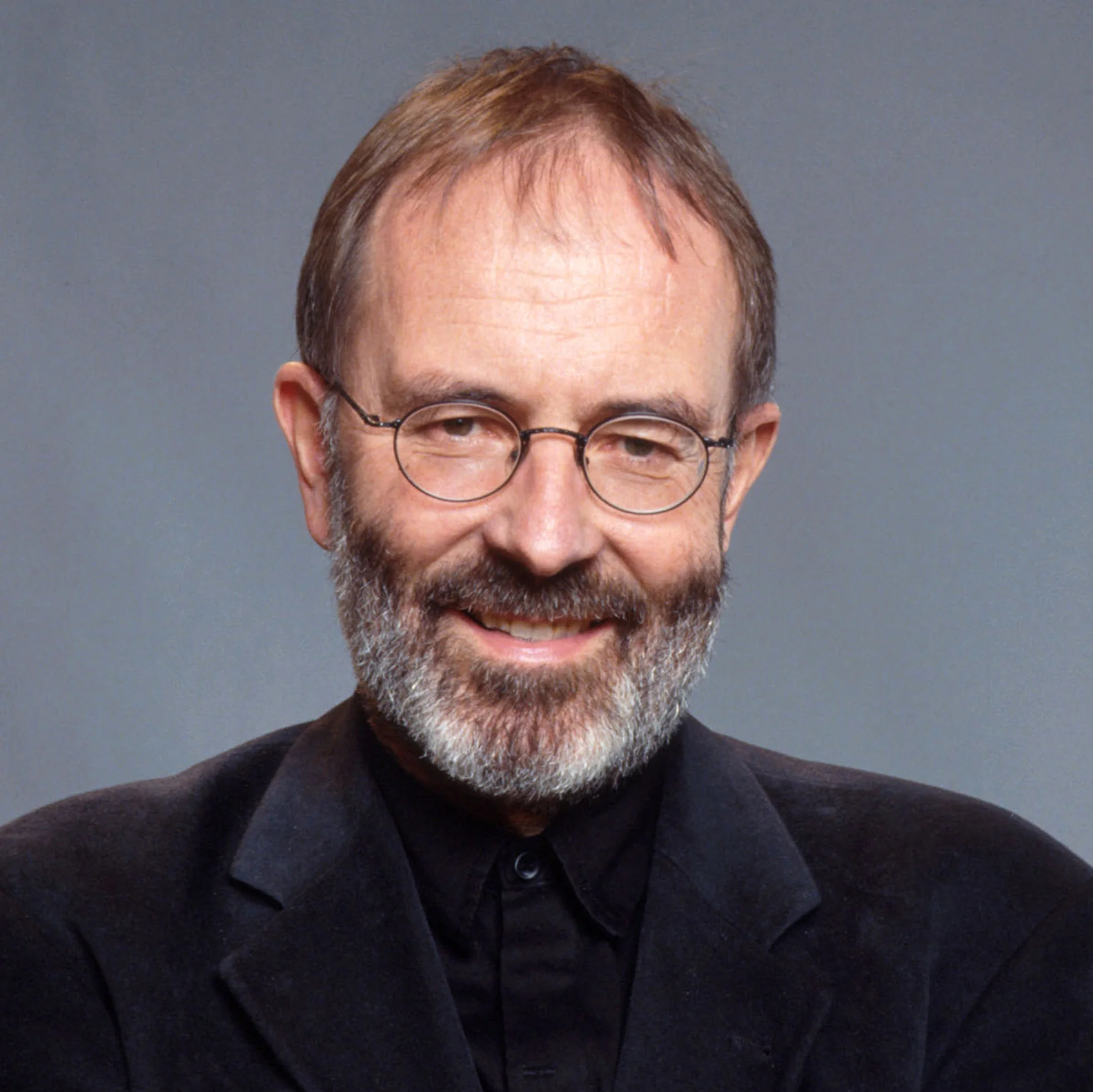
Image from Wikipedia
Image from Wikipedia
Ruedi Baumann: From a Bernese Farm to a Defining Voice of the Swiss Greens
A Biography Between Agriculture, Conviction, and Political Friction
Ruedi Baumann, born on November 11, 1947, in Suberg in the Canton of Bern, is one of those Swiss personalities whose life path is closely linked to groundedness, political clarity, and social commitment. The former politician began his career not in the spotlight of a capital city, but on a farm, in a family where agriculture, work ethic, and responsibility shaped everyday life. His biography tells the story of a man who worked his way from farming to administration and into national politics, becoming a prominent figure in the green movement.
Baumann’s life story intertwines agricultural practice with institutional experience and political commitment. He is a Swiss-French dual citizen and now lives in France, having built his professional and political career in Switzerland over decades. It is precisely this combination of origin, upheaval, and reorientation that gives his trajectory a special depth. It makes him a personality who not only held offices but took positions and bore consequences.
Early Years in Suberg and the Path to Agriculture
Ruedi Baumann was born as the second of three children to farmers Rudolf and Lina Baumann-Röthlisberger. His childhood in Suberg, within the municipality of Grossaffoltern, was marked by an agricultural family reality handed down from generation to generation. Amid farm work, rural roots, and familial cohesion, he quickly developed an understanding of the significance of agriculture as a form of economy, habitat, and cultural foundation.
From 1963 to 1965, Baumann completed an agricultural apprenticeship. Later, he obtained his maturity at evening school to further his education in agronomy at ETH. This educational path demonstrates his willingness to combine practical experience with academic depth. From 1973, he worked in the Directorate of Agriculture of the Canton of Bern, linking his agricultural background with state administrative practice.
After the death of his father in 1975, he took over the family farm Inselmatt in Suberg part-time. In 1983, he resigned from his position as secretary of the Directorate of Agriculture to become a full-time farmer. This step marked not a retreat but a conscious decision for a life in which agriculture remained not only a profession but an identity. His later political stance cannot be fully understood without this experience.
Political Rise Between the SVP, Freie Liste, and the Greens
In 1982, Baumann was elected as a part-time municipal councilor of Grossaffoltern, then still a member of the Swiss People's Party (SVP). Even in this early phase, his sensitivity to municipal responsibility and agricultural policy issues was evident. The break with the SVP occurred when the party did not nominate him for the upcoming Grand Council elections after his wife, Stephanie, ran for the Social Democratic Party (SP). This conflict situation led to a new political reorientation.
In 1986, Baumann was elected to the Grand Council for the Freie Liste, while Stephanie Baumann secured a mandate for the SP. In 1991, he was elected to the National Council, and in 1994, his wife also entered the National Council. For the first time, a married couple sat together in the National Council, and both were re-elected in 1995 and 1999. This constellation gave their political presence an extraordinary character and underscored the visibility of a family that understood politics as a shared responsibility.
When Hanspeter Thür resigned as President of the Swiss Greens in 1997, Baumann was elected his successor in a contested election. He led the party until 2001, after which a co-presidency with Ruth Genner and Patrice Mugny took over. His role during this phase was formative, as it was associated with a clear agricultural and ecological line. Baumann stood for a green politics that was not abstract but argued from the real conflicts of agriculture.
Influence on Agricultural Policy and Farmers’ Interests
Baumann's political profile was closely tied to Swiss agricultural policy. He exerted significant influence in this area and was active at a time when two small farmer initiatives and three referendums dominated the agricultural policy debate. His commitment as co-president of the Small Farmers' Association from 1989 to 2000 underscores how consistently he brought farmers' issues into the national dialogue. He thus stood at the intersection of practice, lobbying, and parliamentary decision-making.
His actions can be read as an attempt to defend agriculture not just as a production sector but as a social space. The combination of his own farming experience, agronomic education, and political mandate granted him credibility. In a debate that often oscillated between industrial efficiency and ecological sustainability, Baumann represented the perspective of small and medium-sized farms. This made him an important voice for an agricultural policy with social and ecological awareness.
His involvement in parliamentary procedures and committees also shows that his influence extended beyond symbolic party politics. His entry in the web services of the Swiss Parliament lists him as a member of the Board of Trustees of the Greina Foundation, among other roles. Such positions place him within a network of political and civil responsibility. His work exemplifies a politics shaped by concrete life contexts.
Family, Farm Succession, and the Move to France
A central chapter in Baumann's life story is his later move to France. The Baumann couple decided to pass on their farm in Suberg early to their son Kilian, to avoid repeating the experience of their parents’ long-delayed farm succession. The family moved to Traversères in France, where they continued to run a medium-sized agricultural business. This step marked a biographical turning point that connected professional continuity with spatial distance.
The documentary "Wir Erben" by son Simon Baumann addresses the family story and the question of farm succession. Thus, a private decision also became a public narrative about heritage, agriculture, and generational succession. Baumann's life gained a second layer: he is not just a political actor but also part of a family whose history has been documented. It is precisely this dual perspective that makes his biography culturally interesting.
On his blog, Baumann has been reporting from France for many years on topics related to agriculture, homeland, and personal observation. It becomes apparent how closely his political past remains intertwined with the present of rural life. The texts offer insights into an attitude that connects experience, reflection, and closeness to everyday life. This creates the image of a man who has not disappeared from public life but continues to convey his perspective in another form.
Literary Footprint and Political Self-Positioning
In 2006, Baumann published the book "Bauernland. Mein Leben" (Farm Land. My Life). The title already refers to the connection of personal memory, agricultural identity, and political accounting. The work enriches the public perception of his person with the written self-disclosure of a man who stood for decades at the intersection of agriculture and politics. These texts are not just memoirs but also time documents of a transformation in Swiss agricultural and party landscapes.
Baumann's early and later political development also shows how flexible political biographies can be. His journey from an SVP member to Green president illustrates a substantive shift that arose from experience and not tactical posturing. This lies at the core of his authority: the connection of origin, professional competence, and political consistency. Those who read his biography encounter not a smoothly polished career but a life marked by friction, change, and clear positions.
This self-positioning continues to resonate today because it exemplifies how closely personal life decisions and public roles can be intertwined. Baumann embodies a political type that has become rarer in Switzerland: the agriculturally rooted, institutionally experienced, and substantively independent mandate holder. His life path does not follow a linear ascent but rather a trajectory of responsibility, conflict, and new beginnings.
Conclusion: Why Ruedi Baumann Remains Fascinating Today
Ruedi Baumann remains fascinating because his biography is more than a sequence of political stages. It tells of agriculture as a lived reality, of party politics as a stance, and of a life that has repeatedly reorganized itself. His role in the Swiss Green movement, his commitment to small farmers, and his unusual family history give him a profile that transcends the usual framework of political biographies.
For those interested in Swiss contemporary history, agricultural policy, and political character studies, Baumann presents a figure of enduring interest. His path demonstrates how deeply conviction and experience can shape a public voice. It is precisely for this reason that it is worthwhile to learn more about his story and to trace the connections between farm, parliament, and exile in France.
Official Channels of Ruedi Baumann:
- Instagram: no official profile found
- Facebook: no official profile found
- YouTube: no official profile found
- Spotify: no official profile found
- TikTok: no official profile found
Sources:
- Wikipedia - Ruedi Baumann
- Swiss Parliament - Parliamentary Investigation Committees
- Web Services of the Swiss Federal Assembly - Baumann Ruedi
- EMIGRANT BLOG - About Me
- EMIGRANT BLOG - Swiss World Class
- EMIGRANT BLOG - What Is He Actually Doing...
- EMIGRANT BLOG - Roots, racines, roots
- EMIGRANT BLOG - L’Orchidée de Traversères