
Wasserburg am Inn
83512 Wasserburg am Inn, Germany
To Our Lady | Photos & History
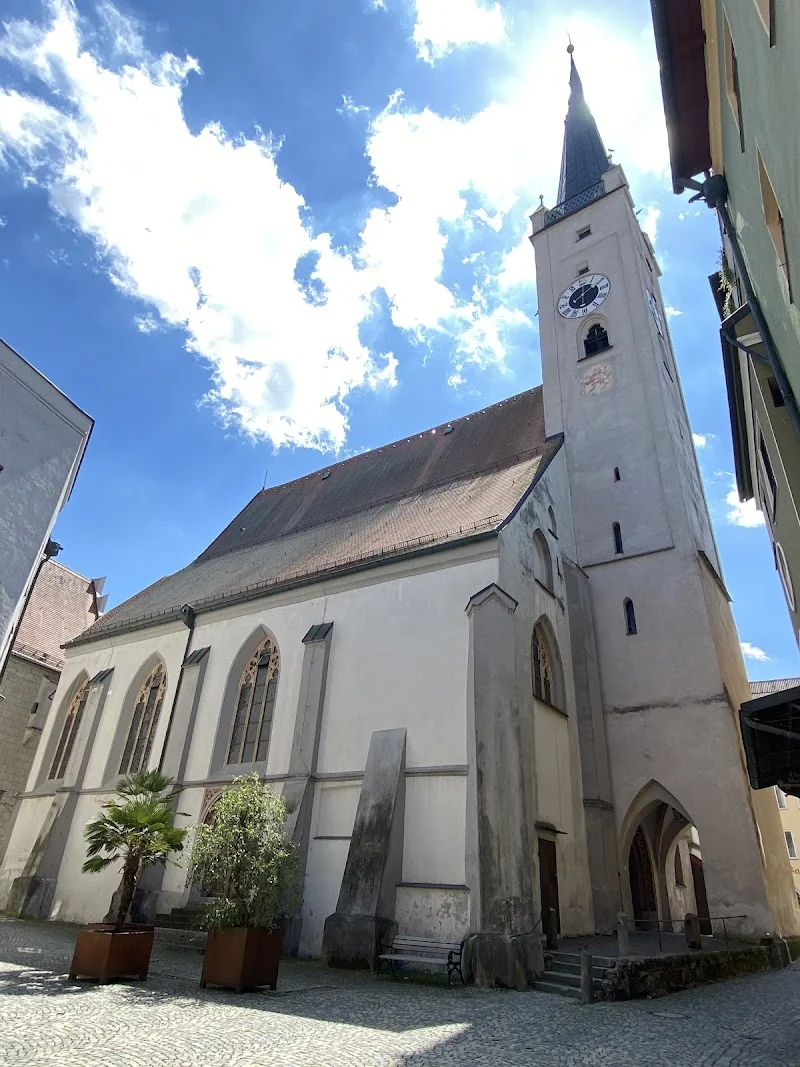
The Church of Our Lady is one of the most significant places in Wasserburg am Inn. It stands in the middle of the historic old town, is closely connected to the town tower, and is considered the oldest church in the city. Those visiting Wasserburg encounter not only a religious building but also a piece of city history, where early Gothic, Rococo, and vibrant present overlap. This connection of age, use, and strong location makes the church equally exciting for walkers, architecture enthusiasts, photographers, and those interested in Marian devotion. The city of Wasserburg explicitly names the Church of Our Lady as a fixed point of a day in the old town, while the town church provides information about opening hours and services. This creates a place that is not only beautiful to look at but is also actively used and therefore remains authentic. ([erzbistum-muenchen.de](https://www.erzbistum-muenchen.de/pfarrei/Stadtkirche-Wasserburg/cont/108586))
Photos and First Impressions of the Church of Our Lady
Those searching for photos of the Church of Our Lady quickly notice that this building primarily works through contrast. Outside, the church presents itself as a calm, historically grown ensemble with a tower, old town, and narrow urban space; inside, however, a colorful, baroque and Rococo-influenced interior unfolds. The city's image page not only shows the church itself but also refers to the baroque interior decoration and the miraculous image of the Virgin Mary. This is precisely why the images of the Church of Our Lady are so enlightening: they document not just a beautiful building but also the development of an entire city perspective. In the city tour of Wasserburg, the Church of Our Lady is mentioned as a fixed stop, along with Marienplatz, the town hall, Kernhaus, and St. Jakob. For visitors, this is practical because the church fits into a compact old town tour, and its impact becomes clear at first glance. ([wasserburg.de](https://www.wasserburg.de/sehenswuerdigkeiten-altstadt/frauenkirche-wasserburg-am-inn-bilder))
Particularly photogenic is the connection between the historic tower and the dense buildings of Wasserburg. The tower belongs to the early Gothic construction phase, while the church was significantly redesigned inside in the 18th century. These layers make the Church of Our Lady a motif with depth, not a smoothly restored backdrop. Those walking through the old town on a clear morning or late afternoon quickly recognize how strongly light, masonry, and the narrow alleys interact. The official image page of the city also emphasizes that the church is not only a religious place but also an important part of the ensemble of sights. For this reason, many people specifically seek photos of the Church of Our Lady: they want to see the distinctive character of this building before visiting it on-site, and they get a very good impression of how much Wasserburg revolves around the connection of history and present. ([wasserburg.de](https://www.wasserburg.de/sehenswuerdigkeiten-altstadt/frauenkirche-wasserburg-am-inn-bilder))
History of the Church of Our Lady in Wasserburg am Inn
The history of the Church of Our Lady is unusually well graspable because official and scientific sources provide a clear timeline. The church was first mentioned in 1324 on the occasion of a foundation for early mass. It was vaulted in 1339, consecrated in 1386, and thus visibly expanded as an independent sacred space. The tower's spire was completed in 1501/1502 and renewed in 1730. In 1753, the major redesign of the interior in Rococo style followed, which still shapes the character of the church today. During a restoration in 1974/75, the baroque version was not removed but deliberately preserved, cleaned, and repaired. Thus, the Church of Our Lady today is a place where one can not only read architectural history but see it immediately. The official page of the town church therefore also calls it the oldest church in the city. ([erzbistum-muenchen.de](https://www.erzbistum-muenchen.de/pfarrei/Stadtkirche-Wasserburg/cont/108586))
The Historical Lexicon of Wasserburg adds important details to this timeline regarding the development of the building. It describes that the Church of Our Lady was expanded into a more complex church space by the 14th century and that the tower was raised in 1502/03 with the involvement of the Wasserburg master builder Wolfgang Wiser. Presumably, it was only through this that it acquired its additional function as a municipal watchtower. This is crucial for understanding the church, as sacred architecture and city defense meet in a single building. In the 18th century, extensive baroque changes were made with new vault and wall designs, followed by neo-Gothic interventions in the 19th century, including new windows and portals. These modifications show that the Church of Our Lady has not stagnated in a single style but has evolved over centuries. This layering of early Gothic, Baroque, and later additions is precisely what makes it appealing. ([historisches-lexikon-wasserburg.de](https://www.historisches-lexikon-wasserburg.de/Frauenkirche))
Miraculous Image, High Altar, and Baroque Interior Decoration
Among the most significant pieces of decoration in the Church of Our Lady is the miraculous image of the enthroned Madonna, which, according to current knowledge, was created around 1420/30. It is seen in connection with the style of the Beautiful Madonnas and is therefore not only religious but also of high art-historical significance. The high altar was erected in 1696 and incorporated the Gothic miraculous image. Particularly beautiful is the background image, which depicts the Trinity and contains a detailed view of Wasserburg in the lower area. This makes the church itself a bearer of the image of its city. The city of Wasserburg explicitly highlights the miraculous image of the Virgin Mary in its tour of the Patrona Bavariae. Visitors therefore do not simply experience an altar but a place where Marian devotion, cityscape, and baroque representation visibly come together. ([historisches-lexikon-wasserburg.de](https://www.historisches-lexikon-wasserburg.de/Frauenkirche))
The interior also tells of carefully designed piety. The baroque redesign from 1750 to 1753 brought a new painting, in which vault and wall surfaces were newly framed. According to the Historical Lexicon, motifs from the Lauretian Litany, Marian feasts, and Old Testament female figures were depicted, creating a dense theological iconographic program. The impression is not overloaded but rather solemn and cheerful at the same time, which the official church description also emphasizes. For the visitor, this means: The Church of Our Lady is interesting not only because of its external appearance but especially because of the inner narrative that deals with protection, intercession, salvation history, and urban identity. Those who observe the space attentively recognize how much the decoration revolves around the veneration of Mary and how consciously the baroque iconography was coordinated with the Gothic miraculous image. This is where one of the greatest charms of this church lies. ([historisches-lexikon-wasserburg.de](https://www.historisches-lexikon-wasserburg.de/Frauenkirche))
Opening Hours and Services in the Church of Our Lady
For visitors who wish to experience the Church of Our Lady not only from the outside but also from the inside, the opening hours are pleasantly uncomplicated. The official page of the town church Wasserburg states that the Church of Our Lady is open daily from 8 AM to 6 PM. This makes the church easily accessible, even for travelers who only plan a short city walk in Wasserburg. Since the Church of Our Lady is also an active church, it is advisable to keep an eye on the current church bulletin. This keeps the visit flexible and respectful of liturgical processes. This mix of free access and lived use is typical for many historical churches, but particularly pleasant in Wasserburg because the old town visit and a quiet church visit can be very well combined. ([erzbistum-muenchen.de](https://www.erzbistum-muenchen.de/pfarrei/Stadtkirche-Wasserburg/cont/108586))
The service operation also shows that the Church of Our Lady is not only a monument but still a parish church. The current service page of the town church lists regular celebrations in the Church of Our Lady; these include Saturday services with rosary devotion, evening mass, and Portuguese mass. The page also points out that changes are reserved and the current church bulletin remains decisive. For visitors, this is helpful if they want to combine a quiet church visit with participation in a service. So those coming out of religious interest find here not only a beautiful shell but a church with real community life. This is precisely what distinguishes the Church of Our Lady from many purely tourist monuments: it is a historical monument, but also a living place of faith that continues its tradition to this day. ([www2.erzbistum-muenchen.de](https://www2.erzbistum-muenchen.de/pfarrei/Stadtkirche-Wasserburg/Gottesdienste))
Directions and Parking around Marienplatz
The location of the Church of Our Lady in Wasserburg is very attractive for visitors, but due to the historic old town, it is also logistically important. The city of Wasserburg recommends the marked parking options at the access points for the old town. Specifically mentioned are the parking garage Kellerstraße, the parking garage Überfuhrstraße, the parking lot Unter der Rampe, and the parking lot Am Gries. This is sensible for outsiders because the old town with its narrow streets and alleys is not designed for spontaneous parking while passing by. Especially practical is the parking garage Kellerstraße with 565 parking spaces and four hours of free parking time. Furthermore, the city emphasizes that every point in the old town is reachable on foot within a maximum of 600 meters from the central parking options. This makes the Church of Our Lady easily integrable into a short city visit without having to plan a long walk. ([wasserburg.de](https://www.wasserburg.de/parken?utm_source=openai))
Those arriving by bus also benefit from the location. The city designates parking spaces for tour buses on Landwehrstraße in front of the parking lot Am Gries, and from there it is only about 200 meters to Marienplatz. Additionally, the city points out the good accessibility of the old town by city bus. For travelers, this means: whether by car, bus, or train with a connection to the city bus, the Church of Our Lady is generally well accessible. Especially on day trips, this is a plus because one can experience the old town not only as a destination but as a compact tour. The Church of Our Lady is then not isolated at the edge but right in the way between arrival, walk, and other sights. This is one of the reasons why a visit is so easy to plan: the paths are short, orientation is simple, and the historic city center provides the appropriate framework for the church visit. ([wasserburg.de](https://www.wasserburg.de/de/wirtschaft-verkehr/anfahrt-parken/parken-reisebusse/?utm_source=openai))
Experience Wasserburg am Inn: Old Town, Walk, and Culture
Those visiting the Church of Our Lady should not view it as a single destination but as part of a larger city experience. The city of Wasserburg explicitly recommends several stops for a day visit: Beautiful View, Inn Bridge, Church of Our Lady at Marienplatz, Town Hall with Town Hall Halls, Kernhaus, and then St. Jakob with the Zürn pulpit. This sequence shows how well the Church of Our Lady fits into the cultural profile of the city. It is not only a religious place but also a fixed point in the historic city center. Those who want to photograph can therefore connect the visit with multiple perspectives: view of the tower, view through the alleys, view from near Marienplatz, and view in ensemble with the town hall and old town facades. This creates a very complete impression of Wasserburg as a compact, almost insular city with a strong character. ([wasserburg.de](https://www.wasserburg.de/ein-tag-in-wasserburg))
Also, the surrounding area is worth a visit. The city refers in its daily suggestion to the sculpture path along the banks of the Inn, to the Wasserburg Museum in Herrengasse, and to the many small shops and cafés in the old town. This quickly turns the church visit into a half or full city walk. The Church of Our Lady is an ideal starting or ending point in this context because it is centrally located and simultaneously radiates tranquility. Those who want to connect culture, architecture, religion, and city history receive a particularly dense impression in Wasserburg am Inn. This is precisely why inquiries about photos, history, opening hours, services, directions, and parking are so obvious: this church is not only beautiful but also a meaningful starting point for discovering the entire old town. Those who visit it take away more than just a photo moment; they experience a piece of Wasserburg identity that has remained visible and tangible to this day. ([wasserburg.de](https://www.wasserburg.de/ein-tag-in-wasserburg))
Sources:
Show moreShow less
To Our Lady | Photos & History
The Church of Our Lady is one of the most significant places in Wasserburg am Inn. It stands in the middle of the historic old town, is closely connected to the town tower, and is considered the oldest church in the city. Those visiting Wasserburg encounter not only a religious building but also a piece of city history, where early Gothic, Rococo, and vibrant present overlap. This connection of age, use, and strong location makes the church equally exciting for walkers, architecture enthusiasts, photographers, and those interested in Marian devotion. The city of Wasserburg explicitly names the Church of Our Lady as a fixed point of a day in the old town, while the town church provides information about opening hours and services. This creates a place that is not only beautiful to look at but is also actively used and therefore remains authentic. ([erzbistum-muenchen.de](https://www.erzbistum-muenchen.de/pfarrei/Stadtkirche-Wasserburg/cont/108586))
Photos and First Impressions of the Church of Our Lady
Those searching for photos of the Church of Our Lady quickly notice that this building primarily works through contrast. Outside, the church presents itself as a calm, historically grown ensemble with a tower, old town, and narrow urban space; inside, however, a colorful, baroque and Rococo-influenced interior unfolds. The city's image page not only shows the church itself but also refers to the baroque interior decoration and the miraculous image of the Virgin Mary. This is precisely why the images of the Church of Our Lady are so enlightening: they document not just a beautiful building but also the development of an entire city perspective. In the city tour of Wasserburg, the Church of Our Lady is mentioned as a fixed stop, along with Marienplatz, the town hall, Kernhaus, and St. Jakob. For visitors, this is practical because the church fits into a compact old town tour, and its impact becomes clear at first glance. ([wasserburg.de](https://www.wasserburg.de/sehenswuerdigkeiten-altstadt/frauenkirche-wasserburg-am-inn-bilder))
Particularly photogenic is the connection between the historic tower and the dense buildings of Wasserburg. The tower belongs to the early Gothic construction phase, while the church was significantly redesigned inside in the 18th century. These layers make the Church of Our Lady a motif with depth, not a smoothly restored backdrop. Those walking through the old town on a clear morning or late afternoon quickly recognize how strongly light, masonry, and the narrow alleys interact. The official image page of the city also emphasizes that the church is not only a religious place but also an important part of the ensemble of sights. For this reason, many people specifically seek photos of the Church of Our Lady: they want to see the distinctive character of this building before visiting it on-site, and they get a very good impression of how much Wasserburg revolves around the connection of history and present. ([wasserburg.de](https://www.wasserburg.de/sehenswuerdigkeiten-altstadt/frauenkirche-wasserburg-am-inn-bilder))
History of the Church of Our Lady in Wasserburg am Inn
The history of the Church of Our Lady is unusually well graspable because official and scientific sources provide a clear timeline. The church was first mentioned in 1324 on the occasion of a foundation for early mass. It was vaulted in 1339, consecrated in 1386, and thus visibly expanded as an independent sacred space. The tower's spire was completed in 1501/1502 and renewed in 1730. In 1753, the major redesign of the interior in Rococo style followed, which still shapes the character of the church today. During a restoration in 1974/75, the baroque version was not removed but deliberately preserved, cleaned, and repaired. Thus, the Church of Our Lady today is a place where one can not only read architectural history but see it immediately. The official page of the town church therefore also calls it the oldest church in the city. ([erzbistum-muenchen.de](https://www.erzbistum-muenchen.de/pfarrei/Stadtkirche-Wasserburg/cont/108586))
The Historical Lexicon of Wasserburg adds important details to this timeline regarding the development of the building. It describes that the Church of Our Lady was expanded into a more complex church space by the 14th century and that the tower was raised in 1502/03 with the involvement of the Wasserburg master builder Wolfgang Wiser. Presumably, it was only through this that it acquired its additional function as a municipal watchtower. This is crucial for understanding the church, as sacred architecture and city defense meet in a single building. In the 18th century, extensive baroque changes were made with new vault and wall designs, followed by neo-Gothic interventions in the 19th century, including new windows and portals. These modifications show that the Church of Our Lady has not stagnated in a single style but has evolved over centuries. This layering of early Gothic, Baroque, and later additions is precisely what makes it appealing. ([historisches-lexikon-wasserburg.de](https://www.historisches-lexikon-wasserburg.de/Frauenkirche))
Miraculous Image, High Altar, and Baroque Interior Decoration
Among the most significant pieces of decoration in the Church of Our Lady is the miraculous image of the enthroned Madonna, which, according to current knowledge, was created around 1420/30. It is seen in connection with the style of the Beautiful Madonnas and is therefore not only religious but also of high art-historical significance. The high altar was erected in 1696 and incorporated the Gothic miraculous image. Particularly beautiful is the background image, which depicts the Trinity and contains a detailed view of Wasserburg in the lower area. This makes the church itself a bearer of the image of its city. The city of Wasserburg explicitly highlights the miraculous image of the Virgin Mary in its tour of the Patrona Bavariae. Visitors therefore do not simply experience an altar but a place where Marian devotion, cityscape, and baroque representation visibly come together. ([historisches-lexikon-wasserburg.de](https://www.historisches-lexikon-wasserburg.de/Frauenkirche))
The interior also tells of carefully designed piety. The baroque redesign from 1750 to 1753 brought a new painting, in which vault and wall surfaces were newly framed. According to the Historical Lexicon, motifs from the Lauretian Litany, Marian feasts, and Old Testament female figures were depicted, creating a dense theological iconographic program. The impression is not overloaded but rather solemn and cheerful at the same time, which the official church description also emphasizes. For the visitor, this means: The Church of Our Lady is interesting not only because of its external appearance but especially because of the inner narrative that deals with protection, intercession, salvation history, and urban identity. Those who observe the space attentively recognize how much the decoration revolves around the veneration of Mary and how consciously the baroque iconography was coordinated with the Gothic miraculous image. This is where one of the greatest charms of this church lies. ([historisches-lexikon-wasserburg.de](https://www.historisches-lexikon-wasserburg.de/Frauenkirche))
Opening Hours and Services in the Church of Our Lady
For visitors who wish to experience the Church of Our Lady not only from the outside but also from the inside, the opening hours are pleasantly uncomplicated. The official page of the town church Wasserburg states that the Church of Our Lady is open daily from 8 AM to 6 PM. This makes the church easily accessible, even for travelers who only plan a short city walk in Wasserburg. Since the Church of Our Lady is also an active church, it is advisable to keep an eye on the current church bulletin. This keeps the visit flexible and respectful of liturgical processes. This mix of free access and lived use is typical for many historical churches, but particularly pleasant in Wasserburg because the old town visit and a quiet church visit can be very well combined. ([erzbistum-muenchen.de](https://www.erzbistum-muenchen.de/pfarrei/Stadtkirche-Wasserburg/cont/108586))
The service operation also shows that the Church of Our Lady is not only a monument but still a parish church. The current service page of the town church lists regular celebrations in the Church of Our Lady; these include Saturday services with rosary devotion, evening mass, and Portuguese mass. The page also points out that changes are reserved and the current church bulletin remains decisive. For visitors, this is helpful if they want to combine a quiet church visit with participation in a service. So those coming out of religious interest find here not only a beautiful shell but a church with real community life. This is precisely what distinguishes the Church of Our Lady from many purely tourist monuments: it is a historical monument, but also a living place of faith that continues its tradition to this day. ([www2.erzbistum-muenchen.de](https://www2.erzbistum-muenchen.de/pfarrei/Stadtkirche-Wasserburg/Gottesdienste))
Directions and Parking around Marienplatz
The location of the Church of Our Lady in Wasserburg is very attractive for visitors, but due to the historic old town, it is also logistically important. The city of Wasserburg recommends the marked parking options at the access points for the old town. Specifically mentioned are the parking garage Kellerstraße, the parking garage Überfuhrstraße, the parking lot Unter der Rampe, and the parking lot Am Gries. This is sensible for outsiders because the old town with its narrow streets and alleys is not designed for spontaneous parking while passing by. Especially practical is the parking garage Kellerstraße with 565 parking spaces and four hours of free parking time. Furthermore, the city emphasizes that every point in the old town is reachable on foot within a maximum of 600 meters from the central parking options. This makes the Church of Our Lady easily integrable into a short city visit without having to plan a long walk. ([wasserburg.de](https://www.wasserburg.de/parken?utm_source=openai))
Those arriving by bus also benefit from the location. The city designates parking spaces for tour buses on Landwehrstraße in front of the parking lot Am Gries, and from there it is only about 200 meters to Marienplatz. Additionally, the city points out the good accessibility of the old town by city bus. For travelers, this means: whether by car, bus, or train with a connection to the city bus, the Church of Our Lady is generally well accessible. Especially on day trips, this is a plus because one can experience the old town not only as a destination but as a compact tour. The Church of Our Lady is then not isolated at the edge but right in the way between arrival, walk, and other sights. This is one of the reasons why a visit is so easy to plan: the paths are short, orientation is simple, and the historic city center provides the appropriate framework for the church visit. ([wasserburg.de](https://www.wasserburg.de/de/wirtschaft-verkehr/anfahrt-parken/parken-reisebusse/?utm_source=openai))
Experience Wasserburg am Inn: Old Town, Walk, and Culture
Those visiting the Church of Our Lady should not view it as a single destination but as part of a larger city experience. The city of Wasserburg explicitly recommends several stops for a day visit: Beautiful View, Inn Bridge, Church of Our Lady at Marienplatz, Town Hall with Town Hall Halls, Kernhaus, and then St. Jakob with the Zürn pulpit. This sequence shows how well the Church of Our Lady fits into the cultural profile of the city. It is not only a religious place but also a fixed point in the historic city center. Those who want to photograph can therefore connect the visit with multiple perspectives: view of the tower, view through the alleys, view from near Marienplatz, and view in ensemble with the town hall and old town facades. This creates a very complete impression of Wasserburg as a compact, almost insular city with a strong character. ([wasserburg.de](https://www.wasserburg.de/ein-tag-in-wasserburg))
Also, the surrounding area is worth a visit. The city refers in its daily suggestion to the sculpture path along the banks of the Inn, to the Wasserburg Museum in Herrengasse, and to the many small shops and cafés in the old town. This quickly turns the church visit into a half or full city walk. The Church of Our Lady is an ideal starting or ending point in this context because it is centrally located and simultaneously radiates tranquility. Those who want to connect culture, architecture, religion, and city history receive a particularly dense impression in Wasserburg am Inn. This is precisely why inquiries about photos, history, opening hours, services, directions, and parking are so obvious: this church is not only beautiful but also a meaningful starting point for discovering the entire old town. Those who visit it take away more than just a photo moment; they experience a piece of Wasserburg identity that has remained visible and tangible to this day. ([wasserburg.de](https://www.wasserburg.de/ein-tag-in-wasserburg))
Sources:
To Our Lady | Photos & History
The Church of Our Lady is one of the most significant places in Wasserburg am Inn. It stands in the middle of the historic old town, is closely connected to the town tower, and is considered the oldest church in the city. Those visiting Wasserburg encounter not only a religious building but also a piece of city history, where early Gothic, Rococo, and vibrant present overlap. This connection of age, use, and strong location makes the church equally exciting for walkers, architecture enthusiasts, photographers, and those interested in Marian devotion. The city of Wasserburg explicitly names the Church of Our Lady as a fixed point of a day in the old town, while the town church provides information about opening hours and services. This creates a place that is not only beautiful to look at but is also actively used and therefore remains authentic. ([erzbistum-muenchen.de](https://www.erzbistum-muenchen.de/pfarrei/Stadtkirche-Wasserburg/cont/108586))
Photos and First Impressions of the Church of Our Lady
Those searching for photos of the Church of Our Lady quickly notice that this building primarily works through contrast. Outside, the church presents itself as a calm, historically grown ensemble with a tower, old town, and narrow urban space; inside, however, a colorful, baroque and Rococo-influenced interior unfolds. The city's image page not only shows the church itself but also refers to the baroque interior decoration and the miraculous image of the Virgin Mary. This is precisely why the images of the Church of Our Lady are so enlightening: they document not just a beautiful building but also the development of an entire city perspective. In the city tour of Wasserburg, the Church of Our Lady is mentioned as a fixed stop, along with Marienplatz, the town hall, Kernhaus, and St. Jakob. For visitors, this is practical because the church fits into a compact old town tour, and its impact becomes clear at first glance. ([wasserburg.de](https://www.wasserburg.de/sehenswuerdigkeiten-altstadt/frauenkirche-wasserburg-am-inn-bilder))
Particularly photogenic is the connection between the historic tower and the dense buildings of Wasserburg. The tower belongs to the early Gothic construction phase, while the church was significantly redesigned inside in the 18th century. These layers make the Church of Our Lady a motif with depth, not a smoothly restored backdrop. Those walking through the old town on a clear morning or late afternoon quickly recognize how strongly light, masonry, and the narrow alleys interact. The official image page of the city also emphasizes that the church is not only a religious place but also an important part of the ensemble of sights. For this reason, many people specifically seek photos of the Church of Our Lady: they want to see the distinctive character of this building before visiting it on-site, and they get a very good impression of how much Wasserburg revolves around the connection of history and present. ([wasserburg.de](https://www.wasserburg.de/sehenswuerdigkeiten-altstadt/frauenkirche-wasserburg-am-inn-bilder))
History of the Church of Our Lady in Wasserburg am Inn
The history of the Church of Our Lady is unusually well graspable because official and scientific sources provide a clear timeline. The church was first mentioned in 1324 on the occasion of a foundation for early mass. It was vaulted in 1339, consecrated in 1386, and thus visibly expanded as an independent sacred space. The tower's spire was completed in 1501/1502 and renewed in 1730. In 1753, the major redesign of the interior in Rococo style followed, which still shapes the character of the church today. During a restoration in 1974/75, the baroque version was not removed but deliberately preserved, cleaned, and repaired. Thus, the Church of Our Lady today is a place where one can not only read architectural history but see it immediately. The official page of the town church therefore also calls it the oldest church in the city. ([erzbistum-muenchen.de](https://www.erzbistum-muenchen.de/pfarrei/Stadtkirche-Wasserburg/cont/108586))
The Historical Lexicon of Wasserburg adds important details to this timeline regarding the development of the building. It describes that the Church of Our Lady was expanded into a more complex church space by the 14th century and that the tower was raised in 1502/03 with the involvement of the Wasserburg master builder Wolfgang Wiser. Presumably, it was only through this that it acquired its additional function as a municipal watchtower. This is crucial for understanding the church, as sacred architecture and city defense meet in a single building. In the 18th century, extensive baroque changes were made with new vault and wall designs, followed by neo-Gothic interventions in the 19th century, including new windows and portals. These modifications show that the Church of Our Lady has not stagnated in a single style but has evolved over centuries. This layering of early Gothic, Baroque, and later additions is precisely what makes it appealing. ([historisches-lexikon-wasserburg.de](https://www.historisches-lexikon-wasserburg.de/Frauenkirche))
Miraculous Image, High Altar, and Baroque Interior Decoration
Among the most significant pieces of decoration in the Church of Our Lady is the miraculous image of the enthroned Madonna, which, according to current knowledge, was created around 1420/30. It is seen in connection with the style of the Beautiful Madonnas and is therefore not only religious but also of high art-historical significance. The high altar was erected in 1696 and incorporated the Gothic miraculous image. Particularly beautiful is the background image, which depicts the Trinity and contains a detailed view of Wasserburg in the lower area. This makes the church itself a bearer of the image of its city. The city of Wasserburg explicitly highlights the miraculous image of the Virgin Mary in its tour of the Patrona Bavariae. Visitors therefore do not simply experience an altar but a place where Marian devotion, cityscape, and baroque representation visibly come together. ([historisches-lexikon-wasserburg.de](https://www.historisches-lexikon-wasserburg.de/Frauenkirche))
The interior also tells of carefully designed piety. The baroque redesign from 1750 to 1753 brought a new painting, in which vault and wall surfaces were newly framed. According to the Historical Lexicon, motifs from the Lauretian Litany, Marian feasts, and Old Testament female figures were depicted, creating a dense theological iconographic program. The impression is not overloaded but rather solemn and cheerful at the same time, which the official church description also emphasizes. For the visitor, this means: The Church of Our Lady is interesting not only because of its external appearance but especially because of the inner narrative that deals with protection, intercession, salvation history, and urban identity. Those who observe the space attentively recognize how much the decoration revolves around the veneration of Mary and how consciously the baroque iconography was coordinated with the Gothic miraculous image. This is where one of the greatest charms of this church lies. ([historisches-lexikon-wasserburg.de](https://www.historisches-lexikon-wasserburg.de/Frauenkirche))
Opening Hours and Services in the Church of Our Lady
For visitors who wish to experience the Church of Our Lady not only from the outside but also from the inside, the opening hours are pleasantly uncomplicated. The official page of the town church Wasserburg states that the Church of Our Lady is open daily from 8 AM to 6 PM. This makes the church easily accessible, even for travelers who only plan a short city walk in Wasserburg. Since the Church of Our Lady is also an active church, it is advisable to keep an eye on the current church bulletin. This keeps the visit flexible and respectful of liturgical processes. This mix of free access and lived use is typical for many historical churches, but particularly pleasant in Wasserburg because the old town visit and a quiet church visit can be very well combined. ([erzbistum-muenchen.de](https://www.erzbistum-muenchen.de/pfarrei/Stadtkirche-Wasserburg/cont/108586))
The service operation also shows that the Church of Our Lady is not only a monument but still a parish church. The current service page of the town church lists regular celebrations in the Church of Our Lady; these include Saturday services with rosary devotion, evening mass, and Portuguese mass. The page also points out that changes are reserved and the current church bulletin remains decisive. For visitors, this is helpful if they want to combine a quiet church visit with participation in a service. So those coming out of religious interest find here not only a beautiful shell but a church with real community life. This is precisely what distinguishes the Church of Our Lady from many purely tourist monuments: it is a historical monument, but also a living place of faith that continues its tradition to this day. ([www2.erzbistum-muenchen.de](https://www2.erzbistum-muenchen.de/pfarrei/Stadtkirche-Wasserburg/Gottesdienste))
Directions and Parking around Marienplatz
The location of the Church of Our Lady in Wasserburg is very attractive for visitors, but due to the historic old town, it is also logistically important. The city of Wasserburg recommends the marked parking options at the access points for the old town. Specifically mentioned are the parking garage Kellerstraße, the parking garage Überfuhrstraße, the parking lot Unter der Rampe, and the parking lot Am Gries. This is sensible for outsiders because the old town with its narrow streets and alleys is not designed for spontaneous parking while passing by. Especially practical is the parking garage Kellerstraße with 565 parking spaces and four hours of free parking time. Furthermore, the city emphasizes that every point in the old town is reachable on foot within a maximum of 600 meters from the central parking options. This makes the Church of Our Lady easily integrable into a short city visit without having to plan a long walk. ([wasserburg.de](https://www.wasserburg.de/parken?utm_source=openai))
Those arriving by bus also benefit from the location. The city designates parking spaces for tour buses on Landwehrstraße in front of the parking lot Am Gries, and from there it is only about 200 meters to Marienplatz. Additionally, the city points out the good accessibility of the old town by city bus. For travelers, this means: whether by car, bus, or train with a connection to the city bus, the Church of Our Lady is generally well accessible. Especially on day trips, this is a plus because one can experience the old town not only as a destination but as a compact tour. The Church of Our Lady is then not isolated at the edge but right in the way between arrival, walk, and other sights. This is one of the reasons why a visit is so easy to plan: the paths are short, orientation is simple, and the historic city center provides the appropriate framework for the church visit. ([wasserburg.de](https://www.wasserburg.de/de/wirtschaft-verkehr/anfahrt-parken/parken-reisebusse/?utm_source=openai))
Experience Wasserburg am Inn: Old Town, Walk, and Culture
Those visiting the Church of Our Lady should not view it as a single destination but as part of a larger city experience. The city of Wasserburg explicitly recommends several stops for a day visit: Beautiful View, Inn Bridge, Church of Our Lady at Marienplatz, Town Hall with Town Hall Halls, Kernhaus, and then St. Jakob with the Zürn pulpit. This sequence shows how well the Church of Our Lady fits into the cultural profile of the city. It is not only a religious place but also a fixed point in the historic city center. Those who want to photograph can therefore connect the visit with multiple perspectives: view of the tower, view through the alleys, view from near Marienplatz, and view in ensemble with the town hall and old town facades. This creates a very complete impression of Wasserburg as a compact, almost insular city with a strong character. ([wasserburg.de](https://www.wasserburg.de/ein-tag-in-wasserburg))
Also, the surrounding area is worth a visit. The city refers in its daily suggestion to the sculpture path along the banks of the Inn, to the Wasserburg Museum in Herrengasse, and to the many small shops and cafés in the old town. This quickly turns the church visit into a half or full city walk. The Church of Our Lady is an ideal starting or ending point in this context because it is centrally located and simultaneously radiates tranquility. Those who want to connect culture, architecture, religion, and city history receive a particularly dense impression in Wasserburg am Inn. This is precisely why inquiries about photos, history, opening hours, services, directions, and parking are so obvious: this church is not only beautiful but also a meaningful starting point for discovering the entire old town. Those who visit it take away more than just a photo moment; they experience a piece of Wasserburg identity that has remained visible and tangible to this day. ([wasserburg.de](https://www.wasserburg.de/ein-tag-in-wasserburg))
Sources:
Upcoming Events
No events found
Frequently Asked Questions
Reviews
david antoun
8. February 2026
Medieval church from the 14th century, later modernized to Baroque and neo-Gothic architecture. The tower is a landmark of the town.
Andreas
7. September 2023
A remarkable 14th-century Gothic church with rich interior furnishings. The barrel-vaulted ceiling is decorated with colorful murals and is in excellent condition.
Dieter Achatz
18. August 2022
Every Wednesday, Frauenkirche (Church of Our Lady), Wasserburg am Inn 8:30 Eucharistic Adoration 9:00 Holy Mass 6:00 Germany Prays the Rosary Anyone who wants to feel and experience God's grace is welcome to come and see for themselves. Wasserburg is worth a day trip 😉👍
Hippek der Grosse
30. September 2019
Wonderful church, very beautiful and interesting. Exceptional, rich furnishings, beautiful altars, paintings... very well maintained, order and cleanliness everywhere, excellent condition... I liked everything, I'm thrilled, and of course I recommend it, definitely worth seeing. A strong five stars from me ⭐⭐⭐⭐⭐
Sarex Kenan
9. June 2025
A very beautiful church, inside and out, well-maintained, clean and stylish, very pleasant atmosphere, highly recommended.