
Wasserburg am Inn
Herderstraße 7, 83512 Wasserburg am Inn, Deutschland
Waymaker Museum Wasserburg | Road Construction & Winter Service
The Waymaker Museum Wasserburg is not an ordinary excursion destination, but a very special place for all who want to understand the history of technology, infrastructure, and the development of road systems. In the former road maintenance office on the southern outskirts of Wasserburg am Inn, it becomes visible how the work of waymakers has changed over generations and how manual maintenance work has evolved into a modern road maintenance service. The museum is operated by the State Building Authority Rosenheim and can only be visited by prior telephone appointment. This special form is precisely what makes it appealing: the visit does not feel like a mass program, but rather like a glimpse behind the scenes of an important public task. With around 1,500 exhibits, historical documents, and tools, the Waymaker Museum offers a dense and authentic collection that makes the history of road, path, and bridge construction in Bavaria comprehensible. For visitors looking for an extraordinary museum in Wasserburg am Inn, this house is therefore a real insider tip. ([wasserburg.de](https://www.wasserburg.de/wegmachermuseum))
Road Construction and Maintenance in Bavaria
The focus of the Waymaker Museum is the history of road construction and maintenance in Bavaria. The official descriptions emphasize that the so-called waymaker was responsible for the maintenance of roads until the mid-20th century. The museum vividly illustrates this old realm of tasks by not only showing individual tools but also documenting the entire development of the road maintenance service. Visitors learn how paths were maintained, roads secured, signage adjusted, and how bridge construction and landscape maintenance were organizationally interconnected. Particularly exciting is that the collection does not stop at a nostalgic look at old tools, but makes the development comprehensible over nearly 200 years. This creates a clear historical framework: from early manual work along country roads to the professional, technically equipped operational service of the present. Anyone interested in traffic routes, public infrastructure, or the history of rural everyday life will find many points of connection here. The classification in Bavaria is also important, as the collection is described as unique and refers to the great significance of road construction for regional development. Especially because Wasserburg am Inn itself is historically shaped, this special museum fits excellently into the city: it complements cultural history with a topic that is often overlooked in everyday life but was and is crucial for mobility, trade, and supply. The museum thus showcases not only technology but also social development, state organization, and the practical work of many generations. ([wasserburg.de](https://www.wasserburg.de/wegmachermuseum))
Winter Service, Large Equipment, and Technical Rarities
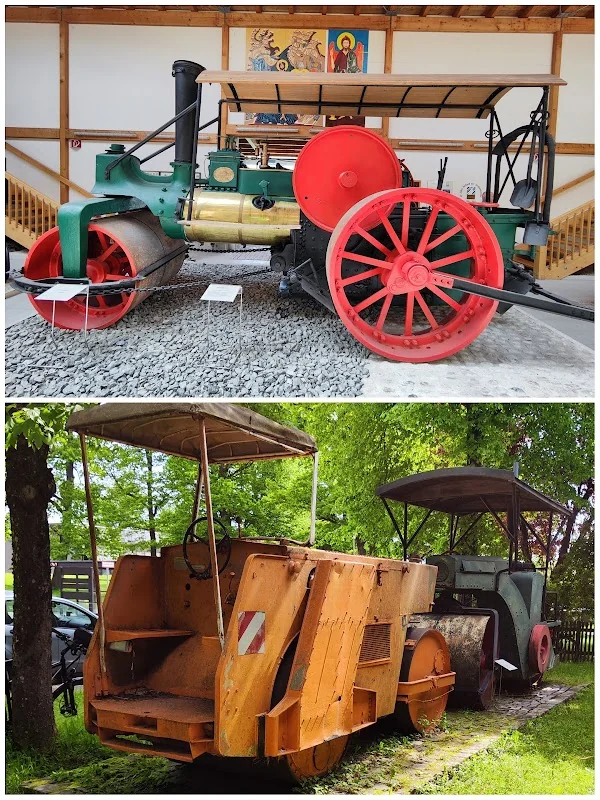
A second focus of the Waymaker Museum is the winter service with its impressive large equipment. This area makes the visit particularly vivid for technology fans, families, and groups because here the work on the road does not remain abstract but becomes visible in large, often surprising machines. The sources mention, among other things, steam rollers, snow plows, snow throwers, road breakers, stone crushers, and tar sprayers. Such devices explain in a very immediate way how demanding road maintenance used to be and how much the work has evolved from simple craftsmanship to a technically shaped operation. Particularly impressive is the idea that even part of the collection is dedicated to winter service because snow and ice play a huge role in Bavaria. This makes it understandable why the museum not only exhibits historical tools but also machines that could keep roads passable in winter. The collection includes historical working tools as well as traffic signs and regulations that make the changes in traffic management and road order visible. This creates a comprehensive picture of technology, organization, and everyday experience. The museum thus conveys a piece of concrete engineering and administrative history without appearing dry. Anyone walking through the exhibition quickly realizes that behind every road that seems self-evident today lies a long chain of work steps, decisions, and technical solutions. This connection of large machines, documented practice, and Bavarian road construction history gives the Waymaker Museum its unique character and clearly distinguishes it from many classic local museums. ([museen-in-bayern.de](https://museen-in-bayern.de/museen/detailseite-museum/wegmachermuseum-in-der-ehemaligen-strassenmeisterei-wasserburg-a-inn))
From Waymaker to Road Keeper: The History Behind the Museum
The historical development of the museum itself is closely linked to the development of road administration in Rosenheim and Wasserburg. According to available sources, the Waymaker Museum was established in 1977 on the occasion of the modernization of the Wasserburg road maintenance office. It was initially located in the new depot on the southern edge of the town and moved to a new exhibition hall in 1999. This chronological development shows that the museum did not arise as an afterthought but directly emerged from the working environment of road maintenance. This gives it a special credibility: the exhibition has grown out of real operations. The collection is based on archival materials, historical working tools, and about 1,500 tools and large equipment from road construction, maintenance, bridge construction, and winter service. Additionally, traffic signs and regulations from the 18th century to the present are included. Another important point is the historical classification of the profession itself: over time, the waymaker has become the road keeper, a recognized vocational training position. The museum thus tells not only the story of individual objects but also the story of a profession and a public task. Particularly relevant is that the Rosenheim road construction office points out in its history that there was another maintenance office in Wasserburg until the dissolution of the road maintenance office in 2012 and that the Waymaker Museum established there remains accessible to the public. This connection between past and present makes the museum a living memorial for road infrastructure in Bavaria. ([kulturportal-bayern.de](https://kulturportal-bayern.de/veranstalter/wegmachermuseum/?utm_source=openai))
Opening Hours, Admission, and Tours by Appointment
Anyone wishing to visit the Waymaker Museum should be aware of the special practical conditions. The opening hours are not regular like those of a classic city museum but are exclusively by appointment. While this presents a small hurdle, it also offers an advantage: the visit can be planned very specifically, often in peace and with personal coordination. The official information states that visits are organized by telephone appointment at the Ebersberg road maintenance office. The telephone numbers provided are 08092 8273-0, 08092/8273-12, and mobile 0173 8635915. Admission is free, making the museum attractive for school classes, clubs, technical groups, or families. Additionally, tourism and museum websites indicate that tours can also be arranged for groups. This is particularly interesting because the exhibition of historical devices, documents, and technical contexts thrives, and an expert introduction can significantly deepen the visit. The practical recommendation is therefore: anyone who wants to experience the museum should not just go spontaneously but should arrange the appointment by phone in advance. This also allows for questions about group size, the tour, and the exact arrival to be clarified. Especially for a special museum that is not operated in regular ongoing operation, this approach is sensible and resource-saving. This way, the visit can be planned, and the collection can be presented in an appropriate context. For SEO search queries such as admission, tour, visit, or opening hours, one important piece of information is therefore: The Waymaker Museum is freely accessible but only by prior arrangement. ([wasserburg.de](https://www.wasserburg.de/wegmachermuseum))
Address, Location, and Directions to the Waymaker Museum in Wasserburg
The Waymaker Museum is located in Wasserburg am Inn on the southern outskirts at Herderstraße 1. The official city website, the tourism site of Chiemsee-Alpenland, and other Bavarian museum directories assign the museum to the former road maintenance office. This location also explains the special character of the house: it is not located in a representative museum building but in an authentic place of road operations. This already makes it clear from the building environment what it is about in terms of content. For visitors, it is especially important to plan the journey in advance because the museum does not operate in the normal flow of visitors but is only open by appointment. The city points out its general information areas regarding access, parking, city maps, as well as bus, train, and bicycle; therefore, for a specific visit, it is advisable to clarify the route and any parking questions by phone in advance. This is particularly sensible if coming from the Rosenheim region, from Chiemgau, or from further away. The location on the edge of the city is both practical and atmospheric: it combines accessibility with a real operational site and avoids the distance of a purely museumally staged place. It is also particularly pleasant that the museum can be thematically well combined with other attractions in Wasserburg. Those who want to combine their visit in Wasserburg with the old town, culture, and city history thus receive a varied program. For those searching specifically for Waymaker Museum Wasserburg address, Herderstraße, or directions, the most important core statement is therefore: The museum is located at Herderstraße 1 in Wasserburg am Inn and should be coordinated by phone before the visit. ([wasserburg.de](https://www.wasserburg.de/wegmachermuseum))
Sources:
Show moreShow less
Waymaker Museum Wasserburg | Road Construction & Winter Service
The Waymaker Museum Wasserburg is not an ordinary excursion destination, but a very special place for all who want to understand the history of technology, infrastructure, and the development of road systems. In the former road maintenance office on the southern outskirts of Wasserburg am Inn, it becomes visible how the work of waymakers has changed over generations and how manual maintenance work has evolved into a modern road maintenance service. The museum is operated by the State Building Authority Rosenheim and can only be visited by prior telephone appointment. This special form is precisely what makes it appealing: the visit does not feel like a mass program, but rather like a glimpse behind the scenes of an important public task. With around 1,500 exhibits, historical documents, and tools, the Waymaker Museum offers a dense and authentic collection that makes the history of road, path, and bridge construction in Bavaria comprehensible. For visitors looking for an extraordinary museum in Wasserburg am Inn, this house is therefore a real insider tip. ([wasserburg.de](https://www.wasserburg.de/wegmachermuseum))
Road Construction and Maintenance in Bavaria
The focus of the Waymaker Museum is the history of road construction and maintenance in Bavaria. The official descriptions emphasize that the so-called waymaker was responsible for the maintenance of roads until the mid-20th century. The museum vividly illustrates this old realm of tasks by not only showing individual tools but also documenting the entire development of the road maintenance service. Visitors learn how paths were maintained, roads secured, signage adjusted, and how bridge construction and landscape maintenance were organizationally interconnected. Particularly exciting is that the collection does not stop at a nostalgic look at old tools, but makes the development comprehensible over nearly 200 years. This creates a clear historical framework: from early manual work along country roads to the professional, technically equipped operational service of the present. Anyone interested in traffic routes, public infrastructure, or the history of rural everyday life will find many points of connection here. The classification in Bavaria is also important, as the collection is described as unique and refers to the great significance of road construction for regional development. Especially because Wasserburg am Inn itself is historically shaped, this special museum fits excellently into the city: it complements cultural history with a topic that is often overlooked in everyday life but was and is crucial for mobility, trade, and supply. The museum thus showcases not only technology but also social development, state organization, and the practical work of many generations. ([wasserburg.de](https://www.wasserburg.de/wegmachermuseum))
Winter Service, Large Equipment, and Technical Rarities
A second focus of the Waymaker Museum is the winter service with its impressive large equipment. This area makes the visit particularly vivid for technology fans, families, and groups because here the work on the road does not remain abstract but becomes visible in large, often surprising machines. The sources mention, among other things, steam rollers, snow plows, snow throwers, road breakers, stone crushers, and tar sprayers. Such devices explain in a very immediate way how demanding road maintenance used to be and how much the work has evolved from simple craftsmanship to a technically shaped operation. Particularly impressive is the idea that even part of the collection is dedicated to winter service because snow and ice play a huge role in Bavaria. This makes it understandable why the museum not only exhibits historical tools but also machines that could keep roads passable in winter. The collection includes historical working tools as well as traffic signs and regulations that make the changes in traffic management and road order visible. This creates a comprehensive picture of technology, organization, and everyday experience. The museum thus conveys a piece of concrete engineering and administrative history without appearing dry. Anyone walking through the exhibition quickly realizes that behind every road that seems self-evident today lies a long chain of work steps, decisions, and technical solutions. This connection of large machines, documented practice, and Bavarian road construction history gives the Waymaker Museum its unique character and clearly distinguishes it from many classic local museums. ([museen-in-bayern.de](https://museen-in-bayern.de/museen/detailseite-museum/wegmachermuseum-in-der-ehemaligen-strassenmeisterei-wasserburg-a-inn))
From Waymaker to Road Keeper: The History Behind the Museum
The historical development of the museum itself is closely linked to the development of road administration in Rosenheim and Wasserburg. According to available sources, the Waymaker Museum was established in 1977 on the occasion of the modernization of the Wasserburg road maintenance office. It was initially located in the new depot on the southern edge of the town and moved to a new exhibition hall in 1999. This chronological development shows that the museum did not arise as an afterthought but directly emerged from the working environment of road maintenance. This gives it a special credibility: the exhibition has grown out of real operations. The collection is based on archival materials, historical working tools, and about 1,500 tools and large equipment from road construction, maintenance, bridge construction, and winter service. Additionally, traffic signs and regulations from the 18th century to the present are included. Another important point is the historical classification of the profession itself: over time, the waymaker has become the road keeper, a recognized vocational training position. The museum thus tells not only the story of individual objects but also the story of a profession and a public task. Particularly relevant is that the Rosenheim road construction office points out in its history that there was another maintenance office in Wasserburg until the dissolution of the road maintenance office in 2012 and that the Waymaker Museum established there remains accessible to the public. This connection between past and present makes the museum a living memorial for road infrastructure in Bavaria. ([kulturportal-bayern.de](https://kulturportal-bayern.de/veranstalter/wegmachermuseum/?utm_source=openai))
Opening Hours, Admission, and Tours by Appointment
Anyone wishing to visit the Waymaker Museum should be aware of the special practical conditions. The opening hours are not regular like those of a classic city museum but are exclusively by appointment. While this presents a small hurdle, it also offers an advantage: the visit can be planned very specifically, often in peace and with personal coordination. The official information states that visits are organized by telephone appointment at the Ebersberg road maintenance office. The telephone numbers provided are 08092 8273-0, 08092/8273-12, and mobile 0173 8635915. Admission is free, making the museum attractive for school classes, clubs, technical groups, or families. Additionally, tourism and museum websites indicate that tours can also be arranged for groups. This is particularly interesting because the exhibition of historical devices, documents, and technical contexts thrives, and an expert introduction can significantly deepen the visit. The practical recommendation is therefore: anyone who wants to experience the museum should not just go spontaneously but should arrange the appointment by phone in advance. This also allows for questions about group size, the tour, and the exact arrival to be clarified. Especially for a special museum that is not operated in regular ongoing operation, this approach is sensible and resource-saving. This way, the visit can be planned, and the collection can be presented in an appropriate context. For SEO search queries such as admission, tour, visit, or opening hours, one important piece of information is therefore: The Waymaker Museum is freely accessible but only by prior arrangement. ([wasserburg.de](https://www.wasserburg.de/wegmachermuseum))
Address, Location, and Directions to the Waymaker Museum in Wasserburg
The Waymaker Museum is located in Wasserburg am Inn on the southern outskirts at Herderstraße 1. The official city website, the tourism site of Chiemsee-Alpenland, and other Bavarian museum directories assign the museum to the former road maintenance office. This location also explains the special character of the house: it is not located in a representative museum building but in an authentic place of road operations. This already makes it clear from the building environment what it is about in terms of content. For visitors, it is especially important to plan the journey in advance because the museum does not operate in the normal flow of visitors but is only open by appointment. The city points out its general information areas regarding access, parking, city maps, as well as bus, train, and bicycle; therefore, for a specific visit, it is advisable to clarify the route and any parking questions by phone in advance. This is particularly sensible if coming from the Rosenheim region, from Chiemgau, or from further away. The location on the edge of the city is both practical and atmospheric: it combines accessibility with a real operational site and avoids the distance of a purely museumally staged place. It is also particularly pleasant that the museum can be thematically well combined with other attractions in Wasserburg. Those who want to combine their visit in Wasserburg with the old town, culture, and city history thus receive a varied program. For those searching specifically for Waymaker Museum Wasserburg address, Herderstraße, or directions, the most important core statement is therefore: The museum is located at Herderstraße 1 in Wasserburg am Inn and should be coordinated by phone before the visit. ([wasserburg.de](https://www.wasserburg.de/wegmachermuseum))
Sources:
Waymaker Museum Wasserburg | Road Construction & Winter Service
The Waymaker Museum Wasserburg is not an ordinary excursion destination, but a very special place for all who want to understand the history of technology, infrastructure, and the development of road systems. In the former road maintenance office on the southern outskirts of Wasserburg am Inn, it becomes visible how the work of waymakers has changed over generations and how manual maintenance work has evolved into a modern road maintenance service. The museum is operated by the State Building Authority Rosenheim and can only be visited by prior telephone appointment. This special form is precisely what makes it appealing: the visit does not feel like a mass program, but rather like a glimpse behind the scenes of an important public task. With around 1,500 exhibits, historical documents, and tools, the Waymaker Museum offers a dense and authentic collection that makes the history of road, path, and bridge construction in Bavaria comprehensible. For visitors looking for an extraordinary museum in Wasserburg am Inn, this house is therefore a real insider tip. ([wasserburg.de](https://www.wasserburg.de/wegmachermuseum))
Road Construction and Maintenance in Bavaria
The focus of the Waymaker Museum is the history of road construction and maintenance in Bavaria. The official descriptions emphasize that the so-called waymaker was responsible for the maintenance of roads until the mid-20th century. The museum vividly illustrates this old realm of tasks by not only showing individual tools but also documenting the entire development of the road maintenance service. Visitors learn how paths were maintained, roads secured, signage adjusted, and how bridge construction and landscape maintenance were organizationally interconnected. Particularly exciting is that the collection does not stop at a nostalgic look at old tools, but makes the development comprehensible over nearly 200 years. This creates a clear historical framework: from early manual work along country roads to the professional, technically equipped operational service of the present. Anyone interested in traffic routes, public infrastructure, or the history of rural everyday life will find many points of connection here. The classification in Bavaria is also important, as the collection is described as unique and refers to the great significance of road construction for regional development. Especially because Wasserburg am Inn itself is historically shaped, this special museum fits excellently into the city: it complements cultural history with a topic that is often overlooked in everyday life but was and is crucial for mobility, trade, and supply. The museum thus showcases not only technology but also social development, state organization, and the practical work of many generations. ([wasserburg.de](https://www.wasserburg.de/wegmachermuseum))
Winter Service, Large Equipment, and Technical Rarities
A second focus of the Waymaker Museum is the winter service with its impressive large equipment. This area makes the visit particularly vivid for technology fans, families, and groups because here the work on the road does not remain abstract but becomes visible in large, often surprising machines. The sources mention, among other things, steam rollers, snow plows, snow throwers, road breakers, stone crushers, and tar sprayers. Such devices explain in a very immediate way how demanding road maintenance used to be and how much the work has evolved from simple craftsmanship to a technically shaped operation. Particularly impressive is the idea that even part of the collection is dedicated to winter service because snow and ice play a huge role in Bavaria. This makes it understandable why the museum not only exhibits historical tools but also machines that could keep roads passable in winter. The collection includes historical working tools as well as traffic signs and regulations that make the changes in traffic management and road order visible. This creates a comprehensive picture of technology, organization, and everyday experience. The museum thus conveys a piece of concrete engineering and administrative history without appearing dry. Anyone walking through the exhibition quickly realizes that behind every road that seems self-evident today lies a long chain of work steps, decisions, and technical solutions. This connection of large machines, documented practice, and Bavarian road construction history gives the Waymaker Museum its unique character and clearly distinguishes it from many classic local museums. ([museen-in-bayern.de](https://museen-in-bayern.de/museen/detailseite-museum/wegmachermuseum-in-der-ehemaligen-strassenmeisterei-wasserburg-a-inn))
From Waymaker to Road Keeper: The History Behind the Museum
The historical development of the museum itself is closely linked to the development of road administration in Rosenheim and Wasserburg. According to available sources, the Waymaker Museum was established in 1977 on the occasion of the modernization of the Wasserburg road maintenance office. It was initially located in the new depot on the southern edge of the town and moved to a new exhibition hall in 1999. This chronological development shows that the museum did not arise as an afterthought but directly emerged from the working environment of road maintenance. This gives it a special credibility: the exhibition has grown out of real operations. The collection is based on archival materials, historical working tools, and about 1,500 tools and large equipment from road construction, maintenance, bridge construction, and winter service. Additionally, traffic signs and regulations from the 18th century to the present are included. Another important point is the historical classification of the profession itself: over time, the waymaker has become the road keeper, a recognized vocational training position. The museum thus tells not only the story of individual objects but also the story of a profession and a public task. Particularly relevant is that the Rosenheim road construction office points out in its history that there was another maintenance office in Wasserburg until the dissolution of the road maintenance office in 2012 and that the Waymaker Museum established there remains accessible to the public. This connection between past and present makes the museum a living memorial for road infrastructure in Bavaria. ([kulturportal-bayern.de](https://kulturportal-bayern.de/veranstalter/wegmachermuseum/?utm_source=openai))
Opening Hours, Admission, and Tours by Appointment
Anyone wishing to visit the Waymaker Museum should be aware of the special practical conditions. The opening hours are not regular like those of a classic city museum but are exclusively by appointment. While this presents a small hurdle, it also offers an advantage: the visit can be planned very specifically, often in peace and with personal coordination. The official information states that visits are organized by telephone appointment at the Ebersberg road maintenance office. The telephone numbers provided are 08092 8273-0, 08092/8273-12, and mobile 0173 8635915. Admission is free, making the museum attractive for school classes, clubs, technical groups, or families. Additionally, tourism and museum websites indicate that tours can also be arranged for groups. This is particularly interesting because the exhibition of historical devices, documents, and technical contexts thrives, and an expert introduction can significantly deepen the visit. The practical recommendation is therefore: anyone who wants to experience the museum should not just go spontaneously but should arrange the appointment by phone in advance. This also allows for questions about group size, the tour, and the exact arrival to be clarified. Especially for a special museum that is not operated in regular ongoing operation, this approach is sensible and resource-saving. This way, the visit can be planned, and the collection can be presented in an appropriate context. For SEO search queries such as admission, tour, visit, or opening hours, one important piece of information is therefore: The Waymaker Museum is freely accessible but only by prior arrangement. ([wasserburg.de](https://www.wasserburg.de/wegmachermuseum))
Address, Location, and Directions to the Waymaker Museum in Wasserburg
The Waymaker Museum is located in Wasserburg am Inn on the southern outskirts at Herderstraße 1. The official city website, the tourism site of Chiemsee-Alpenland, and other Bavarian museum directories assign the museum to the former road maintenance office. This location also explains the special character of the house: it is not located in a representative museum building but in an authentic place of road operations. This already makes it clear from the building environment what it is about in terms of content. For visitors, it is especially important to plan the journey in advance because the museum does not operate in the normal flow of visitors but is only open by appointment. The city points out its general information areas regarding access, parking, city maps, as well as bus, train, and bicycle; therefore, for a specific visit, it is advisable to clarify the route and any parking questions by phone in advance. This is particularly sensible if coming from the Rosenheim region, from Chiemgau, or from further away. The location on the edge of the city is both practical and atmospheric: it combines accessibility with a real operational site and avoids the distance of a purely museumally staged place. It is also particularly pleasant that the museum can be thematically well combined with other attractions in Wasserburg. Those who want to combine their visit in Wasserburg with the old town, culture, and city history thus receive a varied program. For those searching specifically for Waymaker Museum Wasserburg address, Herderstraße, or directions, the most important core statement is therefore: The museum is located at Herderstraße 1 in Wasserburg am Inn and should be coordinated by phone before the visit. ([wasserburg.de](https://www.wasserburg.de/wegmachermuseum))
Sources:
Frequently Asked Questions
Reviews
No reviews found