
Bernau am Chiemsee
Hittostraße 18A, 83233 Bernau am Chiemsee, Deutschland
Trachtenheim Hittenkirchen | Events & Program
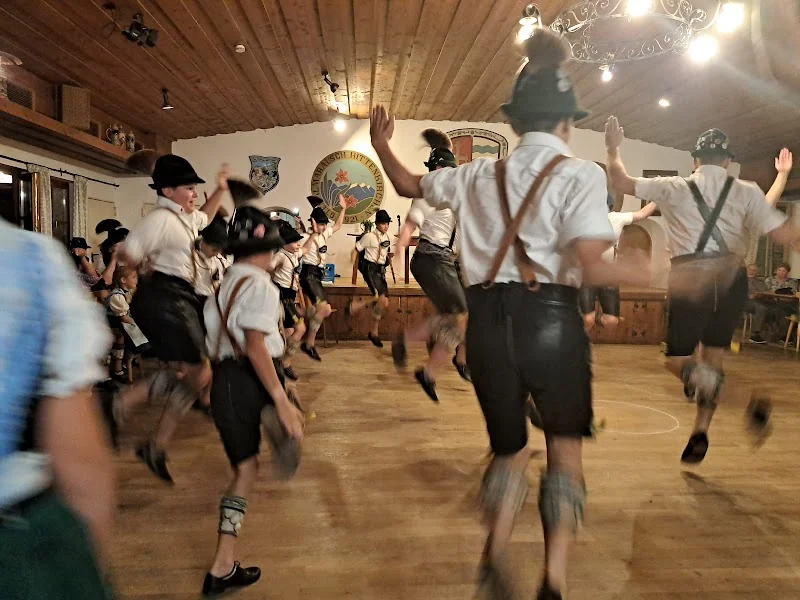
The Trachtenheim Hittenkirchen is much more than just an event space in Bernau am Chiemsee. It is a meeting point, rehearsal venue, stage, and social center of the folk dance club "Almarausch" Hittenkirchen, which organizes its club activities here throughout the year. Those looking for a place where traditions are not only preserved but actively lived will find one of the most well-known spaces in the Chiemgau here. The building was constructed through self-effort, later expanded, and continues to serve as a hub for folk dance, theater, carnival, village festivals, and numerous other club formats. The official club website even describes the Trachtenheim as a "folk dance stronghold," and this character continues to shape the place today. ([trachtenverein-hittenkirchen.de](https://www.trachtenverein-hittenkirchen.de/kopie-von-kontakt-impressum))
Events, Program, and Annual Cycle at Trachtenheim Hittenkirchen
The event rhythm at Trachtenheim Hittenkirchen follows a clear club year, which begins in January with a folk dance course for young people. This is followed by the traditional closing ball, the Rosenmontagstanz. During the carnival season, additional formats are added, such as the Weiber- and Dirndlkranzl as well as a children's carnival. At the beginning of May, the actual club year begins with the annual day and the subsequent meeting at the Trachtenheim; occasionally, the raising of the maypole and a spring dance are also included. This structure shows that the house does not just host individual evenings but sets the pace for a complete cultural and club year. ([trachtenverein-hittenkirchen.de](https://www.trachtenverein-hittenkirchen.de/kopie-von-aktuelles-2))
Throughout the year, fixed highlights follow that make the Trachtenheim a lively place for guests and members. These include participation in the pilgrimage of the Gauverband to Raiten, the local Corpus Christi procession, the visit to the district festival at the end of July or beginning of August, and the celebration of the patronage of St. Bartholomew on August 24 with a church service, procession, and village dance. Later in the year, the village festival in front of the Trachtenheim, the club's own prize dance with Dirndldrahn, joint home evenings with the neighboring club from Bernau, a musicians' gathering in October, theater performances from within the club, and the Christmas tree auction on St. Stephen's Day in Weisham follow. Therefore, those looking for the Trachtenheim are not just searching for a hall but a densely packed program with a lot of local identity. ([trachtenverein-hittenkirchen.de](https://www.trachtenverein-hittenkirchen.de/kopie-von-aktuelles-2))
History, Construction, and Expansions of the Trachtenheim
The history of the Trachtenheim begins with a clear idea and a lot of initiative. The official club report states that in 1974, six men from the then board agreed by handshake to create their own home for the club. Named are Christian Kaufmann, Michael Berneder, Andreas and Toni Bauer, Kaspar Steindlmüller, and Jakob Irrgang. The property was secured on a leasehold basis, the construction work was almost entirely done through self-effort, and around 200 people contributed about 5,000 working hours. These figures clearly show how strongly the project was supported by volunteer work, solidarity, and perseverance. ([trachtenverein-hittenkirchen.de](https://www.trachtenverein-hittenkirchen.de/kopie-von-kontakt-impressum))
On July 11, 1975, the Trachtenheim was ceremoniously inaugurated; among those present at the celebration were Gauvorstand Sepp Schlagbauer from the Chiemgau-Alpenverband, State Secretary Franz Neubauer, local mayor Sepp Steinbichler, and the Wildenwarter brass band. Further construction measures followed in 1979 with the relocation of the kitchen and installations for heating, cooling, ventilation, and bar. Additionally, windows on the east side and the restroom facilities were renovated. The expansion building with a basement was completed in 1987/1988, resulting in the current business operation. In retrospect, this construction history marks the transition from a purely internal club project to a place that gained significance far beyond Hittenkirchen. ([trachtenverein-hittenkirchen.de](https://www.trachtenverein-hittenkirchen.de/kopie-von-kontakt-impressum))
Capacity, Equipment, and Space for Celebrations
The Trachtenheim Hittenkirchen is not only historically interesting but also very well equipped. The club describes the house as a place with a large dance floor and space for around 300 people. This makes it suitable for meetings, festive evenings, dance events, cultural programs, and family celebrations in a manageable yet generous setting. The combination of dance floor, business operation, and club character makes the space flexibly usable. The expansion steps of 1979 and 1987/88 also show that the building has been repeatedly adapted to the needs of the club. ([trachtenverein-hittenkirchen.de](https://www.trachtenverein-hittenkirchen.de/kopie-von-kontakt-impressum))
Additionally, the Trachtenheim does not only serve the club itself. A report on the spring meeting explicitly mentions that the Trachtenheim and its inventory are also actively used by outsiders, for example, for weddings and meetings. The hall is also available to members for celebrations free of charge, which underscores the role of the house as social infrastructure in the village. For visitors, this means: The Trachtenheim is not an anonymous event center but a place with a recognizable identity where private, cultural, and community uses overlap meaningfully. This versatility is a key reason why the house is so firmly anchored in the village. ([ovb-online.de](https://www.ovb-online.de/rosenheim/chiemgau/traditionsbewusste-gemeinschaft-trifft-moderne-erster-maisonntag-beim-trachtenverein-almarausch-hittenkirchen-93056400.html))
Folk Dance, Theater, and Preservation of Traditions at Trachtenheim Hittenkirchen
Particularly defining is the role of the Trachtenheim as a folk dance venue. The club describes that Jakob Irrgang early on transformed the house into a "folk dance stronghold" by making folk dance and folk music public and inspiring young people, villagers, and students from the area. To this day, this focus is palpable: The official text reports on a folk dance course for young people that attracts more than 110 dance enthusiasts on average over five practice evenings. This shows that traditions are not presented here in a museum-like manner but passed on as a living practice with a new generation. ([trachtenverein-hittenkirchen.de](https://www.trachtenverein-hittenkirchen.de/kopie-von-kontakt-impressum))
The Trachtenheim also has a special musical aura. The club report mentions loyal groups of singers and musicians who have repeatedly performed at dance evenings or musicians' gatherings since the beginning; additionally, the Chiemgau-Alpenverband has been a guest with events such as the district ball or "Frisch aufgpuit und gsunga." The district of Upper Bavaria also recorded audio recordings and public events here for many years, documenting over 650 songs and musical pieces over time. This cultural breadth is complemented by theater work: According to Bayern Tourism, the theater group from Hittenkirchen has been bringing a funny comedy to the stage at the Trachtenheim every year in late autumn for 21 years now. Thus, the house unites dance, music, and theater in a compact space. ([trachtenverein-hittenkirchen.de](https://www.trachtenverein-hittenkirchen.de/kopie-von-kontakt-impressum))
Directions, Address, and Parking at Trachtenheim Hittenkirchen
For practical orientation, the exact address is especially important: Trachtenheim Hittenkirchen, Hittostraße 18a, 83233 Bernau am Chiemsee. This address appears in both the event entries of the municipality and in the club's information. Anyone attending an appointment or looking for the house for an event can therefore orient themselves very clearly. On the municipal event pages, the Trachtenheim is listed as an event location and provided with its own map and travel view. This facilitates planning, especially when guests are traveling from the wider Chiemgau or from outside. ([bernau-am-chiemsee.de](https://www.bernau-am-chiemsee.de/bernau/event/detail/Bernau-aChiemsee-Tradition-Brauchtum-Vereinspreisplatteln-mit-Dirndldrahn-2642312))
Regarding parking and arrival, the verified sources cautiously state the following: No fixed number of parking spaces or an official parking plan is specified there. Instead, the event entries provide a travel section with route calculation and train travel information. This is helpful for visitors as they can plan the way directly through the respective appointment. Therefore, if you want to attend a specific event, it is always worth checking the current entry of the municipality of Bernau am Chiemsee or the official club page, as there the location, time, and travel information are neatly summarized according to the event. ([bernau-am-chiemsee.de](https://www.bernau-am-chiemsee.de/bernau/event/detail/Bernau-aChiemsee-Tradition-Brauchtum-Vereinspreisplatteln-mit-Dirndldrahn-2642312))
Club Life, Tracht, and Significance for Hittenkirchen
The Trachtenheim is closely linked to the club's self-understanding. The official club website describes how the house has developed into a well-known meeting point beyond the borders of the Chiemgau in terms of preserving traditions. At the same time, it is emphasized that over 1,500 public events have taken place there in recent decades, and the annual visitor count ranged between 3,500 and 4,500. Such numbers show that the Trachtenheim is not only used for individual festivals but functions as a permanent cultural infrastructure. It is thus a place where club history, youth promotion, music, and village community meet in a special density. ([trachtenverein-hittenkirchen.de](https://www.trachtenverein-hittenkirchen.de/kopie-von-kontakt-impressum))
In club life itself, the house also plays a significant role. The annual overview of the club not only lists festivals and rehearsals but also work assignments at the Trachtenheim, excursions, performances at the Green Week in Berlin, and at the Historical Oktoberfest in Munich. Additionally, the club explicitly points out in its spring presentation how important the Trachtenheim is for vibrant youth. This is precisely where the special quality of the place lies: The building is not just a backdrop but a prerequisite for practicing, celebrating, organizing, and passing on traditions together. Therefore, anyone visiting the Trachtenheim Hittenkirchen always experiences a piece of lived village culture. ([ovb-online.de](https://www.ovb-online.de/rosenheim/chiemgau/traditionsbewusste-gemeinschaft-trifft-moderne-erster-maisonntag-beim-trachtenverein-almarausch-hittenkirchen-93056400.html))
Sources:
- Trachtenverein Hittenkirchen - Official Website
- Trachtenverein Hittenkirchen - Trachtenheim and History
- Trachtenverein Hittenkirchen - Club Life
- Municipality of Bernau am Chiemsee - Club Prize Dance with Dirndldrahn
- Bavaria Tourism - Theater at Trachtenheim Hittenkirchen
- OVB online - First Maisonntag at the Trachtenverein Almarausch Hittenkirchen
Show moreShow less
Trachtenheim Hittenkirchen | Events & Program
The Trachtenheim Hittenkirchen is much more than just an event space in Bernau am Chiemsee. It is a meeting point, rehearsal venue, stage, and social center of the folk dance club "Almarausch" Hittenkirchen, which organizes its club activities here throughout the year. Those looking for a place where traditions are not only preserved but actively lived will find one of the most well-known spaces in the Chiemgau here. The building was constructed through self-effort, later expanded, and continues to serve as a hub for folk dance, theater, carnival, village festivals, and numerous other club formats. The official club website even describes the Trachtenheim as a "folk dance stronghold," and this character continues to shape the place today. ([trachtenverein-hittenkirchen.de](https://www.trachtenverein-hittenkirchen.de/kopie-von-kontakt-impressum))
Events, Program, and Annual Cycle at Trachtenheim Hittenkirchen
The event rhythm at Trachtenheim Hittenkirchen follows a clear club year, which begins in January with a folk dance course for young people. This is followed by the traditional closing ball, the Rosenmontagstanz. During the carnival season, additional formats are added, such as the Weiber- and Dirndlkranzl as well as a children's carnival. At the beginning of May, the actual club year begins with the annual day and the subsequent meeting at the Trachtenheim; occasionally, the raising of the maypole and a spring dance are also included. This structure shows that the house does not just host individual evenings but sets the pace for a complete cultural and club year. ([trachtenverein-hittenkirchen.de](https://www.trachtenverein-hittenkirchen.de/kopie-von-aktuelles-2))
Throughout the year, fixed highlights follow that make the Trachtenheim a lively place for guests and members. These include participation in the pilgrimage of the Gauverband to Raiten, the local Corpus Christi procession, the visit to the district festival at the end of July or beginning of August, and the celebration of the patronage of St. Bartholomew on August 24 with a church service, procession, and village dance. Later in the year, the village festival in front of the Trachtenheim, the club's own prize dance with Dirndldrahn, joint home evenings with the neighboring club from Bernau, a musicians' gathering in October, theater performances from within the club, and the Christmas tree auction on St. Stephen's Day in Weisham follow. Therefore, those looking for the Trachtenheim are not just searching for a hall but a densely packed program with a lot of local identity. ([trachtenverein-hittenkirchen.de](https://www.trachtenverein-hittenkirchen.de/kopie-von-aktuelles-2))
History, Construction, and Expansions of the Trachtenheim
The history of the Trachtenheim begins with a clear idea and a lot of initiative. The official club report states that in 1974, six men from the then board agreed by handshake to create their own home for the club. Named are Christian Kaufmann, Michael Berneder, Andreas and Toni Bauer, Kaspar Steindlmüller, and Jakob Irrgang. The property was secured on a leasehold basis, the construction work was almost entirely done through self-effort, and around 200 people contributed about 5,000 working hours. These figures clearly show how strongly the project was supported by volunteer work, solidarity, and perseverance. ([trachtenverein-hittenkirchen.de](https://www.trachtenverein-hittenkirchen.de/kopie-von-kontakt-impressum))
On July 11, 1975, the Trachtenheim was ceremoniously inaugurated; among those present at the celebration were Gauvorstand Sepp Schlagbauer from the Chiemgau-Alpenverband, State Secretary Franz Neubauer, local mayor Sepp Steinbichler, and the Wildenwarter brass band. Further construction measures followed in 1979 with the relocation of the kitchen and installations for heating, cooling, ventilation, and bar. Additionally, windows on the east side and the restroom facilities were renovated. The expansion building with a basement was completed in 1987/1988, resulting in the current business operation. In retrospect, this construction history marks the transition from a purely internal club project to a place that gained significance far beyond Hittenkirchen. ([trachtenverein-hittenkirchen.de](https://www.trachtenverein-hittenkirchen.de/kopie-von-kontakt-impressum))
Capacity, Equipment, and Space for Celebrations
The Trachtenheim Hittenkirchen is not only historically interesting but also very well equipped. The club describes the house as a place with a large dance floor and space for around 300 people. This makes it suitable for meetings, festive evenings, dance events, cultural programs, and family celebrations in a manageable yet generous setting. The combination of dance floor, business operation, and club character makes the space flexibly usable. The expansion steps of 1979 and 1987/88 also show that the building has been repeatedly adapted to the needs of the club. ([trachtenverein-hittenkirchen.de](https://www.trachtenverein-hittenkirchen.de/kopie-von-kontakt-impressum))
Additionally, the Trachtenheim does not only serve the club itself. A report on the spring meeting explicitly mentions that the Trachtenheim and its inventory are also actively used by outsiders, for example, for weddings and meetings. The hall is also available to members for celebrations free of charge, which underscores the role of the house as social infrastructure in the village. For visitors, this means: The Trachtenheim is not an anonymous event center but a place with a recognizable identity where private, cultural, and community uses overlap meaningfully. This versatility is a key reason why the house is so firmly anchored in the village. ([ovb-online.de](https://www.ovb-online.de/rosenheim/chiemgau/traditionsbewusste-gemeinschaft-trifft-moderne-erster-maisonntag-beim-trachtenverein-almarausch-hittenkirchen-93056400.html))
Folk Dance, Theater, and Preservation of Traditions at Trachtenheim Hittenkirchen
Particularly defining is the role of the Trachtenheim as a folk dance venue. The club describes that Jakob Irrgang early on transformed the house into a "folk dance stronghold" by making folk dance and folk music public and inspiring young people, villagers, and students from the area. To this day, this focus is palpable: The official text reports on a folk dance course for young people that attracts more than 110 dance enthusiasts on average over five practice evenings. This shows that traditions are not presented here in a museum-like manner but passed on as a living practice with a new generation. ([trachtenverein-hittenkirchen.de](https://www.trachtenverein-hittenkirchen.de/kopie-von-kontakt-impressum))
The Trachtenheim also has a special musical aura. The club report mentions loyal groups of singers and musicians who have repeatedly performed at dance evenings or musicians' gatherings since the beginning; additionally, the Chiemgau-Alpenverband has been a guest with events such as the district ball or "Frisch aufgpuit und gsunga." The district of Upper Bavaria also recorded audio recordings and public events here for many years, documenting over 650 songs and musical pieces over time. This cultural breadth is complemented by theater work: According to Bayern Tourism, the theater group from Hittenkirchen has been bringing a funny comedy to the stage at the Trachtenheim every year in late autumn for 21 years now. Thus, the house unites dance, music, and theater in a compact space. ([trachtenverein-hittenkirchen.de](https://www.trachtenverein-hittenkirchen.de/kopie-von-kontakt-impressum))
Directions, Address, and Parking at Trachtenheim Hittenkirchen
For practical orientation, the exact address is especially important: Trachtenheim Hittenkirchen, Hittostraße 18a, 83233 Bernau am Chiemsee. This address appears in both the event entries of the municipality and in the club's information. Anyone attending an appointment or looking for the house for an event can therefore orient themselves very clearly. On the municipal event pages, the Trachtenheim is listed as an event location and provided with its own map and travel view. This facilitates planning, especially when guests are traveling from the wider Chiemgau or from outside. ([bernau-am-chiemsee.de](https://www.bernau-am-chiemsee.de/bernau/event/detail/Bernau-aChiemsee-Tradition-Brauchtum-Vereinspreisplatteln-mit-Dirndldrahn-2642312))
Regarding parking and arrival, the verified sources cautiously state the following: No fixed number of parking spaces or an official parking plan is specified there. Instead, the event entries provide a travel section with route calculation and train travel information. This is helpful for visitors as they can plan the way directly through the respective appointment. Therefore, if you want to attend a specific event, it is always worth checking the current entry of the municipality of Bernau am Chiemsee or the official club page, as there the location, time, and travel information are neatly summarized according to the event. ([bernau-am-chiemsee.de](https://www.bernau-am-chiemsee.de/bernau/event/detail/Bernau-aChiemsee-Tradition-Brauchtum-Vereinspreisplatteln-mit-Dirndldrahn-2642312))
Club Life, Tracht, and Significance for Hittenkirchen
The Trachtenheim is closely linked to the club's self-understanding. The official club website describes how the house has developed into a well-known meeting point beyond the borders of the Chiemgau in terms of preserving traditions. At the same time, it is emphasized that over 1,500 public events have taken place there in recent decades, and the annual visitor count ranged between 3,500 and 4,500. Such numbers show that the Trachtenheim is not only used for individual festivals but functions as a permanent cultural infrastructure. It is thus a place where club history, youth promotion, music, and village community meet in a special density. ([trachtenverein-hittenkirchen.de](https://www.trachtenverein-hittenkirchen.de/kopie-von-kontakt-impressum))
In club life itself, the house also plays a significant role. The annual overview of the club not only lists festivals and rehearsals but also work assignments at the Trachtenheim, excursions, performances at the Green Week in Berlin, and at the Historical Oktoberfest in Munich. Additionally, the club explicitly points out in its spring presentation how important the Trachtenheim is for vibrant youth. This is precisely where the special quality of the place lies: The building is not just a backdrop but a prerequisite for practicing, celebrating, organizing, and passing on traditions together. Therefore, anyone visiting the Trachtenheim Hittenkirchen always experiences a piece of lived village culture. ([ovb-online.de](https://www.ovb-online.de/rosenheim/chiemgau/traditionsbewusste-gemeinschaft-trifft-moderne-erster-maisonntag-beim-trachtenverein-almarausch-hittenkirchen-93056400.html))
Sources:
- Trachtenverein Hittenkirchen - Official Website
- Trachtenverein Hittenkirchen - Trachtenheim and History
- Trachtenverein Hittenkirchen - Club Life
- Municipality of Bernau am Chiemsee - Club Prize Dance with Dirndldrahn
- Bavaria Tourism - Theater at Trachtenheim Hittenkirchen
- OVB online - First Maisonntag at the Trachtenverein Almarausch Hittenkirchen
Trachtenheim Hittenkirchen | Events & Program
The Trachtenheim Hittenkirchen is much more than just an event space in Bernau am Chiemsee. It is a meeting point, rehearsal venue, stage, and social center of the folk dance club "Almarausch" Hittenkirchen, which organizes its club activities here throughout the year. Those looking for a place where traditions are not only preserved but actively lived will find one of the most well-known spaces in the Chiemgau here. The building was constructed through self-effort, later expanded, and continues to serve as a hub for folk dance, theater, carnival, village festivals, and numerous other club formats. The official club website even describes the Trachtenheim as a "folk dance stronghold," and this character continues to shape the place today. ([trachtenverein-hittenkirchen.de](https://www.trachtenverein-hittenkirchen.de/kopie-von-kontakt-impressum))
Events, Program, and Annual Cycle at Trachtenheim Hittenkirchen
The event rhythm at Trachtenheim Hittenkirchen follows a clear club year, which begins in January with a folk dance course for young people. This is followed by the traditional closing ball, the Rosenmontagstanz. During the carnival season, additional formats are added, such as the Weiber- and Dirndlkranzl as well as a children's carnival. At the beginning of May, the actual club year begins with the annual day and the subsequent meeting at the Trachtenheim; occasionally, the raising of the maypole and a spring dance are also included. This structure shows that the house does not just host individual evenings but sets the pace for a complete cultural and club year. ([trachtenverein-hittenkirchen.de](https://www.trachtenverein-hittenkirchen.de/kopie-von-aktuelles-2))
Throughout the year, fixed highlights follow that make the Trachtenheim a lively place for guests and members. These include participation in the pilgrimage of the Gauverband to Raiten, the local Corpus Christi procession, the visit to the district festival at the end of July or beginning of August, and the celebration of the patronage of St. Bartholomew on August 24 with a church service, procession, and village dance. Later in the year, the village festival in front of the Trachtenheim, the club's own prize dance with Dirndldrahn, joint home evenings with the neighboring club from Bernau, a musicians' gathering in October, theater performances from within the club, and the Christmas tree auction on St. Stephen's Day in Weisham follow. Therefore, those looking for the Trachtenheim are not just searching for a hall but a densely packed program with a lot of local identity. ([trachtenverein-hittenkirchen.de](https://www.trachtenverein-hittenkirchen.de/kopie-von-aktuelles-2))
History, Construction, and Expansions of the Trachtenheim
The history of the Trachtenheim begins with a clear idea and a lot of initiative. The official club report states that in 1974, six men from the then board agreed by handshake to create their own home for the club. Named are Christian Kaufmann, Michael Berneder, Andreas and Toni Bauer, Kaspar Steindlmüller, and Jakob Irrgang. The property was secured on a leasehold basis, the construction work was almost entirely done through self-effort, and around 200 people contributed about 5,000 working hours. These figures clearly show how strongly the project was supported by volunteer work, solidarity, and perseverance. ([trachtenverein-hittenkirchen.de](https://www.trachtenverein-hittenkirchen.de/kopie-von-kontakt-impressum))
On July 11, 1975, the Trachtenheim was ceremoniously inaugurated; among those present at the celebration were Gauvorstand Sepp Schlagbauer from the Chiemgau-Alpenverband, State Secretary Franz Neubauer, local mayor Sepp Steinbichler, and the Wildenwarter brass band. Further construction measures followed in 1979 with the relocation of the kitchen and installations for heating, cooling, ventilation, and bar. Additionally, windows on the east side and the restroom facilities were renovated. The expansion building with a basement was completed in 1987/1988, resulting in the current business operation. In retrospect, this construction history marks the transition from a purely internal club project to a place that gained significance far beyond Hittenkirchen. ([trachtenverein-hittenkirchen.de](https://www.trachtenverein-hittenkirchen.de/kopie-von-kontakt-impressum))
Capacity, Equipment, and Space for Celebrations
The Trachtenheim Hittenkirchen is not only historically interesting but also very well equipped. The club describes the house as a place with a large dance floor and space for around 300 people. This makes it suitable for meetings, festive evenings, dance events, cultural programs, and family celebrations in a manageable yet generous setting. The combination of dance floor, business operation, and club character makes the space flexibly usable. The expansion steps of 1979 and 1987/88 also show that the building has been repeatedly adapted to the needs of the club. ([trachtenverein-hittenkirchen.de](https://www.trachtenverein-hittenkirchen.de/kopie-von-kontakt-impressum))
Additionally, the Trachtenheim does not only serve the club itself. A report on the spring meeting explicitly mentions that the Trachtenheim and its inventory are also actively used by outsiders, for example, for weddings and meetings. The hall is also available to members for celebrations free of charge, which underscores the role of the house as social infrastructure in the village. For visitors, this means: The Trachtenheim is not an anonymous event center but a place with a recognizable identity where private, cultural, and community uses overlap meaningfully. This versatility is a key reason why the house is so firmly anchored in the village. ([ovb-online.de](https://www.ovb-online.de/rosenheim/chiemgau/traditionsbewusste-gemeinschaft-trifft-moderne-erster-maisonntag-beim-trachtenverein-almarausch-hittenkirchen-93056400.html))
Folk Dance, Theater, and Preservation of Traditions at Trachtenheim Hittenkirchen
Particularly defining is the role of the Trachtenheim as a folk dance venue. The club describes that Jakob Irrgang early on transformed the house into a "folk dance stronghold" by making folk dance and folk music public and inspiring young people, villagers, and students from the area. To this day, this focus is palpable: The official text reports on a folk dance course for young people that attracts more than 110 dance enthusiasts on average over five practice evenings. This shows that traditions are not presented here in a museum-like manner but passed on as a living practice with a new generation. ([trachtenverein-hittenkirchen.de](https://www.trachtenverein-hittenkirchen.de/kopie-von-kontakt-impressum))
The Trachtenheim also has a special musical aura. The club report mentions loyal groups of singers and musicians who have repeatedly performed at dance evenings or musicians' gatherings since the beginning; additionally, the Chiemgau-Alpenverband has been a guest with events such as the district ball or "Frisch aufgpuit und gsunga." The district of Upper Bavaria also recorded audio recordings and public events here for many years, documenting over 650 songs and musical pieces over time. This cultural breadth is complemented by theater work: According to Bayern Tourism, the theater group from Hittenkirchen has been bringing a funny comedy to the stage at the Trachtenheim every year in late autumn for 21 years now. Thus, the house unites dance, music, and theater in a compact space. ([trachtenverein-hittenkirchen.de](https://www.trachtenverein-hittenkirchen.de/kopie-von-kontakt-impressum))
Directions, Address, and Parking at Trachtenheim Hittenkirchen
For practical orientation, the exact address is especially important: Trachtenheim Hittenkirchen, Hittostraße 18a, 83233 Bernau am Chiemsee. This address appears in both the event entries of the municipality and in the club's information. Anyone attending an appointment or looking for the house for an event can therefore orient themselves very clearly. On the municipal event pages, the Trachtenheim is listed as an event location and provided with its own map and travel view. This facilitates planning, especially when guests are traveling from the wider Chiemgau or from outside. ([bernau-am-chiemsee.de](https://www.bernau-am-chiemsee.de/bernau/event/detail/Bernau-aChiemsee-Tradition-Brauchtum-Vereinspreisplatteln-mit-Dirndldrahn-2642312))
Regarding parking and arrival, the verified sources cautiously state the following: No fixed number of parking spaces or an official parking plan is specified there. Instead, the event entries provide a travel section with route calculation and train travel information. This is helpful for visitors as they can plan the way directly through the respective appointment. Therefore, if you want to attend a specific event, it is always worth checking the current entry of the municipality of Bernau am Chiemsee or the official club page, as there the location, time, and travel information are neatly summarized according to the event. ([bernau-am-chiemsee.de](https://www.bernau-am-chiemsee.de/bernau/event/detail/Bernau-aChiemsee-Tradition-Brauchtum-Vereinspreisplatteln-mit-Dirndldrahn-2642312))
Club Life, Tracht, and Significance for Hittenkirchen
The Trachtenheim is closely linked to the club's self-understanding. The official club website describes how the house has developed into a well-known meeting point beyond the borders of the Chiemgau in terms of preserving traditions. At the same time, it is emphasized that over 1,500 public events have taken place there in recent decades, and the annual visitor count ranged between 3,500 and 4,500. Such numbers show that the Trachtenheim is not only used for individual festivals but functions as a permanent cultural infrastructure. It is thus a place where club history, youth promotion, music, and village community meet in a special density. ([trachtenverein-hittenkirchen.de](https://www.trachtenverein-hittenkirchen.de/kopie-von-kontakt-impressum))
In club life itself, the house also plays a significant role. The annual overview of the club not only lists festivals and rehearsals but also work assignments at the Trachtenheim, excursions, performances at the Green Week in Berlin, and at the Historical Oktoberfest in Munich. Additionally, the club explicitly points out in its spring presentation how important the Trachtenheim is for vibrant youth. This is precisely where the special quality of the place lies: The building is not just a backdrop but a prerequisite for practicing, celebrating, organizing, and passing on traditions together. Therefore, anyone visiting the Trachtenheim Hittenkirchen always experiences a piece of lived village culture. ([ovb-online.de](https://www.ovb-online.de/rosenheim/chiemgau/traditionsbewusste-gemeinschaft-trifft-moderne-erster-maisonntag-beim-trachtenverein-almarausch-hittenkirchen-93056400.html))
Sources:
- Trachtenverein Hittenkirchen - Official Website
- Trachtenverein Hittenkirchen - Trachtenheim and History
- Trachtenverein Hittenkirchen - Club Life
- Municipality of Bernau am Chiemsee - Club Prize Dance with Dirndldrahn
- Bavaria Tourism - Theater at Trachtenheim Hittenkirchen
- OVB online - First Maisonntag at the Trachtenverein Almarausch Hittenkirchen
Upcoming Events
No events found
Frequently Asked Questions
Reviews
No reviews found