
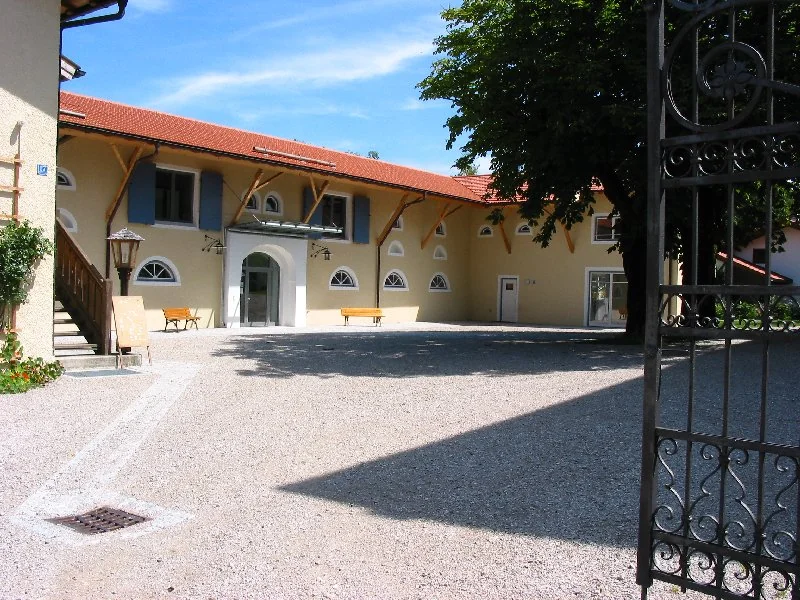
Grabenstätt
Schloßstraße 17, 83355 Grabenstätt, Deutschland
Tourist Information Grabenstätt | Opening Hours & Directions
The Tourist Information Grabenstätt is the compact point of contact for guests who want to consciously discover the place and its surroundings rather than just passing through. In the heart of the municipality, at Schloß-Straße 17, it bundles practical information, inspirations, and the most important tips for a stay between Chiemsee, Achental, and the Chiemgau mountains. Grabenstätt itself is described in regional tourism as a small, cozy place on the southeast shore of Lake Chiemsee, located in an exceptionally scenic environment and serving as a base for nature experiences, culture, and active vacations. This is precisely where the Tourist Information comes in: it makes the place readable, shows pathways, and connects service with genuine excursion impulses. The fact that the Roman Museum and other tourist offerings are also in close proximity makes the location particularly valuable for visitors who want to get to know several facets of Grabenstätt in one place. ([chiemsee-alpenland.de](https://www.chiemsee-alpenland.de/entdecken/region/alle-orte/grabenstaett-2d19f4e148))
Opening Hours, Address, and Direct Contact to the Tourist Information Grabenstätt
Those wishing to visit the Tourist Information Grabenstätt can find it at Schloß-Straße 17, 83355 Grabenstätt. The official opening hours are clear and practical: Monday to Friday from 09:00 to 12:00 and additionally on Thursdays from 14:00 to 16:00. These times are consistently stated on the municipality's pages and in tourist entries, making planning easier. For inquiries, the Tourist Information can be reached by phone at 08661 9887-31; additionally, the central municipal phone number 08661 9887-40 and the email address info@grabenstaett.de are provided. This makes the office not only physically accessible but also digitally and by phone, which is particularly useful for day visitors, families, and hikers. ([grabenstaett.de](https://www.grabenstaett.de/ortsinformationen/geschichte/grabenstaett-frueher))
The location is also easy to place because the Tourist Information in Grabenstätt is closely linked to the municipal environment. The municipality lists the town hall at Schloß-Straße 15 and the Tourist Information at Schloß-Straße 17 on its official pages; additionally, the Tourist Information is named as its own area in the municipal structure. This creates a central point of contact for visitors in close proximity to the administration and other facilities. Particularly interesting is that the Roman Museum Grabenstätt shares the same address and the Museum zum Chiemgau-Impakt is also located directly next to the Tourist Information. So, upon arrival, there is no need to plan long routes, but rather visitors find several information and experience offerings bundled in one place. This proximity creates a clear advantage, especially for guests who are only briefly in the area: asking questions, taking brochures, planning a tour, and then directly starting into the museum or nature. ([grabenstaett.de](https://www.grabenstaett.de/ortsinformationen/geschichte/grabenstaett-frueher))
Directions and Transport Connections in Grabenstätt
Grabenstätt is described as a tourist destination located between mountains and lakes and occupies a special position in the delta of the largest tributary of Lake Chiemsee, the Tiroler Ache. The municipality refers to its location and transport connections as well as a digital local map that helps guests orient themselves. This is helpful for the Tourist Information because visitors can quickly understand how the town center, the town hall area, and the most important excursion destinations relate to each other. In the regional tourism context, Grabenstätt is also described as an ideal starting point for cycling and hiking tours. Public buses transport guests with a guest card free of charge, comfortably, and environmentally friendly to hiking starting points; additionally, the Chiemsee Ring Bus is highlighted as an option for cyclists. This is a strong argument for the Tourist Information because arrival and mobility are not just seen as obligatory information but as part of the vacation experience. ([chiemsee-alpenland.de](https://www.chiemsee-alpenland.de/entdecken/region/alle-orte/grabenstaett-2d19f4e148))
Even in the town center itself, orientation is relatively simple. The municipality provides a digital local map that brings together various categories such as public facilities, culture, leisure, and important addresses. For visitors arriving by car, this is especially useful because it allows for quicker identification of the tourist points in and around Schloßstraße. For the Roman Museum, it is also explicitly noted that free parking is available at the Schlossökonomie, the annex of the town hall. This information is important because it shows that the central area around the Tourist Information is practical not only on foot but also by car. Therefore, for the Tourist Information itself: those who wish to receive advice on-site can conveniently connect the central facilities in the town center with the municipal infrastructure. ([grabenstaett.de](https://www.grabenstaett.de/ortsinformationen/lernen-sie-uns-kennen/ortsplan?cHash=f25b3a32e70d9a9d2689be3f5a4918c1&tx_communiceaddresses_addressmap%5Baction%5D=map&tx_communiceaddresses_addressmap%5Baddress%5D=89&tx_communiceaddresses_addressmap%5Bcontroller%5D=Address&utm_source=openai))
Service, Brochures, and Help with Vacation Planning
The Tourist Information Grabenstätt is not just an information office but a practical hub for the stay on-site. The official tourism site explicitly names it as a contact for accommodation searches, brochure orders, useful information for bookings, webcams, and public restrooms. Additionally, Grabenstätt presents a wide mix of nature, sports, culture, and family offerings on its tourism page. This makes it clear why a Tourist Information in this place does more than just communicate opening hours: it organizes what can be experienced in a short time and helps in selecting suitable destinations. This is a real added value, especially for guests weighing options between lakes, hiking trails, and cultural offerings. ([chiemsee-alpenland.de](https://www.chiemsee-alpenland.de/entdecken/region/alle-orte/grabenstaett-2d19f4e148))
The local leisure offerings are also closely linked to the Tourist Information. The municipality points out that the Achental hiking pass is available at the Tourist Information. Additionally, boules balls can be borrowed there for a deposit, and for tennis guests, the key collection is explicitly linked to the Tourist Information. Such details may seem small but are crucial for the vacation because they show how closely service and leisure are intertwined in the area. So, those who want to be active spontaneously do not have to search long for access to local offerings but find it at a clearly defined location. It is also fitting that the municipality does not leave its guests with abstract information but provides concrete hints regarding usage conditions, leisure areas, and contacts. The Tourist Information thus becomes a place where general local knowledge turns into practical experiences. ([grabenstaett.de](https://www.grabenstaett.de/freizeit-tourismus/sport-und-freizeit/wandern))
Hiking in Achental and the Achental Hiking Pass
For many guests, hiking is one of the main reasons to visit the Tourist Information Grabenstätt. The municipality describes Achental as an area with well-marked paths that allow for both relaxed tours in the valley and more athletic routes in the Chiemgau Alps. The Hochfelln, which is only 6 kilometers from Grabenstätt and can be reached on foot or by cable car, is also highlighted. The Achental hiking pass complements this offering as a motivating element: collect stamps, complete tours, and receive a free hiking badge at the end. Those who like to link their daily planning with a small goal will find here a convincing system of orientation, movement, and reward. For the Tourist Information, this means: it is not just a distribution point but an entry point into a regional hiking concept. ([grabenstaett.de](https://www.grabenstaett.de/freizeit-tourismus/sport-und-freizeit/wandern))
Around Grabenstätt, hiking is also connected with nature observation. The Grabenstätter Moos is described by the municipality as a nature reserve of about 1,250 hectares located at the mouth of the Tiroler Ache and is considered a unique natural inland delta in the context of Central Europe. Floodplain forests, meadows, rare birds, medicinal plants, and blooming orchids in summer make the area a destination for nature lovers, hikers, and cyclists. Particularly interesting are the guided nature hikes, which provide insights into the animal and plant world according to the municipality. So, those looking for a place in Grabenstätt where information and nature truly fit together will find the Tourist Information to be the right starting point. It turns the hiking pass into an invitation to not only traverse the landscape but to consciously perceive it. ([grabenstaett.de](https://www.grabenstaett.de/freizeit-tourismus/natur-erkunden/grabenstaetter-moos))
Roman Museum Grabenstätt and Museum zum Chiemgau-Impakt
Few other districts around the Tourist Information show so clearly how closely service, history, and science are interconnected in Grabenstätt. The Roman Museum Grabenstätt is located at Schloß-Straße 17 and presents remains of Roman architecture, tools, household items, dishes, and other finds. The exhibition places the Chiemgau in the time between 15 BC and about 300 AD, when the region experienced an economic and cultural heyday in the then Noricum. The architectural details are also vividly described: estates with central heating, mosaic floors, and painted walls show that a sophisticated residential culture existed here. This is exciting for visitors because the Tourist Information does not stand isolated next to a sight but is situated in the midst of a historically charged area that makes several layers of time visible in just a few steps. ([chiemsee-alpenland.de](https://www.chiemsee-alpenland.de/entdecken/alle-sehenswuerdigkeiten/roemermuseum-grabenstaett-38500de96c))
Particularly practical is that the Roman Museum mentions free parking at the Schlossökonomie, i.e., the annex of the town hall, and is open during the week as well as additionally on Thursday afternoons; from the end of June to mid-September, an additional opening time is added on Saturdays. Directly next to the Tourist Information is also the Museum zum Chiemgau-Impakt, which deals with the controversial but scientifically intensely discussed formation of Lake Tüttensee due to a meteorite impact about 2,500 years ago. The official municipal site describes a large interactive display that introduces the research world of comet and asteroid impacts and simultaneously refers to the Tüttensee circular hiking trail as a geological educational path. For the visitor, this means: those arriving in Grabenstätt can not only pick up information but also immediately dive into a story that ranges from Roman times to impact research. ([chiemsee-alpenland.de](https://www.chiemsee-alpenland.de/entdecken/alle-sehenswuerdigkeiten/roemermuseum-grabenstaett-38500de96c))
Tüttensee, Grabenstätter Moos, and Excursion Destinations Around the Place
Even with natural destinations, it becomes clear why the Tourist Information Grabenstätt is more than just a classic advisory center. Lake Tüttensee is located between Grabenstätt and Vachendorf in the midst of a forest and warms up quickly in summer, making swimming pleasures often possible as early as May. The municipality describes a spacious sunbathing area, a swimming island, a beach volleyball court, and a designated non-swimmer area at the Tüttensee swimming area. Additionally, there are information boards at the beach that explain the two theories of the lake's formation. This is particularly attractive for families, bathers, and day-trippers because it combines nature experience with knowledge gain. So, those who want to not only swim but also understand how the region explains its special places receive a very illustrative example with Lake Tüttensee. ([grabenstaett.de](https://www.grabenstaett.de/freizeit-tourismus/sport-und-freizeit/im-wasser))
Grabenstätt's tourist identity goes even further. The Chiemsee-Alpenland site describes the place as one where natural treasures, bird watching, sports, and culture come together. Mentioned are, among others, nature observation towers in the Hirschauer Bay and near Hagenau, the Grabenstätter Moos as a habitat for rare animals and plants, as well as offerings such as stand concerts, castle serenades, traditional festivals, and a children's holiday program during the summer months. For the Tourist Information, this means a clear role: it is the place where many individual opportunities become a coherent overall picture. Whether hiking, museum, swimming lake, or cultural event, the guest finds here the ideal starting point to discover the place at their own pace. Those visiting Grabenstätt should not see the Tourist Information as a peripheral station but as the first step into a small but surprisingly versatile vacation destination. ([chiemsee-alpenland.de](https://www.chiemsee-alpenland.de/entdecken/region/alle-orte/grabenstaett-2d19f4e148))
In the end, Grabenstätt shows exactly what makes good tourist destinations: a clear, easily accessible Tourist Information, short distances to history and nature, and an offering that appeals to both spontaneous day visitors and active vacationers. Schloß-Straße 17 is much more than just an address; it is the hub for orientation, inspiration, and real experiences. Those wanting to know what is worthwhile, how to start best, and which destinations fit together will find the right answer here. Thus, the Tourist Information Grabenstätt becomes the ideal starting point for a place that has surprisingly much to tell between Lake Chiemsee, Achental, and the mountains. ([grabenstaett.de](https://www.grabenstaett.de/ortsinformationen/geschichte/grabenstaett-frueher))
Sources:
- Municipality of Grabenstätt - Your Tourist Information Grabenstätt
- Municipality of Grabenstätt - Grabenstätt in the past
- Municipality of Grabenstätt - Hiking
- Municipality of Grabenstätt - Tüttensee
- Chiemsee-Alpenland Tourism - Grabenstätt
- Chiemsee-Alpenland Tourism - Roman Museum Grabenstätt
- Municipality of Grabenstätt - Museum zum Chiemgau-Impakt
Show moreShow less
Tourist Information Grabenstätt | Opening Hours & Directions
The Tourist Information Grabenstätt is the compact point of contact for guests who want to consciously discover the place and its surroundings rather than just passing through. In the heart of the municipality, at Schloß-Straße 17, it bundles practical information, inspirations, and the most important tips for a stay between Chiemsee, Achental, and the Chiemgau mountains. Grabenstätt itself is described in regional tourism as a small, cozy place on the southeast shore of Lake Chiemsee, located in an exceptionally scenic environment and serving as a base for nature experiences, culture, and active vacations. This is precisely where the Tourist Information comes in: it makes the place readable, shows pathways, and connects service with genuine excursion impulses. The fact that the Roman Museum and other tourist offerings are also in close proximity makes the location particularly valuable for visitors who want to get to know several facets of Grabenstätt in one place. ([chiemsee-alpenland.de](https://www.chiemsee-alpenland.de/entdecken/region/alle-orte/grabenstaett-2d19f4e148))
Opening Hours, Address, and Direct Contact to the Tourist Information Grabenstätt
Those wishing to visit the Tourist Information Grabenstätt can find it at Schloß-Straße 17, 83355 Grabenstätt. The official opening hours are clear and practical: Monday to Friday from 09:00 to 12:00 and additionally on Thursdays from 14:00 to 16:00. These times are consistently stated on the municipality's pages and in tourist entries, making planning easier. For inquiries, the Tourist Information can be reached by phone at 08661 9887-31; additionally, the central municipal phone number 08661 9887-40 and the email address info@grabenstaett.de are provided. This makes the office not only physically accessible but also digitally and by phone, which is particularly useful for day visitors, families, and hikers. ([grabenstaett.de](https://www.grabenstaett.de/ortsinformationen/geschichte/grabenstaett-frueher))
The location is also easy to place because the Tourist Information in Grabenstätt is closely linked to the municipal environment. The municipality lists the town hall at Schloß-Straße 15 and the Tourist Information at Schloß-Straße 17 on its official pages; additionally, the Tourist Information is named as its own area in the municipal structure. This creates a central point of contact for visitors in close proximity to the administration and other facilities. Particularly interesting is that the Roman Museum Grabenstätt shares the same address and the Museum zum Chiemgau-Impakt is also located directly next to the Tourist Information. So, upon arrival, there is no need to plan long routes, but rather visitors find several information and experience offerings bundled in one place. This proximity creates a clear advantage, especially for guests who are only briefly in the area: asking questions, taking brochures, planning a tour, and then directly starting into the museum or nature. ([grabenstaett.de](https://www.grabenstaett.de/ortsinformationen/geschichte/grabenstaett-frueher))
Directions and Transport Connections in Grabenstätt
Grabenstätt is described as a tourist destination located between mountains and lakes and occupies a special position in the delta of the largest tributary of Lake Chiemsee, the Tiroler Ache. The municipality refers to its location and transport connections as well as a digital local map that helps guests orient themselves. This is helpful for the Tourist Information because visitors can quickly understand how the town center, the town hall area, and the most important excursion destinations relate to each other. In the regional tourism context, Grabenstätt is also described as an ideal starting point for cycling and hiking tours. Public buses transport guests with a guest card free of charge, comfortably, and environmentally friendly to hiking starting points; additionally, the Chiemsee Ring Bus is highlighted as an option for cyclists. This is a strong argument for the Tourist Information because arrival and mobility are not just seen as obligatory information but as part of the vacation experience. ([chiemsee-alpenland.de](https://www.chiemsee-alpenland.de/entdecken/region/alle-orte/grabenstaett-2d19f4e148))
Even in the town center itself, orientation is relatively simple. The municipality provides a digital local map that brings together various categories such as public facilities, culture, leisure, and important addresses. For visitors arriving by car, this is especially useful because it allows for quicker identification of the tourist points in and around Schloßstraße. For the Roman Museum, it is also explicitly noted that free parking is available at the Schlossökonomie, the annex of the town hall. This information is important because it shows that the central area around the Tourist Information is practical not only on foot but also by car. Therefore, for the Tourist Information itself: those who wish to receive advice on-site can conveniently connect the central facilities in the town center with the municipal infrastructure. ([grabenstaett.de](https://www.grabenstaett.de/ortsinformationen/lernen-sie-uns-kennen/ortsplan?cHash=f25b3a32e70d9a9d2689be3f5a4918c1&tx_communiceaddresses_addressmap%5Baction%5D=map&tx_communiceaddresses_addressmap%5Baddress%5D=89&tx_communiceaddresses_addressmap%5Bcontroller%5D=Address&utm_source=openai))
Service, Brochures, and Help with Vacation Planning
The Tourist Information Grabenstätt is not just an information office but a practical hub for the stay on-site. The official tourism site explicitly names it as a contact for accommodation searches, brochure orders, useful information for bookings, webcams, and public restrooms. Additionally, Grabenstätt presents a wide mix of nature, sports, culture, and family offerings on its tourism page. This makes it clear why a Tourist Information in this place does more than just communicate opening hours: it organizes what can be experienced in a short time and helps in selecting suitable destinations. This is a real added value, especially for guests weighing options between lakes, hiking trails, and cultural offerings. ([chiemsee-alpenland.de](https://www.chiemsee-alpenland.de/entdecken/region/alle-orte/grabenstaett-2d19f4e148))
The local leisure offerings are also closely linked to the Tourist Information. The municipality points out that the Achental hiking pass is available at the Tourist Information. Additionally, boules balls can be borrowed there for a deposit, and for tennis guests, the key collection is explicitly linked to the Tourist Information. Such details may seem small but are crucial for the vacation because they show how closely service and leisure are intertwined in the area. So, those who want to be active spontaneously do not have to search long for access to local offerings but find it at a clearly defined location. It is also fitting that the municipality does not leave its guests with abstract information but provides concrete hints regarding usage conditions, leisure areas, and contacts. The Tourist Information thus becomes a place where general local knowledge turns into practical experiences. ([grabenstaett.de](https://www.grabenstaett.de/freizeit-tourismus/sport-und-freizeit/wandern))
Hiking in Achental and the Achental Hiking Pass
For many guests, hiking is one of the main reasons to visit the Tourist Information Grabenstätt. The municipality describes Achental as an area with well-marked paths that allow for both relaxed tours in the valley and more athletic routes in the Chiemgau Alps. The Hochfelln, which is only 6 kilometers from Grabenstätt and can be reached on foot or by cable car, is also highlighted. The Achental hiking pass complements this offering as a motivating element: collect stamps, complete tours, and receive a free hiking badge at the end. Those who like to link their daily planning with a small goal will find here a convincing system of orientation, movement, and reward. For the Tourist Information, this means: it is not just a distribution point but an entry point into a regional hiking concept. ([grabenstaett.de](https://www.grabenstaett.de/freizeit-tourismus/sport-und-freizeit/wandern))
Around Grabenstätt, hiking is also connected with nature observation. The Grabenstätter Moos is described by the municipality as a nature reserve of about 1,250 hectares located at the mouth of the Tiroler Ache and is considered a unique natural inland delta in the context of Central Europe. Floodplain forests, meadows, rare birds, medicinal plants, and blooming orchids in summer make the area a destination for nature lovers, hikers, and cyclists. Particularly interesting are the guided nature hikes, which provide insights into the animal and plant world according to the municipality. So, those looking for a place in Grabenstätt where information and nature truly fit together will find the Tourist Information to be the right starting point. It turns the hiking pass into an invitation to not only traverse the landscape but to consciously perceive it. ([grabenstaett.de](https://www.grabenstaett.de/freizeit-tourismus/natur-erkunden/grabenstaetter-moos))
Roman Museum Grabenstätt and Museum zum Chiemgau-Impakt
Few other districts around the Tourist Information show so clearly how closely service, history, and science are interconnected in Grabenstätt. The Roman Museum Grabenstätt is located at Schloß-Straße 17 and presents remains of Roman architecture, tools, household items, dishes, and other finds. The exhibition places the Chiemgau in the time between 15 BC and about 300 AD, when the region experienced an economic and cultural heyday in the then Noricum. The architectural details are also vividly described: estates with central heating, mosaic floors, and painted walls show that a sophisticated residential culture existed here. This is exciting for visitors because the Tourist Information does not stand isolated next to a sight but is situated in the midst of a historically charged area that makes several layers of time visible in just a few steps. ([chiemsee-alpenland.de](https://www.chiemsee-alpenland.de/entdecken/alle-sehenswuerdigkeiten/roemermuseum-grabenstaett-38500de96c))
Particularly practical is that the Roman Museum mentions free parking at the Schlossökonomie, i.e., the annex of the town hall, and is open during the week as well as additionally on Thursday afternoons; from the end of June to mid-September, an additional opening time is added on Saturdays. Directly next to the Tourist Information is also the Museum zum Chiemgau-Impakt, which deals with the controversial but scientifically intensely discussed formation of Lake Tüttensee due to a meteorite impact about 2,500 years ago. The official municipal site describes a large interactive display that introduces the research world of comet and asteroid impacts and simultaneously refers to the Tüttensee circular hiking trail as a geological educational path. For the visitor, this means: those arriving in Grabenstätt can not only pick up information but also immediately dive into a story that ranges from Roman times to impact research. ([chiemsee-alpenland.de](https://www.chiemsee-alpenland.de/entdecken/alle-sehenswuerdigkeiten/roemermuseum-grabenstaett-38500de96c))
Tüttensee, Grabenstätter Moos, and Excursion Destinations Around the Place
Even with natural destinations, it becomes clear why the Tourist Information Grabenstätt is more than just a classic advisory center. Lake Tüttensee is located between Grabenstätt and Vachendorf in the midst of a forest and warms up quickly in summer, making swimming pleasures often possible as early as May. The municipality describes a spacious sunbathing area, a swimming island, a beach volleyball court, and a designated non-swimmer area at the Tüttensee swimming area. Additionally, there are information boards at the beach that explain the two theories of the lake's formation. This is particularly attractive for families, bathers, and day-trippers because it combines nature experience with knowledge gain. So, those who want to not only swim but also understand how the region explains its special places receive a very illustrative example with Lake Tüttensee. ([grabenstaett.de](https://www.grabenstaett.de/freizeit-tourismus/sport-und-freizeit/im-wasser))
Grabenstätt's tourist identity goes even further. The Chiemsee-Alpenland site describes the place as one where natural treasures, bird watching, sports, and culture come together. Mentioned are, among others, nature observation towers in the Hirschauer Bay and near Hagenau, the Grabenstätter Moos as a habitat for rare animals and plants, as well as offerings such as stand concerts, castle serenades, traditional festivals, and a children's holiday program during the summer months. For the Tourist Information, this means a clear role: it is the place where many individual opportunities become a coherent overall picture. Whether hiking, museum, swimming lake, or cultural event, the guest finds here the ideal starting point to discover the place at their own pace. Those visiting Grabenstätt should not see the Tourist Information as a peripheral station but as the first step into a small but surprisingly versatile vacation destination. ([chiemsee-alpenland.de](https://www.chiemsee-alpenland.de/entdecken/region/alle-orte/grabenstaett-2d19f4e148))
In the end, Grabenstätt shows exactly what makes good tourist destinations: a clear, easily accessible Tourist Information, short distances to history and nature, and an offering that appeals to both spontaneous day visitors and active vacationers. Schloß-Straße 17 is much more than just an address; it is the hub for orientation, inspiration, and real experiences. Those wanting to know what is worthwhile, how to start best, and which destinations fit together will find the right answer here. Thus, the Tourist Information Grabenstätt becomes the ideal starting point for a place that has surprisingly much to tell between Lake Chiemsee, Achental, and the mountains. ([grabenstaett.de](https://www.grabenstaett.de/ortsinformationen/geschichte/grabenstaett-frueher))
Sources:
- Municipality of Grabenstätt - Your Tourist Information Grabenstätt
- Municipality of Grabenstätt - Grabenstätt in the past
- Municipality of Grabenstätt - Hiking
- Municipality of Grabenstätt - Tüttensee
- Chiemsee-Alpenland Tourism - Grabenstätt
- Chiemsee-Alpenland Tourism - Roman Museum Grabenstätt
- Municipality of Grabenstätt - Museum zum Chiemgau-Impakt
Tourist Information Grabenstätt | Opening Hours & Directions
The Tourist Information Grabenstätt is the compact point of contact for guests who want to consciously discover the place and its surroundings rather than just passing through. In the heart of the municipality, at Schloß-Straße 17, it bundles practical information, inspirations, and the most important tips for a stay between Chiemsee, Achental, and the Chiemgau mountains. Grabenstätt itself is described in regional tourism as a small, cozy place on the southeast shore of Lake Chiemsee, located in an exceptionally scenic environment and serving as a base for nature experiences, culture, and active vacations. This is precisely where the Tourist Information comes in: it makes the place readable, shows pathways, and connects service with genuine excursion impulses. The fact that the Roman Museum and other tourist offerings are also in close proximity makes the location particularly valuable for visitors who want to get to know several facets of Grabenstätt in one place. ([chiemsee-alpenland.de](https://www.chiemsee-alpenland.de/entdecken/region/alle-orte/grabenstaett-2d19f4e148))
Opening Hours, Address, and Direct Contact to the Tourist Information Grabenstätt
Those wishing to visit the Tourist Information Grabenstätt can find it at Schloß-Straße 17, 83355 Grabenstätt. The official opening hours are clear and practical: Monday to Friday from 09:00 to 12:00 and additionally on Thursdays from 14:00 to 16:00. These times are consistently stated on the municipality's pages and in tourist entries, making planning easier. For inquiries, the Tourist Information can be reached by phone at 08661 9887-31; additionally, the central municipal phone number 08661 9887-40 and the email address info@grabenstaett.de are provided. This makes the office not only physically accessible but also digitally and by phone, which is particularly useful for day visitors, families, and hikers. ([grabenstaett.de](https://www.grabenstaett.de/ortsinformationen/geschichte/grabenstaett-frueher))
The location is also easy to place because the Tourist Information in Grabenstätt is closely linked to the municipal environment. The municipality lists the town hall at Schloß-Straße 15 and the Tourist Information at Schloß-Straße 17 on its official pages; additionally, the Tourist Information is named as its own area in the municipal structure. This creates a central point of contact for visitors in close proximity to the administration and other facilities. Particularly interesting is that the Roman Museum Grabenstätt shares the same address and the Museum zum Chiemgau-Impakt is also located directly next to the Tourist Information. So, upon arrival, there is no need to plan long routes, but rather visitors find several information and experience offerings bundled in one place. This proximity creates a clear advantage, especially for guests who are only briefly in the area: asking questions, taking brochures, planning a tour, and then directly starting into the museum or nature. ([grabenstaett.de](https://www.grabenstaett.de/ortsinformationen/geschichte/grabenstaett-frueher))
Directions and Transport Connections in Grabenstätt
Grabenstätt is described as a tourist destination located between mountains and lakes and occupies a special position in the delta of the largest tributary of Lake Chiemsee, the Tiroler Ache. The municipality refers to its location and transport connections as well as a digital local map that helps guests orient themselves. This is helpful for the Tourist Information because visitors can quickly understand how the town center, the town hall area, and the most important excursion destinations relate to each other. In the regional tourism context, Grabenstätt is also described as an ideal starting point for cycling and hiking tours. Public buses transport guests with a guest card free of charge, comfortably, and environmentally friendly to hiking starting points; additionally, the Chiemsee Ring Bus is highlighted as an option for cyclists. This is a strong argument for the Tourist Information because arrival and mobility are not just seen as obligatory information but as part of the vacation experience. ([chiemsee-alpenland.de](https://www.chiemsee-alpenland.de/entdecken/region/alle-orte/grabenstaett-2d19f4e148))
Even in the town center itself, orientation is relatively simple. The municipality provides a digital local map that brings together various categories such as public facilities, culture, leisure, and important addresses. For visitors arriving by car, this is especially useful because it allows for quicker identification of the tourist points in and around Schloßstraße. For the Roman Museum, it is also explicitly noted that free parking is available at the Schlossökonomie, the annex of the town hall. This information is important because it shows that the central area around the Tourist Information is practical not only on foot but also by car. Therefore, for the Tourist Information itself: those who wish to receive advice on-site can conveniently connect the central facilities in the town center with the municipal infrastructure. ([grabenstaett.de](https://www.grabenstaett.de/ortsinformationen/lernen-sie-uns-kennen/ortsplan?cHash=f25b3a32e70d9a9d2689be3f5a4918c1&tx_communiceaddresses_addressmap%5Baction%5D=map&tx_communiceaddresses_addressmap%5Baddress%5D=89&tx_communiceaddresses_addressmap%5Bcontroller%5D=Address&utm_source=openai))
Service, Brochures, and Help with Vacation Planning
The Tourist Information Grabenstätt is not just an information office but a practical hub for the stay on-site. The official tourism site explicitly names it as a contact for accommodation searches, brochure orders, useful information for bookings, webcams, and public restrooms. Additionally, Grabenstätt presents a wide mix of nature, sports, culture, and family offerings on its tourism page. This makes it clear why a Tourist Information in this place does more than just communicate opening hours: it organizes what can be experienced in a short time and helps in selecting suitable destinations. This is a real added value, especially for guests weighing options between lakes, hiking trails, and cultural offerings. ([chiemsee-alpenland.de](https://www.chiemsee-alpenland.de/entdecken/region/alle-orte/grabenstaett-2d19f4e148))
The local leisure offerings are also closely linked to the Tourist Information. The municipality points out that the Achental hiking pass is available at the Tourist Information. Additionally, boules balls can be borrowed there for a deposit, and for tennis guests, the key collection is explicitly linked to the Tourist Information. Such details may seem small but are crucial for the vacation because they show how closely service and leisure are intertwined in the area. So, those who want to be active spontaneously do not have to search long for access to local offerings but find it at a clearly defined location. It is also fitting that the municipality does not leave its guests with abstract information but provides concrete hints regarding usage conditions, leisure areas, and contacts. The Tourist Information thus becomes a place where general local knowledge turns into practical experiences. ([grabenstaett.de](https://www.grabenstaett.de/freizeit-tourismus/sport-und-freizeit/wandern))
Hiking in Achental and the Achental Hiking Pass
For many guests, hiking is one of the main reasons to visit the Tourist Information Grabenstätt. The municipality describes Achental as an area with well-marked paths that allow for both relaxed tours in the valley and more athletic routes in the Chiemgau Alps. The Hochfelln, which is only 6 kilometers from Grabenstätt and can be reached on foot or by cable car, is also highlighted. The Achental hiking pass complements this offering as a motivating element: collect stamps, complete tours, and receive a free hiking badge at the end. Those who like to link their daily planning with a small goal will find here a convincing system of orientation, movement, and reward. For the Tourist Information, this means: it is not just a distribution point but an entry point into a regional hiking concept. ([grabenstaett.de](https://www.grabenstaett.de/freizeit-tourismus/sport-und-freizeit/wandern))
Around Grabenstätt, hiking is also connected with nature observation. The Grabenstätter Moos is described by the municipality as a nature reserve of about 1,250 hectares located at the mouth of the Tiroler Ache and is considered a unique natural inland delta in the context of Central Europe. Floodplain forests, meadows, rare birds, medicinal plants, and blooming orchids in summer make the area a destination for nature lovers, hikers, and cyclists. Particularly interesting are the guided nature hikes, which provide insights into the animal and plant world according to the municipality. So, those looking for a place in Grabenstätt where information and nature truly fit together will find the Tourist Information to be the right starting point. It turns the hiking pass into an invitation to not only traverse the landscape but to consciously perceive it. ([grabenstaett.de](https://www.grabenstaett.de/freizeit-tourismus/natur-erkunden/grabenstaetter-moos))
Roman Museum Grabenstätt and Museum zum Chiemgau-Impakt
Few other districts around the Tourist Information show so clearly how closely service, history, and science are interconnected in Grabenstätt. The Roman Museum Grabenstätt is located at Schloß-Straße 17 and presents remains of Roman architecture, tools, household items, dishes, and other finds. The exhibition places the Chiemgau in the time between 15 BC and about 300 AD, when the region experienced an economic and cultural heyday in the then Noricum. The architectural details are also vividly described: estates with central heating, mosaic floors, and painted walls show that a sophisticated residential culture existed here. This is exciting for visitors because the Tourist Information does not stand isolated next to a sight but is situated in the midst of a historically charged area that makes several layers of time visible in just a few steps. ([chiemsee-alpenland.de](https://www.chiemsee-alpenland.de/entdecken/alle-sehenswuerdigkeiten/roemermuseum-grabenstaett-38500de96c))
Particularly practical is that the Roman Museum mentions free parking at the Schlossökonomie, i.e., the annex of the town hall, and is open during the week as well as additionally on Thursday afternoons; from the end of June to mid-September, an additional opening time is added on Saturdays. Directly next to the Tourist Information is also the Museum zum Chiemgau-Impakt, which deals with the controversial but scientifically intensely discussed formation of Lake Tüttensee due to a meteorite impact about 2,500 years ago. The official municipal site describes a large interactive display that introduces the research world of comet and asteroid impacts and simultaneously refers to the Tüttensee circular hiking trail as a geological educational path. For the visitor, this means: those arriving in Grabenstätt can not only pick up information but also immediately dive into a story that ranges from Roman times to impact research. ([chiemsee-alpenland.de](https://www.chiemsee-alpenland.de/entdecken/alle-sehenswuerdigkeiten/roemermuseum-grabenstaett-38500de96c))
Tüttensee, Grabenstätter Moos, and Excursion Destinations Around the Place
Even with natural destinations, it becomes clear why the Tourist Information Grabenstätt is more than just a classic advisory center. Lake Tüttensee is located between Grabenstätt and Vachendorf in the midst of a forest and warms up quickly in summer, making swimming pleasures often possible as early as May. The municipality describes a spacious sunbathing area, a swimming island, a beach volleyball court, and a designated non-swimmer area at the Tüttensee swimming area. Additionally, there are information boards at the beach that explain the two theories of the lake's formation. This is particularly attractive for families, bathers, and day-trippers because it combines nature experience with knowledge gain. So, those who want to not only swim but also understand how the region explains its special places receive a very illustrative example with Lake Tüttensee. ([grabenstaett.de](https://www.grabenstaett.de/freizeit-tourismus/sport-und-freizeit/im-wasser))
Grabenstätt's tourist identity goes even further. The Chiemsee-Alpenland site describes the place as one where natural treasures, bird watching, sports, and culture come together. Mentioned are, among others, nature observation towers in the Hirschauer Bay and near Hagenau, the Grabenstätter Moos as a habitat for rare animals and plants, as well as offerings such as stand concerts, castle serenades, traditional festivals, and a children's holiday program during the summer months. For the Tourist Information, this means a clear role: it is the place where many individual opportunities become a coherent overall picture. Whether hiking, museum, swimming lake, or cultural event, the guest finds here the ideal starting point to discover the place at their own pace. Those visiting Grabenstätt should not see the Tourist Information as a peripheral station but as the first step into a small but surprisingly versatile vacation destination. ([chiemsee-alpenland.de](https://www.chiemsee-alpenland.de/entdecken/region/alle-orte/grabenstaett-2d19f4e148))
In the end, Grabenstätt shows exactly what makes good tourist destinations: a clear, easily accessible Tourist Information, short distances to history and nature, and an offering that appeals to both spontaneous day visitors and active vacationers. Schloß-Straße 17 is much more than just an address; it is the hub for orientation, inspiration, and real experiences. Those wanting to know what is worthwhile, how to start best, and which destinations fit together will find the right answer here. Thus, the Tourist Information Grabenstätt becomes the ideal starting point for a place that has surprisingly much to tell between Lake Chiemsee, Achental, and the mountains. ([grabenstaett.de](https://www.grabenstaett.de/ortsinformationen/geschichte/grabenstaett-frueher))
Sources:
- Municipality of Grabenstätt - Your Tourist Information Grabenstätt
- Municipality of Grabenstätt - Grabenstätt in the past
- Municipality of Grabenstätt - Hiking
- Municipality of Grabenstätt - Tüttensee
- Chiemsee-Alpenland Tourism - Grabenstätt
- Chiemsee-Alpenland Tourism - Roman Museum Grabenstätt
- Municipality of Grabenstätt - Museum zum Chiemgau-Impakt
Frequently Asked Questions
Reviews
No reviews found