
Seeon-Seebruck
Klosterweg 10, 83370 Seeon-Seebruck-Seeon, Deutschland
St. Walburgis | History & Tours
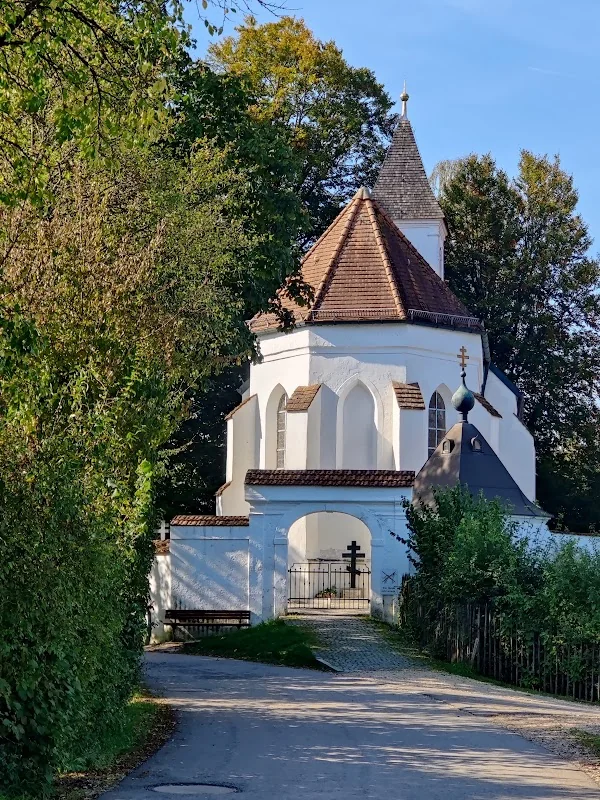
St. Walburgis in Seeon, also known as Walburgis Chapel and referred to in current programs as St. Walburg Church, is one of those places where history, faith, memory, and the present closely intertwine. The site is part of the ensemble Kloster Seeon in Seeon-Seebruck, which is described in the Bavarian monument list as a coherent historical area that includes the former Benedictine monastery, the neighboring churches of St. Walburg and St. Maria, as well as other parts of the cultural landscape. Today, those who come here encounter not just a building, but a developed cultural space that has emerged from monastic foundations, later repurposing, monument preservation, and modern cultural revitalization. This very mixture makes St. Walburgis an exciting destination for visitors who want not only to take photographs but to understand why this place continues to have such a special impact. ([geodaten.bayern.de](https://geodaten.bayern.de/denkmal_static_data/externe_denkmalliste/pdf/denkmalliste_merge_189143.pdf))
The official history of Kloster Seeon shows that the place has been reinterpreted repeatedly since the Middle Ages: as a Benedictine center, as noble property, as a spa, as a retreat, and today as a cultural and educational center of the district of Upper Bavaria. In this transformation, St. Walburgis has remained a historical reference point. This is particularly relevant for those searching for St. Walburgis Seeon, Walburgis Chapel, history, tours, or events, because here a single name connects multiple levels: a sacred heritage, a listed building substance, and a vibrant event location in Chiemgau. This is why a closer look at the origins, architecture, current use, and practical visitor information is worthwhile. ([kloster-seeon.de](https://www.kloster-seeon.de/ueber-uns/geschichte))
History of St. Walburgis in Seeon
The history of St. Walburgis is closely linked to the beginnings of Kloster Seeon. According to the official account of the house, a women's convent likely developed around 1035 on the smaller Seeon island, which has since completely silted up, parallel to the Benedictine monastery on the larger island. The first residents probably came from the Benedictine abbey of St. Walburg in Eichstätt. This origin already explains why St. Walburgis is not just any village church, but a place with deep monastic roots, where female and male monastic history stood side by side. Monument preservation additionally points out that St. Walburgis Church is first mentioned in 1349. This makes it one of the oldest tangible testimonies of the Seeon religious and settlement area. ([kloster-seeon.de](https://www.kloster-seeon.de/ueber-uns/geschichte))
Particularly influential was the great fire of April 18, 1561. According to the official historical overview, the fire spread from the bridge to St. Walburg Church and destroyed large parts of the complex; in the following decades, under Abbot Martin Kötterlin, reconstruction took place. Therefore, the present church preserves not only medieval elements but also traces of this upheaval. Later, the secularization of 1803 and the auction of properties and buildings in 1804 followed, when the Munich master baker Franz Xaver Distler acquired a large part of the complex along with St. Walburg Church. In the 19th century, the complex came into the possession of the Leuchtenberg family; in 1969, the family donated St. Walburgis to the municipality of Seeon-Seebruck. The district of Upper Bavaria finally acquired the monastery complex in 1986 and 1989, extensively renovated it, and made it publicly accessible again. ([kloster-seeon.de](https://www.kloster-seeon.de/ueber-uns/geschichte))
The historical classification is also interesting because St. Walburgis cannot be viewed in isolation. The monument description names the area as part of an ensemble that was an important cultural center in Chiemgau for centuries. As early as 1004, Abbot Gerhard established a scriptorium known for book painting; at the same time, the monks worked on clearing and cultivating the surrounding area, on dams, canals, and an orderly cultural landscape. In this larger context, St. Walburgis represents the earliest female and ecclesiastical usage phases of the area. Therefore, those searching for St. Walburgis Seeon are not just looking for an address but a place with over a thousand years of layered history. ([geodaten.bayern.de](https://geodaten.bayern.de/denkmal_static_data/externe_denkmalliste/pdf/denkmalliste_merge_189143.pdf))
Tours and Concerts at St. Walburg Church
Today, St. Walburgis thrives mainly through culture. The official event page of Kloster Seeon regularly lists concerts at St. Walburg Church, including formats of the Chiemgau Music Spring and other musical events. The event calendar specifies concrete dates in St. Walburg Church and Walburgis Church, showing that the historical space is not only preserved but actively used. This is a significant added value for visitors who expect not only historical facts but also current experiences in their search for St. Walburgis. Tickets are available according to the official offer at the Kloster shop in Seeon, through the Kloster-Seeon webshop, via muenchenticket.de, and at associated advance sales points; online tickets can also be picked up at the box office on the day or evening of the event. ([kloster-seeon.de](https://www.kloster-seeon.de/kultur-erleben/veranstaltungskalender))
The tours are also clearly organized. Kloster Seeon offers general tours, special tours, and thematic walks. The large tour leads through the former monastery church of St. Lambert, the Abbot's chapel of St. Nicholas, and the former monastery complex; the small tour conveys the history of the house in a shorter form; there are also musical tours and special open-air themes. For groups, individual dates can be arranged, which is particularly exciting for travel groups, clubs, and culture enthusiasts. Therefore, those who want to experience the place not just as a photo destination but as a cultural monument will find a very good combination of facts, atmosphere, and professional mediation here. ([kloster-seeon.de](https://www.kloster-seeon.de/kultur-erleben/fuehrungen))
Another advantage: St. Walburg Church is perceived not only as a historical space but also as an acoustically and atmospherically special place. The official cultural calendar describes concerts and readings in Walburgis Church, and in the music formats, the space is explicitly used as a stage for chamber music and spiritually influenced programs. For search queries like St. Walburgis Seeon, events, concert, or program, this is crucial because it brings the place into the present. The combination of a Gothic church, monastic silence, and a demanding cultural program makes St. Walburgis a location that not only tells history but makes that history audible and experienceable. ([kloster-seeon.de](https://www.kloster-seeon.de/kultur-erleben/veranstaltungskalender))
Access and Parking at Kloster Seeon
For practical planning, St. Walburgis is very well accessible. The official travel page of Kloster Seeon lists several routes by car: from the A8 via exits 106 Bernau or 109 Grabenstätt, from Munich via B304, or from Passau via B12. Those who prefer to travel by public transport can take the train to Prien am Chiemsee, Bad Endorf, or Traunstein and then continue the journey by taxi or bus. Important regional bus lines are 9520 and 9522. This information is particularly helpful for anyone planning a visit, concert, or tour at St. Walburgis and wanting to organize their arrival as stress-free as possible. ([kloster-seeon.de](https://www.kloster-seeon.de/ueber-uns/anreise?utm_source=openai))
Parking is also convenient. Kloster Seeon points out a large parking lot with around 150 free parking spaces. Additionally, there are two electric charging stations and three disabled parking spaces directly at the main building. For visitors, this means that those attending an event or tour typically do not have to expect long searches for parking. For a historical site with tourist and cultural use, this is an important advantage. Therefore, those looking to park at St. Walburgis, for access, or for barrier-free options will find a clear and well-organized infrastructure that makes the visit uncomplicated. ([kloster-seeon.de](https://www.kloster-seeon.de/ueber-uns/anreise?utm_source=openai))
Moreover, Kloster Seeon emphasizes accessibility in and around the historic building and provides further assistance on its own information pages and in its brochures. This is not a given for a listed building complex and shows that current use takes into account different visitor groups. Therefore, those traveling with elderly people, children, or guests with mobility impairments can inform themselves well in advance. This is particularly important for culture-interested day trips because the place should not only be beautiful but also practical. St. Walburgis scores not only with history but also with realistic and pleasant visitor logistics. ([kloster-seeon.de](https://www.kloster-seeon.de/kultur-erleben))
Architecture, Location, and Special Atmosphere
Architecturally, St. Walburgis is a particularly exciting monument. The Bavarian monument list describes the church as a single-nave Gothic building from the 14th and 15th centuries built over the foundations of the former nunnery. Thus, it is not simply a later replacement building but a place with architectural continuity over many centuries. The official history adds that the present church was equipped after 1561 with a vault and a mannerist painting. In the imagery of the complex, this means: medieval structure, late Gothic and early modern transformation, along with the memory of a place that has developed from a monastic chapel to a parish church to a secular cultural space. ([geodaten.bayern.de](https://geodaten.bayern.de/denkmal_static_data/externe_denkmalliste/pdf/denkmalliste_merge_189143.pdf))
The special effect also includes the location within the ensemble. The monument list describes St. Walburgis as part of a historical context with the former Benedictine monastery Seeon located on an island and other neighboring churches. The official history emphasizes that a women's convent developed on the smaller Seeon island, which later disappeared, while St. Walburg Church recalls this early phase. This spatial and historical connection creates exactly the atmosphere that many visitors seek in Seeon: not monumentality in the urban sense, but quiet density, landscape reference, and a fine interplay of water, history, and architecture. Therefore, those who visit St. Walburgis experience a place that seems small but is historically very significant. ([geodaten.bayern.de](https://geodaten.bayern.de/denkmal_static_data/externe_denkmalliste/pdf/denkmalliste_merge_189143.pdf))
Architecture also includes the perception of the interior. Kloster Seeon shows in its official history a view of the altar area of the current St. Walburg Church with a Gothic net ribbed vault and softly translucent light that underscores the calm spatial effect. This is important for visitors because it describes the church not only as a monument but as an aesthetic experience space. Those interested in sacred spaces, wall paintings, vaults, or monastic architectural history will find many details that make St. Walburgis a worthwhile stop. The combination of historical depth and a still vibrant use is rare and shapes the special atmosphere of this place. ([kloster-seeon.de](https://www.kloster-seeon.de/ueber-uns/geschichte))
Cemetery, Leuchtenberg, and Memory Culture
St. Walburgis is not only a church and cultural site but also a place of memory. The official history of the monastery reports that in 1852 Amélie von Leuchtenberg acquired the property, and the place later became a retreat for the Bavarian-Russian noble family Leuchtenberg. In this context, the Russian Orthodox cemetery of St. Walburg was established. The museums-in-Bavaria page explicitly points out that Russian Orthodox graves in the cemetery of Walburgis Church still remind us of this time. For visitors, this is an important note because local, ecclesiastical, and European history condenses in this small space. ([museen-in-bayern.de](https://museen-in-bayern.de/en/museums/museum-details/kloster-seeon))
The monument preservation also mentions the burial sites of the Leuchtenberg family located in the cemetery, and the official history notes that Olga von Leuchtenberg was buried in 1953 opposite her husband's grave in the cemetery of St. Walburg. Additionally, there is the well-known grave of Anna Anderson, whose burial at the site also plays a role in the history of Kloster Seeon and the description of the cemetery. This layer of memory gives St. Walburgis a special depth: the place is interesting not only for art and music enthusiasts but also for people who deal with dynasties, exile, identity, and memory culture. ([geodaten.bayern.de](https://geodaten.bayern.de/denkmal_static_data/externe_denkmalliste/pdf/denkmalliste_merge_189143.pdf))
Especially in the SEO context, this is relevant because many search queries aim not only at architecture or events but also at history, cemetery, Leuchtenberg, or special graves. St. Walburgis answers these search intentions very well because the place brings all these levels together. The result is an unusual space of remembrance: a religious place with medieval roots, a chapter of noble-Russian family history, and at the same time a part of a publicly accessible cultural site today. Those who linger here quickly feel that memory in Seeon is not museum-like and closed off but continues to live on. ([museen-in-bayern.de](https://museen-in-bayern.de/en/museums/museum-details/kloster-seeon))
St. Walburgis in Today's Monastic Ensemble
Today, St. Walburgis is part of a vibrant overall concept. Kloster Seeon describes itself as a cultural and educational center of the district of Upper Bavaria, a place for conferences, cultural events, exhibitions, and overnight stays. The official page calls the ensemble one of the most beautiful historical complexes in Chiemgau, and the current cultural communication emphasizes that concerts, readings, folk music, exhibitions, and tours regularly take place here. For visitors, this means: St. Walburgis is not just a monument on the edge but part of a very active cultural location. Especially the new permanent exhibition Kloster Seeon - 994 to today, which is open daily and freely accessible, makes the visit additionally attractive. ([kloster-seeon.de](https://www.kloster-seeon.de/?utm_source=openai))
The culinary and organizational environment is also remarkable. Kloster Seeon offers a hotel in a historic monastery ambiance, renovated rooms, sauna and fitness area, as well as a monastery restaurant and the restaurant Ex libris in the former library of the Dukes of Leuchtenberg. The brochures of the house also mention events for up to 120 people, baroque courtyard use, banquet hall, Gothic cellar, and lake terrace. For guests who want to combine a tour or concert at St. Walburgis with a longer stay, this is a real plus. The place functions not only as a sight but as a total experience of history, culture, enjoyment, and stay. ([kloster-seeon.de](https://www.kloster-seeon.de/_Resources/Persistent/8/6/1/e/861e6a94050232e9779d4cc762efcbd27886ac18/Hausbrosch%C3%BCre_KlosterSeeon.pdf))
Thus, St. Walburgis fulfills exactly what many seekers expect: an authentic historical destination with clear information on access, parking, tours, and events. At the same time, the place remains closely connected to the larger monastic context that has shaped Seeon for centuries. Therefore, those searching for St. Walburgis Seeon, Walburgis Chapel, St. Walburg Church, or Kloster Seeon receive not just a single building but a dense cultural context. This makes St. Walburgis a location that is excellent for both spontaneous discoveries and targeted cultural visits. ([kloster-seeon.de](https://www.kloster-seeon.de/kultur-erleben))
Sources:
Show moreShow less
St. Walburgis | History & Tours
St. Walburgis in Seeon, also known as Walburgis Chapel and referred to in current programs as St. Walburg Church, is one of those places where history, faith, memory, and the present closely intertwine. The site is part of the ensemble Kloster Seeon in Seeon-Seebruck, which is described in the Bavarian monument list as a coherent historical area that includes the former Benedictine monastery, the neighboring churches of St. Walburg and St. Maria, as well as other parts of the cultural landscape. Today, those who come here encounter not just a building, but a developed cultural space that has emerged from monastic foundations, later repurposing, monument preservation, and modern cultural revitalization. This very mixture makes St. Walburgis an exciting destination for visitors who want not only to take photographs but to understand why this place continues to have such a special impact. ([geodaten.bayern.de](https://geodaten.bayern.de/denkmal_static_data/externe_denkmalliste/pdf/denkmalliste_merge_189143.pdf))
The official history of Kloster Seeon shows that the place has been reinterpreted repeatedly since the Middle Ages: as a Benedictine center, as noble property, as a spa, as a retreat, and today as a cultural and educational center of the district of Upper Bavaria. In this transformation, St. Walburgis has remained a historical reference point. This is particularly relevant for those searching for St. Walburgis Seeon, Walburgis Chapel, history, tours, or events, because here a single name connects multiple levels: a sacred heritage, a listed building substance, and a vibrant event location in Chiemgau. This is why a closer look at the origins, architecture, current use, and practical visitor information is worthwhile. ([kloster-seeon.de](https://www.kloster-seeon.de/ueber-uns/geschichte))
History of St. Walburgis in Seeon
The history of St. Walburgis is closely linked to the beginnings of Kloster Seeon. According to the official account of the house, a women's convent likely developed around 1035 on the smaller Seeon island, which has since completely silted up, parallel to the Benedictine monastery on the larger island. The first residents probably came from the Benedictine abbey of St. Walburg in Eichstätt. This origin already explains why St. Walburgis is not just any village church, but a place with deep monastic roots, where female and male monastic history stood side by side. Monument preservation additionally points out that St. Walburgis Church is first mentioned in 1349. This makes it one of the oldest tangible testimonies of the Seeon religious and settlement area. ([kloster-seeon.de](https://www.kloster-seeon.de/ueber-uns/geschichte))
Particularly influential was the great fire of April 18, 1561. According to the official historical overview, the fire spread from the bridge to St. Walburg Church and destroyed large parts of the complex; in the following decades, under Abbot Martin Kötterlin, reconstruction took place. Therefore, the present church preserves not only medieval elements but also traces of this upheaval. Later, the secularization of 1803 and the auction of properties and buildings in 1804 followed, when the Munich master baker Franz Xaver Distler acquired a large part of the complex along with St. Walburg Church. In the 19th century, the complex came into the possession of the Leuchtenberg family; in 1969, the family donated St. Walburgis to the municipality of Seeon-Seebruck. The district of Upper Bavaria finally acquired the monastery complex in 1986 and 1989, extensively renovated it, and made it publicly accessible again. ([kloster-seeon.de](https://www.kloster-seeon.de/ueber-uns/geschichte))
The historical classification is also interesting because St. Walburgis cannot be viewed in isolation. The monument description names the area as part of an ensemble that was an important cultural center in Chiemgau for centuries. As early as 1004, Abbot Gerhard established a scriptorium known for book painting; at the same time, the monks worked on clearing and cultivating the surrounding area, on dams, canals, and an orderly cultural landscape. In this larger context, St. Walburgis represents the earliest female and ecclesiastical usage phases of the area. Therefore, those searching for St. Walburgis Seeon are not just looking for an address but a place with over a thousand years of layered history. ([geodaten.bayern.de](https://geodaten.bayern.de/denkmal_static_data/externe_denkmalliste/pdf/denkmalliste_merge_189143.pdf))
Tours and Concerts at St. Walburg Church
Today, St. Walburgis thrives mainly through culture. The official event page of Kloster Seeon regularly lists concerts at St. Walburg Church, including formats of the Chiemgau Music Spring and other musical events. The event calendar specifies concrete dates in St. Walburg Church and Walburgis Church, showing that the historical space is not only preserved but actively used. This is a significant added value for visitors who expect not only historical facts but also current experiences in their search for St. Walburgis. Tickets are available according to the official offer at the Kloster shop in Seeon, through the Kloster-Seeon webshop, via muenchenticket.de, and at associated advance sales points; online tickets can also be picked up at the box office on the day or evening of the event. ([kloster-seeon.de](https://www.kloster-seeon.de/kultur-erleben/veranstaltungskalender))
The tours are also clearly organized. Kloster Seeon offers general tours, special tours, and thematic walks. The large tour leads through the former monastery church of St. Lambert, the Abbot's chapel of St. Nicholas, and the former monastery complex; the small tour conveys the history of the house in a shorter form; there are also musical tours and special open-air themes. For groups, individual dates can be arranged, which is particularly exciting for travel groups, clubs, and culture enthusiasts. Therefore, those who want to experience the place not just as a photo destination but as a cultural monument will find a very good combination of facts, atmosphere, and professional mediation here. ([kloster-seeon.de](https://www.kloster-seeon.de/kultur-erleben/fuehrungen))
Another advantage: St. Walburg Church is perceived not only as a historical space but also as an acoustically and atmospherically special place. The official cultural calendar describes concerts and readings in Walburgis Church, and in the music formats, the space is explicitly used as a stage for chamber music and spiritually influenced programs. For search queries like St. Walburgis Seeon, events, concert, or program, this is crucial because it brings the place into the present. The combination of a Gothic church, monastic silence, and a demanding cultural program makes St. Walburgis a location that not only tells history but makes that history audible and experienceable. ([kloster-seeon.de](https://www.kloster-seeon.de/kultur-erleben/veranstaltungskalender))
Access and Parking at Kloster Seeon
For practical planning, St. Walburgis is very well accessible. The official travel page of Kloster Seeon lists several routes by car: from the A8 via exits 106 Bernau or 109 Grabenstätt, from Munich via B304, or from Passau via B12. Those who prefer to travel by public transport can take the train to Prien am Chiemsee, Bad Endorf, or Traunstein and then continue the journey by taxi or bus. Important regional bus lines are 9520 and 9522. This information is particularly helpful for anyone planning a visit, concert, or tour at St. Walburgis and wanting to organize their arrival as stress-free as possible. ([kloster-seeon.de](https://www.kloster-seeon.de/ueber-uns/anreise?utm_source=openai))
Parking is also convenient. Kloster Seeon points out a large parking lot with around 150 free parking spaces. Additionally, there are two electric charging stations and three disabled parking spaces directly at the main building. For visitors, this means that those attending an event or tour typically do not have to expect long searches for parking. For a historical site with tourist and cultural use, this is an important advantage. Therefore, those looking to park at St. Walburgis, for access, or for barrier-free options will find a clear and well-organized infrastructure that makes the visit uncomplicated. ([kloster-seeon.de](https://www.kloster-seeon.de/ueber-uns/anreise?utm_source=openai))
Moreover, Kloster Seeon emphasizes accessibility in and around the historic building and provides further assistance on its own information pages and in its brochures. This is not a given for a listed building complex and shows that current use takes into account different visitor groups. Therefore, those traveling with elderly people, children, or guests with mobility impairments can inform themselves well in advance. This is particularly important for culture-interested day trips because the place should not only be beautiful but also practical. St. Walburgis scores not only with history but also with realistic and pleasant visitor logistics. ([kloster-seeon.de](https://www.kloster-seeon.de/kultur-erleben))
Architecture, Location, and Special Atmosphere
Architecturally, St. Walburgis is a particularly exciting monument. The Bavarian monument list describes the church as a single-nave Gothic building from the 14th and 15th centuries built over the foundations of the former nunnery. Thus, it is not simply a later replacement building but a place with architectural continuity over many centuries. The official history adds that the present church was equipped after 1561 with a vault and a mannerist painting. In the imagery of the complex, this means: medieval structure, late Gothic and early modern transformation, along with the memory of a place that has developed from a monastic chapel to a parish church to a secular cultural space. ([geodaten.bayern.de](https://geodaten.bayern.de/denkmal_static_data/externe_denkmalliste/pdf/denkmalliste_merge_189143.pdf))
The special effect also includes the location within the ensemble. The monument list describes St. Walburgis as part of a historical context with the former Benedictine monastery Seeon located on an island and other neighboring churches. The official history emphasizes that a women's convent developed on the smaller Seeon island, which later disappeared, while St. Walburg Church recalls this early phase. This spatial and historical connection creates exactly the atmosphere that many visitors seek in Seeon: not monumentality in the urban sense, but quiet density, landscape reference, and a fine interplay of water, history, and architecture. Therefore, those who visit St. Walburgis experience a place that seems small but is historically very significant. ([geodaten.bayern.de](https://geodaten.bayern.de/denkmal_static_data/externe_denkmalliste/pdf/denkmalliste_merge_189143.pdf))
Architecture also includes the perception of the interior. Kloster Seeon shows in its official history a view of the altar area of the current St. Walburg Church with a Gothic net ribbed vault and softly translucent light that underscores the calm spatial effect. This is important for visitors because it describes the church not only as a monument but as an aesthetic experience space. Those interested in sacred spaces, wall paintings, vaults, or monastic architectural history will find many details that make St. Walburgis a worthwhile stop. The combination of historical depth and a still vibrant use is rare and shapes the special atmosphere of this place. ([kloster-seeon.de](https://www.kloster-seeon.de/ueber-uns/geschichte))
Cemetery, Leuchtenberg, and Memory Culture
St. Walburgis is not only a church and cultural site but also a place of memory. The official history of the monastery reports that in 1852 Amélie von Leuchtenberg acquired the property, and the place later became a retreat for the Bavarian-Russian noble family Leuchtenberg. In this context, the Russian Orthodox cemetery of St. Walburg was established. The museums-in-Bavaria page explicitly points out that Russian Orthodox graves in the cemetery of Walburgis Church still remind us of this time. For visitors, this is an important note because local, ecclesiastical, and European history condenses in this small space. ([museen-in-bayern.de](https://museen-in-bayern.de/en/museums/museum-details/kloster-seeon))
The monument preservation also mentions the burial sites of the Leuchtenberg family located in the cemetery, and the official history notes that Olga von Leuchtenberg was buried in 1953 opposite her husband's grave in the cemetery of St. Walburg. Additionally, there is the well-known grave of Anna Anderson, whose burial at the site also plays a role in the history of Kloster Seeon and the description of the cemetery. This layer of memory gives St. Walburgis a special depth: the place is interesting not only for art and music enthusiasts but also for people who deal with dynasties, exile, identity, and memory culture. ([geodaten.bayern.de](https://geodaten.bayern.de/denkmal_static_data/externe_denkmalliste/pdf/denkmalliste_merge_189143.pdf))
Especially in the SEO context, this is relevant because many search queries aim not only at architecture or events but also at history, cemetery, Leuchtenberg, or special graves. St. Walburgis answers these search intentions very well because the place brings all these levels together. The result is an unusual space of remembrance: a religious place with medieval roots, a chapter of noble-Russian family history, and at the same time a part of a publicly accessible cultural site today. Those who linger here quickly feel that memory in Seeon is not museum-like and closed off but continues to live on. ([museen-in-bayern.de](https://museen-in-bayern.de/en/museums/museum-details/kloster-seeon))
St. Walburgis in Today's Monastic Ensemble
Today, St. Walburgis is part of a vibrant overall concept. Kloster Seeon describes itself as a cultural and educational center of the district of Upper Bavaria, a place for conferences, cultural events, exhibitions, and overnight stays. The official page calls the ensemble one of the most beautiful historical complexes in Chiemgau, and the current cultural communication emphasizes that concerts, readings, folk music, exhibitions, and tours regularly take place here. For visitors, this means: St. Walburgis is not just a monument on the edge but part of a very active cultural location. Especially the new permanent exhibition Kloster Seeon - 994 to today, which is open daily and freely accessible, makes the visit additionally attractive. ([kloster-seeon.de](https://www.kloster-seeon.de/?utm_source=openai))
The culinary and organizational environment is also remarkable. Kloster Seeon offers a hotel in a historic monastery ambiance, renovated rooms, sauna and fitness area, as well as a monastery restaurant and the restaurant Ex libris in the former library of the Dukes of Leuchtenberg. The brochures of the house also mention events for up to 120 people, baroque courtyard use, banquet hall, Gothic cellar, and lake terrace. For guests who want to combine a tour or concert at St. Walburgis with a longer stay, this is a real plus. The place functions not only as a sight but as a total experience of history, culture, enjoyment, and stay. ([kloster-seeon.de](https://www.kloster-seeon.de/_Resources/Persistent/8/6/1/e/861e6a94050232e9779d4cc762efcbd27886ac18/Hausbrosch%C3%BCre_KlosterSeeon.pdf))
Thus, St. Walburgis fulfills exactly what many seekers expect: an authentic historical destination with clear information on access, parking, tours, and events. At the same time, the place remains closely connected to the larger monastic context that has shaped Seeon for centuries. Therefore, those searching for St. Walburgis Seeon, Walburgis Chapel, St. Walburg Church, or Kloster Seeon receive not just a single building but a dense cultural context. This makes St. Walburgis a location that is excellent for both spontaneous discoveries and targeted cultural visits. ([kloster-seeon.de](https://www.kloster-seeon.de/kultur-erleben))
Sources:
St. Walburgis | History & Tours
St. Walburgis in Seeon, also known as Walburgis Chapel and referred to in current programs as St. Walburg Church, is one of those places where history, faith, memory, and the present closely intertwine. The site is part of the ensemble Kloster Seeon in Seeon-Seebruck, which is described in the Bavarian monument list as a coherent historical area that includes the former Benedictine monastery, the neighboring churches of St. Walburg and St. Maria, as well as other parts of the cultural landscape. Today, those who come here encounter not just a building, but a developed cultural space that has emerged from monastic foundations, later repurposing, monument preservation, and modern cultural revitalization. This very mixture makes St. Walburgis an exciting destination for visitors who want not only to take photographs but to understand why this place continues to have such a special impact. ([geodaten.bayern.de](https://geodaten.bayern.de/denkmal_static_data/externe_denkmalliste/pdf/denkmalliste_merge_189143.pdf))
The official history of Kloster Seeon shows that the place has been reinterpreted repeatedly since the Middle Ages: as a Benedictine center, as noble property, as a spa, as a retreat, and today as a cultural and educational center of the district of Upper Bavaria. In this transformation, St. Walburgis has remained a historical reference point. This is particularly relevant for those searching for St. Walburgis Seeon, Walburgis Chapel, history, tours, or events, because here a single name connects multiple levels: a sacred heritage, a listed building substance, and a vibrant event location in Chiemgau. This is why a closer look at the origins, architecture, current use, and practical visitor information is worthwhile. ([kloster-seeon.de](https://www.kloster-seeon.de/ueber-uns/geschichte))
History of St. Walburgis in Seeon
The history of St. Walburgis is closely linked to the beginnings of Kloster Seeon. According to the official account of the house, a women's convent likely developed around 1035 on the smaller Seeon island, which has since completely silted up, parallel to the Benedictine monastery on the larger island. The first residents probably came from the Benedictine abbey of St. Walburg in Eichstätt. This origin already explains why St. Walburgis is not just any village church, but a place with deep monastic roots, where female and male monastic history stood side by side. Monument preservation additionally points out that St. Walburgis Church is first mentioned in 1349. This makes it one of the oldest tangible testimonies of the Seeon religious and settlement area. ([kloster-seeon.de](https://www.kloster-seeon.de/ueber-uns/geschichte))
Particularly influential was the great fire of April 18, 1561. According to the official historical overview, the fire spread from the bridge to St. Walburg Church and destroyed large parts of the complex; in the following decades, under Abbot Martin Kötterlin, reconstruction took place. Therefore, the present church preserves not only medieval elements but also traces of this upheaval. Later, the secularization of 1803 and the auction of properties and buildings in 1804 followed, when the Munich master baker Franz Xaver Distler acquired a large part of the complex along with St. Walburg Church. In the 19th century, the complex came into the possession of the Leuchtenberg family; in 1969, the family donated St. Walburgis to the municipality of Seeon-Seebruck. The district of Upper Bavaria finally acquired the monastery complex in 1986 and 1989, extensively renovated it, and made it publicly accessible again. ([kloster-seeon.de](https://www.kloster-seeon.de/ueber-uns/geschichte))
The historical classification is also interesting because St. Walburgis cannot be viewed in isolation. The monument description names the area as part of an ensemble that was an important cultural center in Chiemgau for centuries. As early as 1004, Abbot Gerhard established a scriptorium known for book painting; at the same time, the monks worked on clearing and cultivating the surrounding area, on dams, canals, and an orderly cultural landscape. In this larger context, St. Walburgis represents the earliest female and ecclesiastical usage phases of the area. Therefore, those searching for St. Walburgis Seeon are not just looking for an address but a place with over a thousand years of layered history. ([geodaten.bayern.de](https://geodaten.bayern.de/denkmal_static_data/externe_denkmalliste/pdf/denkmalliste_merge_189143.pdf))
Tours and Concerts at St. Walburg Church
Today, St. Walburgis thrives mainly through culture. The official event page of Kloster Seeon regularly lists concerts at St. Walburg Church, including formats of the Chiemgau Music Spring and other musical events. The event calendar specifies concrete dates in St. Walburg Church and Walburgis Church, showing that the historical space is not only preserved but actively used. This is a significant added value for visitors who expect not only historical facts but also current experiences in their search for St. Walburgis. Tickets are available according to the official offer at the Kloster shop in Seeon, through the Kloster-Seeon webshop, via muenchenticket.de, and at associated advance sales points; online tickets can also be picked up at the box office on the day or evening of the event. ([kloster-seeon.de](https://www.kloster-seeon.de/kultur-erleben/veranstaltungskalender))
The tours are also clearly organized. Kloster Seeon offers general tours, special tours, and thematic walks. The large tour leads through the former monastery church of St. Lambert, the Abbot's chapel of St. Nicholas, and the former monastery complex; the small tour conveys the history of the house in a shorter form; there are also musical tours and special open-air themes. For groups, individual dates can be arranged, which is particularly exciting for travel groups, clubs, and culture enthusiasts. Therefore, those who want to experience the place not just as a photo destination but as a cultural monument will find a very good combination of facts, atmosphere, and professional mediation here. ([kloster-seeon.de](https://www.kloster-seeon.de/kultur-erleben/fuehrungen))
Another advantage: St. Walburg Church is perceived not only as a historical space but also as an acoustically and atmospherically special place. The official cultural calendar describes concerts and readings in Walburgis Church, and in the music formats, the space is explicitly used as a stage for chamber music and spiritually influenced programs. For search queries like St. Walburgis Seeon, events, concert, or program, this is crucial because it brings the place into the present. The combination of a Gothic church, monastic silence, and a demanding cultural program makes St. Walburgis a location that not only tells history but makes that history audible and experienceable. ([kloster-seeon.de](https://www.kloster-seeon.de/kultur-erleben/veranstaltungskalender))
Access and Parking at Kloster Seeon
For practical planning, St. Walburgis is very well accessible. The official travel page of Kloster Seeon lists several routes by car: from the A8 via exits 106 Bernau or 109 Grabenstätt, from Munich via B304, or from Passau via B12. Those who prefer to travel by public transport can take the train to Prien am Chiemsee, Bad Endorf, or Traunstein and then continue the journey by taxi or bus. Important regional bus lines are 9520 and 9522. This information is particularly helpful for anyone planning a visit, concert, or tour at St. Walburgis and wanting to organize their arrival as stress-free as possible. ([kloster-seeon.de](https://www.kloster-seeon.de/ueber-uns/anreise?utm_source=openai))
Parking is also convenient. Kloster Seeon points out a large parking lot with around 150 free parking spaces. Additionally, there are two electric charging stations and three disabled parking spaces directly at the main building. For visitors, this means that those attending an event or tour typically do not have to expect long searches for parking. For a historical site with tourist and cultural use, this is an important advantage. Therefore, those looking to park at St. Walburgis, for access, or for barrier-free options will find a clear and well-organized infrastructure that makes the visit uncomplicated. ([kloster-seeon.de](https://www.kloster-seeon.de/ueber-uns/anreise?utm_source=openai))
Moreover, Kloster Seeon emphasizes accessibility in and around the historic building and provides further assistance on its own information pages and in its brochures. This is not a given for a listed building complex and shows that current use takes into account different visitor groups. Therefore, those traveling with elderly people, children, or guests with mobility impairments can inform themselves well in advance. This is particularly important for culture-interested day trips because the place should not only be beautiful but also practical. St. Walburgis scores not only with history but also with realistic and pleasant visitor logistics. ([kloster-seeon.de](https://www.kloster-seeon.de/kultur-erleben))
Architecture, Location, and Special Atmosphere
Architecturally, St. Walburgis is a particularly exciting monument. The Bavarian monument list describes the church as a single-nave Gothic building from the 14th and 15th centuries built over the foundations of the former nunnery. Thus, it is not simply a later replacement building but a place with architectural continuity over many centuries. The official history adds that the present church was equipped after 1561 with a vault and a mannerist painting. In the imagery of the complex, this means: medieval structure, late Gothic and early modern transformation, along with the memory of a place that has developed from a monastic chapel to a parish church to a secular cultural space. ([geodaten.bayern.de](https://geodaten.bayern.de/denkmal_static_data/externe_denkmalliste/pdf/denkmalliste_merge_189143.pdf))
The special effect also includes the location within the ensemble. The monument list describes St. Walburgis as part of a historical context with the former Benedictine monastery Seeon located on an island and other neighboring churches. The official history emphasizes that a women's convent developed on the smaller Seeon island, which later disappeared, while St. Walburg Church recalls this early phase. This spatial and historical connection creates exactly the atmosphere that many visitors seek in Seeon: not monumentality in the urban sense, but quiet density, landscape reference, and a fine interplay of water, history, and architecture. Therefore, those who visit St. Walburgis experience a place that seems small but is historically very significant. ([geodaten.bayern.de](https://geodaten.bayern.de/denkmal_static_data/externe_denkmalliste/pdf/denkmalliste_merge_189143.pdf))
Architecture also includes the perception of the interior. Kloster Seeon shows in its official history a view of the altar area of the current St. Walburg Church with a Gothic net ribbed vault and softly translucent light that underscores the calm spatial effect. This is important for visitors because it describes the church not only as a monument but as an aesthetic experience space. Those interested in sacred spaces, wall paintings, vaults, or monastic architectural history will find many details that make St. Walburgis a worthwhile stop. The combination of historical depth and a still vibrant use is rare and shapes the special atmosphere of this place. ([kloster-seeon.de](https://www.kloster-seeon.de/ueber-uns/geschichte))
Cemetery, Leuchtenberg, and Memory Culture
St. Walburgis is not only a church and cultural site but also a place of memory. The official history of the monastery reports that in 1852 Amélie von Leuchtenberg acquired the property, and the place later became a retreat for the Bavarian-Russian noble family Leuchtenberg. In this context, the Russian Orthodox cemetery of St. Walburg was established. The museums-in-Bavaria page explicitly points out that Russian Orthodox graves in the cemetery of Walburgis Church still remind us of this time. For visitors, this is an important note because local, ecclesiastical, and European history condenses in this small space. ([museen-in-bayern.de](https://museen-in-bayern.de/en/museums/museum-details/kloster-seeon))
The monument preservation also mentions the burial sites of the Leuchtenberg family located in the cemetery, and the official history notes that Olga von Leuchtenberg was buried in 1953 opposite her husband's grave in the cemetery of St. Walburg. Additionally, there is the well-known grave of Anna Anderson, whose burial at the site also plays a role in the history of Kloster Seeon and the description of the cemetery. This layer of memory gives St. Walburgis a special depth: the place is interesting not only for art and music enthusiasts but also for people who deal with dynasties, exile, identity, and memory culture. ([geodaten.bayern.de](https://geodaten.bayern.de/denkmal_static_data/externe_denkmalliste/pdf/denkmalliste_merge_189143.pdf))
Especially in the SEO context, this is relevant because many search queries aim not only at architecture or events but also at history, cemetery, Leuchtenberg, or special graves. St. Walburgis answers these search intentions very well because the place brings all these levels together. The result is an unusual space of remembrance: a religious place with medieval roots, a chapter of noble-Russian family history, and at the same time a part of a publicly accessible cultural site today. Those who linger here quickly feel that memory in Seeon is not museum-like and closed off but continues to live on. ([museen-in-bayern.de](https://museen-in-bayern.de/en/museums/museum-details/kloster-seeon))
St. Walburgis in Today's Monastic Ensemble
Today, St. Walburgis is part of a vibrant overall concept. Kloster Seeon describes itself as a cultural and educational center of the district of Upper Bavaria, a place for conferences, cultural events, exhibitions, and overnight stays. The official page calls the ensemble one of the most beautiful historical complexes in Chiemgau, and the current cultural communication emphasizes that concerts, readings, folk music, exhibitions, and tours regularly take place here. For visitors, this means: St. Walburgis is not just a monument on the edge but part of a very active cultural location. Especially the new permanent exhibition Kloster Seeon - 994 to today, which is open daily and freely accessible, makes the visit additionally attractive. ([kloster-seeon.de](https://www.kloster-seeon.de/?utm_source=openai))
The culinary and organizational environment is also remarkable. Kloster Seeon offers a hotel in a historic monastery ambiance, renovated rooms, sauna and fitness area, as well as a monastery restaurant and the restaurant Ex libris in the former library of the Dukes of Leuchtenberg. The brochures of the house also mention events for up to 120 people, baroque courtyard use, banquet hall, Gothic cellar, and lake terrace. For guests who want to combine a tour or concert at St. Walburgis with a longer stay, this is a real plus. The place functions not only as a sight but as a total experience of history, culture, enjoyment, and stay. ([kloster-seeon.de](https://www.kloster-seeon.de/_Resources/Persistent/8/6/1/e/861e6a94050232e9779d4cc762efcbd27886ac18/Hausbrosch%C3%BCre_KlosterSeeon.pdf))
Thus, St. Walburgis fulfills exactly what many seekers expect: an authentic historical destination with clear information on access, parking, tours, and events. At the same time, the place remains closely connected to the larger monastic context that has shaped Seeon for centuries. Therefore, those searching for St. Walburgis Seeon, Walburgis Chapel, St. Walburg Church, or Kloster Seeon receive not just a single building but a dense cultural context. This makes St. Walburgis a location that is excellent for both spontaneous discoveries and targeted cultural visits. ([kloster-seeon.de](https://www.kloster-seeon.de/kultur-erleben))
Sources:
Upcoming Events
No events found
Frequently Asked Questions
Reviews
No reviews found