
Seeon-Seebruck
Truchtlaching, 83376 Seeon-Seebruck, Deutschland
St. John the Baptist Truchtlaching | History & Photos
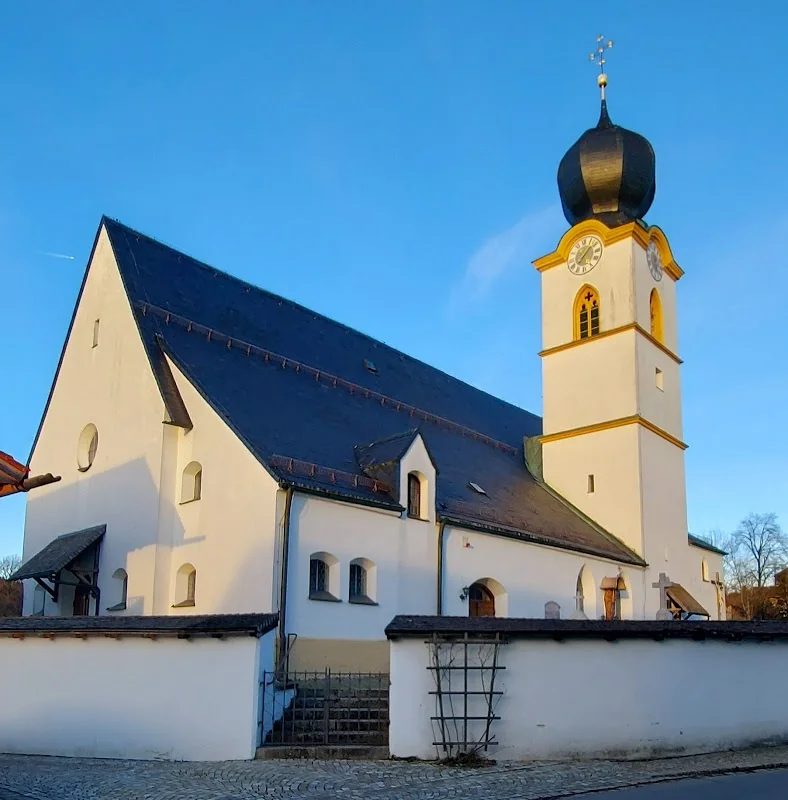
St. John the Baptist Truchtlaching is one of those places that appears calm at first glance but reveals a lot of history, identity, and regional depth upon closer inspection. The church stands on the banks of the Alz, forming the village center with its onion dome and is not only a religious focal point for Truchtlaching but also a distinctive feature of the local landscape that shapes the character of the entire community. Those looking for images, backgrounds, or practical information will find here a church that combines late Gothic architecture, art historical details, and a vibrant parish tradition. The place itself is located in the Upper Alz Valley, just a few kilometers from Lake Chiemsee, and connects village life, nature, and culture in a way that is as interesting for visitors as it is for locals. ([erzbistum-muenchen.de](https://www.erzbistum-muenchen.de/pfarrei/pv-seeon/cont/69209))
History of St. John the Baptist Truchtlaching Church
The history of St. John the Baptist Truchtlaching goes back a long way. According to the Archdiocese, the Gothic building was constructed in 1435 and expanded to the west in 1956. The regional tourism website describes the church as a late Gothic structure from the first half of the 15th century and adds that the first church at this location was already mentioned in documents in 788. This creates a picture of a place where Christian continuity and local history have been closely intertwined for centuries. The church was also a private church of the knights of Truchtlaching; some well-preserved tombstones of this lineage are kept in the church. This makes the building not only a religious space but also a historical memory site for the village and its noble and family history. ([erzbistum-muenchen.de](https://www.erzbistum-muenchen.de/pfarrei/pv-seeon/cont/69209))
Particularly exciting is the connection between architecture and village structure. The church lies on the banks of the Alz and forms the center of the village with its onion dome. This location is defining for Truchtlaching because here spiritual, scenic, and historical significance overlap. The municipality of Seeon-Seebruck also describes Truchtlaching as a state-recognized resort in the idyllic Upper Alz Valley, surrounded by fields, forests, and meadows. When looking at the place as a whole, it becomes clear why the church is so strongly embedded in the local landscape: it is not an isolated monument but part of a developed village core that has evolved over centuries. This also supports the impression that visitors here do not just see a sight but experience a piece of living local history. ([erzbistum-muenchen.de](https://www.erzbistum-muenchen.de/pfarrei/pv-seeon/cont/69209))
Winged Altar, Pietà, and the Artworks in the Church Space
Inside the church lies one of the most important reasons for a visit: the furnishings. The main piece of furnishing is the winged altar redesigned by Roland Friederichsen in 1947, which is modeled after the Gothic style and incorporates figures from the earlier altar. This connects the house of worship with historical substance and a later artistic reinterpretation. For visitors interested in church art, this is particularly appealing because multiple layers of time can be read from a single object. The altar is not merely decoration but a visible testimony to how a community has reordered its sacred center after the upheavals of the 20th century. ([erzbistum-muenchen.de](https://www.erzbistum-muenchen.de/pfarrei/pv-seeon/cont/69209))
Equally noteworthy are the Pietà from around 1500, the Madonna at the side altar, and the tombstones of the Truchtlaching knightly lineage. These elements give depth and dignity to the church space. The Pietà refers to late medieval piety, the Madonna at the side altar to Marian devotion, and the tombstones to the close connection between the church and local ruling history. Especially in smaller village churches, this mixture is often particularly impressive because it does not appear museum-like but is embedded in a still-used sacred space. Those who take their time will discover here not an overloaded presentation but a concentrated, calm form of representation that characterizes the place and makes the long continuity of faith visible. ([erzbistum-muenchen.de](https://www.erzbistum-muenchen.de/pfarrei/pv-seeon/cont/69209))
Service Times and Parish Association Seeon
St. John the Baptist Truchtlaching is not only a historical building but also an active church location. According to the community portal, services are held in the church every Sunday at 10:30 AM, every Tuesday at 8:00 AM, and every Thursday at 6:30 PM. Additionally, the parish office is open on Wednesdays and Fridays from 9:00 AM to 11:00 AM. For visitors seeking a quiet moment, a prayer, or simply a look into the church, these times are important practical orientation points. Especially for small village churches, it is advisable to pay attention to the service schedule in advance, as the daily rhythm closely aligns with the liturgical times. ([seeon-seebruck-rathaus.de](https://www.seeon-seebruck-rathaus.de/kirchen-in-truchtlaching))
The parish currently has about 1200 Catholics and forms the parish association Seeon together with Seeon and Seebruck. This shows that St. John the Baptist Truchtlaching is part of a larger church network, even though the village church itself maintains its own identity. This is important for external perception: those looking for events, church life, or regional contacts should always see the parish in the context of the parish association. For this reason, research often reveals not only the church itself but also search terms related to Seeon and Seebruck. The church is thus both an independent location and part of a shared pastoral space that connects the Upper Alz Valley ecclesiastically. ([erzbistum-muenchen.de](https://www.erzbistum-muenchen.de/pfarrei/pv-seeon/cont/69209))
Access, Location, and Parking in Truchtlaching
The location of St. John the Baptist Truchtlaching is one of its greatest advantages. The church stands in Truchtlaching, a district of Seeon-Seebruck, on the banks of the Alz and forms the center of the village. The address is listed in regional tourist information as Osterbergstr. 4, 83376 Truchtlaching. Those visiting the church thus experience not just an individual building but a historically grown village center with short pathways, clear orientation, and a scenically appealing environment. This embedding in the village center is also one reason why the visit can be easily combined with a walk through the village or along the Alz. ([erzbistum-muenchen.de](https://www.erzbistum-muenchen.de/pfarrei/pv-seeon/cont/69209))
For parking, the municipality mentions the Alzbad / Truchtlaching parking lot on Seeoner Straße or Wehrländer Straße. There is a shuttle bus stop set up there in summer; additionally, the parking lot is open year-round and is subject to fees daily from Easter to November from 8:00 AM to 7:00 PM. Even though this information is not specifically designated as church parking, it is practically relevant for a visit to Truchtlaching because it describes the infrastructure of the district. Those arriving by car should therefore pay attention to local signage and seasonal information. Overall, it shows: Access is well organized for a small place, but the visit remains intentionally close to the village and not oriented towards a large parking area. ([seeon-seebruck.de](https://www.seeon-seebruck.de/parkplatz-alzbad-truchtlaching))
Truchtlaching on the Alz: Village, History, and Excursion
Truchtlaching itself is much more than just the location of the church. The municipality of Seeon-Seebruck describes the place as a state-recognized resort in the idyllic Upper Alz Valley, just five kilometers from Lake Chiemsee. Fields, forests, and meadows shape the surroundings, and the Alz provides a uniquely scenic experience. For visitors, this creates a combination of village idyll, water, nature, and history. Those who come here quickly realize that the church is part of a larger cultural landscape where religious architecture, rural lifestyle, and tourist attractiveness mutually reinforce each other. ([seeon-seebruck.de](https://www.seeon-seebruck.de/truchtlaching))
The local history goes deep into prehistory. According to the municipality, Celts settled here around 500 BC; later, the Romans influenced the place from Bedaium, which eventually came into the possession of the Bavarian dukes. In 1347, Emperor Ludwig granted the Truchtlaching knights the toll collection at the Alz bridge. This shows that Truchtlaching had early strategic and economic significance. Today, this history can be experienced on the Archaeological Circular Path, which is about 27 kilometers long and runs through all three municipal parts Seebruck, Truchtlaching, and Seeon. Along the circular path are several stations directly in the vicinity of Truchtlaching, including the Celtic farmstead, the Celtic fortification, and the early medieval refuge. Those visiting the church can thus easily combine the excursion with a historical walk or a bike tour. ([seeon-seebruck.de](https://www.seeon-seebruck.de/truchtlaching))
Photos, View Axes, and the Best Time to Visit
Those looking for images of St. John the Baptist Truchtlaching will benefit especially from the location and silhouette of the church. The combination of late Gothic building, onion dome, and position on the banks of the Alz makes the place particularly photogenic. This is a natural conclusion from the official descriptions, as the church forms the center of the village and is idyllically situated by the Alz. This creates clear view axes between the village center, tower, and landscape. For the visual effect, this contrast is important: historical architecture meets a calm, rural environment. This results in particularly good photo opportunities, especially when the surroundings are quiet and the onion dome stands out clearly against the sky. ([erzbistum-muenchen.de](https://www.erzbistum-muenchen.de/pfarrei/pv-seeon/cont/69209))
The place itself also supports the visual quality. Truchtlaching is described as rural, nature-connected, and historically grown. The proximity to Alzbad, water playground, and archaeological stations also makes the place a destination that can be easily explored on foot. Those wishing to take photos can therefore combine the church with views of the village, river proximity, and village scenery, rather than just capturing a single motif. This is particularly appealing for travelers who are looking for not just a monument but a coherent overall picture of church, village, and landscape. Thus, a simple photo research quickly turns into a small excursion with multiple motifs, perspectives, and impressions. ([seeon-seebruck-rathaus.de](https://www.seeon-seebruck-rathaus.de/spielplatz))
Practical Tips for Your Visit to St. John the Baptist
For a successful visit to St. John the Baptist Truchtlaching, it is worthwhile to read the church and local information together. The service times provide a good framework if you want to experience the church from the inside, and the office hours on Wednesday and Friday help with organizational questions. Since the church is part of the parish association Seeon, much information flows through the shared structures of the parishes. Therefore, if you are planning a quiet visit, you should first check whether a service is taking place. This allows for a respectful and unhurried visit that meets both the sacred function of the place and the interest in architecture and history. ([seeon-seebruck.de](https://www.seeon-seebruck.de/kirchen-in-truchtlaching))
The surroundings are also worth attention. Truchtlaching is not an isolated church tower location but a place with high quality of stay: Alzbad, archaeological stations, river proximity, and the historic village center can be well connected. Those arriving by car can use the Alzbad / Truchtlaching parking lot as a practical starting point and then continue the visit on foot. Those who prefer to stay longer will find in the village the combination of nature, history, and tranquility that characterizes the resort. It is precisely this connection that makes St. John the Baptist Truchtlaching interesting for those seeking not just to see a church but an authentic place with genuine regional appeal. ([seeon-seebruck.de](https://www.seeon-seebruck.de/parkplatz-alzbad-truchtlaching))
Sources:
- Official website of the Archdiocese of Munich and Freising for the parish of St. John the Baptist Truchtlaching ([erzbistum-muenchen.de](https://www.erzbistum-muenchen.de/pfarrei/pv-seeon/cont/69209))
- Municipality of Seeon-Seebruck: Church in Truchtlaching with service times and parish contact ([seeon-seebruck-rathaus.de](https://www.seeon-seebruck-rathaus.de/kirchen-in-truchtlaching))
- Chiemsee-Alpenland Tourism: Church of St. John the Baptist in Truchtlaching ([chiemsee-alpenland.de](https://www.chiemsee-alpenland.de/entdecken/alle-sehenswuerdigkeiten/kirche-st.-johannes-der-taeufer-bda01c888b))
- Municipality of Seeon-Seebruck: Parking lot Alzbad / Truchtlaching ([seeon-seebruck.de](https://www.seeon-seebruck.de/parkplatz-alzbad-truchtlaching))
- Municipality of Seeon-Seebruck: Archaeological Circular Path with stations in Truchtlaching ([seeon-seebruck-rathaus.de](https://www.seeon-seebruck-rathaus.de/archaeologischer-rundweg))
- Municipality of Seeon-Seebruck: Truchtlaching on the Alz and local history ([seeon-seebruck.de](https://www.seeon-seebruck.de/truchtlaching))
- Municipality of Seeon-Seebruck: Playground in Alzbad Truchtlaching as a local environment reference ([seeon-seebruck-rathaus.de](https://www.seeon-seebruck.de/spielplatz))
Show moreShow less
St. John the Baptist Truchtlaching | History & Photos
St. John the Baptist Truchtlaching is one of those places that appears calm at first glance but reveals a lot of history, identity, and regional depth upon closer inspection. The church stands on the banks of the Alz, forming the village center with its onion dome and is not only a religious focal point for Truchtlaching but also a distinctive feature of the local landscape that shapes the character of the entire community. Those looking for images, backgrounds, or practical information will find here a church that combines late Gothic architecture, art historical details, and a vibrant parish tradition. The place itself is located in the Upper Alz Valley, just a few kilometers from Lake Chiemsee, and connects village life, nature, and culture in a way that is as interesting for visitors as it is for locals. ([erzbistum-muenchen.de](https://www.erzbistum-muenchen.de/pfarrei/pv-seeon/cont/69209))
History of St. John the Baptist Truchtlaching Church
The history of St. John the Baptist Truchtlaching goes back a long way. According to the Archdiocese, the Gothic building was constructed in 1435 and expanded to the west in 1956. The regional tourism website describes the church as a late Gothic structure from the first half of the 15th century and adds that the first church at this location was already mentioned in documents in 788. This creates a picture of a place where Christian continuity and local history have been closely intertwined for centuries. The church was also a private church of the knights of Truchtlaching; some well-preserved tombstones of this lineage are kept in the church. This makes the building not only a religious space but also a historical memory site for the village and its noble and family history. ([erzbistum-muenchen.de](https://www.erzbistum-muenchen.de/pfarrei/pv-seeon/cont/69209))
Particularly exciting is the connection between architecture and village structure. The church lies on the banks of the Alz and forms the center of the village with its onion dome. This location is defining for Truchtlaching because here spiritual, scenic, and historical significance overlap. The municipality of Seeon-Seebruck also describes Truchtlaching as a state-recognized resort in the idyllic Upper Alz Valley, surrounded by fields, forests, and meadows. When looking at the place as a whole, it becomes clear why the church is so strongly embedded in the local landscape: it is not an isolated monument but part of a developed village core that has evolved over centuries. This also supports the impression that visitors here do not just see a sight but experience a piece of living local history. ([erzbistum-muenchen.de](https://www.erzbistum-muenchen.de/pfarrei/pv-seeon/cont/69209))
Winged Altar, Pietà, and the Artworks in the Church Space
Inside the church lies one of the most important reasons for a visit: the furnishings. The main piece of furnishing is the winged altar redesigned by Roland Friederichsen in 1947, which is modeled after the Gothic style and incorporates figures from the earlier altar. This connects the house of worship with historical substance and a later artistic reinterpretation. For visitors interested in church art, this is particularly appealing because multiple layers of time can be read from a single object. The altar is not merely decoration but a visible testimony to how a community has reordered its sacred center after the upheavals of the 20th century. ([erzbistum-muenchen.de](https://www.erzbistum-muenchen.de/pfarrei/pv-seeon/cont/69209))
Equally noteworthy are the Pietà from around 1500, the Madonna at the side altar, and the tombstones of the Truchtlaching knightly lineage. These elements give depth and dignity to the church space. The Pietà refers to late medieval piety, the Madonna at the side altar to Marian devotion, and the tombstones to the close connection between the church and local ruling history. Especially in smaller village churches, this mixture is often particularly impressive because it does not appear museum-like but is embedded in a still-used sacred space. Those who take their time will discover here not an overloaded presentation but a concentrated, calm form of representation that characterizes the place and makes the long continuity of faith visible. ([erzbistum-muenchen.de](https://www.erzbistum-muenchen.de/pfarrei/pv-seeon/cont/69209))
Service Times and Parish Association Seeon
St. John the Baptist Truchtlaching is not only a historical building but also an active church location. According to the community portal, services are held in the church every Sunday at 10:30 AM, every Tuesday at 8:00 AM, and every Thursday at 6:30 PM. Additionally, the parish office is open on Wednesdays and Fridays from 9:00 AM to 11:00 AM. For visitors seeking a quiet moment, a prayer, or simply a look into the church, these times are important practical orientation points. Especially for small village churches, it is advisable to pay attention to the service schedule in advance, as the daily rhythm closely aligns with the liturgical times. ([seeon-seebruck-rathaus.de](https://www.seeon-seebruck-rathaus.de/kirchen-in-truchtlaching))
The parish currently has about 1200 Catholics and forms the parish association Seeon together with Seeon and Seebruck. This shows that St. John the Baptist Truchtlaching is part of a larger church network, even though the village church itself maintains its own identity. This is important for external perception: those looking for events, church life, or regional contacts should always see the parish in the context of the parish association. For this reason, research often reveals not only the church itself but also search terms related to Seeon and Seebruck. The church is thus both an independent location and part of a shared pastoral space that connects the Upper Alz Valley ecclesiastically. ([erzbistum-muenchen.de](https://www.erzbistum-muenchen.de/pfarrei/pv-seeon/cont/69209))
Access, Location, and Parking in Truchtlaching
The location of St. John the Baptist Truchtlaching is one of its greatest advantages. The church stands in Truchtlaching, a district of Seeon-Seebruck, on the banks of the Alz and forms the center of the village. The address is listed in regional tourist information as Osterbergstr. 4, 83376 Truchtlaching. Those visiting the church thus experience not just an individual building but a historically grown village center with short pathways, clear orientation, and a scenically appealing environment. This embedding in the village center is also one reason why the visit can be easily combined with a walk through the village or along the Alz. ([erzbistum-muenchen.de](https://www.erzbistum-muenchen.de/pfarrei/pv-seeon/cont/69209))
For parking, the municipality mentions the Alzbad / Truchtlaching parking lot on Seeoner Straße or Wehrländer Straße. There is a shuttle bus stop set up there in summer; additionally, the parking lot is open year-round and is subject to fees daily from Easter to November from 8:00 AM to 7:00 PM. Even though this information is not specifically designated as church parking, it is practically relevant for a visit to Truchtlaching because it describes the infrastructure of the district. Those arriving by car should therefore pay attention to local signage and seasonal information. Overall, it shows: Access is well organized for a small place, but the visit remains intentionally close to the village and not oriented towards a large parking area. ([seeon-seebruck.de](https://www.seeon-seebruck.de/parkplatz-alzbad-truchtlaching))
Truchtlaching on the Alz: Village, History, and Excursion
Truchtlaching itself is much more than just the location of the church. The municipality of Seeon-Seebruck describes the place as a state-recognized resort in the idyllic Upper Alz Valley, just five kilometers from Lake Chiemsee. Fields, forests, and meadows shape the surroundings, and the Alz provides a uniquely scenic experience. For visitors, this creates a combination of village idyll, water, nature, and history. Those who come here quickly realize that the church is part of a larger cultural landscape where religious architecture, rural lifestyle, and tourist attractiveness mutually reinforce each other. ([seeon-seebruck.de](https://www.seeon-seebruck.de/truchtlaching))
The local history goes deep into prehistory. According to the municipality, Celts settled here around 500 BC; later, the Romans influenced the place from Bedaium, which eventually came into the possession of the Bavarian dukes. In 1347, Emperor Ludwig granted the Truchtlaching knights the toll collection at the Alz bridge. This shows that Truchtlaching had early strategic and economic significance. Today, this history can be experienced on the Archaeological Circular Path, which is about 27 kilometers long and runs through all three municipal parts Seebruck, Truchtlaching, and Seeon. Along the circular path are several stations directly in the vicinity of Truchtlaching, including the Celtic farmstead, the Celtic fortification, and the early medieval refuge. Those visiting the church can thus easily combine the excursion with a historical walk or a bike tour. ([seeon-seebruck.de](https://www.seeon-seebruck.de/truchtlaching))
Photos, View Axes, and the Best Time to Visit
Those looking for images of St. John the Baptist Truchtlaching will benefit especially from the location and silhouette of the church. The combination of late Gothic building, onion dome, and position on the banks of the Alz makes the place particularly photogenic. This is a natural conclusion from the official descriptions, as the church forms the center of the village and is idyllically situated by the Alz. This creates clear view axes between the village center, tower, and landscape. For the visual effect, this contrast is important: historical architecture meets a calm, rural environment. This results in particularly good photo opportunities, especially when the surroundings are quiet and the onion dome stands out clearly against the sky. ([erzbistum-muenchen.de](https://www.erzbistum-muenchen.de/pfarrei/pv-seeon/cont/69209))
The place itself also supports the visual quality. Truchtlaching is described as rural, nature-connected, and historically grown. The proximity to Alzbad, water playground, and archaeological stations also makes the place a destination that can be easily explored on foot. Those wishing to take photos can therefore combine the church with views of the village, river proximity, and village scenery, rather than just capturing a single motif. This is particularly appealing for travelers who are looking for not just a monument but a coherent overall picture of church, village, and landscape. Thus, a simple photo research quickly turns into a small excursion with multiple motifs, perspectives, and impressions. ([seeon-seebruck-rathaus.de](https://www.seeon-seebruck-rathaus.de/spielplatz))
Practical Tips for Your Visit to St. John the Baptist
For a successful visit to St. John the Baptist Truchtlaching, it is worthwhile to read the church and local information together. The service times provide a good framework if you want to experience the church from the inside, and the office hours on Wednesday and Friday help with organizational questions. Since the church is part of the parish association Seeon, much information flows through the shared structures of the parishes. Therefore, if you are planning a quiet visit, you should first check whether a service is taking place. This allows for a respectful and unhurried visit that meets both the sacred function of the place and the interest in architecture and history. ([seeon-seebruck.de](https://www.seeon-seebruck.de/kirchen-in-truchtlaching))
The surroundings are also worth attention. Truchtlaching is not an isolated church tower location but a place with high quality of stay: Alzbad, archaeological stations, river proximity, and the historic village center can be well connected. Those arriving by car can use the Alzbad / Truchtlaching parking lot as a practical starting point and then continue the visit on foot. Those who prefer to stay longer will find in the village the combination of nature, history, and tranquility that characterizes the resort. It is precisely this connection that makes St. John the Baptist Truchtlaching interesting for those seeking not just to see a church but an authentic place with genuine regional appeal. ([seeon-seebruck.de](https://www.seeon-seebruck.de/parkplatz-alzbad-truchtlaching))
Sources:
- Official website of the Archdiocese of Munich and Freising for the parish of St. John the Baptist Truchtlaching ([erzbistum-muenchen.de](https://www.erzbistum-muenchen.de/pfarrei/pv-seeon/cont/69209))
- Municipality of Seeon-Seebruck: Church in Truchtlaching with service times and parish contact ([seeon-seebruck-rathaus.de](https://www.seeon-seebruck-rathaus.de/kirchen-in-truchtlaching))
- Chiemsee-Alpenland Tourism: Church of St. John the Baptist in Truchtlaching ([chiemsee-alpenland.de](https://www.chiemsee-alpenland.de/entdecken/alle-sehenswuerdigkeiten/kirche-st.-johannes-der-taeufer-bda01c888b))
- Municipality of Seeon-Seebruck: Parking lot Alzbad / Truchtlaching ([seeon-seebruck.de](https://www.seeon-seebruck.de/parkplatz-alzbad-truchtlaching))
- Municipality of Seeon-Seebruck: Archaeological Circular Path with stations in Truchtlaching ([seeon-seebruck-rathaus.de](https://www.seeon-seebruck-rathaus.de/archaeologischer-rundweg))
- Municipality of Seeon-Seebruck: Truchtlaching on the Alz and local history ([seeon-seebruck.de](https://www.seeon-seebruck.de/truchtlaching))
- Municipality of Seeon-Seebruck: Playground in Alzbad Truchtlaching as a local environment reference ([seeon-seebruck-rathaus.de](https://www.seeon-seebruck.de/spielplatz))
St. John the Baptist Truchtlaching | History & Photos
St. John the Baptist Truchtlaching is one of those places that appears calm at first glance but reveals a lot of history, identity, and regional depth upon closer inspection. The church stands on the banks of the Alz, forming the village center with its onion dome and is not only a religious focal point for Truchtlaching but also a distinctive feature of the local landscape that shapes the character of the entire community. Those looking for images, backgrounds, or practical information will find here a church that combines late Gothic architecture, art historical details, and a vibrant parish tradition. The place itself is located in the Upper Alz Valley, just a few kilometers from Lake Chiemsee, and connects village life, nature, and culture in a way that is as interesting for visitors as it is for locals. ([erzbistum-muenchen.de](https://www.erzbistum-muenchen.de/pfarrei/pv-seeon/cont/69209))
History of St. John the Baptist Truchtlaching Church
The history of St. John the Baptist Truchtlaching goes back a long way. According to the Archdiocese, the Gothic building was constructed in 1435 and expanded to the west in 1956. The regional tourism website describes the church as a late Gothic structure from the first half of the 15th century and adds that the first church at this location was already mentioned in documents in 788. This creates a picture of a place where Christian continuity and local history have been closely intertwined for centuries. The church was also a private church of the knights of Truchtlaching; some well-preserved tombstones of this lineage are kept in the church. This makes the building not only a religious space but also a historical memory site for the village and its noble and family history. ([erzbistum-muenchen.de](https://www.erzbistum-muenchen.de/pfarrei/pv-seeon/cont/69209))
Particularly exciting is the connection between architecture and village structure. The church lies on the banks of the Alz and forms the center of the village with its onion dome. This location is defining for Truchtlaching because here spiritual, scenic, and historical significance overlap. The municipality of Seeon-Seebruck also describes Truchtlaching as a state-recognized resort in the idyllic Upper Alz Valley, surrounded by fields, forests, and meadows. When looking at the place as a whole, it becomes clear why the church is so strongly embedded in the local landscape: it is not an isolated monument but part of a developed village core that has evolved over centuries. This also supports the impression that visitors here do not just see a sight but experience a piece of living local history. ([erzbistum-muenchen.de](https://www.erzbistum-muenchen.de/pfarrei/pv-seeon/cont/69209))
Winged Altar, Pietà, and the Artworks in the Church Space
Inside the church lies one of the most important reasons for a visit: the furnishings. The main piece of furnishing is the winged altar redesigned by Roland Friederichsen in 1947, which is modeled after the Gothic style and incorporates figures from the earlier altar. This connects the house of worship with historical substance and a later artistic reinterpretation. For visitors interested in church art, this is particularly appealing because multiple layers of time can be read from a single object. The altar is not merely decoration but a visible testimony to how a community has reordered its sacred center after the upheavals of the 20th century. ([erzbistum-muenchen.de](https://www.erzbistum-muenchen.de/pfarrei/pv-seeon/cont/69209))
Equally noteworthy are the Pietà from around 1500, the Madonna at the side altar, and the tombstones of the Truchtlaching knightly lineage. These elements give depth and dignity to the church space. The Pietà refers to late medieval piety, the Madonna at the side altar to Marian devotion, and the tombstones to the close connection between the church and local ruling history. Especially in smaller village churches, this mixture is often particularly impressive because it does not appear museum-like but is embedded in a still-used sacred space. Those who take their time will discover here not an overloaded presentation but a concentrated, calm form of representation that characterizes the place and makes the long continuity of faith visible. ([erzbistum-muenchen.de](https://www.erzbistum-muenchen.de/pfarrei/pv-seeon/cont/69209))
Service Times and Parish Association Seeon
St. John the Baptist Truchtlaching is not only a historical building but also an active church location. According to the community portal, services are held in the church every Sunday at 10:30 AM, every Tuesday at 8:00 AM, and every Thursday at 6:30 PM. Additionally, the parish office is open on Wednesdays and Fridays from 9:00 AM to 11:00 AM. For visitors seeking a quiet moment, a prayer, or simply a look into the church, these times are important practical orientation points. Especially for small village churches, it is advisable to pay attention to the service schedule in advance, as the daily rhythm closely aligns with the liturgical times. ([seeon-seebruck-rathaus.de](https://www.seeon-seebruck-rathaus.de/kirchen-in-truchtlaching))
The parish currently has about 1200 Catholics and forms the parish association Seeon together with Seeon and Seebruck. This shows that St. John the Baptist Truchtlaching is part of a larger church network, even though the village church itself maintains its own identity. This is important for external perception: those looking for events, church life, or regional contacts should always see the parish in the context of the parish association. For this reason, research often reveals not only the church itself but also search terms related to Seeon and Seebruck. The church is thus both an independent location and part of a shared pastoral space that connects the Upper Alz Valley ecclesiastically. ([erzbistum-muenchen.de](https://www.erzbistum-muenchen.de/pfarrei/pv-seeon/cont/69209))
Access, Location, and Parking in Truchtlaching
The location of St. John the Baptist Truchtlaching is one of its greatest advantages. The church stands in Truchtlaching, a district of Seeon-Seebruck, on the banks of the Alz and forms the center of the village. The address is listed in regional tourist information as Osterbergstr. 4, 83376 Truchtlaching. Those visiting the church thus experience not just an individual building but a historically grown village center with short pathways, clear orientation, and a scenically appealing environment. This embedding in the village center is also one reason why the visit can be easily combined with a walk through the village or along the Alz. ([erzbistum-muenchen.de](https://www.erzbistum-muenchen.de/pfarrei/pv-seeon/cont/69209))
For parking, the municipality mentions the Alzbad / Truchtlaching parking lot on Seeoner Straße or Wehrländer Straße. There is a shuttle bus stop set up there in summer; additionally, the parking lot is open year-round and is subject to fees daily from Easter to November from 8:00 AM to 7:00 PM. Even though this information is not specifically designated as church parking, it is practically relevant for a visit to Truchtlaching because it describes the infrastructure of the district. Those arriving by car should therefore pay attention to local signage and seasonal information. Overall, it shows: Access is well organized for a small place, but the visit remains intentionally close to the village and not oriented towards a large parking area. ([seeon-seebruck.de](https://www.seeon-seebruck.de/parkplatz-alzbad-truchtlaching))
Truchtlaching on the Alz: Village, History, and Excursion
Truchtlaching itself is much more than just the location of the church. The municipality of Seeon-Seebruck describes the place as a state-recognized resort in the idyllic Upper Alz Valley, just five kilometers from Lake Chiemsee. Fields, forests, and meadows shape the surroundings, and the Alz provides a uniquely scenic experience. For visitors, this creates a combination of village idyll, water, nature, and history. Those who come here quickly realize that the church is part of a larger cultural landscape where religious architecture, rural lifestyle, and tourist attractiveness mutually reinforce each other. ([seeon-seebruck.de](https://www.seeon-seebruck.de/truchtlaching))
The local history goes deep into prehistory. According to the municipality, Celts settled here around 500 BC; later, the Romans influenced the place from Bedaium, which eventually came into the possession of the Bavarian dukes. In 1347, Emperor Ludwig granted the Truchtlaching knights the toll collection at the Alz bridge. This shows that Truchtlaching had early strategic and economic significance. Today, this history can be experienced on the Archaeological Circular Path, which is about 27 kilometers long and runs through all three municipal parts Seebruck, Truchtlaching, and Seeon. Along the circular path are several stations directly in the vicinity of Truchtlaching, including the Celtic farmstead, the Celtic fortification, and the early medieval refuge. Those visiting the church can thus easily combine the excursion with a historical walk or a bike tour. ([seeon-seebruck.de](https://www.seeon-seebruck.de/truchtlaching))
Photos, View Axes, and the Best Time to Visit
Those looking for images of St. John the Baptist Truchtlaching will benefit especially from the location and silhouette of the church. The combination of late Gothic building, onion dome, and position on the banks of the Alz makes the place particularly photogenic. This is a natural conclusion from the official descriptions, as the church forms the center of the village and is idyllically situated by the Alz. This creates clear view axes between the village center, tower, and landscape. For the visual effect, this contrast is important: historical architecture meets a calm, rural environment. This results in particularly good photo opportunities, especially when the surroundings are quiet and the onion dome stands out clearly against the sky. ([erzbistum-muenchen.de](https://www.erzbistum-muenchen.de/pfarrei/pv-seeon/cont/69209))
The place itself also supports the visual quality. Truchtlaching is described as rural, nature-connected, and historically grown. The proximity to Alzbad, water playground, and archaeological stations also makes the place a destination that can be easily explored on foot. Those wishing to take photos can therefore combine the church with views of the village, river proximity, and village scenery, rather than just capturing a single motif. This is particularly appealing for travelers who are looking for not just a monument but a coherent overall picture of church, village, and landscape. Thus, a simple photo research quickly turns into a small excursion with multiple motifs, perspectives, and impressions. ([seeon-seebruck-rathaus.de](https://www.seeon-seebruck-rathaus.de/spielplatz))
Practical Tips for Your Visit to St. John the Baptist
For a successful visit to St. John the Baptist Truchtlaching, it is worthwhile to read the church and local information together. The service times provide a good framework if you want to experience the church from the inside, and the office hours on Wednesday and Friday help with organizational questions. Since the church is part of the parish association Seeon, much information flows through the shared structures of the parishes. Therefore, if you are planning a quiet visit, you should first check whether a service is taking place. This allows for a respectful and unhurried visit that meets both the sacred function of the place and the interest in architecture and history. ([seeon-seebruck.de](https://www.seeon-seebruck.de/kirchen-in-truchtlaching))
The surroundings are also worth attention. Truchtlaching is not an isolated church tower location but a place with high quality of stay: Alzbad, archaeological stations, river proximity, and the historic village center can be well connected. Those arriving by car can use the Alzbad / Truchtlaching parking lot as a practical starting point and then continue the visit on foot. Those who prefer to stay longer will find in the village the combination of nature, history, and tranquility that characterizes the resort. It is precisely this connection that makes St. John the Baptist Truchtlaching interesting for those seeking not just to see a church but an authentic place with genuine regional appeal. ([seeon-seebruck.de](https://www.seeon-seebruck.de/parkplatz-alzbad-truchtlaching))
Sources:
- Official website of the Archdiocese of Munich and Freising for the parish of St. John the Baptist Truchtlaching ([erzbistum-muenchen.de](https://www.erzbistum-muenchen.de/pfarrei/pv-seeon/cont/69209))
- Municipality of Seeon-Seebruck: Church in Truchtlaching with service times and parish contact ([seeon-seebruck-rathaus.de](https://www.seeon-seebruck-rathaus.de/kirchen-in-truchtlaching))
- Chiemsee-Alpenland Tourism: Church of St. John the Baptist in Truchtlaching ([chiemsee-alpenland.de](https://www.chiemsee-alpenland.de/entdecken/alle-sehenswuerdigkeiten/kirche-st.-johannes-der-taeufer-bda01c888b))
- Municipality of Seeon-Seebruck: Parking lot Alzbad / Truchtlaching ([seeon-seebruck.de](https://www.seeon-seebruck.de/parkplatz-alzbad-truchtlaching))
- Municipality of Seeon-Seebruck: Archaeological Circular Path with stations in Truchtlaching ([seeon-seebruck-rathaus.de](https://www.seeon-seebruck-rathaus.de/archaeologischer-rundweg))
- Municipality of Seeon-Seebruck: Truchtlaching on the Alz and local history ([seeon-seebruck.de](https://www.seeon-seebruck.de/truchtlaching))
- Municipality of Seeon-Seebruck: Playground in Alzbad Truchtlaching as a local environment reference ([seeon-seebruck-rathaus.de](https://www.seeon-seebruck.de/spielplatz))
Upcoming Events
No events found
Frequently Asked Questions
Reviews
No reviews found