
Klosterweg 1, Seeon-Seebruck
Klosterweg 1, 83370 Seeon-Seebruck, Germany
Kloster Seeon | History & Arrival
Kloster Seeon is one of the most prominent cultural addresses in Chiemgau: a former Benedictine monastery from the year 994, today a cultural and educational center of the district of Upper Bavaria, conference hotel, and event venue with historical character. The facility is located on Lake Seeon or Klostersee, nestled in a quiet lakeside and park landscape that has been associated with spiritual history, music, art, and hospitality for centuries. Those looking for Seeon monastery germany, Kloster Seeon history, or practical information on arrival, parking, and programs will find a place here that convincingly combines tradition and modernity. The house is suitable for conferences, seminars, cultural enjoyment, overnight stays, and retreats by the water, without losing sight of the historical core of the monastery complex. It is precisely this mix of monastic history, modern infrastructure, and scenic location that makes Kloster Seeon a place that is not only visited but experienced. ([kloster-seeon.de](https://www.kloster-seeon.de/ueber-uns/geschichte))
History of Kloster Seeon: From Island Monastery to Cultural Center
The history of Kloster Seeon officially begins in 994, when Count Palatine Aribo I and his wife Adala establish a cell on an island in today's Klostersee, dedicated to Saint Lambert; as early as 999, the monastery is mentioned in the context of the confirmation of its privileges by Emperor Otto III and Pope Sylvester II. From this early phase, not only a spiritual place developed but also a center of writing and book painting that gained regional attention. The official history of the house also emphasizes that magnificent manuscripts were produced here in the 11th century, among others in the circle of Emperor Henry II. Thus, Kloster Seeon is much more than a beautiful architectural ensemble: it was early on a place of education, art, and monastic organization, whose significance has been reflected in architecture and furnishings over centuries. Today's visitor perspective benefits from the fact that this development remains visible in the house to this day and is presented in guided tours and the permanent exhibition. ([kloster-seeon.de](https://www.kloster-seeon.de/ueber-uns/geschichte))
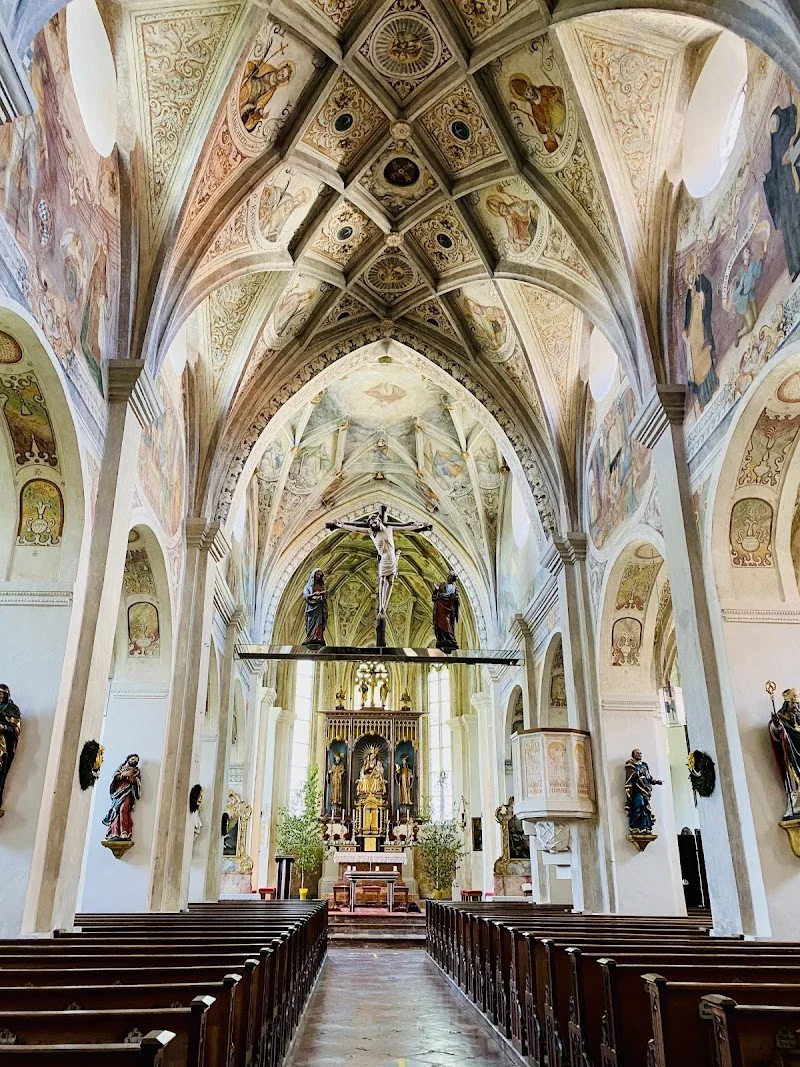
Shaping the current appearance were primarily the renovations of the Romanesque, Gothic, Renaissance, and Baroque periods. The Romanesque column basilica from the late 12th century still forms a preserved part of the complex today, while the late Gothic redesign of the 14th and 15th centuries influenced, among other things, the cloister, chapter house, and the former wine cellar. In 1561, a major fire destroyed large parts of the monastery; in the following decades, under Abbot Martin Kötterlin, the reconstruction took place with the characteristic onion domes of the church towers. In the 17th century, the monastery complex was expanded into a Baroque unity, and in the 18th century, representative rooms were added, including a music hall and a banquet hall. The history of Mozart is also documented here: according to the official monastery history, Wolfgang Amadeus Mozart visited the Benedictine monastery several times, and two of his compositions are associated with Seeon. After the secularization in 1803, there were various uses before the estate was transformed into a cultural and educational center in 1993. ([kloster-seeon.de](https://www.kloster-seeon.de/ueber-uns/geschichte))
It is precisely this history of change that explains why Kloster Seeon appears so multifaceted today. This is not a museum-like place, but a facility that has reinvented itself repeatedly over centuries: from island monastery to spa and castle to modern conference and cultural house. The official website describes the house as a place where one can experience history on-site, deepen it through guided tours, and trace it in the permanent exhibition along important epochs. For visitors, this is ideal because architectural traces, historical facts, and current use connect directly with each other. Thus, upon entering the monastery, one sees not only beautiful facades and a view of the lake but moves through a developed ensemble where spiritual heritage, music history, administrative use, and contemporary cultural mandate overlap. This depth makes Kloster Seeon equally attractive for culture-interested guests, seminar groups, and day-trippers. ([kloster-seeon.de](https://www.kloster-seeon.de/ueber-uns/geschichte))
Arrival and Parking at Kloster Seeon
Kloster Seeon is easily accessible and clearly signposted for arrival. By car, the route from Munich or Salzburg leads via the A8, alternatively from Munich also via the B304; the official arrival description mentions exits 106 Bernau and 109 Grabenstätt as well as further connections via Prien, Rimsting, Eggstätt, Chieming, Seebruck, or Obing. Those arriving by train can travel to Prien am Chiemsee, Bad Endorf, or Traunstein according to the website and continue the journey by taxi or bus. This makes the location well-planned for visitors from the Munich area as well as for guests from Salzburg or the surrounding Alpine foothills. Particularly practical: the coordinates of the house are officially provided, making navigation and route planning uncomplicated. For the SEO topics Kloster Seeon arrival, parking, and tickets, this is important because many guests want to experience the surroundings as rural but not difficult to access. ([kloster-seeon.de](https://www.kloster-seeon.de/ueber-uns/anreise))
The facility is also comfortably set up for parking. Directly at the monastery, there are free parking spaces with about 150 spots available, along with two electric charging stations at the large parking lot and three disabled parking spaces directly at the main building. This mix of free parking options, e-mobility offerings, and barrier-free spaces is a strong argument, especially for conferences, concerts, guided tours, and overnight guests. In conjunction with the clear paths on the monastery peninsula, a relaxed first impression is created that fits very well with a historical house. Therefore, those looking to park at Kloster Seeon will not find a complicated parking logic, but a clearly structured arrival area with practical details. For visitors who connect the place with events, restaurant visits, or the monastery shop, this is particularly pleasant because car, train, and bus remain sensible options. ([kloster-seeon.de](https://www.kloster-seeon.de/ueber-uns/anreise))
Conference Rooms, Banquet Hall, and Seating at Kloster Seeon
Kloster Seeon is not only a historic monument but also a professional conference venue. The official meeting page lists 15 conference, meeting, and seminar rooms with a capacity for up to 199 guests. The house brochure even describes the offer with 16 conference and seminar rooms for 6 to 199 people; additionally, modern seminar technology, free Wi-Fi, and experienced organization are available. This is important for event planners because it results in a wide range of uses: small meetings, workshops, lectures, receptions, cultural events, and multi-day conferences. The rooms range from about 20 square meters to 300 square meters and are all equipped with natural light. Thus, Kloster Seeon convincingly covers the keyword field of conference rooms, seating plans, capacity, and event locations. ([kloster-seeon.de](https://www.kloster-seeon.de/en/meet-kloster-seeon))
Particularly impressive is the banquet hall. It measures 182 square meters, accommodates up to 199 people, and features a stage and sound technology. A wonderful view of the lake complements the Baroque ambiance in which the abbot once resided. Directly adjoining is the Lambertisaal with 120 square meters; both rooms can be separated by a wooden folding wall or combined, creating a total area of around 300 square meters. In addition, there are characterful side rooms such as the Benediktussaal, the former refectory, the Fürstenzimmer with a view of the Klostersee, and the Kramerhaus for confidential discussions or smaller groups. This spatial diversity makes the location particularly attractive for organizers looking for flexible seating plans, representative halls, and historical atmosphere. Those needing a clear seating plan, various room sizes, and professional infrastructure will find in Kloster Seeon a solution that is both functional and aesthetic. ([kloster-seeon.de](https://www.kloster-seeon.de/tagen-im-kloster/tagungsraeume))
The small conference and group rooms also contribute to the good overall impression. The website lists rooms from 20 to 55 square meters designed for up to 20 people, distributed over several floors. For intensive workshops, confidential discussions, or breakout sessions, this is a real advantage because participants can switch between large and small settings depending on the program. Additionally, the house brochure emphasizes the gastronomic infrastructure with a restaurant, Klosterstüberl, tavern with Gothic cellar, lakeside terrace, and banquet hall offerings. This creates a total experience that goes far beyond a simple event space. Those planning a Kloster Seeon program benefit not only from historical walls but from a fully-fledged event architecture with clear room sizes, courtyard, lake view, and culinary framework. This combination of organization, atmosphere, and scalability is one of the strongest reasons why the location is in high demand for conferences and cultural events. ([kloster-seeon.de](https://www.kloster-seeon.de/tagen-im-kloster/tagungsraeume))
Staying at the Monastery: Peace, Rooms, and Relaxation
Those who wish to not only visit the monastery but stay there will find in Kloster Seeon a historically influenced hotel with plenty of peace. The official accommodation page describes 92 former monk cells, which are now used as comfortable rooms distributed across three building complexes. All rooms overlook either the Baroque courtyard or the lake, giving the stay a quiet, almost meditative quality. Additionally, there are clear service times with breakfast from 7:00 to 9:30 AM, as well as check-in and check-out times that allow for a planned hotel stay. Particularly interesting for seminar and cultural guests is that the historical framework does not stop at the sleeping area: the house combines rooms, reception, lobby, breakfast, and leisure offerings in a way that makes the stay pleasant and simultaneously authentic. Thus, overnight stays become part of the monastery experience and not just a practical addition to the event. ([kloster-seeon.de](https://www.kloster-seeon.de/uebernachten))
The room offerings are deliberately designed to be different. There are single rooms, double rooms, double rooms in the Kramerhaus, junior suites, and barrier-free rooms in the main building. Some areas are equipped with modern open wardrobe systems, safes, seating niches, and clear, contemporary bathroom solutions. Additional relaxation options include a sauna, relaxation room, sunbathing area, and direct access to the lake. The website even mentions a loophole to the lake in the sauna area, vividly illustrating the connection between wellness and nature. Additionally, the house brochure mentions a fitness area, bowling alley, bathing jetty, e-charging stations, barrier-free access, and offers for walks or jogging rounds. This creates a stay that works for both conference guests and private guests. Those searching for Kloster Seeon hotel or staying at the monastery will discover here not an ordinary accommodation business but a place that brings together historical substance, modern functionality, and scenic relaxation. ([kloster-seeon.de](https://www.kloster-seeon.de/uebernachten))
Mesnerhaus, Monastery Shop, and Practical Visitor Information
An important point of orientation on the grounds is the Mesnerhaus. According to the future concept of the house, it was opened in 2023 and has since housed the monastery shop, an exhibition area, public restrooms, and additional guest rooms in a listed building from the 16th century. The monastery shop itself has been located in the rooms of the Mesnerhaus at Klosterweg 15 since 2023. This is practical for visitors because shopping, information, ticket sales, and short breaks can be easily combined there. The shop offers gift items, regional products, literature, postcards, calligraphy supplies, and much more; it also serves as a pre-sale point for events at Kloster Seeon and for Reservix. Therefore, those searching for the keyword seeon mesnerhaus will land at a very specific, currently actively used part of the monastery complex. ([kloster-seeon.de](https://www.kloster-seeon.de/ueber-uns/zukunftskonzept?utm_source=openai))
The opening hours are also clearly regulated, making it easy for day visitors to plan. In the summer season, the monastery shop is open daily from 10:00 AM to 12:30 PM and from 1:30 PM to 5:00 PM. In the winter season, the same daily hours apply from Monday to Sunday, with Tuesday being closed as a rest day. This information is helpful not only for spontaneous visitors but also for guests picking up tickets, stopping by before a tour, or wanting to take a gift with them. That the public restrooms are also located in the Mesnerhaus is important for families, day-trippers, and groups. Together with the location directly on Klosterweg, this creates a small, very functional service point that complements the historical ensemble with a modern visitor area. This unobtrusive infrastructure makes the place practical without losing its character. ([kloster-seeon.de](https://www.kloster-seeon.de/kultur-erleben/klosterladen))
Seeoner Madonna, Tours, and Cultural Program
The keyword seeoner madonna refers to one of the most significant works of art from the historical environment of the monastery. The Seeoner Madonna is now located in the Bavarian National Museum in Munich. There it is attributed to the Master of Seeon, dated around 1400, and described as an exceptionally well-preserved Marian sculpture; the acquisition from the former Benedictine monastery Seeon took place in 1854. For art history, the work is particularly important because the anonymous sculptor names himself after this work and because the original version of the sculpture is remarkably well preserved. Thus, visitors to Kloster Seeon will not encounter the Madonna at its original location, but they will certainly meet a central part of monastic art history that remains closely connected to the origin of the house. This makes the place additionally exciting for art history enthusiasts, as architecture, liturgy, sculpture, and museum reception come together here. ([bayerisches-nationalmuseum.de](https://www.bayerisches-nationalmuseum.de/en/collection/00023505))
The tours at Kloster Seeon build precisely on this historical depth. The official tour page offers a large tour through the former monastery church of St. Lambert, the Abbot's chapel of St. Nicholas, and the former monastery complex; the small tour focuses more compactly on the founding of the monastery and the Abbot's chapel. Additionally, there is a melodious tour with a small concert as well as open-air tours around the peninsula. Furthermore, there is a broad cultural program with exhibitions, tours, concerts, and readings. The event entries also show how lively the house is used today: open-air concerts on the peninsula, seasonal market formats, and musical evenings are just as much a part of it as specialized tours and themed programs. Therefore, those searching for Kloster Seeon events, programs, or tickets will find not only a historical address but a vibrant cultural operation that offers new occasions throughout the year. This connection of museum history, tour offerings, and current cultural calendar is one of the reasons why Kloster Seeon is searched for so frequently online. ([kloster-seeon.de](https://www.kloster-seeon.de/kultur-erleben/fuehrungen))
In conclusion, Kloster Seeon is a place where the most important search intentions can be very well bundled: history, arrival, parking, conference rooms, banquet hall, overnight stays, monastery shop, tours, and cultural program. The facility is clearly structured, professionally operated, and historically exceptionally dense. Those looking for a quiet seminar location will find modern technology and flexible rooms. Those wanting to experience culture and history will receive tours, exhibitions, and a strong connection to the Seeoner Madonna as well as the musical history of the house. Those simply wanting to relax will benefit from the lake, courtyard, garden, and hotel. This multiple quality makes Kloster Seeon a location with high stay quality and very good SEO relevance. ([kloster-seeon.de](https://www.kloster-seeon.de/en/meet-kloster-seeon))
Sources:
https://www.kloster-seeon.de/ueber-uns/geschichte — Kloster Seeon: History ([kloster-seeon.de](https://www.kloster-seeon.de/ueber-uns/geschichte))https://www.kloster-seeon.de/ueber-uns/anreise — Kloster Seeon: Arrival and Parking ([kloster-seeon.de](https://www.kloster-seeon.de/ueber-uns/anreise))https://www.kloster-seeon.de/tagen-im-kloster/tagungsraeume — Kloster Seeon: Conference Rooms and Banquet Hall ([kloster-seeon.de](https://www.kloster-seeon.de/tagen-im-kloster/tagungsraeume))https://www.kloster-seeon.de/uebernachten — Kloster Seeon: Staying at the Monastery ([kloster-seeon.de](https://www.kloster-seeon.de/uebernachten))https://www.kloster-seeon.de/kultur-erleben/klosterladen — Kloster Seeon: Mesnerhaus and Monastery Shop ([kloster-seeon.de](https://www.kloster-seeon.de/kultur-erleben/klosterladen))https://www.kloster-seeon.de/kultur-erleben/fuehrungen — Kloster Seeon: Tours ([kloster-seeon.de](https://www.kloster-seeon.de/kultur-erleben/fuehrungen))https://www.bayerisches-nationalmuseum.de/en/collection/00023505 — Bavarian National Museum: Seeoner Madonna ([bayerisches-nationalmuseum.de](https://www.bayerisches-nationalmuseum.de/en/collection/00023505))
Show moreShow less
Kloster Seeon | History & Arrival
Kloster Seeon is one of the most prominent cultural addresses in Chiemgau: a former Benedictine monastery from the year 994, today a cultural and educational center of the district of Upper Bavaria, conference hotel, and event venue with historical character. The facility is located on Lake Seeon or Klostersee, nestled in a quiet lakeside and park landscape that has been associated with spiritual history, music, art, and hospitality for centuries. Those looking for Seeon monastery germany, Kloster Seeon history, or practical information on arrival, parking, and programs will find a place here that convincingly combines tradition and modernity. The house is suitable for conferences, seminars, cultural enjoyment, overnight stays, and retreats by the water, without losing sight of the historical core of the monastery complex. It is precisely this mix of monastic history, modern infrastructure, and scenic location that makes Kloster Seeon a place that is not only visited but experienced. ([kloster-seeon.de](https://www.kloster-seeon.de/ueber-uns/geschichte))
History of Kloster Seeon: From Island Monastery to Cultural Center
The history of Kloster Seeon officially begins in 994, when Count Palatine Aribo I and his wife Adala establish a cell on an island in today's Klostersee, dedicated to Saint Lambert; as early as 999, the monastery is mentioned in the context of the confirmation of its privileges by Emperor Otto III and Pope Sylvester II. From this early phase, not only a spiritual place developed but also a center of writing and book painting that gained regional attention. The official history of the house also emphasizes that magnificent manuscripts were produced here in the 11th century, among others in the circle of Emperor Henry II. Thus, Kloster Seeon is much more than a beautiful architectural ensemble: it was early on a place of education, art, and monastic organization, whose significance has been reflected in architecture and furnishings over centuries. Today's visitor perspective benefits from the fact that this development remains visible in the house to this day and is presented in guided tours and the permanent exhibition. ([kloster-seeon.de](https://www.kloster-seeon.de/ueber-uns/geschichte))
Shaping the current appearance were primarily the renovations of the Romanesque, Gothic, Renaissance, and Baroque periods. The Romanesque column basilica from the late 12th century still forms a preserved part of the complex today, while the late Gothic redesign of the 14th and 15th centuries influenced, among other things, the cloister, chapter house, and the former wine cellar. In 1561, a major fire destroyed large parts of the monastery; in the following decades, under Abbot Martin Kötterlin, the reconstruction took place with the characteristic onion domes of the church towers. In the 17th century, the monastery complex was expanded into a Baroque unity, and in the 18th century, representative rooms were added, including a music hall and a banquet hall. The history of Mozart is also documented here: according to the official monastery history, Wolfgang Amadeus Mozart visited the Benedictine monastery several times, and two of his compositions are associated with Seeon. After the secularization in 1803, there were various uses before the estate was transformed into a cultural and educational center in 1993. ([kloster-seeon.de](https://www.kloster-seeon.de/ueber-uns/geschichte))
It is precisely this history of change that explains why Kloster Seeon appears so multifaceted today. This is not a museum-like place, but a facility that has reinvented itself repeatedly over centuries: from island monastery to spa and castle to modern conference and cultural house. The official website describes the house as a place where one can experience history on-site, deepen it through guided tours, and trace it in the permanent exhibition along important epochs. For visitors, this is ideal because architectural traces, historical facts, and current use connect directly with each other. Thus, upon entering the monastery, one sees not only beautiful facades and a view of the lake but moves through a developed ensemble where spiritual heritage, music history, administrative use, and contemporary cultural mandate overlap. This depth makes Kloster Seeon equally attractive for culture-interested guests, seminar groups, and day-trippers. ([kloster-seeon.de](https://www.kloster-seeon.de/ueber-uns/geschichte))
Arrival and Parking at Kloster Seeon
Kloster Seeon is easily accessible and clearly signposted for arrival. By car, the route from Munich or Salzburg leads via the A8, alternatively from Munich also via the B304; the official arrival description mentions exits 106 Bernau and 109 Grabenstätt as well as further connections via Prien, Rimsting, Eggstätt, Chieming, Seebruck, or Obing. Those arriving by train can travel to Prien am Chiemsee, Bad Endorf, or Traunstein according to the website and continue the journey by taxi or bus. This makes the location well-planned for visitors from the Munich area as well as for guests from Salzburg or the surrounding Alpine foothills. Particularly practical: the coordinates of the house are officially provided, making navigation and route planning uncomplicated. For the SEO topics Kloster Seeon arrival, parking, and tickets, this is important because many guests want to experience the surroundings as rural but not difficult to access. ([kloster-seeon.de](https://www.kloster-seeon.de/ueber-uns/anreise))
The facility is also comfortably set up for parking. Directly at the monastery, there are free parking spaces with about 150 spots available, along with two electric charging stations at the large parking lot and three disabled parking spaces directly at the main building. This mix of free parking options, e-mobility offerings, and barrier-free spaces is a strong argument, especially for conferences, concerts, guided tours, and overnight guests. In conjunction with the clear paths on the monastery peninsula, a relaxed first impression is created that fits very well with a historical house. Therefore, those looking to park at Kloster Seeon will not find a complicated parking logic, but a clearly structured arrival area with practical details. For visitors who connect the place with events, restaurant visits, or the monastery shop, this is particularly pleasant because car, train, and bus remain sensible options. ([kloster-seeon.de](https://www.kloster-seeon.de/ueber-uns/anreise))
Conference Rooms, Banquet Hall, and Seating at Kloster Seeon
Kloster Seeon is not only a historic monument but also a professional conference venue. The official meeting page lists 15 conference, meeting, and seminar rooms with a capacity for up to 199 guests. The house brochure even describes the offer with 16 conference and seminar rooms for 6 to 199 people; additionally, modern seminar technology, free Wi-Fi, and experienced organization are available. This is important for event planners because it results in a wide range of uses: small meetings, workshops, lectures, receptions, cultural events, and multi-day conferences. The rooms range from about 20 square meters to 300 square meters and are all equipped with natural light. Thus, Kloster Seeon convincingly covers the keyword field of conference rooms, seating plans, capacity, and event locations. ([kloster-seeon.de](https://www.kloster-seeon.de/en/meet-kloster-seeon))
Particularly impressive is the banquet hall. It measures 182 square meters, accommodates up to 199 people, and features a stage and sound technology. A wonderful view of the lake complements the Baroque ambiance in which the abbot once resided. Directly adjoining is the Lambertisaal with 120 square meters; both rooms can be separated by a wooden folding wall or combined, creating a total area of around 300 square meters. In addition, there are characterful side rooms such as the Benediktussaal, the former refectory, the Fürstenzimmer with a view of the Klostersee, and the Kramerhaus for confidential discussions or smaller groups. This spatial diversity makes the location particularly attractive for organizers looking for flexible seating plans, representative halls, and historical atmosphere. Those needing a clear seating plan, various room sizes, and professional infrastructure will find in Kloster Seeon a solution that is both functional and aesthetic. ([kloster-seeon.de](https://www.kloster-seeon.de/tagen-im-kloster/tagungsraeume))
The small conference and group rooms also contribute to the good overall impression. The website lists rooms from 20 to 55 square meters designed for up to 20 people, distributed over several floors. For intensive workshops, confidential discussions, or breakout sessions, this is a real advantage because participants can switch between large and small settings depending on the program. Additionally, the house brochure emphasizes the gastronomic infrastructure with a restaurant, Klosterstüberl, tavern with Gothic cellar, lakeside terrace, and banquet hall offerings. This creates a total experience that goes far beyond a simple event space. Those planning a Kloster Seeon program benefit not only from historical walls but from a fully-fledged event architecture with clear room sizes, courtyard, lake view, and culinary framework. This combination of organization, atmosphere, and scalability is one of the strongest reasons why the location is in high demand for conferences and cultural events. ([kloster-seeon.de](https://www.kloster-seeon.de/tagen-im-kloster/tagungsraeume))
Staying at the Monastery: Peace, Rooms, and Relaxation
Those who wish to not only visit the monastery but stay there will find in Kloster Seeon a historically influenced hotel with plenty of peace. The official accommodation page describes 92 former monk cells, which are now used as comfortable rooms distributed across three building complexes. All rooms overlook either the Baroque courtyard or the lake, giving the stay a quiet, almost meditative quality. Additionally, there are clear service times with breakfast from 7:00 to 9:30 AM, as well as check-in and check-out times that allow for a planned hotel stay. Particularly interesting for seminar and cultural guests is that the historical framework does not stop at the sleeping area: the house combines rooms, reception, lobby, breakfast, and leisure offerings in a way that makes the stay pleasant and simultaneously authentic. Thus, overnight stays become part of the monastery experience and not just a practical addition to the event. ([kloster-seeon.de](https://www.kloster-seeon.de/uebernachten))
The room offerings are deliberately designed to be different. There are single rooms, double rooms, double rooms in the Kramerhaus, junior suites, and barrier-free rooms in the main building. Some areas are equipped with modern open wardrobe systems, safes, seating niches, and clear, contemporary bathroom solutions. Additional relaxation options include a sauna, relaxation room, sunbathing area, and direct access to the lake. The website even mentions a loophole to the lake in the sauna area, vividly illustrating the connection between wellness and nature. Additionally, the house brochure mentions a fitness area, bowling alley, bathing jetty, e-charging stations, barrier-free access, and offers for walks or jogging rounds. This creates a stay that works for both conference guests and private guests. Those searching for Kloster Seeon hotel or staying at the monastery will discover here not an ordinary accommodation business but a place that brings together historical substance, modern functionality, and scenic relaxation. ([kloster-seeon.de](https://www.kloster-seeon.de/uebernachten))
Mesnerhaus, Monastery Shop, and Practical Visitor Information
An important point of orientation on the grounds is the Mesnerhaus. According to the future concept of the house, it was opened in 2023 and has since housed the monastery shop, an exhibition area, public restrooms, and additional guest rooms in a listed building from the 16th century. The monastery shop itself has been located in the rooms of the Mesnerhaus at Klosterweg 15 since 2023. This is practical for visitors because shopping, information, ticket sales, and short breaks can be easily combined there. The shop offers gift items, regional products, literature, postcards, calligraphy supplies, and much more; it also serves as a pre-sale point for events at Kloster Seeon and for Reservix. Therefore, those searching for the keyword seeon mesnerhaus will land at a very specific, currently actively used part of the monastery complex. ([kloster-seeon.de](https://www.kloster-seeon.de/ueber-uns/zukunftskonzept?utm_source=openai))
The opening hours are also clearly regulated, making it easy for day visitors to plan. In the summer season, the monastery shop is open daily from 10:00 AM to 12:30 PM and from 1:30 PM to 5:00 PM. In the winter season, the same daily hours apply from Monday to Sunday, with Tuesday being closed as a rest day. This information is helpful not only for spontaneous visitors but also for guests picking up tickets, stopping by before a tour, or wanting to take a gift with them. That the public restrooms are also located in the Mesnerhaus is important for families, day-trippers, and groups. Together with the location directly on Klosterweg, this creates a small, very functional service point that complements the historical ensemble with a modern visitor area. This unobtrusive infrastructure makes the place practical without losing its character. ([kloster-seeon.de](https://www.kloster-seeon.de/kultur-erleben/klosterladen))
Seeoner Madonna, Tours, and Cultural Program
The keyword seeoner madonna refers to one of the most significant works of art from the historical environment of the monastery. The Seeoner Madonna is now located in the Bavarian National Museum in Munich. There it is attributed to the Master of Seeon, dated around 1400, and described as an exceptionally well-preserved Marian sculpture; the acquisition from the former Benedictine monastery Seeon took place in 1854. For art history, the work is particularly important because the anonymous sculptor names himself after this work and because the original version of the sculpture is remarkably well preserved. Thus, visitors to Kloster Seeon will not encounter the Madonna at its original location, but they will certainly meet a central part of monastic art history that remains closely connected to the origin of the house. This makes the place additionally exciting for art history enthusiasts, as architecture, liturgy, sculpture, and museum reception come together here. ([bayerisches-nationalmuseum.de](https://www.bayerisches-nationalmuseum.de/en/collection/00023505))
The tours at Kloster Seeon build precisely on this historical depth. The official tour page offers a large tour through the former monastery church of St. Lambert, the Abbot's chapel of St. Nicholas, and the former monastery complex; the small tour focuses more compactly on the founding of the monastery and the Abbot's chapel. Additionally, there is a melodious tour with a small concert as well as open-air tours around the peninsula. Furthermore, there is a broad cultural program with exhibitions, tours, concerts, and readings. The event entries also show how lively the house is used today: open-air concerts on the peninsula, seasonal market formats, and musical evenings are just as much a part of it as specialized tours and themed programs. Therefore, those searching for Kloster Seeon events, programs, or tickets will find not only a historical address but a vibrant cultural operation that offers new occasions throughout the year. This connection of museum history, tour offerings, and current cultural calendar is one of the reasons why Kloster Seeon is searched for so frequently online. ([kloster-seeon.de](https://www.kloster-seeon.de/kultur-erleben/fuehrungen))
In conclusion, Kloster Seeon is a place where the most important search intentions can be very well bundled: history, arrival, parking, conference rooms, banquet hall, overnight stays, monastery shop, tours, and cultural program. The facility is clearly structured, professionally operated, and historically exceptionally dense. Those looking for a quiet seminar location will find modern technology and flexible rooms. Those wanting to experience culture and history will receive tours, exhibitions, and a strong connection to the Seeoner Madonna as well as the musical history of the house. Those simply wanting to relax will benefit from the lake, courtyard, garden, and hotel. This multiple quality makes Kloster Seeon a location with high stay quality and very good SEO relevance. ([kloster-seeon.de](https://www.kloster-seeon.de/en/meet-kloster-seeon))
Sources:
https://www.kloster-seeon.de/ueber-uns/geschichte— Kloster Seeon: History ([kloster-seeon.de](https://www.kloster-seeon.de/ueber-uns/geschichte))https://www.kloster-seeon.de/ueber-uns/anreise— Kloster Seeon: Arrival and Parking ([kloster-seeon.de](https://www.kloster-seeon.de/ueber-uns/anreise))https://www.kloster-seeon.de/tagen-im-kloster/tagungsraeume— Kloster Seeon: Conference Rooms and Banquet Hall ([kloster-seeon.de](https://www.kloster-seeon.de/tagen-im-kloster/tagungsraeume))https://www.kloster-seeon.de/uebernachten— Kloster Seeon: Staying at the Monastery ([kloster-seeon.de](https://www.kloster-seeon.de/uebernachten))https://www.kloster-seeon.de/kultur-erleben/klosterladen— Kloster Seeon: Mesnerhaus and Monastery Shop ([kloster-seeon.de](https://www.kloster-seeon.de/kultur-erleben/klosterladen))https://www.kloster-seeon.de/kultur-erleben/fuehrungen— Kloster Seeon: Tours ([kloster-seeon.de](https://www.kloster-seeon.de/kultur-erleben/fuehrungen))https://www.bayerisches-nationalmuseum.de/en/collection/00023505— Bavarian National Museum: Seeoner Madonna ([bayerisches-nationalmuseum.de](https://www.bayerisches-nationalmuseum.de/en/collection/00023505))
Kloster Seeon | History & Arrival
Kloster Seeon is one of the most prominent cultural addresses in Chiemgau: a former Benedictine monastery from the year 994, today a cultural and educational center of the district of Upper Bavaria, conference hotel, and event venue with historical character. The facility is located on Lake Seeon or Klostersee, nestled in a quiet lakeside and park landscape that has been associated with spiritual history, music, art, and hospitality for centuries. Those looking for Seeon monastery germany, Kloster Seeon history, or practical information on arrival, parking, and programs will find a place here that convincingly combines tradition and modernity. The house is suitable for conferences, seminars, cultural enjoyment, overnight stays, and retreats by the water, without losing sight of the historical core of the monastery complex. It is precisely this mix of monastic history, modern infrastructure, and scenic location that makes Kloster Seeon a place that is not only visited but experienced. ([kloster-seeon.de](https://www.kloster-seeon.de/ueber-uns/geschichte))
History of Kloster Seeon: From Island Monastery to Cultural Center
The history of Kloster Seeon officially begins in 994, when Count Palatine Aribo I and his wife Adala establish a cell on an island in today's Klostersee, dedicated to Saint Lambert; as early as 999, the monastery is mentioned in the context of the confirmation of its privileges by Emperor Otto III and Pope Sylvester II. From this early phase, not only a spiritual place developed but also a center of writing and book painting that gained regional attention. The official history of the house also emphasizes that magnificent manuscripts were produced here in the 11th century, among others in the circle of Emperor Henry II. Thus, Kloster Seeon is much more than a beautiful architectural ensemble: it was early on a place of education, art, and monastic organization, whose significance has been reflected in architecture and furnishings over centuries. Today's visitor perspective benefits from the fact that this development remains visible in the house to this day and is presented in guided tours and the permanent exhibition. ([kloster-seeon.de](https://www.kloster-seeon.de/ueber-uns/geschichte))
Shaping the current appearance were primarily the renovations of the Romanesque, Gothic, Renaissance, and Baroque periods. The Romanesque column basilica from the late 12th century still forms a preserved part of the complex today, while the late Gothic redesign of the 14th and 15th centuries influenced, among other things, the cloister, chapter house, and the former wine cellar. In 1561, a major fire destroyed large parts of the monastery; in the following decades, under Abbot Martin Kötterlin, the reconstruction took place with the characteristic onion domes of the church towers. In the 17th century, the monastery complex was expanded into a Baroque unity, and in the 18th century, representative rooms were added, including a music hall and a banquet hall. The history of Mozart is also documented here: according to the official monastery history, Wolfgang Amadeus Mozart visited the Benedictine monastery several times, and two of his compositions are associated with Seeon. After the secularization in 1803, there were various uses before the estate was transformed into a cultural and educational center in 1993. ([kloster-seeon.de](https://www.kloster-seeon.de/ueber-uns/geschichte))
It is precisely this history of change that explains why Kloster Seeon appears so multifaceted today. This is not a museum-like place, but a facility that has reinvented itself repeatedly over centuries: from island monastery to spa and castle to modern conference and cultural house. The official website describes the house as a place where one can experience history on-site, deepen it through guided tours, and trace it in the permanent exhibition along important epochs. For visitors, this is ideal because architectural traces, historical facts, and current use connect directly with each other. Thus, upon entering the monastery, one sees not only beautiful facades and a view of the lake but moves through a developed ensemble where spiritual heritage, music history, administrative use, and contemporary cultural mandate overlap. This depth makes Kloster Seeon equally attractive for culture-interested guests, seminar groups, and day-trippers. ([kloster-seeon.de](https://www.kloster-seeon.de/ueber-uns/geschichte))
Arrival and Parking at Kloster Seeon
Kloster Seeon is easily accessible and clearly signposted for arrival. By car, the route from Munich or Salzburg leads via the A8, alternatively from Munich also via the B304; the official arrival description mentions exits 106 Bernau and 109 Grabenstätt as well as further connections via Prien, Rimsting, Eggstätt, Chieming, Seebruck, or Obing. Those arriving by train can travel to Prien am Chiemsee, Bad Endorf, or Traunstein according to the website and continue the journey by taxi or bus. This makes the location well-planned for visitors from the Munich area as well as for guests from Salzburg or the surrounding Alpine foothills. Particularly practical: the coordinates of the house are officially provided, making navigation and route planning uncomplicated. For the SEO topics Kloster Seeon arrival, parking, and tickets, this is important because many guests want to experience the surroundings as rural but not difficult to access. ([kloster-seeon.de](https://www.kloster-seeon.de/ueber-uns/anreise))
The facility is also comfortably set up for parking. Directly at the monastery, there are free parking spaces with about 150 spots available, along with two electric charging stations at the large parking lot and three disabled parking spaces directly at the main building. This mix of free parking options, e-mobility offerings, and barrier-free spaces is a strong argument, especially for conferences, concerts, guided tours, and overnight guests. In conjunction with the clear paths on the monastery peninsula, a relaxed first impression is created that fits very well with a historical house. Therefore, those looking to park at Kloster Seeon will not find a complicated parking logic, but a clearly structured arrival area with practical details. For visitors who connect the place with events, restaurant visits, or the monastery shop, this is particularly pleasant because car, train, and bus remain sensible options. ([kloster-seeon.de](https://www.kloster-seeon.de/ueber-uns/anreise))
Conference Rooms, Banquet Hall, and Seating at Kloster Seeon
Kloster Seeon is not only a historic monument but also a professional conference venue. The official meeting page lists 15 conference, meeting, and seminar rooms with a capacity for up to 199 guests. The house brochure even describes the offer with 16 conference and seminar rooms for 6 to 199 people; additionally, modern seminar technology, free Wi-Fi, and experienced organization are available. This is important for event planners because it results in a wide range of uses: small meetings, workshops, lectures, receptions, cultural events, and multi-day conferences. The rooms range from about 20 square meters to 300 square meters and are all equipped with natural light. Thus, Kloster Seeon convincingly covers the keyword field of conference rooms, seating plans, capacity, and event locations. ([kloster-seeon.de](https://www.kloster-seeon.de/en/meet-kloster-seeon))
Particularly impressive is the banquet hall. It measures 182 square meters, accommodates up to 199 people, and features a stage and sound technology. A wonderful view of the lake complements the Baroque ambiance in which the abbot once resided. Directly adjoining is the Lambertisaal with 120 square meters; both rooms can be separated by a wooden folding wall or combined, creating a total area of around 300 square meters. In addition, there are characterful side rooms such as the Benediktussaal, the former refectory, the Fürstenzimmer with a view of the Klostersee, and the Kramerhaus for confidential discussions or smaller groups. This spatial diversity makes the location particularly attractive for organizers looking for flexible seating plans, representative halls, and historical atmosphere. Those needing a clear seating plan, various room sizes, and professional infrastructure will find in Kloster Seeon a solution that is both functional and aesthetic. ([kloster-seeon.de](https://www.kloster-seeon.de/tagen-im-kloster/tagungsraeume))
The small conference and group rooms also contribute to the good overall impression. The website lists rooms from 20 to 55 square meters designed for up to 20 people, distributed over several floors. For intensive workshops, confidential discussions, or breakout sessions, this is a real advantage because participants can switch between large and small settings depending on the program. Additionally, the house brochure emphasizes the gastronomic infrastructure with a restaurant, Klosterstüberl, tavern with Gothic cellar, lakeside terrace, and banquet hall offerings. This creates a total experience that goes far beyond a simple event space. Those planning a Kloster Seeon program benefit not only from historical walls but from a fully-fledged event architecture with clear room sizes, courtyard, lake view, and culinary framework. This combination of organization, atmosphere, and scalability is one of the strongest reasons why the location is in high demand for conferences and cultural events. ([kloster-seeon.de](https://www.kloster-seeon.de/tagen-im-kloster/tagungsraeume))
Staying at the Monastery: Peace, Rooms, and Relaxation
Those who wish to not only visit the monastery but stay there will find in Kloster Seeon a historically influenced hotel with plenty of peace. The official accommodation page describes 92 former monk cells, which are now used as comfortable rooms distributed across three building complexes. All rooms overlook either the Baroque courtyard or the lake, giving the stay a quiet, almost meditative quality. Additionally, there are clear service times with breakfast from 7:00 to 9:30 AM, as well as check-in and check-out times that allow for a planned hotel stay. Particularly interesting for seminar and cultural guests is that the historical framework does not stop at the sleeping area: the house combines rooms, reception, lobby, breakfast, and leisure offerings in a way that makes the stay pleasant and simultaneously authentic. Thus, overnight stays become part of the monastery experience and not just a practical addition to the event. ([kloster-seeon.de](https://www.kloster-seeon.de/uebernachten))
The room offerings are deliberately designed to be different. There are single rooms, double rooms, double rooms in the Kramerhaus, junior suites, and barrier-free rooms in the main building. Some areas are equipped with modern open wardrobe systems, safes, seating niches, and clear, contemporary bathroom solutions. Additional relaxation options include a sauna, relaxation room, sunbathing area, and direct access to the lake. The website even mentions a loophole to the lake in the sauna area, vividly illustrating the connection between wellness and nature. Additionally, the house brochure mentions a fitness area, bowling alley, bathing jetty, e-charging stations, barrier-free access, and offers for walks or jogging rounds. This creates a stay that works for both conference guests and private guests. Those searching for Kloster Seeon hotel or staying at the monastery will discover here not an ordinary accommodation business but a place that brings together historical substance, modern functionality, and scenic relaxation. ([kloster-seeon.de](https://www.kloster-seeon.de/uebernachten))
Mesnerhaus, Monastery Shop, and Practical Visitor Information
An important point of orientation on the grounds is the Mesnerhaus. According to the future concept of the house, it was opened in 2023 and has since housed the monastery shop, an exhibition area, public restrooms, and additional guest rooms in a listed building from the 16th century. The monastery shop itself has been located in the rooms of the Mesnerhaus at Klosterweg 15 since 2023. This is practical for visitors because shopping, information, ticket sales, and short breaks can be easily combined there. The shop offers gift items, regional products, literature, postcards, calligraphy supplies, and much more; it also serves as a pre-sale point for events at Kloster Seeon and for Reservix. Therefore, those searching for the keyword seeon mesnerhaus will land at a very specific, currently actively used part of the monastery complex. ([kloster-seeon.de](https://www.kloster-seeon.de/ueber-uns/zukunftskonzept?utm_source=openai))
The opening hours are also clearly regulated, making it easy for day visitors to plan. In the summer season, the monastery shop is open daily from 10:00 AM to 12:30 PM and from 1:30 PM to 5:00 PM. In the winter season, the same daily hours apply from Monday to Sunday, with Tuesday being closed as a rest day. This information is helpful not only for spontaneous visitors but also for guests picking up tickets, stopping by before a tour, or wanting to take a gift with them. That the public restrooms are also located in the Mesnerhaus is important for families, day-trippers, and groups. Together with the location directly on Klosterweg, this creates a small, very functional service point that complements the historical ensemble with a modern visitor area. This unobtrusive infrastructure makes the place practical without losing its character. ([kloster-seeon.de](https://www.kloster-seeon.de/kultur-erleben/klosterladen))
Seeoner Madonna, Tours, and Cultural Program
The keyword seeoner madonna refers to one of the most significant works of art from the historical environment of the monastery. The Seeoner Madonna is now located in the Bavarian National Museum in Munich. There it is attributed to the Master of Seeon, dated around 1400, and described as an exceptionally well-preserved Marian sculpture; the acquisition from the former Benedictine monastery Seeon took place in 1854. For art history, the work is particularly important because the anonymous sculptor names himself after this work and because the original version of the sculpture is remarkably well preserved. Thus, visitors to Kloster Seeon will not encounter the Madonna at its original location, but they will certainly meet a central part of monastic art history that remains closely connected to the origin of the house. This makes the place additionally exciting for art history enthusiasts, as architecture, liturgy, sculpture, and museum reception come together here. ([bayerisches-nationalmuseum.de](https://www.bayerisches-nationalmuseum.de/en/collection/00023505))
The tours at Kloster Seeon build precisely on this historical depth. The official tour page offers a large tour through the former monastery church of St. Lambert, the Abbot's chapel of St. Nicholas, and the former monastery complex; the small tour focuses more compactly on the founding of the monastery and the Abbot's chapel. Additionally, there is a melodious tour with a small concert as well as open-air tours around the peninsula. Furthermore, there is a broad cultural program with exhibitions, tours, concerts, and readings. The event entries also show how lively the house is used today: open-air concerts on the peninsula, seasonal market formats, and musical evenings are just as much a part of it as specialized tours and themed programs. Therefore, those searching for Kloster Seeon events, programs, or tickets will find not only a historical address but a vibrant cultural operation that offers new occasions throughout the year. This connection of museum history, tour offerings, and current cultural calendar is one of the reasons why Kloster Seeon is searched for so frequently online. ([kloster-seeon.de](https://www.kloster-seeon.de/kultur-erleben/fuehrungen))
In conclusion, Kloster Seeon is a place where the most important search intentions can be very well bundled: history, arrival, parking, conference rooms, banquet hall, overnight stays, monastery shop, tours, and cultural program. The facility is clearly structured, professionally operated, and historically exceptionally dense. Those looking for a quiet seminar location will find modern technology and flexible rooms. Those wanting to experience culture and history will receive tours, exhibitions, and a strong connection to the Seeoner Madonna as well as the musical history of the house. Those simply wanting to relax will benefit from the lake, courtyard, garden, and hotel. This multiple quality makes Kloster Seeon a location with high stay quality and very good SEO relevance. ([kloster-seeon.de](https://www.kloster-seeon.de/en/meet-kloster-seeon))
Sources:
https://www.kloster-seeon.de/ueber-uns/geschichte— Kloster Seeon: History ([kloster-seeon.de](https://www.kloster-seeon.de/ueber-uns/geschichte))https://www.kloster-seeon.de/ueber-uns/anreise— Kloster Seeon: Arrival and Parking ([kloster-seeon.de](https://www.kloster-seeon.de/ueber-uns/anreise))https://www.kloster-seeon.de/tagen-im-kloster/tagungsraeume— Kloster Seeon: Conference Rooms and Banquet Hall ([kloster-seeon.de](https://www.kloster-seeon.de/tagen-im-kloster/tagungsraeume))https://www.kloster-seeon.de/uebernachten— Kloster Seeon: Staying at the Monastery ([kloster-seeon.de](https://www.kloster-seeon.de/uebernachten))https://www.kloster-seeon.de/kultur-erleben/klosterladen— Kloster Seeon: Mesnerhaus and Monastery Shop ([kloster-seeon.de](https://www.kloster-seeon.de/kultur-erleben/klosterladen))https://www.kloster-seeon.de/kultur-erleben/fuehrungen— Kloster Seeon: Tours ([kloster-seeon.de](https://www.kloster-seeon.de/kultur-erleben/fuehrungen))https://www.bayerisches-nationalmuseum.de/en/collection/00023505— Bavarian National Museum: Seeoner Madonna ([bayerisches-nationalmuseum.de](https://www.bayerisches-nationalmuseum.de/en/collection/00023505))
Upcoming Events
No events found
Frequently Asked Questions
Reviews
shafqat shabir
19. February 2026
The experience of renting a room in this building, which is antique and rich in historic style, was phenomenal. The establishment is on an island in the lake, has scenic gardens, a lake, a sauna, and an old piano which they claim was played by Mozart himself when he used to visit. So I would recommend it and would like to see it again.
Snehal Pk
16. October 2025
One of our memorable stays at this beautiful kloster hotel :) It’s a really beautiful location by the lake 🌊
Daniel Rosentreter
15. August 2025
Very peaceful place. Small but cosy rooms. Friendly reception. Solid food in the restaurant. Very unique.
kobi bus
30. May 2023
Beautiful hotel in an old monastery, everything was good, the rooms are big, spacious, cozy, the place has quite a tranquil atmosphere, kind staff.
Robert Mokwa
27. April 2023
Well preserved and taken care of. Nice, quiet place for a walk by the lake.