

Waging am See
Gessenberg 4, 83329 Waging am See, Deutschland
Chapel of St. Mary Assumed into Heaven | Gessenberg & History
The Chapel of St. Mary Assumed into Heaven at Gessenberg in Waging am See is one of those small historical places that seem quiet at first glance and tell surprisingly much upon a second look. Those searching for chapel of mary assumed into heaven, chapel of mary assumed into heaven or chapel gessenberg will encounter a building that is not only architecturally interesting but also deeply embedded in the religious and regional history of Chiemgau. The chapel is part of the ensemble of Gessenberg Castle, located on the foothills of a ridge west of Waging, and is perceived today as a space of silence, art, and remembrance. Its history dates back to the early modern period, its model from Altötting refers to significant Marian devotion, and its current use shows that historical sacred spaces can remain vibrant when they are cared for with attention and opened in a contemporary manner. For visitors, it is thus a pilgrimage site, a cultural place, and a destination for a quiet outing. ([euregio-salzburg.info](https://www.euregio-salzburg.info/objekt/gessenberg-waging-a-see/))
History of the Chapel of St. Mary Assumed into Heaven at Gessenberg
The historical development of the site begins long before the current chapel. According to the Euregio overview, the noble seat on Gessenberg was first mentioned in 1147. At the end of the 15th century, it passed to the Auer von Winkel family, a noble family that significantly shaped the place. In the 17th century, the castle was built in its current basic form, and right next to it, Hans Jakob von Auer had the chapel built in 1664. This construction decision was not a random addition to the manor but an expression of religious representation and lived piety. The chapel was intentionally created as a replica of the Altötting Chapel of Grace, one of the most important Marian shrines in Bavaria. In doing so, a model of supraregional significance was brought into the local landscape, transferring its aura to the estate. The fact that the site is located on a ridge west of Waging enhances the effect to this day: the chapel is not situated in the middle of the town center but slightly elevated and embedded in a historical ensemble that forms an impressive triad of castle, chapel, and landscape. ([euregio-salzburg.info](https://www.euregio-salzburg.info/objekt/gessenberg-waging-a-see/))
A second, equally important narrative thread arises from the early pilgrimage history. In the 18th century, a copy of the Altötting Madonna was erected, making Gessenberg a frequently visited local pilgrimage site. The highlight of this devotion was the Gessenberg Women's Day on August 15, the Feast of the Assumption. The Euregio text also describes that a visitation report from 1788 criticized the chapel for being heavily filled with votive tablets, wax votive offerings, flower bushes, crucifixes, and images of Mary; these items were subsequently removed. Nevertheless, the site remained a destination for many believers in the 19th century and continued to be celebrated. This shows that the chapel played a role not only architecturally but also culturally and emotionally over generations. After longer phases in which the condition of the building was problematic, the chapel was renovated and newly consecrated on June 21, 2015. Since then, it has been open to visitors during the summer and explicitly sees itself as a space of silence and art. This makes the chapel a place where history does not become museum-like but remains visible in contemporary use. ([euregio-salzburg.info](https://www.euregio-salzburg.info/objekt/gessenberg-waging-a-see/))
Architecture, Furnishings, and the Model from Altötting
Architecturally, the chapel belongs to the remarkable small central buildings of the region. The official description from the Archdiocese of Munich and Freising mentions a small central building that is round on the ground floor and octagonal in the upper part. It features a pyramid roof and a turret, architectural characteristics that give the building presence despite its compact size. Inside, there are niche-like recesses in the walls, vaulted with half-domes. This solution creates a clear, calm spatial effect that is well-suited for devotion and contemplative viewing. The Bavarian Monument Atlas confirms its character as a Baroque central building and adds a note about the pulpit above the entrance. This detail is particularly important for the chapel because it shows that it was not only intended as a private prayer space but as a place where preaching and public piety came together. The building is thus not an arbitrary small structure but a deliberately composed sacred space with strong references to Baroque spatial and piety culture. ([erzbistum-muenchen.de](https://www.erzbistum-muenchen.de/pfarrei/pv-waging-am-see/cont/88279))
The monument preservation classification also underscores the value of the building. In the monument list of the Bavarian State Office for Monument Preservation, the Chapel of St. Mary Assumed into Heaven is listed as a monument with the designation 1664; it is also described as a Baroque central building likely constructed after the model of the Altötting Chapel of Grace. The entry also mentions the furnishings, which is important because the chapel is preserved not just as a shell but as a complete sacred space. The site Gessenberg 4 is also part of a historical ensemble that includes the castle and the medieval ring ditch system. Thus, the chapel should not be viewed in isolation but as part of a multifaceted place of power and devotion. The combination of castle, chapel, ring ditch, and landscape explains why the site attracts attention far beyond its geographical size. Those interested in Baroque sacred architecture, regional building history, or the lasting influence of Altötting as a pilgrimage model will find here a particularly meaningful small place. This makes the chapel more than just an outbuilding of the castle: it is the spiritual center of the entire Gessenberg ensemble. ([geodaten.bayern.de](https://www.geodaten.bayern.de/denkmal_static_data/externe_denkmalliste/pdf/denkmalliste_merge_189162.pdf))
Pilgrimage, Gessenberg Women's Day, and Spiritual Significance
The religious significance of the chapel cannot be understood without the tradition of pilgrimage. Its establishment as a replica of the Altötting Chapel of Grace was from the outset associated with Marian devotion. The official description emphasizes that a copy of the Altötting image of grace was erected and visited by believers from the surrounding area. Thus, Gessenberg developed into a local pilgrimage site that experienced its heyday in the 18th century. The Gessenberg Women's Day on August 15 marked the peak of this devotion and shows how strongly the place was linked to the Feast of the Assumption. That large crowds were documented even in the 19th century makes clear how enduring such religious places can be in rural areas. The chapel was thus not only a private house chapel but a point of communal devotion. The historical reference to the previously existing external pulpit above the entrance portal further clarifies that preaching and public proclamation of faith were spatially considered here. ([euregio-salzburg.info](https://www.euregio-salzburg.info/objekt/gessenberg-waging-a-see/))
For today's visitors, this transformation is particularly interesting: a place that was once the center of a regional pilgrimage is now used as a quiet church space, art venue, and protected space for contemplation. The Archdiocese explicitly describes the chapel since its renovation and re-consecration in 2015 as a space of silence and art, where one can pause, pray, or simply let the tranquility of the space take effect. This formulation captures the essence of the place very well. It shows that the sacred character has not been lost, even though the use has broadened. Rather, the chapel is now experienced on multiple levels: as a spiritual space, as a testimony of Baroque Marian devotion, and as a place of cultural encounter. This is precisely what makes its special appeal. It is not a loud destination, not a large event hall, and not a stage for staging, but a small-scale, concentrated place. Those who visit the chapel are usually not seeking spectacle but atmosphere, history, and silence. And it is precisely in this reduction that its strength lies. ([erzbistum-muenchen.de](https://www.erzbistum-muenchen.de/pfarrei/pv-waging-am-see/cont/88279))
Opening Hours, Gessenberg Art Summer, and Visit 2026
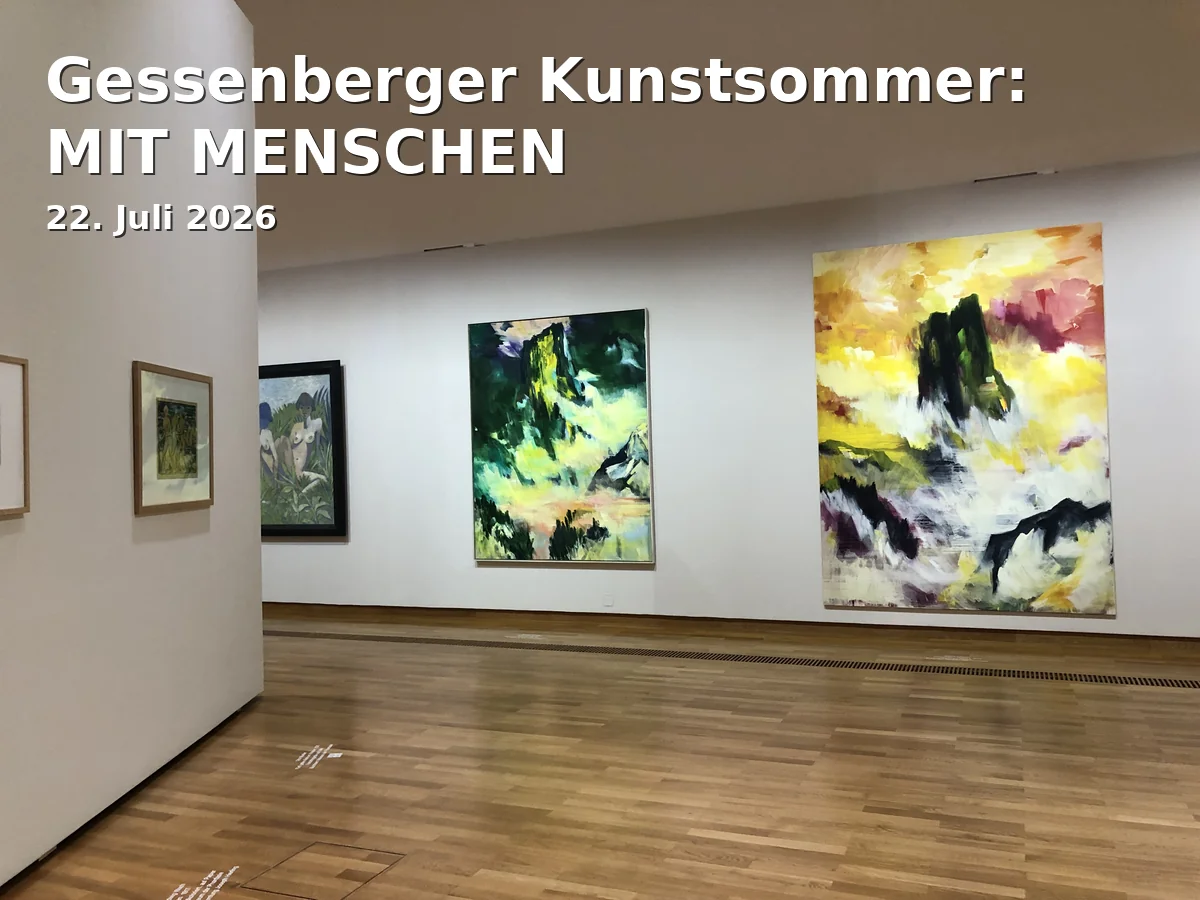
Currently, the chapel is particularly relevant in connection with the Gessenberg Art Summer. The tourism page of the Chiemsee-Chiemgau Association announces the exhibition WITH PEOPLE featuring works by Wolfgang Hübner in the Chapel of Mary Assumed into Heaven at Gessenberg for 2026. The duration runs from May 17 to September 20, 2026, open daily from 10:00 AM to 5:00 PM. For planning, it is also important to note that the chapel is only accessible on foot or by bike in this context. This makes the visit somewhat special, but for many, this is also part of the appeal: the way up is part of the experience and fits the character of a quiet, landscape-embedded place. Therefore, those wishing to visit the chapel in 2026 should plan their arrival consciously and allow enough time for the walk or bike ride. The chapel is thus not presented as a place for casual passing by but as a destination that one consciously seeks out. ([chiemsee-chiemgau.info](https://www.chiemsee-chiemgau.info/gessenberger-kunstsommer))
The fact that the chapel has also been used as an art venue in previous years shows the continuity of this concept. Exhibitions under the title Gessenberg Art Summer took place there in 2023 and 2025; the event pages also mentioned daily opening hours from 10:00 AM to 5:00 PM and described the place as access to art in a sacred space. This repetition is no coincidence but points to the special suitability of the place for quiet, concentrated formats. The chapel is small, atmospherically dense, and architecturally clearly structured. It is precisely through this that artworks, religious themes, and historical spatial effects can enter into dialogue with each other. For inquiries such as opening hours, art summer, or chapel gessenberg, it is therefore especially important to understand that this is not about a permanently regular museum offering but about seasonal opening and curated use. The chapel thus remains true to its origin while also opening up to new forms of perception. Those who visit it as part of the Art Summer experience not only an exhibition but also the special tension between Baroque devotion, historical memorial site, and contemporary interpretation. ([chiemsee-chiemgau.info](https://www.chiemsee-chiemgau.info/gessenberger-kunstsommer))
Directions, Accessibility, and Parking at Gessenberg
When approaching the chapel, it is important to consider the special location of the site. The official address is Gessenberg 4, 83329 Waging am See. The site is located west of Waging am See on a ridge and is thus scenically beautiful but cannot be compared to a classic city center location. The current tourist announcement regarding the Gessenberg Art Summer explicitly clarifies accessibility: The exhibition in the chapel is only reachable on foot or by bike. For practical visits, this means that the last section should not be covered by car, but the path should be consciously planned as part of the outing. Those coming from Waging should therefore allow enough time for the ascent or bike ride depending on their personal condition. This is especially important for events with many guests because the site is not designed for spontaneous motorized influx. The chapel thus remains a destination for a decelerated arrival, not for hectic stops. ([chiemsee-chiemgau.info](https://www.chiemsee-chiemgau.info/gessenberger-kunstsommer))
The issue of parking is also clearly regulated or restricted. A previous event announcement for the Gessenberg art site explicitly pointed out that there is no parking available on Gessenberg. Instead, a guided visitor foot group was mentioned starting from the parking lot at Waging train station, as well as a transport option for people who are not able to walk well. This information is therefore helpful as it confirms the current logic of the visit: The site is designed for foot and bike paths, not for direct car access. Therefore, those wishing to visit the chapel should ideally combine their arrival with a parking space in the town of Waging or with a combined walking or biking approach. For visitors who appreciate a quiet, nature-close arrival, this is an advantage. The way to the historical site thus becomes part of the experience. At the same time, one should consider in planning that weatherproof shoes, sufficient water, and some time are sensible. Especially during summer events, this can make the difference between a strenuous and a relaxed visit. ([hey-stage.de](https://www.hey-stage.de/events/247059?utm_source=openai))
Gessenberg Castle and the Historical Ensemble
The chapel can only be fully understood in connection with Gessenberg Castle. The monument preservation entry describes the castle as a three-story structure with a half-hip roof and corner turret, built in the 17th century over older parts and historically reshaped in 1887. Additionally, there is the medieval ring ditch system, which further enhances the historical character of the site. In the same monument list, the chapel is listed as an independent monument directly next to the castle. This makes it clear that there is not simply a castle with an attached chapel here, but an ensemble in which representation, piety, and power interact. The chapel is architecturally small but historically by no means secondary. It complements the castle with the spiritual dimension and gives the place its name. Therefore, those searching for chapel of mary assumed into heaven or chapel at gessenberg will also find one of the most interesting small monuments in southeastern Bavaria. ([geodaten.bayern.de](https://www.geodaten.bayern.de/denkmal_static_data/externe_denkmalliste/pdf/denkmalliste_merge_189162.pdf))
The location itself also contributes to the special impression. On the foothills of a ridge west of Waging stands the noble seat, which has been mentioned early on and has experienced several owners and architectural changes over the centuries. It is precisely this historical depth that makes the visit appealing. The chapel is not an isolated sacred space in a new development area but part of a historically grown local landscape. This is evident in the connection between castle, chapel, and surrounding landscape as well as in the ongoing cultural use. When today art summers, spiritual visits, or quiet contemplation take place here, it connects to a long tradition without copying it. The new use is not a break but a continuation with different means. For the tourist and content preparation of a location, this is crucial: this chapel offers not only beautiful views but also a narratable history, clear historical facts, and a strong local image. Those who visit it experience a small but very dense piece of Bavarian cultural history. ([euregio-salzburg.info](https://www.euregio-salzburg.info/objekt/gessenberg-waging-a-see/))
Sources:
- Archdiocese of Munich and Freising - Mary Assumed into Heaven, Gessenberg
- Bavarian State Office for Monument Preservation - Monument List Traunstein District
- Chiemsee-Chiemgau - Gessenberg Art Summer 2026
- Euregio Salzburg - Chapel of Gessenberg – Waging am See
- Market Community Waging am See - Land Use and Landscape Plan Appendix 1
Show moreShow less
Chapel of St. Mary Assumed into Heaven | Gessenberg & History
The Chapel of St. Mary Assumed into Heaven at Gessenberg in Waging am See is one of those small historical places that seem quiet at first glance and tell surprisingly much upon a second look. Those searching for chapel of mary assumed into heaven, chapel of mary assumed into heaven or chapel gessenberg will encounter a building that is not only architecturally interesting but also deeply embedded in the religious and regional history of Chiemgau. The chapel is part of the ensemble of Gessenberg Castle, located on the foothills of a ridge west of Waging, and is perceived today as a space of silence, art, and remembrance. Its history dates back to the early modern period, its model from Altötting refers to significant Marian devotion, and its current use shows that historical sacred spaces can remain vibrant when they are cared for with attention and opened in a contemporary manner. For visitors, it is thus a pilgrimage site, a cultural place, and a destination for a quiet outing. ([euregio-salzburg.info](https://www.euregio-salzburg.info/objekt/gessenberg-waging-a-see/))
History of the Chapel of St. Mary Assumed into Heaven at Gessenberg
The historical development of the site begins long before the current chapel. According to the Euregio overview, the noble seat on Gessenberg was first mentioned in 1147. At the end of the 15th century, it passed to the Auer von Winkel family, a noble family that significantly shaped the place. In the 17th century, the castle was built in its current basic form, and right next to it, Hans Jakob von Auer had the chapel built in 1664. This construction decision was not a random addition to the manor but an expression of religious representation and lived piety. The chapel was intentionally created as a replica of the Altötting Chapel of Grace, one of the most important Marian shrines in Bavaria. In doing so, a model of supraregional significance was brought into the local landscape, transferring its aura to the estate. The fact that the site is located on a ridge west of Waging enhances the effect to this day: the chapel is not situated in the middle of the town center but slightly elevated and embedded in a historical ensemble that forms an impressive triad of castle, chapel, and landscape. ([euregio-salzburg.info](https://www.euregio-salzburg.info/objekt/gessenberg-waging-a-see/))
A second, equally important narrative thread arises from the early pilgrimage history. In the 18th century, a copy of the Altötting Madonna was erected, making Gessenberg a frequently visited local pilgrimage site. The highlight of this devotion was the Gessenberg Women's Day on August 15, the Feast of the Assumption. The Euregio text also describes that a visitation report from 1788 criticized the chapel for being heavily filled with votive tablets, wax votive offerings, flower bushes, crucifixes, and images of Mary; these items were subsequently removed. Nevertheless, the site remained a destination for many believers in the 19th century and continued to be celebrated. This shows that the chapel played a role not only architecturally but also culturally and emotionally over generations. After longer phases in which the condition of the building was problematic, the chapel was renovated and newly consecrated on June 21, 2015. Since then, it has been open to visitors during the summer and explicitly sees itself as a space of silence and art. This makes the chapel a place where history does not become museum-like but remains visible in contemporary use. ([euregio-salzburg.info](https://www.euregio-salzburg.info/objekt/gessenberg-waging-a-see/))
Architecture, Furnishings, and the Model from Altötting
Architecturally, the chapel belongs to the remarkable small central buildings of the region. The official description from the Archdiocese of Munich and Freising mentions a small central building that is round on the ground floor and octagonal in the upper part. It features a pyramid roof and a turret, architectural characteristics that give the building presence despite its compact size. Inside, there are niche-like recesses in the walls, vaulted with half-domes. This solution creates a clear, calm spatial effect that is well-suited for devotion and contemplative viewing. The Bavarian Monument Atlas confirms its character as a Baroque central building and adds a note about the pulpit above the entrance. This detail is particularly important for the chapel because it shows that it was not only intended as a private prayer space but as a place where preaching and public piety came together. The building is thus not an arbitrary small structure but a deliberately composed sacred space with strong references to Baroque spatial and piety culture. ([erzbistum-muenchen.de](https://www.erzbistum-muenchen.de/pfarrei/pv-waging-am-see/cont/88279))
The monument preservation classification also underscores the value of the building. In the monument list of the Bavarian State Office for Monument Preservation, the Chapel of St. Mary Assumed into Heaven is listed as a monument with the designation 1664; it is also described as a Baroque central building likely constructed after the model of the Altötting Chapel of Grace. The entry also mentions the furnishings, which is important because the chapel is preserved not just as a shell but as a complete sacred space. The site Gessenberg 4 is also part of a historical ensemble that includes the castle and the medieval ring ditch system. Thus, the chapel should not be viewed in isolation but as part of a multifaceted place of power and devotion. The combination of castle, chapel, ring ditch, and landscape explains why the site attracts attention far beyond its geographical size. Those interested in Baroque sacred architecture, regional building history, or the lasting influence of Altötting as a pilgrimage model will find here a particularly meaningful small place. This makes the chapel more than just an outbuilding of the castle: it is the spiritual center of the entire Gessenberg ensemble. ([geodaten.bayern.de](https://www.geodaten.bayern.de/denkmal_static_data/externe_denkmalliste/pdf/denkmalliste_merge_189162.pdf))
Pilgrimage, Gessenberg Women's Day, and Spiritual Significance
The religious significance of the chapel cannot be understood without the tradition of pilgrimage. Its establishment as a replica of the Altötting Chapel of Grace was from the outset associated with Marian devotion. The official description emphasizes that a copy of the Altötting image of grace was erected and visited by believers from the surrounding area. Thus, Gessenberg developed into a local pilgrimage site that experienced its heyday in the 18th century. The Gessenberg Women's Day on August 15 marked the peak of this devotion and shows how strongly the place was linked to the Feast of the Assumption. That large crowds were documented even in the 19th century makes clear how enduring such religious places can be in rural areas. The chapel was thus not only a private house chapel but a point of communal devotion. The historical reference to the previously existing external pulpit above the entrance portal further clarifies that preaching and public proclamation of faith were spatially considered here. ([euregio-salzburg.info](https://www.euregio-salzburg.info/objekt/gessenberg-waging-a-see/))
For today's visitors, this transformation is particularly interesting: a place that was once the center of a regional pilgrimage is now used as a quiet church space, art venue, and protected space for contemplation. The Archdiocese explicitly describes the chapel since its renovation and re-consecration in 2015 as a space of silence and art, where one can pause, pray, or simply let the tranquility of the space take effect. This formulation captures the essence of the place very well. It shows that the sacred character has not been lost, even though the use has broadened. Rather, the chapel is now experienced on multiple levels: as a spiritual space, as a testimony of Baroque Marian devotion, and as a place of cultural encounter. This is precisely what makes its special appeal. It is not a loud destination, not a large event hall, and not a stage for staging, but a small-scale, concentrated place. Those who visit the chapel are usually not seeking spectacle but atmosphere, history, and silence. And it is precisely in this reduction that its strength lies. ([erzbistum-muenchen.de](https://www.erzbistum-muenchen.de/pfarrei/pv-waging-am-see/cont/88279))
Opening Hours, Gessenberg Art Summer, and Visit 2026
Currently, the chapel is particularly relevant in connection with the Gessenberg Art Summer. The tourism page of the Chiemsee-Chiemgau Association announces the exhibition WITH PEOPLE featuring works by Wolfgang Hübner in the Chapel of Mary Assumed into Heaven at Gessenberg for 2026. The duration runs from May 17 to September 20, 2026, open daily from 10:00 AM to 5:00 PM. For planning, it is also important to note that the chapel is only accessible on foot or by bike in this context. This makes the visit somewhat special, but for many, this is also part of the appeal: the way up is part of the experience and fits the character of a quiet, landscape-embedded place. Therefore, those wishing to visit the chapel in 2026 should plan their arrival consciously and allow enough time for the walk or bike ride. The chapel is thus not presented as a place for casual passing by but as a destination that one consciously seeks out. ([chiemsee-chiemgau.info](https://www.chiemsee-chiemgau.info/gessenberger-kunstsommer))
The fact that the chapel has also been used as an art venue in previous years shows the continuity of this concept. Exhibitions under the title Gessenberg Art Summer took place there in 2023 and 2025; the event pages also mentioned daily opening hours from 10:00 AM to 5:00 PM and described the place as access to art in a sacred space. This repetition is no coincidence but points to the special suitability of the place for quiet, concentrated formats. The chapel is small, atmospherically dense, and architecturally clearly structured. It is precisely through this that artworks, religious themes, and historical spatial effects can enter into dialogue with each other. For inquiries such as opening hours, art summer, or chapel gessenberg, it is therefore especially important to understand that this is not about a permanently regular museum offering but about seasonal opening and curated use. The chapel thus remains true to its origin while also opening up to new forms of perception. Those who visit it as part of the Art Summer experience not only an exhibition but also the special tension between Baroque devotion, historical memorial site, and contemporary interpretation. ([chiemsee-chiemgau.info](https://www.chiemsee-chiemgau.info/gessenberger-kunstsommer))
Directions, Accessibility, and Parking at Gessenberg
When approaching the chapel, it is important to consider the special location of the site. The official address is Gessenberg 4, 83329 Waging am See. The site is located west of Waging am See on a ridge and is thus scenically beautiful but cannot be compared to a classic city center location. The current tourist announcement regarding the Gessenberg Art Summer explicitly clarifies accessibility: The exhibition in the chapel is only reachable on foot or by bike. For practical visits, this means that the last section should not be covered by car, but the path should be consciously planned as part of the outing. Those coming from Waging should therefore allow enough time for the ascent or bike ride depending on their personal condition. This is especially important for events with many guests because the site is not designed for spontaneous motorized influx. The chapel thus remains a destination for a decelerated arrival, not for hectic stops. ([chiemsee-chiemgau.info](https://www.chiemsee-chiemgau.info/gessenberger-kunstsommer))
The issue of parking is also clearly regulated or restricted. A previous event announcement for the Gessenberg art site explicitly pointed out that there is no parking available on Gessenberg. Instead, a guided visitor foot group was mentioned starting from the parking lot at Waging train station, as well as a transport option for people who are not able to walk well. This information is therefore helpful as it confirms the current logic of the visit: The site is designed for foot and bike paths, not for direct car access. Therefore, those wishing to visit the chapel should ideally combine their arrival with a parking space in the town of Waging or with a combined walking or biking approach. For visitors who appreciate a quiet, nature-close arrival, this is an advantage. The way to the historical site thus becomes part of the experience. At the same time, one should consider in planning that weatherproof shoes, sufficient water, and some time are sensible. Especially during summer events, this can make the difference between a strenuous and a relaxed visit. ([hey-stage.de](https://www.hey-stage.de/events/247059?utm_source=openai))
Gessenberg Castle and the Historical Ensemble
The chapel can only be fully understood in connection with Gessenberg Castle. The monument preservation entry describes the castle as a three-story structure with a half-hip roof and corner turret, built in the 17th century over older parts and historically reshaped in 1887. Additionally, there is the medieval ring ditch system, which further enhances the historical character of the site. In the same monument list, the chapel is listed as an independent monument directly next to the castle. This makes it clear that there is not simply a castle with an attached chapel here, but an ensemble in which representation, piety, and power interact. The chapel is architecturally small but historically by no means secondary. It complements the castle with the spiritual dimension and gives the place its name. Therefore, those searching for chapel of mary assumed into heaven or chapel at gessenberg will also find one of the most interesting small monuments in southeastern Bavaria. ([geodaten.bayern.de](https://www.geodaten.bayern.de/denkmal_static_data/externe_denkmalliste/pdf/denkmalliste_merge_189162.pdf))
The location itself also contributes to the special impression. On the foothills of a ridge west of Waging stands the noble seat, which has been mentioned early on and has experienced several owners and architectural changes over the centuries. It is precisely this historical depth that makes the visit appealing. The chapel is not an isolated sacred space in a new development area but part of a historically grown local landscape. This is evident in the connection between castle, chapel, and surrounding landscape as well as in the ongoing cultural use. When today art summers, spiritual visits, or quiet contemplation take place here, it connects to a long tradition without copying it. The new use is not a break but a continuation with different means. For the tourist and content preparation of a location, this is crucial: this chapel offers not only beautiful views but also a narratable history, clear historical facts, and a strong local image. Those who visit it experience a small but very dense piece of Bavarian cultural history. ([euregio-salzburg.info](https://www.euregio-salzburg.info/objekt/gessenberg-waging-a-see/))
Sources:
- Archdiocese of Munich and Freising - Mary Assumed into Heaven, Gessenberg
- Bavarian State Office for Monument Preservation - Monument List Traunstein District
- Chiemsee-Chiemgau - Gessenberg Art Summer 2026
- Euregio Salzburg - Chapel of Gessenberg – Waging am See
- Market Community Waging am See - Land Use and Landscape Plan Appendix 1
Chapel of St. Mary Assumed into Heaven | Gessenberg & History
The Chapel of St. Mary Assumed into Heaven at Gessenberg in Waging am See is one of those small historical places that seem quiet at first glance and tell surprisingly much upon a second look. Those searching for chapel of mary assumed into heaven, chapel of mary assumed into heaven or chapel gessenberg will encounter a building that is not only architecturally interesting but also deeply embedded in the religious and regional history of Chiemgau. The chapel is part of the ensemble of Gessenberg Castle, located on the foothills of a ridge west of Waging, and is perceived today as a space of silence, art, and remembrance. Its history dates back to the early modern period, its model from Altötting refers to significant Marian devotion, and its current use shows that historical sacred spaces can remain vibrant when they are cared for with attention and opened in a contemporary manner. For visitors, it is thus a pilgrimage site, a cultural place, and a destination for a quiet outing. ([euregio-salzburg.info](https://www.euregio-salzburg.info/objekt/gessenberg-waging-a-see/))
History of the Chapel of St. Mary Assumed into Heaven at Gessenberg
The historical development of the site begins long before the current chapel. According to the Euregio overview, the noble seat on Gessenberg was first mentioned in 1147. At the end of the 15th century, it passed to the Auer von Winkel family, a noble family that significantly shaped the place. In the 17th century, the castle was built in its current basic form, and right next to it, Hans Jakob von Auer had the chapel built in 1664. This construction decision was not a random addition to the manor but an expression of religious representation and lived piety. The chapel was intentionally created as a replica of the Altötting Chapel of Grace, one of the most important Marian shrines in Bavaria. In doing so, a model of supraregional significance was brought into the local landscape, transferring its aura to the estate. The fact that the site is located on a ridge west of Waging enhances the effect to this day: the chapel is not situated in the middle of the town center but slightly elevated and embedded in a historical ensemble that forms an impressive triad of castle, chapel, and landscape. ([euregio-salzburg.info](https://www.euregio-salzburg.info/objekt/gessenberg-waging-a-see/))
A second, equally important narrative thread arises from the early pilgrimage history. In the 18th century, a copy of the Altötting Madonna was erected, making Gessenberg a frequently visited local pilgrimage site. The highlight of this devotion was the Gessenberg Women's Day on August 15, the Feast of the Assumption. The Euregio text also describes that a visitation report from 1788 criticized the chapel for being heavily filled with votive tablets, wax votive offerings, flower bushes, crucifixes, and images of Mary; these items were subsequently removed. Nevertheless, the site remained a destination for many believers in the 19th century and continued to be celebrated. This shows that the chapel played a role not only architecturally but also culturally and emotionally over generations. After longer phases in which the condition of the building was problematic, the chapel was renovated and newly consecrated on June 21, 2015. Since then, it has been open to visitors during the summer and explicitly sees itself as a space of silence and art. This makes the chapel a place where history does not become museum-like but remains visible in contemporary use. ([euregio-salzburg.info](https://www.euregio-salzburg.info/objekt/gessenberg-waging-a-see/))
Architecture, Furnishings, and the Model from Altötting
Architecturally, the chapel belongs to the remarkable small central buildings of the region. The official description from the Archdiocese of Munich and Freising mentions a small central building that is round on the ground floor and octagonal in the upper part. It features a pyramid roof and a turret, architectural characteristics that give the building presence despite its compact size. Inside, there are niche-like recesses in the walls, vaulted with half-domes. This solution creates a clear, calm spatial effect that is well-suited for devotion and contemplative viewing. The Bavarian Monument Atlas confirms its character as a Baroque central building and adds a note about the pulpit above the entrance. This detail is particularly important for the chapel because it shows that it was not only intended as a private prayer space but as a place where preaching and public piety came together. The building is thus not an arbitrary small structure but a deliberately composed sacred space with strong references to Baroque spatial and piety culture. ([erzbistum-muenchen.de](https://www.erzbistum-muenchen.de/pfarrei/pv-waging-am-see/cont/88279))
The monument preservation classification also underscores the value of the building. In the monument list of the Bavarian State Office for Monument Preservation, the Chapel of St. Mary Assumed into Heaven is listed as a monument with the designation 1664; it is also described as a Baroque central building likely constructed after the model of the Altötting Chapel of Grace. The entry also mentions the furnishings, which is important because the chapel is preserved not just as a shell but as a complete sacred space. The site Gessenberg 4 is also part of a historical ensemble that includes the castle and the medieval ring ditch system. Thus, the chapel should not be viewed in isolation but as part of a multifaceted place of power and devotion. The combination of castle, chapel, ring ditch, and landscape explains why the site attracts attention far beyond its geographical size. Those interested in Baroque sacred architecture, regional building history, or the lasting influence of Altötting as a pilgrimage model will find here a particularly meaningful small place. This makes the chapel more than just an outbuilding of the castle: it is the spiritual center of the entire Gessenberg ensemble. ([geodaten.bayern.de](https://www.geodaten.bayern.de/denkmal_static_data/externe_denkmalliste/pdf/denkmalliste_merge_189162.pdf))
Pilgrimage, Gessenberg Women's Day, and Spiritual Significance
The religious significance of the chapel cannot be understood without the tradition of pilgrimage. Its establishment as a replica of the Altötting Chapel of Grace was from the outset associated with Marian devotion. The official description emphasizes that a copy of the Altötting image of grace was erected and visited by believers from the surrounding area. Thus, Gessenberg developed into a local pilgrimage site that experienced its heyday in the 18th century. The Gessenberg Women's Day on August 15 marked the peak of this devotion and shows how strongly the place was linked to the Feast of the Assumption. That large crowds were documented even in the 19th century makes clear how enduring such religious places can be in rural areas. The chapel was thus not only a private house chapel but a point of communal devotion. The historical reference to the previously existing external pulpit above the entrance portal further clarifies that preaching and public proclamation of faith were spatially considered here. ([euregio-salzburg.info](https://www.euregio-salzburg.info/objekt/gessenberg-waging-a-see/))
For today's visitors, this transformation is particularly interesting: a place that was once the center of a regional pilgrimage is now used as a quiet church space, art venue, and protected space for contemplation. The Archdiocese explicitly describes the chapel since its renovation and re-consecration in 2015 as a space of silence and art, where one can pause, pray, or simply let the tranquility of the space take effect. This formulation captures the essence of the place very well. It shows that the sacred character has not been lost, even though the use has broadened. Rather, the chapel is now experienced on multiple levels: as a spiritual space, as a testimony of Baroque Marian devotion, and as a place of cultural encounter. This is precisely what makes its special appeal. It is not a loud destination, not a large event hall, and not a stage for staging, but a small-scale, concentrated place. Those who visit the chapel are usually not seeking spectacle but atmosphere, history, and silence. And it is precisely in this reduction that its strength lies. ([erzbistum-muenchen.de](https://www.erzbistum-muenchen.de/pfarrei/pv-waging-am-see/cont/88279))
Opening Hours, Gessenberg Art Summer, and Visit 2026
Currently, the chapel is particularly relevant in connection with the Gessenberg Art Summer. The tourism page of the Chiemsee-Chiemgau Association announces the exhibition WITH PEOPLE featuring works by Wolfgang Hübner in the Chapel of Mary Assumed into Heaven at Gessenberg for 2026. The duration runs from May 17 to September 20, 2026, open daily from 10:00 AM to 5:00 PM. For planning, it is also important to note that the chapel is only accessible on foot or by bike in this context. This makes the visit somewhat special, but for many, this is also part of the appeal: the way up is part of the experience and fits the character of a quiet, landscape-embedded place. Therefore, those wishing to visit the chapel in 2026 should plan their arrival consciously and allow enough time for the walk or bike ride. The chapel is thus not presented as a place for casual passing by but as a destination that one consciously seeks out. ([chiemsee-chiemgau.info](https://www.chiemsee-chiemgau.info/gessenberger-kunstsommer))
The fact that the chapel has also been used as an art venue in previous years shows the continuity of this concept. Exhibitions under the title Gessenberg Art Summer took place there in 2023 and 2025; the event pages also mentioned daily opening hours from 10:00 AM to 5:00 PM and described the place as access to art in a sacred space. This repetition is no coincidence but points to the special suitability of the place for quiet, concentrated formats. The chapel is small, atmospherically dense, and architecturally clearly structured. It is precisely through this that artworks, religious themes, and historical spatial effects can enter into dialogue with each other. For inquiries such as opening hours, art summer, or chapel gessenberg, it is therefore especially important to understand that this is not about a permanently regular museum offering but about seasonal opening and curated use. The chapel thus remains true to its origin while also opening up to new forms of perception. Those who visit it as part of the Art Summer experience not only an exhibition but also the special tension between Baroque devotion, historical memorial site, and contemporary interpretation. ([chiemsee-chiemgau.info](https://www.chiemsee-chiemgau.info/gessenberger-kunstsommer))
Directions, Accessibility, and Parking at Gessenberg
When approaching the chapel, it is important to consider the special location of the site. The official address is Gessenberg 4, 83329 Waging am See. The site is located west of Waging am See on a ridge and is thus scenically beautiful but cannot be compared to a classic city center location. The current tourist announcement regarding the Gessenberg Art Summer explicitly clarifies accessibility: The exhibition in the chapel is only reachable on foot or by bike. For practical visits, this means that the last section should not be covered by car, but the path should be consciously planned as part of the outing. Those coming from Waging should therefore allow enough time for the ascent or bike ride depending on their personal condition. This is especially important for events with many guests because the site is not designed for spontaneous motorized influx. The chapel thus remains a destination for a decelerated arrival, not for hectic stops. ([chiemsee-chiemgau.info](https://www.chiemsee-chiemgau.info/gessenberger-kunstsommer))
The issue of parking is also clearly regulated or restricted. A previous event announcement for the Gessenberg art site explicitly pointed out that there is no parking available on Gessenberg. Instead, a guided visitor foot group was mentioned starting from the parking lot at Waging train station, as well as a transport option for people who are not able to walk well. This information is therefore helpful as it confirms the current logic of the visit: The site is designed for foot and bike paths, not for direct car access. Therefore, those wishing to visit the chapel should ideally combine their arrival with a parking space in the town of Waging or with a combined walking or biking approach. For visitors who appreciate a quiet, nature-close arrival, this is an advantage. The way to the historical site thus becomes part of the experience. At the same time, one should consider in planning that weatherproof shoes, sufficient water, and some time are sensible. Especially during summer events, this can make the difference between a strenuous and a relaxed visit. ([hey-stage.de](https://www.hey-stage.de/events/247059?utm_source=openai))
Gessenberg Castle and the Historical Ensemble
The chapel can only be fully understood in connection with Gessenberg Castle. The monument preservation entry describes the castle as a three-story structure with a half-hip roof and corner turret, built in the 17th century over older parts and historically reshaped in 1887. Additionally, there is the medieval ring ditch system, which further enhances the historical character of the site. In the same monument list, the chapel is listed as an independent monument directly next to the castle. This makes it clear that there is not simply a castle with an attached chapel here, but an ensemble in which representation, piety, and power interact. The chapel is architecturally small but historically by no means secondary. It complements the castle with the spiritual dimension and gives the place its name. Therefore, those searching for chapel of mary assumed into heaven or chapel at gessenberg will also find one of the most interesting small monuments in southeastern Bavaria. ([geodaten.bayern.de](https://www.geodaten.bayern.de/denkmal_static_data/externe_denkmalliste/pdf/denkmalliste_merge_189162.pdf))
The location itself also contributes to the special impression. On the foothills of a ridge west of Waging stands the noble seat, which has been mentioned early on and has experienced several owners and architectural changes over the centuries. It is precisely this historical depth that makes the visit appealing. The chapel is not an isolated sacred space in a new development area but part of a historically grown local landscape. This is evident in the connection between castle, chapel, and surrounding landscape as well as in the ongoing cultural use. When today art summers, spiritual visits, or quiet contemplation take place here, it connects to a long tradition without copying it. The new use is not a break but a continuation with different means. For the tourist and content preparation of a location, this is crucial: this chapel offers not only beautiful views but also a narratable history, clear historical facts, and a strong local image. Those who visit it experience a small but very dense piece of Bavarian cultural history. ([euregio-salzburg.info](https://www.euregio-salzburg.info/objekt/gessenberg-waging-a-see/))
Sources:
- Archdiocese of Munich and Freising - Mary Assumed into Heaven, Gessenberg
- Bavarian State Office for Monument Preservation - Monument List Traunstein District
- Chiemsee-Chiemgau - Gessenberg Art Summer 2026
- Euregio Salzburg - Chapel of Gessenberg – Waging am See
- Market Community Waging am See - Land Use and Landscape Plan Appendix 1
Frequently Asked Questions
Reviews
No reviews found