
Grabenstätt
Schloßstraße 17, 83355 Grabenstätt, Deutschland
Schloss Grabenstätt | History & Roman Museum
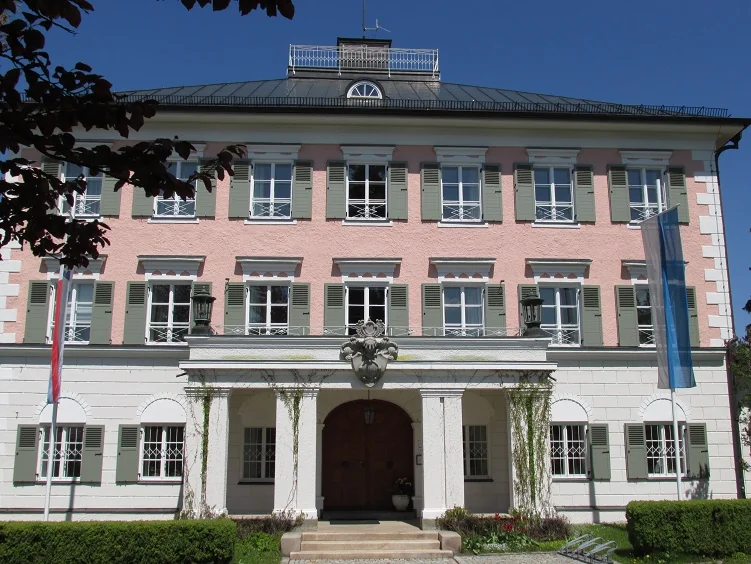
Schloss Grabenstätt is much more than a historical name on the map: The place combines a former noble castle, the town hall of the municipality, the tourist information center, and two thematically strong exhibitions in a cohesive ensemble on Schloß-Straße. Those searching for Schloss Grabenstätt usually want to find not only the address but also understand why this place appears so frequently in the center of Grabenstätt. Here, administration, regional history, Roman archaeology, and event life intersect. The castle thus stands not as an isolated monument but as a functioning public center with a castle courtyard, outbuildings, and visitor offerings. This mixture makes the location equally interesting for locals, day visitors, and culture-interested guests, as it combines a historical framework with practical benefits in everyday life and with tourism information right on site. ([grabenstaett.de](https://www.grabenstaett.de/ortsinformationen/geschichte/wappen))
The search terms surrounding the castle revolve around photos, history, parking, opening hours, and events. On the official pages of the municipality, these questions are directly addressed: The town hall and tourist info are clearly named, the Roman Museum and the exhibition on the Chiemgau Impact are located in the same area, and free parking at the castle economy facilitates the visit. The event calendar also features formats such as wine festivals, brass music, seminars, and other castle courtyard events. This makes Schloss Grabenstätt a location that not only looks beautiful but is also practically organized and functions in several ways. For visitors, it is particularly attractive that sightseeing, information, culture, and event attendance can be combined in one place. For an SEO page, this multifacetedness is important because it explains why so many different search terms lead to the same place. ([grabenstaett.de](https://www.grabenstaett.de/freizeit-tourismus/informieren-und-planen/ihre-tourist-information-grabenstaett))
History and Origin of Schloss Grabenstätt
The history of Grabenstätt dates back deep into the early Middle Ages. The municipality cites the first documented mention as June 8, 959 in a document from King Otto the Great in Salzburg. The area around Grabenstätt is also described at the beginning of the 10th century as comitatus Teginberti, meaning the county of Reginbert. From this historical development, it becomes clear that Grabenstätt did not gain significance only with the present castle but was already an administrative and ruling area early on. From the 12th to the 14th century, Grabenstätt was the seat of a noble family named after it, which was in a feudal relationship with the Prince-Bishopric of Salzburg. Since the 15th century, several noble families have been in possession of the place and a noble seat. Thus, the castle is not only a building but a visible remnant of a long political and social continuity in the Chiemgau. ([grabenstaett.de](https://www.grabenstaett.de/ortsinformationen/geschichte/grabenstaett-frueher))
Particularly important for today's appearance is the phase of the Lords of Widerspach. The municipality describes that this family has been closely intertwined with Grabenstätt since around 1530. Members of the family rebuilt the castle from 1595, expanded it around 1680, and established a castle chapel. The cultural guide of the region adds that Schloss Grabenstätt was originally a noble seat, nothing remains of the early medieval fortification, and the building was rebuilt in the 16th and 18th centuries. A major fire in 1834 largely destroyed the castle; afterwards, it changed hands several times until it was finally acquired by the municipality. Since 1985, it has served as the town hall. This development is particularly exciting for visitors because it shows how a noble seat has become a publicly used center. The building thus bears both the traces of history and the function of a modern municipal location. ([grabenstaett.de](https://www.grabenstaett.de/ortsinformationen/geschichte/wappen))
Town Hall, Tourist Information, and Opening Hours
Today, Schloss Grabenstätt is a clearly structured administrative and visitor location. The town hall of the municipality is located at Schloß-Straße 15 in 83355 Grabenstätt, and the tourist information is at Schloß-Straße 17. The current pages of the municipality also prominently feature the castle courtyard as an image motif, emphasizing the historical character of the area. For visitors, this means: Those coming to the castle do not just enter a monument but a functioning community center with direct access to information, contacts, and museum offerings. This is particularly practical in everyday life because one can consolidate tourist information, administrative processes, and cultural visits in one place. This mixture is typical for a castle that is not today museum-like and isolated but is actively used. ([grabenstaett.de](https://www.grabenstaett.de/freizeit-tourismus/informieren-und-planen/ihre-tourist-information-grabenstaett))
The opening hours are also clear and well-suited for planning. The town hall is open Monday to Friday from 08:00 to 12:00, additionally on Thursdays from 14:00 to 17:00. The tourist information is open Monday to Saturday from 09:00 to 12:00 and additionally from Monday to Thursday from 14:00 to 16:00. The museums follow the same hours as the tourist information. This allows for a visit to be easily structured: gather information in the morning, view the museum, and then explore the town or surroundings. For guests, it is helpful that service and exhibition are so closely located together. Those with questions about events, excursions, or regional offerings will find direct contacts and short distances in the castle courtyard area. This makes Schloss Grabenstätt particularly practical for everyday use and pleasantly uncomplicated for visitors. ([grabenstaett.de](https://www.grabenstaett.de/freizeit-tourismus/informieren-und-planen/ihre-tourist-information-grabenstaett))
Roman Museum Grabenstätt
An important part of the castle area is the Roman Museum Grabenstätt. The municipality explains that it emerged from the work of local researcher Karl Schefczik and the research on the excavations of the Villa Rustica in Erlstätt. In 1980, the museum was initially established above a pharmacy in Grabenstätt; since 2012, the municipality has provided its own space for the exhibition of Roman finds. The museum is thus a good example of how local historical work, civic engagement, and municipal support can work together. Today, it serves not only as an exhibition space but also as a storage place for finds and documents that attest to around five hundred years of Roman culture in the region. This transforms a small museum into a dense historical space that connects archaeological research and illustrative communication. ([grabenstaett.de](https://www.grabenstaett.de/freizeit-tourismus/kultur-erleben/roemermuseum))
Content-wise, the Roman Museum focuses on finds from the area between the Inn and Salzach rivers. The municipality describes that above the showcases, the most important pieces from the region are displayed, while the area below serves as an archive for finds and documents. Particularly exciting is that the museum makes visible the long archaeological work around Grabenstätt-Erlstätt. The official presentation mentions, among other things, mosaics, the remains of which could later be restored, as well as the last major excavation from 1889/90. Visitors thus get a good impression of how Roman residential culture, local research, and regional identity connect with each other. Those interested in history, archaeology, or school and family excursions will find here a compact but content-rich place. The fact that the museum can be visited during the opening hours of the tourist information additionally makes access uncomplicated. ([grabenstaett.de](https://www.grabenstaett.de/freizeit-tourismus/kultur-erleben/roemermuseum))
Museum on the Chiemgau Impact
Directly in the vicinity of Schloss Grabenstätt is also the exhibition on the Chiemgau Impact. Chiemsee-Alpenland Tourism describes it as a natural history museum in the castle economy of Grabenstätt, which presents an exhibition about an ancient meteorite impact. According to the theory of the Chiemgau Impact Research Team, the Tüttensee near Grabenstätt is not an ice age dead ice hole but part of a meteorite crater that formed after the ice age when the area was already inhabited by people of the Bronze Age or Celtic period. For visitors, this is particularly interesting because it connects a local natural theme with an unusual scientific narrative. The exhibition has been redesigned and professionally prepared with the support of local businesses and the municipality. This makes it not just a mere niche but a consciously presented component of the local offerings. ([chiemsee-alpenland.de](https://www.chiemsee-alpenland.de/entdecken/alle-sehenswuerdigkeiten/der-chiemgau-impakt-ein-bayerisches-meteoritenkraterfeld-dc1962676f))
Practically, the exhibition is also very well accessible. The opening hours are Monday to Friday from 09:00 to 12:00, additionally on Thursdays from 14:00 to 16:00; from the end of June to mid-September, Saturdays from 09:00 to 11:30 are added. Guided tours are available upon request through the tourist info. The official tourism page also mentions free parking at the castle economy, the outbuilding of the town hall. Thus, the museum is a good destination for a short stop as well as for a planned visit with a guided tour. The fact that the exhibition is located directly next to the tourist information is particularly pleasant for guests because they can consolidate information, parking, and cultural visits at a single location. Therefore, those visiting Schloss Grabenstätt experience not only administrative architecture but also two very different historical thematic areas in close proximity. ([chiemsee-alpenland.de](https://www.chiemsee-alpenland.de/entdecken/alle-sehenswuerdigkeiten/der-chiemgau-impakt-ein-bayerisches-meteoritenkraterfeld-dc1962676f))
Parking, Access, and Location in the Castle Courtyard
For access, the official location of the ensemble is particularly helpful. The municipality offers the functions Show on map and Plan route on its pages and lists Schloss Grabenstätt with the addresses Schloß-Straße 15 and 17. This facilitates orientation even before departure. Additionally, Chiemsee-Alpenland Tourism mentions free parking at the castle economy, the outbuilding of the town hall. So, those arriving by car can plan their visit easily and do not have to search long for a free parking space. This combination of a clear address, digital route offerings, and free parking is very valuable for a location profile. It makes the castle not only historically interesting but also logistically pleasant. Especially at a place where administration, museum, and tourist information meet, easy access is a real advantage. ([grabenstaett.de](https://www.grabenstaett.de/ortsinformationen/lernen-sie-uns-kennen/lage-und-verkehrsanbindung?utm_source=openai))
Regional mobility is also relevant for the visit. The municipality informs that since June 1, the new call bus Traudl complements the existing public transport offer in the region. While this is not a direct description of castle routes, it shows that Grabenstätt is also being connected to new forms of mobility in public transport. For visitors, this means more flexibility, especially if they want to combine their stay with other destinations in the town or in the Chiemgau. On-site, the castle courtyard acts as a quiet center between the town hall, tourism service, and museum rooms. The spatial impression is thus not that of a large facility but of a compact historical center that can be easily explored on foot. This makes the place suitable for both short visits and longer cultural stops. ([grabenstaett.de](https://www.grabenstaett.de/nachrichten/artikel/rufbus-traudl?utm_source=openai))
Events, Photos, and Special Atmosphere
Schloss Grabenstätt thrives not only on its history but also on its current use as an event venue. In the official event calendar of the municipality, there are events for the castle courtyard such as a wine festival, brass music evenings, and other event formats. The cultural guide of the region adds that educational events, seminars, concerts, and readings take place in Schloss Grabenstätt, and the wine festival in the castle courtyard is a summer highlight. For a location page, this is particularly important because visitors do not just see a building but a house with regular cultural life. The castle courtyard thus becomes a place of encounter where historical backdrop and current community life directly overlap. This strengthens the character of the castle as a lively place and not just as a historical address. ([veranstaltungen.grabenstaett.de](https://veranstaltungen.grabenstaett.de/veranstaltungen-in-grabenstaett/e-tsv-grabenstaett-weinfest-im-schlosshof?eventDateId=2081917&widgetToken=qFhSkhPbquI.&utm_source=openai))
Those searching for photos of Schloss Grabenstätt will find image material of the castle, castle courtyard, and castle economy on the official pages. The municipality's homepage already shows a photo of Schloss Grabenstätt, and the tourist information page uses a castle courtyard image as a visual motif. The event pages also work with images of the respective location. This is important for the perception of the castle because it allows for a quick grasp of the architecture and atmosphere of the place. The combination of historical building, well-kept courtyard, and public use creates a clear image: Schloss Grabenstätt is a place that showcases tradition without appearing museum-like. Those who visit it experience the municipality at one of its most visible points. Precisely for this reason, search terms such as photos, history, parking, and events are so closely intertwined. ([grabenstaett.de](https://www.grabenstaett.de/?utm_source=openai))
Sources:
- Municipality of Grabenstätt - Grabenstätt in the past
- Municipality of Grabenstätt - Coat of Arms
- Municipality of Grabenstätt - Your Tourist Information Grabenstätt
- Municipality of Grabenstätt - Roman Museum
- Chiemsee-Alpenland Tourism - The Chiemgau Impact - a Bavarian Meteorite Crater Field
- Events in Grabenstätt - Event Calendar
- Municipality of Grabenstätt - Homepage
Show moreShow less
Schloss Grabenstätt | History & Roman Museum
Schloss Grabenstätt is much more than a historical name on the map: The place combines a former noble castle, the town hall of the municipality, the tourist information center, and two thematically strong exhibitions in a cohesive ensemble on Schloß-Straße. Those searching for Schloss Grabenstätt usually want to find not only the address but also understand why this place appears so frequently in the center of Grabenstätt. Here, administration, regional history, Roman archaeology, and event life intersect. The castle thus stands not as an isolated monument but as a functioning public center with a castle courtyard, outbuildings, and visitor offerings. This mixture makes the location equally interesting for locals, day visitors, and culture-interested guests, as it combines a historical framework with practical benefits in everyday life and with tourism information right on site. ([grabenstaett.de](https://www.grabenstaett.de/ortsinformationen/geschichte/wappen))
The search terms surrounding the castle revolve around photos, history, parking, opening hours, and events. On the official pages of the municipality, these questions are directly addressed: The town hall and tourist info are clearly named, the Roman Museum and the exhibition on the Chiemgau Impact are located in the same area, and free parking at the castle economy facilitates the visit. The event calendar also features formats such as wine festivals, brass music, seminars, and other castle courtyard events. This makes Schloss Grabenstätt a location that not only looks beautiful but is also practically organized and functions in several ways. For visitors, it is particularly attractive that sightseeing, information, culture, and event attendance can be combined in one place. For an SEO page, this multifacetedness is important because it explains why so many different search terms lead to the same place. ([grabenstaett.de](https://www.grabenstaett.de/freizeit-tourismus/informieren-und-planen/ihre-tourist-information-grabenstaett))
History and Origin of Schloss Grabenstätt
The history of Grabenstätt dates back deep into the early Middle Ages. The municipality cites the first documented mention as June 8, 959 in a document from King Otto the Great in Salzburg. The area around Grabenstätt is also described at the beginning of the 10th century as comitatus Teginberti, meaning the county of Reginbert. From this historical development, it becomes clear that Grabenstätt did not gain significance only with the present castle but was already an administrative and ruling area early on. From the 12th to the 14th century, Grabenstätt was the seat of a noble family named after it, which was in a feudal relationship with the Prince-Bishopric of Salzburg. Since the 15th century, several noble families have been in possession of the place and a noble seat. Thus, the castle is not only a building but a visible remnant of a long political and social continuity in the Chiemgau. ([grabenstaett.de](https://www.grabenstaett.de/ortsinformationen/geschichte/grabenstaett-frueher))
Particularly important for today's appearance is the phase of the Lords of Widerspach. The municipality describes that this family has been closely intertwined with Grabenstätt since around 1530. Members of the family rebuilt the castle from 1595, expanded it around 1680, and established a castle chapel. The cultural guide of the region adds that Schloss Grabenstätt was originally a noble seat, nothing remains of the early medieval fortification, and the building was rebuilt in the 16th and 18th centuries. A major fire in 1834 largely destroyed the castle; afterwards, it changed hands several times until it was finally acquired by the municipality. Since 1985, it has served as the town hall. This development is particularly exciting for visitors because it shows how a noble seat has become a publicly used center. The building thus bears both the traces of history and the function of a modern municipal location. ([grabenstaett.de](https://www.grabenstaett.de/ortsinformationen/geschichte/wappen))
Town Hall, Tourist Information, and Opening Hours
Today, Schloss Grabenstätt is a clearly structured administrative and visitor location. The town hall of the municipality is located at Schloß-Straße 15 in 83355 Grabenstätt, and the tourist information is at Schloß-Straße 17. The current pages of the municipality also prominently feature the castle courtyard as an image motif, emphasizing the historical character of the area. For visitors, this means: Those coming to the castle do not just enter a monument but a functioning community center with direct access to information, contacts, and museum offerings. This is particularly practical in everyday life because one can consolidate tourist information, administrative processes, and cultural visits in one place. This mixture is typical for a castle that is not today museum-like and isolated but is actively used. ([grabenstaett.de](https://www.grabenstaett.de/freizeit-tourismus/informieren-und-planen/ihre-tourist-information-grabenstaett))
The opening hours are also clear and well-suited for planning. The town hall is open Monday to Friday from 08:00 to 12:00, additionally on Thursdays from 14:00 to 17:00. The tourist information is open Monday to Saturday from 09:00 to 12:00 and additionally from Monday to Thursday from 14:00 to 16:00. The museums follow the same hours as the tourist information. This allows for a visit to be easily structured: gather information in the morning, view the museum, and then explore the town or surroundings. For guests, it is helpful that service and exhibition are so closely located together. Those with questions about events, excursions, or regional offerings will find direct contacts and short distances in the castle courtyard area. This makes Schloss Grabenstätt particularly practical for everyday use and pleasantly uncomplicated for visitors. ([grabenstaett.de](https://www.grabenstaett.de/freizeit-tourismus/informieren-und-planen/ihre-tourist-information-grabenstaett))
Roman Museum Grabenstätt
An important part of the castle area is the Roman Museum Grabenstätt. The municipality explains that it emerged from the work of local researcher Karl Schefczik and the research on the excavations of the Villa Rustica in Erlstätt. In 1980, the museum was initially established above a pharmacy in Grabenstätt; since 2012, the municipality has provided its own space for the exhibition of Roman finds. The museum is thus a good example of how local historical work, civic engagement, and municipal support can work together. Today, it serves not only as an exhibition space but also as a storage place for finds and documents that attest to around five hundred years of Roman culture in the region. This transforms a small museum into a dense historical space that connects archaeological research and illustrative communication. ([grabenstaett.de](https://www.grabenstaett.de/freizeit-tourismus/kultur-erleben/roemermuseum))
Content-wise, the Roman Museum focuses on finds from the area between the Inn and Salzach rivers. The municipality describes that above the showcases, the most important pieces from the region are displayed, while the area below serves as an archive for finds and documents. Particularly exciting is that the museum makes visible the long archaeological work around Grabenstätt-Erlstätt. The official presentation mentions, among other things, mosaics, the remains of which could later be restored, as well as the last major excavation from 1889/90. Visitors thus get a good impression of how Roman residential culture, local research, and regional identity connect with each other. Those interested in history, archaeology, or school and family excursions will find here a compact but content-rich place. The fact that the museum can be visited during the opening hours of the tourist information additionally makes access uncomplicated. ([grabenstaett.de](https://www.grabenstaett.de/freizeit-tourismus/kultur-erleben/roemermuseum))
Museum on the Chiemgau Impact
Directly in the vicinity of Schloss Grabenstätt is also the exhibition on the Chiemgau Impact. Chiemsee-Alpenland Tourism describes it as a natural history museum in the castle economy of Grabenstätt, which presents an exhibition about an ancient meteorite impact. According to the theory of the Chiemgau Impact Research Team, the Tüttensee near Grabenstätt is not an ice age dead ice hole but part of a meteorite crater that formed after the ice age when the area was already inhabited by people of the Bronze Age or Celtic period. For visitors, this is particularly interesting because it connects a local natural theme with an unusual scientific narrative. The exhibition has been redesigned and professionally prepared with the support of local businesses and the municipality. This makes it not just a mere niche but a consciously presented component of the local offerings. ([chiemsee-alpenland.de](https://www.chiemsee-alpenland.de/entdecken/alle-sehenswuerdigkeiten/der-chiemgau-impakt-ein-bayerisches-meteoritenkraterfeld-dc1962676f))
Practically, the exhibition is also very well accessible. The opening hours are Monday to Friday from 09:00 to 12:00, additionally on Thursdays from 14:00 to 16:00; from the end of June to mid-September, Saturdays from 09:00 to 11:30 are added. Guided tours are available upon request through the tourist info. The official tourism page also mentions free parking at the castle economy, the outbuilding of the town hall. Thus, the museum is a good destination for a short stop as well as for a planned visit with a guided tour. The fact that the exhibition is located directly next to the tourist information is particularly pleasant for guests because they can consolidate information, parking, and cultural visits at a single location. Therefore, those visiting Schloss Grabenstätt experience not only administrative architecture but also two very different historical thematic areas in close proximity. ([chiemsee-alpenland.de](https://www.chiemsee-alpenland.de/entdecken/alle-sehenswuerdigkeiten/der-chiemgau-impakt-ein-bayerisches-meteoritenkraterfeld-dc1962676f))
Parking, Access, and Location in the Castle Courtyard
For access, the official location of the ensemble is particularly helpful. The municipality offers the functions Show on map and Plan route on its pages and lists Schloss Grabenstätt with the addresses Schloß-Straße 15 and 17. This facilitates orientation even before departure. Additionally, Chiemsee-Alpenland Tourism mentions free parking at the castle economy, the outbuilding of the town hall. So, those arriving by car can plan their visit easily and do not have to search long for a free parking space. This combination of a clear address, digital route offerings, and free parking is very valuable for a location profile. It makes the castle not only historically interesting but also logistically pleasant. Especially at a place where administration, museum, and tourist information meet, easy access is a real advantage. ([grabenstaett.de](https://www.grabenstaett.de/ortsinformationen/lernen-sie-uns-kennen/lage-und-verkehrsanbindung?utm_source=openai))
Regional mobility is also relevant for the visit. The municipality informs that since June 1, the new call bus Traudl complements the existing public transport offer in the region. While this is not a direct description of castle routes, it shows that Grabenstätt is also being connected to new forms of mobility in public transport. For visitors, this means more flexibility, especially if they want to combine their stay with other destinations in the town or in the Chiemgau. On-site, the castle courtyard acts as a quiet center between the town hall, tourism service, and museum rooms. The spatial impression is thus not that of a large facility but of a compact historical center that can be easily explored on foot. This makes the place suitable for both short visits and longer cultural stops. ([grabenstaett.de](https://www.grabenstaett.de/nachrichten/artikel/rufbus-traudl?utm_source=openai))
Events, Photos, and Special Atmosphere
Schloss Grabenstätt thrives not only on its history but also on its current use as an event venue. In the official event calendar of the municipality, there are events for the castle courtyard such as a wine festival, brass music evenings, and other event formats. The cultural guide of the region adds that educational events, seminars, concerts, and readings take place in Schloss Grabenstätt, and the wine festival in the castle courtyard is a summer highlight. For a location page, this is particularly important because visitors do not just see a building but a house with regular cultural life. The castle courtyard thus becomes a place of encounter where historical backdrop and current community life directly overlap. This strengthens the character of the castle as a lively place and not just as a historical address. ([veranstaltungen.grabenstaett.de](https://veranstaltungen.grabenstaett.de/veranstaltungen-in-grabenstaett/e-tsv-grabenstaett-weinfest-im-schlosshof?eventDateId=2081917&widgetToken=qFhSkhPbquI.&utm_source=openai))
Those searching for photos of Schloss Grabenstätt will find image material of the castle, castle courtyard, and castle economy on the official pages. The municipality's homepage already shows a photo of Schloss Grabenstätt, and the tourist information page uses a castle courtyard image as a visual motif. The event pages also work with images of the respective location. This is important for the perception of the castle because it allows for a quick grasp of the architecture and atmosphere of the place. The combination of historical building, well-kept courtyard, and public use creates a clear image: Schloss Grabenstätt is a place that showcases tradition without appearing museum-like. Those who visit it experience the municipality at one of its most visible points. Precisely for this reason, search terms such as photos, history, parking, and events are so closely intertwined. ([grabenstaett.de](https://www.grabenstaett.de/?utm_source=openai))
Sources:
- Municipality of Grabenstätt - Grabenstätt in the past
- Municipality of Grabenstätt - Coat of Arms
- Municipality of Grabenstätt - Your Tourist Information Grabenstätt
- Municipality of Grabenstätt - Roman Museum
- Chiemsee-Alpenland Tourism - The Chiemgau Impact - a Bavarian Meteorite Crater Field
- Events in Grabenstätt - Event Calendar
- Municipality of Grabenstätt - Homepage
Schloss Grabenstätt | History & Roman Museum
Schloss Grabenstätt is much more than a historical name on the map: The place combines a former noble castle, the town hall of the municipality, the tourist information center, and two thematically strong exhibitions in a cohesive ensemble on Schloß-Straße. Those searching for Schloss Grabenstätt usually want to find not only the address but also understand why this place appears so frequently in the center of Grabenstätt. Here, administration, regional history, Roman archaeology, and event life intersect. The castle thus stands not as an isolated monument but as a functioning public center with a castle courtyard, outbuildings, and visitor offerings. This mixture makes the location equally interesting for locals, day visitors, and culture-interested guests, as it combines a historical framework with practical benefits in everyday life and with tourism information right on site. ([grabenstaett.de](https://www.grabenstaett.de/ortsinformationen/geschichte/wappen))
The search terms surrounding the castle revolve around photos, history, parking, opening hours, and events. On the official pages of the municipality, these questions are directly addressed: The town hall and tourist info are clearly named, the Roman Museum and the exhibition on the Chiemgau Impact are located in the same area, and free parking at the castle economy facilitates the visit. The event calendar also features formats such as wine festivals, brass music, seminars, and other castle courtyard events. This makes Schloss Grabenstätt a location that not only looks beautiful but is also practically organized and functions in several ways. For visitors, it is particularly attractive that sightseeing, information, culture, and event attendance can be combined in one place. For an SEO page, this multifacetedness is important because it explains why so many different search terms lead to the same place. ([grabenstaett.de](https://www.grabenstaett.de/freizeit-tourismus/informieren-und-planen/ihre-tourist-information-grabenstaett))
History and Origin of Schloss Grabenstätt
The history of Grabenstätt dates back deep into the early Middle Ages. The municipality cites the first documented mention as June 8, 959 in a document from King Otto the Great in Salzburg. The area around Grabenstätt is also described at the beginning of the 10th century as comitatus Teginberti, meaning the county of Reginbert. From this historical development, it becomes clear that Grabenstätt did not gain significance only with the present castle but was already an administrative and ruling area early on. From the 12th to the 14th century, Grabenstätt was the seat of a noble family named after it, which was in a feudal relationship with the Prince-Bishopric of Salzburg. Since the 15th century, several noble families have been in possession of the place and a noble seat. Thus, the castle is not only a building but a visible remnant of a long political and social continuity in the Chiemgau. ([grabenstaett.de](https://www.grabenstaett.de/ortsinformationen/geschichte/grabenstaett-frueher))
Particularly important for today's appearance is the phase of the Lords of Widerspach. The municipality describes that this family has been closely intertwined with Grabenstätt since around 1530. Members of the family rebuilt the castle from 1595, expanded it around 1680, and established a castle chapel. The cultural guide of the region adds that Schloss Grabenstätt was originally a noble seat, nothing remains of the early medieval fortification, and the building was rebuilt in the 16th and 18th centuries. A major fire in 1834 largely destroyed the castle; afterwards, it changed hands several times until it was finally acquired by the municipality. Since 1985, it has served as the town hall. This development is particularly exciting for visitors because it shows how a noble seat has become a publicly used center. The building thus bears both the traces of history and the function of a modern municipal location. ([grabenstaett.de](https://www.grabenstaett.de/ortsinformationen/geschichte/wappen))
Town Hall, Tourist Information, and Opening Hours
Today, Schloss Grabenstätt is a clearly structured administrative and visitor location. The town hall of the municipality is located at Schloß-Straße 15 in 83355 Grabenstätt, and the tourist information is at Schloß-Straße 17. The current pages of the municipality also prominently feature the castle courtyard as an image motif, emphasizing the historical character of the area. For visitors, this means: Those coming to the castle do not just enter a monument but a functioning community center with direct access to information, contacts, and museum offerings. This is particularly practical in everyday life because one can consolidate tourist information, administrative processes, and cultural visits in one place. This mixture is typical for a castle that is not today museum-like and isolated but is actively used. ([grabenstaett.de](https://www.grabenstaett.de/freizeit-tourismus/informieren-und-planen/ihre-tourist-information-grabenstaett))
The opening hours are also clear and well-suited for planning. The town hall is open Monday to Friday from 08:00 to 12:00, additionally on Thursdays from 14:00 to 17:00. The tourist information is open Monday to Saturday from 09:00 to 12:00 and additionally from Monday to Thursday from 14:00 to 16:00. The museums follow the same hours as the tourist information. This allows for a visit to be easily structured: gather information in the morning, view the museum, and then explore the town or surroundings. For guests, it is helpful that service and exhibition are so closely located together. Those with questions about events, excursions, or regional offerings will find direct contacts and short distances in the castle courtyard area. This makes Schloss Grabenstätt particularly practical for everyday use and pleasantly uncomplicated for visitors. ([grabenstaett.de](https://www.grabenstaett.de/freizeit-tourismus/informieren-und-planen/ihre-tourist-information-grabenstaett))
Roman Museum Grabenstätt
An important part of the castle area is the Roman Museum Grabenstätt. The municipality explains that it emerged from the work of local researcher Karl Schefczik and the research on the excavations of the Villa Rustica in Erlstätt. In 1980, the museum was initially established above a pharmacy in Grabenstätt; since 2012, the municipality has provided its own space for the exhibition of Roman finds. The museum is thus a good example of how local historical work, civic engagement, and municipal support can work together. Today, it serves not only as an exhibition space but also as a storage place for finds and documents that attest to around five hundred years of Roman culture in the region. This transforms a small museum into a dense historical space that connects archaeological research and illustrative communication. ([grabenstaett.de](https://www.grabenstaett.de/freizeit-tourismus/kultur-erleben/roemermuseum))
Content-wise, the Roman Museum focuses on finds from the area between the Inn and Salzach rivers. The municipality describes that above the showcases, the most important pieces from the region are displayed, while the area below serves as an archive for finds and documents. Particularly exciting is that the museum makes visible the long archaeological work around Grabenstätt-Erlstätt. The official presentation mentions, among other things, mosaics, the remains of which could later be restored, as well as the last major excavation from 1889/90. Visitors thus get a good impression of how Roman residential culture, local research, and regional identity connect with each other. Those interested in history, archaeology, or school and family excursions will find here a compact but content-rich place. The fact that the museum can be visited during the opening hours of the tourist information additionally makes access uncomplicated. ([grabenstaett.de](https://www.grabenstaett.de/freizeit-tourismus/kultur-erleben/roemermuseum))
Museum on the Chiemgau Impact
Directly in the vicinity of Schloss Grabenstätt is also the exhibition on the Chiemgau Impact. Chiemsee-Alpenland Tourism describes it as a natural history museum in the castle economy of Grabenstätt, which presents an exhibition about an ancient meteorite impact. According to the theory of the Chiemgau Impact Research Team, the Tüttensee near Grabenstätt is not an ice age dead ice hole but part of a meteorite crater that formed after the ice age when the area was already inhabited by people of the Bronze Age or Celtic period. For visitors, this is particularly interesting because it connects a local natural theme with an unusual scientific narrative. The exhibition has been redesigned and professionally prepared with the support of local businesses and the municipality. This makes it not just a mere niche but a consciously presented component of the local offerings. ([chiemsee-alpenland.de](https://www.chiemsee-alpenland.de/entdecken/alle-sehenswuerdigkeiten/der-chiemgau-impakt-ein-bayerisches-meteoritenkraterfeld-dc1962676f))
Practically, the exhibition is also very well accessible. The opening hours are Monday to Friday from 09:00 to 12:00, additionally on Thursdays from 14:00 to 16:00; from the end of June to mid-September, Saturdays from 09:00 to 11:30 are added. Guided tours are available upon request through the tourist info. The official tourism page also mentions free parking at the castle economy, the outbuilding of the town hall. Thus, the museum is a good destination for a short stop as well as for a planned visit with a guided tour. The fact that the exhibition is located directly next to the tourist information is particularly pleasant for guests because they can consolidate information, parking, and cultural visits at a single location. Therefore, those visiting Schloss Grabenstätt experience not only administrative architecture but also two very different historical thematic areas in close proximity. ([chiemsee-alpenland.de](https://www.chiemsee-alpenland.de/entdecken/alle-sehenswuerdigkeiten/der-chiemgau-impakt-ein-bayerisches-meteoritenkraterfeld-dc1962676f))
Parking, Access, and Location in the Castle Courtyard
For access, the official location of the ensemble is particularly helpful. The municipality offers the functions Show on map and Plan route on its pages and lists Schloss Grabenstätt with the addresses Schloß-Straße 15 and 17. This facilitates orientation even before departure. Additionally, Chiemsee-Alpenland Tourism mentions free parking at the castle economy, the outbuilding of the town hall. So, those arriving by car can plan their visit easily and do not have to search long for a free parking space. This combination of a clear address, digital route offerings, and free parking is very valuable for a location profile. It makes the castle not only historically interesting but also logistically pleasant. Especially at a place where administration, museum, and tourist information meet, easy access is a real advantage. ([grabenstaett.de](https://www.grabenstaett.de/ortsinformationen/lernen-sie-uns-kennen/lage-und-verkehrsanbindung?utm_source=openai))
Regional mobility is also relevant for the visit. The municipality informs that since June 1, the new call bus Traudl complements the existing public transport offer in the region. While this is not a direct description of castle routes, it shows that Grabenstätt is also being connected to new forms of mobility in public transport. For visitors, this means more flexibility, especially if they want to combine their stay with other destinations in the town or in the Chiemgau. On-site, the castle courtyard acts as a quiet center between the town hall, tourism service, and museum rooms. The spatial impression is thus not that of a large facility but of a compact historical center that can be easily explored on foot. This makes the place suitable for both short visits and longer cultural stops. ([grabenstaett.de](https://www.grabenstaett.de/nachrichten/artikel/rufbus-traudl?utm_source=openai))
Events, Photos, and Special Atmosphere
Schloss Grabenstätt thrives not only on its history but also on its current use as an event venue. In the official event calendar of the municipality, there are events for the castle courtyard such as a wine festival, brass music evenings, and other event formats. The cultural guide of the region adds that educational events, seminars, concerts, and readings take place in Schloss Grabenstätt, and the wine festival in the castle courtyard is a summer highlight. For a location page, this is particularly important because visitors do not just see a building but a house with regular cultural life. The castle courtyard thus becomes a place of encounter where historical backdrop and current community life directly overlap. This strengthens the character of the castle as a lively place and not just as a historical address. ([veranstaltungen.grabenstaett.de](https://veranstaltungen.grabenstaett.de/veranstaltungen-in-grabenstaett/e-tsv-grabenstaett-weinfest-im-schlosshof?eventDateId=2081917&widgetToken=qFhSkhPbquI.&utm_source=openai))
Those searching for photos of Schloss Grabenstätt will find image material of the castle, castle courtyard, and castle economy on the official pages. The municipality's homepage already shows a photo of Schloss Grabenstätt, and the tourist information page uses a castle courtyard image as a visual motif. The event pages also work with images of the respective location. This is important for the perception of the castle because it allows for a quick grasp of the architecture and atmosphere of the place. The combination of historical building, well-kept courtyard, and public use creates a clear image: Schloss Grabenstätt is a place that showcases tradition without appearing museum-like. Those who visit it experience the municipality at one of its most visible points. Precisely for this reason, search terms such as photos, history, parking, and events are so closely intertwined. ([grabenstaett.de](https://www.grabenstaett.de/?utm_source=openai))
Sources:
- Municipality of Grabenstätt - Grabenstätt in the past
- Municipality of Grabenstätt - Coat of Arms
- Municipality of Grabenstätt - Your Tourist Information Grabenstätt
- Municipality of Grabenstätt - Roman Museum
- Chiemsee-Alpenland Tourism - The Chiemgau Impact - a Bavarian Meteorite Crater Field
- Events in Grabenstätt - Event Calendar
- Municipality of Grabenstätt - Homepage
Upcoming Events
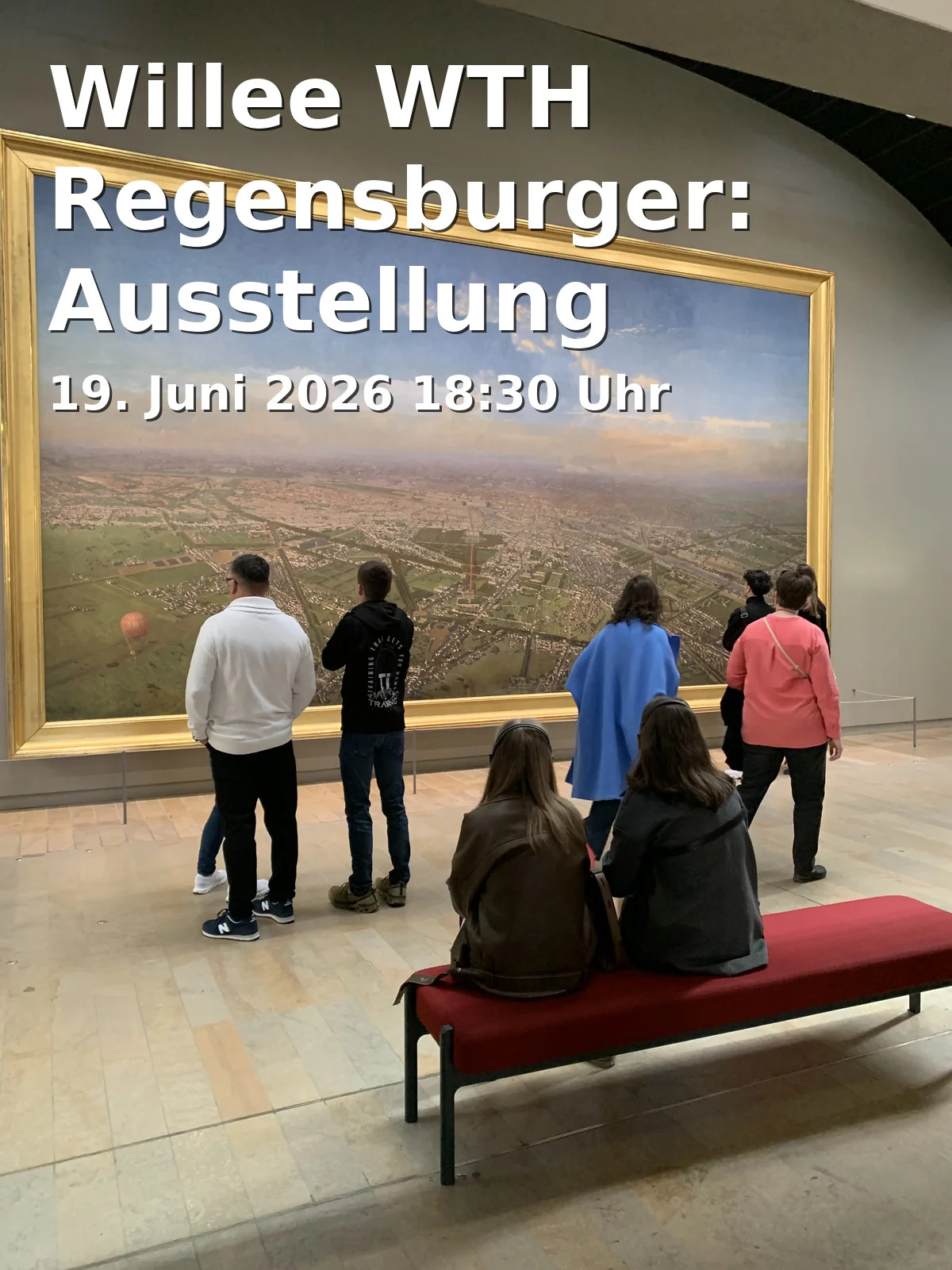
Willee WTH Regensburger: Exhibition Herkulessaal
Herkulessaal in Grabenstätt: An exhibition full of color, symbolism, and spatial effects. Opening on June 19, 2026 at 6:30 PM. #Art
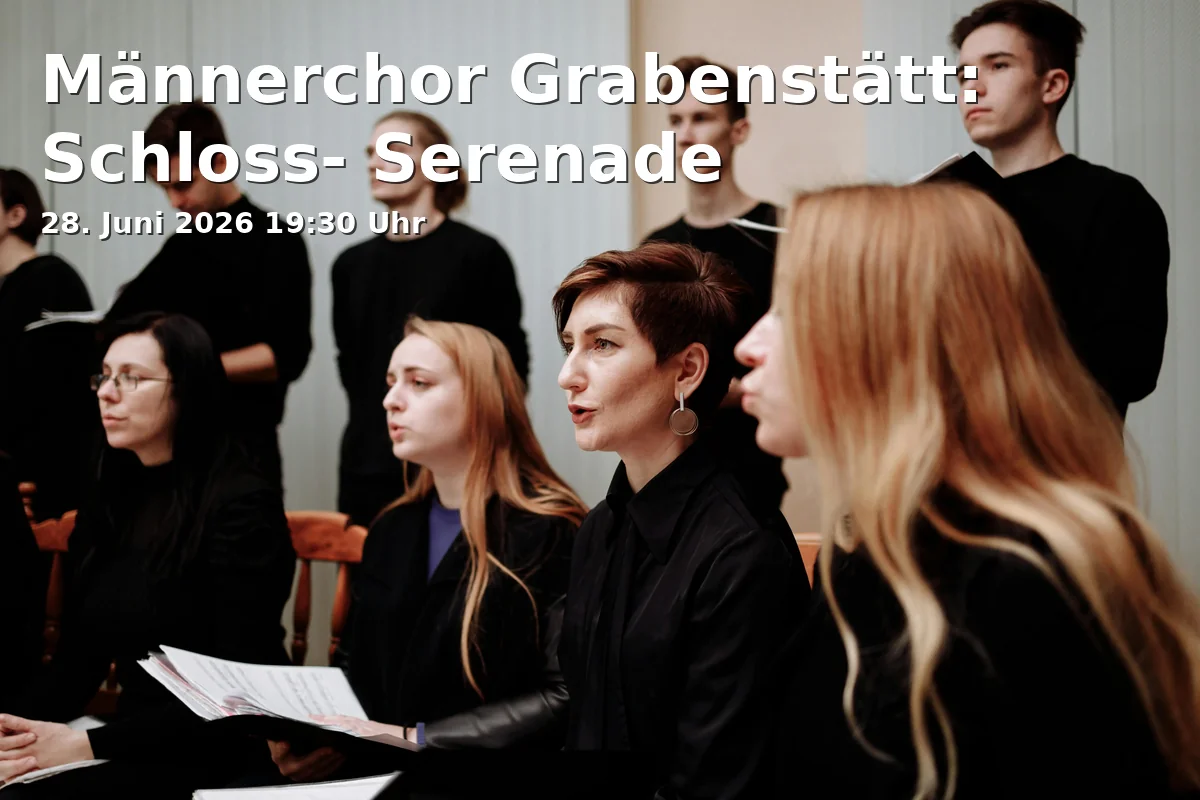
Men's Choir Grabenstätt: Castle Serenade
Choral music in castle ambiance: The Castle Serenade of the Men's Choir Grabenstätt promises a special summer evening with free admission. #Chiemgau
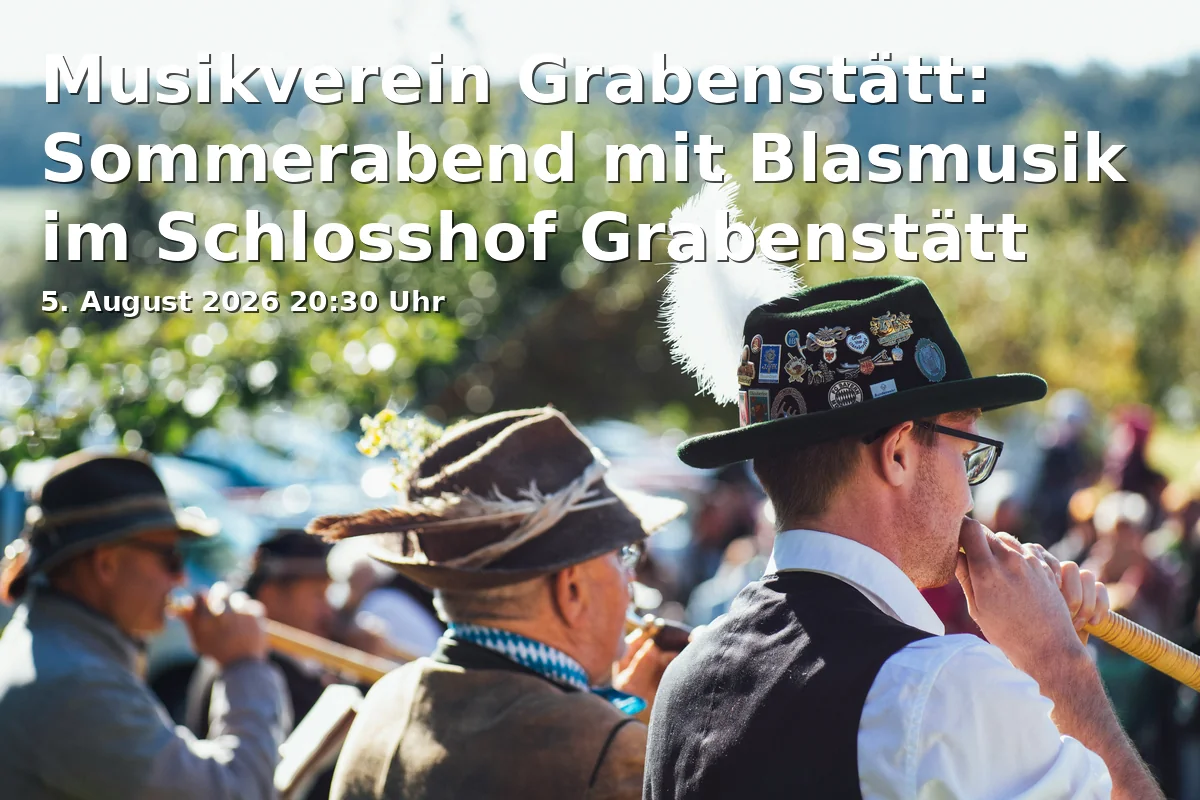
Musikverein Grabenstätt: Summer Evening with Brass Music in the Courtyard of Grabenstätt
Brass music in candlelight: The Musikverein Grabenstätt transforms the courtyard into a summer evening full of mood. 05.08.2026, 20:30, free admission. #BrassMusic #Chiemgau
Frequently Asked Questions
Reviews
No reviews found