
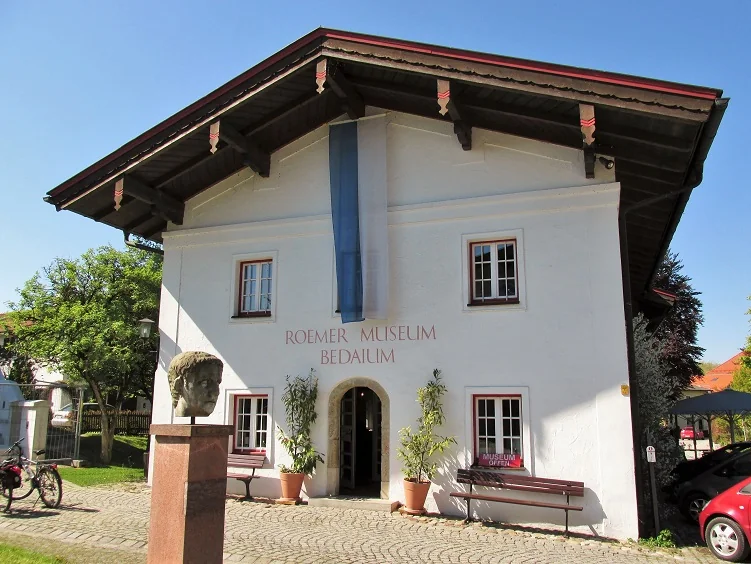
Seeon-Seebruck
Römerstraße 3, 83358 Seeon-Seebruck, Deutschland
Römermuseum Bedaium | Tickets & Opening Hours
The Römermuseum Bedaium is interesting for everyone who wants to understand a place in Seebruck where landscape, transport history, religion, and everyday life have overlapped for many centuries, rather than just visiting a museum. Located directly on the northern shore of Lake Chiemsee and in the historic center of Seebruck, the museum tells the story of the ancient Bedaium from the first traces of Celtic settlements through the Roman period to the early Bavarians. The location itself is part of the narrative: Here ran an important Roman east-west connection, a bridge crossed the Alz, and a significant transport hub developed in the pre-Alpine region. Those looking for tickets, photos, reviews, or the right time to visit will find in Bedaium not an anonymous exhibition building, but an authentic historical site with a strong regional connection. ([roemermuseum-bedaium.de](https://roemermuseum-bedaium.de/))
The museum has been operated by the municipality of Seeon-Seebruck since 2022 and sees itself as a museum for the Celtic-Roman past of the Chiemgau. The exhibition was designed by the Archaeological State Collection in Munich and is also scientifically and conservatively supervised there. More than 500 exhibits, 18 display cases, and a didactically prepared presentation make the visit vivid without losing scientific rigor. In addition, there are special exhibitions, guided tours, an archaeological circular path, and an annual program with lively formats. Thus, the Römermuseum Bedaium is suitable for history enthusiasts as well as families, school classes, and day-trippers looking for a destination at Lake Chiemsee for any weather. ([roemermuseum-bedaium.de](https://roemermuseum-bedaium.de/))
Tickets, Opening Hours, and Admission Prices
Those searching for tickets for the Römermuseum Bedaium want to know quickly when it is worth visiting and what costs to expect. The museum is open from Wednesday to Friday from 10 AM to 1 PM and from 2 PM to 5 PM. On Saturdays and Sundays, it has continuous opening hours from 10 AM to 3 PM. The museum is closed on Mondays and Tuesdays, which also applies on public holidays. During the week, public holidays follow the Sunday schedule from 10 AM to 3 PM, except for Good Friday and All Saints' Day, when the museum remains closed. This structure makes planning easy: Those traveling from the region can easily incorporate the visit into a day trip to Seebruck, Lake Chiemsee, or the archaeological circular path. ([roemermuseum-bedaium.de](https://roemermuseum-bedaium.de/de/ihr-besuch/oeffnungszeiten))
The admission prices are also clear and family-friendly. Adults pay 4.00 euros, reduced 3.50 euros. Reductions apply to guest card holders, people with disabilities with proof, groups of 10 or more, and retirees; additionally, the reduced price is also valid upon presentation of the LOKSCHUPPEN admission ticket Römer - Faces of an Empire between 20.03.2026 and 01.08.2027. Children aged 6 to 18, as well as students and trainees, pay 1.00 euro, and the family ticket costs 7.00 euros. Admission is free for people with disabilities using a wheelchair and their registered companion, as the building is not fully accessible. This is a helpful note for families, groups, and cultural travelers because it allows for planning the visit without surprises. ([roemermuseum-bedaium.de](https://roemermuseum-bedaium.de/de/ihr-besuch/eintrittspreise))
For inquiries such as opening hours or admission prices, it is also important to know that the museum is not a classic mass tourism location, but rather a compact building with clear visiting windows. This is even an advantage for the character of the place: Instead of short visits, Bedaium offers a relaxed museum stay where the collection can be explored at leisure. Especially in changeable weather at Lake Chiemsee, this is practical, as the visit can be flexibly integrated into the day. Those wanting to time their trip perfectly should best combine the opening hours with a walk through Seebruck or with the archaeological circular path, which starts and ends directly at the museum. ([roemermuseum-bedaium.de](https://roemermuseum-bedaium.de/de/ihr-besuch/oeffnungszeiten))
Arrival, Parking, and Location in Seebruck
The location of the Römermuseum Bedaium is one of its greatest advantages. The building is located in Seebruck directly on the northern shore of Lake Chiemsee and in close proximity to the historic town center. For those arriving by car, the official site provides clear routes: From the west, the museum can be reached via State Road 2095, from the north via State Road 2094 or 2093, and from the east also via State Road 2095. For the navigation system, the address Römerstraße 3, 83358 Seebruck should be used. This is particularly helpful because it clearly distinguishes the museum address from the municipal address and allows navigation to be directed straight to the museum entrance. ([roemermuseum-bedaium.de](https://roemermuseum-bedaium.de/de/ihr-besuch/anreise))
When it comes to parking, the municipality offers some free public parking spaces in front of the museum and at the nearby community. Although the capacity is not designed like that of a large event center, it is usually sufficient for a typical museum visit and many day-trippers. Those specifically looking for parking and arrival will find no complicated logistics, but rather a pragmatic solution with short distances. This is valuable for a day trip because the distances in Seebruck are manageable, and the museum visit can be easily combined with a local tour. Visitors who want to take photos or get to know the place first will benefit from the museum's central location, which is not situated in an industrial area or at a remote location. ([roemermuseum-bedaium.de](https://roemermuseum-bedaium.de/de/ihr-besuch/anreise))
Even without a car, the Römermuseum Bedaium is easily accessible. According to the official arrival page, there are regular bus connections from the train stations in Prien am Chiemsee and Traunstein to Seebruck, with the Hotel Post stop as the destination. Additionally, the museum refers to the Chiemsee Ring Line as another travel option. This makes the museum interesting not only for local visitors but also for vacationers planning their stay at Lake Chiemsee without a car. Those who plan their route cleverly can combine the museum visit with a ride along the lake, a walk in the town center, or a detour to other attractions in the municipality. ([roemermuseum-bedaium.de](https://roemermuseum-bedaium.de/de/ihr-besuch/anreise))
The location in the town center also shapes the visitor experience itself. According to its own description, the museum is located in the heart of the town, in the tension between the church and the town hall. This is more than a charming formulation: it explains why Bedaium is so well embedded in the identity of Seebruck. The historic site, the municipal history, and the archaeological presentation are not separate here, but closely connected both spatially and contextually. For inquiries such as Römermuseum Bedaium Seebruck or Römermuseum Bedaium Weather, this is important: the visit is not isolated but part of a larger local and landscape experience. ([roemermuseum-bedaium.de](https://roemermuseum-bedaium.de/de/das-museum))
The History of Bedaium: Celts, Romans, and Bavarians
The actual strength of the Römermuseum lies in its historical depth. The museum tells not only of the Roman period but also of a settlement history spanning around 4,000 years. In Seebruck, according to the museum, one can trace Celtic beginnings, a late Roman fortification, the early medieval Bavarians, and numerous archaeological layers. The Roman settlement BEDAIVM was closely linked to the road from Iuvavum, that is, Salzburg, to Augusta Vindelicum, that is, Augsburg. A bridge over the Alz and Lake Chiemsee to the south made the place an important hub in the pre-Alpine region. The place was named after the water god Bedaius, and at the site of today's church once stood a monumental stone temple. ([roemermuseum-bedaium.de](https://roemermuseum-bedaium.de/))
This historical narrative makes it clear why Seebruck is considered one of the best-researched Roman sites in Bavaria among experts. Numerous excavation campaigns have uncovered and measured ancient building remains, while vast amounts of small finds such as glass, ceramics, coins, metal tools, and jewelry have been secured. The Römermuseum Bedaium consolidates these finds into a comprehensible story of the place. It is not just about individual spectacular objects, but about a dense picture of everyday life, settlement development, and regional interconnections. This is precisely where the value lies for visitors who want to understand not just Roman history in general but the history of a specific place. ([roemermuseum-bedaium.de](https://roemermuseum-bedaium.de/de/das-museum))
Particularly exciting is the museum's emphasis on the transitions between the epochs. The exhibition ranges from local finds from the Stone and Bronze Ages to traces of the first Bavarians. This does not just showcase a classic Roman exhibition but presents a broader historical arc. Therefore, those searching for history will find not just a chapter here but an entire period in which use, transport, religion, and settlement forms have changed multiple times. The identity of Bedaium as a place on the road, by the water, and at the transition is the common thread that holds everything together. For visitors, this is important because it opens up a larger perspective on the Chiemgau through a single museum visit. ([roemermuseum-bedaium.de](https://roemermuseum-bedaium.de/de/das-museum))
The name itself is also part of this story. The museum emphasizes that the settlement and the place were named after the revered water god Bedaius and that the ancient location was closely linked to the river crossing. This creates an image of Bedaium as a place where economy, religion, and mobility intertwine. This interplay explains why the museum does not come across as just a local museum but as an archaeologically founded place of supra-regional significance. For search terms like Römermuseum Bedaium History or Römermuseum Bedaium Museum, this is the core message: Here, there is not just decoration, but reconstruction, explanation, and historical contextualization. ([roemermuseum-bedaium.de](https://roemermuseum-bedaium.de/))
The Museum as a Collection: 500 Exhibits, 18 Display Cases, and Clear Presentation
Inside, the Römermuseum Bedaium impresses mainly with its concentrated, factual, and simultaneously vivid presentation. In the upper floor, bright exhibition rooms with well over 500 exhibits in 18 display cases unfold historical contexts ranging from the Stone and Bronze Ages to the first Bavarians. The focus is on everyday life in the Celtic-Roman village community. This creates a museum space that is not overloaded but readable, where objects, image panels, and graphics complement each other. For visitors looking for photos, this mix is important: the house is visually clear but not staged in the sense of a spectacular experience museum. It focuses on comprehensibility, originality, and proximity to the find site. ([roemermuseum-bedaium.de](https://roemermuseum-bedaium.de/de/das-museum))
Also noteworthy is the scientific embedding. The Archaeological State Collection in Munich designed the exhibition and scientifically and conservatively supervises the museum. This lends a high degree of reliability to the presentation. Therefore, those wondering if a visit is worthwhile do not receive mere regional marketing but a curated archaeological perspective on the region. That Seebruck is considered one of the best-researched Roman sites in Bavaria explains the abundance of material but also the quality of the narrative. The collection benefits from systematic excavations, documentation, and evaluation over the years. This not only showcases beautiful individual pieces but also find contexts that say something about economy, transport, and everyday life in settlements. ([roemermuseum-bedaium.de](https://roemermuseum-bedaium.de/de/das-museum))
Another advantage is the spatial structure of the museum. On the ground floor, image panels, graphics, and selected exhibits introduce the topic before the exhibition is deepened on the upper floor with the display cases. This makes the house accessible even to visitors who would not normally dive straight into archaeological specialist literature. The tour functions like a didactic structure: first orientation, then condensation, then historical depth. This is particularly pleasant for families and mixed groups because different levels of knowledge can be well accommodated. Even those who only have an hour can experience a compact but content-rich museum visit. ([roemermuseum-bedaium.de](https://roemermuseum-bedaium.de/de/das-museum))
The atmosphere is also enhanced by the location in the town center. The museum, with its tavern, is situated in the tension between the church and the town hall, right in the heart of Seebruck's life. This position is not only geographically interesting but also narratively strong because the historical exhibition overlaps with the present place. For people looking for photos, impressions, or reviews, this is often the decisive point: the Römermuseum Bedaium does not seem like a closed display behind glass but like a place where the location itself is part of the exhibition. This is precisely why the visit remains memorable. ([roemermuseum-bedaium.de](https://roemermuseum-bedaium.de/de/das-museum))
Archaeological Circular Path: 23 Kilometers and 11 Stations
Those wanting to experience more than just the museum space should take a look at the archaeological circular path. It starts and ends at the Römermuseum Bedaium in Seebruck and leads through all three parts of the municipality Seebruck, Truchtlaching, and Seeon over approximately 23 kilometers. The route is designed to lead through 4,000 years of human history while consciously using quiet streets and paths. This is ideal for cyclists and hikers because the path does not run along major traffic routes but allows for relaxed discovery. For the search intent of archaeological circular paths, this is a strong answer: here, history is not only exhibited but made experienceable outdoors. ([roemermuseum-bedaium.de](https://roemermuseum-bedaium.de/de/archaeologischer-rundweg))
The circular path focuses on the most important find sites of the municipality and connects traces of settlement, cultural techniques, and landscape experiences. At each station, large panels with pictures and maps inform about the respective place, the route, and the reconstructed or displayed finds. Additionally, brochures for stations 2 and 3 are available at the museum. The signage is done with Roman-red metal signs featuring the Capricorn, the emblem of the Roman site BEDAIVM. This creates a coherent information system that links the exhibition in the house with the finds in the field. Especially for guests interested in Römermuseum Bedaium photos, this connection is attractive: the museum offers not only indoor spaces but also well-readable outdoor motifs and historical anchor points in the local area. ([roemermuseum-bedaium.de](https://roemermuseum-bedaium.de/de/archaeologischer-rundweg))
Particularly strong is the didactic claim of the path. The museum aims to show nature and history on site to make them more comprehensible. This approach fits excellently with the Chiemgau region, where landscape and settlement history are closely intertwined. The archaeological circular path is therefore not just a leisure offer but an extension of the museum narrative. Those who walk or ride it better understand why people settled here, how they used the land, and how complex cultural landscapes developed from early forms of settlement. The route is thus a low-threshold offer for families, school groups, and culture-interested visitors who do not want to spend the whole day in the museum but still want to dive deep into history. ([roemermuseum-bedaium.de](https://roemermuseum-bedaium.de/de/archaeologischer-rundweg))
Content-wise, the circular path is also a good complement to the museum visit because it broadens the perspective. The house itself explains the finds and the find locations; outside, one sees the landscape from which this history emerges. Therefore, those planning the visit can either start with the museum and then go on the circular path or vice versa, explore the surroundings and use the museum for deepening. For inquiries such as admission, opening hours, or parking, this is relevant because it allows for a sensible structuring of the day's plan. The path enlarges the place without overwhelming it. This is one of the reasons why the Römermuseum Bedaium is more than just a small local exhibition. ([roemermuseum-bedaium.de](https://roemermuseum-bedaium.de/de/archaeologischer-rundweg))
Guided Tours, Special Exhibition 2026, and Lively Museum Visit
The Römermuseum Bedaium is not a static showcase but actively works with guided tours, events, and special exhibitions. According to the official website, museum tours can be booked year-round, even in the winter months from Monday to Friday. For school classes, tours and experiential tours can be directly registered; the museum management requests prior registration at least one week in advance due to high demand. Group tours are conducted by in-house museum guides, and the museum points out that only one large group can be accommodated at a time. This organizational clarity is important for visitors as it allows for reliable planning while preserving the personal character of the house. ([roemermuseum-bedaium.de](https://roemermuseum-bedaium.de/de/paedagogik/museumsfuehrungen))
The content of the guided tours ranges from classic knowledge transfer to experience-oriented formats. For school classes, museum-pedagogically prepared tours are offered, in which over 500 original finds from the Seebruck area are placed in their spatial and temporal context. Additionally, there are experiential tours that include military equipment, Roman family life, and outdoor areas such as the forecourt, castle wall, and an archaeological excavation of a Roman underfloor heating system. Particularly vivid is the tour with the legionary Quintus Tiberius Octavius, which not only explains history but translates it into a tangible narrative form. This makes the museum a lively learning place, especially for families and children. ([roemermuseum-bedaium.de](https://roemermuseum-bedaium.de/de/paedagogik/museumsfuehrungen))
Another current focus is the special exhibition 2026 titled Farm and Luxury Villa - Roman Agriculture between Inn and Salzach. It runs from March 25 to December 31, 2026, and deals with agriculture around the Roman small town of Bedaium. The exhibition works with a map of Roman estates and settlements between Rosenheim and Salzburg as well as Mühldorf and the Alps, with reconstructions, short informative texts, a life-sized diorama, and interactive stations. It is being created in collaboration with the Römermuseum Grabenstätt and the Heimat- und Geschichtsverein Tacherting and complements the large exhibition at Lokschuppen Rosenheim. For visitors interested in the Roman era, this is a very good reason to plan a visit in 2026. ([roemermuseum-bedaium.de](https://roemermuseum-bedaium.de/de/das-museum/sonderausstellung))
The event program for 2026 also shows how broadly the museum works culturally. Among other things, Vivat Bedaium with LEG IX HISPANA, On the Trails of Bedaium, the Roman Garden of Bedaium, the tour of the special exhibition, exclusive tours with the legionary, the Roman workshop, adventure afternoons at the Römermuseum, and The Celts of Stöffling are mentioned. This mix of tours, workshops, family offerings, and outdoor references makes it clear that the Römermuseum Bedaium focuses on participation and not just on pure viewing. For search terms like guided tours or special exhibitions, this is ideal because the museum answers exactly these search intents with concrete offers. ([roemermuseum-bedaium.de](https://roemermuseum-bedaium.de/de/veranstaltungen))
Photos, Reviews, and Practical Visit Tips for Planning
Those searching for photos or reviews of the Römermuseum Bedaium generally want to quickly assess whether the visit is worthwhile for their day. The official self-presentation already provides strong hints: the museum is centrally located in the town, showcases more than 500 exhibits, works with bright exhibition rooms, image panels, and graphics, and connects indoor exhibitions with an archaeological circular path in the field. Additionally, there are special exhibitions, guided tours, and the embedding in the historic town center. This creates a clear picture: Bedaium is not a loud event format but a content-rich cultural destination with a calm, authentic atmosphere. For many visitors, this is precisely why photos of the house and its surroundings are particularly appealing. ([roemermuseum-bedaium.de](https://roemermuseum-bedaium.de/de/das-museum))
A practical tip for planning is not to schedule the visit too tightly. Those who only want to see the exhibition can manage with a shorter time, but the real value lies in the connection between the museum, local history, and the circular path. Therefore, it is worth allowing enough time for the display cases, image panels, and the view of the central location of the house. Those traveling with children will benefit from the guided tours and experiential offerings; cultural travelers can combine the exhibition with a walk through Seebruck and a ride along Lake Chiemsee. Especially in cooler or changeable weather, the museum is a suitable component for a flexible day trip. ([roemermuseum-bedaium.de](https://roemermuseum-bedaium.de/de/ihr-besuch/oeffnungszeiten))
Also, when it comes to accessibility and reachability, one should briefly check in advance what is important for their visit. The building is not fully accessible but offers a barrier-free entrance on the north side and allows access to the ground floor. Those arriving with a wheelchair or with assisted support should speak to the ticket staff so that access can be opened. For groups, prior registration is advisable, and for families or school classes, the visit can be significantly enhanced by a guided tour. This turns a simple museum question into a well-planned cultural experience with clear framework conditions. ([roemermuseum-bedaium.de](https://roemermuseum-bedaium.de/de/ihr-besuch/eintrittspreise))
In summary, the Römermuseum Bedaium is particularly interesting for those seeking historical depth rather than mere scenery. The place offers original finds, a strong archaeological contextualization, a scenically attractive environment, and a program ranging from classic tours to lively special exhibitions. Therefore, anyone searching for Römermuseum Bedaium Seebruck, tickets, weather, opening hours, parking, or reviews will find a location that is clearly positioned in content and convinces with its genuine history. This makes the visit not only informative but also very memorable. ([roemermuseum-bedaium.de](https://roemermuseum-bedaium.de/))
Sources:
- Römermuseum Bedaium - Official Website
- Römermuseum Bedaium - Opening Hours
- Römermuseum Bedaium - Arrival and Parking
- Römermuseum Bedaium - Admission Prices
- Römermuseum Bedaium - The Museum
- Römermuseum Bedaium - Archaeological Circular Path
- Römermuseum Bedaium - Events 2026
- Römermuseum Bedaium - Special Exhibition 2026
Show moreShow less
Römermuseum Bedaium | Tickets & Opening Hours
The Römermuseum Bedaium is interesting for everyone who wants to understand a place in Seebruck where landscape, transport history, religion, and everyday life have overlapped for many centuries, rather than just visiting a museum. Located directly on the northern shore of Lake Chiemsee and in the historic center of Seebruck, the museum tells the story of the ancient Bedaium from the first traces of Celtic settlements through the Roman period to the early Bavarians. The location itself is part of the narrative: Here ran an important Roman east-west connection, a bridge crossed the Alz, and a significant transport hub developed in the pre-Alpine region. Those looking for tickets, photos, reviews, or the right time to visit will find in Bedaium not an anonymous exhibition building, but an authentic historical site with a strong regional connection. ([roemermuseum-bedaium.de](https://roemermuseum-bedaium.de/))
The museum has been operated by the municipality of Seeon-Seebruck since 2022 and sees itself as a museum for the Celtic-Roman past of the Chiemgau. The exhibition was designed by the Archaeological State Collection in Munich and is also scientifically and conservatively supervised there. More than 500 exhibits, 18 display cases, and a didactically prepared presentation make the visit vivid without losing scientific rigor. In addition, there are special exhibitions, guided tours, an archaeological circular path, and an annual program with lively formats. Thus, the Römermuseum Bedaium is suitable for history enthusiasts as well as families, school classes, and day-trippers looking for a destination at Lake Chiemsee for any weather. ([roemermuseum-bedaium.de](https://roemermuseum-bedaium.de/))
Tickets, Opening Hours, and Admission Prices
Those searching for tickets for the Römermuseum Bedaium want to know quickly when it is worth visiting and what costs to expect. The museum is open from Wednesday to Friday from 10 AM to 1 PM and from 2 PM to 5 PM. On Saturdays and Sundays, it has continuous opening hours from 10 AM to 3 PM. The museum is closed on Mondays and Tuesdays, which also applies on public holidays. During the week, public holidays follow the Sunday schedule from 10 AM to 3 PM, except for Good Friday and All Saints' Day, when the museum remains closed. This structure makes planning easy: Those traveling from the region can easily incorporate the visit into a day trip to Seebruck, Lake Chiemsee, or the archaeological circular path. ([roemermuseum-bedaium.de](https://roemermuseum-bedaium.de/de/ihr-besuch/oeffnungszeiten))
The admission prices are also clear and family-friendly. Adults pay 4.00 euros, reduced 3.50 euros. Reductions apply to guest card holders, people with disabilities with proof, groups of 10 or more, and retirees; additionally, the reduced price is also valid upon presentation of the LOKSCHUPPEN admission ticket Römer - Faces of an Empire between 20.03.2026 and 01.08.2027. Children aged 6 to 18, as well as students and trainees, pay 1.00 euro, and the family ticket costs 7.00 euros. Admission is free for people with disabilities using a wheelchair and their registered companion, as the building is not fully accessible. This is a helpful note for families, groups, and cultural travelers because it allows for planning the visit without surprises. ([roemermuseum-bedaium.de](https://roemermuseum-bedaium.de/de/ihr-besuch/eintrittspreise))
For inquiries such as opening hours or admission prices, it is also important to know that the museum is not a classic mass tourism location, but rather a compact building with clear visiting windows. This is even an advantage for the character of the place: Instead of short visits, Bedaium offers a relaxed museum stay where the collection can be explored at leisure. Especially in changeable weather at Lake Chiemsee, this is practical, as the visit can be flexibly integrated into the day. Those wanting to time their trip perfectly should best combine the opening hours with a walk through Seebruck or with the archaeological circular path, which starts and ends directly at the museum. ([roemermuseum-bedaium.de](https://roemermuseum-bedaium.de/de/ihr-besuch/oeffnungszeiten))
Arrival, Parking, and Location in Seebruck
The location of the Römermuseum Bedaium is one of its greatest advantages. The building is located in Seebruck directly on the northern shore of Lake Chiemsee and in close proximity to the historic town center. For those arriving by car, the official site provides clear routes: From the west, the museum can be reached via State Road 2095, from the north via State Road 2094 or 2093, and from the east also via State Road 2095. For the navigation system, the address Römerstraße 3, 83358 Seebruck should be used. This is particularly helpful because it clearly distinguishes the museum address from the municipal address and allows navigation to be directed straight to the museum entrance. ([roemermuseum-bedaium.de](https://roemermuseum-bedaium.de/de/ihr-besuch/anreise))
When it comes to parking, the municipality offers some free public parking spaces in front of the museum and at the nearby community. Although the capacity is not designed like that of a large event center, it is usually sufficient for a typical museum visit and many day-trippers. Those specifically looking for parking and arrival will find no complicated logistics, but rather a pragmatic solution with short distances. This is valuable for a day trip because the distances in Seebruck are manageable, and the museum visit can be easily combined with a local tour. Visitors who want to take photos or get to know the place first will benefit from the museum's central location, which is not situated in an industrial area or at a remote location. ([roemermuseum-bedaium.de](https://roemermuseum-bedaium.de/de/ihr-besuch/anreise))
Even without a car, the Römermuseum Bedaium is easily accessible. According to the official arrival page, there are regular bus connections from the train stations in Prien am Chiemsee and Traunstein to Seebruck, with the Hotel Post stop as the destination. Additionally, the museum refers to the Chiemsee Ring Line as another travel option. This makes the museum interesting not only for local visitors but also for vacationers planning their stay at Lake Chiemsee without a car. Those who plan their route cleverly can combine the museum visit with a ride along the lake, a walk in the town center, or a detour to other attractions in the municipality. ([roemermuseum-bedaium.de](https://roemermuseum-bedaium.de/de/ihr-besuch/anreise))
The location in the town center also shapes the visitor experience itself. According to its own description, the museum is located in the heart of the town, in the tension between the church and the town hall. This is more than a charming formulation: it explains why Bedaium is so well embedded in the identity of Seebruck. The historic site, the municipal history, and the archaeological presentation are not separate here, but closely connected both spatially and contextually. For inquiries such as Römermuseum Bedaium Seebruck or Römermuseum Bedaium Weather, this is important: the visit is not isolated but part of a larger local and landscape experience. ([roemermuseum-bedaium.de](https://roemermuseum-bedaium.de/de/das-museum))
The History of Bedaium: Celts, Romans, and Bavarians
The actual strength of the Römermuseum lies in its historical depth. The museum tells not only of the Roman period but also of a settlement history spanning around 4,000 years. In Seebruck, according to the museum, one can trace Celtic beginnings, a late Roman fortification, the early medieval Bavarians, and numerous archaeological layers. The Roman settlement BEDAIVM was closely linked to the road from Iuvavum, that is, Salzburg, to Augusta Vindelicum, that is, Augsburg. A bridge over the Alz and Lake Chiemsee to the south made the place an important hub in the pre-Alpine region. The place was named after the water god Bedaius, and at the site of today's church once stood a monumental stone temple. ([roemermuseum-bedaium.de](https://roemermuseum-bedaium.de/))
This historical narrative makes it clear why Seebruck is considered one of the best-researched Roman sites in Bavaria among experts. Numerous excavation campaigns have uncovered and measured ancient building remains, while vast amounts of small finds such as glass, ceramics, coins, metal tools, and jewelry have been secured. The Römermuseum Bedaium consolidates these finds into a comprehensible story of the place. It is not just about individual spectacular objects, but about a dense picture of everyday life, settlement development, and regional interconnections. This is precisely where the value lies for visitors who want to understand not just Roman history in general but the history of a specific place. ([roemermuseum-bedaium.de](https://roemermuseum-bedaium.de/de/das-museum))
Particularly exciting is the museum's emphasis on the transitions between the epochs. The exhibition ranges from local finds from the Stone and Bronze Ages to traces of the first Bavarians. This does not just showcase a classic Roman exhibition but presents a broader historical arc. Therefore, those searching for history will find not just a chapter here but an entire period in which use, transport, religion, and settlement forms have changed multiple times. The identity of Bedaium as a place on the road, by the water, and at the transition is the common thread that holds everything together. For visitors, this is important because it opens up a larger perspective on the Chiemgau through a single museum visit. ([roemermuseum-bedaium.de](https://roemermuseum-bedaium.de/de/das-museum))
The name itself is also part of this story. The museum emphasizes that the settlement and the place were named after the revered water god Bedaius and that the ancient location was closely linked to the river crossing. This creates an image of Bedaium as a place where economy, religion, and mobility intertwine. This interplay explains why the museum does not come across as just a local museum but as an archaeologically founded place of supra-regional significance. For search terms like Römermuseum Bedaium History or Römermuseum Bedaium Museum, this is the core message: Here, there is not just decoration, but reconstruction, explanation, and historical contextualization. ([roemermuseum-bedaium.de](https://roemermuseum-bedaium.de/))
The Museum as a Collection: 500 Exhibits, 18 Display Cases, and Clear Presentation
Inside, the Römermuseum Bedaium impresses mainly with its concentrated, factual, and simultaneously vivid presentation. In the upper floor, bright exhibition rooms with well over 500 exhibits in 18 display cases unfold historical contexts ranging from the Stone and Bronze Ages to the first Bavarians. The focus is on everyday life in the Celtic-Roman village community. This creates a museum space that is not overloaded but readable, where objects, image panels, and graphics complement each other. For visitors looking for photos, this mix is important: the house is visually clear but not staged in the sense of a spectacular experience museum. It focuses on comprehensibility, originality, and proximity to the find site. ([roemermuseum-bedaium.de](https://roemermuseum-bedaium.de/de/das-museum))
Also noteworthy is the scientific embedding. The Archaeological State Collection in Munich designed the exhibition and scientifically and conservatively supervises the museum. This lends a high degree of reliability to the presentation. Therefore, those wondering if a visit is worthwhile do not receive mere regional marketing but a curated archaeological perspective on the region. That Seebruck is considered one of the best-researched Roman sites in Bavaria explains the abundance of material but also the quality of the narrative. The collection benefits from systematic excavations, documentation, and evaluation over the years. This not only showcases beautiful individual pieces but also find contexts that say something about economy, transport, and everyday life in settlements. ([roemermuseum-bedaium.de](https://roemermuseum-bedaium.de/de/das-museum))
Another advantage is the spatial structure of the museum. On the ground floor, image panels, graphics, and selected exhibits introduce the topic before the exhibition is deepened on the upper floor with the display cases. This makes the house accessible even to visitors who would not normally dive straight into archaeological specialist literature. The tour functions like a didactic structure: first orientation, then condensation, then historical depth. This is particularly pleasant for families and mixed groups because different levels of knowledge can be well accommodated. Even those who only have an hour can experience a compact but content-rich museum visit. ([roemermuseum-bedaium.de](https://roemermuseum-bedaium.de/de/das-museum))
The atmosphere is also enhanced by the location in the town center. The museum, with its tavern, is situated in the tension between the church and the town hall, right in the heart of Seebruck's life. This position is not only geographically interesting but also narratively strong because the historical exhibition overlaps with the present place. For people looking for photos, impressions, or reviews, this is often the decisive point: the Römermuseum Bedaium does not seem like a closed display behind glass but like a place where the location itself is part of the exhibition. This is precisely why the visit remains memorable. ([roemermuseum-bedaium.de](https://roemermuseum-bedaium.de/de/das-museum))
Archaeological Circular Path: 23 Kilometers and 11 Stations
Those wanting to experience more than just the museum space should take a look at the archaeological circular path. It starts and ends at the Römermuseum Bedaium in Seebruck and leads through all three parts of the municipality Seebruck, Truchtlaching, and Seeon over approximately 23 kilometers. The route is designed to lead through 4,000 years of human history while consciously using quiet streets and paths. This is ideal for cyclists and hikers because the path does not run along major traffic routes but allows for relaxed discovery. For the search intent of archaeological circular paths, this is a strong answer: here, history is not only exhibited but made experienceable outdoors. ([roemermuseum-bedaium.de](https://roemermuseum-bedaium.de/de/archaeologischer-rundweg))
The circular path focuses on the most important find sites of the municipality and connects traces of settlement, cultural techniques, and landscape experiences. At each station, large panels with pictures and maps inform about the respective place, the route, and the reconstructed or displayed finds. Additionally, brochures for stations 2 and 3 are available at the museum. The signage is done with Roman-red metal signs featuring the Capricorn, the emblem of the Roman site BEDAIVM. This creates a coherent information system that links the exhibition in the house with the finds in the field. Especially for guests interested in Römermuseum Bedaium photos, this connection is attractive: the museum offers not only indoor spaces but also well-readable outdoor motifs and historical anchor points in the local area. ([roemermuseum-bedaium.de](https://roemermuseum-bedaium.de/de/archaeologischer-rundweg))
Particularly strong is the didactic claim of the path. The museum aims to show nature and history on site to make them more comprehensible. This approach fits excellently with the Chiemgau region, where landscape and settlement history are closely intertwined. The archaeological circular path is therefore not just a leisure offer but an extension of the museum narrative. Those who walk or ride it better understand why people settled here, how they used the land, and how complex cultural landscapes developed from early forms of settlement. The route is thus a low-threshold offer for families, school groups, and culture-interested visitors who do not want to spend the whole day in the museum but still want to dive deep into history. ([roemermuseum-bedaium.de](https://roemermuseum-bedaium.de/de/archaeologischer-rundweg))
Content-wise, the circular path is also a good complement to the museum visit because it broadens the perspective. The house itself explains the finds and the find locations; outside, one sees the landscape from which this history emerges. Therefore, those planning the visit can either start with the museum and then go on the circular path or vice versa, explore the surroundings and use the museum for deepening. For inquiries such as admission, opening hours, or parking, this is relevant because it allows for a sensible structuring of the day's plan. The path enlarges the place without overwhelming it. This is one of the reasons why the Römermuseum Bedaium is more than just a small local exhibition. ([roemermuseum-bedaium.de](https://roemermuseum-bedaium.de/de/archaeologischer-rundweg))
Guided Tours, Special Exhibition 2026, and Lively Museum Visit
The Römermuseum Bedaium is not a static showcase but actively works with guided tours, events, and special exhibitions. According to the official website, museum tours can be booked year-round, even in the winter months from Monday to Friday. For school classes, tours and experiential tours can be directly registered; the museum management requests prior registration at least one week in advance due to high demand. Group tours are conducted by in-house museum guides, and the museum points out that only one large group can be accommodated at a time. This organizational clarity is important for visitors as it allows for reliable planning while preserving the personal character of the house. ([roemermuseum-bedaium.de](https://roemermuseum-bedaium.de/de/paedagogik/museumsfuehrungen))
The content of the guided tours ranges from classic knowledge transfer to experience-oriented formats. For school classes, museum-pedagogically prepared tours are offered, in which over 500 original finds from the Seebruck area are placed in their spatial and temporal context. Additionally, there are experiential tours that include military equipment, Roman family life, and outdoor areas such as the forecourt, castle wall, and an archaeological excavation of a Roman underfloor heating system. Particularly vivid is the tour with the legionary Quintus Tiberius Octavius, which not only explains history but translates it into a tangible narrative form. This makes the museum a lively learning place, especially for families and children. ([roemermuseum-bedaium.de](https://roemermuseum-bedaium.de/de/paedagogik/museumsfuehrungen))
Another current focus is the special exhibition 2026 titled Farm and Luxury Villa - Roman Agriculture between Inn and Salzach. It runs from March 25 to December 31, 2026, and deals with agriculture around the Roman small town of Bedaium. The exhibition works with a map of Roman estates and settlements between Rosenheim and Salzburg as well as Mühldorf and the Alps, with reconstructions, short informative texts, a life-sized diorama, and interactive stations. It is being created in collaboration with the Römermuseum Grabenstätt and the Heimat- und Geschichtsverein Tacherting and complements the large exhibition at Lokschuppen Rosenheim. For visitors interested in the Roman era, this is a very good reason to plan a visit in 2026. ([roemermuseum-bedaium.de](https://roemermuseum-bedaium.de/de/das-museum/sonderausstellung))
The event program for 2026 also shows how broadly the museum works culturally. Among other things, Vivat Bedaium with LEG IX HISPANA, On the Trails of Bedaium, the Roman Garden of Bedaium, the tour of the special exhibition, exclusive tours with the legionary, the Roman workshop, adventure afternoons at the Römermuseum, and The Celts of Stöffling are mentioned. This mix of tours, workshops, family offerings, and outdoor references makes it clear that the Römermuseum Bedaium focuses on participation and not just on pure viewing. For search terms like guided tours or special exhibitions, this is ideal because the museum answers exactly these search intents with concrete offers. ([roemermuseum-bedaium.de](https://roemermuseum-bedaium.de/de/veranstaltungen))
Photos, Reviews, and Practical Visit Tips for Planning
Those searching for photos or reviews of the Römermuseum Bedaium generally want to quickly assess whether the visit is worthwhile for their day. The official self-presentation already provides strong hints: the museum is centrally located in the town, showcases more than 500 exhibits, works with bright exhibition rooms, image panels, and graphics, and connects indoor exhibitions with an archaeological circular path in the field. Additionally, there are special exhibitions, guided tours, and the embedding in the historic town center. This creates a clear picture: Bedaium is not a loud event format but a content-rich cultural destination with a calm, authentic atmosphere. For many visitors, this is precisely why photos of the house and its surroundings are particularly appealing. ([roemermuseum-bedaium.de](https://roemermuseum-bedaium.de/de/das-museum))
A practical tip for planning is not to schedule the visit too tightly. Those who only want to see the exhibition can manage with a shorter time, but the real value lies in the connection between the museum, local history, and the circular path. Therefore, it is worth allowing enough time for the display cases, image panels, and the view of the central location of the house. Those traveling with children will benefit from the guided tours and experiential offerings; cultural travelers can combine the exhibition with a walk through Seebruck and a ride along Lake Chiemsee. Especially in cooler or changeable weather, the museum is a suitable component for a flexible day trip. ([roemermuseum-bedaium.de](https://roemermuseum-bedaium.de/de/ihr-besuch/oeffnungszeiten))
Also, when it comes to accessibility and reachability, one should briefly check in advance what is important for their visit. The building is not fully accessible but offers a barrier-free entrance on the north side and allows access to the ground floor. Those arriving with a wheelchair or with assisted support should speak to the ticket staff so that access can be opened. For groups, prior registration is advisable, and for families or school classes, the visit can be significantly enhanced by a guided tour. This turns a simple museum question into a well-planned cultural experience with clear framework conditions. ([roemermuseum-bedaium.de](https://roemermuseum-bedaium.de/de/ihr-besuch/eintrittspreise))
In summary, the Römermuseum Bedaium is particularly interesting for those seeking historical depth rather than mere scenery. The place offers original finds, a strong archaeological contextualization, a scenically attractive environment, and a program ranging from classic tours to lively special exhibitions. Therefore, anyone searching for Römermuseum Bedaium Seebruck, tickets, weather, opening hours, parking, or reviews will find a location that is clearly positioned in content and convinces with its genuine history. This makes the visit not only informative but also very memorable. ([roemermuseum-bedaium.de](https://roemermuseum-bedaium.de/))
Sources:
- Römermuseum Bedaium - Official Website
- Römermuseum Bedaium - Opening Hours
- Römermuseum Bedaium - Arrival and Parking
- Römermuseum Bedaium - Admission Prices
- Römermuseum Bedaium - The Museum
- Römermuseum Bedaium - Archaeological Circular Path
- Römermuseum Bedaium - Events 2026
- Römermuseum Bedaium - Special Exhibition 2026
Römermuseum Bedaium | Tickets & Opening Hours
The Römermuseum Bedaium is interesting for everyone who wants to understand a place in Seebruck where landscape, transport history, religion, and everyday life have overlapped for many centuries, rather than just visiting a museum. Located directly on the northern shore of Lake Chiemsee and in the historic center of Seebruck, the museum tells the story of the ancient Bedaium from the first traces of Celtic settlements through the Roman period to the early Bavarians. The location itself is part of the narrative: Here ran an important Roman east-west connection, a bridge crossed the Alz, and a significant transport hub developed in the pre-Alpine region. Those looking for tickets, photos, reviews, or the right time to visit will find in Bedaium not an anonymous exhibition building, but an authentic historical site with a strong regional connection. ([roemermuseum-bedaium.de](https://roemermuseum-bedaium.de/))
The museum has been operated by the municipality of Seeon-Seebruck since 2022 and sees itself as a museum for the Celtic-Roman past of the Chiemgau. The exhibition was designed by the Archaeological State Collection in Munich and is also scientifically and conservatively supervised there. More than 500 exhibits, 18 display cases, and a didactically prepared presentation make the visit vivid without losing scientific rigor. In addition, there are special exhibitions, guided tours, an archaeological circular path, and an annual program with lively formats. Thus, the Römermuseum Bedaium is suitable for history enthusiasts as well as families, school classes, and day-trippers looking for a destination at Lake Chiemsee for any weather. ([roemermuseum-bedaium.de](https://roemermuseum-bedaium.de/))
Tickets, Opening Hours, and Admission Prices
Those searching for tickets for the Römermuseum Bedaium want to know quickly when it is worth visiting and what costs to expect. The museum is open from Wednesday to Friday from 10 AM to 1 PM and from 2 PM to 5 PM. On Saturdays and Sundays, it has continuous opening hours from 10 AM to 3 PM. The museum is closed on Mondays and Tuesdays, which also applies on public holidays. During the week, public holidays follow the Sunday schedule from 10 AM to 3 PM, except for Good Friday and All Saints' Day, when the museum remains closed. This structure makes planning easy: Those traveling from the region can easily incorporate the visit into a day trip to Seebruck, Lake Chiemsee, or the archaeological circular path. ([roemermuseum-bedaium.de](https://roemermuseum-bedaium.de/de/ihr-besuch/oeffnungszeiten))
The admission prices are also clear and family-friendly. Adults pay 4.00 euros, reduced 3.50 euros. Reductions apply to guest card holders, people with disabilities with proof, groups of 10 or more, and retirees; additionally, the reduced price is also valid upon presentation of the LOKSCHUPPEN admission ticket Römer - Faces of an Empire between 20.03.2026 and 01.08.2027. Children aged 6 to 18, as well as students and trainees, pay 1.00 euro, and the family ticket costs 7.00 euros. Admission is free for people with disabilities using a wheelchair and their registered companion, as the building is not fully accessible. This is a helpful note for families, groups, and cultural travelers because it allows for planning the visit without surprises. ([roemermuseum-bedaium.de](https://roemermuseum-bedaium.de/de/ihr-besuch/eintrittspreise))
For inquiries such as opening hours or admission prices, it is also important to know that the museum is not a classic mass tourism location, but rather a compact building with clear visiting windows. This is even an advantage for the character of the place: Instead of short visits, Bedaium offers a relaxed museum stay where the collection can be explored at leisure. Especially in changeable weather at Lake Chiemsee, this is practical, as the visit can be flexibly integrated into the day. Those wanting to time their trip perfectly should best combine the opening hours with a walk through Seebruck or with the archaeological circular path, which starts and ends directly at the museum. ([roemermuseum-bedaium.de](https://roemermuseum-bedaium.de/de/ihr-besuch/oeffnungszeiten))
Arrival, Parking, and Location in Seebruck
The location of the Römermuseum Bedaium is one of its greatest advantages. The building is located in Seebruck directly on the northern shore of Lake Chiemsee and in close proximity to the historic town center. For those arriving by car, the official site provides clear routes: From the west, the museum can be reached via State Road 2095, from the north via State Road 2094 or 2093, and from the east also via State Road 2095. For the navigation system, the address Römerstraße 3, 83358 Seebruck should be used. This is particularly helpful because it clearly distinguishes the museum address from the municipal address and allows navigation to be directed straight to the museum entrance. ([roemermuseum-bedaium.de](https://roemermuseum-bedaium.de/de/ihr-besuch/anreise))
When it comes to parking, the municipality offers some free public parking spaces in front of the museum and at the nearby community. Although the capacity is not designed like that of a large event center, it is usually sufficient for a typical museum visit and many day-trippers. Those specifically looking for parking and arrival will find no complicated logistics, but rather a pragmatic solution with short distances. This is valuable for a day trip because the distances in Seebruck are manageable, and the museum visit can be easily combined with a local tour. Visitors who want to take photos or get to know the place first will benefit from the museum's central location, which is not situated in an industrial area or at a remote location. ([roemermuseum-bedaium.de](https://roemermuseum-bedaium.de/de/ihr-besuch/anreise))
Even without a car, the Römermuseum Bedaium is easily accessible. According to the official arrival page, there are regular bus connections from the train stations in Prien am Chiemsee and Traunstein to Seebruck, with the Hotel Post stop as the destination. Additionally, the museum refers to the Chiemsee Ring Line as another travel option. This makes the museum interesting not only for local visitors but also for vacationers planning their stay at Lake Chiemsee without a car. Those who plan their route cleverly can combine the museum visit with a ride along the lake, a walk in the town center, or a detour to other attractions in the municipality. ([roemermuseum-bedaium.de](https://roemermuseum-bedaium.de/de/ihr-besuch/anreise))
The location in the town center also shapes the visitor experience itself. According to its own description, the museum is located in the heart of the town, in the tension between the church and the town hall. This is more than a charming formulation: it explains why Bedaium is so well embedded in the identity of Seebruck. The historic site, the municipal history, and the archaeological presentation are not separate here, but closely connected both spatially and contextually. For inquiries such as Römermuseum Bedaium Seebruck or Römermuseum Bedaium Weather, this is important: the visit is not isolated but part of a larger local and landscape experience. ([roemermuseum-bedaium.de](https://roemermuseum-bedaium.de/de/das-museum))
The History of Bedaium: Celts, Romans, and Bavarians
The actual strength of the Römermuseum lies in its historical depth. The museum tells not only of the Roman period but also of a settlement history spanning around 4,000 years. In Seebruck, according to the museum, one can trace Celtic beginnings, a late Roman fortification, the early medieval Bavarians, and numerous archaeological layers. The Roman settlement BEDAIVM was closely linked to the road from Iuvavum, that is, Salzburg, to Augusta Vindelicum, that is, Augsburg. A bridge over the Alz and Lake Chiemsee to the south made the place an important hub in the pre-Alpine region. The place was named after the water god Bedaius, and at the site of today's church once stood a monumental stone temple. ([roemermuseum-bedaium.de](https://roemermuseum-bedaium.de/))
This historical narrative makes it clear why Seebruck is considered one of the best-researched Roman sites in Bavaria among experts. Numerous excavation campaigns have uncovered and measured ancient building remains, while vast amounts of small finds such as glass, ceramics, coins, metal tools, and jewelry have been secured. The Römermuseum Bedaium consolidates these finds into a comprehensible story of the place. It is not just about individual spectacular objects, but about a dense picture of everyday life, settlement development, and regional interconnections. This is precisely where the value lies for visitors who want to understand not just Roman history in general but the history of a specific place. ([roemermuseum-bedaium.de](https://roemermuseum-bedaium.de/de/das-museum))
Particularly exciting is the museum's emphasis on the transitions between the epochs. The exhibition ranges from local finds from the Stone and Bronze Ages to traces of the first Bavarians. This does not just showcase a classic Roman exhibition but presents a broader historical arc. Therefore, those searching for history will find not just a chapter here but an entire period in which use, transport, religion, and settlement forms have changed multiple times. The identity of Bedaium as a place on the road, by the water, and at the transition is the common thread that holds everything together. For visitors, this is important because it opens up a larger perspective on the Chiemgau through a single museum visit. ([roemermuseum-bedaium.de](https://roemermuseum-bedaium.de/de/das-museum))
The name itself is also part of this story. The museum emphasizes that the settlement and the place were named after the revered water god Bedaius and that the ancient location was closely linked to the river crossing. This creates an image of Bedaium as a place where economy, religion, and mobility intertwine. This interplay explains why the museum does not come across as just a local museum but as an archaeologically founded place of supra-regional significance. For search terms like Römermuseum Bedaium History or Römermuseum Bedaium Museum, this is the core message: Here, there is not just decoration, but reconstruction, explanation, and historical contextualization. ([roemermuseum-bedaium.de](https://roemermuseum-bedaium.de/))
The Museum as a Collection: 500 Exhibits, 18 Display Cases, and Clear Presentation
Inside, the Römermuseum Bedaium impresses mainly with its concentrated, factual, and simultaneously vivid presentation. In the upper floor, bright exhibition rooms with well over 500 exhibits in 18 display cases unfold historical contexts ranging from the Stone and Bronze Ages to the first Bavarians. The focus is on everyday life in the Celtic-Roman village community. This creates a museum space that is not overloaded but readable, where objects, image panels, and graphics complement each other. For visitors looking for photos, this mix is important: the house is visually clear but not staged in the sense of a spectacular experience museum. It focuses on comprehensibility, originality, and proximity to the find site. ([roemermuseum-bedaium.de](https://roemermuseum-bedaium.de/de/das-museum))
Also noteworthy is the scientific embedding. The Archaeological State Collection in Munich designed the exhibition and scientifically and conservatively supervises the museum. This lends a high degree of reliability to the presentation. Therefore, those wondering if a visit is worthwhile do not receive mere regional marketing but a curated archaeological perspective on the region. That Seebruck is considered one of the best-researched Roman sites in Bavaria explains the abundance of material but also the quality of the narrative. The collection benefits from systematic excavations, documentation, and evaluation over the years. This not only showcases beautiful individual pieces but also find contexts that say something about economy, transport, and everyday life in settlements. ([roemermuseum-bedaium.de](https://roemermuseum-bedaium.de/de/das-museum))
Another advantage is the spatial structure of the museum. On the ground floor, image panels, graphics, and selected exhibits introduce the topic before the exhibition is deepened on the upper floor with the display cases. This makes the house accessible even to visitors who would not normally dive straight into archaeological specialist literature. The tour functions like a didactic structure: first orientation, then condensation, then historical depth. This is particularly pleasant for families and mixed groups because different levels of knowledge can be well accommodated. Even those who only have an hour can experience a compact but content-rich museum visit. ([roemermuseum-bedaium.de](https://roemermuseum-bedaium.de/de/das-museum))
The atmosphere is also enhanced by the location in the town center. The museum, with its tavern, is situated in the tension between the church and the town hall, right in the heart of Seebruck's life. This position is not only geographically interesting but also narratively strong because the historical exhibition overlaps with the present place. For people looking for photos, impressions, or reviews, this is often the decisive point: the Römermuseum Bedaium does not seem like a closed display behind glass but like a place where the location itself is part of the exhibition. This is precisely why the visit remains memorable. ([roemermuseum-bedaium.de](https://roemermuseum-bedaium.de/de/das-museum))
Archaeological Circular Path: 23 Kilometers and 11 Stations
Those wanting to experience more than just the museum space should take a look at the archaeological circular path. It starts and ends at the Römermuseum Bedaium in Seebruck and leads through all three parts of the municipality Seebruck, Truchtlaching, and Seeon over approximately 23 kilometers. The route is designed to lead through 4,000 years of human history while consciously using quiet streets and paths. This is ideal for cyclists and hikers because the path does not run along major traffic routes but allows for relaxed discovery. For the search intent of archaeological circular paths, this is a strong answer: here, history is not only exhibited but made experienceable outdoors. ([roemermuseum-bedaium.de](https://roemermuseum-bedaium.de/de/archaeologischer-rundweg))
The circular path focuses on the most important find sites of the municipality and connects traces of settlement, cultural techniques, and landscape experiences. At each station, large panels with pictures and maps inform about the respective place, the route, and the reconstructed or displayed finds. Additionally, brochures for stations 2 and 3 are available at the museum. The signage is done with Roman-red metal signs featuring the Capricorn, the emblem of the Roman site BEDAIVM. This creates a coherent information system that links the exhibition in the house with the finds in the field. Especially for guests interested in Römermuseum Bedaium photos, this connection is attractive: the museum offers not only indoor spaces but also well-readable outdoor motifs and historical anchor points in the local area. ([roemermuseum-bedaium.de](https://roemermuseum-bedaium.de/de/archaeologischer-rundweg))
Particularly strong is the didactic claim of the path. The museum aims to show nature and history on site to make them more comprehensible. This approach fits excellently with the Chiemgau region, where landscape and settlement history are closely intertwined. The archaeological circular path is therefore not just a leisure offer but an extension of the museum narrative. Those who walk or ride it better understand why people settled here, how they used the land, and how complex cultural landscapes developed from early forms of settlement. The route is thus a low-threshold offer for families, school groups, and culture-interested visitors who do not want to spend the whole day in the museum but still want to dive deep into history. ([roemermuseum-bedaium.de](https://roemermuseum-bedaium.de/de/archaeologischer-rundweg))
Content-wise, the circular path is also a good complement to the museum visit because it broadens the perspective. The house itself explains the finds and the find locations; outside, one sees the landscape from which this history emerges. Therefore, those planning the visit can either start with the museum and then go on the circular path or vice versa, explore the surroundings and use the museum for deepening. For inquiries such as admission, opening hours, or parking, this is relevant because it allows for a sensible structuring of the day's plan. The path enlarges the place without overwhelming it. This is one of the reasons why the Römermuseum Bedaium is more than just a small local exhibition. ([roemermuseum-bedaium.de](https://roemermuseum-bedaium.de/de/archaeologischer-rundweg))
Guided Tours, Special Exhibition 2026, and Lively Museum Visit
The Römermuseum Bedaium is not a static showcase but actively works with guided tours, events, and special exhibitions. According to the official website, museum tours can be booked year-round, even in the winter months from Monday to Friday. For school classes, tours and experiential tours can be directly registered; the museum management requests prior registration at least one week in advance due to high demand. Group tours are conducted by in-house museum guides, and the museum points out that only one large group can be accommodated at a time. This organizational clarity is important for visitors as it allows for reliable planning while preserving the personal character of the house. ([roemermuseum-bedaium.de](https://roemermuseum-bedaium.de/de/paedagogik/museumsfuehrungen))
The content of the guided tours ranges from classic knowledge transfer to experience-oriented formats. For school classes, museum-pedagogically prepared tours are offered, in which over 500 original finds from the Seebruck area are placed in their spatial and temporal context. Additionally, there are experiential tours that include military equipment, Roman family life, and outdoor areas such as the forecourt, castle wall, and an archaeological excavation of a Roman underfloor heating system. Particularly vivid is the tour with the legionary Quintus Tiberius Octavius, which not only explains history but translates it into a tangible narrative form. This makes the museum a lively learning place, especially for families and children. ([roemermuseum-bedaium.de](https://roemermuseum-bedaium.de/de/paedagogik/museumsfuehrungen))
Another current focus is the special exhibition 2026 titled Farm and Luxury Villa - Roman Agriculture between Inn and Salzach. It runs from March 25 to December 31, 2026, and deals with agriculture around the Roman small town of Bedaium. The exhibition works with a map of Roman estates and settlements between Rosenheim and Salzburg as well as Mühldorf and the Alps, with reconstructions, short informative texts, a life-sized diorama, and interactive stations. It is being created in collaboration with the Römermuseum Grabenstätt and the Heimat- und Geschichtsverein Tacherting and complements the large exhibition at Lokschuppen Rosenheim. For visitors interested in the Roman era, this is a very good reason to plan a visit in 2026. ([roemermuseum-bedaium.de](https://roemermuseum-bedaium.de/de/das-museum/sonderausstellung))
The event program for 2026 also shows how broadly the museum works culturally. Among other things, Vivat Bedaium with LEG IX HISPANA, On the Trails of Bedaium, the Roman Garden of Bedaium, the tour of the special exhibition, exclusive tours with the legionary, the Roman workshop, adventure afternoons at the Römermuseum, and The Celts of Stöffling are mentioned. This mix of tours, workshops, family offerings, and outdoor references makes it clear that the Römermuseum Bedaium focuses on participation and not just on pure viewing. For search terms like guided tours or special exhibitions, this is ideal because the museum answers exactly these search intents with concrete offers. ([roemermuseum-bedaium.de](https://roemermuseum-bedaium.de/de/veranstaltungen))
Photos, Reviews, and Practical Visit Tips for Planning
Those searching for photos or reviews of the Römermuseum Bedaium generally want to quickly assess whether the visit is worthwhile for their day. The official self-presentation already provides strong hints: the museum is centrally located in the town, showcases more than 500 exhibits, works with bright exhibition rooms, image panels, and graphics, and connects indoor exhibitions with an archaeological circular path in the field. Additionally, there are special exhibitions, guided tours, and the embedding in the historic town center. This creates a clear picture: Bedaium is not a loud event format but a content-rich cultural destination with a calm, authentic atmosphere. For many visitors, this is precisely why photos of the house and its surroundings are particularly appealing. ([roemermuseum-bedaium.de](https://roemermuseum-bedaium.de/de/das-museum))
A practical tip for planning is not to schedule the visit too tightly. Those who only want to see the exhibition can manage with a shorter time, but the real value lies in the connection between the museum, local history, and the circular path. Therefore, it is worth allowing enough time for the display cases, image panels, and the view of the central location of the house. Those traveling with children will benefit from the guided tours and experiential offerings; cultural travelers can combine the exhibition with a walk through Seebruck and a ride along Lake Chiemsee. Especially in cooler or changeable weather, the museum is a suitable component for a flexible day trip. ([roemermuseum-bedaium.de](https://roemermuseum-bedaium.de/de/ihr-besuch/oeffnungszeiten))
Also, when it comes to accessibility and reachability, one should briefly check in advance what is important for their visit. The building is not fully accessible but offers a barrier-free entrance on the north side and allows access to the ground floor. Those arriving with a wheelchair or with assisted support should speak to the ticket staff so that access can be opened. For groups, prior registration is advisable, and for families or school classes, the visit can be significantly enhanced by a guided tour. This turns a simple museum question into a well-planned cultural experience with clear framework conditions. ([roemermuseum-bedaium.de](https://roemermuseum-bedaium.de/de/ihr-besuch/eintrittspreise))
In summary, the Römermuseum Bedaium is particularly interesting for those seeking historical depth rather than mere scenery. The place offers original finds, a strong archaeological contextualization, a scenically attractive environment, and a program ranging from classic tours to lively special exhibitions. Therefore, anyone searching for Römermuseum Bedaium Seebruck, tickets, weather, opening hours, parking, or reviews will find a location that is clearly positioned in content and convinces with its genuine history. This makes the visit not only informative but also very memorable. ([roemermuseum-bedaium.de](https://roemermuseum-bedaium.de/))
Sources:
- Römermuseum Bedaium - Official Website
- Römermuseum Bedaium - Opening Hours
- Römermuseum Bedaium - Arrival and Parking
- Römermuseum Bedaium - Admission Prices
- Römermuseum Bedaium - The Museum
- Römermuseum Bedaium - Archaeological Circular Path
- Römermuseum Bedaium - Events 2026
- Römermuseum Bedaium - Special Exhibition 2026
Upcoming Events
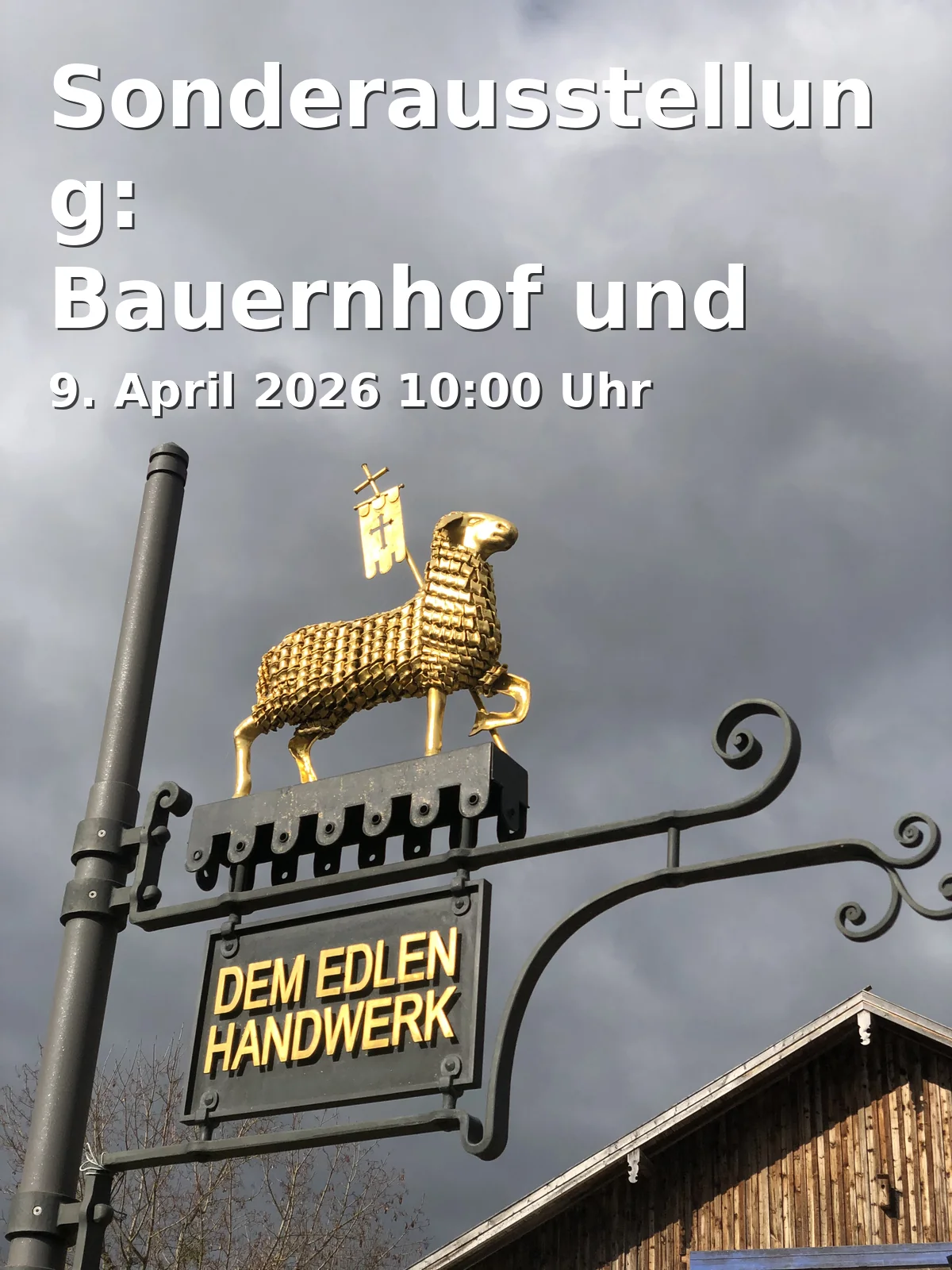
Special Exhibition: Farm and Luxury Villa - Roman Agriculture between Inn and Salzach
Discover Roman Agriculture anew: At Römermuseum Bedaium, manor, luxury villa, and original finds come together in a lively exhibition. #RomanEra
Roman Era Adventure at the Bedaium Roman Museum
Immerse yourself in the Roman era with LEG IX HISPANA, craftsmen, and exciting hands-on activities at the Bedaium Roman Museum in Seebruck.
Harvest Festival of the Romans - Adventure Roman Era
Dive into the world of the Romans at the Roman Museum Bedaium. Free admission and an exciting program await you!
Frequently Asked Questions
Reviews
No reviews found