
Wasserburg am Inn
Gabersee 23, 83512 Wasserburg am Inn, Deutschland
Psychiatry Museum Wasserburg | Tours & Tickets
The Psychiatry Museum Wasserburg is not an ordinary attraction, but a place where medical history, memory culture, and the local development of the kbo-Inn-Salzach Clinic come together. The permanent medical historical exhibition is located in Gabersee in House 23 and has been displayed since 2003 in one of the oldest ward buildings of the listed facility. The exhibition aims not only to be historical but also social: it seeks to make understandable how psychiatric treatment, hospital life, and public perception have changed over the decades, and it also aims to reduce prejudices. This combination of factual information and sensitive remembrance makes the Psychiatry Museum Wasserburg a special destination for culture-interested visitors, school and group visits, and for anyone who wants to engage with the history of Wasserburg am Inn and Gabersee. ([wasserburg.de](https://www.wasserburg.de/psychiatriemuseum?type=98))
Tours, Tickets, and Registration at the Psychiatry Museum Wasserburg
Those looking for tickets will quickly notice that a visit to the Psychiatry Museum Wasserburg does not follow the model of a classic museum with a standard ticket office and fixed daily opening hours. The official museum website explicitly mentions a visit by prior arrangement, and the guided tour of the exhibition is offered free of charge. In practice, this means: Interested parties should coordinate the appointment in advance rather than relying on spontaneous opening hours. A phone number and an email address are provided on the municipal museum page as contact, and the page also refers to the web presence of the kbo-Inn-Salzach Clinic. This makes the visit clearly planable, even though no regular ticket system is at the forefront. This is particularly advantageous for travel groups or thematically interested guests, as the tour can be organized specifically, and access to the exhibition is personally accompanied. ([wasserburg.de](https://www.wasserburg.de/psychiatriemuseum?type=98))
The Google quick search and a third-party entry additionally list the museum with the phrasing 'Tours from 6 people'. However, the official museum page does not confirm this minimum number but only speaks of a tour by prior arrangement. Therefore, direct contact is the best solution for clean planning. Those organizing a group can thus rightly expect a guided visit but should clarify the specific number of people and the date in advance with the museum. This is particularly sensible because the exhibition is designed for mediation: According to the museum, the history of Gabersee is best conveyed within the framework of a guided tour, not just through panels and documents. Therefore, anyone interested in the development of the psychiatric hospital, the change in treatment methods, or the current classification of historical events will receive significantly more context during the guided tour than during a brief self-visit. The visit is thus less a quick stop and more a conscious immersion into a complex chapter of regional and medical history. ([zaubee.com](https://zaubee.com/biz/psychiatriemuseum-medizinhist-dauerausstellung-fuhrungen-ab-6-personen-anmeldungen-unter-angegebenen-kontaktdaten-4f04d7bb?utm_source=openai))
For the SEO perspective on the keyword 'Tickets', this is also important: At the Psychiatry Museum Wasserburg, it is less about admission tickets and more about appointment arrangements, guided mediation, and free museum access. This is very fitting for the search intent, as many users want to know before a visit whether they need to book, how large the group can be, and whether a guided tour can be booked. The official answer to this is: Yes, a guided tour is planned and free of charge, but please by arrangement. This makes the museum both accessible and personal. Those traveling from Wasserburg, Rosenheim, the Chiemsee-Alpenland, or further afield can easily integrate the visit into their daily planning and do not have to respond to rigid time slots. This flexible yet supervised access fits well with the special theme of the house. ([wasserburg.de](https://www.wasserburg.de/psychiatriemuseum?type=98))
The History of Gabersee: From the District Asylum to the Modern Clinic
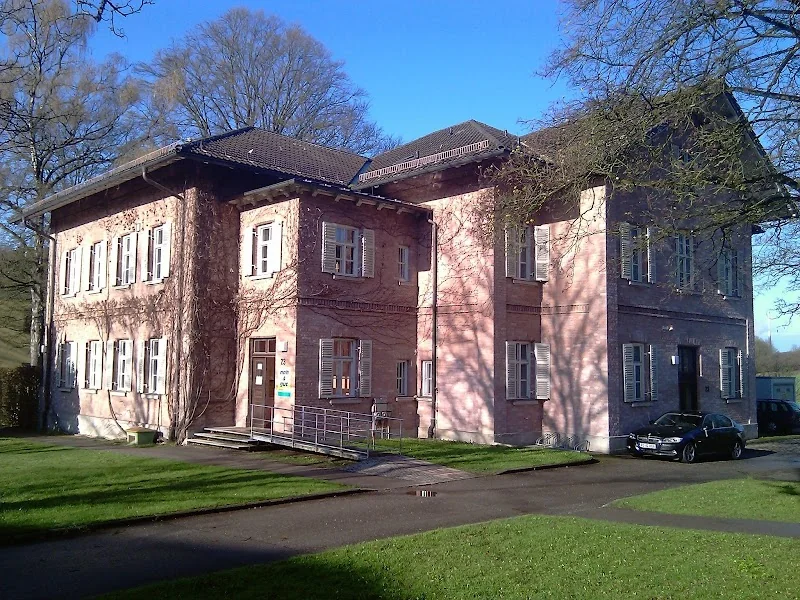
The history of the Psychiatry Museum Wasserburg is inseparably linked to the history of Gabersee. On the current clinic grounds, a psychiatric hospital was established as early as 1883, built as a 'district asylum' for the district of Upper Bavaria. Previously, the only corresponding facility in Munich was overcrowded. The Wasserburg builder and architect Rieperdinger designed the facility in pavilion style, meaning a loosely structured, park-like embedded group of buildings, which was also referred to at the time as a 'colonial institution'. This construction method was intended not only to be functional but also to promote patient engagement and hygienic progress. The buildings were relatively self-sufficient in a spacious environment; in 1893, the associated church St. Raphael was completed in the neo-Romanesque style. By around 1902, approximately 500 patients lived in the facility, and in 1908, the clinic was expanded to include 30 wards. Even these early milestones clearly show that Gabersee was never just a peripheral location but a significant psychiatric site in Upper Bavaria. ([wasserburg.de](https://www.wasserburg.de/gedenken/opfer-des-ns/ns-euthanasie/heil-und-pflegeanstalt-gabersee?type=98))
The historical development was strongly shaped in the 20th century by therapeutic and social upheavals. Under the leadership of Dr. Friedrich Utz, occupational therapies were introduced in the agricultural operation from the mid-1920s, later expanding to family care and external care. At the same time, the institution fell into a problematic development as the care rates were lowered and economic considerations increasingly came to the forefront. The Nazi era then brought a drastic escalation: Selections were prepared in Gabersee starting in June 1940, and from November 1940, hundreds of patients were deported to the Hartheim killing center and murdered there. In early 1941, Gabersee was dissolved, and the remaining patients were transferred to Eglfing-Haar. The city of Wasserburg reminds on its memorial page that the institution became part of a criminal system during this phase and that the history of the place cannot be understood without this dimension. For the classification of the museum, this is crucial, as House 23 not only shows technical or medical changes but also the ethical breaches of psychiatric history. ([wasserburg.de](https://www.wasserburg.de/gedenken/opfer-des-ns/ns-euthanasie/heil-und-pflegeanstalt-gabersee?type=98))
After World War II, a new chapter began. In 1953, the repair work was completed, and the care facility was reopened; in 1954, the district took over the clinic under the name 'Nerve Hospital of the District of Upper Bavaria'. This was followed by the establishment of a nursing school, in 1968 the central occupational and employment therapy, and from 1975 further expansions and new buildings. Later, the hospital was restructured by specialties, patient admission was decentralized, and the services were further modernized. Since 2004, the location has been an academic teaching hospital of LMU. The Psychiatry Museum is thus located in a place where nearly the entire development of psychiatric care in Bavaria can be read in condensed form: from the closed institutional world of the 19th century through the crimes of the Nazi era to today's specialized clinic. This long line makes the exhibition so relevant for all who want to experience not just a museum but a piece of living institutional history. ([wasserburg.de](https://www.wasserburg.de/gedenken/opfer-des-ns/ns-euthanasie/heil-und-pflegeanstalt-gabersee/))
The Permanent Exhibition in House 23: Original Rooms, Objects, and Hospital Life
A special allure of the Psychiatry Museum Wasserburg lies in the fact that the exhibition is not displayed in a neutral new building but in a historic ward building. According to the official description, the house is preserved as it was in the 1960s. This creates a very vivid atmosphere: As one walks through the rooms, one experiences not only showcases and text panels but also a structural framework that itself speaks historically. The building is one of the oldest wards of the listed facility, and the exhibition consciously takes up this authenticity. During the time of the district asylum, the house accommodated nearly 70 patients across two wards. Originally, 19 beds were planned per ward, but in reality, more than 30 beds were set up until the 1980s. The living and sleeping situation was correspondingly cramped: For about 20 patients, there was only one toilet and one bath, the wooden floors did not meet today's hygiene standards, and there was no privacy in the dormitory. In the museum, the former bed locations are marked as white cubes. This spatially illustrates how closely people once lived together. ([wasserburg.de](https://www.wasserburg.de/psychiatriemuseum?type=98))
The collection itself continues this architectural experience thematically. Objects from all eras of Gabersee's history are displayed, with a focus on the 1960s and 1970s. These include storage aids, toilet and hospital wheelchairs, institutional clothing, staff uniforms from the classic nursing attire to the uniform of the operational fire department, as well as one of the last straitjackets. Additionally, there is a collection of historical medical instruments from the nursing school and the dissection operation, which operated here until the 1990s. These objects are not just exhibition pieces but concrete testimonies of a time when medical practice, nursing life, and institutional structures looked very different than today. Anyone interested in material history, nursing history, or medical history will therefore find not only a local reference here but also a rich field of sources for understanding an entire field. Particularly in the SEO context, terms like 'permanent exhibition', 'House 23', 'medical instruments', and 'history' are not just keywords but precise indicators of the character of the museum. ([wasserburg.de](https://www.wasserburg.de/psychiatriemuseum?type=98))
Another important aspect is the mediation of psychiatric reform. According to the official museum description, conditions gradually changed after 1975, and the old institution transformed into a modern specialized clinic. This transition forms a common thread of the exhibition: It shows that the history of psychiatry does not stand still but is shaped by medical knowledge, societal expectations, and ethical debates. The museum is thus not only a retrospective but also a space for reflection. It allows visitors to understand why certain treatment concepts have been overcome today, what role occupational therapy once had, and how the perspective on mental illnesses has changed. Precisely because the place carries historical traces within itself, this change gains a special vividness. Therefore, those who visit the Psychiatry Museum Wasserburg see not only objects but the history of an institution that has evolved from the overcrowding and discipline of the 19th century to a modern, professionally differentiated clinic. ([wasserburg.de](https://www.wasserburg.de/psychiatriemuseum?type=98))
Directions, Location, and Orientation on the Grounds in Gabersee
The Psychiatry Museum Wasserburg is not located in the middle of the Wasserburg old town but on the grounds of the kbo-Inn-Salzach Clinic in Gabersee. The address is Gabersee 23, 83512 Wasserburg am Inn. For orientation, it is important to note that the museum is housed in House 23; the event page for the International Museum Day explicitly names it as a location on the 1st floor, in the nearest building after the fest hall. Therefore, those who want to get an idea before arriving should expect a clinic site rather than a classic museum building. This is precisely why a prior appointment arrangement is sensible: The visit is part of an active clinic site with ongoing operations, and the structure on site follows different rules than a centrally located city museum. ([wasserburg.de](https://www.wasserburg.de/psychiatriemuseum?type=98))
The official pages of the clinic provide helpful information for directions. The contact page refers to the kbo-Navi app, which is intended to help visitors find the right building and parking options on the grounds. Additionally, there is a clinic bus on site that connects central stops on the grounds in Gabersee with the new building every 30 minutes. Those arriving by car can therefore inform themselves about the campus structure in advance rather than searching on site. This is particularly useful for people traveling from the surrounding area, from Rosenheim, or further away. The clinic page also lists the central contact times for patient admissions, showing how well-organized the location is. For a museum visit, this means: The best strategy is to clarify the appointment, arrival, and building route in advance and not rely on spontaneous orientation. ([kbo-isk.de](https://kbo-isk.de/kontakt))
The question of parking and accessibility should be taken particularly seriously at the Psychiatry Museum Wasserburg. The official sources do not mention a dedicated museum parking lot, but they refer via the kbo-Navi app to parking options on the grounds. At the same time, the event page for the museum is clear: The room in House 23 is located on the 1st floor and is not accessible. Therefore, those who depend on barrier-free access, elevators, or other aids should definitely inquire in advance whether and in what form a visit is possible. This is not a limitation of the content quality but an important practical piece of information for visit planning. Particularly because the museum is housed in a historic ward building, the preservation of the monument and today's accessibility are in a tension relationship. For the SEO texts around 'Directions', 'Parking', and 'Tickets', precise language is particularly important: The museum is well describable and planable, but it is not a standardized event center. Those who know this can approach the visit much more relaxed. ([kbo-isk.de](https://kbo-isk.de/kontakt))
Events, Museum Day, and Memorial Culture in Wasserburg
Although the Psychiatry Museum Wasserburg does not have a classic permanent program with daily changing performances, it plays an important role in the local event landscape. This becomes particularly visible during the International Museum Day. For May 17, 2026, the platform Museums in Bavaria lists a lecture at the Psychiatry Museum Gabersee: 'The Eventful History of Gabersee', 14:00 to 15:30, free admission. The announcement emphasizes a richly illustrated presentation on the tumultuous history of the place and the impacts of the Nazi era on the institution. Such events show that the museum is not just a quiet exhibition space but also a place of public mediation. The official city page and the municipal media archive also report on previous museum days when the Psychiatry Museum was part of joint cultural offerings. For visitors searching for 'events', this is an important indication: The museum does not appear in terms of large event series but as a special contribution to thematic memorial and museum days. ([museen-in-bayern.de](https://museen-in-bayern.de/detail/17-05-2026_psychiatriemuseum-gabersee-die-wechselvolle-geschichte-gabersees-museum-wasserburg))
Particularly the connection between exhibition and memorial culture is central at the Gabersee site. The city of Wasserburg extensively details the history of the healing and care institution and the crimes of the Nazi era on its memorial page. The Psychiatry Museum is thus situated in an environment that is not only museum-like but also shaped by memory politics. Visitors learn how a crowded district asylum developed into a large psychiatric institution, how work and care systems changed, and how deeply the violence policy of National Socialism intervened in this history. That the museum does not shy away from such topics but addresses them in guided tours and special events is an essential part of its profile. This makes the place relevant for school classes, educational groups, and historically interested travelers. Therefore, those searching for a 'program' should not only think of dates but also of the content program: processing, classification, and personal mediation are more central here than show formats or commercial event series. ([wasserburg.de](https://www.wasserburg.de/gedenken/opfer-des-ns/ns-euthanasie/heil-und-pflegeanstalt-gabersee/))
Another plus for public perception is that the museum repeatedly presents its history in current contexts. The Museum Day 2026 is just one example; earlier actions already show that the institution participates in open cultural formats, lectures, and free access. This aligns with the fundamental idea of the house: A place that was often perceived as a closed institution in the past is now consciously opened and explained. The exhibition aims to break down prejudices and make the development of psychiatry comprehensible. Therefore, the Psychiatry Museum Wasserburg is not only interesting for specialists but for everyone who wants to experience the history of medicine, society, and region at a specific location. Those planning a visit should check the current event announcements, as on special days, mediation through lectures or special tours can be deepened. Thus, the museum becomes not just an exhibition site but a vibrant part of the cultural calendar of Wasserburg am Inn. ([wasserburg.de](https://www.wasserburg.de/psychiatriemuseum?type=98))
Why a Visit to the Psychiatry Museum Wasserburg is Worthwhile
The Psychiatry Museum Wasserburg is special because it connects multiple levels at once. It is a place of remembrance, a place of the history of science, a place of architectural history, and a place of regional identity. The historical rooms in House 23, the objects from hospital life, the references to psychiatric reform, and the open acknowledgment of the crimes of the Nazi era together create a holistic picture that goes far beyond a simple exhibition. Visitors who search on Google for 'Tickets', 'Tours', or 'Events' receive no standard answer here but an individual approach: register, coordinate the appointment, take the tour, ask questions, and understand the history at leisure. This form of visit is less spectacular but significantly more sustainable. It fits a museum that does not rely on quick stimuli but on concentration, respect, and classification. This is rare in today's museum landscape and therefore valuable. ([wasserburg.de](https://www.wasserburg.de/psychiatriemuseum?type=98))
Also in terms of content, the place has high relevance. The development from the district asylum through the time of Nazi crimes to the modern specialized clinic not only tells the story of a single institution but also reflects larger medical and social processes. The former cramped dormitories, occupational therapies, the expansion of clinic operations, the reforms after 1975, and the current role as part of the kbo-Inn-Salzach Clinic show how significantly the approach to mental illness has changed over more than a hundred years. The museum makes this development visible without glossing over it. This is precisely its strength: It not only shows what was but also how we talk about it today. For an excursion to Wasserburg am Inn, this is an unusual but very worthwhile address. Those who engage with the place not only take knowledge with them but also a clearer picture of the conditions under which psychiatric care took place in the past and how important human, professional, and ethical standards are today. ([wasserburg.de](https://www.wasserburg.de/gedenken/opfer-des-ns/ns-euthanasie/heil-und-pflegeanstalt-gabersee/))
Those who want to prepare the visit well should use the official pages as a starting point: the municipal museum page for content and tours, the kbo contact page for orientation and arrival, the memorial page for historical classification, and the event page for current dates. This makes the Psychiatry Museum Wasserburg not only a destination for a single visit but also a suitable place for a thematic day planning in Wasserburg am Inn. Particularly exciting is the combination with other cultural-historical offerings of the city, as this allows a visit to the museum to be connected with further stations around history, remembrance, and regional culture. The museum itself remains the unusual, quieter, and at the same time most compelling part of the program. ([wasserburg.de](https://www.wasserburg.de/psychiatriemuseum?type=98))
Sources:
Show moreShow less
Psychiatry Museum Wasserburg | Tours & Tickets
The Psychiatry Museum Wasserburg is not an ordinary attraction, but a place where medical history, memory culture, and the local development of the kbo-Inn-Salzach Clinic come together. The permanent medical historical exhibition is located in Gabersee in House 23 and has been displayed since 2003 in one of the oldest ward buildings of the listed facility. The exhibition aims not only to be historical but also social: it seeks to make understandable how psychiatric treatment, hospital life, and public perception have changed over the decades, and it also aims to reduce prejudices. This combination of factual information and sensitive remembrance makes the Psychiatry Museum Wasserburg a special destination for culture-interested visitors, school and group visits, and for anyone who wants to engage with the history of Wasserburg am Inn and Gabersee. ([wasserburg.de](https://www.wasserburg.de/psychiatriemuseum?type=98))
Tours, Tickets, and Registration at the Psychiatry Museum Wasserburg
Those looking for tickets will quickly notice that a visit to the Psychiatry Museum Wasserburg does not follow the model of a classic museum with a standard ticket office and fixed daily opening hours. The official museum website explicitly mentions a visit by prior arrangement, and the guided tour of the exhibition is offered free of charge. In practice, this means: Interested parties should coordinate the appointment in advance rather than relying on spontaneous opening hours. A phone number and an email address are provided on the municipal museum page as contact, and the page also refers to the web presence of the kbo-Inn-Salzach Clinic. This makes the visit clearly planable, even though no regular ticket system is at the forefront. This is particularly advantageous for travel groups or thematically interested guests, as the tour can be organized specifically, and access to the exhibition is personally accompanied. ([wasserburg.de](https://www.wasserburg.de/psychiatriemuseum?type=98))
The Google quick search and a third-party entry additionally list the museum with the phrasing 'Tours from 6 people'. However, the official museum page does not confirm this minimum number but only speaks of a tour by prior arrangement. Therefore, direct contact is the best solution for clean planning. Those organizing a group can thus rightly expect a guided visit but should clarify the specific number of people and the date in advance with the museum. This is particularly sensible because the exhibition is designed for mediation: According to the museum, the history of Gabersee is best conveyed within the framework of a guided tour, not just through panels and documents. Therefore, anyone interested in the development of the psychiatric hospital, the change in treatment methods, or the current classification of historical events will receive significantly more context during the guided tour than during a brief self-visit. The visit is thus less a quick stop and more a conscious immersion into a complex chapter of regional and medical history. ([zaubee.com](https://zaubee.com/biz/psychiatriemuseum-medizinhist-dauerausstellung-fuhrungen-ab-6-personen-anmeldungen-unter-angegebenen-kontaktdaten-4f04d7bb?utm_source=openai))
For the SEO perspective on the keyword 'Tickets', this is also important: At the Psychiatry Museum Wasserburg, it is less about admission tickets and more about appointment arrangements, guided mediation, and free museum access. This is very fitting for the search intent, as many users want to know before a visit whether they need to book, how large the group can be, and whether a guided tour can be booked. The official answer to this is: Yes, a guided tour is planned and free of charge, but please by arrangement. This makes the museum both accessible and personal. Those traveling from Wasserburg, Rosenheim, the Chiemsee-Alpenland, or further afield can easily integrate the visit into their daily planning and do not have to respond to rigid time slots. This flexible yet supervised access fits well with the special theme of the house. ([wasserburg.de](https://www.wasserburg.de/psychiatriemuseum?type=98))
The History of Gabersee: From the District Asylum to the Modern Clinic
The history of the Psychiatry Museum Wasserburg is inseparably linked to the history of Gabersee. On the current clinic grounds, a psychiatric hospital was established as early as 1883, built as a 'district asylum' for the district of Upper Bavaria. Previously, the only corresponding facility in Munich was overcrowded. The Wasserburg builder and architect Rieperdinger designed the facility in pavilion style, meaning a loosely structured, park-like embedded group of buildings, which was also referred to at the time as a 'colonial institution'. This construction method was intended not only to be functional but also to promote patient engagement and hygienic progress. The buildings were relatively self-sufficient in a spacious environment; in 1893, the associated church St. Raphael was completed in the neo-Romanesque style. By around 1902, approximately 500 patients lived in the facility, and in 1908, the clinic was expanded to include 30 wards. Even these early milestones clearly show that Gabersee was never just a peripheral location but a significant psychiatric site in Upper Bavaria. ([wasserburg.de](https://www.wasserburg.de/gedenken/opfer-des-ns/ns-euthanasie/heil-und-pflegeanstalt-gabersee?type=98))
The historical development was strongly shaped in the 20th century by therapeutic and social upheavals. Under the leadership of Dr. Friedrich Utz, occupational therapies were introduced in the agricultural operation from the mid-1920s, later expanding to family care and external care. At the same time, the institution fell into a problematic development as the care rates were lowered and economic considerations increasingly came to the forefront. The Nazi era then brought a drastic escalation: Selections were prepared in Gabersee starting in June 1940, and from November 1940, hundreds of patients were deported to the Hartheim killing center and murdered there. In early 1941, Gabersee was dissolved, and the remaining patients were transferred to Eglfing-Haar. The city of Wasserburg reminds on its memorial page that the institution became part of a criminal system during this phase and that the history of the place cannot be understood without this dimension. For the classification of the museum, this is crucial, as House 23 not only shows technical or medical changes but also the ethical breaches of psychiatric history. ([wasserburg.de](https://www.wasserburg.de/gedenken/opfer-des-ns/ns-euthanasie/heil-und-pflegeanstalt-gabersee?type=98))
After World War II, a new chapter began. In 1953, the repair work was completed, and the care facility was reopened; in 1954, the district took over the clinic under the name 'Nerve Hospital of the District of Upper Bavaria'. This was followed by the establishment of a nursing school, in 1968 the central occupational and employment therapy, and from 1975 further expansions and new buildings. Later, the hospital was restructured by specialties, patient admission was decentralized, and the services were further modernized. Since 2004, the location has been an academic teaching hospital of LMU. The Psychiatry Museum is thus located in a place where nearly the entire development of psychiatric care in Bavaria can be read in condensed form: from the closed institutional world of the 19th century through the crimes of the Nazi era to today's specialized clinic. This long line makes the exhibition so relevant for all who want to experience not just a museum but a piece of living institutional history. ([wasserburg.de](https://www.wasserburg.de/gedenken/opfer-des-ns/ns-euthanasie/heil-und-pflegeanstalt-gabersee/))
The Permanent Exhibition in House 23: Original Rooms, Objects, and Hospital Life
A special allure of the Psychiatry Museum Wasserburg lies in the fact that the exhibition is not displayed in a neutral new building but in a historic ward building. According to the official description, the house is preserved as it was in the 1960s. This creates a very vivid atmosphere: As one walks through the rooms, one experiences not only showcases and text panels but also a structural framework that itself speaks historically. The building is one of the oldest wards of the listed facility, and the exhibition consciously takes up this authenticity. During the time of the district asylum, the house accommodated nearly 70 patients across two wards. Originally, 19 beds were planned per ward, but in reality, more than 30 beds were set up until the 1980s. The living and sleeping situation was correspondingly cramped: For about 20 patients, there was only one toilet and one bath, the wooden floors did not meet today's hygiene standards, and there was no privacy in the dormitory. In the museum, the former bed locations are marked as white cubes. This spatially illustrates how closely people once lived together. ([wasserburg.de](https://www.wasserburg.de/psychiatriemuseum?type=98))
The collection itself continues this architectural experience thematically. Objects from all eras of Gabersee's history are displayed, with a focus on the 1960s and 1970s. These include storage aids, toilet and hospital wheelchairs, institutional clothing, staff uniforms from the classic nursing attire to the uniform of the operational fire department, as well as one of the last straitjackets. Additionally, there is a collection of historical medical instruments from the nursing school and the dissection operation, which operated here until the 1990s. These objects are not just exhibition pieces but concrete testimonies of a time when medical practice, nursing life, and institutional structures looked very different than today. Anyone interested in material history, nursing history, or medical history will therefore find not only a local reference here but also a rich field of sources for understanding an entire field. Particularly in the SEO context, terms like 'permanent exhibition', 'House 23', 'medical instruments', and 'history' are not just keywords but precise indicators of the character of the museum. ([wasserburg.de](https://www.wasserburg.de/psychiatriemuseum?type=98))
Another important aspect is the mediation of psychiatric reform. According to the official museum description, conditions gradually changed after 1975, and the old institution transformed into a modern specialized clinic. This transition forms a common thread of the exhibition: It shows that the history of psychiatry does not stand still but is shaped by medical knowledge, societal expectations, and ethical debates. The museum is thus not only a retrospective but also a space for reflection. It allows visitors to understand why certain treatment concepts have been overcome today, what role occupational therapy once had, and how the perspective on mental illnesses has changed. Precisely because the place carries historical traces within itself, this change gains a special vividness. Therefore, those who visit the Psychiatry Museum Wasserburg see not only objects but the history of an institution that has evolved from the overcrowding and discipline of the 19th century to a modern, professionally differentiated clinic. ([wasserburg.de](https://www.wasserburg.de/psychiatriemuseum?type=98))
Directions, Location, and Orientation on the Grounds in Gabersee
The Psychiatry Museum Wasserburg is not located in the middle of the Wasserburg old town but on the grounds of the kbo-Inn-Salzach Clinic in Gabersee. The address is Gabersee 23, 83512 Wasserburg am Inn. For orientation, it is important to note that the museum is housed in House 23; the event page for the International Museum Day explicitly names it as a location on the 1st floor, in the nearest building after the fest hall. Therefore, those who want to get an idea before arriving should expect a clinic site rather than a classic museum building. This is precisely why a prior appointment arrangement is sensible: The visit is part of an active clinic site with ongoing operations, and the structure on site follows different rules than a centrally located city museum. ([wasserburg.de](https://www.wasserburg.de/psychiatriemuseum?type=98))
The official pages of the clinic provide helpful information for directions. The contact page refers to the kbo-Navi app, which is intended to help visitors find the right building and parking options on the grounds. Additionally, there is a clinic bus on site that connects central stops on the grounds in Gabersee with the new building every 30 minutes. Those arriving by car can therefore inform themselves about the campus structure in advance rather than searching on site. This is particularly useful for people traveling from the surrounding area, from Rosenheim, or further away. The clinic page also lists the central contact times for patient admissions, showing how well-organized the location is. For a museum visit, this means: The best strategy is to clarify the appointment, arrival, and building route in advance and not rely on spontaneous orientation. ([kbo-isk.de](https://kbo-isk.de/kontakt))
The question of parking and accessibility should be taken particularly seriously at the Psychiatry Museum Wasserburg. The official sources do not mention a dedicated museum parking lot, but they refer via the kbo-Navi app to parking options on the grounds. At the same time, the event page for the museum is clear: The room in House 23 is located on the 1st floor and is not accessible. Therefore, those who depend on barrier-free access, elevators, or other aids should definitely inquire in advance whether and in what form a visit is possible. This is not a limitation of the content quality but an important practical piece of information for visit planning. Particularly because the museum is housed in a historic ward building, the preservation of the monument and today's accessibility are in a tension relationship. For the SEO texts around 'Directions', 'Parking', and 'Tickets', precise language is particularly important: The museum is well describable and planable, but it is not a standardized event center. Those who know this can approach the visit much more relaxed. ([kbo-isk.de](https://kbo-isk.de/kontakt))
Events, Museum Day, and Memorial Culture in Wasserburg
Although the Psychiatry Museum Wasserburg does not have a classic permanent program with daily changing performances, it plays an important role in the local event landscape. This becomes particularly visible during the International Museum Day. For May 17, 2026, the platform Museums in Bavaria lists a lecture at the Psychiatry Museum Gabersee: 'The Eventful History of Gabersee', 14:00 to 15:30, free admission. The announcement emphasizes a richly illustrated presentation on the tumultuous history of the place and the impacts of the Nazi era on the institution. Such events show that the museum is not just a quiet exhibition space but also a place of public mediation. The official city page and the municipal media archive also report on previous museum days when the Psychiatry Museum was part of joint cultural offerings. For visitors searching for 'events', this is an important indication: The museum does not appear in terms of large event series but as a special contribution to thematic memorial and museum days. ([museen-in-bayern.de](https://museen-in-bayern.de/detail/17-05-2026_psychiatriemuseum-gabersee-die-wechselvolle-geschichte-gabersees-museum-wasserburg))
Particularly the connection between exhibition and memorial culture is central at the Gabersee site. The city of Wasserburg extensively details the history of the healing and care institution and the crimes of the Nazi era on its memorial page. The Psychiatry Museum is thus situated in an environment that is not only museum-like but also shaped by memory politics. Visitors learn how a crowded district asylum developed into a large psychiatric institution, how work and care systems changed, and how deeply the violence policy of National Socialism intervened in this history. That the museum does not shy away from such topics but addresses them in guided tours and special events is an essential part of its profile. This makes the place relevant for school classes, educational groups, and historically interested travelers. Therefore, those searching for a 'program' should not only think of dates but also of the content program: processing, classification, and personal mediation are more central here than show formats or commercial event series. ([wasserburg.de](https://www.wasserburg.de/gedenken/opfer-des-ns/ns-euthanasie/heil-und-pflegeanstalt-gabersee/))
Another plus for public perception is that the museum repeatedly presents its history in current contexts. The Museum Day 2026 is just one example; earlier actions already show that the institution participates in open cultural formats, lectures, and free access. This aligns with the fundamental idea of the house: A place that was often perceived as a closed institution in the past is now consciously opened and explained. The exhibition aims to break down prejudices and make the development of psychiatry comprehensible. Therefore, the Psychiatry Museum Wasserburg is not only interesting for specialists but for everyone who wants to experience the history of medicine, society, and region at a specific location. Those planning a visit should check the current event announcements, as on special days, mediation through lectures or special tours can be deepened. Thus, the museum becomes not just an exhibition site but a vibrant part of the cultural calendar of Wasserburg am Inn. ([wasserburg.de](https://www.wasserburg.de/psychiatriemuseum?type=98))
Why a Visit to the Psychiatry Museum Wasserburg is Worthwhile
The Psychiatry Museum Wasserburg is special because it connects multiple levels at once. It is a place of remembrance, a place of the history of science, a place of architectural history, and a place of regional identity. The historical rooms in House 23, the objects from hospital life, the references to psychiatric reform, and the open acknowledgment of the crimes of the Nazi era together create a holistic picture that goes far beyond a simple exhibition. Visitors who search on Google for 'Tickets', 'Tours', or 'Events' receive no standard answer here but an individual approach: register, coordinate the appointment, take the tour, ask questions, and understand the history at leisure. This form of visit is less spectacular but significantly more sustainable. It fits a museum that does not rely on quick stimuli but on concentration, respect, and classification. This is rare in today's museum landscape and therefore valuable. ([wasserburg.de](https://www.wasserburg.de/psychiatriemuseum?type=98))
Also in terms of content, the place has high relevance. The development from the district asylum through the time of Nazi crimes to the modern specialized clinic not only tells the story of a single institution but also reflects larger medical and social processes. The former cramped dormitories, occupational therapies, the expansion of clinic operations, the reforms after 1975, and the current role as part of the kbo-Inn-Salzach Clinic show how significantly the approach to mental illness has changed over more than a hundred years. The museum makes this development visible without glossing over it. This is precisely its strength: It not only shows what was but also how we talk about it today. For an excursion to Wasserburg am Inn, this is an unusual but very worthwhile address. Those who engage with the place not only take knowledge with them but also a clearer picture of the conditions under which psychiatric care took place in the past and how important human, professional, and ethical standards are today. ([wasserburg.de](https://www.wasserburg.de/gedenken/opfer-des-ns/ns-euthanasie/heil-und-pflegeanstalt-gabersee/))
Those who want to prepare the visit well should use the official pages as a starting point: the municipal museum page for content and tours, the kbo contact page for orientation and arrival, the memorial page for historical classification, and the event page for current dates. This makes the Psychiatry Museum Wasserburg not only a destination for a single visit but also a suitable place for a thematic day planning in Wasserburg am Inn. Particularly exciting is the combination with other cultural-historical offerings of the city, as this allows a visit to the museum to be connected with further stations around history, remembrance, and regional culture. The museum itself remains the unusual, quieter, and at the same time most compelling part of the program. ([wasserburg.de](https://www.wasserburg.de/psychiatriemuseum?type=98))
Sources:
Psychiatry Museum Wasserburg | Tours & Tickets
The Psychiatry Museum Wasserburg is not an ordinary attraction, but a place where medical history, memory culture, and the local development of the kbo-Inn-Salzach Clinic come together. The permanent medical historical exhibition is located in Gabersee in House 23 and has been displayed since 2003 in one of the oldest ward buildings of the listed facility. The exhibition aims not only to be historical but also social: it seeks to make understandable how psychiatric treatment, hospital life, and public perception have changed over the decades, and it also aims to reduce prejudices. This combination of factual information and sensitive remembrance makes the Psychiatry Museum Wasserburg a special destination for culture-interested visitors, school and group visits, and for anyone who wants to engage with the history of Wasserburg am Inn and Gabersee. ([wasserburg.de](https://www.wasserburg.de/psychiatriemuseum?type=98))
Tours, Tickets, and Registration at the Psychiatry Museum Wasserburg
Those looking for tickets will quickly notice that a visit to the Psychiatry Museum Wasserburg does not follow the model of a classic museum with a standard ticket office and fixed daily opening hours. The official museum website explicitly mentions a visit by prior arrangement, and the guided tour of the exhibition is offered free of charge. In practice, this means: Interested parties should coordinate the appointment in advance rather than relying on spontaneous opening hours. A phone number and an email address are provided on the municipal museum page as contact, and the page also refers to the web presence of the kbo-Inn-Salzach Clinic. This makes the visit clearly planable, even though no regular ticket system is at the forefront. This is particularly advantageous for travel groups or thematically interested guests, as the tour can be organized specifically, and access to the exhibition is personally accompanied. ([wasserburg.de](https://www.wasserburg.de/psychiatriemuseum?type=98))
The Google quick search and a third-party entry additionally list the museum with the phrasing 'Tours from 6 people'. However, the official museum page does not confirm this minimum number but only speaks of a tour by prior arrangement. Therefore, direct contact is the best solution for clean planning. Those organizing a group can thus rightly expect a guided visit but should clarify the specific number of people and the date in advance with the museum. This is particularly sensible because the exhibition is designed for mediation: According to the museum, the history of Gabersee is best conveyed within the framework of a guided tour, not just through panels and documents. Therefore, anyone interested in the development of the psychiatric hospital, the change in treatment methods, or the current classification of historical events will receive significantly more context during the guided tour than during a brief self-visit. The visit is thus less a quick stop and more a conscious immersion into a complex chapter of regional and medical history. ([zaubee.com](https://zaubee.com/biz/psychiatriemuseum-medizinhist-dauerausstellung-fuhrungen-ab-6-personen-anmeldungen-unter-angegebenen-kontaktdaten-4f04d7bb?utm_source=openai))
For the SEO perspective on the keyword 'Tickets', this is also important: At the Psychiatry Museum Wasserburg, it is less about admission tickets and more about appointment arrangements, guided mediation, and free museum access. This is very fitting for the search intent, as many users want to know before a visit whether they need to book, how large the group can be, and whether a guided tour can be booked. The official answer to this is: Yes, a guided tour is planned and free of charge, but please by arrangement. This makes the museum both accessible and personal. Those traveling from Wasserburg, Rosenheim, the Chiemsee-Alpenland, or further afield can easily integrate the visit into their daily planning and do not have to respond to rigid time slots. This flexible yet supervised access fits well with the special theme of the house. ([wasserburg.de](https://www.wasserburg.de/psychiatriemuseum?type=98))
The History of Gabersee: From the District Asylum to the Modern Clinic
The history of the Psychiatry Museum Wasserburg is inseparably linked to the history of Gabersee. On the current clinic grounds, a psychiatric hospital was established as early as 1883, built as a 'district asylum' for the district of Upper Bavaria. Previously, the only corresponding facility in Munich was overcrowded. The Wasserburg builder and architect Rieperdinger designed the facility in pavilion style, meaning a loosely structured, park-like embedded group of buildings, which was also referred to at the time as a 'colonial institution'. This construction method was intended not only to be functional but also to promote patient engagement and hygienic progress. The buildings were relatively self-sufficient in a spacious environment; in 1893, the associated church St. Raphael was completed in the neo-Romanesque style. By around 1902, approximately 500 patients lived in the facility, and in 1908, the clinic was expanded to include 30 wards. Even these early milestones clearly show that Gabersee was never just a peripheral location but a significant psychiatric site in Upper Bavaria. ([wasserburg.de](https://www.wasserburg.de/gedenken/opfer-des-ns/ns-euthanasie/heil-und-pflegeanstalt-gabersee?type=98))
The historical development was strongly shaped in the 20th century by therapeutic and social upheavals. Under the leadership of Dr. Friedrich Utz, occupational therapies were introduced in the agricultural operation from the mid-1920s, later expanding to family care and external care. At the same time, the institution fell into a problematic development as the care rates were lowered and economic considerations increasingly came to the forefront. The Nazi era then brought a drastic escalation: Selections were prepared in Gabersee starting in June 1940, and from November 1940, hundreds of patients were deported to the Hartheim killing center and murdered there. In early 1941, Gabersee was dissolved, and the remaining patients were transferred to Eglfing-Haar. The city of Wasserburg reminds on its memorial page that the institution became part of a criminal system during this phase and that the history of the place cannot be understood without this dimension. For the classification of the museum, this is crucial, as House 23 not only shows technical or medical changes but also the ethical breaches of psychiatric history. ([wasserburg.de](https://www.wasserburg.de/gedenken/opfer-des-ns/ns-euthanasie/heil-und-pflegeanstalt-gabersee?type=98))
After World War II, a new chapter began. In 1953, the repair work was completed, and the care facility was reopened; in 1954, the district took over the clinic under the name 'Nerve Hospital of the District of Upper Bavaria'. This was followed by the establishment of a nursing school, in 1968 the central occupational and employment therapy, and from 1975 further expansions and new buildings. Later, the hospital was restructured by specialties, patient admission was decentralized, and the services were further modernized. Since 2004, the location has been an academic teaching hospital of LMU. The Psychiatry Museum is thus located in a place where nearly the entire development of psychiatric care in Bavaria can be read in condensed form: from the closed institutional world of the 19th century through the crimes of the Nazi era to today's specialized clinic. This long line makes the exhibition so relevant for all who want to experience not just a museum but a piece of living institutional history. ([wasserburg.de](https://www.wasserburg.de/gedenken/opfer-des-ns/ns-euthanasie/heil-und-pflegeanstalt-gabersee/))
The Permanent Exhibition in House 23: Original Rooms, Objects, and Hospital Life
A special allure of the Psychiatry Museum Wasserburg lies in the fact that the exhibition is not displayed in a neutral new building but in a historic ward building. According to the official description, the house is preserved as it was in the 1960s. This creates a very vivid atmosphere: As one walks through the rooms, one experiences not only showcases and text panels but also a structural framework that itself speaks historically. The building is one of the oldest wards of the listed facility, and the exhibition consciously takes up this authenticity. During the time of the district asylum, the house accommodated nearly 70 patients across two wards. Originally, 19 beds were planned per ward, but in reality, more than 30 beds were set up until the 1980s. The living and sleeping situation was correspondingly cramped: For about 20 patients, there was only one toilet and one bath, the wooden floors did not meet today's hygiene standards, and there was no privacy in the dormitory. In the museum, the former bed locations are marked as white cubes. This spatially illustrates how closely people once lived together. ([wasserburg.de](https://www.wasserburg.de/psychiatriemuseum?type=98))
The collection itself continues this architectural experience thematically. Objects from all eras of Gabersee's history are displayed, with a focus on the 1960s and 1970s. These include storage aids, toilet and hospital wheelchairs, institutional clothing, staff uniforms from the classic nursing attire to the uniform of the operational fire department, as well as one of the last straitjackets. Additionally, there is a collection of historical medical instruments from the nursing school and the dissection operation, which operated here until the 1990s. These objects are not just exhibition pieces but concrete testimonies of a time when medical practice, nursing life, and institutional structures looked very different than today. Anyone interested in material history, nursing history, or medical history will therefore find not only a local reference here but also a rich field of sources for understanding an entire field. Particularly in the SEO context, terms like 'permanent exhibition', 'House 23', 'medical instruments', and 'history' are not just keywords but precise indicators of the character of the museum. ([wasserburg.de](https://www.wasserburg.de/psychiatriemuseum?type=98))
Another important aspect is the mediation of psychiatric reform. According to the official museum description, conditions gradually changed after 1975, and the old institution transformed into a modern specialized clinic. This transition forms a common thread of the exhibition: It shows that the history of psychiatry does not stand still but is shaped by medical knowledge, societal expectations, and ethical debates. The museum is thus not only a retrospective but also a space for reflection. It allows visitors to understand why certain treatment concepts have been overcome today, what role occupational therapy once had, and how the perspective on mental illnesses has changed. Precisely because the place carries historical traces within itself, this change gains a special vividness. Therefore, those who visit the Psychiatry Museum Wasserburg see not only objects but the history of an institution that has evolved from the overcrowding and discipline of the 19th century to a modern, professionally differentiated clinic. ([wasserburg.de](https://www.wasserburg.de/psychiatriemuseum?type=98))
Directions, Location, and Orientation on the Grounds in Gabersee
The Psychiatry Museum Wasserburg is not located in the middle of the Wasserburg old town but on the grounds of the kbo-Inn-Salzach Clinic in Gabersee. The address is Gabersee 23, 83512 Wasserburg am Inn. For orientation, it is important to note that the museum is housed in House 23; the event page for the International Museum Day explicitly names it as a location on the 1st floor, in the nearest building after the fest hall. Therefore, those who want to get an idea before arriving should expect a clinic site rather than a classic museum building. This is precisely why a prior appointment arrangement is sensible: The visit is part of an active clinic site with ongoing operations, and the structure on site follows different rules than a centrally located city museum. ([wasserburg.de](https://www.wasserburg.de/psychiatriemuseum?type=98))
The official pages of the clinic provide helpful information for directions. The contact page refers to the kbo-Navi app, which is intended to help visitors find the right building and parking options on the grounds. Additionally, there is a clinic bus on site that connects central stops on the grounds in Gabersee with the new building every 30 minutes. Those arriving by car can therefore inform themselves about the campus structure in advance rather than searching on site. This is particularly useful for people traveling from the surrounding area, from Rosenheim, or further away. The clinic page also lists the central contact times for patient admissions, showing how well-organized the location is. For a museum visit, this means: The best strategy is to clarify the appointment, arrival, and building route in advance and not rely on spontaneous orientation. ([kbo-isk.de](https://kbo-isk.de/kontakt))
The question of parking and accessibility should be taken particularly seriously at the Psychiatry Museum Wasserburg. The official sources do not mention a dedicated museum parking lot, but they refer via the kbo-Navi app to parking options on the grounds. At the same time, the event page for the museum is clear: The room in House 23 is located on the 1st floor and is not accessible. Therefore, those who depend on barrier-free access, elevators, or other aids should definitely inquire in advance whether and in what form a visit is possible. This is not a limitation of the content quality but an important practical piece of information for visit planning. Particularly because the museum is housed in a historic ward building, the preservation of the monument and today's accessibility are in a tension relationship. For the SEO texts around 'Directions', 'Parking', and 'Tickets', precise language is particularly important: The museum is well describable and planable, but it is not a standardized event center. Those who know this can approach the visit much more relaxed. ([kbo-isk.de](https://kbo-isk.de/kontakt))
Events, Museum Day, and Memorial Culture in Wasserburg
Although the Psychiatry Museum Wasserburg does not have a classic permanent program with daily changing performances, it plays an important role in the local event landscape. This becomes particularly visible during the International Museum Day. For May 17, 2026, the platform Museums in Bavaria lists a lecture at the Psychiatry Museum Gabersee: 'The Eventful History of Gabersee', 14:00 to 15:30, free admission. The announcement emphasizes a richly illustrated presentation on the tumultuous history of the place and the impacts of the Nazi era on the institution. Such events show that the museum is not just a quiet exhibition space but also a place of public mediation. The official city page and the municipal media archive also report on previous museum days when the Psychiatry Museum was part of joint cultural offerings. For visitors searching for 'events', this is an important indication: The museum does not appear in terms of large event series but as a special contribution to thematic memorial and museum days. ([museen-in-bayern.de](https://museen-in-bayern.de/detail/17-05-2026_psychiatriemuseum-gabersee-die-wechselvolle-geschichte-gabersees-museum-wasserburg))
Particularly the connection between exhibition and memorial culture is central at the Gabersee site. The city of Wasserburg extensively details the history of the healing and care institution and the crimes of the Nazi era on its memorial page. The Psychiatry Museum is thus situated in an environment that is not only museum-like but also shaped by memory politics. Visitors learn how a crowded district asylum developed into a large psychiatric institution, how work and care systems changed, and how deeply the violence policy of National Socialism intervened in this history. That the museum does not shy away from such topics but addresses them in guided tours and special events is an essential part of its profile. This makes the place relevant for school classes, educational groups, and historically interested travelers. Therefore, those searching for a 'program' should not only think of dates but also of the content program: processing, classification, and personal mediation are more central here than show formats or commercial event series. ([wasserburg.de](https://www.wasserburg.de/gedenken/opfer-des-ns/ns-euthanasie/heil-und-pflegeanstalt-gabersee/))
Another plus for public perception is that the museum repeatedly presents its history in current contexts. The Museum Day 2026 is just one example; earlier actions already show that the institution participates in open cultural formats, lectures, and free access. This aligns with the fundamental idea of the house: A place that was often perceived as a closed institution in the past is now consciously opened and explained. The exhibition aims to break down prejudices and make the development of psychiatry comprehensible. Therefore, the Psychiatry Museum Wasserburg is not only interesting for specialists but for everyone who wants to experience the history of medicine, society, and region at a specific location. Those planning a visit should check the current event announcements, as on special days, mediation through lectures or special tours can be deepened. Thus, the museum becomes not just an exhibition site but a vibrant part of the cultural calendar of Wasserburg am Inn. ([wasserburg.de](https://www.wasserburg.de/psychiatriemuseum?type=98))
Why a Visit to the Psychiatry Museum Wasserburg is Worthwhile
The Psychiatry Museum Wasserburg is special because it connects multiple levels at once. It is a place of remembrance, a place of the history of science, a place of architectural history, and a place of regional identity. The historical rooms in House 23, the objects from hospital life, the references to psychiatric reform, and the open acknowledgment of the crimes of the Nazi era together create a holistic picture that goes far beyond a simple exhibition. Visitors who search on Google for 'Tickets', 'Tours', or 'Events' receive no standard answer here but an individual approach: register, coordinate the appointment, take the tour, ask questions, and understand the history at leisure. This form of visit is less spectacular but significantly more sustainable. It fits a museum that does not rely on quick stimuli but on concentration, respect, and classification. This is rare in today's museum landscape and therefore valuable. ([wasserburg.de](https://www.wasserburg.de/psychiatriemuseum?type=98))
Also in terms of content, the place has high relevance. The development from the district asylum through the time of Nazi crimes to the modern specialized clinic not only tells the story of a single institution but also reflects larger medical and social processes. The former cramped dormitories, occupational therapies, the expansion of clinic operations, the reforms after 1975, and the current role as part of the kbo-Inn-Salzach Clinic show how significantly the approach to mental illness has changed over more than a hundred years. The museum makes this development visible without glossing over it. This is precisely its strength: It not only shows what was but also how we talk about it today. For an excursion to Wasserburg am Inn, this is an unusual but very worthwhile address. Those who engage with the place not only take knowledge with them but also a clearer picture of the conditions under which psychiatric care took place in the past and how important human, professional, and ethical standards are today. ([wasserburg.de](https://www.wasserburg.de/gedenken/opfer-des-ns/ns-euthanasie/heil-und-pflegeanstalt-gabersee/))
Those who want to prepare the visit well should use the official pages as a starting point: the municipal museum page for content and tours, the kbo contact page for orientation and arrival, the memorial page for historical classification, and the event page for current dates. This makes the Psychiatry Museum Wasserburg not only a destination for a single visit but also a suitable place for a thematic day planning in Wasserburg am Inn. Particularly exciting is the combination with other cultural-historical offerings of the city, as this allows a visit to the museum to be connected with further stations around history, remembrance, and regional culture. The museum itself remains the unusual, quieter, and at the same time most compelling part of the program. ([wasserburg.de](https://www.wasserburg.de/psychiatriemuseum?type=98))
Sources:
Frequently Asked Questions
Reviews
No reviews found