
Wasserburg am Inn
Herrengasse 15, 83512 Wasserburg am Inn, Deutschland
Museum Wasserburg | Opening Hours & Tickets
Museum Wasserburg is one of those places where the first impression immediately reveals the essence: It is not just about showcases and data collections, but about a lively, carefully staged journey through the history of a city and its region. Those exploring the historic streets of Wasserburg am Inn will find a museum at Herrengasse 15 that is much more than a classic collection. It connects city history, everyday culture, trade, craftsmanship, legal history, furniture art, and the special atmosphere of a building over 600 years old into a visit that is both informative and atmospheric. The house is located in the middle of the old town opposite the back of the town hall, making it spatially part of the historical backdrop that it explains in content. This proximity of place and content is what makes it appealing: The city history does not end at the door but begins to be retold inside the house on several levels. With around 8,000 exhibits, 52 thematic areas, changing special exhibitions, guided tours, and a free museum app, Museum Wasserburg is a destination for culture-interested adults, families, school classes, and anyone who wants to not just look at Wasserburg but understand it. ([wasserburg.de](https://www.wasserburg.de/museum/ihr-besuch/))
Opening Hours, Tickets, Directions, and Parking at Museum Wasserburg
For most visitors, practical questions arise even before the actual tour: When is Museum Wasserburg open, how much does admission cost, and how can one get there most easily? The official information is clear and visitor-friendly. From May to September, the museum is open Tuesday to Sunday from 1 PM to 5 PM. In the cooler season from October to April, the hours are Tuesday to Sunday from 1 PM to 4 PM, and on Advent weekends, it is open Friday to Sunday from 1 PM to 5 PM. There are also specific closing days such as Shrove Tuesday, Good Friday, All Saints' Day, and December 24th, 25th, and 31st. Those planning early in the year should also know that the museum closes on the evening of January 6th and reopens on February 1st. For groups, visits outside regular hours are possible by prior arrangement. This structure is particularly practical as it allows for both spontaneous individual visits and organized trips. Admission is 3.50 euros for adults; groups of 11 or more pay 2.50 euros per person, children and teenagers up to 16 years, as well as students with a valid ID and school classes, pay 1.50 euros per person. Children up to 6 years are free. There is a family ticket available that makes the visit even more attractive. ([wasserburg.de](https://www.wasserburg.de/museum/ihr-besuch/))
The directions are also easy to follow for an old town museum. On foot, Museum Wasserburg is located in the historic old town at Herrengasse opposite the back of the town hall; from Marienplatz, one can reach it via Frauengasse. By public transport, the train station of Wasserburg in the district of Reitmehring is served, from where city buses take passengers to the old town. For boarding and alighting, the Marienplatz stop is recommended, from there it is a one to two-minute walk to the museum via Rathausgasse. Those arriving by car can benefit from several parking options around the old town. Particularly noteworthy is the parking garage Kellerstraße at the Inn bridge with over 500 parking spaces, where parking is free for up to four hours. The way to the museum then leads at ground level across the red bridge, Marienplatz, and Frauengasse. Right in front of the museum, there are also paid short-term parking spaces, a disabled parking space, and a loading zone; during major events and markets, these spaces are removed and access to the old town is restricted. Additional paid parking spaces are available at Gries. For inquiries about museum wasserburg directions or museum wasserburg parking, these are the relevant facts as they accurately depict the real visitor situation. ([wasserburg.de](https://www.wasserburg.de/museum/ihr-besuch/))
Permanent Exhibition, 52 Thematic Areas, and 8,000 Exhibits
The heart of the house is the permanent exhibition, and this is exactly where it becomes clear why Museum Wasserburg is one of the most exciting city museums in the region. On four floors, around 8,000 exhibits are displayed, which do not just dryly list the history of the city and region but make it tangible in thematic fields. The official presentation speaks of 52 individual themes, ranging from prehistory and early history to the bourgeois life of the 19th century. Particularly important are the focuses on river navigation and trade, the changing bourgeois life, craftsmanship and trades, as well as rural living culture. These themes are not a random collection of objects but the common thread of an exhibition that shows how Wasserburg has historically developed and how closely the city is connected to its location by water, trade, and craftsmanship. A special guiding thought runs through the presentation: Proverbs and sayings are explained using cultural-historical objects, so that language, everyday life, and history encounter each other directly. This makes the exhibition attractive not only for history enthusiasts but also for visitors who enjoy working with language, images, and objects. Therefore, those searching for museum wasserburg exhibitions will find no loose offerings but a clearly structured permanent exhibition with a strong concept. ([wasserburg.de](https://www.wasserburg.de/museum/ausstellungen))
Particularly impressive is the thematic breadth of the collection. The museum is known for its rich furniture collection related to the rural living culture of southeastern Bavaria. Not only individual pieces of furniture are shown, but also typical room furnishings that make different living environments visible. In addition to Gothic individual pieces, there are numerous Turkish chests with oriental features as well as outstanding ensembles from workshops of the farmer baroque, such as those of the Obstädter or Perthaler carpenters. This is complemented by a legal history department with shame masks, shame boards, a guillotine, and a quarter gallows, which make the judicial system and penal enforcement comprehensible from the Middle Ages to the early 19th century. Additionally, there is a music department remembering Johann Kaspar Aiblinger, a court conductor and composer from Wasserburg, as well as a remarkable collection of musical instruments with historical pieces such as a virginal from 1588. Military artifacts and shooting sports are also represented, showing how self-defense, civic pride, and regional organizations shaped the city's history. The message of the house is therefore very clear: Wasserburg is not told in snapshots but as a multifaceted cultural and life history. ([wasserburg.de](https://www.wasserburg.de/museum/ausstellungen/dauerausstellung?type=98))
The museum's focus on staging rather than overloaded text deserts makes the tour particularly pleasant. Historical kitchens, classrooms, workshops, and everyday objects interact with the building itself and convey an immediate picture of former living environments. The museum largely avoids long explanatory texts and instead relies on originals, scenes, and illustrative arrangements. This is precisely why it functions both as a classic city museum and as an experiential place for families and school classes. Those interested in museum wasserburg photos usually want to know if a visit is visually worthwhile. The answer is clear: Yes, because the exhibition rooms combine historical architecture, original objects, and carefully designed scenes into a very photogenic yet content-rich museum world. The good balance between information and atmosphere ensures that the collection does not become museum-like but acts as a lively commentary on the city's history. Especially in connection with the old town itself, a complete picture emerges that makes Wasserburg's role as a trading and cultural place comprehensible over many centuries. ([wasserburg.de](https://www.wasserburg.de/fileadmin/Dateien/Dateien/Wasserburg/Tourismus_Freizeit/Prospekte/museum.pdf))
Old Town House, Architectural History, and Special Atmosphere
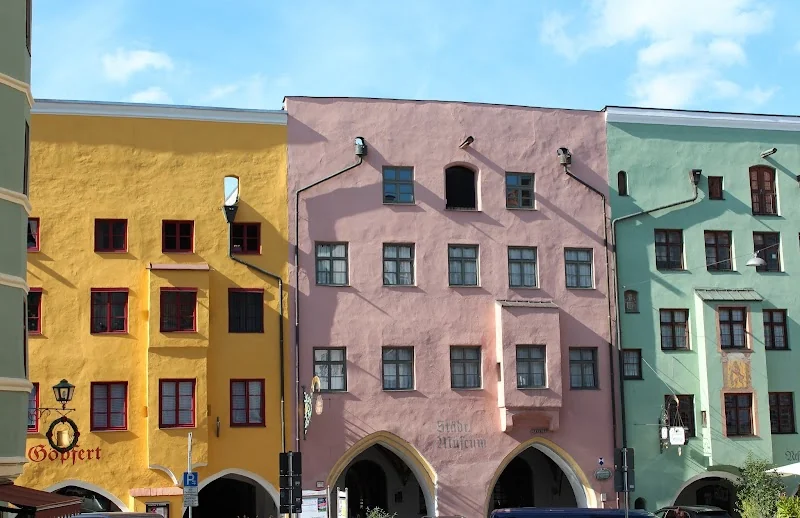
A central reason why Museum Wasserburg is so impressive is the building itself. The museum is housed in a typical Inn-Salzach-style house, with advance walls, a trench roof, bay windows, a Gothic living hall, storage rooms, and an arcade-surrounded courtyard. According to official information, the museum has been located at Herrengasse 15 since 1938; the house was built in Gothic style in the late Middle Ages by wealthy patricians. These facts are not just historical footnotes for the visit but part of the exhibition concept. Because when one enters the museum, one also visits a significant old town house from the inside and experiences how living, trading, and representation were organized in an urban patrician house. This makes the tour spatially special: The architecture is not a backdrop but an exhibit. The free museum app takes up this thought and explains the architectural history of the over 600-year-old building through multimedia tours. Thus, the house itself becomes a subject, not just the objects it houses. ([wasserburg.de](https://www.wasserburg.de/fileadmin/Dateien/Dateien/Wasserburg/Tourismus_Freizeit/Prospekte/museum.pdf))
Those interested in historical urban development get a rare double access here: on the one hand, the history of Wasserburg as a city, and on the other hand, the interior of a typical old town house. The official guided tour offering explicitly describes that the museum allows a look into the different development stages of the house and addresses the architectural peculiarities. These include the Gothic creation phase, the Renaissance embellishment, and the characteristic sequences of rooms typical for the living of a wealthy patrician family. The fact that the rooms are not sterilized modernized but conveyed as closely as possible to the historical substance is a great advantage. This creates an atmosphere that is often missed in many modern museums: The path through the exhibition also leads through a building that makes historical layers visible. The official museum app enhances this impression with additional images, audios, building plans, and a 360-degree view. Thus, not only objects are explained, but also the paths, rooms, and sightlines of the house. For many visitors, this connection is the actual highlight because it places the city history tangibly within a structural framework. ([wasserburg.de](https://www.wasserburg.de/museum/ihr-besuch/fuehrungen-buchen))
The location in the old town also supports this special effect. Herrengasse, Marienplatz, Frauengasse, and the town hall form a close historical ensemble that almost automatically transforms the museum visit into a city walk. Therefore, those visiting the museum experience not only an interior space but a transition between narrow alleys, the historic city center, and cultural-historical depth. This is one of the greatest strengths of Museum Wasserburg: The house explains the city, and the city explains the house. The combination of architecture, collection, and location makes the difference between a mere exhibition space and a true place of history. This is also the reason why the museum often stands out positively in many visitor inquiries regarding museum wasserburg reviews or museum wasserburg photos: The atmosphere is perceived not only as informative but also as authentic and harmonious. Anyone wanting to understand Wasserburg should therefore not view the museum in isolation but as a key to the overall city experience. ([wasserburg.de](https://www.wasserburg.de/museum/ihr-besuch/))
Families, Children, Photos, and Accessibility at Museum Wasserburg
Museum Wasserburg is by no means just a destination for specialists or history enthusiasts. Families, in particular, find many points of connection here because the house tailors its content to different age groups. Upon request, parents can receive a museum rally for children from the 3rd grade or a treasure hunt for ages 6 and up at the ticket counter. Both formats guide young visitors playfully through the most important areas of the house and rely on careful observation, reading, and combining. The treasure hunt works with photo cards and motivates children to independently find specific objects and signs in the museum. The museum rally is somewhat more extensive and is particularly suitable for older children who enjoy working with tasks and small puzzles. On special occasions such as International Museum Day, Open Monument Day, or as part of special exhibitions, family tours or small games for children are also offered. This makes the house interesting for visitor groups that want to discover together rather than just consume. The family ticket and free admission with WasserburgPass are additional practical advantages. ([wasserburg.de](https://www.wasserburg.de/museum/ihr-besuch/kindergaerten-und-schulen))
The topic of photos is also important for many visitors. In Museum Wasserburg, photography is generally allowed, but without flash and without a tripod. This rule is sensible in historical museums as it protects both the objects and other guests. Therefore, those looking for photos for personal memories or social media will find good conditions as long as the photographic practice remains respectful. At the same time, there are publications and postcards with motifs from the museum available in the entrance area, so that beautiful impressions can also be taken home without a camera. It is also practically relevant that large bags and umbrellas should be left at the cloakroom and that food and drinks are not allowed to be consumed in the museum. This may sound trivial, but it is particularly helpful for a relaxed family visit, as the paths remain clear and the historical rooms are preserved. Guide dogs are allowed, but animals in general are not. These rules make the visit clear and understandable. Therefore, those searching for museum wasserburg photos not only receive permission but also a hint about the atmosphere: The house is photogenic but at the same time a protectable historical space. ([wasserburg.de](https://www.wasserburg.de/museum/ihr-besuch/tipps-hinweise))
Regarding accessibility, the museum is honest and transparent. As a historical building, it is not barrier-free; two steps must be overcome at the entrance, and there is also a small staircase leading to the special exhibition room and the toilets. Visitors who can only visit the ground floor due to a limitation are not charged admission. This is important information as it both names the architectural limits of the house and offers a fair solution. In a listed town house, modern access cannot always be implemented without interventions, but the museum addresses this with a clear visitor regulation. This is particularly relevant for planning a visit when strollers, mobility restrictions, or larger groups are involved. The combination of honest communication, family offerings, and clear photo and visit rules shows that Museum Wasserburg takes its guests seriously and does not make the visit unnecessarily complicated. This is precisely why the house is also well-structured for search queries like museum wasserburg accessible or museum wasserburg children: The information is open, concrete, and immediately usable. ([wasserburg.de](https://www.wasserburg.de/museum/ihr-besuch/tipps-hinweise))
Guided Tours, Museum App, and Group Visits
Those who want to experience Museum Wasserburg more intensively should not overlook the guided tour offerings. The house offers special tours on individual thematic areas as well as overview tours that present the collection in its entirety. The thematic focuses include proverbs and sayings, the furniture collection, guilds and crafts, as well as river navigation and trade. These thematic tours are particularly sensible because the museum does not consist of a straight narrative but of many layers of content. The tour of the furniture collection shows the development from Gothic pieces to the early 20th century and explains workshops such as those of the Perthalers and Obstädters. The tour on guilds and crafts familiarizes visitors with nearly completely preserved workshops and explains the significance of the guild system for religious and social life. The tour on river navigation and trade, in turn, illuminates the economic bloom of Wasserburg until the mid-18th century and explains how the location by the water influenced the architecture and daily life of the city. Therefore, those who want to not only see but understand will receive a very good foundation. ([wasserburg.de](https://www.wasserburg.de/museum/ihr-besuch/fuehrungen-buchen))
For groups, there are also clear conditions. Guided tours are offered from five people and cost an additional 2 euros per person on top of the admission fee. School classes and youth groups are exempt from the guiding fee and only pay the admission. By prior arrangement, the museum can also be visited outside regular opening hours, which significantly facilitates the planning of trips. This is particularly interesting for clubs, school groups, and travel groups looking for a fixed program point. Additionally, combined city and museum tours are possible, making the visit even more valuable as the museum content can be directly connected with the places in the old town. The app complements this offering in a modern way: It provides two multimedia tours, leads to the highlights of the permanent exhibition, and explains the architectural history of the historic building. Both tours last about an hour and include additional images, audios, building plans, and a 360-degree view. Thus, the app is not only suitable as a replacement or complement to the classic tour but also as preparation for the visit. This is a very useful tool for guests who enjoy being independent. ([wasserburg.de](https://www.wasserburg.de/museum/ihr-besuch/fuehrungen-buchen))
Schools and educational groups also find suitable formats at Museum Wasserburg. For children and teenagers, there are thematic approaches that make the everyday life of past times visible, such as through historical kitchens, old schools, and stagecoaches. The museum works strongly with illustrative originals and small experiences that make history manageable. A museum rally, a treasure hunt, or a guided tour can have a much stronger impact in a school context than mere text delivery. Additionally, there are offerings around families and children that do not turn the visit into a mere obligation but into a shared discovery. Those searching for museum wasserburg guided tours or museum wasserburg museum app will hit exactly the right keywords: The museum consciously focuses on mediation, not just on exhibition. Therefore, it is well-suited for different visitor groups, from individual guests to school classes. In summary, a coherent visit concept emerges, where historical depth, practical orientation, and interactive mediation come together. This makes Museum Wasserburg a location that works excellently both culturally and touristically. ([wasserburg.de](https://www.wasserburg.de/museum/ihr-besuch/kindergaerten-und-schulen))
Sources:
Show moreShow less
Museum Wasserburg | Opening Hours & Tickets
Museum Wasserburg is one of those places where the first impression immediately reveals the essence: It is not just about showcases and data collections, but about a lively, carefully staged journey through the history of a city and its region. Those exploring the historic streets of Wasserburg am Inn will find a museum at Herrengasse 15 that is much more than a classic collection. It connects city history, everyday culture, trade, craftsmanship, legal history, furniture art, and the special atmosphere of a building over 600 years old into a visit that is both informative and atmospheric. The house is located in the middle of the old town opposite the back of the town hall, making it spatially part of the historical backdrop that it explains in content. This proximity of place and content is what makes it appealing: The city history does not end at the door but begins to be retold inside the house on several levels. With around 8,000 exhibits, 52 thematic areas, changing special exhibitions, guided tours, and a free museum app, Museum Wasserburg is a destination for culture-interested adults, families, school classes, and anyone who wants to not just look at Wasserburg but understand it. ([wasserburg.de](https://www.wasserburg.de/museum/ihr-besuch/))
Opening Hours, Tickets, Directions, and Parking at Museum Wasserburg
For most visitors, practical questions arise even before the actual tour: When is Museum Wasserburg open, how much does admission cost, and how can one get there most easily? The official information is clear and visitor-friendly. From May to September, the museum is open Tuesday to Sunday from 1 PM to 5 PM. In the cooler season from October to April, the hours are Tuesday to Sunday from 1 PM to 4 PM, and on Advent weekends, it is open Friday to Sunday from 1 PM to 5 PM. There are also specific closing days such as Shrove Tuesday, Good Friday, All Saints' Day, and December 24th, 25th, and 31st. Those planning early in the year should also know that the museum closes on the evening of January 6th and reopens on February 1st. For groups, visits outside regular hours are possible by prior arrangement. This structure is particularly practical as it allows for both spontaneous individual visits and organized trips. Admission is 3.50 euros for adults; groups of 11 or more pay 2.50 euros per person, children and teenagers up to 16 years, as well as students with a valid ID and school classes, pay 1.50 euros per person. Children up to 6 years are free. There is a family ticket available that makes the visit even more attractive. ([wasserburg.de](https://www.wasserburg.de/museum/ihr-besuch/))
The directions are also easy to follow for an old town museum. On foot, Museum Wasserburg is located in the historic old town at Herrengasse opposite the back of the town hall; from Marienplatz, one can reach it via Frauengasse. By public transport, the train station of Wasserburg in the district of Reitmehring is served, from where city buses take passengers to the old town. For boarding and alighting, the Marienplatz stop is recommended, from there it is a one to two-minute walk to the museum via Rathausgasse. Those arriving by car can benefit from several parking options around the old town. Particularly noteworthy is the parking garage Kellerstraße at the Inn bridge with over 500 parking spaces, where parking is free for up to four hours. The way to the museum then leads at ground level across the red bridge, Marienplatz, and Frauengasse. Right in front of the museum, there are also paid short-term parking spaces, a disabled parking space, and a loading zone; during major events and markets, these spaces are removed and access to the old town is restricted. Additional paid parking spaces are available at Gries. For inquiries about museum wasserburg directions or museum wasserburg parking, these are the relevant facts as they accurately depict the real visitor situation. ([wasserburg.de](https://www.wasserburg.de/museum/ihr-besuch/))
Permanent Exhibition, 52 Thematic Areas, and 8,000 Exhibits
The heart of the house is the permanent exhibition, and this is exactly where it becomes clear why Museum Wasserburg is one of the most exciting city museums in the region. On four floors, around 8,000 exhibits are displayed, which do not just dryly list the history of the city and region but make it tangible in thematic fields. The official presentation speaks of 52 individual themes, ranging from prehistory and early history to the bourgeois life of the 19th century. Particularly important are the focuses on river navigation and trade, the changing bourgeois life, craftsmanship and trades, as well as rural living culture. These themes are not a random collection of objects but the common thread of an exhibition that shows how Wasserburg has historically developed and how closely the city is connected to its location by water, trade, and craftsmanship. A special guiding thought runs through the presentation: Proverbs and sayings are explained using cultural-historical objects, so that language, everyday life, and history encounter each other directly. This makes the exhibition attractive not only for history enthusiasts but also for visitors who enjoy working with language, images, and objects. Therefore, those searching for museum wasserburg exhibitions will find no loose offerings but a clearly structured permanent exhibition with a strong concept. ([wasserburg.de](https://www.wasserburg.de/museum/ausstellungen))
Particularly impressive is the thematic breadth of the collection. The museum is known for its rich furniture collection related to the rural living culture of southeastern Bavaria. Not only individual pieces of furniture are shown, but also typical room furnishings that make different living environments visible. In addition to Gothic individual pieces, there are numerous Turkish chests with oriental features as well as outstanding ensembles from workshops of the farmer baroque, such as those of the Obstädter or Perthaler carpenters. This is complemented by a legal history department with shame masks, shame boards, a guillotine, and a quarter gallows, which make the judicial system and penal enforcement comprehensible from the Middle Ages to the early 19th century. Additionally, there is a music department remembering Johann Kaspar Aiblinger, a court conductor and composer from Wasserburg, as well as a remarkable collection of musical instruments with historical pieces such as a virginal from 1588. Military artifacts and shooting sports are also represented, showing how self-defense, civic pride, and regional organizations shaped the city's history. The message of the house is therefore very clear: Wasserburg is not told in snapshots but as a multifaceted cultural and life history. ([wasserburg.de](https://www.wasserburg.de/museum/ausstellungen/dauerausstellung?type=98))
The museum's focus on staging rather than overloaded text deserts makes the tour particularly pleasant. Historical kitchens, classrooms, workshops, and everyday objects interact with the building itself and convey an immediate picture of former living environments. The museum largely avoids long explanatory texts and instead relies on originals, scenes, and illustrative arrangements. This is precisely why it functions both as a classic city museum and as an experiential place for families and school classes. Those interested in museum wasserburg photos usually want to know if a visit is visually worthwhile. The answer is clear: Yes, because the exhibition rooms combine historical architecture, original objects, and carefully designed scenes into a very photogenic yet content-rich museum world. The good balance between information and atmosphere ensures that the collection does not become museum-like but acts as a lively commentary on the city's history. Especially in connection with the old town itself, a complete picture emerges that makes Wasserburg's role as a trading and cultural place comprehensible over many centuries. ([wasserburg.de](https://www.wasserburg.de/fileadmin/Dateien/Dateien/Wasserburg/Tourismus_Freizeit/Prospekte/museum.pdf))
Old Town House, Architectural History, and Special Atmosphere
A central reason why Museum Wasserburg is so impressive is the building itself. The museum is housed in a typical Inn-Salzach-style house, with advance walls, a trench roof, bay windows, a Gothic living hall, storage rooms, and an arcade-surrounded courtyard. According to official information, the museum has been located at Herrengasse 15 since 1938; the house was built in Gothic style in the late Middle Ages by wealthy patricians. These facts are not just historical footnotes for the visit but part of the exhibition concept. Because when one enters the museum, one also visits a significant old town house from the inside and experiences how living, trading, and representation were organized in an urban patrician house. This makes the tour spatially special: The architecture is not a backdrop but an exhibit. The free museum app takes up this thought and explains the architectural history of the over 600-year-old building through multimedia tours. Thus, the house itself becomes a subject, not just the objects it houses. ([wasserburg.de](https://www.wasserburg.de/fileadmin/Dateien/Dateien/Wasserburg/Tourismus_Freizeit/Prospekte/museum.pdf))
Those interested in historical urban development get a rare double access here: on the one hand, the history of Wasserburg as a city, and on the other hand, the interior of a typical old town house. The official guided tour offering explicitly describes that the museum allows a look into the different development stages of the house and addresses the architectural peculiarities. These include the Gothic creation phase, the Renaissance embellishment, and the characteristic sequences of rooms typical for the living of a wealthy patrician family. The fact that the rooms are not sterilized modernized but conveyed as closely as possible to the historical substance is a great advantage. This creates an atmosphere that is often missed in many modern museums: The path through the exhibition also leads through a building that makes historical layers visible. The official museum app enhances this impression with additional images, audios, building plans, and a 360-degree view. Thus, not only objects are explained, but also the paths, rooms, and sightlines of the house. For many visitors, this connection is the actual highlight because it places the city history tangibly within a structural framework. ([wasserburg.de](https://www.wasserburg.de/museum/ihr-besuch/fuehrungen-buchen))
The location in the old town also supports this special effect. Herrengasse, Marienplatz, Frauengasse, and the town hall form a close historical ensemble that almost automatically transforms the museum visit into a city walk. Therefore, those visiting the museum experience not only an interior space but a transition between narrow alleys, the historic city center, and cultural-historical depth. This is one of the greatest strengths of Museum Wasserburg: The house explains the city, and the city explains the house. The combination of architecture, collection, and location makes the difference between a mere exhibition space and a true place of history. This is also the reason why the museum often stands out positively in many visitor inquiries regarding museum wasserburg reviews or museum wasserburg photos: The atmosphere is perceived not only as informative but also as authentic and harmonious. Anyone wanting to understand Wasserburg should therefore not view the museum in isolation but as a key to the overall city experience. ([wasserburg.de](https://www.wasserburg.de/museum/ihr-besuch/))
Families, Children, Photos, and Accessibility at Museum Wasserburg
Museum Wasserburg is by no means just a destination for specialists or history enthusiasts. Families, in particular, find many points of connection here because the house tailors its content to different age groups. Upon request, parents can receive a museum rally for children from the 3rd grade or a treasure hunt for ages 6 and up at the ticket counter. Both formats guide young visitors playfully through the most important areas of the house and rely on careful observation, reading, and combining. The treasure hunt works with photo cards and motivates children to independently find specific objects and signs in the museum. The museum rally is somewhat more extensive and is particularly suitable for older children who enjoy working with tasks and small puzzles. On special occasions such as International Museum Day, Open Monument Day, or as part of special exhibitions, family tours or small games for children are also offered. This makes the house interesting for visitor groups that want to discover together rather than just consume. The family ticket and free admission with WasserburgPass are additional practical advantages. ([wasserburg.de](https://www.wasserburg.de/museum/ihr-besuch/kindergaerten-und-schulen))
The topic of photos is also important for many visitors. In Museum Wasserburg, photography is generally allowed, but without flash and without a tripod. This rule is sensible in historical museums as it protects both the objects and other guests. Therefore, those looking for photos for personal memories or social media will find good conditions as long as the photographic practice remains respectful. At the same time, there are publications and postcards with motifs from the museum available in the entrance area, so that beautiful impressions can also be taken home without a camera. It is also practically relevant that large bags and umbrellas should be left at the cloakroom and that food and drinks are not allowed to be consumed in the museum. This may sound trivial, but it is particularly helpful for a relaxed family visit, as the paths remain clear and the historical rooms are preserved. Guide dogs are allowed, but animals in general are not. These rules make the visit clear and understandable. Therefore, those searching for museum wasserburg photos not only receive permission but also a hint about the atmosphere: The house is photogenic but at the same time a protectable historical space. ([wasserburg.de](https://www.wasserburg.de/museum/ihr-besuch/tipps-hinweise))
Regarding accessibility, the museum is honest and transparent. As a historical building, it is not barrier-free; two steps must be overcome at the entrance, and there is also a small staircase leading to the special exhibition room and the toilets. Visitors who can only visit the ground floor due to a limitation are not charged admission. This is important information as it both names the architectural limits of the house and offers a fair solution. In a listed town house, modern access cannot always be implemented without interventions, but the museum addresses this with a clear visitor regulation. This is particularly relevant for planning a visit when strollers, mobility restrictions, or larger groups are involved. The combination of honest communication, family offerings, and clear photo and visit rules shows that Museum Wasserburg takes its guests seriously and does not make the visit unnecessarily complicated. This is precisely why the house is also well-structured for search queries like museum wasserburg accessible or museum wasserburg children: The information is open, concrete, and immediately usable. ([wasserburg.de](https://www.wasserburg.de/museum/ihr-besuch/tipps-hinweise))
Guided Tours, Museum App, and Group Visits
Those who want to experience Museum Wasserburg more intensively should not overlook the guided tour offerings. The house offers special tours on individual thematic areas as well as overview tours that present the collection in its entirety. The thematic focuses include proverbs and sayings, the furniture collection, guilds and crafts, as well as river navigation and trade. These thematic tours are particularly sensible because the museum does not consist of a straight narrative but of many layers of content. The tour of the furniture collection shows the development from Gothic pieces to the early 20th century and explains workshops such as those of the Perthalers and Obstädters. The tour on guilds and crafts familiarizes visitors with nearly completely preserved workshops and explains the significance of the guild system for religious and social life. The tour on river navigation and trade, in turn, illuminates the economic bloom of Wasserburg until the mid-18th century and explains how the location by the water influenced the architecture and daily life of the city. Therefore, those who want to not only see but understand will receive a very good foundation. ([wasserburg.de](https://www.wasserburg.de/museum/ihr-besuch/fuehrungen-buchen))
For groups, there are also clear conditions. Guided tours are offered from five people and cost an additional 2 euros per person on top of the admission fee. School classes and youth groups are exempt from the guiding fee and only pay the admission. By prior arrangement, the museum can also be visited outside regular opening hours, which significantly facilitates the planning of trips. This is particularly interesting for clubs, school groups, and travel groups looking for a fixed program point. Additionally, combined city and museum tours are possible, making the visit even more valuable as the museum content can be directly connected with the places in the old town. The app complements this offering in a modern way: It provides two multimedia tours, leads to the highlights of the permanent exhibition, and explains the architectural history of the historic building. Both tours last about an hour and include additional images, audios, building plans, and a 360-degree view. Thus, the app is not only suitable as a replacement or complement to the classic tour but also as preparation for the visit. This is a very useful tool for guests who enjoy being independent. ([wasserburg.de](https://www.wasserburg.de/museum/ihr-besuch/fuehrungen-buchen))
Schools and educational groups also find suitable formats at Museum Wasserburg. For children and teenagers, there are thematic approaches that make the everyday life of past times visible, such as through historical kitchens, old schools, and stagecoaches. The museum works strongly with illustrative originals and small experiences that make history manageable. A museum rally, a treasure hunt, or a guided tour can have a much stronger impact in a school context than mere text delivery. Additionally, there are offerings around families and children that do not turn the visit into a mere obligation but into a shared discovery. Those searching for museum wasserburg guided tours or museum wasserburg museum app will hit exactly the right keywords: The museum consciously focuses on mediation, not just on exhibition. Therefore, it is well-suited for different visitor groups, from individual guests to school classes. In summary, a coherent visit concept emerges, where historical depth, practical orientation, and interactive mediation come together. This makes Museum Wasserburg a location that works excellently both culturally and touristically. ([wasserburg.de](https://www.wasserburg.de/museum/ihr-besuch/kindergaerten-und-schulen))
Sources:
Museum Wasserburg | Opening Hours & Tickets
Museum Wasserburg is one of those places where the first impression immediately reveals the essence: It is not just about showcases and data collections, but about a lively, carefully staged journey through the history of a city and its region. Those exploring the historic streets of Wasserburg am Inn will find a museum at Herrengasse 15 that is much more than a classic collection. It connects city history, everyday culture, trade, craftsmanship, legal history, furniture art, and the special atmosphere of a building over 600 years old into a visit that is both informative and atmospheric. The house is located in the middle of the old town opposite the back of the town hall, making it spatially part of the historical backdrop that it explains in content. This proximity of place and content is what makes it appealing: The city history does not end at the door but begins to be retold inside the house on several levels. With around 8,000 exhibits, 52 thematic areas, changing special exhibitions, guided tours, and a free museum app, Museum Wasserburg is a destination for culture-interested adults, families, school classes, and anyone who wants to not just look at Wasserburg but understand it. ([wasserburg.de](https://www.wasserburg.de/museum/ihr-besuch/))
Opening Hours, Tickets, Directions, and Parking at Museum Wasserburg
For most visitors, practical questions arise even before the actual tour: When is Museum Wasserburg open, how much does admission cost, and how can one get there most easily? The official information is clear and visitor-friendly. From May to September, the museum is open Tuesday to Sunday from 1 PM to 5 PM. In the cooler season from October to April, the hours are Tuesday to Sunday from 1 PM to 4 PM, and on Advent weekends, it is open Friday to Sunday from 1 PM to 5 PM. There are also specific closing days such as Shrove Tuesday, Good Friday, All Saints' Day, and December 24th, 25th, and 31st. Those planning early in the year should also know that the museum closes on the evening of January 6th and reopens on February 1st. For groups, visits outside regular hours are possible by prior arrangement. This structure is particularly practical as it allows for both spontaneous individual visits and organized trips. Admission is 3.50 euros for adults; groups of 11 or more pay 2.50 euros per person, children and teenagers up to 16 years, as well as students with a valid ID and school classes, pay 1.50 euros per person. Children up to 6 years are free. There is a family ticket available that makes the visit even more attractive. ([wasserburg.de](https://www.wasserburg.de/museum/ihr-besuch/))
The directions are also easy to follow for an old town museum. On foot, Museum Wasserburg is located in the historic old town at Herrengasse opposite the back of the town hall; from Marienplatz, one can reach it via Frauengasse. By public transport, the train station of Wasserburg in the district of Reitmehring is served, from where city buses take passengers to the old town. For boarding and alighting, the Marienplatz stop is recommended, from there it is a one to two-minute walk to the museum via Rathausgasse. Those arriving by car can benefit from several parking options around the old town. Particularly noteworthy is the parking garage Kellerstraße at the Inn bridge with over 500 parking spaces, where parking is free for up to four hours. The way to the museum then leads at ground level across the red bridge, Marienplatz, and Frauengasse. Right in front of the museum, there are also paid short-term parking spaces, a disabled parking space, and a loading zone; during major events and markets, these spaces are removed and access to the old town is restricted. Additional paid parking spaces are available at Gries. For inquiries about museum wasserburg directions or museum wasserburg parking, these are the relevant facts as they accurately depict the real visitor situation. ([wasserburg.de](https://www.wasserburg.de/museum/ihr-besuch/))
Permanent Exhibition, 52 Thematic Areas, and 8,000 Exhibits
The heart of the house is the permanent exhibition, and this is exactly where it becomes clear why Museum Wasserburg is one of the most exciting city museums in the region. On four floors, around 8,000 exhibits are displayed, which do not just dryly list the history of the city and region but make it tangible in thematic fields. The official presentation speaks of 52 individual themes, ranging from prehistory and early history to the bourgeois life of the 19th century. Particularly important are the focuses on river navigation and trade, the changing bourgeois life, craftsmanship and trades, as well as rural living culture. These themes are not a random collection of objects but the common thread of an exhibition that shows how Wasserburg has historically developed and how closely the city is connected to its location by water, trade, and craftsmanship. A special guiding thought runs through the presentation: Proverbs and sayings are explained using cultural-historical objects, so that language, everyday life, and history encounter each other directly. This makes the exhibition attractive not only for history enthusiasts but also for visitors who enjoy working with language, images, and objects. Therefore, those searching for museum wasserburg exhibitions will find no loose offerings but a clearly structured permanent exhibition with a strong concept. ([wasserburg.de](https://www.wasserburg.de/museum/ausstellungen))
Particularly impressive is the thematic breadth of the collection. The museum is known for its rich furniture collection related to the rural living culture of southeastern Bavaria. Not only individual pieces of furniture are shown, but also typical room furnishings that make different living environments visible. In addition to Gothic individual pieces, there are numerous Turkish chests with oriental features as well as outstanding ensembles from workshops of the farmer baroque, such as those of the Obstädter or Perthaler carpenters. This is complemented by a legal history department with shame masks, shame boards, a guillotine, and a quarter gallows, which make the judicial system and penal enforcement comprehensible from the Middle Ages to the early 19th century. Additionally, there is a music department remembering Johann Kaspar Aiblinger, a court conductor and composer from Wasserburg, as well as a remarkable collection of musical instruments with historical pieces such as a virginal from 1588. Military artifacts and shooting sports are also represented, showing how self-defense, civic pride, and regional organizations shaped the city's history. The message of the house is therefore very clear: Wasserburg is not told in snapshots but as a multifaceted cultural and life history. ([wasserburg.de](https://www.wasserburg.de/museum/ausstellungen/dauerausstellung?type=98))
The museum's focus on staging rather than overloaded text deserts makes the tour particularly pleasant. Historical kitchens, classrooms, workshops, and everyday objects interact with the building itself and convey an immediate picture of former living environments. The museum largely avoids long explanatory texts and instead relies on originals, scenes, and illustrative arrangements. This is precisely why it functions both as a classic city museum and as an experiential place for families and school classes. Those interested in museum wasserburg photos usually want to know if a visit is visually worthwhile. The answer is clear: Yes, because the exhibition rooms combine historical architecture, original objects, and carefully designed scenes into a very photogenic yet content-rich museum world. The good balance between information and atmosphere ensures that the collection does not become museum-like but acts as a lively commentary on the city's history. Especially in connection with the old town itself, a complete picture emerges that makes Wasserburg's role as a trading and cultural place comprehensible over many centuries. ([wasserburg.de](https://www.wasserburg.de/fileadmin/Dateien/Dateien/Wasserburg/Tourismus_Freizeit/Prospekte/museum.pdf))
Old Town House, Architectural History, and Special Atmosphere
A central reason why Museum Wasserburg is so impressive is the building itself. The museum is housed in a typical Inn-Salzach-style house, with advance walls, a trench roof, bay windows, a Gothic living hall, storage rooms, and an arcade-surrounded courtyard. According to official information, the museum has been located at Herrengasse 15 since 1938; the house was built in Gothic style in the late Middle Ages by wealthy patricians. These facts are not just historical footnotes for the visit but part of the exhibition concept. Because when one enters the museum, one also visits a significant old town house from the inside and experiences how living, trading, and representation were organized in an urban patrician house. This makes the tour spatially special: The architecture is not a backdrop but an exhibit. The free museum app takes up this thought and explains the architectural history of the over 600-year-old building through multimedia tours. Thus, the house itself becomes a subject, not just the objects it houses. ([wasserburg.de](https://www.wasserburg.de/fileadmin/Dateien/Dateien/Wasserburg/Tourismus_Freizeit/Prospekte/museum.pdf))
Those interested in historical urban development get a rare double access here: on the one hand, the history of Wasserburg as a city, and on the other hand, the interior of a typical old town house. The official guided tour offering explicitly describes that the museum allows a look into the different development stages of the house and addresses the architectural peculiarities. These include the Gothic creation phase, the Renaissance embellishment, and the characteristic sequences of rooms typical for the living of a wealthy patrician family. The fact that the rooms are not sterilized modernized but conveyed as closely as possible to the historical substance is a great advantage. This creates an atmosphere that is often missed in many modern museums: The path through the exhibition also leads through a building that makes historical layers visible. The official museum app enhances this impression with additional images, audios, building plans, and a 360-degree view. Thus, not only objects are explained, but also the paths, rooms, and sightlines of the house. For many visitors, this connection is the actual highlight because it places the city history tangibly within a structural framework. ([wasserburg.de](https://www.wasserburg.de/museum/ihr-besuch/fuehrungen-buchen))
The location in the old town also supports this special effect. Herrengasse, Marienplatz, Frauengasse, and the town hall form a close historical ensemble that almost automatically transforms the museum visit into a city walk. Therefore, those visiting the museum experience not only an interior space but a transition between narrow alleys, the historic city center, and cultural-historical depth. This is one of the greatest strengths of Museum Wasserburg: The house explains the city, and the city explains the house. The combination of architecture, collection, and location makes the difference between a mere exhibition space and a true place of history. This is also the reason why the museum often stands out positively in many visitor inquiries regarding museum wasserburg reviews or museum wasserburg photos: The atmosphere is perceived not only as informative but also as authentic and harmonious. Anyone wanting to understand Wasserburg should therefore not view the museum in isolation but as a key to the overall city experience. ([wasserburg.de](https://www.wasserburg.de/museum/ihr-besuch/))
Families, Children, Photos, and Accessibility at Museum Wasserburg
Museum Wasserburg is by no means just a destination for specialists or history enthusiasts. Families, in particular, find many points of connection here because the house tailors its content to different age groups. Upon request, parents can receive a museum rally for children from the 3rd grade or a treasure hunt for ages 6 and up at the ticket counter. Both formats guide young visitors playfully through the most important areas of the house and rely on careful observation, reading, and combining. The treasure hunt works with photo cards and motivates children to independently find specific objects and signs in the museum. The museum rally is somewhat more extensive and is particularly suitable for older children who enjoy working with tasks and small puzzles. On special occasions such as International Museum Day, Open Monument Day, or as part of special exhibitions, family tours or small games for children are also offered. This makes the house interesting for visitor groups that want to discover together rather than just consume. The family ticket and free admission with WasserburgPass are additional practical advantages. ([wasserburg.de](https://www.wasserburg.de/museum/ihr-besuch/kindergaerten-und-schulen))
The topic of photos is also important for many visitors. In Museum Wasserburg, photography is generally allowed, but without flash and without a tripod. This rule is sensible in historical museums as it protects both the objects and other guests. Therefore, those looking for photos for personal memories or social media will find good conditions as long as the photographic practice remains respectful. At the same time, there are publications and postcards with motifs from the museum available in the entrance area, so that beautiful impressions can also be taken home without a camera. It is also practically relevant that large bags and umbrellas should be left at the cloakroom and that food and drinks are not allowed to be consumed in the museum. This may sound trivial, but it is particularly helpful for a relaxed family visit, as the paths remain clear and the historical rooms are preserved. Guide dogs are allowed, but animals in general are not. These rules make the visit clear and understandable. Therefore, those searching for museum wasserburg photos not only receive permission but also a hint about the atmosphere: The house is photogenic but at the same time a protectable historical space. ([wasserburg.de](https://www.wasserburg.de/museum/ihr-besuch/tipps-hinweise))
Regarding accessibility, the museum is honest and transparent. As a historical building, it is not barrier-free; two steps must be overcome at the entrance, and there is also a small staircase leading to the special exhibition room and the toilets. Visitors who can only visit the ground floor due to a limitation are not charged admission. This is important information as it both names the architectural limits of the house and offers a fair solution. In a listed town house, modern access cannot always be implemented without interventions, but the museum addresses this with a clear visitor regulation. This is particularly relevant for planning a visit when strollers, mobility restrictions, or larger groups are involved. The combination of honest communication, family offerings, and clear photo and visit rules shows that Museum Wasserburg takes its guests seriously and does not make the visit unnecessarily complicated. This is precisely why the house is also well-structured for search queries like museum wasserburg accessible or museum wasserburg children: The information is open, concrete, and immediately usable. ([wasserburg.de](https://www.wasserburg.de/museum/ihr-besuch/tipps-hinweise))
Guided Tours, Museum App, and Group Visits
Those who want to experience Museum Wasserburg more intensively should not overlook the guided tour offerings. The house offers special tours on individual thematic areas as well as overview tours that present the collection in its entirety. The thematic focuses include proverbs and sayings, the furniture collection, guilds and crafts, as well as river navigation and trade. These thematic tours are particularly sensible because the museum does not consist of a straight narrative but of many layers of content. The tour of the furniture collection shows the development from Gothic pieces to the early 20th century and explains workshops such as those of the Perthalers and Obstädters. The tour on guilds and crafts familiarizes visitors with nearly completely preserved workshops and explains the significance of the guild system for religious and social life. The tour on river navigation and trade, in turn, illuminates the economic bloom of Wasserburg until the mid-18th century and explains how the location by the water influenced the architecture and daily life of the city. Therefore, those who want to not only see but understand will receive a very good foundation. ([wasserburg.de](https://www.wasserburg.de/museum/ihr-besuch/fuehrungen-buchen))
For groups, there are also clear conditions. Guided tours are offered from five people and cost an additional 2 euros per person on top of the admission fee. School classes and youth groups are exempt from the guiding fee and only pay the admission. By prior arrangement, the museum can also be visited outside regular opening hours, which significantly facilitates the planning of trips. This is particularly interesting for clubs, school groups, and travel groups looking for a fixed program point. Additionally, combined city and museum tours are possible, making the visit even more valuable as the museum content can be directly connected with the places in the old town. The app complements this offering in a modern way: It provides two multimedia tours, leads to the highlights of the permanent exhibition, and explains the architectural history of the historic building. Both tours last about an hour and include additional images, audios, building plans, and a 360-degree view. Thus, the app is not only suitable as a replacement or complement to the classic tour but also as preparation for the visit. This is a very useful tool for guests who enjoy being independent. ([wasserburg.de](https://www.wasserburg.de/museum/ihr-besuch/fuehrungen-buchen))
Schools and educational groups also find suitable formats at Museum Wasserburg. For children and teenagers, there are thematic approaches that make the everyday life of past times visible, such as through historical kitchens, old schools, and stagecoaches. The museum works strongly with illustrative originals and small experiences that make history manageable. A museum rally, a treasure hunt, or a guided tour can have a much stronger impact in a school context than mere text delivery. Additionally, there are offerings around families and children that do not turn the visit into a mere obligation but into a shared discovery. Those searching for museum wasserburg guided tours or museum wasserburg museum app will hit exactly the right keywords: The museum consciously focuses on mediation, not just on exhibition. Therefore, it is well-suited for different visitor groups, from individual guests to school classes. In summary, a coherent visit concept emerges, where historical depth, practical orientation, and interactive mediation come together. This makes Museum Wasserburg a location that works excellently both culturally and touristically. ([wasserburg.de](https://www.wasserburg.de/museum/ihr-besuch/kindergaerten-und-schulen))
Sources:
Upcoming Events
No events found
Frequently Asked Questions
Reviews
Tim Clifford
21. February 2023
This is a really excellent local museum in the lovely market town of Wasserburg (about 30 mins drive north of Lake Chiemsee). Wasserburg is halfway between Salzburg and Munich on the river Inn, and it has a rich history tied to the old salt trade route. The museum is located in a charming old house near the market square (there's a public car park about a 5-minute walk over the bridge), and it's open only in the afternoons. There are three floors: one for city history (military, boats, art), another for Bavarian culture (furniture, music), and the last for crafts (woodworking, brewing, etc.). The displays are nice, and there's a fascinating mix of items (you'll need 2-3 hours to see everything properly), plus the staff is really friendly. Overall, I give it a 10/10.
franz wolfinger
2. March 2026
The authentic facade of the venerable building already sparks excitement for many sights in a city with a very long history. I was pleasantly surprised by the incredibly spacious interior, which allows for a carefully organized display of the excellent exhibits in nearly immeasurable numbers. In my opinion, the special charm and atmosphere come particularly from the fact that the museum is housed in a historic building. Moreover, you can easily see from the abundance and quality of the historical exhibits that wise visionaries began collecting purposefully as early as the 19th century and passed their enthusiasm on to future generations. This makes it possible to trace the development of Wasserburg seamlessly up to the present day. I especially liked that the focus of the museum is still on 'collection' and that educational programming doesn't overshadow it. 👍 Very friendly and helpful staff at the ticket counter. 😄 The opening hours are very generous!
Hebby1
23. August 2025
I can only recommend the museum. I was also surprised by its size, which I didn't expect. There was really a lot to see. I especially liked the archaeological section, the fossils with the mammoth tusks, and the bakery. The reception was very friendly.
Stefan Lisson
10. September 2025
Much bigger than it looks – an unforgettable journey through time! Don't be fooled by the unassuming facade! From the outside, the museum in Wasserburg seems rather small, but as soon as you step inside, a journey of discovery begins that takes you deeper and further into history. Floor by floor, a true labyrinth full of treasures unfolds. With every step on the old, creaky wooden floors, I felt like I was really traveling back in time. Looking out of the same windows that people have gazed through for centuries, you can almost feel the soul of the city. The atmosphere is just incredibly authentic. The variety of exhibits is impressive. There's a corner with old weapons, cannons, and mortars that bring the city's history to life. My daughter was totally fascinated by the historical baby carriages from the past – we had never seen anything like that! Plus, there are exhibits from Roman times and prehistoric finds like mammoth tusks and ammonite fossils. The recreated living spaces are particularly striking, showing how people lived back then. You can even tell from the small furniture how much smaller people were in the past. Everything is spotless and you can see that the old exhibits are cared for with a lot of love and attention. We spent almost two hours here and I took over a hundred photos – if my phone hadn't already been overheating, I would have taken even more! In conclusion: A must-see for anyone in Wasserburg! For such a low price, you get to see and experience so much. An unforgettable experience that I wholeheartedly recommend.
c.morgenthal
26. October 2025
Very nice and interesting collection on various topics of the city's history. Well and contemporarily prepared and presented in spacious rooms. Great quiz rally for kids that encourages exploration and rewards them with a little something. Friendly reception. Family ticket €8. Definitely recommended for both young and old!