
Rosenheim
Ludwigspl., 83022 Rosenheim, Deutschland
Ludwigsplatz Rosenheim | Parking & Green Market
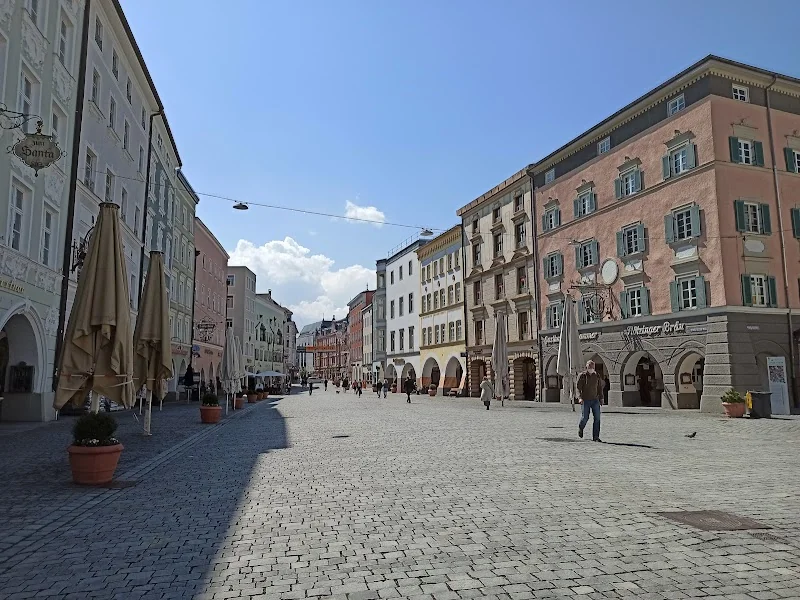
The Ludwigsplatz is one of the most prominent places in the old town of Rosenheim, connecting history, everyday life, and quality of stay in a compact space. It is located in the center of the city, is part of the pedestrian zone, and is therefore not just a passageway but an urban meeting point with markets, gastronomy, shops, and cultural references. Those exploring Rosenheim on foot will almost automatically find themselves at a square that makes the city's historical heritage visible while simultaneously making its current rhythm palpable. This mixture of tradition and vibrant city life is what makes Ludwigsplatz one of the most well-known addresses in Rosenheim. ([rosenheim.de](https://www.rosenheim.de/unternehmerservice/gewerbe-gaststaetten/fussgaengerzone/))
History of Ludwigsplatz in Rosenheim
The history of Ludwigsplatz dates back to the development of Rosenheim as a trading place. The city archive describes that Rosenheim emerged as an important trading place in the Middle Ages, was granted market rights in 1328, and that the Inner Market and the Outer Market continue to shape the character of the old town to this day. The current Ludwigsplatz corresponds to the former Outer Market, which over time consisted of several smaller markets. These included, among others, the Egg Market in the center, the Pig Market near Färbergasse, and the Kösten Market along the former house numbers 28 to 31. This evolved structure explains why the square does not appear as a strictly planned facility but rather as a historically grown urban space with many layers. The current name was assigned around 1825 in honor of King Ludwig I, which linguistically integrates the square into Bavarian city history. ([stadtarchiv.de](https://www.stadtarchiv.de/stadtgeschichte/))
A particularly vivid glimpse into the past is provided by the site of today's roundabout. There once stood the Inn Gate, which spatially defined the square and connected it with Inn and Königstraße. According to the city archive, Ludwigsplatz was significantly smaller back then; the demolition of the Inn Gate in 1865 caused it to lose part of its historical framing. The course of the Mühlbach is still traceable, as it ran under the former gate and is now made visible again at an opening in the sidewalk. Such details make Ludwigsplatz a place where city history is not abstract but literally readable in the ground and the edges of the space. For visitors who appreciate historical places, this is one of the greatest charms of the area. ([stadtarchiv.de](https://www.stadtarchiv.de/stadtgeschichte/schauplaetze/10-inntor-am-ludwigsplatz/))
Green Market and Weekly Market at Ludwigsplatz
The Green Market is one of the most important reasons why Ludwigsplatz is so closely connected to the everyday life of Rosenheim residents. The city of Rosenheim designates the Green Market at Ludwigsplatz as a regular market event from Thursday to Saturday mornings. In spring, it traditionally starts the season with an expanded range and larger size, making the square an even stronger shopping and meeting point. The offerings include typical fresh products and regional goods, including fruits, vegetables, meat, fish, cheese, pasta, herbs, eggs, honey, spices, plants, and seasonal specialties. Thus, the market is not only a place for shopping but also a social space where people meet, taste, engage in conversation, and experience the city center as a vibrant living space. This mixture of regional reference and urban atmosphere makes the market a significant part of Rosenheim's identity. ([rosenheim.de](https://www.rosenheim.de/unternehmerservice/gewerbe-gaststaetten/jahr-wochenmaerkte/?utm_source=openai))
The temporal use of the square also shows how closely market life and urban planning are intertwined here. The city points out that Ludwigsplatz is part of the pedestrian zone, delivery traffic is only possible during defined time windows, and the Green Market occupies the square until 2:00 PM during market hours. This creates a clearly structured urban space where delivery, sales, and quality of stay are coordinated. Chiemsee-Alpenland also describes Ludwigsplatz as a historical marketplace, whose current form emerged from the earlier sub-markets. Therefore, those visiting the market in the morning experience not just a weekly market but a piece of ongoing city history. For many visitors, this is precisely the appeal: one does not just shop but stands in a square whose function as a market place has been passed down for centuries. ([rosenheim.de](https://www.rosenheim.de/en/citizen-service/mobility/special-permission-to-drive-in-the-pedestrian-zone/))
Pedestrian Zone, Access, and Parking at Ludwigsplatz
Ludwigsplatz is located in one of the most important city center areas of Rosenheim and is part of the pedestrian zone. The city of Rosenheim explicitly counts it among the central pedestrian zones along with Max-Josefs-Platz and other city center areas. For visitors, this means: The square is generally traffic-calmed and therefore particularly pleasant for strolling, shopping, and lingering. Fixed time windows apply for deliveries, namely from 6:00 AM to 9:00 AM and from 6:00 PM to 8:00 PM at Ludwigsplatz. Outside these times, access authorization is required. This regulation protects the quality of stay and ensures that traders, gastronomy, and residents can operate functionally. The pedestrian zone is thus not a static restricted area but a well-organized urban space where mobility and quality of life are carefully balanced. ([rosenheim.de](https://www.rosenheim.de/unternehmerservice/gewerbe-gaststaetten/fussgaengerzone/))
In terms of practical access, Ludwigsplatz is also well integrated. The city marketing mentions nearby parking options including Loretowiese and the parking garage P7 In der Schmucken. The municipal museum also indicates parking options P4 Mitte with about five minutes walking distance and P7 Altstadt-Ost with about six minutes walking distance for the area. Those arriving by car can conveniently reach Rosenheim via the A8 Munich-Salzburg, the A93 Rosenheim-Inntal-Brenner, and from the north via the B15 Landshut-Rosenheim. Additionally, the area is served by the public transport stop Stadtmitte. For a relaxed visit, this is particularly practical, as one can quickly reach the square while also exploring the city center on foot. Bicycles have also been more strongly considered in the city center, as city marketing mentions additional bike racks. ([ro-city.de](https://www.ro-city.de/innenstadtprofil/ludwigsplatz-2/))
Shops, Gastronomy, and City Life around Ludwigsplatz
Ludwigsplatz is not only a market and traffic area but also an important shopping and leisure spot. The City Management of Rosenheim describes the square as a place with tradition and character, where there are many specialty shops, a very good mix of goods, individual advice, and a wide range of offerings. In addition, there are numerous gastronomic establishments and areas that invite sitting, watching, and lingering. Especially in the historical context, this mix unfolds its effect, as the arcades, facades, and edges of the square provide a special backdrop for everyday life. Those shopping or taking a break there do not experience Rosenheim as an anonymous city center but as a manageable, vibrant old town with short distances and a personal atmosphere. The combination of trade, services, and gastronomy makes the square a natural focal point for many visitors during their city center stroll. ([ro-city.de](https://www.ro-city.de/innenstadtprofil/ludwigsplatz-2/))
Particularly appealing is the immediate proximity to cultural and urban anchors. The municipal museum is located at Ludwigsplatz 26 directly at the square and is therefore an important building block for all who wish to connect city history with a walk. The parish church of St. Nikolaus is also one of the defining neighbors of the square and underscores the historical depth of the surroundings. The City Management also points out that Ludwigsplatz, after the renovation for the State Garden Show, offers consumption-free areas and an increased quality of stay. This creates the special mixture: One can shop, eat, take a break, meet people, and at the same time enjoy the atmosphere of a grown old town. For many guests, the square is therefore less a single sight than a versatile urban space that fulfills several needs in one place. ([ro-city.de](https://www.ro-city.de/innenstadtprofil/ludwigsplatz-2/))
Events, Schmankerlstraße, and Special Highlights at the Square
Ludwigsplatz is also a place for events and seasonal highlights in Rosenheim. One example is the Schmankerlstraße, which according to Chiemsee-Alpenland takes place every year from 10:00 AM to 3:00 PM at Ludwigsplatz. Here, regional culinary delights are the focus, and the square becomes a large-scale enjoyment experience for a day with agricultural products, tastings, and a special city center flair. Such formats show that Ludwigsplatz not only functions in everyday life but also serves as a stage for special actions. The city of Rosenheim also mentions that the areas of the square are used for various events. This makes the square a flexible urban space that can accommodate markets, city festivals, special uses, and cultural formats. For visitors, this means a high likelihood of encountering additional activities during a stroll that make the stay even more vibrant. ([chiemsee-alpenland.de](https://www.chiemsee-alpenland.de/entdecken/veranstaltungen-brauchtum/veranstaltungs-highlights/schmankerlstrasse-rosenheim?utm_source=openai))
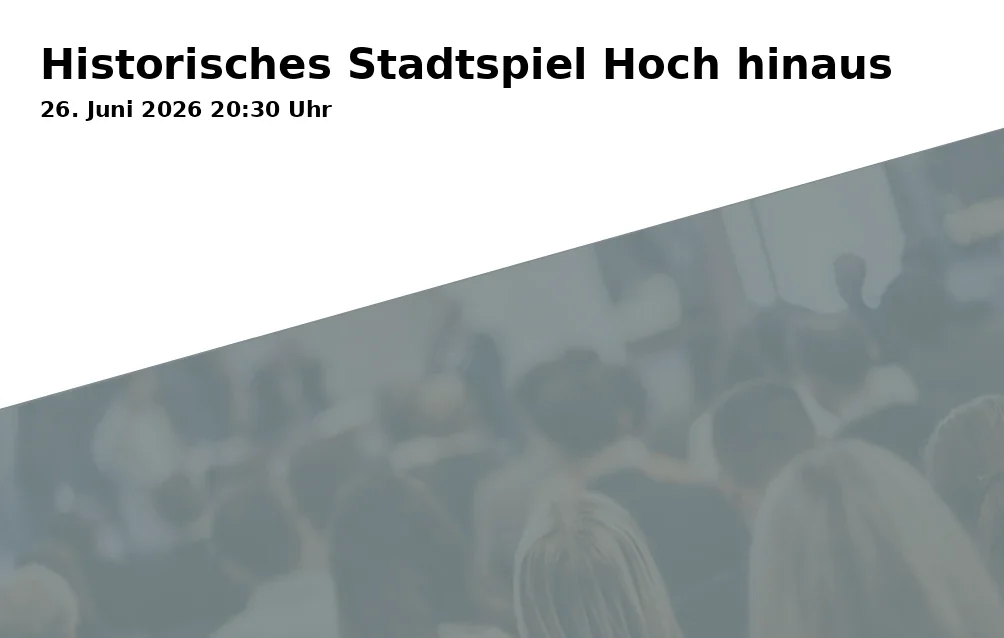
Culturally, Ludwigsplatz also plays a role beyond the market itself. Chiemsee-Alpenland names it as a filming location for the Rosenheim Cops, and in Rosenheim, the square is also incorporated into city play and staging formats. This makes it a place where media recognition, city identity, and real use overlap. Additionally, the square repeatedly comes into focus in urban design, such as in questions of traffic management or construction work at the roundabout. Even such measures illustrate how central the place is for the functioning city center structure. Therefore, those visiting Ludwigsplatz experience not only historical architecture and market stalls but a square that continually takes on a new role in the public life of the city. Its special strength lies precisely in this: it is rich in tradition but never stagnant, remaining visibly part of the current happenings in Rosenheim. ([chiemsee-alpenland.de](https://www.chiemsee-alpenland.de/entdecken/alle-sehenswuerdigkeiten/ludwigsplatz-16055046b6?utm_source=openai))
Orientation and Practical Tips for Visiting Ludwigsplatz
For a successful visit to Ludwigsplatz, it is worthwhile to consider the square as a starting point for the entire city center of Rosenheim. Those arriving in the morning will encounter market life and fresh products; those stopping by at noon or early afternoon will usually find the best combination of gastronomy, shopping, and relaxed strolling. Thanks to the short distances, the square can be easily connected with other destinations, such as Max-Josefs-Platz, Mittertor, or a detour to the municipal museum. The latter is located directly at Ludwigsplatz and is open from Tuesday to Sunday from 12:00 PM to 5:00 PM, closed on Mondays and public holidays. For all those visiting Rosenheim for the first time, this is particularly practical, as one can bundle city history, transport connections, and city center atmosphere in one single place. Thus, Ludwigsplatz becomes an ideal starting point for a stroll through the old town, whether one is specifically heading to the market, the museum, or simply for a walk. ([museum.rosenheim.de](https://museum.rosenheim.de/besuch/informationen/))
Another tip is to experience the square seasonally differently. In spring, new plantings at Ludwigsplatz and Max-Josefs-Platz provide additional quality of stay, while throughout the year, markets and events continually revitalize the square. This interplay of nature, trade, gastronomy, and public space makes Ludwigsplatz attractive. Those interested in historical details should pay attention to the course of the old Inn Gate and the structure of the former Outer Market, as this is where the deep historical layering of the place becomes apparent. Those who are more pragmatic will benefit from the nearby parking garages and the short distances to the shops. Those seeking culture will find museum, church, city history, and event flow in the immediate vicinity. Therefore, Ludwigsplatz is not just a place to pass through, but one that succinctly summarizes the character of Rosenheim. ([rosenheim.de](https://www.rosenheim.de/en/fruehjahrsbepflanzung-laesst-rosenheim-aufbluehen/?utm_source=openai))
Sources:
- City of Rosenheim – Pedestrian Zone and Special Uses ([rosenheim.de](https://www.rosenheim.de/unternehmerservice/gewerbe-gaststaetten/fussgaengerzone/))
- City of Rosenheim – Special Permission and Delivery Times in the Pedestrian Zone ([rosenheim.de](https://www.rosenheim.de/en/citizen-service/mobility/special-permission-to-drive-in-the-pedestrian-zone/))
- City of Rosenheim – Year and Weekly Markets, Green Market at Ludwigsplatz ([rosenheim.de](https://www.rosenheim.de/unternehmerservice/gewerbe-gaststaetten/jahr-wochenmaerkte/?utm_source=openai))
- City of Rosenheim – Green Market Starts into Spring ([rosenheim.de](https://www.rosenheim.de/gruener-markt-startet-ins-fruehjahr/?utm_source=openai))
- City Archive Rosenheim – City History and Outer Market ([stadtarchiv.de](https://www.stadtarchiv.de/stadtgeschichte/))
- City Archive Rosenheim – Inn Gate at Ludwigsplatz ([stadtarchiv.de](https://www.stadtarchiv.de/stadtgeschichte/schauplaetze/10-inntor-am-ludwigsplatz/))
- Chiemsee-Alpenland Tourism – Ludwigsplatz in Rosenheim ([chiemsee-alpenland.de](https://www.chiemsee-alpenland.de/entdecken/alle-sehenswuerdigkeiten/ludwigsplatz-16055046b6?utm_source=openai))
- Chiemsee-Alpenland Tourism – Schmankerlstraße Rosenheim ([chiemsee-alpenland.de](https://www.chiemsee-alpenland.de/entdecken/veranstaltungen-brauchtum/veranstaltungs-highlights/schmankerlstrasse-rosenheim?utm_source=openai))
- City Management Rosenheim – Ludwigsplatz ([ro-city.de](https://www.ro-city.de/innenstadtprofil/ludwigsplatz-2/))
- Municipal Museum Rosenheim – Access and Opening Hours ([museum.rosenheim.de](https://museum.rosenheim.de/besuch/informationen/))
Show moreShow less
Ludwigsplatz Rosenheim | Parking & Green Market
The Ludwigsplatz is one of the most prominent places in the old town of Rosenheim, connecting history, everyday life, and quality of stay in a compact space. It is located in the center of the city, is part of the pedestrian zone, and is therefore not just a passageway but an urban meeting point with markets, gastronomy, shops, and cultural references. Those exploring Rosenheim on foot will almost automatically find themselves at a square that makes the city's historical heritage visible while simultaneously making its current rhythm palpable. This mixture of tradition and vibrant city life is what makes Ludwigsplatz one of the most well-known addresses in Rosenheim. ([rosenheim.de](https://www.rosenheim.de/unternehmerservice/gewerbe-gaststaetten/fussgaengerzone/))
History of Ludwigsplatz in Rosenheim
The history of Ludwigsplatz dates back to the development of Rosenheim as a trading place. The city archive describes that Rosenheim emerged as an important trading place in the Middle Ages, was granted market rights in 1328, and that the Inner Market and the Outer Market continue to shape the character of the old town to this day. The current Ludwigsplatz corresponds to the former Outer Market, which over time consisted of several smaller markets. These included, among others, the Egg Market in the center, the Pig Market near Färbergasse, and the Kösten Market along the former house numbers 28 to 31. This evolved structure explains why the square does not appear as a strictly planned facility but rather as a historically grown urban space with many layers. The current name was assigned around 1825 in honor of King Ludwig I, which linguistically integrates the square into Bavarian city history. ([stadtarchiv.de](https://www.stadtarchiv.de/stadtgeschichte/))
A particularly vivid glimpse into the past is provided by the site of today's roundabout. There once stood the Inn Gate, which spatially defined the square and connected it with Inn and Königstraße. According to the city archive, Ludwigsplatz was significantly smaller back then; the demolition of the Inn Gate in 1865 caused it to lose part of its historical framing. The course of the Mühlbach is still traceable, as it ran under the former gate and is now made visible again at an opening in the sidewalk. Such details make Ludwigsplatz a place where city history is not abstract but literally readable in the ground and the edges of the space. For visitors who appreciate historical places, this is one of the greatest charms of the area. ([stadtarchiv.de](https://www.stadtarchiv.de/stadtgeschichte/schauplaetze/10-inntor-am-ludwigsplatz/))
Green Market and Weekly Market at Ludwigsplatz
The Green Market is one of the most important reasons why Ludwigsplatz is so closely connected to the everyday life of Rosenheim residents. The city of Rosenheim designates the Green Market at Ludwigsplatz as a regular market event from Thursday to Saturday mornings. In spring, it traditionally starts the season with an expanded range and larger size, making the square an even stronger shopping and meeting point. The offerings include typical fresh products and regional goods, including fruits, vegetables, meat, fish, cheese, pasta, herbs, eggs, honey, spices, plants, and seasonal specialties. Thus, the market is not only a place for shopping but also a social space where people meet, taste, engage in conversation, and experience the city center as a vibrant living space. This mixture of regional reference and urban atmosphere makes the market a significant part of Rosenheim's identity. ([rosenheim.de](https://www.rosenheim.de/unternehmerservice/gewerbe-gaststaetten/jahr-wochenmaerkte/?utm_source=openai))
The temporal use of the square also shows how closely market life and urban planning are intertwined here. The city points out that Ludwigsplatz is part of the pedestrian zone, delivery traffic is only possible during defined time windows, and the Green Market occupies the square until 2:00 PM during market hours. This creates a clearly structured urban space where delivery, sales, and quality of stay are coordinated. Chiemsee-Alpenland also describes Ludwigsplatz as a historical marketplace, whose current form emerged from the earlier sub-markets. Therefore, those visiting the market in the morning experience not just a weekly market but a piece of ongoing city history. For many visitors, this is precisely the appeal: one does not just shop but stands in a square whose function as a market place has been passed down for centuries. ([rosenheim.de](https://www.rosenheim.de/en/citizen-service/mobility/special-permission-to-drive-in-the-pedestrian-zone/))
Pedestrian Zone, Access, and Parking at Ludwigsplatz
Ludwigsplatz is located in one of the most important city center areas of Rosenheim and is part of the pedestrian zone. The city of Rosenheim explicitly counts it among the central pedestrian zones along with Max-Josefs-Platz and other city center areas. For visitors, this means: The square is generally traffic-calmed and therefore particularly pleasant for strolling, shopping, and lingering. Fixed time windows apply for deliveries, namely from 6:00 AM to 9:00 AM and from 6:00 PM to 8:00 PM at Ludwigsplatz. Outside these times, access authorization is required. This regulation protects the quality of stay and ensures that traders, gastronomy, and residents can operate functionally. The pedestrian zone is thus not a static restricted area but a well-organized urban space where mobility and quality of life are carefully balanced. ([rosenheim.de](https://www.rosenheim.de/unternehmerservice/gewerbe-gaststaetten/fussgaengerzone/))
In terms of practical access, Ludwigsplatz is also well integrated. The city marketing mentions nearby parking options including Loretowiese and the parking garage P7 In der Schmucken. The municipal museum also indicates parking options P4 Mitte with about five minutes walking distance and P7 Altstadt-Ost with about six minutes walking distance for the area. Those arriving by car can conveniently reach Rosenheim via the A8 Munich-Salzburg, the A93 Rosenheim-Inntal-Brenner, and from the north via the B15 Landshut-Rosenheim. Additionally, the area is served by the public transport stop Stadtmitte. For a relaxed visit, this is particularly practical, as one can quickly reach the square while also exploring the city center on foot. Bicycles have also been more strongly considered in the city center, as city marketing mentions additional bike racks. ([ro-city.de](https://www.ro-city.de/innenstadtprofil/ludwigsplatz-2/))
Shops, Gastronomy, and City Life around Ludwigsplatz
Ludwigsplatz is not only a market and traffic area but also an important shopping and leisure spot. The City Management of Rosenheim describes the square as a place with tradition and character, where there are many specialty shops, a very good mix of goods, individual advice, and a wide range of offerings. In addition, there are numerous gastronomic establishments and areas that invite sitting, watching, and lingering. Especially in the historical context, this mix unfolds its effect, as the arcades, facades, and edges of the square provide a special backdrop for everyday life. Those shopping or taking a break there do not experience Rosenheim as an anonymous city center but as a manageable, vibrant old town with short distances and a personal atmosphere. The combination of trade, services, and gastronomy makes the square a natural focal point for many visitors during their city center stroll. ([ro-city.de](https://www.ro-city.de/innenstadtprofil/ludwigsplatz-2/))
Particularly appealing is the immediate proximity to cultural and urban anchors. The municipal museum is located at Ludwigsplatz 26 directly at the square and is therefore an important building block for all who wish to connect city history with a walk. The parish church of St. Nikolaus is also one of the defining neighbors of the square and underscores the historical depth of the surroundings. The City Management also points out that Ludwigsplatz, after the renovation for the State Garden Show, offers consumption-free areas and an increased quality of stay. This creates the special mixture: One can shop, eat, take a break, meet people, and at the same time enjoy the atmosphere of a grown old town. For many guests, the square is therefore less a single sight than a versatile urban space that fulfills several needs in one place. ([ro-city.de](https://www.ro-city.de/innenstadtprofil/ludwigsplatz-2/))
Events, Schmankerlstraße, and Special Highlights at the Square
Ludwigsplatz is also a place for events and seasonal highlights in Rosenheim. One example is the Schmankerlstraße, which according to Chiemsee-Alpenland takes place every year from 10:00 AM to 3:00 PM at Ludwigsplatz. Here, regional culinary delights are the focus, and the square becomes a large-scale enjoyment experience for a day with agricultural products, tastings, and a special city center flair. Such formats show that Ludwigsplatz not only functions in everyday life but also serves as a stage for special actions. The city of Rosenheim also mentions that the areas of the square are used for various events. This makes the square a flexible urban space that can accommodate markets, city festivals, special uses, and cultural formats. For visitors, this means a high likelihood of encountering additional activities during a stroll that make the stay even more vibrant. ([chiemsee-alpenland.de](https://www.chiemsee-alpenland.de/entdecken/veranstaltungen-brauchtum/veranstaltungs-highlights/schmankerlstrasse-rosenheim?utm_source=openai))
Culturally, Ludwigsplatz also plays a role beyond the market itself. Chiemsee-Alpenland names it as a filming location for the Rosenheim Cops, and in Rosenheim, the square is also incorporated into city play and staging formats. This makes it a place where media recognition, city identity, and real use overlap. Additionally, the square repeatedly comes into focus in urban design, such as in questions of traffic management or construction work at the roundabout. Even such measures illustrate how central the place is for the functioning city center structure. Therefore, those visiting Ludwigsplatz experience not only historical architecture and market stalls but a square that continually takes on a new role in the public life of the city. Its special strength lies precisely in this: it is rich in tradition but never stagnant, remaining visibly part of the current happenings in Rosenheim. ([chiemsee-alpenland.de](https://www.chiemsee-alpenland.de/entdecken/alle-sehenswuerdigkeiten/ludwigsplatz-16055046b6?utm_source=openai))
Orientation and Practical Tips for Visiting Ludwigsplatz
For a successful visit to Ludwigsplatz, it is worthwhile to consider the square as a starting point for the entire city center of Rosenheim. Those arriving in the morning will encounter market life and fresh products; those stopping by at noon or early afternoon will usually find the best combination of gastronomy, shopping, and relaxed strolling. Thanks to the short distances, the square can be easily connected with other destinations, such as Max-Josefs-Platz, Mittertor, or a detour to the municipal museum. The latter is located directly at Ludwigsplatz and is open from Tuesday to Sunday from 12:00 PM to 5:00 PM, closed on Mondays and public holidays. For all those visiting Rosenheim for the first time, this is particularly practical, as one can bundle city history, transport connections, and city center atmosphere in one single place. Thus, Ludwigsplatz becomes an ideal starting point for a stroll through the old town, whether one is specifically heading to the market, the museum, or simply for a walk. ([museum.rosenheim.de](https://museum.rosenheim.de/besuch/informationen/))
Another tip is to experience the square seasonally differently. In spring, new plantings at Ludwigsplatz and Max-Josefs-Platz provide additional quality of stay, while throughout the year, markets and events continually revitalize the square. This interplay of nature, trade, gastronomy, and public space makes Ludwigsplatz attractive. Those interested in historical details should pay attention to the course of the old Inn Gate and the structure of the former Outer Market, as this is where the deep historical layering of the place becomes apparent. Those who are more pragmatic will benefit from the nearby parking garages and the short distances to the shops. Those seeking culture will find museum, church, city history, and event flow in the immediate vicinity. Therefore, Ludwigsplatz is not just a place to pass through, but one that succinctly summarizes the character of Rosenheim. ([rosenheim.de](https://www.rosenheim.de/en/fruehjahrsbepflanzung-laesst-rosenheim-aufbluehen/?utm_source=openai))
Sources:
- City of Rosenheim – Pedestrian Zone and Special Uses ([rosenheim.de](https://www.rosenheim.de/unternehmerservice/gewerbe-gaststaetten/fussgaengerzone/))
- City of Rosenheim – Special Permission and Delivery Times in the Pedestrian Zone ([rosenheim.de](https://www.rosenheim.de/en/citizen-service/mobility/special-permission-to-drive-in-the-pedestrian-zone/))
- City of Rosenheim – Year and Weekly Markets, Green Market at Ludwigsplatz ([rosenheim.de](https://www.rosenheim.de/unternehmerservice/gewerbe-gaststaetten/jahr-wochenmaerkte/?utm_source=openai))
- City of Rosenheim – Green Market Starts into Spring ([rosenheim.de](https://www.rosenheim.de/gruener-markt-startet-ins-fruehjahr/?utm_source=openai))
- City Archive Rosenheim – City History and Outer Market ([stadtarchiv.de](https://www.stadtarchiv.de/stadtgeschichte/))
- City Archive Rosenheim – Inn Gate at Ludwigsplatz ([stadtarchiv.de](https://www.stadtarchiv.de/stadtgeschichte/schauplaetze/10-inntor-am-ludwigsplatz/))
- Chiemsee-Alpenland Tourism – Ludwigsplatz in Rosenheim ([chiemsee-alpenland.de](https://www.chiemsee-alpenland.de/entdecken/alle-sehenswuerdigkeiten/ludwigsplatz-16055046b6?utm_source=openai))
- Chiemsee-Alpenland Tourism – Schmankerlstraße Rosenheim ([chiemsee-alpenland.de](https://www.chiemsee-alpenland.de/entdecken/veranstaltungen-brauchtum/veranstaltungs-highlights/schmankerlstrasse-rosenheim?utm_source=openai))
- City Management Rosenheim – Ludwigsplatz ([ro-city.de](https://www.ro-city.de/innenstadtprofil/ludwigsplatz-2/))
- Municipal Museum Rosenheim – Access and Opening Hours ([museum.rosenheim.de](https://museum.rosenheim.de/besuch/informationen/))
Ludwigsplatz Rosenheim | Parking & Green Market
The Ludwigsplatz is one of the most prominent places in the old town of Rosenheim, connecting history, everyday life, and quality of stay in a compact space. It is located in the center of the city, is part of the pedestrian zone, and is therefore not just a passageway but an urban meeting point with markets, gastronomy, shops, and cultural references. Those exploring Rosenheim on foot will almost automatically find themselves at a square that makes the city's historical heritage visible while simultaneously making its current rhythm palpable. This mixture of tradition and vibrant city life is what makes Ludwigsplatz one of the most well-known addresses in Rosenheim. ([rosenheim.de](https://www.rosenheim.de/unternehmerservice/gewerbe-gaststaetten/fussgaengerzone/))
History of Ludwigsplatz in Rosenheim
The history of Ludwigsplatz dates back to the development of Rosenheim as a trading place. The city archive describes that Rosenheim emerged as an important trading place in the Middle Ages, was granted market rights in 1328, and that the Inner Market and the Outer Market continue to shape the character of the old town to this day. The current Ludwigsplatz corresponds to the former Outer Market, which over time consisted of several smaller markets. These included, among others, the Egg Market in the center, the Pig Market near Färbergasse, and the Kösten Market along the former house numbers 28 to 31. This evolved structure explains why the square does not appear as a strictly planned facility but rather as a historically grown urban space with many layers. The current name was assigned around 1825 in honor of King Ludwig I, which linguistically integrates the square into Bavarian city history. ([stadtarchiv.de](https://www.stadtarchiv.de/stadtgeschichte/))
A particularly vivid glimpse into the past is provided by the site of today's roundabout. There once stood the Inn Gate, which spatially defined the square and connected it with Inn and Königstraße. According to the city archive, Ludwigsplatz was significantly smaller back then; the demolition of the Inn Gate in 1865 caused it to lose part of its historical framing. The course of the Mühlbach is still traceable, as it ran under the former gate and is now made visible again at an opening in the sidewalk. Such details make Ludwigsplatz a place where city history is not abstract but literally readable in the ground and the edges of the space. For visitors who appreciate historical places, this is one of the greatest charms of the area. ([stadtarchiv.de](https://www.stadtarchiv.de/stadtgeschichte/schauplaetze/10-inntor-am-ludwigsplatz/))
Green Market and Weekly Market at Ludwigsplatz
The Green Market is one of the most important reasons why Ludwigsplatz is so closely connected to the everyday life of Rosenheim residents. The city of Rosenheim designates the Green Market at Ludwigsplatz as a regular market event from Thursday to Saturday mornings. In spring, it traditionally starts the season with an expanded range and larger size, making the square an even stronger shopping and meeting point. The offerings include typical fresh products and regional goods, including fruits, vegetables, meat, fish, cheese, pasta, herbs, eggs, honey, spices, plants, and seasonal specialties. Thus, the market is not only a place for shopping but also a social space where people meet, taste, engage in conversation, and experience the city center as a vibrant living space. This mixture of regional reference and urban atmosphere makes the market a significant part of Rosenheim's identity. ([rosenheim.de](https://www.rosenheim.de/unternehmerservice/gewerbe-gaststaetten/jahr-wochenmaerkte/?utm_source=openai))
The temporal use of the square also shows how closely market life and urban planning are intertwined here. The city points out that Ludwigsplatz is part of the pedestrian zone, delivery traffic is only possible during defined time windows, and the Green Market occupies the square until 2:00 PM during market hours. This creates a clearly structured urban space where delivery, sales, and quality of stay are coordinated. Chiemsee-Alpenland also describes Ludwigsplatz as a historical marketplace, whose current form emerged from the earlier sub-markets. Therefore, those visiting the market in the morning experience not just a weekly market but a piece of ongoing city history. For many visitors, this is precisely the appeal: one does not just shop but stands in a square whose function as a market place has been passed down for centuries. ([rosenheim.de](https://www.rosenheim.de/en/citizen-service/mobility/special-permission-to-drive-in-the-pedestrian-zone/))
Pedestrian Zone, Access, and Parking at Ludwigsplatz
Ludwigsplatz is located in one of the most important city center areas of Rosenheim and is part of the pedestrian zone. The city of Rosenheim explicitly counts it among the central pedestrian zones along with Max-Josefs-Platz and other city center areas. For visitors, this means: The square is generally traffic-calmed and therefore particularly pleasant for strolling, shopping, and lingering. Fixed time windows apply for deliveries, namely from 6:00 AM to 9:00 AM and from 6:00 PM to 8:00 PM at Ludwigsplatz. Outside these times, access authorization is required. This regulation protects the quality of stay and ensures that traders, gastronomy, and residents can operate functionally. The pedestrian zone is thus not a static restricted area but a well-organized urban space where mobility and quality of life are carefully balanced. ([rosenheim.de](https://www.rosenheim.de/unternehmerservice/gewerbe-gaststaetten/fussgaengerzone/))
In terms of practical access, Ludwigsplatz is also well integrated. The city marketing mentions nearby parking options including Loretowiese and the parking garage P7 In der Schmucken. The municipal museum also indicates parking options P4 Mitte with about five minutes walking distance and P7 Altstadt-Ost with about six minutes walking distance for the area. Those arriving by car can conveniently reach Rosenheim via the A8 Munich-Salzburg, the A93 Rosenheim-Inntal-Brenner, and from the north via the B15 Landshut-Rosenheim. Additionally, the area is served by the public transport stop Stadtmitte. For a relaxed visit, this is particularly practical, as one can quickly reach the square while also exploring the city center on foot. Bicycles have also been more strongly considered in the city center, as city marketing mentions additional bike racks. ([ro-city.de](https://www.ro-city.de/innenstadtprofil/ludwigsplatz-2/))
Shops, Gastronomy, and City Life around Ludwigsplatz
Ludwigsplatz is not only a market and traffic area but also an important shopping and leisure spot. The City Management of Rosenheim describes the square as a place with tradition and character, where there are many specialty shops, a very good mix of goods, individual advice, and a wide range of offerings. In addition, there are numerous gastronomic establishments and areas that invite sitting, watching, and lingering. Especially in the historical context, this mix unfolds its effect, as the arcades, facades, and edges of the square provide a special backdrop for everyday life. Those shopping or taking a break there do not experience Rosenheim as an anonymous city center but as a manageable, vibrant old town with short distances and a personal atmosphere. The combination of trade, services, and gastronomy makes the square a natural focal point for many visitors during their city center stroll. ([ro-city.de](https://www.ro-city.de/innenstadtprofil/ludwigsplatz-2/))
Particularly appealing is the immediate proximity to cultural and urban anchors. The municipal museum is located at Ludwigsplatz 26 directly at the square and is therefore an important building block for all who wish to connect city history with a walk. The parish church of St. Nikolaus is also one of the defining neighbors of the square and underscores the historical depth of the surroundings. The City Management also points out that Ludwigsplatz, after the renovation for the State Garden Show, offers consumption-free areas and an increased quality of stay. This creates the special mixture: One can shop, eat, take a break, meet people, and at the same time enjoy the atmosphere of a grown old town. For many guests, the square is therefore less a single sight than a versatile urban space that fulfills several needs in one place. ([ro-city.de](https://www.ro-city.de/innenstadtprofil/ludwigsplatz-2/))
Events, Schmankerlstraße, and Special Highlights at the Square
Ludwigsplatz is also a place for events and seasonal highlights in Rosenheim. One example is the Schmankerlstraße, which according to Chiemsee-Alpenland takes place every year from 10:00 AM to 3:00 PM at Ludwigsplatz. Here, regional culinary delights are the focus, and the square becomes a large-scale enjoyment experience for a day with agricultural products, tastings, and a special city center flair. Such formats show that Ludwigsplatz not only functions in everyday life but also serves as a stage for special actions. The city of Rosenheim also mentions that the areas of the square are used for various events. This makes the square a flexible urban space that can accommodate markets, city festivals, special uses, and cultural formats. For visitors, this means a high likelihood of encountering additional activities during a stroll that make the stay even more vibrant. ([chiemsee-alpenland.de](https://www.chiemsee-alpenland.de/entdecken/veranstaltungen-brauchtum/veranstaltungs-highlights/schmankerlstrasse-rosenheim?utm_source=openai))
Culturally, Ludwigsplatz also plays a role beyond the market itself. Chiemsee-Alpenland names it as a filming location for the Rosenheim Cops, and in Rosenheim, the square is also incorporated into city play and staging formats. This makes it a place where media recognition, city identity, and real use overlap. Additionally, the square repeatedly comes into focus in urban design, such as in questions of traffic management or construction work at the roundabout. Even such measures illustrate how central the place is for the functioning city center structure. Therefore, those visiting Ludwigsplatz experience not only historical architecture and market stalls but a square that continually takes on a new role in the public life of the city. Its special strength lies precisely in this: it is rich in tradition but never stagnant, remaining visibly part of the current happenings in Rosenheim. ([chiemsee-alpenland.de](https://www.chiemsee-alpenland.de/entdecken/alle-sehenswuerdigkeiten/ludwigsplatz-16055046b6?utm_source=openai))
Orientation and Practical Tips for Visiting Ludwigsplatz
For a successful visit to Ludwigsplatz, it is worthwhile to consider the square as a starting point for the entire city center of Rosenheim. Those arriving in the morning will encounter market life and fresh products; those stopping by at noon or early afternoon will usually find the best combination of gastronomy, shopping, and relaxed strolling. Thanks to the short distances, the square can be easily connected with other destinations, such as Max-Josefs-Platz, Mittertor, or a detour to the municipal museum. The latter is located directly at Ludwigsplatz and is open from Tuesday to Sunday from 12:00 PM to 5:00 PM, closed on Mondays and public holidays. For all those visiting Rosenheim for the first time, this is particularly practical, as one can bundle city history, transport connections, and city center atmosphere in one single place. Thus, Ludwigsplatz becomes an ideal starting point for a stroll through the old town, whether one is specifically heading to the market, the museum, or simply for a walk. ([museum.rosenheim.de](https://museum.rosenheim.de/besuch/informationen/))
Another tip is to experience the square seasonally differently. In spring, new plantings at Ludwigsplatz and Max-Josefs-Platz provide additional quality of stay, while throughout the year, markets and events continually revitalize the square. This interplay of nature, trade, gastronomy, and public space makes Ludwigsplatz attractive. Those interested in historical details should pay attention to the course of the old Inn Gate and the structure of the former Outer Market, as this is where the deep historical layering of the place becomes apparent. Those who are more pragmatic will benefit from the nearby parking garages and the short distances to the shops. Those seeking culture will find museum, church, city history, and event flow in the immediate vicinity. Therefore, Ludwigsplatz is not just a place to pass through, but one that succinctly summarizes the character of Rosenheim. ([rosenheim.de](https://www.rosenheim.de/en/fruehjahrsbepflanzung-laesst-rosenheim-aufbluehen/?utm_source=openai))
Sources:
- City of Rosenheim – Pedestrian Zone and Special Uses ([rosenheim.de](https://www.rosenheim.de/unternehmerservice/gewerbe-gaststaetten/fussgaengerzone/))
- City of Rosenheim – Special Permission and Delivery Times in the Pedestrian Zone ([rosenheim.de](https://www.rosenheim.de/en/citizen-service/mobility/special-permission-to-drive-in-the-pedestrian-zone/))
- City of Rosenheim – Year and Weekly Markets, Green Market at Ludwigsplatz ([rosenheim.de](https://www.rosenheim.de/unternehmerservice/gewerbe-gaststaetten/jahr-wochenmaerkte/?utm_source=openai))
- City of Rosenheim – Green Market Starts into Spring ([rosenheim.de](https://www.rosenheim.de/gruener-markt-startet-ins-fruehjahr/?utm_source=openai))
- City Archive Rosenheim – City History and Outer Market ([stadtarchiv.de](https://www.stadtarchiv.de/stadtgeschichte/))
- City Archive Rosenheim – Inn Gate at Ludwigsplatz ([stadtarchiv.de](https://www.stadtarchiv.de/stadtgeschichte/schauplaetze/10-inntor-am-ludwigsplatz/))
- Chiemsee-Alpenland Tourism – Ludwigsplatz in Rosenheim ([chiemsee-alpenland.de](https://www.chiemsee-alpenland.de/entdecken/alle-sehenswuerdigkeiten/ludwigsplatz-16055046b6?utm_source=openai))
- Chiemsee-Alpenland Tourism – Schmankerlstraße Rosenheim ([chiemsee-alpenland.de](https://www.chiemsee-alpenland.de/entdecken/veranstaltungen-brauchtum/veranstaltungs-highlights/schmankerlstrasse-rosenheim?utm_source=openai))
- City Management Rosenheim – Ludwigsplatz ([ro-city.de](https://www.ro-city.de/innenstadtprofil/ludwigsplatz-2/))
- Municipal Museum Rosenheim – Access and Opening Hours ([museum.rosenheim.de](https://museum.rosenheim.de/besuch/informationen/))
Frequently Asked Questions
Reviews
No reviews found