
Kolbermoor
Heubergstraße 36, 83059 Kolbermoor, Deutschland
Church of the Second Coming of Christ | Services & Directions
The Church of the Second Coming of Christ in Kolbermoor is a prominent place of faith in the southern part of the city and an important building block of the city church of Kolbermoor. Those looking for a Catholic church in Kolbermoor will find a house of worship that stands out not only for its location at Heubergstraße 36 but also for its clear architectural language, distinctive bell tower, and visible community life. Since its founding in 2014, the church has been part of a joint pastoral and administrative unit with Holy Trinity. This connection makes the place particularly interesting for visitors: here, liturgical everyday life, local history, church music, and practical orientation come together. The church is featured on the official pages of the archdiocese with its own images of the altar area and interior view, further emphasizing the significance of the building within the city church. Visitors to the church do not experience an anonymous functional space, but a place with a recognizable history, established prayer order, and a vibrant community core. ([erzbistum-muenchen.de](https://www.erzbistum-muenchen.de/pfarrei/stadtkirche-kolbermoor/ueber-uns/96624))
For many inquiries regarding the Second Coming of Christ in Kolbermoor, practical questions are at the forefront: When is the service, how do I get there, where is the parish office, and what special features does the church have? This overview is specifically aimed at addressing these questions. The current information from the city church states that the parish service at the Church of the Second Coming of Christ takes place on Sundays at 10:30 AM, and the church is open on many days, making it accessible for quiet visits, prayer, and brief retreats. Additionally, there are regular offerings from the parish that range from sacraments to groups to church music. Therefore, anyone looking for a church in Kolbermoor South that has grown historically, is well integrated pastorally, and is also easily accessible will find a place with clear direction and good orientation for visitors, families, and community members. ([erzbistum-muenchen.de](https://www.erzbistum-muenchen.de/pfarrei/stadtkirche-kolbermoor/aktuelle-informationen/95751))
Service Times and Open Church at the Second Coming of Christ
The current information from the city church of Kolbermoor clearly shows that the Second Coming of Christ is an active place of worship. On Sundays, the parish service usually takes place at 10:30 AM. On Thursdays, the parish complements the offerings with a rosary at 6:00 PM and the FeierAbendHalbe at 6:30 PM. This structure is helpful for visitors because it not only reflects a classic Sunday rhythm but also offers opportunities for prayer, silence, and spiritual interruption during the week. For those seeking a Catholic church where liturgical life regularly takes place, this provides clear and reliable orientation. Especially for people searching for “Second Coming of Christ service” or “Church of the Second Coming of Christ Kolbermoor,” these times are the most important entry points. At the same time, the official presence of the city church shows that the Second Coming of Christ is not just a building but a place with a fixed spot in the liturgical calendar. ([erzbistum-muenchen.de](https://www.erzbistum-muenchen.de/pfarrei/stadtkirche-kolbermoor/aktuelle-informationen/95751))
Even outside of service times, the church is open. According to the current page, the Church of the Second Coming of Christ is accessible on Sundays and Wednesdays from 9:00 AM to 12:30 PM, on Saturdays, Mondays, Tuesdays, and Fridays from 9:00 AM to 4:00 PM, and on Thursdays from 9:00 AM to 6:30 PM. These opening hours are particularly valuable for visitors planning a quiet church visit, a brief devotion, or a look into the space. They also show that the church wants to be present in everyday life and does not only come alive for services. For content searches related to “Second Coming of Christ Catholic” or “Second Coming of Christ,” this point is important: it is not just about a purely theoretical keyword, but about a real place with an open door, regular liturgy, and church hospitality. The opening hours also facilitate planning for baptisms, weddings, and conversations at the parish office. ([erzbistum-muenchen.de](https://www.erzbistum-muenchen.de/pfarrei/stadtkirche-kolbermoor/aktuelle-informationen/95751))
Directions by City Bus 333 and 334
Those wishing to visit the Church of the Second Coming of Christ benefit from a clearly traceable connection in the municipal bus network of Kolbermoor. In the official timetables of the city, the stop “Church of the Second Coming of Christ” appears on both line 333 and line 334. This is a practical detail that is very relevant for attending services, baptism celebrations, weddings, choir rehearsals, or organ tours. Line 333 runs, among other places, along Kolbermoor train station, the old spinning mill, Holy Trinity Church, the Church of the Second Coming of Christ, and further towards Schlarbhofen. Line 334 also connects the train station with the southern city area and stops at the Church of the Second Coming of Christ. This means that the church is not only easily accessible within the neighborhood but also relatively easy to reach from other districts. For inquiries about “Second Coming of Christ directions” or “Second Coming of Christ bus,” this is the most reliable practical information that can be obtained from the official city documents. ([kolbermoor.de](https://www.kolbermoor.de/fileadmin/Stadt_Kolbermoor/Dateien/Stadtbus/Minifahrplan_333_Kolbermoor_Sued_ueber_Hertopark_neu.pdf))
The location in southern Kolbermoor also fits the historical development of the district. The city chronicle describes the founding of the parish of the Second Coming of Christ in 1967 in the building area south of the Mangfall as a response to the growth of the city. This growth explains why the church is now located in a residential and community area that has been deliberately developed and is still perceived as a vibrant part of Kolbermoor today. Therefore, those planning their visit should pay attention not only to the bus stop but also to the spatial orientation in the southern part of the city. The church is marked as a prominent point in the bus plans and is thus well integrated into local mobility. Specific official information about a dedicated parking lot is not provided on the mentioned pages; therefore, public access via the city bus is the clearest published option for visitors. ([kolbermoor.de](https://www.kolbermoor.de/unsere-stadt/ein-blick-zurueck/chronik-der-stadt))
History of the Church of the Second Coming of Christ
The history of the Church of the Second Coming of Christ begins with the growth of Kolbermoor in the post-war period. The official description of the city church notes that the strong population growth and new building areas made the planning of a new church necessary. On February 11, 1965, the Church Foundation of the Second Coming of Christ was established, and already on March 29, 1965, Eugen Klaas was appointed as the curate. His task was to establish the new pastoral site and to advance the construction of the church and parish center. The city chronicle adds that in the building area south of the Mangfall, the second Catholic parish of the city was established in December 1967. Thus, the Second Coming of Christ is not simply a subsequent individual project but part of a targeted ecclesiastical and urban development of Kolbermoor. Therefore, visitors to the site today encounter a church that has grown out of a specific social need and remains closely connected to the city's history. ([erzbistum-muenchen.de](https://www.erzbistum-muenchen.de/pfarrei/stadtkirche-kolbermoor/kirchen-und-kapellen/96628))
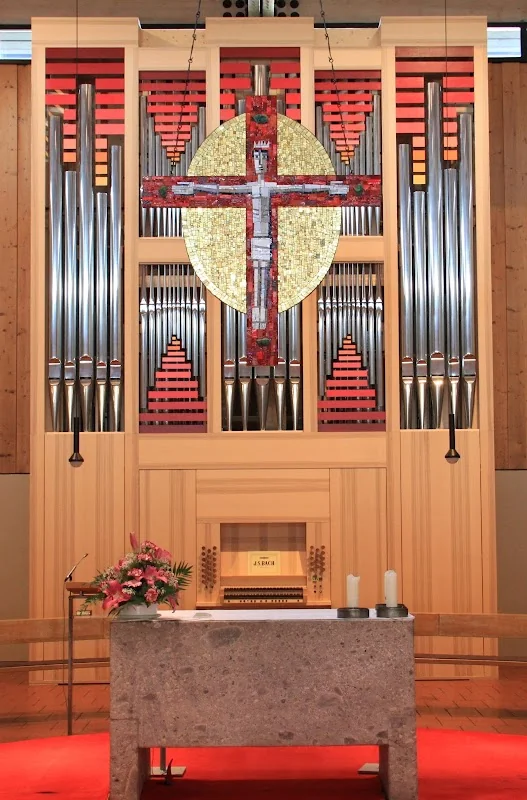
The further development of the building is also well documented. The foundation had to be placed on deep-reaching concrete piles due to the high water level. The construction itself was carried out using precast concrete parts, and the free-spanning ceiling is described in the official description as a master achievement of modern construction technology. The consecration of the church and altar took place on December 19, 1971, by Auxiliary Bishop Matthias Defregger. In 1987, the church painter Werner Persy decorated the large concrete surfaces with a Stations of the Cross, complemented by a mosaic cross above the priest's bench. The ecclesiastical self-understanding of the area is explicitly connected to the Christian hope for the Second Coming of Christ. For seekers asking about “Second Coming of Christ Munich” or “Church of the Second Coming of Christ Munich,” this historical and theological context is particularly enlightening: the church is not only geographically located in the Archdiocese of Munich and Freising but also carries the hope for Christ's return in its name and in the imagery of the space. ([erzbistum-muenchen.de](https://www.erzbistum-muenchen.de/pfarrei/stadtkirche-kolbermoor/kirchen-und-kapellen/96628))
Architecture, Bell Tower, and Bells
Architecturally, the Church of the Second Coming of Christ is a remarkably sober yet expressive house of worship. The official page describes the church space as restrained and convincing primarily due to its spatial arrangement. This restraint is not a flaw but part of the concept: the church relies on clear forms, modern construction, and an inner imagery that makes the path of faith visible. Particularly interesting is the construction method. The house of worship was built from precast concrete parts, the floor had to be deeply founded due to the high water level, and the free-spanning ceiling is considered a technical specialty. For visitors searching for special features or architecture of the “parish church of the Second Coming of Christ,” this connection between modern construction technology and ecclesiastical function is a strong anchor point. Thus, the church is not old-church-romantic but consciously modern and readable as a product of its time. This gives it a distinctive character in the Kolbermoor cityscape. ([erzbistum-muenchen.de](https://www.erzbistum-muenchen.de/pfarrei/stadtkirche-kolbermoor/kirchen-und-kapellen/96628))
The distinctive bell tower shapes the silhouette of southern Kolbermoor. The tower was completed on November 17, 1990, rises 41 meters high, and houses five bells. The official description of the bells states that they were cast by the Perner bell foundry in Passau and consecrated by Auxiliary Bishop Defregger. Their names and weights give the peal a striking form: Christ Bell, Mary Bell, Joseph Bell, Korbinian Bell, and Michael Bell. The fact that the community describes the sound of the bells in the district as familiar shows how strongly the church is acoustically anchored in everyday life. The bells connect liturgical function with regional identity and make the church audible from the outside. For the keyword logic surrounding “Second Coming of Christ bells” or “Church of the Second Coming of Christ Kolbermoor,” these details are particularly valuable as they describe a genuine unique feature of the location. ([www2.erzbistum-muenchen.de](https://www2.erzbistum-muenchen.de/pfarrei/stadtkirche-kolbermoor/die-glocken-von-wiederkunft-christi/97272))
Organ, Church Music, and Vibrant Community Work
Another focus of the Church of the Second Coming of Christ is church music. The official organ page of the city church reports that the new organ in the parish church built in 1971 was consecrated on September 29, 2012, and that the instrument has since been used in services, at the monthly organ Wednesday, and on other occasions. The organ comes from Frenger & Eder and has 28 registers on two manuals and pedal, with mechanical action and electric stop action. This is not only interesting for specialists but also for visitors who want to experience a vibrant musical culture in the church. For inquiries about “Second Coming of Christ organ” or “Kolbermoor organ Wednesday,” this is the central content. The church is thus not just a space for word services but also a place for church music, concert formats, and musical discoveries. ([erzbistum-muenchen.de](https://www.erzbistum-muenchen.de/pfarrei/stadtkirche-kolbermoor/orgeln/96853))
The musical work does not end with the organ. Since 2014, the two parishes of the Second Coming of Christ and Holy Trinity have merged into the city church of Kolbermoor; the two former church choirs have formed the choir community of the city church of Kolbermoor. This choir rehearses on Tuesdays at 7:00 PM in the parish hall of Holy Trinity, is open to new members, and musically shapes the liturgy with a repertoire from Baroque to modern. This shows how closely both churches work together today in a pastoral and cultural network. For the Second Coming of Christ, this means: even if the choir rehearsals take place at another location, the musical identity of the community continues to thrive in the shared city church. This is complemented by regular concerts that make the church visible as a cultural venue. In connection with the organ and the sound of the bells, a broad soundscape emerges that clearly distinguishes the Second Coming of Christ from a purely functional place of worship. ([erzbistum-muenchen.de](https://www.erzbistum-muenchen.de/pfarrei/stadtkirche-kolbermoor/chorgemeinschaft/96638))
Parish Office, Sacraments, and Community Life
For those seeking practical information, the Church of the Second Coming of Christ offers a clearly structured ecclesiastical infrastructure. The parish office is located at Heubergstr. 36, 83059 Kolbermoor, and is open according to the current contact page on Mondays from 9:00 AM to 11:30 AM and Thursdays from 3:30 PM to 5:30 PM. The city church of Kolbermoor also points out that both church foundations, Holy Trinity and the Second Coming of Christ, are responsible for their churches, buildings, personnel, and finances. This organizational clarity is valuable for visitors, volunteers, and families as it shows whom to contact regarding questions about appointments, sacraments, or group offerings. For searches related to “Second Coming of Christ parish office” or “Second Coming of Christ Catholic,” this information is particularly relevant as it directly connects the place with concrete ways of contacting. ([erzbistum-muenchen.de](https://www.erzbistum-muenchen.de/pfarrei/stadtkirche-kolbermoor/kontakt/96623))
The parish is also well-equipped in the area of sacraments. The official baptism page of the city church explains that fixed baptism dates are offered in the parish, and one can freely choose between the two churches, Holy Trinity and the Second Coming of Christ. The same principle applies to weddings: here, couples can also freely choose between the two churches and should contact early to reserve the church and arrange the date. This openness is an important plus for families and couples as it shows that the Second Coming of Christ is not just a place for Sunday services but a space for significant life moments. Additionally, there are offerings for first communion, altar servers, star singers, scouts, summer camps, kfd, and other groups that are visible on the pages of the city church. Thus, the church address becomes a complete community life with many points of contact. Those searching for “Second Coming of Christ directions,” “Second Coming of Christ service,” or “city church Kolbermoor” thus receive a complete picture of the place, organization, and spiritual everyday life. ([erzbistum-muenchen.de](https://www.erzbistum-muenchen.de/pfarrei/stadtkirche-kolbermoor/taufe/96635?utm_source=openai))
Sources:
- Archdiocese of Munich and Freising - City Church Kolbermoor / About Us ([erzbistum-muenchen.de](https://www.erzbistum-muenchen.de/pfarrei/stadtkirche-kolbermoor/ueber-uns/96624))
- Archdiocese of Munich and Freising - Churches and Chapels / Second Coming of Christ ([erzbistum-muenchen.de](https://www.erzbistum-muenchen.de/pfarrei/stadtkirche-kolbermoor/kirchen-und-kapellen/96628))
- Archdiocese of Munich and Freising - Contact / Opening Hours ([erzbistum-muenchen.de](https://www.erzbistum-muenchen.de/pfarrei/stadtkirche-kolbermoor/kontakt/96623))
- Archdiocese of Munich and Freising - Current Information / Service Schedule ([erzbistum-muenchen.de](https://www.erzbistum-muenchen.de/pfarrei/stadtkirche-kolbermoor/aktuelle-informationen/95751))
- Archdiocese of Munich and Freising - Organs / Second Coming of Christ ([erzbistum-muenchen.de](https://www.erzbistum-muenchen.de/pfarrei/stadtkirche-kolbermoor/orgeln/96853))
- City of Kolbermoor - Chronicle of the City ([kolbermoor.de](https://www.kolbermoor.de/unsere-stadt/ein-blick-zurueck/chronik-der-stadt))
- City of Kolbermoor - City Bus 333 ([kolbermoor.de](https://www.kolbermoor.de/fileadmin/Stadt_Kolbermoor/Dateien/Stadtbus/Minifahrplan_333_Kolbermoor_Sued_ueber_Hertopark_neu.pdf))
- City of Kolbermoor - City Bus 334 ([kolbermoor.de](https://www.kolbermoor.de/fileadmin/Stadt_Kolbermoor/Dateien/Stadtbus/Minifahrplan_Linie_334_Kolbermoor_Sued_ueber_Schwimmbad.pdf))
- Archdiocese of Munich and Freising - Choir Community of the City Church Kolbermoor ([erzbistum-muenchen.de](https://www.erzbistum-muenchen.de/pfarrei/stadtkirche-kolbermoor/chorgemeinschaft/96638))
Show moreShow less
Church of the Second Coming of Christ | Services & Directions
The Church of the Second Coming of Christ in Kolbermoor is a prominent place of faith in the southern part of the city and an important building block of the city church of Kolbermoor. Those looking for a Catholic church in Kolbermoor will find a house of worship that stands out not only for its location at Heubergstraße 36 but also for its clear architectural language, distinctive bell tower, and visible community life. Since its founding in 2014, the church has been part of a joint pastoral and administrative unit with Holy Trinity. This connection makes the place particularly interesting for visitors: here, liturgical everyday life, local history, church music, and practical orientation come together. The church is featured on the official pages of the archdiocese with its own images of the altar area and interior view, further emphasizing the significance of the building within the city church. Visitors to the church do not experience an anonymous functional space, but a place with a recognizable history, established prayer order, and a vibrant community core. ([erzbistum-muenchen.de](https://www.erzbistum-muenchen.de/pfarrei/stadtkirche-kolbermoor/ueber-uns/96624))
For many inquiries regarding the Second Coming of Christ in Kolbermoor, practical questions are at the forefront: When is the service, how do I get there, where is the parish office, and what special features does the church have? This overview is specifically aimed at addressing these questions. The current information from the city church states that the parish service at the Church of the Second Coming of Christ takes place on Sundays at 10:30 AM, and the church is open on many days, making it accessible for quiet visits, prayer, and brief retreats. Additionally, there are regular offerings from the parish that range from sacraments to groups to church music. Therefore, anyone looking for a church in Kolbermoor South that has grown historically, is well integrated pastorally, and is also easily accessible will find a place with clear direction and good orientation for visitors, families, and community members. ([erzbistum-muenchen.de](https://www.erzbistum-muenchen.de/pfarrei/stadtkirche-kolbermoor/aktuelle-informationen/95751))
Service Times and Open Church at the Second Coming of Christ
The current information from the city church of Kolbermoor clearly shows that the Second Coming of Christ is an active place of worship. On Sundays, the parish service usually takes place at 10:30 AM. On Thursdays, the parish complements the offerings with a rosary at 6:00 PM and the FeierAbendHalbe at 6:30 PM. This structure is helpful for visitors because it not only reflects a classic Sunday rhythm but also offers opportunities for prayer, silence, and spiritual interruption during the week. For those seeking a Catholic church where liturgical life regularly takes place, this provides clear and reliable orientation. Especially for people searching for “Second Coming of Christ service” or “Church of the Second Coming of Christ Kolbermoor,” these times are the most important entry points. At the same time, the official presence of the city church shows that the Second Coming of Christ is not just a building but a place with a fixed spot in the liturgical calendar. ([erzbistum-muenchen.de](https://www.erzbistum-muenchen.de/pfarrei/stadtkirche-kolbermoor/aktuelle-informationen/95751))
Even outside of service times, the church is open. According to the current page, the Church of the Second Coming of Christ is accessible on Sundays and Wednesdays from 9:00 AM to 12:30 PM, on Saturdays, Mondays, Tuesdays, and Fridays from 9:00 AM to 4:00 PM, and on Thursdays from 9:00 AM to 6:30 PM. These opening hours are particularly valuable for visitors planning a quiet church visit, a brief devotion, or a look into the space. They also show that the church wants to be present in everyday life and does not only come alive for services. For content searches related to “Second Coming of Christ Catholic” or “Second Coming of Christ,” this point is important: it is not just about a purely theoretical keyword, but about a real place with an open door, regular liturgy, and church hospitality. The opening hours also facilitate planning for baptisms, weddings, and conversations at the parish office. ([erzbistum-muenchen.de](https://www.erzbistum-muenchen.de/pfarrei/stadtkirche-kolbermoor/aktuelle-informationen/95751))
Directions by City Bus 333 and 334
Those wishing to visit the Church of the Second Coming of Christ benefit from a clearly traceable connection in the municipal bus network of Kolbermoor. In the official timetables of the city, the stop “Church of the Second Coming of Christ” appears on both line 333 and line 334. This is a practical detail that is very relevant for attending services, baptism celebrations, weddings, choir rehearsals, or organ tours. Line 333 runs, among other places, along Kolbermoor train station, the old spinning mill, Holy Trinity Church, the Church of the Second Coming of Christ, and further towards Schlarbhofen. Line 334 also connects the train station with the southern city area and stops at the Church of the Second Coming of Christ. This means that the church is not only easily accessible within the neighborhood but also relatively easy to reach from other districts. For inquiries about “Second Coming of Christ directions” or “Second Coming of Christ bus,” this is the most reliable practical information that can be obtained from the official city documents. ([kolbermoor.de](https://www.kolbermoor.de/fileadmin/Stadt_Kolbermoor/Dateien/Stadtbus/Minifahrplan_333_Kolbermoor_Sued_ueber_Hertopark_neu.pdf))
The location in southern Kolbermoor also fits the historical development of the district. The city chronicle describes the founding of the parish of the Second Coming of Christ in 1967 in the building area south of the Mangfall as a response to the growth of the city. This growth explains why the church is now located in a residential and community area that has been deliberately developed and is still perceived as a vibrant part of Kolbermoor today. Therefore, those planning their visit should pay attention not only to the bus stop but also to the spatial orientation in the southern part of the city. The church is marked as a prominent point in the bus plans and is thus well integrated into local mobility. Specific official information about a dedicated parking lot is not provided on the mentioned pages; therefore, public access via the city bus is the clearest published option for visitors. ([kolbermoor.de](https://www.kolbermoor.de/unsere-stadt/ein-blick-zurueck/chronik-der-stadt))
History of the Church of the Second Coming of Christ
The history of the Church of the Second Coming of Christ begins with the growth of Kolbermoor in the post-war period. The official description of the city church notes that the strong population growth and new building areas made the planning of a new church necessary. On February 11, 1965, the Church Foundation of the Second Coming of Christ was established, and already on March 29, 1965, Eugen Klaas was appointed as the curate. His task was to establish the new pastoral site and to advance the construction of the church and parish center. The city chronicle adds that in the building area south of the Mangfall, the second Catholic parish of the city was established in December 1967. Thus, the Second Coming of Christ is not simply a subsequent individual project but part of a targeted ecclesiastical and urban development of Kolbermoor. Therefore, visitors to the site today encounter a church that has grown out of a specific social need and remains closely connected to the city's history. ([erzbistum-muenchen.de](https://www.erzbistum-muenchen.de/pfarrei/stadtkirche-kolbermoor/kirchen-und-kapellen/96628))
The further development of the building is also well documented. The foundation had to be placed on deep-reaching concrete piles due to the high water level. The construction itself was carried out using precast concrete parts, and the free-spanning ceiling is described in the official description as a master achievement of modern construction technology. The consecration of the church and altar took place on December 19, 1971, by Auxiliary Bishop Matthias Defregger. In 1987, the church painter Werner Persy decorated the large concrete surfaces with a Stations of the Cross, complemented by a mosaic cross above the priest's bench. The ecclesiastical self-understanding of the area is explicitly connected to the Christian hope for the Second Coming of Christ. For seekers asking about “Second Coming of Christ Munich” or “Church of the Second Coming of Christ Munich,” this historical and theological context is particularly enlightening: the church is not only geographically located in the Archdiocese of Munich and Freising but also carries the hope for Christ's return in its name and in the imagery of the space. ([erzbistum-muenchen.de](https://www.erzbistum-muenchen.de/pfarrei/stadtkirche-kolbermoor/kirchen-und-kapellen/96628))
Architecture, Bell Tower, and Bells
Architecturally, the Church of the Second Coming of Christ is a remarkably sober yet expressive house of worship. The official page describes the church space as restrained and convincing primarily due to its spatial arrangement. This restraint is not a flaw but part of the concept: the church relies on clear forms, modern construction, and an inner imagery that makes the path of faith visible. Particularly interesting is the construction method. The house of worship was built from precast concrete parts, the floor had to be deeply founded due to the high water level, and the free-spanning ceiling is considered a technical specialty. For visitors searching for special features or architecture of the “parish church of the Second Coming of Christ,” this connection between modern construction technology and ecclesiastical function is a strong anchor point. Thus, the church is not old-church-romantic but consciously modern and readable as a product of its time. This gives it a distinctive character in the Kolbermoor cityscape. ([erzbistum-muenchen.de](https://www.erzbistum-muenchen.de/pfarrei/stadtkirche-kolbermoor/kirchen-und-kapellen/96628))
The distinctive bell tower shapes the silhouette of southern Kolbermoor. The tower was completed on November 17, 1990, rises 41 meters high, and houses five bells. The official description of the bells states that they were cast by the Perner bell foundry in Passau and consecrated by Auxiliary Bishop Defregger. Their names and weights give the peal a striking form: Christ Bell, Mary Bell, Joseph Bell, Korbinian Bell, and Michael Bell. The fact that the community describes the sound of the bells in the district as familiar shows how strongly the church is acoustically anchored in everyday life. The bells connect liturgical function with regional identity and make the church audible from the outside. For the keyword logic surrounding “Second Coming of Christ bells” or “Church of the Second Coming of Christ Kolbermoor,” these details are particularly valuable as they describe a genuine unique feature of the location. ([www2.erzbistum-muenchen.de](https://www2.erzbistum-muenchen.de/pfarrei/stadtkirche-kolbermoor/die-glocken-von-wiederkunft-christi/97272))
Organ, Church Music, and Vibrant Community Work
Another focus of the Church of the Second Coming of Christ is church music. The official organ page of the city church reports that the new organ in the parish church built in 1971 was consecrated on September 29, 2012, and that the instrument has since been used in services, at the monthly organ Wednesday, and on other occasions. The organ comes from Frenger & Eder and has 28 registers on two manuals and pedal, with mechanical action and electric stop action. This is not only interesting for specialists but also for visitors who want to experience a vibrant musical culture in the church. For inquiries about “Second Coming of Christ organ” or “Kolbermoor organ Wednesday,” this is the central content. The church is thus not just a space for word services but also a place for church music, concert formats, and musical discoveries. ([erzbistum-muenchen.de](https://www.erzbistum-muenchen.de/pfarrei/stadtkirche-kolbermoor/orgeln/96853))
The musical work does not end with the organ. Since 2014, the two parishes of the Second Coming of Christ and Holy Trinity have merged into the city church of Kolbermoor; the two former church choirs have formed the choir community of the city church of Kolbermoor. This choir rehearses on Tuesdays at 7:00 PM in the parish hall of Holy Trinity, is open to new members, and musically shapes the liturgy with a repertoire from Baroque to modern. This shows how closely both churches work together today in a pastoral and cultural network. For the Second Coming of Christ, this means: even if the choir rehearsals take place at another location, the musical identity of the community continues to thrive in the shared city church. This is complemented by regular concerts that make the church visible as a cultural venue. In connection with the organ and the sound of the bells, a broad soundscape emerges that clearly distinguishes the Second Coming of Christ from a purely functional place of worship. ([erzbistum-muenchen.de](https://www.erzbistum-muenchen.de/pfarrei/stadtkirche-kolbermoor/chorgemeinschaft/96638))
Parish Office, Sacraments, and Community Life
For those seeking practical information, the Church of the Second Coming of Christ offers a clearly structured ecclesiastical infrastructure. The parish office is located at Heubergstr. 36, 83059 Kolbermoor, and is open according to the current contact page on Mondays from 9:00 AM to 11:30 AM and Thursdays from 3:30 PM to 5:30 PM. The city church of Kolbermoor also points out that both church foundations, Holy Trinity and the Second Coming of Christ, are responsible for their churches, buildings, personnel, and finances. This organizational clarity is valuable for visitors, volunteers, and families as it shows whom to contact regarding questions about appointments, sacraments, or group offerings. For searches related to “Second Coming of Christ parish office” or “Second Coming of Christ Catholic,” this information is particularly relevant as it directly connects the place with concrete ways of contacting. ([erzbistum-muenchen.de](https://www.erzbistum-muenchen.de/pfarrei/stadtkirche-kolbermoor/kontakt/96623))
The parish is also well-equipped in the area of sacraments. The official baptism page of the city church explains that fixed baptism dates are offered in the parish, and one can freely choose between the two churches, Holy Trinity and the Second Coming of Christ. The same principle applies to weddings: here, couples can also freely choose between the two churches and should contact early to reserve the church and arrange the date. This openness is an important plus for families and couples as it shows that the Second Coming of Christ is not just a place for Sunday services but a space for significant life moments. Additionally, there are offerings for first communion, altar servers, star singers, scouts, summer camps, kfd, and other groups that are visible on the pages of the city church. Thus, the church address becomes a complete community life with many points of contact. Those searching for “Second Coming of Christ directions,” “Second Coming of Christ service,” or “city church Kolbermoor” thus receive a complete picture of the place, organization, and spiritual everyday life. ([erzbistum-muenchen.de](https://www.erzbistum-muenchen.de/pfarrei/stadtkirche-kolbermoor/taufe/96635?utm_source=openai))
Sources:
- Archdiocese of Munich and Freising - City Church Kolbermoor / About Us ([erzbistum-muenchen.de](https://www.erzbistum-muenchen.de/pfarrei/stadtkirche-kolbermoor/ueber-uns/96624))
- Archdiocese of Munich and Freising - Churches and Chapels / Second Coming of Christ ([erzbistum-muenchen.de](https://www.erzbistum-muenchen.de/pfarrei/stadtkirche-kolbermoor/kirchen-und-kapellen/96628))
- Archdiocese of Munich and Freising - Contact / Opening Hours ([erzbistum-muenchen.de](https://www.erzbistum-muenchen.de/pfarrei/stadtkirche-kolbermoor/kontakt/96623))
- Archdiocese of Munich and Freising - Current Information / Service Schedule ([erzbistum-muenchen.de](https://www.erzbistum-muenchen.de/pfarrei/stadtkirche-kolbermoor/aktuelle-informationen/95751))
- Archdiocese of Munich and Freising - Organs / Second Coming of Christ ([erzbistum-muenchen.de](https://www.erzbistum-muenchen.de/pfarrei/stadtkirche-kolbermoor/orgeln/96853))
- City of Kolbermoor - Chronicle of the City ([kolbermoor.de](https://www.kolbermoor.de/unsere-stadt/ein-blick-zurueck/chronik-der-stadt))
- City of Kolbermoor - City Bus 333 ([kolbermoor.de](https://www.kolbermoor.de/fileadmin/Stadt_Kolbermoor/Dateien/Stadtbus/Minifahrplan_333_Kolbermoor_Sued_ueber_Hertopark_neu.pdf))
- City of Kolbermoor - City Bus 334 ([kolbermoor.de](https://www.kolbermoor.de/fileadmin/Stadt_Kolbermoor/Dateien/Stadtbus/Minifahrplan_Linie_334_Kolbermoor_Sued_ueber_Schwimmbad.pdf))
- Archdiocese of Munich and Freising - Choir Community of the City Church Kolbermoor ([erzbistum-muenchen.de](https://www.erzbistum-muenchen.de/pfarrei/stadtkirche-kolbermoor/chorgemeinschaft/96638))
Church of the Second Coming of Christ | Services & Directions
The Church of the Second Coming of Christ in Kolbermoor is a prominent place of faith in the southern part of the city and an important building block of the city church of Kolbermoor. Those looking for a Catholic church in Kolbermoor will find a house of worship that stands out not only for its location at Heubergstraße 36 but also for its clear architectural language, distinctive bell tower, and visible community life. Since its founding in 2014, the church has been part of a joint pastoral and administrative unit with Holy Trinity. This connection makes the place particularly interesting for visitors: here, liturgical everyday life, local history, church music, and practical orientation come together. The church is featured on the official pages of the archdiocese with its own images of the altar area and interior view, further emphasizing the significance of the building within the city church. Visitors to the church do not experience an anonymous functional space, but a place with a recognizable history, established prayer order, and a vibrant community core. ([erzbistum-muenchen.de](https://www.erzbistum-muenchen.de/pfarrei/stadtkirche-kolbermoor/ueber-uns/96624))
For many inquiries regarding the Second Coming of Christ in Kolbermoor, practical questions are at the forefront: When is the service, how do I get there, where is the parish office, and what special features does the church have? This overview is specifically aimed at addressing these questions. The current information from the city church states that the parish service at the Church of the Second Coming of Christ takes place on Sundays at 10:30 AM, and the church is open on many days, making it accessible for quiet visits, prayer, and brief retreats. Additionally, there are regular offerings from the parish that range from sacraments to groups to church music. Therefore, anyone looking for a church in Kolbermoor South that has grown historically, is well integrated pastorally, and is also easily accessible will find a place with clear direction and good orientation for visitors, families, and community members. ([erzbistum-muenchen.de](https://www.erzbistum-muenchen.de/pfarrei/stadtkirche-kolbermoor/aktuelle-informationen/95751))
Service Times and Open Church at the Second Coming of Christ
The current information from the city church of Kolbermoor clearly shows that the Second Coming of Christ is an active place of worship. On Sundays, the parish service usually takes place at 10:30 AM. On Thursdays, the parish complements the offerings with a rosary at 6:00 PM and the FeierAbendHalbe at 6:30 PM. This structure is helpful for visitors because it not only reflects a classic Sunday rhythm but also offers opportunities for prayer, silence, and spiritual interruption during the week. For those seeking a Catholic church where liturgical life regularly takes place, this provides clear and reliable orientation. Especially for people searching for “Second Coming of Christ service” or “Church of the Second Coming of Christ Kolbermoor,” these times are the most important entry points. At the same time, the official presence of the city church shows that the Second Coming of Christ is not just a building but a place with a fixed spot in the liturgical calendar. ([erzbistum-muenchen.de](https://www.erzbistum-muenchen.de/pfarrei/stadtkirche-kolbermoor/aktuelle-informationen/95751))
Even outside of service times, the church is open. According to the current page, the Church of the Second Coming of Christ is accessible on Sundays and Wednesdays from 9:00 AM to 12:30 PM, on Saturdays, Mondays, Tuesdays, and Fridays from 9:00 AM to 4:00 PM, and on Thursdays from 9:00 AM to 6:30 PM. These opening hours are particularly valuable for visitors planning a quiet church visit, a brief devotion, or a look into the space. They also show that the church wants to be present in everyday life and does not only come alive for services. For content searches related to “Second Coming of Christ Catholic” or “Second Coming of Christ,” this point is important: it is not just about a purely theoretical keyword, but about a real place with an open door, regular liturgy, and church hospitality. The opening hours also facilitate planning for baptisms, weddings, and conversations at the parish office. ([erzbistum-muenchen.de](https://www.erzbistum-muenchen.de/pfarrei/stadtkirche-kolbermoor/aktuelle-informationen/95751))
Directions by City Bus 333 and 334
Those wishing to visit the Church of the Second Coming of Christ benefit from a clearly traceable connection in the municipal bus network of Kolbermoor. In the official timetables of the city, the stop “Church of the Second Coming of Christ” appears on both line 333 and line 334. This is a practical detail that is very relevant for attending services, baptism celebrations, weddings, choir rehearsals, or organ tours. Line 333 runs, among other places, along Kolbermoor train station, the old spinning mill, Holy Trinity Church, the Church of the Second Coming of Christ, and further towards Schlarbhofen. Line 334 also connects the train station with the southern city area and stops at the Church of the Second Coming of Christ. This means that the church is not only easily accessible within the neighborhood but also relatively easy to reach from other districts. For inquiries about “Second Coming of Christ directions” or “Second Coming of Christ bus,” this is the most reliable practical information that can be obtained from the official city documents. ([kolbermoor.de](https://www.kolbermoor.de/fileadmin/Stadt_Kolbermoor/Dateien/Stadtbus/Minifahrplan_333_Kolbermoor_Sued_ueber_Hertopark_neu.pdf))
The location in southern Kolbermoor also fits the historical development of the district. The city chronicle describes the founding of the parish of the Second Coming of Christ in 1967 in the building area south of the Mangfall as a response to the growth of the city. This growth explains why the church is now located in a residential and community area that has been deliberately developed and is still perceived as a vibrant part of Kolbermoor today. Therefore, those planning their visit should pay attention not only to the bus stop but also to the spatial orientation in the southern part of the city. The church is marked as a prominent point in the bus plans and is thus well integrated into local mobility. Specific official information about a dedicated parking lot is not provided on the mentioned pages; therefore, public access via the city bus is the clearest published option for visitors. ([kolbermoor.de](https://www.kolbermoor.de/unsere-stadt/ein-blick-zurueck/chronik-der-stadt))
History of the Church of the Second Coming of Christ
The history of the Church of the Second Coming of Christ begins with the growth of Kolbermoor in the post-war period. The official description of the city church notes that the strong population growth and new building areas made the planning of a new church necessary. On February 11, 1965, the Church Foundation of the Second Coming of Christ was established, and already on March 29, 1965, Eugen Klaas was appointed as the curate. His task was to establish the new pastoral site and to advance the construction of the church and parish center. The city chronicle adds that in the building area south of the Mangfall, the second Catholic parish of the city was established in December 1967. Thus, the Second Coming of Christ is not simply a subsequent individual project but part of a targeted ecclesiastical and urban development of Kolbermoor. Therefore, visitors to the site today encounter a church that has grown out of a specific social need and remains closely connected to the city's history. ([erzbistum-muenchen.de](https://www.erzbistum-muenchen.de/pfarrei/stadtkirche-kolbermoor/kirchen-und-kapellen/96628))
The further development of the building is also well documented. The foundation had to be placed on deep-reaching concrete piles due to the high water level. The construction itself was carried out using precast concrete parts, and the free-spanning ceiling is described in the official description as a master achievement of modern construction technology. The consecration of the church and altar took place on December 19, 1971, by Auxiliary Bishop Matthias Defregger. In 1987, the church painter Werner Persy decorated the large concrete surfaces with a Stations of the Cross, complemented by a mosaic cross above the priest's bench. The ecclesiastical self-understanding of the area is explicitly connected to the Christian hope for the Second Coming of Christ. For seekers asking about “Second Coming of Christ Munich” or “Church of the Second Coming of Christ Munich,” this historical and theological context is particularly enlightening: the church is not only geographically located in the Archdiocese of Munich and Freising but also carries the hope for Christ's return in its name and in the imagery of the space. ([erzbistum-muenchen.de](https://www.erzbistum-muenchen.de/pfarrei/stadtkirche-kolbermoor/kirchen-und-kapellen/96628))
Architecture, Bell Tower, and Bells
Architecturally, the Church of the Second Coming of Christ is a remarkably sober yet expressive house of worship. The official page describes the church space as restrained and convincing primarily due to its spatial arrangement. This restraint is not a flaw but part of the concept: the church relies on clear forms, modern construction, and an inner imagery that makes the path of faith visible. Particularly interesting is the construction method. The house of worship was built from precast concrete parts, the floor had to be deeply founded due to the high water level, and the free-spanning ceiling is considered a technical specialty. For visitors searching for special features or architecture of the “parish church of the Second Coming of Christ,” this connection between modern construction technology and ecclesiastical function is a strong anchor point. Thus, the church is not old-church-romantic but consciously modern and readable as a product of its time. This gives it a distinctive character in the Kolbermoor cityscape. ([erzbistum-muenchen.de](https://www.erzbistum-muenchen.de/pfarrei/stadtkirche-kolbermoor/kirchen-und-kapellen/96628))
The distinctive bell tower shapes the silhouette of southern Kolbermoor. The tower was completed on November 17, 1990, rises 41 meters high, and houses five bells. The official description of the bells states that they were cast by the Perner bell foundry in Passau and consecrated by Auxiliary Bishop Defregger. Their names and weights give the peal a striking form: Christ Bell, Mary Bell, Joseph Bell, Korbinian Bell, and Michael Bell. The fact that the community describes the sound of the bells in the district as familiar shows how strongly the church is acoustically anchored in everyday life. The bells connect liturgical function with regional identity and make the church audible from the outside. For the keyword logic surrounding “Second Coming of Christ bells” or “Church of the Second Coming of Christ Kolbermoor,” these details are particularly valuable as they describe a genuine unique feature of the location. ([www2.erzbistum-muenchen.de](https://www2.erzbistum-muenchen.de/pfarrei/stadtkirche-kolbermoor/die-glocken-von-wiederkunft-christi/97272))
Organ, Church Music, and Vibrant Community Work
Another focus of the Church of the Second Coming of Christ is church music. The official organ page of the city church reports that the new organ in the parish church built in 1971 was consecrated on September 29, 2012, and that the instrument has since been used in services, at the monthly organ Wednesday, and on other occasions. The organ comes from Frenger & Eder and has 28 registers on two manuals and pedal, with mechanical action and electric stop action. This is not only interesting for specialists but also for visitors who want to experience a vibrant musical culture in the church. For inquiries about “Second Coming of Christ organ” or “Kolbermoor organ Wednesday,” this is the central content. The church is thus not just a space for word services but also a place for church music, concert formats, and musical discoveries. ([erzbistum-muenchen.de](https://www.erzbistum-muenchen.de/pfarrei/stadtkirche-kolbermoor/orgeln/96853))
The musical work does not end with the organ. Since 2014, the two parishes of the Second Coming of Christ and Holy Trinity have merged into the city church of Kolbermoor; the two former church choirs have formed the choir community of the city church of Kolbermoor. This choir rehearses on Tuesdays at 7:00 PM in the parish hall of Holy Trinity, is open to new members, and musically shapes the liturgy with a repertoire from Baroque to modern. This shows how closely both churches work together today in a pastoral and cultural network. For the Second Coming of Christ, this means: even if the choir rehearsals take place at another location, the musical identity of the community continues to thrive in the shared city church. This is complemented by regular concerts that make the church visible as a cultural venue. In connection with the organ and the sound of the bells, a broad soundscape emerges that clearly distinguishes the Second Coming of Christ from a purely functional place of worship. ([erzbistum-muenchen.de](https://www.erzbistum-muenchen.de/pfarrei/stadtkirche-kolbermoor/chorgemeinschaft/96638))
Parish Office, Sacraments, and Community Life
For those seeking practical information, the Church of the Second Coming of Christ offers a clearly structured ecclesiastical infrastructure. The parish office is located at Heubergstr. 36, 83059 Kolbermoor, and is open according to the current contact page on Mondays from 9:00 AM to 11:30 AM and Thursdays from 3:30 PM to 5:30 PM. The city church of Kolbermoor also points out that both church foundations, Holy Trinity and the Second Coming of Christ, are responsible for their churches, buildings, personnel, and finances. This organizational clarity is valuable for visitors, volunteers, and families as it shows whom to contact regarding questions about appointments, sacraments, or group offerings. For searches related to “Second Coming of Christ parish office” or “Second Coming of Christ Catholic,” this information is particularly relevant as it directly connects the place with concrete ways of contacting. ([erzbistum-muenchen.de](https://www.erzbistum-muenchen.de/pfarrei/stadtkirche-kolbermoor/kontakt/96623))
The parish is also well-equipped in the area of sacraments. The official baptism page of the city church explains that fixed baptism dates are offered in the parish, and one can freely choose between the two churches, Holy Trinity and the Second Coming of Christ. The same principle applies to weddings: here, couples can also freely choose between the two churches and should contact early to reserve the church and arrange the date. This openness is an important plus for families and couples as it shows that the Second Coming of Christ is not just a place for Sunday services but a space for significant life moments. Additionally, there are offerings for first communion, altar servers, star singers, scouts, summer camps, kfd, and other groups that are visible on the pages of the city church. Thus, the church address becomes a complete community life with many points of contact. Those searching for “Second Coming of Christ directions,” “Second Coming of Christ service,” or “city church Kolbermoor” thus receive a complete picture of the place, organization, and spiritual everyday life. ([erzbistum-muenchen.de](https://www.erzbistum-muenchen.de/pfarrei/stadtkirche-kolbermoor/taufe/96635?utm_source=openai))
Sources:
- Archdiocese of Munich and Freising - City Church Kolbermoor / About Us ([erzbistum-muenchen.de](https://www.erzbistum-muenchen.de/pfarrei/stadtkirche-kolbermoor/ueber-uns/96624))
- Archdiocese of Munich and Freising - Churches and Chapels / Second Coming of Christ ([erzbistum-muenchen.de](https://www.erzbistum-muenchen.de/pfarrei/stadtkirche-kolbermoor/kirchen-und-kapellen/96628))
- Archdiocese of Munich and Freising - Contact / Opening Hours ([erzbistum-muenchen.de](https://www.erzbistum-muenchen.de/pfarrei/stadtkirche-kolbermoor/kontakt/96623))
- Archdiocese of Munich and Freising - Current Information / Service Schedule ([erzbistum-muenchen.de](https://www.erzbistum-muenchen.de/pfarrei/stadtkirche-kolbermoor/aktuelle-informationen/95751))
- Archdiocese of Munich and Freising - Organs / Second Coming of Christ ([erzbistum-muenchen.de](https://www.erzbistum-muenchen.de/pfarrei/stadtkirche-kolbermoor/orgeln/96853))
- City of Kolbermoor - Chronicle of the City ([kolbermoor.de](https://www.kolbermoor.de/unsere-stadt/ein-blick-zurueck/chronik-der-stadt))
- City of Kolbermoor - City Bus 333 ([kolbermoor.de](https://www.kolbermoor.de/fileadmin/Stadt_Kolbermoor/Dateien/Stadtbus/Minifahrplan_333_Kolbermoor_Sued_ueber_Hertopark_neu.pdf))
- City of Kolbermoor - City Bus 334 ([kolbermoor.de](https://www.kolbermoor.de/fileadmin/Stadt_Kolbermoor/Dateien/Stadtbus/Minifahrplan_Linie_334_Kolbermoor_Sued_ueber_Schwimmbad.pdf))
- Archdiocese of Munich and Freising - Choir Community of the City Church Kolbermoor ([erzbistum-muenchen.de](https://www.erzbistum-muenchen.de/pfarrei/stadtkirche-kolbermoor/chorgemeinschaft/96638))
Upcoming Events
Parish Festival Kolbermoor
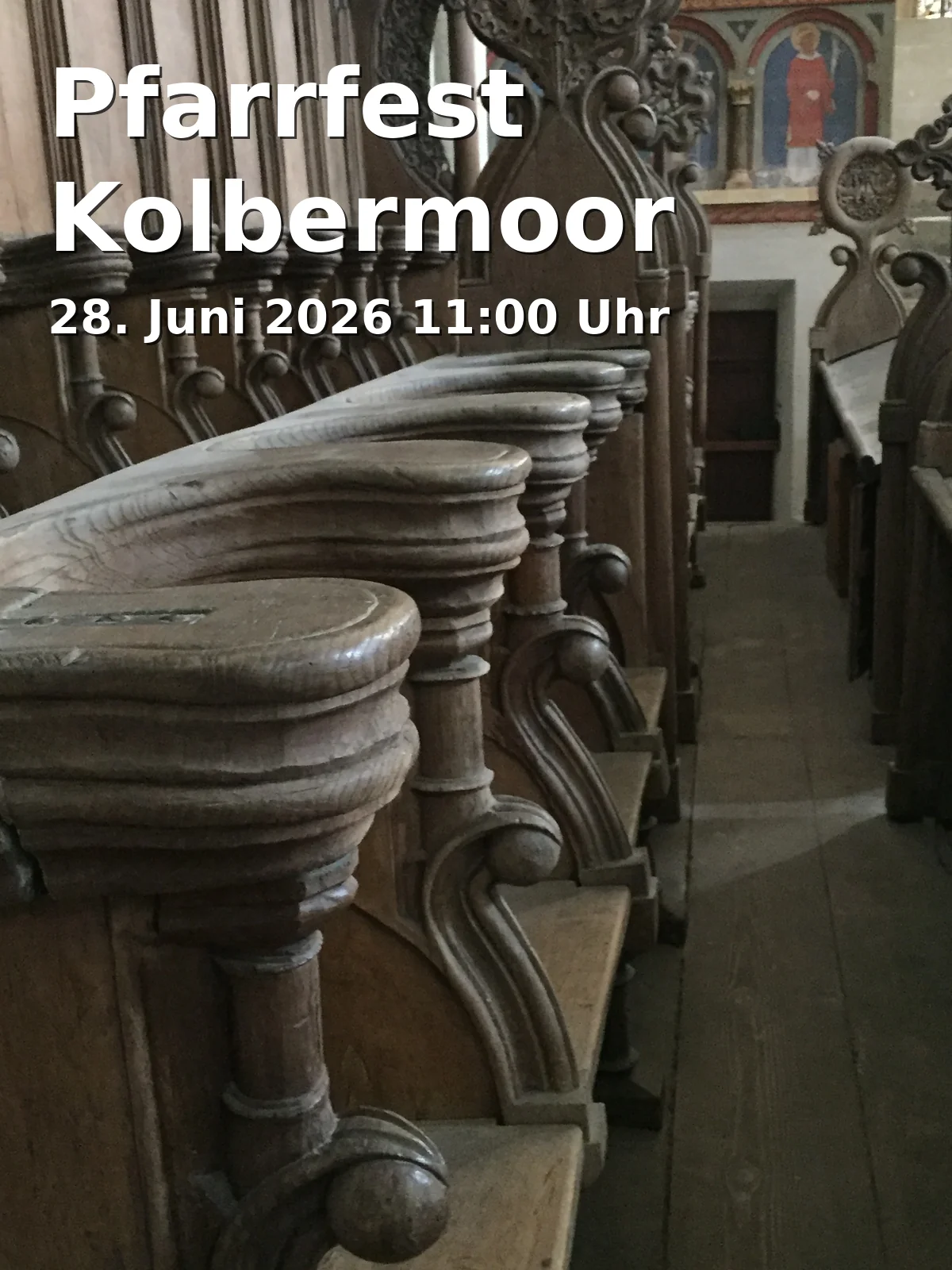
A heartfelt parish festival in Kolbermoor: Faith, Encounter, and Living Community in Christ's Return. 28.06.2026, Free Entry. #Kolbermoor #ParishFestival
String Sextet
A special chamber music evening in Kolbermoor: The String Sextet plays Schönberg and Tchaikovsky in the Church of the Second Coming of Christ. Admission free, donations welcome. #ChamberMusic
Frequently Asked Questions
Reviews
No reviews found