
Seebruck-Stöffling
Stöffling, 83376 Seeon-Seebruck, Germany
Celtic Farm Stöffling (Station 3) | Tree Path & Access
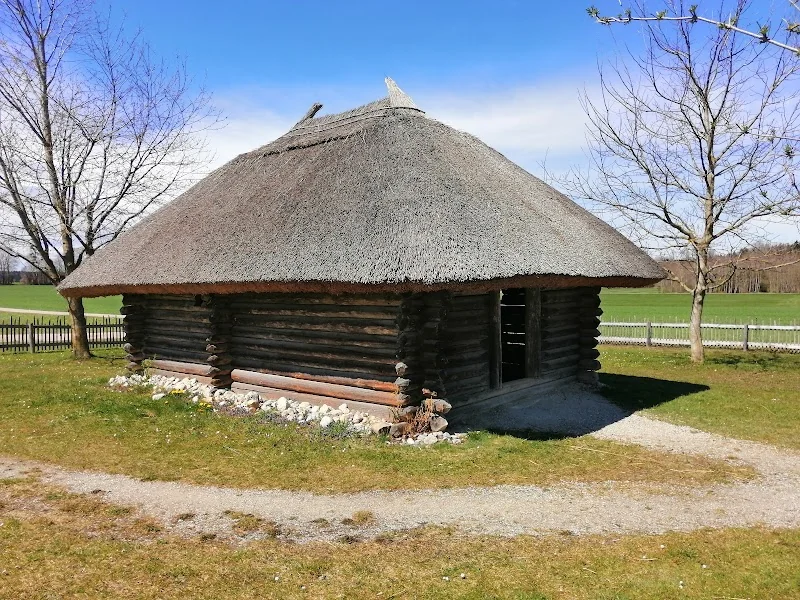
The Celtic Farm Stöffling is a place where history is not only told but also spatially experienced. In Stöffling near Truchtlaching, in the municipality of Seeon-Seebruck at Lake Chiemsee, there stands a reconstructed Celtic farmstead built on the original settlement site. Those who come here will not find a staged major attraction, but a clear, quiet historical site with a strong regional connection, embedded in the landscape between Alz, moor, and the paths of the Roman region Chiemsee. The official tourist info describes the farm as freely accessible year-round and simultaneously refers to the Tree Path, which connects the site with a scenic walking and hiking experience. This very mix is what makes it appealing: archaeology, nature, and an authentic sense of place without an entry barrier. For visitors searching for Celtic Farm Stöffling, Celtic Village Stöffling, Stöffling Celtic Settlement, or Station 3, this place is therefore a very fitting destination. ([seeon-seebruck.de](https://www.seeon-seebruck.de/keltengehoeft-stoeffling?utm_source=openai))
History and Reconstruction of the Celtic Farm Stöffling
The historical significance of the site begins long before today's reconstruction. Surface finds at the site in Stöffling indicate that a Celtic settlement existed here between the middle of the 3rd century BC and the 1st century BC, during the La Tène period. The region provides not only a general reference to early settlement but also concrete archaeological evidence: The official presentation of the Roman region Chiemsee mentions several thousand Celtic coins made of gold, silver, and other metals, as well as 24 nearly completely preserved brooches. Based on these finds, the settlement can be dated to approximately 250 to 30 BC. This makes the Celtic Farm Stöffling more than just a pretty replica; it stands at a location where archaeological evidence is particularly dense. In 2000, a reconstructed Celtic farmstead was built here to show early human settlement as realistically and vividly as possible. The intention is clear: visitors should not only read data but also be able to understand the life of their Celtic ancestors in terms of structure, scale, and landscape reference. The historical context extends far beyond the individual house, as the farm is part of a cultural landscape where prehistoric and early historical traces overlap. Thus, those who visit the site experience not just a single reconstruction object but a tangible slice of the long settlement history on the northern shore of Lake Chiemsee. ([seeon-seebruck.de](https://www.seeon-seebruck.de/keltengehoeft-stoeffling?utm_source=openai))
Especially for SEO-relevant search queries like Celtic Farm Upper Bavaria, Stöffling Celtic Settlement, or Celtic Farm Stöffling Seeon-Seebruck, this background is important because it clearly positions the site. The facility is not an abstract open-air object but a reconstruction on archaeologically secured terrain. This is the crucial difference from many thematic replicas: here, the story does not begin with the didactic idea but with the findings. The finds show that a settlement existed in Stöffling over a longer period, and the reconstruction in 2000 makes this finding visible for today's visitors. The embedding in the Roman region Chiemsee also emphasizes the historical density of the surroundings. Between Celtic past, Roman traces, and later cultural landscapes, a destination for excursions emerges that does not limit itself to a single image of an epoch. Those interested in archaeology, regional history, and early settlement will find here a place that conveys a lot in a short time while remaining easily accessible. That is precisely why the Celtic Farm Stöffling is so important as Station 3 of the archaeological circular route: it marks not only a point on a map but a real transition between research, reconstruction, and public communication. ([chiemsee-alpenland.de](https://www.chiemsee-alpenland.de/entdecken/alle-sehenswuerdigkeiten/keltengehoeft-stoeffling-roemerregion-chiemsee-0fdb2d2aac?utm_source=openai))
Visit for Free: Opening Hours, Admission, and Visitor Experience
A significant search incentive for the Celtic Farm Stöffling is the question of opening hours and admission. Here, the answer is pleasantly straightforward: the Celtic farm can be visited free of charge year-round. The official website of the municipality explicitly highlights that access is free, and the tourist flyer specifies the visiting time from sunrise to sunset. This means in practice above all one thing: there is no classic ticket office, no ticket window, and no tight event logic, but a place that can be spontaneously integrated into a day trip. For travelers, cyclists, families, and everyone who is flexible around Lake Chiemsee, this is a strong argument. The freedom in planning is also helpful, as there is no need to reserve a fixed slot; instead, the visit can be combined with a hike, a bike tour, or a detour into the surroundings. The official description also points out that a visit to the Roman Museum Bedaium in Seebruck, where numerous finds from the Celtic past are exhibited, is recommended afterward. Thus, the free access to the farm and the museum in the neighborhood creates a well-rounded combination. For search terms like visit for free, opening hours Celtic Farm Stöffling, or admission Celtic Farm Stöffling, the most important information can therefore be quickly found: the destination is freely accessible, open year-round, and particularly suitable for a flexible day trip. ([seeon-seebruck.de](https://www.seeon-seebruck.de/keltengehoeft-stoeffling?utm_source=openai))
Especially practical is the fact that the open visiting logic also makes daily planning easier. Those who visit the site in the morning experience the facility in a calm atmosphere; those who come in the late afternoon can easily combine the visit with a walk or a bike round. Since the tourist flyer mentions the period from sunrise to sunset, the farm is more to be understood as a daytime destination rather than an evening event location. This is part of its quality: it is a place where one can look around in peace, without time pressure from program points or ticket controls. The combination of free access, historical content, and scenic embedding makes the farm a very good destination for people seeking short but meaningful excursions. Especially in the region around Seeon-Seebruck, which is already characterized by bike paths, nature trails, and historical stations, the Celtic Farm works as a low-threshold attraction. So, for those looking for a destination without admission costs that also offers added value through knowledge and atmosphere, here is a remarkably clear answer. The search intention behind terms like Celtic Village Stöffling or open-air facility Seeon-Seebruck is thus very directly addressed. ([seeon-seebruck.de](https://www.seeon-seebruck.de/keltengehoeft-stoeffling?utm_source=openai))
Tree Path to the Celtic Farm Stöffling: Hiking through the Former Settlement Area
The Tree Path to the Celtic Farm Stöffling is more than just an access road; it is itself a substantive part of the visit. The official hiking trail leads approximately 3.5 kilometers in about 55 minutes through the Grabener Moor along the Alz and through the former settlement area of the Celts to Stöffling. The starting point is the rafting landing site on Haushoferstraße in Seebruck. So, those who do not arrive directly by bike or car already experience a small scenic introduction to the history of the site on the way there. The path is rated easy and is therefore generally suitable for a relaxed outing. At the same time, the tourist info explicitly points out that the path is not suitable for strollers or wheelchairs. This information is important because it shows that nature paths and barrier-free access are not identical. The Tree Path is particularly interesting because it picks up the Celtic perspective on trees and shrubs. The official description reminds us that trees had a special significance for the Celts: they were considered seats of the gods, the sacred center of the tribe, and places where justice was spoken, contracts negotiated, and even wars decided. Accordingly, the path conveys not only movement but also a cultural-historical connection between landscape and belief system. For search queries like Tree Path to the Celtic Farm Stöffling, access Celtic Farm Stöffling, or Celtic Village Stöffling, this is the central added value: one does not just arrive but experiences the journey as part of the story. ([seeon-seebruck.de](https://www.seeon-seebruck.de/baumweg-zum-keltengehoeft-stoeffling-1?utm_source=openai))
The Tree Path also fits very well with the typical forms of visits in the region. Seeon-Seebruck is strongly oriented towards cycling and hiking tours, and the Celtic Farm integrates into this network of nature and cultural paths. Those who have time can walk the path leisurely, take small breaks, and perceive the transitions between moor, river landscape, and settlement area. The fact that the route leads through the former settlement area of the Celts makes the geographical location vivid and gives the destination a historical framework that goes beyond mere viewing. The official site also mentions a tip for travel planning: a visit to the Roman Museum BEDAIUM with interesting guided tours and events. This way, the Tree Path becomes a building block in a larger discovery route between the epochs. For families, history enthusiasts, and cyclists, this is particularly attractive because the path is short enough for a stopover and dense enough in content for real added value. That is why it is worth thinking about the keywords Tree Path, Celtic Farm Stöffling, and Seeon-Seebruck together: they describe not only a place but a small historical experience space. ([seeon-seebruck.de](https://www.seeon-seebruck.de/baumweg-zum-keltengehoeft-stoeffling-1?utm_source=openai))
Parking, Starting Point, and Access to Stöffling
For practical planning, it is especially important where one can park and how to start the visit most sensibly. The official tourist info names the Haushoferstraße in Seebruck as the parking lot for the start of the Tree Path, specifically the parking lot at the rafting landing site behind the mini-golf course. This parking lot is open year-round, but from Easter to November, it is subject to fees daily from 8 AM to 7 PM. Additionally, it is designated as a shuttle bus stop in summer. Those visiting the Celtic Farm Stöffling as part of a day route thus have a clearly defined starting point. Especially for search terms like parking Haushoferstraße, parking Celtic Farm Stöffling, or access Stöffling, this information is crucial because it does not refer to a separate parking area directly at the reconstruction site but to the official access via Seebruck. The journey can also be organized using public transport: the tourist info describes the connection from Munich via the Munich-Salzburg railway line to Prien am Chiemsee and from there by bus 9520 to Seebruck Hotel Post or Seebruck Landing Stage. Coming from Salzburg, it is also possible to take bus 9520 to Seebruck via Traunstein. Thus, the site is also easily accessible without a car, provided one plans the footpath or the Tree Path as the last section. ([seeon-seebruck.de](https://www.seeon-seebruck.de/parkplatz-haushoferstrasse-seebruck?utm_source=openai))
For the visiting logic, this means: those who want to see the Celtic Farm should best plan a short walk or a light hike from Seebruck. This fits well with the character of the site, as the farm is designed as a landscape-embedded reconstruction and not as a large-scale developed event area. So, if you are looking for Celtic Farm Stöffling Seeon-Seebruck and especially need a stress-free access, the combination of parking at Haushoferstraße, Tree Path, and free access is the cleanest solution. The official tourism site also mentions that the farm is wonderfully accessible on foot via the Tree Path. This confirms that the site is intentionally designed as part of a network of paths. For cyclists, the location is also interesting because the visit can be connected with the archaeological and scenic environment of the municipality. Overall, the access is thus easy but not trivial: one gets there well but should understand the last section as a small excursion. That is part of its charm. The site does not require complex logistics, but it rewards those who want to experience it consciously through the path and not just the destination. ([seeon-seebruck.de](https://www.seeon-seebruck.de/baumweg-zum-keltengehoeft-stoeffling-1?utm_source=openai))
Archaeological Circular Route Seebruck: Station 3 in the Larger Historical Network
The Celtic Farm Stöffling is not just a single excursion destination but part of a larger historical context. The official page for the Archaeological Circular Route Seebruck describes the region as an ancient settlement and cultural land with numerous sites and some regionally significant archaeological monuments from prehistoric and early historical periods. The circular route leads through all three municipal parts and makes 4000 years of human history tangible. In this sequence, the Celtic Farm is classified as Station 3. Thus, it stands at the beginning of a historical narrative arc that ranges from Celtic settlement through Roman traces to later epochs. The official tour description also mentions a well-developed route that can be used as a cycling and experience path; in the detailed view, it appears with a length of 23.2 kilometers and an easy difficulty. This is relevant because it allows the Celtic Farm to be well integrated into a larger day round. Those visiting Station 3 cannot view the site in isolation but as a building block of an archaeological overall concept that makes history visible in space. For users searching for archaeological circular route Seeon-Seebruck or Station 3 Celtic Farm Stöffling, this classification is central. ([seeon-seebruck.de](https://www.seeon-seebruck.de/archaeologischer-rundweg?utm_source=openai))
The strength of the archaeological circular route lies in its ability to bring together different forms of learning about history. The Stöffling farm conveys the Celtic settlement phase, while other stations illuminate Roman infrastructure or later burial and settlement forms. This creates a network of places that does not explain the development of the region abstractly but directly connects to terrain, finds, and reconstructions. Particularly helpful is that the circular route is not designed as a pure expert route but remains understandable for visitors without prior knowledge. The short, well-described embedding in the municipality makes it easy to pick out individual stations or view the entire circular route as a project. Those with little time can choose Station 3 as a compact entry point; those with more time can build the rest of the circular route around it. The fact that the Celtic Farm is also listed on the official overview of attractions as open today and as a year-round destination underscores its importance in the local excursion offerings. From an SEO perspective, this is a clear advantage because terms like Archaeological Circular Route Seebruck, Celtic Farm Stöffling Station 3, and Roman Region Chiemsee are closely related in content. The search intention behind them is usually the same: to find a historical destination that is scientifically grounded, easily accessible, and feasible in everyday life. This combination is particularly well fulfilled by Station 3. ([seeon-seebruck.de](https://www.seeon-seebruck.de/sehenswertes?utm_source=openai))
Accessibility, Families, and the Right Conclusion with the Roman Museum Bedaium
For many visitors, not only the history is important, but also the question of how well the site functions in everyday life. Here, the official tourism site provides encouraging information: For the Celtic Farm Stöffling, a step-free access and a disabled-friendly toilet are mentioned. At the same time, one must honestly classify the path, as the Tree Path itself is not suitable for strollers or wheelchairs according to the official description. This means in practice: the facility can be barrier-free on site, but the scenic access via the Tree Path is not. This difference is important for planning and should be clearly considered in search queries like barrier-free Celtic Farm Stöffling or stroller Stöffling. For families, the site is still very attractive because the history is vividly conveyed and the region is explicitly presented as a destination for young and old alike. On the official site and in the tourism overviews, the Celtic Farm is described as an exciting place for both children and adults, and the region also refers to adventure afternoons around the life of the Celts. This makes the destination particularly valuable for an informative yet not overloaded family outing. ([chiemsee-alpenland.de](https://www.chiemsee-alpenland.de/entdecken/alle-sehenswuerdigkeiten/keltengehoeft-stoeffling-roemerregion-chiemsee-0fdb2d2aac?utm_source=openai))
Those looking to round off their trip should plan a visit to the Roman Museum Bedaium in Seebruck. The official tourist info explicitly recommends visiting it after the Celtic Farm, as numerous artifacts from the Celtic past can be seen there. This connection is particularly strong in content: first the reconstruction in Stöffling, then the archaeological original finds in the museum. Thus, a short stop becomes a well-rounded historical visit. For travelers with strollers, the combination can also be sensible, as the museum and the local areas are more accessible than the Tree Path. Those using the site only as a stopover on a cycling or hiking tour will find in the museum a good complement for the rest of the day. Overall, this creates a very clear added value: the Celtic Farm Stöffling is freely accessible, historically grounded, beautifully embedded in the landscape, and interesting for many target groups, as long as one plans the path realistically. This makes the site highly relevant for users with search terms like Celtic Village Stöffling, Celtic Farm Upper Bavaria, or open-air facility Seeon-Seebruck. The site is small enough for a spontaneous visit and rich enough in context to remain memorable. ([seeon-seebruck.de](https://www.seeon-seebruck.de/keltengehoeft-stoeffling?utm_source=openai))
Sources:
- Seeon-Seebruck Tourism: Celtic Farm Stöffling. ([seeon-seebruck.de](https://www.seeon-seebruck.de/keltengehoeft-stoeffling?utm_source=openai))
- Seeon-Seebruck Tourism: Tree Path to the Celtic Farm Stöffling. ([seeon-seebruck.de](https://www.seeon-seebruck.de/baumweg-zum-keltengehoeft-stoeffling-1?utm_source=openai))
- Seeon-Seebruck Tourism: Archaeological Circular Route Seebruck. ([seeon-seebruck.de](https://www.seeon-seebruck.de/archaeologischer-rundweg?utm_source=openai))
- Chiemsee-Alpenland Tourism: Celtic Farm Stöffling - Roman Region Chiemsee. ([chiemsee-alpenland.de](https://www.chiemsee-alpenland.de/entdecken/alle-sehenswuerdigkeiten/keltengehoeft-stoeffling-roemerregion-chiemsee-0fdb2d2aac?utm_source=openai))
- Seeon-Seebruck Tourism: Parking Haushoferstraße / Seebruck. ([seeon-seebruck.de](https://www.seeon-seebruck.de/parkplatz-haushoferstrasse-seebruck?utm_source=openai))
Show moreShow less
Celtic Farm Stöffling (Station 3) | Tree Path & Access
The Celtic Farm Stöffling is a place where history is not only told but also spatially experienced. In Stöffling near Truchtlaching, in the municipality of Seeon-Seebruck at Lake Chiemsee, there stands a reconstructed Celtic farmstead built on the original settlement site. Those who come here will not find a staged major attraction, but a clear, quiet historical site with a strong regional connection, embedded in the landscape between Alz, moor, and the paths of the Roman region Chiemsee. The official tourist info describes the farm as freely accessible year-round and simultaneously refers to the Tree Path, which connects the site with a scenic walking and hiking experience. This very mix is what makes it appealing: archaeology, nature, and an authentic sense of place without an entry barrier. For visitors searching for Celtic Farm Stöffling, Celtic Village Stöffling, Stöffling Celtic Settlement, or Station 3, this place is therefore a very fitting destination. ([seeon-seebruck.de](https://www.seeon-seebruck.de/keltengehoeft-stoeffling?utm_source=openai))
History and Reconstruction of the Celtic Farm Stöffling
The historical significance of the site begins long before today's reconstruction. Surface finds at the site in Stöffling indicate that a Celtic settlement existed here between the middle of the 3rd century BC and the 1st century BC, during the La Tène period. The region provides not only a general reference to early settlement but also concrete archaeological evidence: The official presentation of the Roman region Chiemsee mentions several thousand Celtic coins made of gold, silver, and other metals, as well as 24 nearly completely preserved brooches. Based on these finds, the settlement can be dated to approximately 250 to 30 BC. This makes the Celtic Farm Stöffling more than just a pretty replica; it stands at a location where archaeological evidence is particularly dense. In 2000, a reconstructed Celtic farmstead was built here to show early human settlement as realistically and vividly as possible. The intention is clear: visitors should not only read data but also be able to understand the life of their Celtic ancestors in terms of structure, scale, and landscape reference. The historical context extends far beyond the individual house, as the farm is part of a cultural landscape where prehistoric and early historical traces overlap. Thus, those who visit the site experience not just a single reconstruction object but a tangible slice of the long settlement history on the northern shore of Lake Chiemsee. ([seeon-seebruck.de](https://www.seeon-seebruck.de/keltengehoeft-stoeffling?utm_source=openai))
Especially for SEO-relevant search queries like Celtic Farm Upper Bavaria, Stöffling Celtic Settlement, or Celtic Farm Stöffling Seeon-Seebruck, this background is important because it clearly positions the site. The facility is not an abstract open-air object but a reconstruction on archaeologically secured terrain. This is the crucial difference from many thematic replicas: here, the story does not begin with the didactic idea but with the findings. The finds show that a settlement existed in Stöffling over a longer period, and the reconstruction in 2000 makes this finding visible for today's visitors. The embedding in the Roman region Chiemsee also emphasizes the historical density of the surroundings. Between Celtic past, Roman traces, and later cultural landscapes, a destination for excursions emerges that does not limit itself to a single image of an epoch. Those interested in archaeology, regional history, and early settlement will find here a place that conveys a lot in a short time while remaining easily accessible. That is precisely why the Celtic Farm Stöffling is so important as Station 3 of the archaeological circular route: it marks not only a point on a map but a real transition between research, reconstruction, and public communication. ([chiemsee-alpenland.de](https://www.chiemsee-alpenland.de/entdecken/alle-sehenswuerdigkeiten/keltengehoeft-stoeffling-roemerregion-chiemsee-0fdb2d2aac?utm_source=openai))
Visit for Free: Opening Hours, Admission, and Visitor Experience
A significant search incentive for the Celtic Farm Stöffling is the question of opening hours and admission. Here, the answer is pleasantly straightforward: the Celtic farm can be visited free of charge year-round. The official website of the municipality explicitly highlights that access is free, and the tourist flyer specifies the visiting time from sunrise to sunset. This means in practice above all one thing: there is no classic ticket office, no ticket window, and no tight event logic, but a place that can be spontaneously integrated into a day trip. For travelers, cyclists, families, and everyone who is flexible around Lake Chiemsee, this is a strong argument. The freedom in planning is also helpful, as there is no need to reserve a fixed slot; instead, the visit can be combined with a hike, a bike tour, or a detour into the surroundings. The official description also points out that a visit to the Roman Museum Bedaium in Seebruck, where numerous finds from the Celtic past are exhibited, is recommended afterward. Thus, the free access to the farm and the museum in the neighborhood creates a well-rounded combination. For search terms like visit for free, opening hours Celtic Farm Stöffling, or admission Celtic Farm Stöffling, the most important information can therefore be quickly found: the destination is freely accessible, open year-round, and particularly suitable for a flexible day trip. ([seeon-seebruck.de](https://www.seeon-seebruck.de/keltengehoeft-stoeffling?utm_source=openai))
Especially practical is the fact that the open visiting logic also makes daily planning easier. Those who visit the site in the morning experience the facility in a calm atmosphere; those who come in the late afternoon can easily combine the visit with a walk or a bike round. Since the tourist flyer mentions the period from sunrise to sunset, the farm is more to be understood as a daytime destination rather than an evening event location. This is part of its quality: it is a place where one can look around in peace, without time pressure from program points or ticket controls. The combination of free access, historical content, and scenic embedding makes the farm a very good destination for people seeking short but meaningful excursions. Especially in the region around Seeon-Seebruck, which is already characterized by bike paths, nature trails, and historical stations, the Celtic Farm works as a low-threshold attraction. So, for those looking for a destination without admission costs that also offers added value through knowledge and atmosphere, here is a remarkably clear answer. The search intention behind terms like Celtic Village Stöffling or open-air facility Seeon-Seebruck is thus very directly addressed. ([seeon-seebruck.de](https://www.seeon-seebruck.de/keltengehoeft-stoeffling?utm_source=openai))
Tree Path to the Celtic Farm Stöffling: Hiking through the Former Settlement Area
The Tree Path to the Celtic Farm Stöffling is more than just an access road; it is itself a substantive part of the visit. The official hiking trail leads approximately 3.5 kilometers in about 55 minutes through the Grabener Moor along the Alz and through the former settlement area of the Celts to Stöffling. The starting point is the rafting landing site on Haushoferstraße in Seebruck. So, those who do not arrive directly by bike or car already experience a small scenic introduction to the history of the site on the way there. The path is rated easy and is therefore generally suitable for a relaxed outing. At the same time, the tourist info explicitly points out that the path is not suitable for strollers or wheelchairs. This information is important because it shows that nature paths and barrier-free access are not identical. The Tree Path is particularly interesting because it picks up the Celtic perspective on trees and shrubs. The official description reminds us that trees had a special significance for the Celts: they were considered seats of the gods, the sacred center of the tribe, and places where justice was spoken, contracts negotiated, and even wars decided. Accordingly, the path conveys not only movement but also a cultural-historical connection between landscape and belief system. For search queries like Tree Path to the Celtic Farm Stöffling, access Celtic Farm Stöffling, or Celtic Village Stöffling, this is the central added value: one does not just arrive but experiences the journey as part of the story. ([seeon-seebruck.de](https://www.seeon-seebruck.de/baumweg-zum-keltengehoeft-stoeffling-1?utm_source=openai))
The Tree Path also fits very well with the typical forms of visits in the region. Seeon-Seebruck is strongly oriented towards cycling and hiking tours, and the Celtic Farm integrates into this network of nature and cultural paths. Those who have time can walk the path leisurely, take small breaks, and perceive the transitions between moor, river landscape, and settlement area. The fact that the route leads through the former settlement area of the Celts makes the geographical location vivid and gives the destination a historical framework that goes beyond mere viewing. The official site also mentions a tip for travel planning: a visit to the Roman Museum BEDAIUM with interesting guided tours and events. This way, the Tree Path becomes a building block in a larger discovery route between the epochs. For families, history enthusiasts, and cyclists, this is particularly attractive because the path is short enough for a stopover and dense enough in content for real added value. That is why it is worth thinking about the keywords Tree Path, Celtic Farm Stöffling, and Seeon-Seebruck together: they describe not only a place but a small historical experience space. ([seeon-seebruck.de](https://www.seeon-seebruck.de/baumweg-zum-keltengehoeft-stoeffling-1?utm_source=openai))
Parking, Starting Point, and Access to Stöffling
For practical planning, it is especially important where one can park and how to start the visit most sensibly. The official tourist info names the Haushoferstraße in Seebruck as the parking lot for the start of the Tree Path, specifically the parking lot at the rafting landing site behind the mini-golf course. This parking lot is open year-round, but from Easter to November, it is subject to fees daily from 8 AM to 7 PM. Additionally, it is designated as a shuttle bus stop in summer. Those visiting the Celtic Farm Stöffling as part of a day route thus have a clearly defined starting point. Especially for search terms like parking Haushoferstraße, parking Celtic Farm Stöffling, or access Stöffling, this information is crucial because it does not refer to a separate parking area directly at the reconstruction site but to the official access via Seebruck. The journey can also be organized using public transport: the tourist info describes the connection from Munich via the Munich-Salzburg railway line to Prien am Chiemsee and from there by bus 9520 to Seebruck Hotel Post or Seebruck Landing Stage. Coming from Salzburg, it is also possible to take bus 9520 to Seebruck via Traunstein. Thus, the site is also easily accessible without a car, provided one plans the footpath or the Tree Path as the last section. ([seeon-seebruck.de](https://www.seeon-seebruck.de/parkplatz-haushoferstrasse-seebruck?utm_source=openai))
For the visiting logic, this means: those who want to see the Celtic Farm should best plan a short walk or a light hike from Seebruck. This fits well with the character of the site, as the farm is designed as a landscape-embedded reconstruction and not as a large-scale developed event area. So, if you are looking for Celtic Farm Stöffling Seeon-Seebruck and especially need a stress-free access, the combination of parking at Haushoferstraße, Tree Path, and free access is the cleanest solution. The official tourism site also mentions that the farm is wonderfully accessible on foot via the Tree Path. This confirms that the site is intentionally designed as part of a network of paths. For cyclists, the location is also interesting because the visit can be connected with the archaeological and scenic environment of the municipality. Overall, the access is thus easy but not trivial: one gets there well but should understand the last section as a small excursion. That is part of its charm. The site does not require complex logistics, but it rewards those who want to experience it consciously through the path and not just the destination. ([seeon-seebruck.de](https://www.seeon-seebruck.de/baumweg-zum-keltengehoeft-stoeffling-1?utm_source=openai))
Archaeological Circular Route Seebruck: Station 3 in the Larger Historical Network
The Celtic Farm Stöffling is not just a single excursion destination but part of a larger historical context. The official page for the Archaeological Circular Route Seebruck describes the region as an ancient settlement and cultural land with numerous sites and some regionally significant archaeological monuments from prehistoric and early historical periods. The circular route leads through all three municipal parts and makes 4000 years of human history tangible. In this sequence, the Celtic Farm is classified as Station 3. Thus, it stands at the beginning of a historical narrative arc that ranges from Celtic settlement through Roman traces to later epochs. The official tour description also mentions a well-developed route that can be used as a cycling and experience path; in the detailed view, it appears with a length of 23.2 kilometers and an easy difficulty. This is relevant because it allows the Celtic Farm to be well integrated into a larger day round. Those visiting Station 3 cannot view the site in isolation but as a building block of an archaeological overall concept that makes history visible in space. For users searching for archaeological circular route Seeon-Seebruck or Station 3 Celtic Farm Stöffling, this classification is central. ([seeon-seebruck.de](https://www.seeon-seebruck.de/archaeologischer-rundweg?utm_source=openai))
The strength of the archaeological circular route lies in its ability to bring together different forms of learning about history. The Stöffling farm conveys the Celtic settlement phase, while other stations illuminate Roman infrastructure or later burial and settlement forms. This creates a network of places that does not explain the development of the region abstractly but directly connects to terrain, finds, and reconstructions. Particularly helpful is that the circular route is not designed as a pure expert route but remains understandable for visitors without prior knowledge. The short, well-described embedding in the municipality makes it easy to pick out individual stations or view the entire circular route as a project. Those with little time can choose Station 3 as a compact entry point; those with more time can build the rest of the circular route around it. The fact that the Celtic Farm is also listed on the official overview of attractions as open today and as a year-round destination underscores its importance in the local excursion offerings. From an SEO perspective, this is a clear advantage because terms like Archaeological Circular Route Seebruck, Celtic Farm Stöffling Station 3, and Roman Region Chiemsee are closely related in content. The search intention behind them is usually the same: to find a historical destination that is scientifically grounded, easily accessible, and feasible in everyday life. This combination is particularly well fulfilled by Station 3. ([seeon-seebruck.de](https://www.seeon-seebruck.de/sehenswertes?utm_source=openai))
Accessibility, Families, and the Right Conclusion with the Roman Museum Bedaium
For many visitors, not only the history is important, but also the question of how well the site functions in everyday life. Here, the official tourism site provides encouraging information: For the Celtic Farm Stöffling, a step-free access and a disabled-friendly toilet are mentioned. At the same time, one must honestly classify the path, as the Tree Path itself is not suitable for strollers or wheelchairs according to the official description. This means in practice: the facility can be barrier-free on site, but the scenic access via the Tree Path is not. This difference is important for planning and should be clearly considered in search queries like barrier-free Celtic Farm Stöffling or stroller Stöffling. For families, the site is still very attractive because the history is vividly conveyed and the region is explicitly presented as a destination for young and old alike. On the official site and in the tourism overviews, the Celtic Farm is described as an exciting place for both children and adults, and the region also refers to adventure afternoons around the life of the Celts. This makes the destination particularly valuable for an informative yet not overloaded family outing. ([chiemsee-alpenland.de](https://www.chiemsee-alpenland.de/entdecken/alle-sehenswuerdigkeiten/keltengehoeft-stoeffling-roemerregion-chiemsee-0fdb2d2aac?utm_source=openai))
Those looking to round off their trip should plan a visit to the Roman Museum Bedaium in Seebruck. The official tourist info explicitly recommends visiting it after the Celtic Farm, as numerous artifacts from the Celtic past can be seen there. This connection is particularly strong in content: first the reconstruction in Stöffling, then the archaeological original finds in the museum. Thus, a short stop becomes a well-rounded historical visit. For travelers with strollers, the combination can also be sensible, as the museum and the local areas are more accessible than the Tree Path. Those using the site only as a stopover on a cycling or hiking tour will find in the museum a good complement for the rest of the day. Overall, this creates a very clear added value: the Celtic Farm Stöffling is freely accessible, historically grounded, beautifully embedded in the landscape, and interesting for many target groups, as long as one plans the path realistically. This makes the site highly relevant for users with search terms like Celtic Village Stöffling, Celtic Farm Upper Bavaria, or open-air facility Seeon-Seebruck. The site is small enough for a spontaneous visit and rich enough in context to remain memorable. ([seeon-seebruck.de](https://www.seeon-seebruck.de/keltengehoeft-stoeffling?utm_source=openai))
Sources:
- Seeon-Seebruck Tourism: Celtic Farm Stöffling. ([seeon-seebruck.de](https://www.seeon-seebruck.de/keltengehoeft-stoeffling?utm_source=openai))
- Seeon-Seebruck Tourism: Tree Path to the Celtic Farm Stöffling. ([seeon-seebruck.de](https://www.seeon-seebruck.de/baumweg-zum-keltengehoeft-stoeffling-1?utm_source=openai))
- Seeon-Seebruck Tourism: Archaeological Circular Route Seebruck. ([seeon-seebruck.de](https://www.seeon-seebruck.de/archaeologischer-rundweg?utm_source=openai))
- Chiemsee-Alpenland Tourism: Celtic Farm Stöffling - Roman Region Chiemsee. ([chiemsee-alpenland.de](https://www.chiemsee-alpenland.de/entdecken/alle-sehenswuerdigkeiten/keltengehoeft-stoeffling-roemerregion-chiemsee-0fdb2d2aac?utm_source=openai))
- Seeon-Seebruck Tourism: Parking Haushoferstraße / Seebruck. ([seeon-seebruck.de](https://www.seeon-seebruck.de/parkplatz-haushoferstrasse-seebruck?utm_source=openai))
Celtic Farm Stöffling (Station 3) | Tree Path & Access
The Celtic Farm Stöffling is a place where history is not only told but also spatially experienced. In Stöffling near Truchtlaching, in the municipality of Seeon-Seebruck at Lake Chiemsee, there stands a reconstructed Celtic farmstead built on the original settlement site. Those who come here will not find a staged major attraction, but a clear, quiet historical site with a strong regional connection, embedded in the landscape between Alz, moor, and the paths of the Roman region Chiemsee. The official tourist info describes the farm as freely accessible year-round and simultaneously refers to the Tree Path, which connects the site with a scenic walking and hiking experience. This very mix is what makes it appealing: archaeology, nature, and an authentic sense of place without an entry barrier. For visitors searching for Celtic Farm Stöffling, Celtic Village Stöffling, Stöffling Celtic Settlement, or Station 3, this place is therefore a very fitting destination. ([seeon-seebruck.de](https://www.seeon-seebruck.de/keltengehoeft-stoeffling?utm_source=openai))
History and Reconstruction of the Celtic Farm Stöffling
The historical significance of the site begins long before today's reconstruction. Surface finds at the site in Stöffling indicate that a Celtic settlement existed here between the middle of the 3rd century BC and the 1st century BC, during the La Tène period. The region provides not only a general reference to early settlement but also concrete archaeological evidence: The official presentation of the Roman region Chiemsee mentions several thousand Celtic coins made of gold, silver, and other metals, as well as 24 nearly completely preserved brooches. Based on these finds, the settlement can be dated to approximately 250 to 30 BC. This makes the Celtic Farm Stöffling more than just a pretty replica; it stands at a location where archaeological evidence is particularly dense. In 2000, a reconstructed Celtic farmstead was built here to show early human settlement as realistically and vividly as possible. The intention is clear: visitors should not only read data but also be able to understand the life of their Celtic ancestors in terms of structure, scale, and landscape reference. The historical context extends far beyond the individual house, as the farm is part of a cultural landscape where prehistoric and early historical traces overlap. Thus, those who visit the site experience not just a single reconstruction object but a tangible slice of the long settlement history on the northern shore of Lake Chiemsee. ([seeon-seebruck.de](https://www.seeon-seebruck.de/keltengehoeft-stoeffling?utm_source=openai))
Especially for SEO-relevant search queries like Celtic Farm Upper Bavaria, Stöffling Celtic Settlement, or Celtic Farm Stöffling Seeon-Seebruck, this background is important because it clearly positions the site. The facility is not an abstract open-air object but a reconstruction on archaeologically secured terrain. This is the crucial difference from many thematic replicas: here, the story does not begin with the didactic idea but with the findings. The finds show that a settlement existed in Stöffling over a longer period, and the reconstruction in 2000 makes this finding visible for today's visitors. The embedding in the Roman region Chiemsee also emphasizes the historical density of the surroundings. Between Celtic past, Roman traces, and later cultural landscapes, a destination for excursions emerges that does not limit itself to a single image of an epoch. Those interested in archaeology, regional history, and early settlement will find here a place that conveys a lot in a short time while remaining easily accessible. That is precisely why the Celtic Farm Stöffling is so important as Station 3 of the archaeological circular route: it marks not only a point on a map but a real transition between research, reconstruction, and public communication. ([chiemsee-alpenland.de](https://www.chiemsee-alpenland.de/entdecken/alle-sehenswuerdigkeiten/keltengehoeft-stoeffling-roemerregion-chiemsee-0fdb2d2aac?utm_source=openai))
Visit for Free: Opening Hours, Admission, and Visitor Experience
A significant search incentive for the Celtic Farm Stöffling is the question of opening hours and admission. Here, the answer is pleasantly straightforward: the Celtic farm can be visited free of charge year-round. The official website of the municipality explicitly highlights that access is free, and the tourist flyer specifies the visiting time from sunrise to sunset. This means in practice above all one thing: there is no classic ticket office, no ticket window, and no tight event logic, but a place that can be spontaneously integrated into a day trip. For travelers, cyclists, families, and everyone who is flexible around Lake Chiemsee, this is a strong argument. The freedom in planning is also helpful, as there is no need to reserve a fixed slot; instead, the visit can be combined with a hike, a bike tour, or a detour into the surroundings. The official description also points out that a visit to the Roman Museum Bedaium in Seebruck, where numerous finds from the Celtic past are exhibited, is recommended afterward. Thus, the free access to the farm and the museum in the neighborhood creates a well-rounded combination. For search terms like visit for free, opening hours Celtic Farm Stöffling, or admission Celtic Farm Stöffling, the most important information can therefore be quickly found: the destination is freely accessible, open year-round, and particularly suitable for a flexible day trip. ([seeon-seebruck.de](https://www.seeon-seebruck.de/keltengehoeft-stoeffling?utm_source=openai))
Especially practical is the fact that the open visiting logic also makes daily planning easier. Those who visit the site in the morning experience the facility in a calm atmosphere; those who come in the late afternoon can easily combine the visit with a walk or a bike round. Since the tourist flyer mentions the period from sunrise to sunset, the farm is more to be understood as a daytime destination rather than an evening event location. This is part of its quality: it is a place where one can look around in peace, without time pressure from program points or ticket controls. The combination of free access, historical content, and scenic embedding makes the farm a very good destination for people seeking short but meaningful excursions. Especially in the region around Seeon-Seebruck, which is already characterized by bike paths, nature trails, and historical stations, the Celtic Farm works as a low-threshold attraction. So, for those looking for a destination without admission costs that also offers added value through knowledge and atmosphere, here is a remarkably clear answer. The search intention behind terms like Celtic Village Stöffling or open-air facility Seeon-Seebruck is thus very directly addressed. ([seeon-seebruck.de](https://www.seeon-seebruck.de/keltengehoeft-stoeffling?utm_source=openai))
Tree Path to the Celtic Farm Stöffling: Hiking through the Former Settlement Area
The Tree Path to the Celtic Farm Stöffling is more than just an access road; it is itself a substantive part of the visit. The official hiking trail leads approximately 3.5 kilometers in about 55 minutes through the Grabener Moor along the Alz and through the former settlement area of the Celts to Stöffling. The starting point is the rafting landing site on Haushoferstraße in Seebruck. So, those who do not arrive directly by bike or car already experience a small scenic introduction to the history of the site on the way there. The path is rated easy and is therefore generally suitable for a relaxed outing. At the same time, the tourist info explicitly points out that the path is not suitable for strollers or wheelchairs. This information is important because it shows that nature paths and barrier-free access are not identical. The Tree Path is particularly interesting because it picks up the Celtic perspective on trees and shrubs. The official description reminds us that trees had a special significance for the Celts: they were considered seats of the gods, the sacred center of the tribe, and places where justice was spoken, contracts negotiated, and even wars decided. Accordingly, the path conveys not only movement but also a cultural-historical connection between landscape and belief system. For search queries like Tree Path to the Celtic Farm Stöffling, access Celtic Farm Stöffling, or Celtic Village Stöffling, this is the central added value: one does not just arrive but experiences the journey as part of the story. ([seeon-seebruck.de](https://www.seeon-seebruck.de/baumweg-zum-keltengehoeft-stoeffling-1?utm_source=openai))
The Tree Path also fits very well with the typical forms of visits in the region. Seeon-Seebruck is strongly oriented towards cycling and hiking tours, and the Celtic Farm integrates into this network of nature and cultural paths. Those who have time can walk the path leisurely, take small breaks, and perceive the transitions between moor, river landscape, and settlement area. The fact that the route leads through the former settlement area of the Celts makes the geographical location vivid and gives the destination a historical framework that goes beyond mere viewing. The official site also mentions a tip for travel planning: a visit to the Roman Museum BEDAIUM with interesting guided tours and events. This way, the Tree Path becomes a building block in a larger discovery route between the epochs. For families, history enthusiasts, and cyclists, this is particularly attractive because the path is short enough for a stopover and dense enough in content for real added value. That is why it is worth thinking about the keywords Tree Path, Celtic Farm Stöffling, and Seeon-Seebruck together: they describe not only a place but a small historical experience space. ([seeon-seebruck.de](https://www.seeon-seebruck.de/baumweg-zum-keltengehoeft-stoeffling-1?utm_source=openai))
Parking, Starting Point, and Access to Stöffling
For practical planning, it is especially important where one can park and how to start the visit most sensibly. The official tourist info names the Haushoferstraße in Seebruck as the parking lot for the start of the Tree Path, specifically the parking lot at the rafting landing site behind the mini-golf course. This parking lot is open year-round, but from Easter to November, it is subject to fees daily from 8 AM to 7 PM. Additionally, it is designated as a shuttle bus stop in summer. Those visiting the Celtic Farm Stöffling as part of a day route thus have a clearly defined starting point. Especially for search terms like parking Haushoferstraße, parking Celtic Farm Stöffling, or access Stöffling, this information is crucial because it does not refer to a separate parking area directly at the reconstruction site but to the official access via Seebruck. The journey can also be organized using public transport: the tourist info describes the connection from Munich via the Munich-Salzburg railway line to Prien am Chiemsee and from there by bus 9520 to Seebruck Hotel Post or Seebruck Landing Stage. Coming from Salzburg, it is also possible to take bus 9520 to Seebruck via Traunstein. Thus, the site is also easily accessible without a car, provided one plans the footpath or the Tree Path as the last section. ([seeon-seebruck.de](https://www.seeon-seebruck.de/parkplatz-haushoferstrasse-seebruck?utm_source=openai))
For the visiting logic, this means: those who want to see the Celtic Farm should best plan a short walk or a light hike from Seebruck. This fits well with the character of the site, as the farm is designed as a landscape-embedded reconstruction and not as a large-scale developed event area. So, if you are looking for Celtic Farm Stöffling Seeon-Seebruck and especially need a stress-free access, the combination of parking at Haushoferstraße, Tree Path, and free access is the cleanest solution. The official tourism site also mentions that the farm is wonderfully accessible on foot via the Tree Path. This confirms that the site is intentionally designed as part of a network of paths. For cyclists, the location is also interesting because the visit can be connected with the archaeological and scenic environment of the municipality. Overall, the access is thus easy but not trivial: one gets there well but should understand the last section as a small excursion. That is part of its charm. The site does not require complex logistics, but it rewards those who want to experience it consciously through the path and not just the destination. ([seeon-seebruck.de](https://www.seeon-seebruck.de/baumweg-zum-keltengehoeft-stoeffling-1?utm_source=openai))
Archaeological Circular Route Seebruck: Station 3 in the Larger Historical Network
The Celtic Farm Stöffling is not just a single excursion destination but part of a larger historical context. The official page for the Archaeological Circular Route Seebruck describes the region as an ancient settlement and cultural land with numerous sites and some regionally significant archaeological monuments from prehistoric and early historical periods. The circular route leads through all three municipal parts and makes 4000 years of human history tangible. In this sequence, the Celtic Farm is classified as Station 3. Thus, it stands at the beginning of a historical narrative arc that ranges from Celtic settlement through Roman traces to later epochs. The official tour description also mentions a well-developed route that can be used as a cycling and experience path; in the detailed view, it appears with a length of 23.2 kilometers and an easy difficulty. This is relevant because it allows the Celtic Farm to be well integrated into a larger day round. Those visiting Station 3 cannot view the site in isolation but as a building block of an archaeological overall concept that makes history visible in space. For users searching for archaeological circular route Seeon-Seebruck or Station 3 Celtic Farm Stöffling, this classification is central. ([seeon-seebruck.de](https://www.seeon-seebruck.de/archaeologischer-rundweg?utm_source=openai))
The strength of the archaeological circular route lies in its ability to bring together different forms of learning about history. The Stöffling farm conveys the Celtic settlement phase, while other stations illuminate Roman infrastructure or later burial and settlement forms. This creates a network of places that does not explain the development of the region abstractly but directly connects to terrain, finds, and reconstructions. Particularly helpful is that the circular route is not designed as a pure expert route but remains understandable for visitors without prior knowledge. The short, well-described embedding in the municipality makes it easy to pick out individual stations or view the entire circular route as a project. Those with little time can choose Station 3 as a compact entry point; those with more time can build the rest of the circular route around it. The fact that the Celtic Farm is also listed on the official overview of attractions as open today and as a year-round destination underscores its importance in the local excursion offerings. From an SEO perspective, this is a clear advantage because terms like Archaeological Circular Route Seebruck, Celtic Farm Stöffling Station 3, and Roman Region Chiemsee are closely related in content. The search intention behind them is usually the same: to find a historical destination that is scientifically grounded, easily accessible, and feasible in everyday life. This combination is particularly well fulfilled by Station 3. ([seeon-seebruck.de](https://www.seeon-seebruck.de/sehenswertes?utm_source=openai))
Accessibility, Families, and the Right Conclusion with the Roman Museum Bedaium
For many visitors, not only the history is important, but also the question of how well the site functions in everyday life. Here, the official tourism site provides encouraging information: For the Celtic Farm Stöffling, a step-free access and a disabled-friendly toilet are mentioned. At the same time, one must honestly classify the path, as the Tree Path itself is not suitable for strollers or wheelchairs according to the official description. This means in practice: the facility can be barrier-free on site, but the scenic access via the Tree Path is not. This difference is important for planning and should be clearly considered in search queries like barrier-free Celtic Farm Stöffling or stroller Stöffling. For families, the site is still very attractive because the history is vividly conveyed and the region is explicitly presented as a destination for young and old alike. On the official site and in the tourism overviews, the Celtic Farm is described as an exciting place for both children and adults, and the region also refers to adventure afternoons around the life of the Celts. This makes the destination particularly valuable for an informative yet not overloaded family outing. ([chiemsee-alpenland.de](https://www.chiemsee-alpenland.de/entdecken/alle-sehenswuerdigkeiten/keltengehoeft-stoeffling-roemerregion-chiemsee-0fdb2d2aac?utm_source=openai))
Those looking to round off their trip should plan a visit to the Roman Museum Bedaium in Seebruck. The official tourist info explicitly recommends visiting it after the Celtic Farm, as numerous artifacts from the Celtic past can be seen there. This connection is particularly strong in content: first the reconstruction in Stöffling, then the archaeological original finds in the museum. Thus, a short stop becomes a well-rounded historical visit. For travelers with strollers, the combination can also be sensible, as the museum and the local areas are more accessible than the Tree Path. Those using the site only as a stopover on a cycling or hiking tour will find in the museum a good complement for the rest of the day. Overall, this creates a very clear added value: the Celtic Farm Stöffling is freely accessible, historically grounded, beautifully embedded in the landscape, and interesting for many target groups, as long as one plans the path realistically. This makes the site highly relevant for users with search terms like Celtic Village Stöffling, Celtic Farm Upper Bavaria, or open-air facility Seeon-Seebruck. The site is small enough for a spontaneous visit and rich enough in context to remain memorable. ([seeon-seebruck.de](https://www.seeon-seebruck.de/keltengehoeft-stoeffling?utm_source=openai))
Sources:
- Seeon-Seebruck Tourism: Celtic Farm Stöffling. ([seeon-seebruck.de](https://www.seeon-seebruck.de/keltengehoeft-stoeffling?utm_source=openai))
- Seeon-Seebruck Tourism: Tree Path to the Celtic Farm Stöffling. ([seeon-seebruck.de](https://www.seeon-seebruck.de/baumweg-zum-keltengehoeft-stoeffling-1?utm_source=openai))
- Seeon-Seebruck Tourism: Archaeological Circular Route Seebruck. ([seeon-seebruck.de](https://www.seeon-seebruck.de/archaeologischer-rundweg?utm_source=openai))
- Chiemsee-Alpenland Tourism: Celtic Farm Stöffling - Roman Region Chiemsee. ([chiemsee-alpenland.de](https://www.chiemsee-alpenland.de/entdecken/alle-sehenswuerdigkeiten/keltengehoeft-stoeffling-roemerregion-chiemsee-0fdb2d2aac?utm_source=openai))
- Seeon-Seebruck Tourism: Parking Haushoferstraße / Seebruck. ([seeon-seebruck.de](https://www.seeon-seebruck.de/parkplatz-haushoferstrasse-seebruck?utm_source=openai))
Upcoming Events
No events found
Frequently Asked Questions
Reviews
Max Coter Lynn
5. April 2025
I was so satisfied with this place, a really good spot for a biking trip for me and it’s one of the ancient Celtic farms and open-air museums in Upper Bavaria, plus the entrance is free!
Ca K
25. August 2024
Small but informative reconstruction of a Celtic farm. Reenactments take place on selected days. Clean public loo available, and accessible too.
Allgäuer Lichtmalerei
2. August 2025
I just happened to walk past it – but it's really worth seeing. Especially recommended for children...
Holger Schlagehan
16. February 2024
Hiking tip: A small Celtic village has been authentically reconstructed here. It features an entrance gate, a dwelling with a hearth and sleeping area, a workshop, a storehouse, and a stable. In addition to detailed descriptions, there are also Roman artifacts on display. Definitely worth a stop during a hike in this beautiful landscape between Lake Chiemsee and the Alz River. I'd gladly visit again...
Christian
21. June 2020
The farm is beautifully designed and offers a fantastic glimpse into that era. Everything is well described and in good condition. There are a few places to sit. The complex is easily accessible. For me, it's a little highlight on Lake Chiemsee. If my reviews have helped you, please give it a thumbs up.