
Wasserburg am Inn
Dr.-Fritz-Huber-Straße 57, 83512 Wasserburg am Inn, Deutschland
Kellerfreunde Wasserburg | Cellar Tours & Beer Catacombs
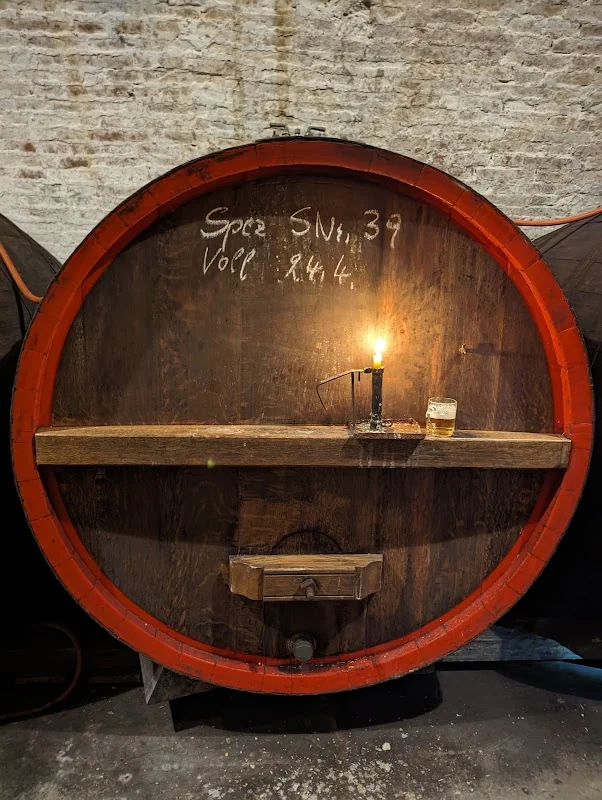
The Kellerfreunde Wasserburg represent one of the most extraordinary attractions in Bavarian Wasserburg on the Inn: a historic cellar labyrinth that can now be experienced as a museum, a place for guided tours, and a living testament to the local brewing culture. Beneath the city lies an ensemble of seven former summer beer cellars, shaped by volunteer engagement, artisanal care, and a strong sense of history. Visitors start the cellar tour at the former Bruck-Bräu at Salzburger Straße 1, where they receive a multimedia introduction and then immerse themselves in an environment that, despite its historical depth, appears easily accessible and clearly organized. Those searching for cellar tours in Wasserburg, Wasserburg beer catacombs, or beer cellars in Wasserburg will find here not an interchangeable excursion destination, but a precisely maintained museum with genuine regional identity. ([wasserburg.de](https://www.wasserburg.de/bierkatakomben/kellerfreunde/wir-stellen-uns-vor))
What are the Wasserburg Beer Catacombs?
The Wasserburg Beer Catacombs are a special part of the city's history, as they arose from a very practical need: summer beer had to be stored cool in the past to survive the warm months. Suitable storage options were created below Kellerstraße and along the Inn for this purpose. The official representation explains that the electoral ban on brewing beer from Georgi to Michaeli, that is, from April 23 to September 29, repeatedly led to supply shortages. Therefore, summer beer was brewed stronger and double-hopped so that it remained drinkable longer and could be sold at a higher price than winter beer. From this economic and technical necessity developed a cellar landscape that is now much more than just an underground storage space. It is a piece of urban and economic history that makes the relationship between brewing culture, climate, and topography immediately visible. ([wasserburg.de](https://www.wasserburg.de/bierkatakomben/kellergeschichte/entstehung))
Particularly remarkable is the location on the southern bank of the Inn opposite the city. The geological conditions and the natural coolness of this area provided ideal conditions for the construction of the summer beer cellars. The expansion in Kellerstraße began in 1785 and continued into the first half of the 19th century. Thus, the facility represents a longer development phase in which the city changed not only architecturally but also economically and culturally. Up until the 20th century, Kellerstraße was a popular meeting point with the serving of cellar-fresh beer. Today, the museum reminds visitors of this special use and simultaneously preserves the atmosphere of a place where supply, sociability, and artisanal brewing art were closely intertwined. The official website rightly describes the facility as a unique museum, whose charm lies precisely in the mix of authenticity, underground architecture, and regional narrative power. ([wasserburg.de](https://www.wasserburg.de/bierkatakomben/kellergeschichte/entstehung))
How did the summer beer cellars in Wasserburg come about?
The emergence of the summer beer cellars is closely linked to Wasserburg's brewing tradition. Official information shows that the cellars were not planned as representative showpieces but as functional storage places for beer that had to remain stable over months in a time without refrigeration technology. Since brewing during the warm season was prohibited, it was necessary to stock up in winter. For these supplies, cool, protected spaces were needed, and the slope area by the Inn was particularly suitable for this purpose. The cellars were built in such a way that they could keep the temperature low for long periods, thus supporting the character of a year-round brewing system. This connection of prohibition, stockpiling, and storage technology is a key reason why the Wasserburg Beer Catacombs continue to generate so much interest today. ([wasserburg.de](https://www.wasserburg.de/bierkatakomben/kellergeschichte/entstehung))
The historical development took place over decades. The official text cites the period from 1785 to the first half of the 19th century as the phase of construction and expansion. Later, the cellars were further used, sometimes even repurposed, until Bruck-Bräu ceased operations in 1977 and the last Wasserburg brewery, Fletzinger-Bräu, followed in 1994. This later phase of use is important because it shows that the cellars were not simply forgotten but continued to play a role in the city's history. It was not until 1995 that Witgar Neumaier senior began to document the cellar facilities and collect documents on the construction and operational history as a private initiative. From this research and the resulting commitment, the current museum eventually developed. The fact that the first public cellar tour took place in 2002 and that over 22,000 visitors have participated in around 1,800 tours underscores how successfully a historical facility has become a vibrant cultural site. ([wasserburg.de](https://www.wasserburg.de/bierkatakomben/kellergeschichte/entstehung))
Guided Tours, Prices, and Dates 2026
Those who wish to experience the beer catacombs do not simply visit the facility spontaneously on their own but as part of a clearly organized tour. The meeting point is in the building of the former Bruck-Bräu, directly on Salzburger Straße, where a documentation with historical images and short film scenes is shown first. Only then does the tour proceed through the labyrinth of the seven former summer beer cellars. The temperature in the cellars is around 7 °C, making the visit a noticeably cool experience even in summer. For groups, dates can be arranged individually with the tourist information. The official price information also shows that the tour is not only historically interesting but also transparently calculated: up to 20 people 200 euros, 21 to 40 people 350 euros, 41 to 50 people 480 euros; foreign language tours are also available. This makes the cellar tour in Wasserburg both planable for clubs and travel groups. ([wasserburg.de](https://www.wasserburg.de/bierkatakomben/kellerfuehrung/fuehrungen-fuer-gruppen))
For individuals, there are a number of open dates in 2026, such as in January, February, April, May, June, July, August, September, October, November, and December. The official site already marks some dates as fully booked, indicating that there is demand and that timely reservations are advisable. The price for an individual is 10 euros, and children under 10 years are free. This combination of a fixed schedule, fair pricing structure, and the special atmosphere of the cellars makes the tour a very concrete reason for users searching for prices, tickets, dates, or tours in Wasserburg. It is important content-wise that no anonymous standard tour is offered here, but a visit in a monument-close, historically charged space that can be reliably planned with the official dates in 2026. This is relevant for SEO because search queries such as tours for individuals, tour prices, or dates 2026 directly relate to the real usage situation on site. ([wasserburg.de](https://www.wasserburg.de/bierkatakomben/kellerfuehrung/fuehrungen-fuer-einzelpersonen))
Directions, Parking, and Meeting Point at Salzburger Straße
For directions to the Wasserburg Beer Catacombs, the official site recommends a very specific route. The best way to reach the destination is via the federal highway B304, exit Wasserburg-Ost, and then continue on Salzburger Straße towards the old town. Just before the Inn bridge, turn right into the Kellerstraße parking garage. In front of this parking garage, there is also a bus stop available on the side lane, making the facility attractive for larger groups. This information is particularly important for the search terms directions, parking, and Kellerstraße parking garage because it not only refers generally to a central location but also provides clear, practical orientation. Especially for visitors who are heading to Wasserburg for the first time, the combination of B304, Salzburger Straße, Inn bridge, and parking garage is the quickest way to the right meeting point. ([wasserburg.de](https://www.wasserburg.de/bierkatakomben/kellerfuehrung/lage-und-anfahrt))
The meeting point itself is located in the screening room, which is also referred to as a cinema on the website, in the building of the former Bruck-Bräu directly at Salzburger Straße 1. The official site mentions this address both in the directions and in the contact area. Thus, it is clear: the actual starting point of the tour is not somewhere in the cellar vault but initially in an easily identifiable, urban-connected building at the street edge. This facilitates orientation and is equally helpful for groups and individuals. Additionally, the city refers to further information about parking options in Wasserburg, which underscores the integration into the local infrastructure. This point is important for local search intent because users often want to know not only the destination itself but also the practical accessibility. The Kellerfreunde Wasserburg are therefore not only a historical topic but also a very concrete destination for visitors looking for a clearly explained journey, a nearby parking garage, and an unambiguous meeting point. ([wasserburg.de](https://www.wasserburg.de/bierkatakomben/kellerfuehrung/lage-und-anfahrt))
Accessibility, Temperature, and Visitor Experience
The Wasserburg Beer Catacombs are surprisingly well described despite their historical substance when it comes to the practical visiting situation. The official site points out that there are only a few thresholds and low steps before the cinema room and in the cellars. Before the cellar entrance, there are initially 8 steps up and then 9 steps down. This is not perfect accessibility in the modern sense for visitors with limited mobility, but it is also an honest and helpful indication of what to expect on site. Particularly specific is the information about the narrowest point in the cellar: 78 cm wide. If a wheelchair is wider, this point can be bypassed, and assistance in bridging is explicitly offered. For many users searching for wheelchair accessibility or barrier-free options, this transparency is a significant plus point. ([wasserburg.de](https://www.wasserburg.de/bierkatakomben/kellerfuehrung/fuehrungen-fuer-gruppen))
The visitor experience also includes the temperature. The temperature in the cellars is about 7 °C, which is not only historically sensible but also remains immediately noticeable today. The cellar visit is therefore not just an informational tour but a physically tangible piece of cultural history. This explains why the official site advises visitors to prepare accordingly for a duration of three-quarters of an hour even in summer. This point connects content and emotion very well: the walls, the weight of the stone, the artificial darkness, and the coolness of the room create an atmosphere that cannot simply be experienced online. Nevertheless, there is a virtual tour for home that complements the experience. This creates a meaningful mix of digital pre-information and real on-site experience. This is important for SEO and for visitors alike because terms like virtual tour, summer beer cellar, museum, and accessibility come together here in a very real way. ([wasserburg.de](https://www.wasserburg.de/bierkatakomben/kellerfuehrung/fuehrungen-fuer-gruppen))
The Kellerfreunde Wasserburg and the Museum
Behind the Wasserburg Beer Catacombs is not an anonymous operator but an engaged group with a clear regional mandate. The Kellerfreunde are a department of the Heimatverein Wasserburg am Inn and surrounding area e.V. and are described on the official site as having around 25 active members. This volunteer foundation gives the place its special character. For the Kellerfreunde not only take care of tours but also the preservation of exhibits that are particularly endangered in the humid and climatically demanding conditions of the cellars. The website explicitly emphasizes that the work in the museum is necessary to present the unique Wasserburg summer beer cellars in the best condition. This is far more than an organizational footnote: it shows that the place is continuously maintained, researched, and museumically developed. ([wasserburg.de](https://www.wasserburg.de/bierkatakomben/kellerfreunde/wir-stellen-uns-vor))
The historical development of this work began in 1995 when Witgar Neumaier senior documented the cellar facilities and collected documents on construction and operational history as a private initiative. After the presentation of a concept by Witgar Neumaier junior to the Heimatverein, the Kellerfreunde were integrated as a department. This was followed by several years of construction work in the cellars, clearing out, researching, measuring, and redesigning as a museum. In 2002, the first public cellar tour finally took place. For today's external impact, it is also important that the group manages both individual and booked tours. As a result, the Kellerfreunde Wasserburg are not only a historical name bearer but also the operational force behind the experience on site. Those searching for history of beer cellars, Kellerfreunde Wasserburg, or beer cellar museum will encounter a real community that has translated local memory into an accessible form for visitors. ([wasserburg.de](https://www.wasserburg.de/bierkatakomben/kellergeschichte/entstehung))
Virtual Tour and Which Cellars Are Visited
The official website offers a virtual tour of the beer cellars, which is particularly useful for digital preparation. This allows interested parties to experience the facility from home and tune in to the actual visit. This is not only practical but also enhances the visibility of the Wasserburg Beer Catacombs for search queries like images of Kellerfreunde Wasserburg, Keller Wasserburg, or virtual tour. This digital access is explicitly promoted on the homepage, and it meaningfully complements the presence on site. Therefore, those visiting the cellars can first gain an impression online and then perceive the atmosphere in the original. This is a helpful offer, especially for people who are still unsure whether the cool environment, the steps, or the tour suits them. ([wasserburg.de](https://www.wasserburg.de/bierkatakomben/startseite))
According to the official navigation and tour description, seven former summer beer cellars are visited. These include the Adam-Gräf-Keller, Gerbl-Keller, Klement-Stechl-Keller, Johann-Baptist-Enzinger-Keller, Andrä-Niggl-Keller, Jakob-Beer-Keller, and Franz-Gassner-Keller. The tour thus makes visible not just a single vault but a whole system of storage and usage history. These names are historically significant because they show the close connection between breweries, cellar facilities, and urban development. This is precisely the allure for visitors searching for beer cellars in Wasserburg or summer beer cellars: not only is the architecture exciting, but also the concrete association with brewers and city history. Those who want to understand the overall experience quickly recognize that the Wasserburg Beer Catacombs form a local memory beneath the surface. They connect brewing culture, architectural history, and volunteer mediation into a clear and very distinctive profile. ([wasserburg.de](https://www.wasserburg.de/bierkatakomben/kellerfreunde/wir-stellen-uns-vor))
Sources:
- Wasserburg Beer Catacombs - Homepage ([wasserburg.de](https://www.wasserburg.de/bierkatakomben/startseite))
- Wasserburg Beer Catacombs - Origin ([wasserburg.de](https://www.wasserburg.de/bierkatakomben/kellergeschichte/entstehung))
- Wasserburg Beer Catacombs - Tours for Individuals ([wasserburg.de](https://www.wasserburg.de/bierkatakomben/kellerfuehrung/fuehrungen-fuer-einzelpersonen))
- Wasserburg Beer Catacombs - Location and Directions ([wasserburg.de](https://www.wasserburg.de/bierkatakomben/kellerfuehrung/lage-und-anfahrt))
- Wasserburg Beer Catacombs - The Kellerfreunde ([wasserburg.de](https://www.wasserburg.de/bierkatakomben/kellerfreunde/wir-stellen-uns-vor))
- Wasserburg Beer Catacombs - Virtual Tour ([wasserburg.de](https://www.wasserburg.de/bierkatakomben/virtueller-rundgang?utm_source=openai))
Show moreShow less
Kellerfreunde Wasserburg | Cellar Tours & Beer Catacombs
The Kellerfreunde Wasserburg represent one of the most extraordinary attractions in Bavarian Wasserburg on the Inn: a historic cellar labyrinth that can now be experienced as a museum, a place for guided tours, and a living testament to the local brewing culture. Beneath the city lies an ensemble of seven former summer beer cellars, shaped by volunteer engagement, artisanal care, and a strong sense of history. Visitors start the cellar tour at the former Bruck-Bräu at Salzburger Straße 1, where they receive a multimedia introduction and then immerse themselves in an environment that, despite its historical depth, appears easily accessible and clearly organized. Those searching for cellar tours in Wasserburg, Wasserburg beer catacombs, or beer cellars in Wasserburg will find here not an interchangeable excursion destination, but a precisely maintained museum with genuine regional identity. ([wasserburg.de](https://www.wasserburg.de/bierkatakomben/kellerfreunde/wir-stellen-uns-vor))
What are the Wasserburg Beer Catacombs?
The Wasserburg Beer Catacombs are a special part of the city's history, as they arose from a very practical need: summer beer had to be stored cool in the past to survive the warm months. Suitable storage options were created below Kellerstraße and along the Inn for this purpose. The official representation explains that the electoral ban on brewing beer from Georgi to Michaeli, that is, from April 23 to September 29, repeatedly led to supply shortages. Therefore, summer beer was brewed stronger and double-hopped so that it remained drinkable longer and could be sold at a higher price than winter beer. From this economic and technical necessity developed a cellar landscape that is now much more than just an underground storage space. It is a piece of urban and economic history that makes the relationship between brewing culture, climate, and topography immediately visible. ([wasserburg.de](https://www.wasserburg.de/bierkatakomben/kellergeschichte/entstehung))
Particularly remarkable is the location on the southern bank of the Inn opposite the city. The geological conditions and the natural coolness of this area provided ideal conditions for the construction of the summer beer cellars. The expansion in Kellerstraße began in 1785 and continued into the first half of the 19th century. Thus, the facility represents a longer development phase in which the city changed not only architecturally but also economically and culturally. Up until the 20th century, Kellerstraße was a popular meeting point with the serving of cellar-fresh beer. Today, the museum reminds visitors of this special use and simultaneously preserves the atmosphere of a place where supply, sociability, and artisanal brewing art were closely intertwined. The official website rightly describes the facility as a unique museum, whose charm lies precisely in the mix of authenticity, underground architecture, and regional narrative power. ([wasserburg.de](https://www.wasserburg.de/bierkatakomben/kellergeschichte/entstehung))
How did the summer beer cellars in Wasserburg come about?
The emergence of the summer beer cellars is closely linked to Wasserburg's brewing tradition. Official information shows that the cellars were not planned as representative showpieces but as functional storage places for beer that had to remain stable over months in a time without refrigeration technology. Since brewing during the warm season was prohibited, it was necessary to stock up in winter. For these supplies, cool, protected spaces were needed, and the slope area by the Inn was particularly suitable for this purpose. The cellars were built in such a way that they could keep the temperature low for long periods, thus supporting the character of a year-round brewing system. This connection of prohibition, stockpiling, and storage technology is a key reason why the Wasserburg Beer Catacombs continue to generate so much interest today. ([wasserburg.de](https://www.wasserburg.de/bierkatakomben/kellergeschichte/entstehung))
The historical development took place over decades. The official text cites the period from 1785 to the first half of the 19th century as the phase of construction and expansion. Later, the cellars were further used, sometimes even repurposed, until Bruck-Bräu ceased operations in 1977 and the last Wasserburg brewery, Fletzinger-Bräu, followed in 1994. This later phase of use is important because it shows that the cellars were not simply forgotten but continued to play a role in the city's history. It was not until 1995 that Witgar Neumaier senior began to document the cellar facilities and collect documents on the construction and operational history as a private initiative. From this research and the resulting commitment, the current museum eventually developed. The fact that the first public cellar tour took place in 2002 and that over 22,000 visitors have participated in around 1,800 tours underscores how successfully a historical facility has become a vibrant cultural site. ([wasserburg.de](https://www.wasserburg.de/bierkatakomben/kellergeschichte/entstehung))
Guided Tours, Prices, and Dates 2026
Those who wish to experience the beer catacombs do not simply visit the facility spontaneously on their own but as part of a clearly organized tour. The meeting point is in the building of the former Bruck-Bräu, directly on Salzburger Straße, where a documentation with historical images and short film scenes is shown first. Only then does the tour proceed through the labyrinth of the seven former summer beer cellars. The temperature in the cellars is around 7 °C, making the visit a noticeably cool experience even in summer. For groups, dates can be arranged individually with the tourist information. The official price information also shows that the tour is not only historically interesting but also transparently calculated: up to 20 people 200 euros, 21 to 40 people 350 euros, 41 to 50 people 480 euros; foreign language tours are also available. This makes the cellar tour in Wasserburg both planable for clubs and travel groups. ([wasserburg.de](https://www.wasserburg.de/bierkatakomben/kellerfuehrung/fuehrungen-fuer-gruppen))
For individuals, there are a number of open dates in 2026, such as in January, February, April, May, June, July, August, September, October, November, and December. The official site already marks some dates as fully booked, indicating that there is demand and that timely reservations are advisable. The price for an individual is 10 euros, and children under 10 years are free. This combination of a fixed schedule, fair pricing structure, and the special atmosphere of the cellars makes the tour a very concrete reason for users searching for prices, tickets, dates, or tours in Wasserburg. It is important content-wise that no anonymous standard tour is offered here, but a visit in a monument-close, historically charged space that can be reliably planned with the official dates in 2026. This is relevant for SEO because search queries such as tours for individuals, tour prices, or dates 2026 directly relate to the real usage situation on site. ([wasserburg.de](https://www.wasserburg.de/bierkatakomben/kellerfuehrung/fuehrungen-fuer-einzelpersonen))
Directions, Parking, and Meeting Point at Salzburger Straße
For directions to the Wasserburg Beer Catacombs, the official site recommends a very specific route. The best way to reach the destination is via the federal highway B304, exit Wasserburg-Ost, and then continue on Salzburger Straße towards the old town. Just before the Inn bridge, turn right into the Kellerstraße parking garage. In front of this parking garage, there is also a bus stop available on the side lane, making the facility attractive for larger groups. This information is particularly important for the search terms directions, parking, and Kellerstraße parking garage because it not only refers generally to a central location but also provides clear, practical orientation. Especially for visitors who are heading to Wasserburg for the first time, the combination of B304, Salzburger Straße, Inn bridge, and parking garage is the quickest way to the right meeting point. ([wasserburg.de](https://www.wasserburg.de/bierkatakomben/kellerfuehrung/lage-und-anfahrt))
The meeting point itself is located in the screening room, which is also referred to as a cinema on the website, in the building of the former Bruck-Bräu directly at Salzburger Straße 1. The official site mentions this address both in the directions and in the contact area. Thus, it is clear: the actual starting point of the tour is not somewhere in the cellar vault but initially in an easily identifiable, urban-connected building at the street edge. This facilitates orientation and is equally helpful for groups and individuals. Additionally, the city refers to further information about parking options in Wasserburg, which underscores the integration into the local infrastructure. This point is important for local search intent because users often want to know not only the destination itself but also the practical accessibility. The Kellerfreunde Wasserburg are therefore not only a historical topic but also a very concrete destination for visitors looking for a clearly explained journey, a nearby parking garage, and an unambiguous meeting point. ([wasserburg.de](https://www.wasserburg.de/bierkatakomben/kellerfuehrung/lage-und-anfahrt))
Accessibility, Temperature, and Visitor Experience
The Wasserburg Beer Catacombs are surprisingly well described despite their historical substance when it comes to the practical visiting situation. The official site points out that there are only a few thresholds and low steps before the cinema room and in the cellars. Before the cellar entrance, there are initially 8 steps up and then 9 steps down. This is not perfect accessibility in the modern sense for visitors with limited mobility, but it is also an honest and helpful indication of what to expect on site. Particularly specific is the information about the narrowest point in the cellar: 78 cm wide. If a wheelchair is wider, this point can be bypassed, and assistance in bridging is explicitly offered. For many users searching for wheelchair accessibility or barrier-free options, this transparency is a significant plus point. ([wasserburg.de](https://www.wasserburg.de/bierkatakomben/kellerfuehrung/fuehrungen-fuer-gruppen))
The visitor experience also includes the temperature. The temperature in the cellars is about 7 °C, which is not only historically sensible but also remains immediately noticeable today. The cellar visit is therefore not just an informational tour but a physically tangible piece of cultural history. This explains why the official site advises visitors to prepare accordingly for a duration of three-quarters of an hour even in summer. This point connects content and emotion very well: the walls, the weight of the stone, the artificial darkness, and the coolness of the room create an atmosphere that cannot simply be experienced online. Nevertheless, there is a virtual tour for home that complements the experience. This creates a meaningful mix of digital pre-information and real on-site experience. This is important for SEO and for visitors alike because terms like virtual tour, summer beer cellar, museum, and accessibility come together here in a very real way. ([wasserburg.de](https://www.wasserburg.de/bierkatakomben/kellerfuehrung/fuehrungen-fuer-gruppen))
The Kellerfreunde Wasserburg and the Museum
Behind the Wasserburg Beer Catacombs is not an anonymous operator but an engaged group with a clear regional mandate. The Kellerfreunde are a department of the Heimatverein Wasserburg am Inn and surrounding area e.V. and are described on the official site as having around 25 active members. This volunteer foundation gives the place its special character. For the Kellerfreunde not only take care of tours but also the preservation of exhibits that are particularly endangered in the humid and climatically demanding conditions of the cellars. The website explicitly emphasizes that the work in the museum is necessary to present the unique Wasserburg summer beer cellars in the best condition. This is far more than an organizational footnote: it shows that the place is continuously maintained, researched, and museumically developed. ([wasserburg.de](https://www.wasserburg.de/bierkatakomben/kellerfreunde/wir-stellen-uns-vor))
The historical development of this work began in 1995 when Witgar Neumaier senior documented the cellar facilities and collected documents on construction and operational history as a private initiative. After the presentation of a concept by Witgar Neumaier junior to the Heimatverein, the Kellerfreunde were integrated as a department. This was followed by several years of construction work in the cellars, clearing out, researching, measuring, and redesigning as a museum. In 2002, the first public cellar tour finally took place. For today's external impact, it is also important that the group manages both individual and booked tours. As a result, the Kellerfreunde Wasserburg are not only a historical name bearer but also the operational force behind the experience on site. Those searching for history of beer cellars, Kellerfreunde Wasserburg, or beer cellar museum will encounter a real community that has translated local memory into an accessible form for visitors. ([wasserburg.de](https://www.wasserburg.de/bierkatakomben/kellergeschichte/entstehung))
Virtual Tour and Which Cellars Are Visited
The official website offers a virtual tour of the beer cellars, which is particularly useful for digital preparation. This allows interested parties to experience the facility from home and tune in to the actual visit. This is not only practical but also enhances the visibility of the Wasserburg Beer Catacombs for search queries like images of Kellerfreunde Wasserburg, Keller Wasserburg, or virtual tour. This digital access is explicitly promoted on the homepage, and it meaningfully complements the presence on site. Therefore, those visiting the cellars can first gain an impression online and then perceive the atmosphere in the original. This is a helpful offer, especially for people who are still unsure whether the cool environment, the steps, or the tour suits them. ([wasserburg.de](https://www.wasserburg.de/bierkatakomben/startseite))
According to the official navigation and tour description, seven former summer beer cellars are visited. These include the Adam-Gräf-Keller, Gerbl-Keller, Klement-Stechl-Keller, Johann-Baptist-Enzinger-Keller, Andrä-Niggl-Keller, Jakob-Beer-Keller, and Franz-Gassner-Keller. The tour thus makes visible not just a single vault but a whole system of storage and usage history. These names are historically significant because they show the close connection between breweries, cellar facilities, and urban development. This is precisely the allure for visitors searching for beer cellars in Wasserburg or summer beer cellars: not only is the architecture exciting, but also the concrete association with brewers and city history. Those who want to understand the overall experience quickly recognize that the Wasserburg Beer Catacombs form a local memory beneath the surface. They connect brewing culture, architectural history, and volunteer mediation into a clear and very distinctive profile. ([wasserburg.de](https://www.wasserburg.de/bierkatakomben/kellerfreunde/wir-stellen-uns-vor))
Sources:
- Wasserburg Beer Catacombs - Homepage ([wasserburg.de](https://www.wasserburg.de/bierkatakomben/startseite))
- Wasserburg Beer Catacombs - Origin ([wasserburg.de](https://www.wasserburg.de/bierkatakomben/kellergeschichte/entstehung))
- Wasserburg Beer Catacombs - Tours for Individuals ([wasserburg.de](https://www.wasserburg.de/bierkatakomben/kellerfuehrung/fuehrungen-fuer-einzelpersonen))
- Wasserburg Beer Catacombs - Location and Directions ([wasserburg.de](https://www.wasserburg.de/bierkatakomben/kellerfuehrung/lage-und-anfahrt))
- Wasserburg Beer Catacombs - The Kellerfreunde ([wasserburg.de](https://www.wasserburg.de/bierkatakomben/kellerfreunde/wir-stellen-uns-vor))
- Wasserburg Beer Catacombs - Virtual Tour ([wasserburg.de](https://www.wasserburg.de/bierkatakomben/virtueller-rundgang?utm_source=openai))
Kellerfreunde Wasserburg | Cellar Tours & Beer Catacombs
The Kellerfreunde Wasserburg represent one of the most extraordinary attractions in Bavarian Wasserburg on the Inn: a historic cellar labyrinth that can now be experienced as a museum, a place for guided tours, and a living testament to the local brewing culture. Beneath the city lies an ensemble of seven former summer beer cellars, shaped by volunteer engagement, artisanal care, and a strong sense of history. Visitors start the cellar tour at the former Bruck-Bräu at Salzburger Straße 1, where they receive a multimedia introduction and then immerse themselves in an environment that, despite its historical depth, appears easily accessible and clearly organized. Those searching for cellar tours in Wasserburg, Wasserburg beer catacombs, or beer cellars in Wasserburg will find here not an interchangeable excursion destination, but a precisely maintained museum with genuine regional identity. ([wasserburg.de](https://www.wasserburg.de/bierkatakomben/kellerfreunde/wir-stellen-uns-vor))
What are the Wasserburg Beer Catacombs?
The Wasserburg Beer Catacombs are a special part of the city's history, as they arose from a very practical need: summer beer had to be stored cool in the past to survive the warm months. Suitable storage options were created below Kellerstraße and along the Inn for this purpose. The official representation explains that the electoral ban on brewing beer from Georgi to Michaeli, that is, from April 23 to September 29, repeatedly led to supply shortages. Therefore, summer beer was brewed stronger and double-hopped so that it remained drinkable longer and could be sold at a higher price than winter beer. From this economic and technical necessity developed a cellar landscape that is now much more than just an underground storage space. It is a piece of urban and economic history that makes the relationship between brewing culture, climate, and topography immediately visible. ([wasserburg.de](https://www.wasserburg.de/bierkatakomben/kellergeschichte/entstehung))
Particularly remarkable is the location on the southern bank of the Inn opposite the city. The geological conditions and the natural coolness of this area provided ideal conditions for the construction of the summer beer cellars. The expansion in Kellerstraße began in 1785 and continued into the first half of the 19th century. Thus, the facility represents a longer development phase in which the city changed not only architecturally but also economically and culturally. Up until the 20th century, Kellerstraße was a popular meeting point with the serving of cellar-fresh beer. Today, the museum reminds visitors of this special use and simultaneously preserves the atmosphere of a place where supply, sociability, and artisanal brewing art were closely intertwined. The official website rightly describes the facility as a unique museum, whose charm lies precisely in the mix of authenticity, underground architecture, and regional narrative power. ([wasserburg.de](https://www.wasserburg.de/bierkatakomben/kellergeschichte/entstehung))
How did the summer beer cellars in Wasserburg come about?
The emergence of the summer beer cellars is closely linked to Wasserburg's brewing tradition. Official information shows that the cellars were not planned as representative showpieces but as functional storage places for beer that had to remain stable over months in a time without refrigeration technology. Since brewing during the warm season was prohibited, it was necessary to stock up in winter. For these supplies, cool, protected spaces were needed, and the slope area by the Inn was particularly suitable for this purpose. The cellars were built in such a way that they could keep the temperature low for long periods, thus supporting the character of a year-round brewing system. This connection of prohibition, stockpiling, and storage technology is a key reason why the Wasserburg Beer Catacombs continue to generate so much interest today. ([wasserburg.de](https://www.wasserburg.de/bierkatakomben/kellergeschichte/entstehung))
The historical development took place over decades. The official text cites the period from 1785 to the first half of the 19th century as the phase of construction and expansion. Later, the cellars were further used, sometimes even repurposed, until Bruck-Bräu ceased operations in 1977 and the last Wasserburg brewery, Fletzinger-Bräu, followed in 1994. This later phase of use is important because it shows that the cellars were not simply forgotten but continued to play a role in the city's history. It was not until 1995 that Witgar Neumaier senior began to document the cellar facilities and collect documents on the construction and operational history as a private initiative. From this research and the resulting commitment, the current museum eventually developed. The fact that the first public cellar tour took place in 2002 and that over 22,000 visitors have participated in around 1,800 tours underscores how successfully a historical facility has become a vibrant cultural site. ([wasserburg.de](https://www.wasserburg.de/bierkatakomben/kellergeschichte/entstehung))
Guided Tours, Prices, and Dates 2026
Those who wish to experience the beer catacombs do not simply visit the facility spontaneously on their own but as part of a clearly organized tour. The meeting point is in the building of the former Bruck-Bräu, directly on Salzburger Straße, where a documentation with historical images and short film scenes is shown first. Only then does the tour proceed through the labyrinth of the seven former summer beer cellars. The temperature in the cellars is around 7 °C, making the visit a noticeably cool experience even in summer. For groups, dates can be arranged individually with the tourist information. The official price information also shows that the tour is not only historically interesting but also transparently calculated: up to 20 people 200 euros, 21 to 40 people 350 euros, 41 to 50 people 480 euros; foreign language tours are also available. This makes the cellar tour in Wasserburg both planable for clubs and travel groups. ([wasserburg.de](https://www.wasserburg.de/bierkatakomben/kellerfuehrung/fuehrungen-fuer-gruppen))
For individuals, there are a number of open dates in 2026, such as in January, February, April, May, June, July, August, September, October, November, and December. The official site already marks some dates as fully booked, indicating that there is demand and that timely reservations are advisable. The price for an individual is 10 euros, and children under 10 years are free. This combination of a fixed schedule, fair pricing structure, and the special atmosphere of the cellars makes the tour a very concrete reason for users searching for prices, tickets, dates, or tours in Wasserburg. It is important content-wise that no anonymous standard tour is offered here, but a visit in a monument-close, historically charged space that can be reliably planned with the official dates in 2026. This is relevant for SEO because search queries such as tours for individuals, tour prices, or dates 2026 directly relate to the real usage situation on site. ([wasserburg.de](https://www.wasserburg.de/bierkatakomben/kellerfuehrung/fuehrungen-fuer-einzelpersonen))
Directions, Parking, and Meeting Point at Salzburger Straße
For directions to the Wasserburg Beer Catacombs, the official site recommends a very specific route. The best way to reach the destination is via the federal highway B304, exit Wasserburg-Ost, and then continue on Salzburger Straße towards the old town. Just before the Inn bridge, turn right into the Kellerstraße parking garage. In front of this parking garage, there is also a bus stop available on the side lane, making the facility attractive for larger groups. This information is particularly important for the search terms directions, parking, and Kellerstraße parking garage because it not only refers generally to a central location but also provides clear, practical orientation. Especially for visitors who are heading to Wasserburg for the first time, the combination of B304, Salzburger Straße, Inn bridge, and parking garage is the quickest way to the right meeting point. ([wasserburg.de](https://www.wasserburg.de/bierkatakomben/kellerfuehrung/lage-und-anfahrt))
The meeting point itself is located in the screening room, which is also referred to as a cinema on the website, in the building of the former Bruck-Bräu directly at Salzburger Straße 1. The official site mentions this address both in the directions and in the contact area. Thus, it is clear: the actual starting point of the tour is not somewhere in the cellar vault but initially in an easily identifiable, urban-connected building at the street edge. This facilitates orientation and is equally helpful for groups and individuals. Additionally, the city refers to further information about parking options in Wasserburg, which underscores the integration into the local infrastructure. This point is important for local search intent because users often want to know not only the destination itself but also the practical accessibility. The Kellerfreunde Wasserburg are therefore not only a historical topic but also a very concrete destination for visitors looking for a clearly explained journey, a nearby parking garage, and an unambiguous meeting point. ([wasserburg.de](https://www.wasserburg.de/bierkatakomben/kellerfuehrung/lage-und-anfahrt))
Accessibility, Temperature, and Visitor Experience
The Wasserburg Beer Catacombs are surprisingly well described despite their historical substance when it comes to the practical visiting situation. The official site points out that there are only a few thresholds and low steps before the cinema room and in the cellars. Before the cellar entrance, there are initially 8 steps up and then 9 steps down. This is not perfect accessibility in the modern sense for visitors with limited mobility, but it is also an honest and helpful indication of what to expect on site. Particularly specific is the information about the narrowest point in the cellar: 78 cm wide. If a wheelchair is wider, this point can be bypassed, and assistance in bridging is explicitly offered. For many users searching for wheelchair accessibility or barrier-free options, this transparency is a significant plus point. ([wasserburg.de](https://www.wasserburg.de/bierkatakomben/kellerfuehrung/fuehrungen-fuer-gruppen))
The visitor experience also includes the temperature. The temperature in the cellars is about 7 °C, which is not only historically sensible but also remains immediately noticeable today. The cellar visit is therefore not just an informational tour but a physically tangible piece of cultural history. This explains why the official site advises visitors to prepare accordingly for a duration of three-quarters of an hour even in summer. This point connects content and emotion very well: the walls, the weight of the stone, the artificial darkness, and the coolness of the room create an atmosphere that cannot simply be experienced online. Nevertheless, there is a virtual tour for home that complements the experience. This creates a meaningful mix of digital pre-information and real on-site experience. This is important for SEO and for visitors alike because terms like virtual tour, summer beer cellar, museum, and accessibility come together here in a very real way. ([wasserburg.de](https://www.wasserburg.de/bierkatakomben/kellerfuehrung/fuehrungen-fuer-gruppen))
The Kellerfreunde Wasserburg and the Museum
Behind the Wasserburg Beer Catacombs is not an anonymous operator but an engaged group with a clear regional mandate. The Kellerfreunde are a department of the Heimatverein Wasserburg am Inn and surrounding area e.V. and are described on the official site as having around 25 active members. This volunteer foundation gives the place its special character. For the Kellerfreunde not only take care of tours but also the preservation of exhibits that are particularly endangered in the humid and climatically demanding conditions of the cellars. The website explicitly emphasizes that the work in the museum is necessary to present the unique Wasserburg summer beer cellars in the best condition. This is far more than an organizational footnote: it shows that the place is continuously maintained, researched, and museumically developed. ([wasserburg.de](https://www.wasserburg.de/bierkatakomben/kellerfreunde/wir-stellen-uns-vor))
The historical development of this work began in 1995 when Witgar Neumaier senior documented the cellar facilities and collected documents on construction and operational history as a private initiative. After the presentation of a concept by Witgar Neumaier junior to the Heimatverein, the Kellerfreunde were integrated as a department. This was followed by several years of construction work in the cellars, clearing out, researching, measuring, and redesigning as a museum. In 2002, the first public cellar tour finally took place. For today's external impact, it is also important that the group manages both individual and booked tours. As a result, the Kellerfreunde Wasserburg are not only a historical name bearer but also the operational force behind the experience on site. Those searching for history of beer cellars, Kellerfreunde Wasserburg, or beer cellar museum will encounter a real community that has translated local memory into an accessible form for visitors. ([wasserburg.de](https://www.wasserburg.de/bierkatakomben/kellergeschichte/entstehung))
Virtual Tour and Which Cellars Are Visited
The official website offers a virtual tour of the beer cellars, which is particularly useful for digital preparation. This allows interested parties to experience the facility from home and tune in to the actual visit. This is not only practical but also enhances the visibility of the Wasserburg Beer Catacombs for search queries like images of Kellerfreunde Wasserburg, Keller Wasserburg, or virtual tour. This digital access is explicitly promoted on the homepage, and it meaningfully complements the presence on site. Therefore, those visiting the cellars can first gain an impression online and then perceive the atmosphere in the original. This is a helpful offer, especially for people who are still unsure whether the cool environment, the steps, or the tour suits them. ([wasserburg.de](https://www.wasserburg.de/bierkatakomben/startseite))
According to the official navigation and tour description, seven former summer beer cellars are visited. These include the Adam-Gräf-Keller, Gerbl-Keller, Klement-Stechl-Keller, Johann-Baptist-Enzinger-Keller, Andrä-Niggl-Keller, Jakob-Beer-Keller, and Franz-Gassner-Keller. The tour thus makes visible not just a single vault but a whole system of storage and usage history. These names are historically significant because they show the close connection between breweries, cellar facilities, and urban development. This is precisely the allure for visitors searching for beer cellars in Wasserburg or summer beer cellars: not only is the architecture exciting, but also the concrete association with brewers and city history. Those who want to understand the overall experience quickly recognize that the Wasserburg Beer Catacombs form a local memory beneath the surface. They connect brewing culture, architectural history, and volunteer mediation into a clear and very distinctive profile. ([wasserburg.de](https://www.wasserburg.de/bierkatakomben/kellerfreunde/wir-stellen-uns-vor))
Sources:
- Wasserburg Beer Catacombs - Homepage ([wasserburg.de](https://www.wasserburg.de/bierkatakomben/startseite))
- Wasserburg Beer Catacombs - Origin ([wasserburg.de](https://www.wasserburg.de/bierkatakomben/kellergeschichte/entstehung))
- Wasserburg Beer Catacombs - Tours for Individuals ([wasserburg.de](https://www.wasserburg.de/bierkatakomben/kellerfuehrung/fuehrungen-fuer-einzelpersonen))
- Wasserburg Beer Catacombs - Location and Directions ([wasserburg.de](https://www.wasserburg.de/bierkatakomben/kellerfuehrung/lage-und-anfahrt))
- Wasserburg Beer Catacombs - The Kellerfreunde ([wasserburg.de](https://www.wasserburg.de/bierkatakomben/kellerfreunde/wir-stellen-uns-vor))
- Wasserburg Beer Catacombs - Virtual Tour ([wasserburg.de](https://www.wasserburg.de/bierkatakomben/virtueller-rundgang?utm_source=openai))
Upcoming Events
No events found
Frequently Asked Questions
Reviews
No reviews found