
Wasserburg am Inn
Gabersee 1, 83512 Wasserburg am Inn, Deutschland
kbo-Inn-Salzach-Klinikum | Wasserburg & Neurology
The kbo-Inn-Salzach-Klinikum in Wasserburg am Inn is a complex topic for many inquiries, as it is not just a single hospital, but a whole network of care that is in focus. Those searching for the kbo-Inn-Salzach-Klinikum Wasserburg am Inn, the non-profit GmbH, photos of the premises, or reviews usually want to first understand how the location is structured, which specialties are treated there, and which other facilities, day clinics, and outpatient services are included. That is why it is worthwhile to take a look at the structure: The main location in Gabersee is the central hospital, supplemented by additional locations in Freilassing, Altötting, Ebersberg, and since the end of 2024 also Rosenheim. The hospital operates according to DIN ISO 9001, is an academic teaching hospital of Ludwig Maximilians University Munich, and combines classical psychiatric care with neurological, psychosomatic, and geriatric services. ([kbo-isk.de](https://kbo-isk.de/))
Where is the kbo-Inn-Salzach-Klinikum located in Wasserburg am Inn?
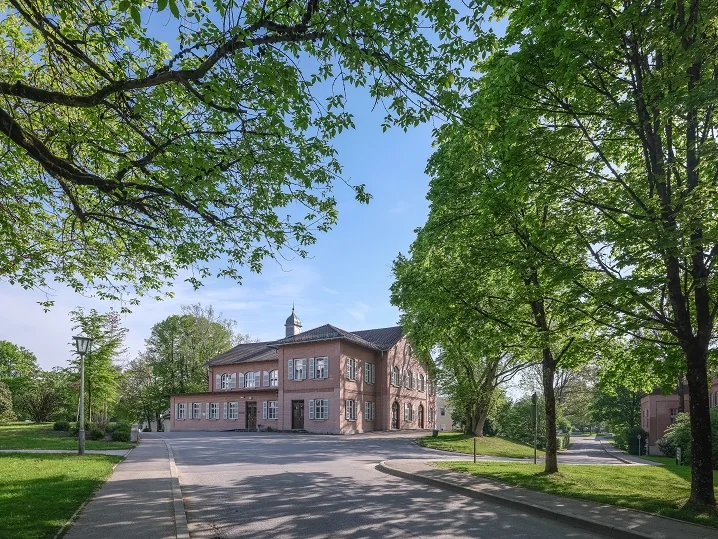
The central location is in Gabersee near Wasserburg am Inn, specifically at the address Gabersee 7, 83512 Wasserburg am Inn. The premises do not resemble a typical hospital area, but rather a spacious health campus with historic brick buildings, plenty of greenery, and a spatial layout that has long been characteristic of a large specialist clinic. On the large park-like grounds of the central hospital, there are 33 hospital wards in a pavilion style, which gives the location a clear structure while also shaping the character of the area. For users looking for Wasserburg am Inn, photos, or a first visual impression, this mixture of park landscape, brick architecture, and medical function is particularly striking. The official website also describes the grounds as park-like and refers to the immediate view of the Alps, which distinguishes the location from many other clinics. ([kbo-isk.de](https://kbo-isk.de/kontakt))
The hospital provides comprehensive psychiatric care for the city and district of Rosenheim as well as for the districts of Traunstein, Mühldorf, Berchtesgadener Land, Altötting, and partially Ebersberg. Thus, Wasserburg is not only the main location but also the organizational center of a regional care network. The facility is one of the largest specialized hospitals for psychiatry, psychotherapy, psychosomatic medicine, geriatrics, and neurology in Germany and claims to serve over 800,000 people in the catchment area. Particularly important is the 24-hour presence of a multi-professional team of doctors, nursing staff, psychologists, and social educators. For patients, relatives, and referrers, this structure is crucial as it shows that the hospital does not only operate inpatient but offers a comprehensive care system with crisis intervention, diagnostics, therapy, and follow-up treatment. ([kbo-isk.de](https://kbo-isk.de/))
The connection is also tailored to a large area. The website mentions a joint hospital bus from kbo-Inn-Salzach-Klinikum and RoMed Klinik Wasserburg, which connects central stops on the grounds in Gabersee with the new building every 30 minutes. Additionally, there is a transport service for individuals with limited mobility. This combination of a large campus, internal shuttle, and digital navigation is a central service element for all those seeking orientation under search terms such as access or parking. Instead of a compact city center location, visitors will find a spacious area with several buildings, clear paths, and an infrastructure designed for medical routes, not event traffic. ([kbo-isk.de](https://kbo-isk.de/))
Which specialties characterize the central hospital in Gabersee?
The central hospital Wasserburg is broadly positioned and covers the core areas of psychiatry, psychotherapy, psychosomatics, neurology, and geriatrics. The official overview of specialties includes, among others, general psychiatry with mother-child unit, psychosomatics, center for geriatric medicine, center for psychotic disorders and personality disorders, addiction medicine, neurology clinic, forensic psychiatry, psychiatric institute outpatient clinic, day clinic Wasserburg, neuropsychology, and the admission center. This breadth explains why the hospital is often searched in search engines with specialized terms such as clinic for neurology Wasserburg am Inn, day clinic Rosenheim, or non-profit GmbH: The facility is not a single offering but a networked specialized hospital with different levels of care and treatment paths. ([kbo-isk.de](https://kbo-isk.de/kbo-inn-salzach-klinikum/unsere-fachbereiche?cHash=b30613c8e27dbbf9c34a31aa72d5b666&ved=2ahUKEwj20cKBquiJAxVe1AIHHdMEKJ8QgU96BAgNEAk))
Particularly notable is the neurological care. The neurology clinic treats individuals with acute and chronic diseases from the entire neurological spectrum, including diseases of the central and peripheral nervous systems as well as muscles. The department has specialized examination methods such as CT, 3-T MRI, neurosonography, neurophysiology, and liquor diagnostics. Also remarkable is the historical claim to innovation: as early as 1976, one of the first computed tomography scanners in Bavaria was installed alongside the Munich university hospitals. For patients seeking modern diagnostics and at the same time a specialized hospital in Wasserburg, this combination of technology and long-standing experience is an important quality feature. The neurology department also operates with a 24-hour presence service for emergencies and inpatient admissions. ([kbo-isk.de](https://kbo-isk.de/kbo-inn-salzach-klinikum/unsere-fachbereiche/klinik-fuer-neurologie?utm_source=openai))
The core psychiatric areas are also content-wise differentiated. In general psychiatry, acute crises, affective disorders, female-specific disorders, and stress disorders are treated; there is an official crisis intervention center with two wards and 44 planned beds. Addiction medicine sees itself as the first point of contact for individuals with addiction disorders, including those with alcohol, medication, or drug dependence, as well as dual diagnoses with other mental illnesses. The center for psychotic disorders and personality disorders works with standardized assessment instruments, while psychosomatics includes not only psychotherapeutic offerings but also the full spectrum of medical diagnostics and therapy. For SEO, this professional diversity is important as it shows that search terms like reviews, photos, or locations are just an entry point; behind it lies a highly specialized clinic with clearly defined treatment paths. ([kbo-isk.de](https://kbo-isk.de/kbo-inn-salzach-klinikum/allgemeinpsychiatrie?utm_source=openai))
The care is not only designed for inpatient treatment. The admission center at kbo-Inn-Salzach-Klinikum in Wasserburg is the first point of contact for patients needing inpatient psychiatric or psychosomatic treatment. Additionally, day clinic and outpatient structures are available, so that diagnostics and therapy can be carried out in varying intensities depending on severity, stability, and need. This is precisely what makes the location relevant for many search queries: The hospital combines acute care, organized admission processes, partial inpatient offerings, and outpatient follow-up care under one organizational roof. ([kbo-isk.de](https://kbo-isk.de/kbo-inn-salzach-klinikum/unsere-fachbereiche/aufnahmezentrum?utm_source=openai))
How do the day clinic, PIA, and other locations function?
A central feature of the kbo-Inn-Salzach-Klinikum is its distribution across multiple locations. The official location overview lists Wasserburg am Inn, Freilassing, Rosenheim, Altötting, and Ebersberg. In Wasserburg itself, there is a day clinic and a psychiatric institute outpatient clinic in addition to the central hospital. This is important for regional care, as it allows not only inpatient treatments but also partial inpatient and outpatient connections. Especially for search terms like kbo-Inn-Salzach-Klinikum Rosenheim or kbo-Inn-Salzach-Klinikum Ebersberg, this structure is relevant because many users initially have only one location in mind, but are actually looking for a network-wide offering. ([kbo-isk.de](https://kbo-isk.de/standorte))
The day clinic Wasserburg is a partial inpatient department for mentally ill individuals aged 18 and over, without restriction to specific diagnoses, provided there is sufficient stability for the day clinic setting. Treatment takes place Monday to Friday during the day, with evenings, nights, weekends, and holidays spent at home. This helps to maintain family ties and everyday practical tasks better. The program includes careful diagnostics, psychotherapy, group offerings, crisis intervention, psychoeducation, medical consultations, pharmacotherapy, primary nursing, milieu therapy, relaxation techniques, social pedagogical counseling, as well as occupational, creative, sports, and movement therapy. This broad mix explains why the day clinic plays an important role in transitions between inpatient treatment and everyday life. ([kbo-isk.de](https://kbo-isk.de/kbo-inn-salzach-klinikum/unsere-fachbereiche/tagesklinik-wasserburg?utm_source=openai))
Particularly current is the new Rosenheim location, which has been in operation since the end of 2024 with a day clinic, psychiatric institute outpatient clinic, and StäB unit. This expands the hospital's regional reach and strengthens local care in the Rosenheim area. In parallel, day clinics and psychiatric institute outpatient clinics also exist in Freilassing, Altötting, and Ebersberg. These branches are not side shows but an essential part of the care concept, as they shorten the path between inpatient treatment, follow-up care, and outpatient stabilization. Thus, those searching for kbo-Inn-Salzach-Klinikum Freilassing or kbo-Inn-Salzach-Klinikum Ebersberg are often not just looking for an address but the appropriate level of care within a larger system. ([kbo-isk.de](https://kbo-isk.de/))
The psychiatric institute outpatient clinic in Wasserburg also follows this thought. It is intended for patients who, due to the nature, severity, and duration of their illness, require a special hospital-near care offering. Thus, it complements the outpatient care and provides a bridge between practice, day clinic, and inpatient area. Together with the locations and the central admission, a network is created that is not reduced to individual appointments but focuses on continuity. For SEO research, this is particularly valuable because search queries for day clinic Rosenheim, locations, or patient admission usually reflect exactly this care pathway. ([kbo-isk.de](https://kbo-isk.de/kbo-inn-salzach-klinikum/unsere-fachbereiche/psychiatrische-institutsambulanz?utm_source=openai))
How does access, patient admission, and orientation on site work?
In a large, long-established hospital area, orientation is a real issue. The kbo-Inn-Salzach-Klinikum therefore refers to the kbo-Navi app, which is intended to help find buildings and parking options at all kbo hospital locations. The app is available for free for Android and iOS and is designed to guide users comfortably and safely to the right destination. Additionally, the hospital refers to a site plan and the joint hospital bus, which connects central stops every 30 minutes on the grounds in Gabersee. These tips are important for patients, relatives, and visitors because the area in Gabersee is significantly larger than a classic city hospital. ([kbo-isk.de](https://kbo-isk.de/kontakt))
The central patient admission is the first point of contact for new patients. It is available Monday to Thursday from 8:00 AM to 6:00 PM and Friday from 8:00 AM to 4:00 PM; the phone number is 08071 71-333. For all inquiries outside of admission, the telephone switchboard can be reached at 08071 71-0. Additionally, the admission center in building 23 has a 24-hour staffed emergency admission structure for inpatient psychiatric or psychosomatic treatments. For individuals searching online for kbo-Inn-Salzach-Klinikum reviews or access, these facts are often more decisive than general evaluations, as they make the real contact path and accessibility visible. ([kbo-isk.de](https://kbo-isk.de/kontakt))
The journey is also organizationally well thought out. The hospital mentions a transport service at 08071 71-123, available from 9:00 AM to 12:00 PM and from 1:00 PM to 4:30 PM. This service is primarily intended for individuals with limited mobility or for those who need additional assistance with transport to the hospital. Together with the hospital bus, a system emerges that makes the large campus more accessible. So, those searching for parking, barrier-free orientation, or the right building will find not just an address on the official site, but a whole mobility concept. ([kbo-isk.de](https://kbo-isk.de/?utm_source=openai))
It is also noteworthy that the admission and orientation system is designed for different user groups: inpatient admissions, day clinic pathways, outpatient contacts, referrers, and relatives. Especially in a specialized hospital that combines mental crises, neurological diseases, and long-term treatments, this structure is sensible. It prevents misunderstandings during arrival and shortens the time to the right contact person. In everyday life, this means: first contact, registration, orientation, building assignment, and transport are not left to chance but are accompanied by clear service pathways. ([kbo-isk.de](https://kbo-isk.de/kbo-inn-salzach-klinikum/unsere-fachbereiche/aufnahmezentrum?utm_source=openai))
What history lies behind Gabersee and the hospital?
The history of today's kbo-Inn-Salzach-Klinikum goes back a long way. In the anniversary article for the 140th anniversary, it is reported that operations began in 1883 with 20 patients in Wasserburg am Inn/Gabersee. The facility at that time was called the Royal Bavarian District Asylum Gabersee. Today, it has become a modern hospital network with several locations that serves thousands of people annually and is well-known far beyond the region. This historical depth is particularly relevant for search queries like history, museum, or kbo-Inn-Salzach-Klinikum non-profit gGmbH, as many interested parties want to understand not only current services but also the development of the place. ([kbo-isk.de](https://kbo-isk.de/aktuelles/140-jahre-kbo-inn-salzach-klinikum?utm_source=openai))
The anniversary in 2023 marked not only the long past but also the present of the institution: More than 1,800 employees at five locations, around 900 beds, and day clinic treatment places as well as 24/7 available care were highlighted. For a specialized clinic, this is a strong signal, as it shows that the facility does not exist as a historical relic but as an active, regionally significant health provider. During the same period, it was also emphasized that the new hospital building and the associated RoMed-Klinik Wasserburg enable a close cooperation between a large psychiatric hospital and a somatic clinic for the first time. This is an important detail for today's care logic in Wasserburg. ([kbo-isk.de](https://kbo-isk.de/aktuelles/140-jahre-kbo-inn-salzach-klinikum?utm_source=openai))
A special attraction is the museum of the kbo-Inn-Salzach-Klinikum. The medical historical permanent exhibition invites visitors to dive into past decades, including a patient room from the 1960s and a doctor's office from the 1920s of the last century. Tours are free and are conducted by knowledgeable guides. Thus, the location has a rare connection between medical present and historical communication. Those searching for photos, museum, or special impressions will find an authentic background to the campus and the development of the institution. Additionally, the support association Gabersee e.V. has been operating a sales shop for therapy products since 2005 and organizes a flea market on the grounds in summer, according to the official website. ([kbo-isk.de](https://kbo-isk.de/kbo-inn-salzach-klinikum/museum?utm_source=openai))
Architecturally and culturally, the history remains visible. The grounds are repeatedly described on the website with brick buildings, pavilions, and a park-like landscape. For search intentions around photos, this is important because the typical image of the hospital does not arise from event rooms or exhibition halls, but from a grown hospital landscape with rows of trees, green spaces, and historically influenced buildings. This contrast between old structure and modern medicine makes the place in Wasserburg am Inn so distinctive. ([kbo-isk.de](https://kbo-isk.de/kontakt))
What atmosphere, comfort offerings, and images can visitors expect?
Those wishing to get an impression of the kbo-Inn-Salzach-Klinikum before a visit will encounter an unusually calm and green atmosphere. The official comfort page describes the grounds as park-like, with numerous old trees, healing gardens, and an immediate view of the Alps. Additionally, there are modern, brightly designed rooms with various amenities, such as separate WC and shower in the new building, cosmetic mirror, hairdryer, care set, bathrobe, towels, minibar, seating for guests, and inviting outdoor areas. These are not trivialities, as such details significantly contribute to the quality of stay, especially in a hospital environment. ([kbo-isk.de](https://kbo-isk.de/kbo-inn-salzach-klinikum/informationen-fuer-patienten-angehoerige-einweiser/kbo-komfort))
The culinary and organizational comfort offerings are also broadly defined. Fresh, regional brand and organic products as well as choice menus for breakfast, lunch, and dinner are mentioned, along with cakes, snacks, and minibar offerings. For many users searching for kbo-Inn-Salzach-Klinikum photos or reviews, this combination of functional clinic and pleasant quality of stay is interesting. The images on the website show not only medical rooms but also the outdoor area, pavilion-style wards, and buildings with brick character. This creates a consistent visual impression: The hospital does not appear sterile or anonymous but is embedded in a historically grown, tranquil area. ([kbo-isk.de](https://kbo-isk.de/kbo-inn-salzach-klinikum/informationen-fuer-patienten-angehoerige-einweiser/kbo-komfort))
Moreover, the institution focuses not only on treatment but also on orientation and service. The kbo-Navi app, the hospital bus, the transport service, the central patient admission, and the clearly named specialties ensure that visitors are not left to their own devices. This is especially important when visiting the hospital for the first time or when looking from the outside to Wasserburg am Inn, Freilassing, Ebersberg, or Rosenheim without having an internal picture of the processes. The atmosphere of the institution is thus shaped not only visually but also organizationally: calm, structured, and safety-oriented. ([kbo-isk.de](https://kbo-isk.de/kontakt))
In summary, the kbo-Inn-Salzach-Klinikum is a location that answers queries about Wasserburg am Inn, neurology, day clinic Rosenheim, Freilassing, Ebersberg, access, parking, history, museum, photos, and reviews in a factual yet illustrative manner. It is a medical center with a large regional reach, historical roots, and a clearly structured location system. For patients, relatives, and referrers, it is particularly important: The official website provides not only general information but also concrete contact paths, specialties, and orientation aids. This makes the location in Gabersee a relevant and reliably findable address in the southeastern Bavarian health network. ([kbo-isk.de](https://kbo-isk.de/))
Sources:
Show moreShow less
kbo-Inn-Salzach-Klinikum | Wasserburg & Neurology
The kbo-Inn-Salzach-Klinikum in Wasserburg am Inn is a complex topic for many inquiries, as it is not just a single hospital, but a whole network of care that is in focus. Those searching for the kbo-Inn-Salzach-Klinikum Wasserburg am Inn, the non-profit GmbH, photos of the premises, or reviews usually want to first understand how the location is structured, which specialties are treated there, and which other facilities, day clinics, and outpatient services are included. That is why it is worthwhile to take a look at the structure: The main location in Gabersee is the central hospital, supplemented by additional locations in Freilassing, Altötting, Ebersberg, and since the end of 2024 also Rosenheim. The hospital operates according to DIN ISO 9001, is an academic teaching hospital of Ludwig Maximilians University Munich, and combines classical psychiatric care with neurological, psychosomatic, and geriatric services. ([kbo-isk.de](https://kbo-isk.de/))
Where is the kbo-Inn-Salzach-Klinikum located in Wasserburg am Inn?
The central location is in Gabersee near Wasserburg am Inn, specifically at the address Gabersee 7, 83512 Wasserburg am Inn. The premises do not resemble a typical hospital area, but rather a spacious health campus with historic brick buildings, plenty of greenery, and a spatial layout that has long been characteristic of a large specialist clinic. On the large park-like grounds of the central hospital, there are 33 hospital wards in a pavilion style, which gives the location a clear structure while also shaping the character of the area. For users looking for Wasserburg am Inn, photos, or a first visual impression, this mixture of park landscape, brick architecture, and medical function is particularly striking. The official website also describes the grounds as park-like and refers to the immediate view of the Alps, which distinguishes the location from many other clinics. ([kbo-isk.de](https://kbo-isk.de/kontakt))
The hospital provides comprehensive psychiatric care for the city and district of Rosenheim as well as for the districts of Traunstein, Mühldorf, Berchtesgadener Land, Altötting, and partially Ebersberg. Thus, Wasserburg is not only the main location but also the organizational center of a regional care network. The facility is one of the largest specialized hospitals for psychiatry, psychotherapy, psychosomatic medicine, geriatrics, and neurology in Germany and claims to serve over 800,000 people in the catchment area. Particularly important is the 24-hour presence of a multi-professional team of doctors, nursing staff, psychologists, and social educators. For patients, relatives, and referrers, this structure is crucial as it shows that the hospital does not only operate inpatient but offers a comprehensive care system with crisis intervention, diagnostics, therapy, and follow-up treatment. ([kbo-isk.de](https://kbo-isk.de/))
The connection is also tailored to a large area. The website mentions a joint hospital bus from kbo-Inn-Salzach-Klinikum and RoMed Klinik Wasserburg, which connects central stops on the grounds in Gabersee with the new building every 30 minutes. Additionally, there is a transport service for individuals with limited mobility. This combination of a large campus, internal shuttle, and digital navigation is a central service element for all those seeking orientation under search terms such as access or parking. Instead of a compact city center location, visitors will find a spacious area with several buildings, clear paths, and an infrastructure designed for medical routes, not event traffic. ([kbo-isk.de](https://kbo-isk.de/))
Which specialties characterize the central hospital in Gabersee?
The central hospital Wasserburg is broadly positioned and covers the core areas of psychiatry, psychotherapy, psychosomatics, neurology, and geriatrics. The official overview of specialties includes, among others, general psychiatry with mother-child unit, psychosomatics, center for geriatric medicine, center for psychotic disorders and personality disorders, addiction medicine, neurology clinic, forensic psychiatry, psychiatric institute outpatient clinic, day clinic Wasserburg, neuropsychology, and the admission center. This breadth explains why the hospital is often searched in search engines with specialized terms such as clinic for neurology Wasserburg am Inn, day clinic Rosenheim, or non-profit GmbH: The facility is not a single offering but a networked specialized hospital with different levels of care and treatment paths. ([kbo-isk.de](https://kbo-isk.de/kbo-inn-salzach-klinikum/unsere-fachbereiche?cHash=b30613c8e27dbbf9c34a31aa72d5b666&ved=2ahUKEwj20cKBquiJAxVe1AIHHdMEKJ8QgU96BAgNEAk))
Particularly notable is the neurological care. The neurology clinic treats individuals with acute and chronic diseases from the entire neurological spectrum, including diseases of the central and peripheral nervous systems as well as muscles. The department has specialized examination methods such as CT, 3-T MRI, neurosonography, neurophysiology, and liquor diagnostics. Also remarkable is the historical claim to innovation: as early as 1976, one of the first computed tomography scanners in Bavaria was installed alongside the Munich university hospitals. For patients seeking modern diagnostics and at the same time a specialized hospital in Wasserburg, this combination of technology and long-standing experience is an important quality feature. The neurology department also operates with a 24-hour presence service for emergencies and inpatient admissions. ([kbo-isk.de](https://kbo-isk.de/kbo-inn-salzach-klinikum/unsere-fachbereiche/klinik-fuer-neurologie?utm_source=openai))
The core psychiatric areas are also content-wise differentiated. In general psychiatry, acute crises, affective disorders, female-specific disorders, and stress disorders are treated; there is an official crisis intervention center with two wards and 44 planned beds. Addiction medicine sees itself as the first point of contact for individuals with addiction disorders, including those with alcohol, medication, or drug dependence, as well as dual diagnoses with other mental illnesses. The center for psychotic disorders and personality disorders works with standardized assessment instruments, while psychosomatics includes not only psychotherapeutic offerings but also the full spectrum of medical diagnostics and therapy. For SEO, this professional diversity is important as it shows that search terms like reviews, photos, or locations are just an entry point; behind it lies a highly specialized clinic with clearly defined treatment paths. ([kbo-isk.de](https://kbo-isk.de/kbo-inn-salzach-klinikum/allgemeinpsychiatrie?utm_source=openai))
The care is not only designed for inpatient treatment. The admission center at kbo-Inn-Salzach-Klinikum in Wasserburg is the first point of contact for patients needing inpatient psychiatric or psychosomatic treatment. Additionally, day clinic and outpatient structures are available, so that diagnostics and therapy can be carried out in varying intensities depending on severity, stability, and need. This is precisely what makes the location relevant for many search queries: The hospital combines acute care, organized admission processes, partial inpatient offerings, and outpatient follow-up care under one organizational roof. ([kbo-isk.de](https://kbo-isk.de/kbo-inn-salzach-klinikum/unsere-fachbereiche/aufnahmezentrum?utm_source=openai))
How do the day clinic, PIA, and other locations function?
A central feature of the kbo-Inn-Salzach-Klinikum is its distribution across multiple locations. The official location overview lists Wasserburg am Inn, Freilassing, Rosenheim, Altötting, and Ebersberg. In Wasserburg itself, there is a day clinic and a psychiatric institute outpatient clinic in addition to the central hospital. This is important for regional care, as it allows not only inpatient treatments but also partial inpatient and outpatient connections. Especially for search terms like kbo-Inn-Salzach-Klinikum Rosenheim or kbo-Inn-Salzach-Klinikum Ebersberg, this structure is relevant because many users initially have only one location in mind, but are actually looking for a network-wide offering. ([kbo-isk.de](https://kbo-isk.de/standorte))
The day clinic Wasserburg is a partial inpatient department for mentally ill individuals aged 18 and over, without restriction to specific diagnoses, provided there is sufficient stability for the day clinic setting. Treatment takes place Monday to Friday during the day, with evenings, nights, weekends, and holidays spent at home. This helps to maintain family ties and everyday practical tasks better. The program includes careful diagnostics, psychotherapy, group offerings, crisis intervention, psychoeducation, medical consultations, pharmacotherapy, primary nursing, milieu therapy, relaxation techniques, social pedagogical counseling, as well as occupational, creative, sports, and movement therapy. This broad mix explains why the day clinic plays an important role in transitions between inpatient treatment and everyday life. ([kbo-isk.de](https://kbo-isk.de/kbo-inn-salzach-klinikum/unsere-fachbereiche/tagesklinik-wasserburg?utm_source=openai))
Particularly current is the new Rosenheim location, which has been in operation since the end of 2024 with a day clinic, psychiatric institute outpatient clinic, and StäB unit. This expands the hospital's regional reach and strengthens local care in the Rosenheim area. In parallel, day clinics and psychiatric institute outpatient clinics also exist in Freilassing, Altötting, and Ebersberg. These branches are not side shows but an essential part of the care concept, as they shorten the path between inpatient treatment, follow-up care, and outpatient stabilization. Thus, those searching for kbo-Inn-Salzach-Klinikum Freilassing or kbo-Inn-Salzach-Klinikum Ebersberg are often not just looking for an address but the appropriate level of care within a larger system. ([kbo-isk.de](https://kbo-isk.de/))
The psychiatric institute outpatient clinic in Wasserburg also follows this thought. It is intended for patients who, due to the nature, severity, and duration of their illness, require a special hospital-near care offering. Thus, it complements the outpatient care and provides a bridge between practice, day clinic, and inpatient area. Together with the locations and the central admission, a network is created that is not reduced to individual appointments but focuses on continuity. For SEO research, this is particularly valuable because search queries for day clinic Rosenheim, locations, or patient admission usually reflect exactly this care pathway. ([kbo-isk.de](https://kbo-isk.de/kbo-inn-salzach-klinikum/unsere-fachbereiche/psychiatrische-institutsambulanz?utm_source=openai))
How does access, patient admission, and orientation on site work?
In a large, long-established hospital area, orientation is a real issue. The kbo-Inn-Salzach-Klinikum therefore refers to the kbo-Navi app, which is intended to help find buildings and parking options at all kbo hospital locations. The app is available for free for Android and iOS and is designed to guide users comfortably and safely to the right destination. Additionally, the hospital refers to a site plan and the joint hospital bus, which connects central stops every 30 minutes on the grounds in Gabersee. These tips are important for patients, relatives, and visitors because the area in Gabersee is significantly larger than a classic city hospital. ([kbo-isk.de](https://kbo-isk.de/kontakt))
The central patient admission is the first point of contact for new patients. It is available Monday to Thursday from 8:00 AM to 6:00 PM and Friday from 8:00 AM to 4:00 PM; the phone number is 08071 71-333. For all inquiries outside of admission, the telephone switchboard can be reached at 08071 71-0. Additionally, the admission center in building 23 has a 24-hour staffed emergency admission structure for inpatient psychiatric or psychosomatic treatments. For individuals searching online for kbo-Inn-Salzach-Klinikum reviews or access, these facts are often more decisive than general evaluations, as they make the real contact path and accessibility visible. ([kbo-isk.de](https://kbo-isk.de/kontakt))
The journey is also organizationally well thought out. The hospital mentions a transport service at 08071 71-123, available from 9:00 AM to 12:00 PM and from 1:00 PM to 4:30 PM. This service is primarily intended for individuals with limited mobility or for those who need additional assistance with transport to the hospital. Together with the hospital bus, a system emerges that makes the large campus more accessible. So, those searching for parking, barrier-free orientation, or the right building will find not just an address on the official site, but a whole mobility concept. ([kbo-isk.de](https://kbo-isk.de/?utm_source=openai))
It is also noteworthy that the admission and orientation system is designed for different user groups: inpatient admissions, day clinic pathways, outpatient contacts, referrers, and relatives. Especially in a specialized hospital that combines mental crises, neurological diseases, and long-term treatments, this structure is sensible. It prevents misunderstandings during arrival and shortens the time to the right contact person. In everyday life, this means: first contact, registration, orientation, building assignment, and transport are not left to chance but are accompanied by clear service pathways. ([kbo-isk.de](https://kbo-isk.de/kbo-inn-salzach-klinikum/unsere-fachbereiche/aufnahmezentrum?utm_source=openai))
What history lies behind Gabersee and the hospital?
The history of today's kbo-Inn-Salzach-Klinikum goes back a long way. In the anniversary article for the 140th anniversary, it is reported that operations began in 1883 with 20 patients in Wasserburg am Inn/Gabersee. The facility at that time was called the Royal Bavarian District Asylum Gabersee. Today, it has become a modern hospital network with several locations that serves thousands of people annually and is well-known far beyond the region. This historical depth is particularly relevant for search queries like history, museum, or kbo-Inn-Salzach-Klinikum non-profit gGmbH, as many interested parties want to understand not only current services but also the development of the place. ([kbo-isk.de](https://kbo-isk.de/aktuelles/140-jahre-kbo-inn-salzach-klinikum?utm_source=openai))
The anniversary in 2023 marked not only the long past but also the present of the institution: More than 1,800 employees at five locations, around 900 beds, and day clinic treatment places as well as 24/7 available care were highlighted. For a specialized clinic, this is a strong signal, as it shows that the facility does not exist as a historical relic but as an active, regionally significant health provider. During the same period, it was also emphasized that the new hospital building and the associated RoMed-Klinik Wasserburg enable a close cooperation between a large psychiatric hospital and a somatic clinic for the first time. This is an important detail for today's care logic in Wasserburg. ([kbo-isk.de](https://kbo-isk.de/aktuelles/140-jahre-kbo-inn-salzach-klinikum?utm_source=openai))
A special attraction is the museum of the kbo-Inn-Salzach-Klinikum. The medical historical permanent exhibition invites visitors to dive into past decades, including a patient room from the 1960s and a doctor's office from the 1920s of the last century. Tours are free and are conducted by knowledgeable guides. Thus, the location has a rare connection between medical present and historical communication. Those searching for photos, museum, or special impressions will find an authentic background to the campus and the development of the institution. Additionally, the support association Gabersee e.V. has been operating a sales shop for therapy products since 2005 and organizes a flea market on the grounds in summer, according to the official website. ([kbo-isk.de](https://kbo-isk.de/kbo-inn-salzach-klinikum/museum?utm_source=openai))
Architecturally and culturally, the history remains visible. The grounds are repeatedly described on the website with brick buildings, pavilions, and a park-like landscape. For search intentions around photos, this is important because the typical image of the hospital does not arise from event rooms or exhibition halls, but from a grown hospital landscape with rows of trees, green spaces, and historically influenced buildings. This contrast between old structure and modern medicine makes the place in Wasserburg am Inn so distinctive. ([kbo-isk.de](https://kbo-isk.de/kontakt))
What atmosphere, comfort offerings, and images can visitors expect?
Those wishing to get an impression of the kbo-Inn-Salzach-Klinikum before a visit will encounter an unusually calm and green atmosphere. The official comfort page describes the grounds as park-like, with numerous old trees, healing gardens, and an immediate view of the Alps. Additionally, there are modern, brightly designed rooms with various amenities, such as separate WC and shower in the new building, cosmetic mirror, hairdryer, care set, bathrobe, towels, minibar, seating for guests, and inviting outdoor areas. These are not trivialities, as such details significantly contribute to the quality of stay, especially in a hospital environment. ([kbo-isk.de](https://kbo-isk.de/kbo-inn-salzach-klinikum/informationen-fuer-patienten-angehoerige-einweiser/kbo-komfort))
The culinary and organizational comfort offerings are also broadly defined. Fresh, regional brand and organic products as well as choice menus for breakfast, lunch, and dinner are mentioned, along with cakes, snacks, and minibar offerings. For many users searching for kbo-Inn-Salzach-Klinikum photos or reviews, this combination of functional clinic and pleasant quality of stay is interesting. The images on the website show not only medical rooms but also the outdoor area, pavilion-style wards, and buildings with brick character. This creates a consistent visual impression: The hospital does not appear sterile or anonymous but is embedded in a historically grown, tranquil area. ([kbo-isk.de](https://kbo-isk.de/kbo-inn-salzach-klinikum/informationen-fuer-patienten-angehoerige-einweiser/kbo-komfort))
Moreover, the institution focuses not only on treatment but also on orientation and service. The kbo-Navi app, the hospital bus, the transport service, the central patient admission, and the clearly named specialties ensure that visitors are not left to their own devices. This is especially important when visiting the hospital for the first time or when looking from the outside to Wasserburg am Inn, Freilassing, Ebersberg, or Rosenheim without having an internal picture of the processes. The atmosphere of the institution is thus shaped not only visually but also organizationally: calm, structured, and safety-oriented. ([kbo-isk.de](https://kbo-isk.de/kontakt))
In summary, the kbo-Inn-Salzach-Klinikum is a location that answers queries about Wasserburg am Inn, neurology, day clinic Rosenheim, Freilassing, Ebersberg, access, parking, history, museum, photos, and reviews in a factual yet illustrative manner. It is a medical center with a large regional reach, historical roots, and a clearly structured location system. For patients, relatives, and referrers, it is particularly important: The official website provides not only general information but also concrete contact paths, specialties, and orientation aids. This makes the location in Gabersee a relevant and reliably findable address in the southeastern Bavarian health network. ([kbo-isk.de](https://kbo-isk.de/))
Sources:
kbo-Inn-Salzach-Klinikum | Wasserburg & Neurology
The kbo-Inn-Salzach-Klinikum in Wasserburg am Inn is a complex topic for many inquiries, as it is not just a single hospital, but a whole network of care that is in focus. Those searching for the kbo-Inn-Salzach-Klinikum Wasserburg am Inn, the non-profit GmbH, photos of the premises, or reviews usually want to first understand how the location is structured, which specialties are treated there, and which other facilities, day clinics, and outpatient services are included. That is why it is worthwhile to take a look at the structure: The main location in Gabersee is the central hospital, supplemented by additional locations in Freilassing, Altötting, Ebersberg, and since the end of 2024 also Rosenheim. The hospital operates according to DIN ISO 9001, is an academic teaching hospital of Ludwig Maximilians University Munich, and combines classical psychiatric care with neurological, psychosomatic, and geriatric services. ([kbo-isk.de](https://kbo-isk.de/))
Where is the kbo-Inn-Salzach-Klinikum located in Wasserburg am Inn?
The central location is in Gabersee near Wasserburg am Inn, specifically at the address Gabersee 7, 83512 Wasserburg am Inn. The premises do not resemble a typical hospital area, but rather a spacious health campus with historic brick buildings, plenty of greenery, and a spatial layout that has long been characteristic of a large specialist clinic. On the large park-like grounds of the central hospital, there are 33 hospital wards in a pavilion style, which gives the location a clear structure while also shaping the character of the area. For users looking for Wasserburg am Inn, photos, or a first visual impression, this mixture of park landscape, brick architecture, and medical function is particularly striking. The official website also describes the grounds as park-like and refers to the immediate view of the Alps, which distinguishes the location from many other clinics. ([kbo-isk.de](https://kbo-isk.de/kontakt))
The hospital provides comprehensive psychiatric care for the city and district of Rosenheim as well as for the districts of Traunstein, Mühldorf, Berchtesgadener Land, Altötting, and partially Ebersberg. Thus, Wasserburg is not only the main location but also the organizational center of a regional care network. The facility is one of the largest specialized hospitals for psychiatry, psychotherapy, psychosomatic medicine, geriatrics, and neurology in Germany and claims to serve over 800,000 people in the catchment area. Particularly important is the 24-hour presence of a multi-professional team of doctors, nursing staff, psychologists, and social educators. For patients, relatives, and referrers, this structure is crucial as it shows that the hospital does not only operate inpatient but offers a comprehensive care system with crisis intervention, diagnostics, therapy, and follow-up treatment. ([kbo-isk.de](https://kbo-isk.de/))
The connection is also tailored to a large area. The website mentions a joint hospital bus from kbo-Inn-Salzach-Klinikum and RoMed Klinik Wasserburg, which connects central stops on the grounds in Gabersee with the new building every 30 minutes. Additionally, there is a transport service for individuals with limited mobility. This combination of a large campus, internal shuttle, and digital navigation is a central service element for all those seeking orientation under search terms such as access or parking. Instead of a compact city center location, visitors will find a spacious area with several buildings, clear paths, and an infrastructure designed for medical routes, not event traffic. ([kbo-isk.de](https://kbo-isk.de/))
Which specialties characterize the central hospital in Gabersee?
The central hospital Wasserburg is broadly positioned and covers the core areas of psychiatry, psychotherapy, psychosomatics, neurology, and geriatrics. The official overview of specialties includes, among others, general psychiatry with mother-child unit, psychosomatics, center for geriatric medicine, center for psychotic disorders and personality disorders, addiction medicine, neurology clinic, forensic psychiatry, psychiatric institute outpatient clinic, day clinic Wasserburg, neuropsychology, and the admission center. This breadth explains why the hospital is often searched in search engines with specialized terms such as clinic for neurology Wasserburg am Inn, day clinic Rosenheim, or non-profit GmbH: The facility is not a single offering but a networked specialized hospital with different levels of care and treatment paths. ([kbo-isk.de](https://kbo-isk.de/kbo-inn-salzach-klinikum/unsere-fachbereiche?cHash=b30613c8e27dbbf9c34a31aa72d5b666&ved=2ahUKEwj20cKBquiJAxVe1AIHHdMEKJ8QgU96BAgNEAk))
Particularly notable is the neurological care. The neurology clinic treats individuals with acute and chronic diseases from the entire neurological spectrum, including diseases of the central and peripheral nervous systems as well as muscles. The department has specialized examination methods such as CT, 3-T MRI, neurosonography, neurophysiology, and liquor diagnostics. Also remarkable is the historical claim to innovation: as early as 1976, one of the first computed tomography scanners in Bavaria was installed alongside the Munich university hospitals. For patients seeking modern diagnostics and at the same time a specialized hospital in Wasserburg, this combination of technology and long-standing experience is an important quality feature. The neurology department also operates with a 24-hour presence service for emergencies and inpatient admissions. ([kbo-isk.de](https://kbo-isk.de/kbo-inn-salzach-klinikum/unsere-fachbereiche/klinik-fuer-neurologie?utm_source=openai))
The core psychiatric areas are also content-wise differentiated. In general psychiatry, acute crises, affective disorders, female-specific disorders, and stress disorders are treated; there is an official crisis intervention center with two wards and 44 planned beds. Addiction medicine sees itself as the first point of contact for individuals with addiction disorders, including those with alcohol, medication, or drug dependence, as well as dual diagnoses with other mental illnesses. The center for psychotic disorders and personality disorders works with standardized assessment instruments, while psychosomatics includes not only psychotherapeutic offerings but also the full spectrum of medical diagnostics and therapy. For SEO, this professional diversity is important as it shows that search terms like reviews, photos, or locations are just an entry point; behind it lies a highly specialized clinic with clearly defined treatment paths. ([kbo-isk.de](https://kbo-isk.de/kbo-inn-salzach-klinikum/allgemeinpsychiatrie?utm_source=openai))
The care is not only designed for inpatient treatment. The admission center at kbo-Inn-Salzach-Klinikum in Wasserburg is the first point of contact for patients needing inpatient psychiatric or psychosomatic treatment. Additionally, day clinic and outpatient structures are available, so that diagnostics and therapy can be carried out in varying intensities depending on severity, stability, and need. This is precisely what makes the location relevant for many search queries: The hospital combines acute care, organized admission processes, partial inpatient offerings, and outpatient follow-up care under one organizational roof. ([kbo-isk.de](https://kbo-isk.de/kbo-inn-salzach-klinikum/unsere-fachbereiche/aufnahmezentrum?utm_source=openai))
How do the day clinic, PIA, and other locations function?
A central feature of the kbo-Inn-Salzach-Klinikum is its distribution across multiple locations. The official location overview lists Wasserburg am Inn, Freilassing, Rosenheim, Altötting, and Ebersberg. In Wasserburg itself, there is a day clinic and a psychiatric institute outpatient clinic in addition to the central hospital. This is important for regional care, as it allows not only inpatient treatments but also partial inpatient and outpatient connections. Especially for search terms like kbo-Inn-Salzach-Klinikum Rosenheim or kbo-Inn-Salzach-Klinikum Ebersberg, this structure is relevant because many users initially have only one location in mind, but are actually looking for a network-wide offering. ([kbo-isk.de](https://kbo-isk.de/standorte))
The day clinic Wasserburg is a partial inpatient department for mentally ill individuals aged 18 and over, without restriction to specific diagnoses, provided there is sufficient stability for the day clinic setting. Treatment takes place Monday to Friday during the day, with evenings, nights, weekends, and holidays spent at home. This helps to maintain family ties and everyday practical tasks better. The program includes careful diagnostics, psychotherapy, group offerings, crisis intervention, psychoeducation, medical consultations, pharmacotherapy, primary nursing, milieu therapy, relaxation techniques, social pedagogical counseling, as well as occupational, creative, sports, and movement therapy. This broad mix explains why the day clinic plays an important role in transitions between inpatient treatment and everyday life. ([kbo-isk.de](https://kbo-isk.de/kbo-inn-salzach-klinikum/unsere-fachbereiche/tagesklinik-wasserburg?utm_source=openai))
Particularly current is the new Rosenheim location, which has been in operation since the end of 2024 with a day clinic, psychiatric institute outpatient clinic, and StäB unit. This expands the hospital's regional reach and strengthens local care in the Rosenheim area. In parallel, day clinics and psychiatric institute outpatient clinics also exist in Freilassing, Altötting, and Ebersberg. These branches are not side shows but an essential part of the care concept, as they shorten the path between inpatient treatment, follow-up care, and outpatient stabilization. Thus, those searching for kbo-Inn-Salzach-Klinikum Freilassing or kbo-Inn-Salzach-Klinikum Ebersberg are often not just looking for an address but the appropriate level of care within a larger system. ([kbo-isk.de](https://kbo-isk.de/))
The psychiatric institute outpatient clinic in Wasserburg also follows this thought. It is intended for patients who, due to the nature, severity, and duration of their illness, require a special hospital-near care offering. Thus, it complements the outpatient care and provides a bridge between practice, day clinic, and inpatient area. Together with the locations and the central admission, a network is created that is not reduced to individual appointments but focuses on continuity. For SEO research, this is particularly valuable because search queries for day clinic Rosenheim, locations, or patient admission usually reflect exactly this care pathway. ([kbo-isk.de](https://kbo-isk.de/kbo-inn-salzach-klinikum/unsere-fachbereiche/psychiatrische-institutsambulanz?utm_source=openai))
How does access, patient admission, and orientation on site work?
In a large, long-established hospital area, orientation is a real issue. The kbo-Inn-Salzach-Klinikum therefore refers to the kbo-Navi app, which is intended to help find buildings and parking options at all kbo hospital locations. The app is available for free for Android and iOS and is designed to guide users comfortably and safely to the right destination. Additionally, the hospital refers to a site plan and the joint hospital bus, which connects central stops every 30 minutes on the grounds in Gabersee. These tips are important for patients, relatives, and visitors because the area in Gabersee is significantly larger than a classic city hospital. ([kbo-isk.de](https://kbo-isk.de/kontakt))
The central patient admission is the first point of contact for new patients. It is available Monday to Thursday from 8:00 AM to 6:00 PM and Friday from 8:00 AM to 4:00 PM; the phone number is 08071 71-333. For all inquiries outside of admission, the telephone switchboard can be reached at 08071 71-0. Additionally, the admission center in building 23 has a 24-hour staffed emergency admission structure for inpatient psychiatric or psychosomatic treatments. For individuals searching online for kbo-Inn-Salzach-Klinikum reviews or access, these facts are often more decisive than general evaluations, as they make the real contact path and accessibility visible. ([kbo-isk.de](https://kbo-isk.de/kontakt))
The journey is also organizationally well thought out. The hospital mentions a transport service at 08071 71-123, available from 9:00 AM to 12:00 PM and from 1:00 PM to 4:30 PM. This service is primarily intended for individuals with limited mobility or for those who need additional assistance with transport to the hospital. Together with the hospital bus, a system emerges that makes the large campus more accessible. So, those searching for parking, barrier-free orientation, or the right building will find not just an address on the official site, but a whole mobility concept. ([kbo-isk.de](https://kbo-isk.de/?utm_source=openai))
It is also noteworthy that the admission and orientation system is designed for different user groups: inpatient admissions, day clinic pathways, outpatient contacts, referrers, and relatives. Especially in a specialized hospital that combines mental crises, neurological diseases, and long-term treatments, this structure is sensible. It prevents misunderstandings during arrival and shortens the time to the right contact person. In everyday life, this means: first contact, registration, orientation, building assignment, and transport are not left to chance but are accompanied by clear service pathways. ([kbo-isk.de](https://kbo-isk.de/kbo-inn-salzach-klinikum/unsere-fachbereiche/aufnahmezentrum?utm_source=openai))
What history lies behind Gabersee and the hospital?
The history of today's kbo-Inn-Salzach-Klinikum goes back a long way. In the anniversary article for the 140th anniversary, it is reported that operations began in 1883 with 20 patients in Wasserburg am Inn/Gabersee. The facility at that time was called the Royal Bavarian District Asylum Gabersee. Today, it has become a modern hospital network with several locations that serves thousands of people annually and is well-known far beyond the region. This historical depth is particularly relevant for search queries like history, museum, or kbo-Inn-Salzach-Klinikum non-profit gGmbH, as many interested parties want to understand not only current services but also the development of the place. ([kbo-isk.de](https://kbo-isk.de/aktuelles/140-jahre-kbo-inn-salzach-klinikum?utm_source=openai))
The anniversary in 2023 marked not only the long past but also the present of the institution: More than 1,800 employees at five locations, around 900 beds, and day clinic treatment places as well as 24/7 available care were highlighted. For a specialized clinic, this is a strong signal, as it shows that the facility does not exist as a historical relic but as an active, regionally significant health provider. During the same period, it was also emphasized that the new hospital building and the associated RoMed-Klinik Wasserburg enable a close cooperation between a large psychiatric hospital and a somatic clinic for the first time. This is an important detail for today's care logic in Wasserburg. ([kbo-isk.de](https://kbo-isk.de/aktuelles/140-jahre-kbo-inn-salzach-klinikum?utm_source=openai))
A special attraction is the museum of the kbo-Inn-Salzach-Klinikum. The medical historical permanent exhibition invites visitors to dive into past decades, including a patient room from the 1960s and a doctor's office from the 1920s of the last century. Tours are free and are conducted by knowledgeable guides. Thus, the location has a rare connection between medical present and historical communication. Those searching for photos, museum, or special impressions will find an authentic background to the campus and the development of the institution. Additionally, the support association Gabersee e.V. has been operating a sales shop for therapy products since 2005 and organizes a flea market on the grounds in summer, according to the official website. ([kbo-isk.de](https://kbo-isk.de/kbo-inn-salzach-klinikum/museum?utm_source=openai))
Architecturally and culturally, the history remains visible. The grounds are repeatedly described on the website with brick buildings, pavilions, and a park-like landscape. For search intentions around photos, this is important because the typical image of the hospital does not arise from event rooms or exhibition halls, but from a grown hospital landscape with rows of trees, green spaces, and historically influenced buildings. This contrast between old structure and modern medicine makes the place in Wasserburg am Inn so distinctive. ([kbo-isk.de](https://kbo-isk.de/kontakt))
What atmosphere, comfort offerings, and images can visitors expect?
Those wishing to get an impression of the kbo-Inn-Salzach-Klinikum before a visit will encounter an unusually calm and green atmosphere. The official comfort page describes the grounds as park-like, with numerous old trees, healing gardens, and an immediate view of the Alps. Additionally, there are modern, brightly designed rooms with various amenities, such as separate WC and shower in the new building, cosmetic mirror, hairdryer, care set, bathrobe, towels, minibar, seating for guests, and inviting outdoor areas. These are not trivialities, as such details significantly contribute to the quality of stay, especially in a hospital environment. ([kbo-isk.de](https://kbo-isk.de/kbo-inn-salzach-klinikum/informationen-fuer-patienten-angehoerige-einweiser/kbo-komfort))
The culinary and organizational comfort offerings are also broadly defined. Fresh, regional brand and organic products as well as choice menus for breakfast, lunch, and dinner are mentioned, along with cakes, snacks, and minibar offerings. For many users searching for kbo-Inn-Salzach-Klinikum photos or reviews, this combination of functional clinic and pleasant quality of stay is interesting. The images on the website show not only medical rooms but also the outdoor area, pavilion-style wards, and buildings with brick character. This creates a consistent visual impression: The hospital does not appear sterile or anonymous but is embedded in a historically grown, tranquil area. ([kbo-isk.de](https://kbo-isk.de/kbo-inn-salzach-klinikum/informationen-fuer-patienten-angehoerige-einweiser/kbo-komfort))
Moreover, the institution focuses not only on treatment but also on orientation and service. The kbo-Navi app, the hospital bus, the transport service, the central patient admission, and the clearly named specialties ensure that visitors are not left to their own devices. This is especially important when visiting the hospital for the first time or when looking from the outside to Wasserburg am Inn, Freilassing, Ebersberg, or Rosenheim without having an internal picture of the processes. The atmosphere of the institution is thus shaped not only visually but also organizationally: calm, structured, and safety-oriented. ([kbo-isk.de](https://kbo-isk.de/kontakt))
In summary, the kbo-Inn-Salzach-Klinikum is a location that answers queries about Wasserburg am Inn, neurology, day clinic Rosenheim, Freilassing, Ebersberg, access, parking, history, museum, photos, and reviews in a factual yet illustrative manner. It is a medical center with a large regional reach, historical roots, and a clearly structured location system. For patients, relatives, and referrers, it is particularly important: The official website provides not only general information but also concrete contact paths, specialties, and orientation aids. This makes the location in Gabersee a relevant and reliably findable address in the southeastern Bavarian health network. ([kbo-isk.de](https://kbo-isk.de/))
Sources:

Frequently Asked Questions
Reviews
No reviews found