
Oberaudorf
Oberfeldweg 2, 83080 Oberaudorf, Deutschland
Catholic Church of Our Lady | History & Organ
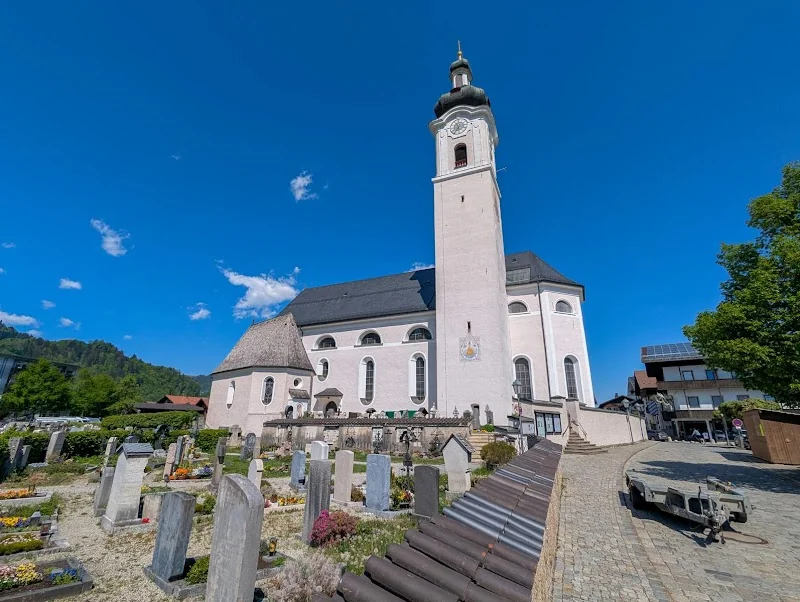
The Catholic Church of Our Lady in Oberaudorf is much more than a place for services. It is a historical center of the parish, a visible landmark of the town, and a space where several centuries of construction, faith, and community history overlap. Those who visit the church at Oberfeldweg 2 encounter not only a striking sacred building but also a place that has been repeatedly renewed, damaged, expanded, and lovingly preserved over a long period. This mixture of continuity and change gives it its special charm. The church is open, well integrated into the local structure, and continues to shape the image of Oberaudorf with its tower, its Marian reference, and its vibrant use to this day. For visitors who wish to experience history, art, liturgy, and local traditions in one place, it is therefore a particularly exciting destination. ([erzbistum-muenchen.de](https://www.erzbistum-muenchen.de/pfarrei/pv-oberes-inntal/Pfarrei_Oberaudorf/Kirchen-Kapellen/Pfarrkirche-zu-unserer-Lieben-Frau))
The verified official sources clearly show that the church is not only a monument but also a living part of the Oberes Inntal parish association. In the vicinity of the house of worship are the parish office, parish hall, and the structures of the community, along with festivals, groups, church music, and the Marian devotion that has shaped Oberaudorf for centuries. The construction history is also impressive: from an early basilica to Romanesque and late Gothic forms to Baroque and Neo-Baroque influences, a multifaceted appearance emerged that consciously does not display a pure style but makes the history of the place visible. Those who engage with this place, in a sense, read the history of Oberaudorf in stone, wood, stucco, and music. ([erzbistum-muenchen.de](https://www.erzbistum-muenchen.de/pfarrei/pv-oberes-inntal/Pfarrei_Oberaudorf/Kirchen-Kapellen/Pfarrkirche-zu-unserer-Lieben-Frau))
History and Construction History of the Parish Church
The construction history of the church officially begins with the so-called Wooden Basilica of 792. In its place initially stood an unknown Romanesque building, before a presumably double-nave late Gothic church with an older tower was constructed at the end of the 15th century. Parts of the apse and nave still originate from this late Gothic structure, while the interior and windows were designed in Baroque style in the 17th century. Even these few key dates show that the church does not present a uniform style but is a historically grown ensemble in which older and younger layers coexist. For visitors, this is precisely what is exciting: one does not only see a church space but a documented development over many generations. ([erzbistum-muenchen.de](https://www.erzbistum-muenchen.de/pfarrei/pv-oberes-inntal/Pfarrei_Oberaudorf/Kirchen-Kapellen/Pfarrkirche-zu-unserer-Lieben-Frau))
The church has been severely damaged multiple times over the last 500 years. The official sources mention, among other things, destructions and damages in the years 1504, around 1638, 1704, 1743, and 1823. The causes were war events, lightning strikes, and the tumultuous history of the Inntal. Particularly notable is the fire of 1823, when the tower and roof again fell victim to the flames. Afterwards, the church was rebuilt and expanded from 1831 to 1833 by Johann Karmann from Rosenheim and the Oberaudorf master carpenter Sebastian Wildgruber. During this process, the vaults were demolished, the interior was raised, the nave was extended to the west, and the tower was restored to its former form. These interventions decisively shape the present appearance. ([erzbistum-muenchen.de](https://www.erzbistum-muenchen.de/pfarrei/pv-oberes-inntal/Pfarrei_Oberaudorf/Kirchen-Kapellen/Pfarrkirche-zu-unserer-Lieben-Frau/cont/123270))
Additionally, the Baroque form of the tower, which according to tourism and church sources is based on plans by Abraham Millauer, rises above the Gothic substructure of the 14th and 15th centuries. The tower is also the landmark of the town and bears on its east side the image of Mary as a thank you for her protection. On its south side, traces of the great fire of 1823 are still visible. The church floor today lies 1.6 to 1.7 meters higher than before, indicating later renovations and changes. Thus, standing before the building, one sees not only a single epoch but a piece of living architectural history that spans from the early Middle Ages to the present. ([chiemsee-alpenland.de](https://www.chiemsee-alpenland.de/entdecken/alle-sehenswuerdigkeiten/pfarrkirche-zu-unserer-lieben-frau-b77f9531c1))
Marian Patronage, Open Church, and Significance in the Town
The church has always been dedicated to Mary as the Comforter of the Afflicted and celebrates its patronage on the Feast of the Assumption of Mary on August 15. It is also officially reported that the population celebrates Saturday as the honor day of the patroness. This veneration of Mary is not a decorative element but the spiritual center of the parish. Particularly significant is the Gothic image of grace of Mary, which continues to make the church a highly visited place today. In the connection of historical building form and spiritual practice lies a great strength of the house of worship: it is not only an architectural testimony but also a place of lived piety. ([chiemsee-alpenland.de](https://www.chiemsee-alpenland.de/entdecken/alle-sehenswuerdigkeiten/pfarrkirche-zu-unserer-lieben-frau-b77f9531c1))
Additionally, according to the official tourism site, the church is always open. This is a clear advantage for travelers, walkers, locals, and quiet visitors, as one can experience the space independently of fixed opening hours. Especially for a church with such a long history, the constant openness acts as an invitation to not only observe the place but to give it a moment of time. The tower with the Marian figure, the historical masonry, and the calm interior effect make the church a place where local identity and faith meet directly. For Oberaudorf, the building is therefore much more than a monument: it is a visible sign of continuity and a spiritual reference point in the daily life of the town. ([chiemsee-alpenland.de](https://www.chiemsee-alpenland.de/entdecken/alle-sehenswuerdigkeiten/pfarrkirche-zu-unserer-lieben-frau-b77f9531c1))
Church Organ, Interior, and Musical Tradition
A central piece of equipment in the church is the organ by Jann Orgelbau, which was inaugurated on March 25, 2001. According to the official description, it has 23 registers distributed across the first manual, the second manual, and the pedal. The instrument has a total of 1,508 pipes; mechanical key action and electric stop action combine traditional playing style with modern technology. The location is also remarkable: the organ was installed on the third gallery, thus towering over the entire church space. For services, choral music, and festive liturgy, this is a defining accent that strongly influences the acoustic and visual character of the interior. ([erzbistum-muenchen.de](https://www.erzbistum-muenchen.de/pfarrei/pv-oberes-inntal/Pfarrei_Oberaudorf/Kirchen-Kapellen/Pfarrkirche-zu-unserer-Lieben-Frau/cont/124034))
However, the musical tradition of the church goes back further than the current organ. In the construction history, a new organ by the organ maker Andreas Mitterreither from Altötting is already mentioned for 1750. In 1760, a new organ choir railing by Marx Grueber was created, and in the 18th century, various beautifications, renovations, and expansions are also documented. This shows that music has always been a part of church life in Oberaudorf and has not only played a role in the present. The construction of the current console is also interesting: the organist sits freely with a view of the altar area and can also lead the choir from there. Thus, the organ is not just an instrument but an active part of the liturgical community. ([erzbistum-muenchen.de](https://www.erzbistum-muenchen.de/pfarrei/pv-oberes-inntal/Pfarrei_Oberaudorf/Kirchen-Kapellen/Pfarrkirche-zu-unserer-Lieben-Frau/cont/124034))
The interior itself benefits from this musical and historical density. According to the official description, the interior was designed in Baroque style in the 17th century, later Neo-Baroque and Neo-Renaissance interventions were added. This results in a space that does not show a museum-like stagnation but rather a grown usage. Precisely for this reason, the church often appears particularly impressive to visitors: it is not sterilely preserved but lives from layers, additions, and liturgical practice. Upon entering the space, one feels the connection of sound, image, architecture, and religious presence. The organ is one of the strongest signs that the church today is not only to be observed but also wants to be heard. ([erzbistum-muenchen.de](https://www.erzbistum-muenchen.de/pfarrei/pv-oberes-inntal/Pfarrei_Oberaudorf/Kirchen-Kapellen/Pfarrkirche-zu-unserer-Lieben-Frau))
Parish Office, Services, and Special Festivals in Oberaudorf
The church is associated with the parish office of Our Lady at Oberfeldweg 2 in 83080 Oberaudorf. The official contact information is telephone 08033-1459 and email Zu-unserer-lieben-Frau.Oberaudorf@ebmuc.de. In the Oberes Inntal parish association, the parish is part of a vibrant structure with services, groups, pastoral offerings, and joint organization. The website of the archdiocese lists for Oberaudorf, among other things, church choir and church music, children and families, altar servers, women's community, and All Souls' Brotherhood. This is important for visitors because it shows: this church is not only historically interesting but also firmly anchored organizationally and communally. ([erzbistum-muenchen.de](https://www.erzbistum-muenchen.de/pfarrei/pv-oberes-inntal/Pfarrei_Oberaudorf/Kirchen-Kapellen/Pfarrkirche-zu-unserer-Lieben-Frau))
The parish of Oberaudorf also celebrates special festivals throughout the church year, according to official pages. These include the Anna Festival on Nuslberg, the Laurenti Festival at the spa park with procession, as well as the harvest festival and the association anniversary. In the reports of the parish, Corpus Christi is also documented as a festive day with a service in the parish church and subsequent procession; the church choir, local associations, and music bands participate. This is a strong sign of the close connection between faith, customs, and village life. Therefore, those who want to get to know Oberaudorf best understand the church not in isolation but as the center of an active religious culture. ([erzbistum-muenchen.de](https://www.erzbistum-muenchen.de/pfarrei/pv-oberes-inntal/Ueber_uns/Besondere-Feste?utm_source=openai))
The rest of the service and community structure also illustrates the significance of the place. The parish association refers to digital offerings, reports from the parish, and several church institutions in the vicinity. This makes the church part of a contemporary, not only historical but also practically organized community landscape. For those seeking parish office, services, church music events, or special festivals, the church is therefore a reliable point of orientation. At the same time, its openness and constant accessibility also make it attractive for spontaneous visitors. This mixture of tradition, service, and openness contributes to its SEO value as well as its real significance on site. ([erzbistum-muenchen.de](https://www.erzbistum-muenchen.de/pfarrei/pv-oberes-inntal/zu-unserer-lieben-frau-oberaudorf?utm_source=openai))
Directions, Location, and Practical Tips for Visiting
The church is located at Oberfeldweg 2 in 83080 Oberaudorf. This address is uniformly mentioned on the official church and tourism site and is therefore the best orientation for getting there. Those coming by car should orient themselves to the address and the parish office, as the verified official pages do not specify any separately designated parking spaces directly at the church. For current questions about parking options, contacting the parish office is therefore the safe point of contact. The advantage of the location lies in its clear findability: the church building is well anchored within the town and can be easily reached through the local structure of Oberaudorf. ([erzbistum-muenchen.de](https://www.erzbistum-muenchen.de/pfarrei/pv-oberes-inntal/Pfarrei_Oberaudorf/Kirchen-Kapellen/Pfarrkirche-zu-unserer-Lieben-Frau))
For visitors who want to discover Oberaudorf on foot, the church is a very sensible stop. As it is always open, it can also be spontaneously incorporated into a local tour. The region around Oberaudorf is strongly shaped by mountains, valleys, and traditional townscapes, and the parish church stands precisely in this cultural context. Those seeking tranquility, architecture, and local history will find a place here where they can linger for a few minutes or stay much longer. The contrast between the quiet church space and the lively community outside makes the visit pleasant and authentic. Those who wish to discover further religious sites of the parish afterwards will find additional destinations in the same spiritual environment, such as Nuslberg Chapel, St. Anna, and other chapels. ([chiemsee-alpenland.de](https://www.chiemsee-alpenland.de/entdecken/alle-sehenswuerdigkeiten/pfarrkirche-zu-unserer-lieben-frau-b77f9531c1))
From a content perspective, the church is also a worthwhile destination for a trip to Oberaudorf. It bundles the core themes that visitors often seek: history, construction history, Marian devotion, organ, parish office, open church, services, and special festivals. This makes it a perfect fit for an SEO-oriented yet factually correct presentation. Those who arrive on site experience not a tourist showroom but a real church space with tradition, usage, and dignity. Precisely for this reason, a conscious visit is worthwhile: not only for photographing but for understanding the place. ([erzbistum-muenchen.de](https://www.erzbistum-muenchen.de/pfarrei/pv-oberes-inntal/Pfarrei_Oberaudorf/Kirchen-Kapellen/Pfarrkirche-zu-unserer-Lieben-Frau))
Sources:
- Parish Church of Our Lady - Archdiocese of Munich and Freising
- Parish Church of Our Lady - Construction History
- Parish Church of Our Lady - Organ
- Chiemsee-Alpenland Tourism - Parish Church of Our Lady
- Parish Oberaudorf - Archdiocese of Munich and Freising
- Parish Association Oberes Inntal - Special Festivals
- Parish Oberaudorf - Reports from Oberaudorf
Show moreShow less
Catholic Church of Our Lady | History & Organ
The Catholic Church of Our Lady in Oberaudorf is much more than a place for services. It is a historical center of the parish, a visible landmark of the town, and a space where several centuries of construction, faith, and community history overlap. Those who visit the church at Oberfeldweg 2 encounter not only a striking sacred building but also a place that has been repeatedly renewed, damaged, expanded, and lovingly preserved over a long period. This mixture of continuity and change gives it its special charm. The church is open, well integrated into the local structure, and continues to shape the image of Oberaudorf with its tower, its Marian reference, and its vibrant use to this day. For visitors who wish to experience history, art, liturgy, and local traditions in one place, it is therefore a particularly exciting destination. ([erzbistum-muenchen.de](https://www.erzbistum-muenchen.de/pfarrei/pv-oberes-inntal/Pfarrei_Oberaudorf/Kirchen-Kapellen/Pfarrkirche-zu-unserer-Lieben-Frau))
The verified official sources clearly show that the church is not only a monument but also a living part of the Oberes Inntal parish association. In the vicinity of the house of worship are the parish office, parish hall, and the structures of the community, along with festivals, groups, church music, and the Marian devotion that has shaped Oberaudorf for centuries. The construction history is also impressive: from an early basilica to Romanesque and late Gothic forms to Baroque and Neo-Baroque influences, a multifaceted appearance emerged that consciously does not display a pure style but makes the history of the place visible. Those who engage with this place, in a sense, read the history of Oberaudorf in stone, wood, stucco, and music. ([erzbistum-muenchen.de](https://www.erzbistum-muenchen.de/pfarrei/pv-oberes-inntal/Pfarrei_Oberaudorf/Kirchen-Kapellen/Pfarrkirche-zu-unserer-Lieben-Frau))
History and Construction History of the Parish Church
The construction history of the church officially begins with the so-called Wooden Basilica of 792. In its place initially stood an unknown Romanesque building, before a presumably double-nave late Gothic church with an older tower was constructed at the end of the 15th century. Parts of the apse and nave still originate from this late Gothic structure, while the interior and windows were designed in Baroque style in the 17th century. Even these few key dates show that the church does not present a uniform style but is a historically grown ensemble in which older and younger layers coexist. For visitors, this is precisely what is exciting: one does not only see a church space but a documented development over many generations. ([erzbistum-muenchen.de](https://www.erzbistum-muenchen.de/pfarrei/pv-oberes-inntal/Pfarrei_Oberaudorf/Kirchen-Kapellen/Pfarrkirche-zu-unserer-Lieben-Frau))
The church has been severely damaged multiple times over the last 500 years. The official sources mention, among other things, destructions and damages in the years 1504, around 1638, 1704, 1743, and 1823. The causes were war events, lightning strikes, and the tumultuous history of the Inntal. Particularly notable is the fire of 1823, when the tower and roof again fell victim to the flames. Afterwards, the church was rebuilt and expanded from 1831 to 1833 by Johann Karmann from Rosenheim and the Oberaudorf master carpenter Sebastian Wildgruber. During this process, the vaults were demolished, the interior was raised, the nave was extended to the west, and the tower was restored to its former form. These interventions decisively shape the present appearance. ([erzbistum-muenchen.de](https://www.erzbistum-muenchen.de/pfarrei/pv-oberes-inntal/Pfarrei_Oberaudorf/Kirchen-Kapellen/Pfarrkirche-zu-unserer-Lieben-Frau/cont/123270))
Additionally, the Baroque form of the tower, which according to tourism and church sources is based on plans by Abraham Millauer, rises above the Gothic substructure of the 14th and 15th centuries. The tower is also the landmark of the town and bears on its east side the image of Mary as a thank you for her protection. On its south side, traces of the great fire of 1823 are still visible. The church floor today lies 1.6 to 1.7 meters higher than before, indicating later renovations and changes. Thus, standing before the building, one sees not only a single epoch but a piece of living architectural history that spans from the early Middle Ages to the present. ([chiemsee-alpenland.de](https://www.chiemsee-alpenland.de/entdecken/alle-sehenswuerdigkeiten/pfarrkirche-zu-unserer-lieben-frau-b77f9531c1))
Marian Patronage, Open Church, and Significance in the Town
The church has always been dedicated to Mary as the Comforter of the Afflicted and celebrates its patronage on the Feast of the Assumption of Mary on August 15. It is also officially reported that the population celebrates Saturday as the honor day of the patroness. This veneration of Mary is not a decorative element but the spiritual center of the parish. Particularly significant is the Gothic image of grace of Mary, which continues to make the church a highly visited place today. In the connection of historical building form and spiritual practice lies a great strength of the house of worship: it is not only an architectural testimony but also a place of lived piety. ([chiemsee-alpenland.de](https://www.chiemsee-alpenland.de/entdecken/alle-sehenswuerdigkeiten/pfarrkirche-zu-unserer-lieben-frau-b77f9531c1))
Additionally, according to the official tourism site, the church is always open. This is a clear advantage for travelers, walkers, locals, and quiet visitors, as one can experience the space independently of fixed opening hours. Especially for a church with such a long history, the constant openness acts as an invitation to not only observe the place but to give it a moment of time. The tower with the Marian figure, the historical masonry, and the calm interior effect make the church a place where local identity and faith meet directly. For Oberaudorf, the building is therefore much more than a monument: it is a visible sign of continuity and a spiritual reference point in the daily life of the town. ([chiemsee-alpenland.de](https://www.chiemsee-alpenland.de/entdecken/alle-sehenswuerdigkeiten/pfarrkirche-zu-unserer-lieben-frau-b77f9531c1))
Church Organ, Interior, and Musical Tradition
A central piece of equipment in the church is the organ by Jann Orgelbau, which was inaugurated on March 25, 2001. According to the official description, it has 23 registers distributed across the first manual, the second manual, and the pedal. The instrument has a total of 1,508 pipes; mechanical key action and electric stop action combine traditional playing style with modern technology. The location is also remarkable: the organ was installed on the third gallery, thus towering over the entire church space. For services, choral music, and festive liturgy, this is a defining accent that strongly influences the acoustic and visual character of the interior. ([erzbistum-muenchen.de](https://www.erzbistum-muenchen.de/pfarrei/pv-oberes-inntal/Pfarrei_Oberaudorf/Kirchen-Kapellen/Pfarrkirche-zu-unserer-Lieben-Frau/cont/124034))
However, the musical tradition of the church goes back further than the current organ. In the construction history, a new organ by the organ maker Andreas Mitterreither from Altötting is already mentioned for 1750. In 1760, a new organ choir railing by Marx Grueber was created, and in the 18th century, various beautifications, renovations, and expansions are also documented. This shows that music has always been a part of church life in Oberaudorf and has not only played a role in the present. The construction of the current console is also interesting: the organist sits freely with a view of the altar area and can also lead the choir from there. Thus, the organ is not just an instrument but an active part of the liturgical community. ([erzbistum-muenchen.de](https://www.erzbistum-muenchen.de/pfarrei/pv-oberes-inntal/Pfarrei_Oberaudorf/Kirchen-Kapellen/Pfarrkirche-zu-unserer-Lieben-Frau/cont/124034))
The interior itself benefits from this musical and historical density. According to the official description, the interior was designed in Baroque style in the 17th century, later Neo-Baroque and Neo-Renaissance interventions were added. This results in a space that does not show a museum-like stagnation but rather a grown usage. Precisely for this reason, the church often appears particularly impressive to visitors: it is not sterilely preserved but lives from layers, additions, and liturgical practice. Upon entering the space, one feels the connection of sound, image, architecture, and religious presence. The organ is one of the strongest signs that the church today is not only to be observed but also wants to be heard. ([erzbistum-muenchen.de](https://www.erzbistum-muenchen.de/pfarrei/pv-oberes-inntal/Pfarrei_Oberaudorf/Kirchen-Kapellen/Pfarrkirche-zu-unserer-Lieben-Frau))
Parish Office, Services, and Special Festivals in Oberaudorf
The church is associated with the parish office of Our Lady at Oberfeldweg 2 in 83080 Oberaudorf. The official contact information is telephone 08033-1459 and email Zu-unserer-lieben-Frau.Oberaudorf@ebmuc.de. In the Oberes Inntal parish association, the parish is part of a vibrant structure with services, groups, pastoral offerings, and joint organization. The website of the archdiocese lists for Oberaudorf, among other things, church choir and church music, children and families, altar servers, women's community, and All Souls' Brotherhood. This is important for visitors because it shows: this church is not only historically interesting but also firmly anchored organizationally and communally. ([erzbistum-muenchen.de](https://www.erzbistum-muenchen.de/pfarrei/pv-oberes-inntal/Pfarrei_Oberaudorf/Kirchen-Kapellen/Pfarrkirche-zu-unserer-Lieben-Frau))
The parish of Oberaudorf also celebrates special festivals throughout the church year, according to official pages. These include the Anna Festival on Nuslberg, the Laurenti Festival at the spa park with procession, as well as the harvest festival and the association anniversary. In the reports of the parish, Corpus Christi is also documented as a festive day with a service in the parish church and subsequent procession; the church choir, local associations, and music bands participate. This is a strong sign of the close connection between faith, customs, and village life. Therefore, those who want to get to know Oberaudorf best understand the church not in isolation but as the center of an active religious culture. ([erzbistum-muenchen.de](https://www.erzbistum-muenchen.de/pfarrei/pv-oberes-inntal/Ueber_uns/Besondere-Feste?utm_source=openai))
The rest of the service and community structure also illustrates the significance of the place. The parish association refers to digital offerings, reports from the parish, and several church institutions in the vicinity. This makes the church part of a contemporary, not only historical but also practically organized community landscape. For those seeking parish office, services, church music events, or special festivals, the church is therefore a reliable point of orientation. At the same time, its openness and constant accessibility also make it attractive for spontaneous visitors. This mixture of tradition, service, and openness contributes to its SEO value as well as its real significance on site. ([erzbistum-muenchen.de](https://www.erzbistum-muenchen.de/pfarrei/pv-oberes-inntal/zu-unserer-lieben-frau-oberaudorf?utm_source=openai))
Directions, Location, and Practical Tips for Visiting
The church is located at Oberfeldweg 2 in 83080 Oberaudorf. This address is uniformly mentioned on the official church and tourism site and is therefore the best orientation for getting there. Those coming by car should orient themselves to the address and the parish office, as the verified official pages do not specify any separately designated parking spaces directly at the church. For current questions about parking options, contacting the parish office is therefore the safe point of contact. The advantage of the location lies in its clear findability: the church building is well anchored within the town and can be easily reached through the local structure of Oberaudorf. ([erzbistum-muenchen.de](https://www.erzbistum-muenchen.de/pfarrei/pv-oberes-inntal/Pfarrei_Oberaudorf/Kirchen-Kapellen/Pfarrkirche-zu-unserer-Lieben-Frau))
For visitors who want to discover Oberaudorf on foot, the church is a very sensible stop. As it is always open, it can also be spontaneously incorporated into a local tour. The region around Oberaudorf is strongly shaped by mountains, valleys, and traditional townscapes, and the parish church stands precisely in this cultural context. Those seeking tranquility, architecture, and local history will find a place here where they can linger for a few minutes or stay much longer. The contrast between the quiet church space and the lively community outside makes the visit pleasant and authentic. Those who wish to discover further religious sites of the parish afterwards will find additional destinations in the same spiritual environment, such as Nuslberg Chapel, St. Anna, and other chapels. ([chiemsee-alpenland.de](https://www.chiemsee-alpenland.de/entdecken/alle-sehenswuerdigkeiten/pfarrkirche-zu-unserer-lieben-frau-b77f9531c1))
From a content perspective, the church is also a worthwhile destination for a trip to Oberaudorf. It bundles the core themes that visitors often seek: history, construction history, Marian devotion, organ, parish office, open church, services, and special festivals. This makes it a perfect fit for an SEO-oriented yet factually correct presentation. Those who arrive on site experience not a tourist showroom but a real church space with tradition, usage, and dignity. Precisely for this reason, a conscious visit is worthwhile: not only for photographing but for understanding the place. ([erzbistum-muenchen.de](https://www.erzbistum-muenchen.de/pfarrei/pv-oberes-inntal/Pfarrei_Oberaudorf/Kirchen-Kapellen/Pfarrkirche-zu-unserer-Lieben-Frau))
Sources:
- Parish Church of Our Lady - Archdiocese of Munich and Freising
- Parish Church of Our Lady - Construction History
- Parish Church of Our Lady - Organ
- Chiemsee-Alpenland Tourism - Parish Church of Our Lady
- Parish Oberaudorf - Archdiocese of Munich and Freising
- Parish Association Oberes Inntal - Special Festivals
- Parish Oberaudorf - Reports from Oberaudorf
Catholic Church of Our Lady | History & Organ
The Catholic Church of Our Lady in Oberaudorf is much more than a place for services. It is a historical center of the parish, a visible landmark of the town, and a space where several centuries of construction, faith, and community history overlap. Those who visit the church at Oberfeldweg 2 encounter not only a striking sacred building but also a place that has been repeatedly renewed, damaged, expanded, and lovingly preserved over a long period. This mixture of continuity and change gives it its special charm. The church is open, well integrated into the local structure, and continues to shape the image of Oberaudorf with its tower, its Marian reference, and its vibrant use to this day. For visitors who wish to experience history, art, liturgy, and local traditions in one place, it is therefore a particularly exciting destination. ([erzbistum-muenchen.de](https://www.erzbistum-muenchen.de/pfarrei/pv-oberes-inntal/Pfarrei_Oberaudorf/Kirchen-Kapellen/Pfarrkirche-zu-unserer-Lieben-Frau))
The verified official sources clearly show that the church is not only a monument but also a living part of the Oberes Inntal parish association. In the vicinity of the house of worship are the parish office, parish hall, and the structures of the community, along with festivals, groups, church music, and the Marian devotion that has shaped Oberaudorf for centuries. The construction history is also impressive: from an early basilica to Romanesque and late Gothic forms to Baroque and Neo-Baroque influences, a multifaceted appearance emerged that consciously does not display a pure style but makes the history of the place visible. Those who engage with this place, in a sense, read the history of Oberaudorf in stone, wood, stucco, and music. ([erzbistum-muenchen.de](https://www.erzbistum-muenchen.de/pfarrei/pv-oberes-inntal/Pfarrei_Oberaudorf/Kirchen-Kapellen/Pfarrkirche-zu-unserer-Lieben-Frau))
History and Construction History of the Parish Church
The construction history of the church officially begins with the so-called Wooden Basilica of 792. In its place initially stood an unknown Romanesque building, before a presumably double-nave late Gothic church with an older tower was constructed at the end of the 15th century. Parts of the apse and nave still originate from this late Gothic structure, while the interior and windows were designed in Baroque style in the 17th century. Even these few key dates show that the church does not present a uniform style but is a historically grown ensemble in which older and younger layers coexist. For visitors, this is precisely what is exciting: one does not only see a church space but a documented development over many generations. ([erzbistum-muenchen.de](https://www.erzbistum-muenchen.de/pfarrei/pv-oberes-inntal/Pfarrei_Oberaudorf/Kirchen-Kapellen/Pfarrkirche-zu-unserer-Lieben-Frau))
The church has been severely damaged multiple times over the last 500 years. The official sources mention, among other things, destructions and damages in the years 1504, around 1638, 1704, 1743, and 1823. The causes were war events, lightning strikes, and the tumultuous history of the Inntal. Particularly notable is the fire of 1823, when the tower and roof again fell victim to the flames. Afterwards, the church was rebuilt and expanded from 1831 to 1833 by Johann Karmann from Rosenheim and the Oberaudorf master carpenter Sebastian Wildgruber. During this process, the vaults were demolished, the interior was raised, the nave was extended to the west, and the tower was restored to its former form. These interventions decisively shape the present appearance. ([erzbistum-muenchen.de](https://www.erzbistum-muenchen.de/pfarrei/pv-oberes-inntal/Pfarrei_Oberaudorf/Kirchen-Kapellen/Pfarrkirche-zu-unserer-Lieben-Frau/cont/123270))
Additionally, the Baroque form of the tower, which according to tourism and church sources is based on plans by Abraham Millauer, rises above the Gothic substructure of the 14th and 15th centuries. The tower is also the landmark of the town and bears on its east side the image of Mary as a thank you for her protection. On its south side, traces of the great fire of 1823 are still visible. The church floor today lies 1.6 to 1.7 meters higher than before, indicating later renovations and changes. Thus, standing before the building, one sees not only a single epoch but a piece of living architectural history that spans from the early Middle Ages to the present. ([chiemsee-alpenland.de](https://www.chiemsee-alpenland.de/entdecken/alle-sehenswuerdigkeiten/pfarrkirche-zu-unserer-lieben-frau-b77f9531c1))
Marian Patronage, Open Church, and Significance in the Town
The church has always been dedicated to Mary as the Comforter of the Afflicted and celebrates its patronage on the Feast of the Assumption of Mary on August 15. It is also officially reported that the population celebrates Saturday as the honor day of the patroness. This veneration of Mary is not a decorative element but the spiritual center of the parish. Particularly significant is the Gothic image of grace of Mary, which continues to make the church a highly visited place today. In the connection of historical building form and spiritual practice lies a great strength of the house of worship: it is not only an architectural testimony but also a place of lived piety. ([chiemsee-alpenland.de](https://www.chiemsee-alpenland.de/entdecken/alle-sehenswuerdigkeiten/pfarrkirche-zu-unserer-lieben-frau-b77f9531c1))
Additionally, according to the official tourism site, the church is always open. This is a clear advantage for travelers, walkers, locals, and quiet visitors, as one can experience the space independently of fixed opening hours. Especially for a church with such a long history, the constant openness acts as an invitation to not only observe the place but to give it a moment of time. The tower with the Marian figure, the historical masonry, and the calm interior effect make the church a place where local identity and faith meet directly. For Oberaudorf, the building is therefore much more than a monument: it is a visible sign of continuity and a spiritual reference point in the daily life of the town. ([chiemsee-alpenland.de](https://www.chiemsee-alpenland.de/entdecken/alle-sehenswuerdigkeiten/pfarrkirche-zu-unserer-lieben-frau-b77f9531c1))
Church Organ, Interior, and Musical Tradition
A central piece of equipment in the church is the organ by Jann Orgelbau, which was inaugurated on March 25, 2001. According to the official description, it has 23 registers distributed across the first manual, the second manual, and the pedal. The instrument has a total of 1,508 pipes; mechanical key action and electric stop action combine traditional playing style with modern technology. The location is also remarkable: the organ was installed on the third gallery, thus towering over the entire church space. For services, choral music, and festive liturgy, this is a defining accent that strongly influences the acoustic and visual character of the interior. ([erzbistum-muenchen.de](https://www.erzbistum-muenchen.de/pfarrei/pv-oberes-inntal/Pfarrei_Oberaudorf/Kirchen-Kapellen/Pfarrkirche-zu-unserer-Lieben-Frau/cont/124034))
However, the musical tradition of the church goes back further than the current organ. In the construction history, a new organ by the organ maker Andreas Mitterreither from Altötting is already mentioned for 1750. In 1760, a new organ choir railing by Marx Grueber was created, and in the 18th century, various beautifications, renovations, and expansions are also documented. This shows that music has always been a part of church life in Oberaudorf and has not only played a role in the present. The construction of the current console is also interesting: the organist sits freely with a view of the altar area and can also lead the choir from there. Thus, the organ is not just an instrument but an active part of the liturgical community. ([erzbistum-muenchen.de](https://www.erzbistum-muenchen.de/pfarrei/pv-oberes-inntal/Pfarrei_Oberaudorf/Kirchen-Kapellen/Pfarrkirche-zu-unserer-Lieben-Frau/cont/124034))
The interior itself benefits from this musical and historical density. According to the official description, the interior was designed in Baroque style in the 17th century, later Neo-Baroque and Neo-Renaissance interventions were added. This results in a space that does not show a museum-like stagnation but rather a grown usage. Precisely for this reason, the church often appears particularly impressive to visitors: it is not sterilely preserved but lives from layers, additions, and liturgical practice. Upon entering the space, one feels the connection of sound, image, architecture, and religious presence. The organ is one of the strongest signs that the church today is not only to be observed but also wants to be heard. ([erzbistum-muenchen.de](https://www.erzbistum-muenchen.de/pfarrei/pv-oberes-inntal/Pfarrei_Oberaudorf/Kirchen-Kapellen/Pfarrkirche-zu-unserer-Lieben-Frau))
Parish Office, Services, and Special Festivals in Oberaudorf
The church is associated with the parish office of Our Lady at Oberfeldweg 2 in 83080 Oberaudorf. The official contact information is telephone 08033-1459 and email Zu-unserer-lieben-Frau.Oberaudorf@ebmuc.de. In the Oberes Inntal parish association, the parish is part of a vibrant structure with services, groups, pastoral offerings, and joint organization. The website of the archdiocese lists for Oberaudorf, among other things, church choir and church music, children and families, altar servers, women's community, and All Souls' Brotherhood. This is important for visitors because it shows: this church is not only historically interesting but also firmly anchored organizationally and communally. ([erzbistum-muenchen.de](https://www.erzbistum-muenchen.de/pfarrei/pv-oberes-inntal/Pfarrei_Oberaudorf/Kirchen-Kapellen/Pfarrkirche-zu-unserer-Lieben-Frau))
The parish of Oberaudorf also celebrates special festivals throughout the church year, according to official pages. These include the Anna Festival on Nuslberg, the Laurenti Festival at the spa park with procession, as well as the harvest festival and the association anniversary. In the reports of the parish, Corpus Christi is also documented as a festive day with a service in the parish church and subsequent procession; the church choir, local associations, and music bands participate. This is a strong sign of the close connection between faith, customs, and village life. Therefore, those who want to get to know Oberaudorf best understand the church not in isolation but as the center of an active religious culture. ([erzbistum-muenchen.de](https://www.erzbistum-muenchen.de/pfarrei/pv-oberes-inntal/Ueber_uns/Besondere-Feste?utm_source=openai))
The rest of the service and community structure also illustrates the significance of the place. The parish association refers to digital offerings, reports from the parish, and several church institutions in the vicinity. This makes the church part of a contemporary, not only historical but also practically organized community landscape. For those seeking parish office, services, church music events, or special festivals, the church is therefore a reliable point of orientation. At the same time, its openness and constant accessibility also make it attractive for spontaneous visitors. This mixture of tradition, service, and openness contributes to its SEO value as well as its real significance on site. ([erzbistum-muenchen.de](https://www.erzbistum-muenchen.de/pfarrei/pv-oberes-inntal/zu-unserer-lieben-frau-oberaudorf?utm_source=openai))
Directions, Location, and Practical Tips for Visiting
The church is located at Oberfeldweg 2 in 83080 Oberaudorf. This address is uniformly mentioned on the official church and tourism site and is therefore the best orientation for getting there. Those coming by car should orient themselves to the address and the parish office, as the verified official pages do not specify any separately designated parking spaces directly at the church. For current questions about parking options, contacting the parish office is therefore the safe point of contact. The advantage of the location lies in its clear findability: the church building is well anchored within the town and can be easily reached through the local structure of Oberaudorf. ([erzbistum-muenchen.de](https://www.erzbistum-muenchen.de/pfarrei/pv-oberes-inntal/Pfarrei_Oberaudorf/Kirchen-Kapellen/Pfarrkirche-zu-unserer-Lieben-Frau))
For visitors who want to discover Oberaudorf on foot, the church is a very sensible stop. As it is always open, it can also be spontaneously incorporated into a local tour. The region around Oberaudorf is strongly shaped by mountains, valleys, and traditional townscapes, and the parish church stands precisely in this cultural context. Those seeking tranquility, architecture, and local history will find a place here where they can linger for a few minutes or stay much longer. The contrast between the quiet church space and the lively community outside makes the visit pleasant and authentic. Those who wish to discover further religious sites of the parish afterwards will find additional destinations in the same spiritual environment, such as Nuslberg Chapel, St. Anna, and other chapels. ([chiemsee-alpenland.de](https://www.chiemsee-alpenland.de/entdecken/alle-sehenswuerdigkeiten/pfarrkirche-zu-unserer-lieben-frau-b77f9531c1))
From a content perspective, the church is also a worthwhile destination for a trip to Oberaudorf. It bundles the core themes that visitors often seek: history, construction history, Marian devotion, organ, parish office, open church, services, and special festivals. This makes it a perfect fit for an SEO-oriented yet factually correct presentation. Those who arrive on site experience not a tourist showroom but a real church space with tradition, usage, and dignity. Precisely for this reason, a conscious visit is worthwhile: not only for photographing but for understanding the place. ([erzbistum-muenchen.de](https://www.erzbistum-muenchen.de/pfarrei/pv-oberes-inntal/Pfarrei_Oberaudorf/Kirchen-Kapellen/Pfarrkirche-zu-unserer-Lieben-Frau))
Sources:
- Parish Church of Our Lady - Archdiocese of Munich and Freising
- Parish Church of Our Lady - Construction History
- Parish Church of Our Lady - Organ
- Chiemsee-Alpenland Tourism - Parish Church of Our Lady
- Parish Oberaudorf - Archdiocese of Munich and Freising
- Parish Association Oberes Inntal - Special Festivals
- Parish Oberaudorf - Reports from Oberaudorf
Frequently Asked Questions
Reviews
No reviews found