
Kiefersfelden
Innstraße 52, 83088 Kiefersfelden, Deutschland
Industriemuseum Blaahaus Kiefersfelden | Opening Hours & Directions
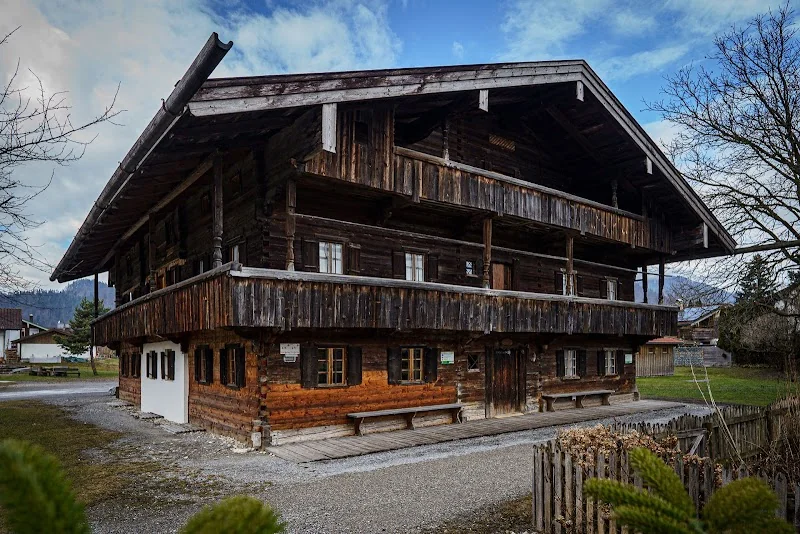
The Industriemuseum Blaahaus Kiefersfelden is a place where the past does not feel like a distant memory, but rather a vibrant part of the present. The listed building tells the story of a community that has evolved from a farming village to an industrial site of regional significance, connecting this development with people, professions, everyday worlds, and cultural traces that are still visible today. Those who visit the Blaahaus experience not just individual exhibits, but a carefully constructed narrative about work, transport, production, theater, music, and coexistence in the Inn Valley. The historic building itself is an essential part of the story: it was originally built as a workers' residential house for the ironworks and was later relocated with great dedication to its current site. Thus, upon entering, it becomes clear that authenticity, local relevance, and museum communication are closely intertwined. ([industriemuseum-blaahaus.de](https://www.industriemuseum-blaahaus.de/de/das-museum))
Opening Hours, Free Admission, and Visit Planning
Those planning a visit benefit from clear and uncomplicated conditions at the Industriemuseum Blaahaus. The museum is open year-round on Thursdays from 2:00 PM to 5:00 PM, including holidays. Additionally, visitors can come on Sundays between 2:00 PM and 5:00 PM. Admission is free, making the house particularly attractive for spontaneous cultural visits, families, day-trippers from the region, and guests looking for a brief but content-rich museum stop during their travels. The tourism page also notes that groups can visit by appointment and that voluntary donations are welcome. This openness fits very well with the overall orientation of the museum: it should be easily accessible without losing depth, and it explicitly invites visitors to not only look at history but to let it resonate with them. For search queries like blaahaus opening hours, blaahaus free admission, or museum blaahaus kiefersfelden, this information provides the most important practical details. ([industriemuseum-blaahaus.de](https://industriemuseum-blaahaus.de/de/museumsbesuch/oeffnungszeiten))
The length of the visit can also be tailored to personal interests. The official museum website describes the exhibition as a tour covering approximately 450 m² with 13 thematic areas and nearly 250 exhibits. Those who only want to get a first impression can focus on the central stations and still gain a clear picture of the development of Kiefersfelden. Those who want to dive deeper should bring more time, as the rooms are designed with historical documents, media offerings, interactive elements, and original objects that not only inform but also encourage close observation time and again. This is particularly pleasant when combining the visit with a walk through the town or a day trip in the Inn Valley. The museum thus does not feel overloaded, but rather structured and very accessible, making it suitable for both short visits and a conscious cultural appointment. ([industriemuseum-blaahaus.de](https://industriemuseum-blaahaus.de/))
Directions, Kiefersfelden Train Station, Parking, and Accessibility
Getting to the Industriemuseum Blaahaus is pleasantly straightforward. The address is Innstraße 52, 83088 Kiefersfelden. The official travel page mentions the Kiefersfelden train station as a particularly nearby stop. From there, a ten-minute walk through the underpass towards the Inn leads directly to the museum. The path is well-developed and paved, making it easy to organize a visit without a car. At the same time, the tourism page lists available parking spaces, making the location additionally convenient for day visitors and families. This combination of train connection, walking distance, and parking availability is particularly relevant for search queries like blaahaus directions and blaahaus parking, as it clearly answers the practical part of visit planning. ([industriemuseum-blaahaus.de](https://industriemuseum-blaahaus.de/de/museumsbesuch/anreise))
It is noteworthy how consistently the museum focuses on accessibility. The Blaahaus is barrier-free accessible, an elevator connects all three floors, and the exhibition is designed so that people with strollers, wheelchairs, or walkers can easily navigate the house. For visitors with hearing impairments, transcripts of the films and audio stations are available upon request at the ticket counter. These measures are not just a technical detail but an expression of the house's philosophy: history should be accessible to as many people as possible, regardless of mobility or individual needs. Especially in a historic building, this is a strong and contemporary solution. For families, school groups, senior groups, and international guests, this creates a tour that is pleasant, safe, and without major hurdles. ([industriemuseum-blaahaus.de](https://industriemuseum-blaahaus.de/de/museumsbesuch/anreise))
400 Years of Industrial History in the Blaahaus
The content strength of the Industriemuseum Blaahaus lies in the long and multifaceted industrial history of Kiefersfelden. The house itself was built in 1696 as a residential house for the workers of the ironworks and is now a listed building. Around 1700, an ironworks was established in Kiefersfelden next to the coal yard, founded by someone from Tyrol who brought about 200 compatriots to work here. For nearly two centuries, high-quality steel was produced there; it was not until 1877 that the last blast furnaces were taken out of operation. Thus, the Blaahaus is not just a place that reports on industry, but a building that has directly emerged from this history. When walking through the rooms, the separation between architecture and content is hardly perceptible, as both tell the same development: work, living, production, and social change in one place. ([tourismus-kiefersfelden.de](https://www.tourismus-kiefersfelden.de/blaahaus-museum-kiefersfelden/))
This history does not end with the ironworks. The museum places Kiefersfelden as a site with over 400 years of industrial history, where coal, iron, scythes, marble, and cement have repeatedly replaced and complemented each other. This clearly illustrates how flexibly the region has responded to economic changes. The exhibition also highlights the role of transport routes: even in Roman times, an important trade route ran through the Inn Valley, and later shipping, railways, and highways influenced the development of the town. This creates a broad picture in which production sites, transport routes, and the townscape are closely linked. Thus, those searching for industrial history kiefersfelden or blaahaus kiefersfelden will find not only local history here but also a vivid narrative about how landscape, work, and change interact in an alpine region. ([industriemuseum-blaahaus.de](https://industriemuseum-blaahaus.de/))
The Collection with 13 Exhibition Areas
The new permanent exhibition is spread across 13 areas and uses the rooms of the former workers' house very purposefully. On approximately 450 m², historical documents, original objects, models, material samples, and photographs are displayed; in total, the museum speaks of nearly 250 exhibits. Additionally, there are multimedia stations, interactive offerings, and panoramic photos that do not explain the content abstractly but make it spatially tangible. The result is an exhibition that does not seek quick sensory overload but rather understandable, carefully curated communication. This makes the Blaahaus interesting even for people who might rarely visit museums: one is not overwhelmed but gradually guided into history. For search queries like blaahaus photos or museum blaahaus, this presentation is particularly important as it shows that the museum is visually and content-wise well-equipped. ([industriemuseum-blaahaus.de](https://industriemuseum-blaahaus.de/))
The thematic structure covers the entire spectrum of local development. The area of local history & transport deals with the long mobility history from the Roman road through Inn Valley shipping to modern transport connections. Timber rafting & charcoal production reminds us that wood has been the most important energy source for millennia and that a charcoal yard existed in Kiefersfelden as early as 1611. The iron industry explains the production of iron and steel as well as the everyday work in the factory. The scythe industry shows how a craft in Mühlbach became an international industrial branch and that a scythe must undergo almost 30 work steps. The marble industry focuses on facades, mosaics, and artistic processing, while the cement industry marks the end of industrial production with the closure of the plant in 2002. Society & social issues, music, and theater connect this economic history with the lives of the people. ([industriemuseum-blaahaus.de](https://industriemuseum-blaahaus.de/de/das-museum/die-sammlung/ortsgeschichte-verkehrswesen))
Theater, Music, and Community Life in Kiefersfelden
A special appeal of the Industriemuseum Blaahaus lies in the fact that it does not stop at machines and production data but also considers the cultural identity of the place. Theater has been performed in Kiefersfelden for over 400 years, and this tradition is closely linked to industrial culture. Many workers engaged in their free time as actors, so theater was not only entertainment but also an expression of community and cultural belonging. The exhibition showcases historical theater costumes from the time of the Passion plays and refers to the genre of knight games, which established itself in the 19th century and continues to thrive today on the baroque stage of the town with its original folding and rotating sets. According to the reopening press release, the exhibition was deliberately designed to address the local theater tradition and coexistence in the German-Austrian border region. ([industriemuseum-blaahaus.de](https://industriemuseum-blaahaus.de/de/das-museum/die-sammlung/theater))
Music in the Blaahaus is also not just a background motif but a historical key to the community. The museum's website explains that the first music bands emerged from workers' associations and are now a fixed part of cultural life. The same applies to the community landscape, which has shaped social interaction for centuries and also has its origins in industry. In the area of society & social issues, it becomes clear how factory housing, workers' settlements, company social facilities, the first fire brigade, the Red Cross, and even the construction of kindergartens were connected to industrial development. This creates a very human image of Kiefersfelden: not only work and production count, but also help, education, leisure, music, and shared rituals. This connection between hard wage labor and vibrant cultural life makes the place in the museum so vivid and impressive. ([industriemuseum-blaahaus.de](https://industriemuseum-blaahaus.de/de/das-museum/die-sammlung/musik))
The Blaahaus as a Monument: Relocation, Collection, and Blaahaus Garden
The Blaahaus itself has as exciting a biography as the topics it presents today. In 1996, the building was dismantled at its original location and faithfully rebuilt at its current site. This relocation is thanks to a dedicated citizens' initiative with Sepp Bleier, Otto Plattner, and Josef Reheis, who volunteered from 1996 to manage and operate it and laid the foundation for the collection. The former local museum was transformed into the Industriemuseum Blaahaus as part of the redesign, which was ceremoniously reopened in November 2024. This development shows how strongly local engagement, museum professionalism, and regional identity interact here. The house thus preserves not only a historical building substance but also the memory of civic work for cultural heritage. ([industriemuseum-blaahaus.de](https://www.industriemuseum-blaahaus.de/de/das-museum))
The overall experience also includes the Blaahaus Garden, which was created between 1996 and 2000 to complement the historic building. It adds a showcase garden with typical farmhouse flowers as well as useful plants, kitchen, medicinal, and wild herbs from the surrounding area. This vividly illustrates the connection between work, everyday life, and nature. The garden shows that the museum not only talks about industry but also about ways of life, knowledge transfer, and local self-sufficiency. Additionally, there are English-language exhibition texts that open the tour for international guests, as well as the combination of free admission, good train connections, and barrier-free access. In total, a museum emerges that is much more than a local insider tip: it is a cleverly constructed place of remembrance where Kiefersfelden tells its history from various perspectives and offers visitors a clear, friendly, and content-rich access. ([tourismus-kiefersfelden.de](https://www.tourismus-kiefersfelden.de/blaahaus-museum-kiefersfelden/))
Sources:
- Industriemuseum Blaahaus - Homepage
- Industriemuseum Blaahaus - The Museum
- Industriemuseum Blaahaus - Directions
- Industriemuseum Blaahaus - Opening Hours
- Tourism Kiefersfelden - Industriemuseum Blaahaus Kiefersfelden
- State Office for Non-State Museums in Bavaria - Reopening of the Industriemuseum Blaahaus
Show moreShow less
Industriemuseum Blaahaus Kiefersfelden | Opening Hours & Directions
The Industriemuseum Blaahaus Kiefersfelden is a place where the past does not feel like a distant memory, but rather a vibrant part of the present. The listed building tells the story of a community that has evolved from a farming village to an industrial site of regional significance, connecting this development with people, professions, everyday worlds, and cultural traces that are still visible today. Those who visit the Blaahaus experience not just individual exhibits, but a carefully constructed narrative about work, transport, production, theater, music, and coexistence in the Inn Valley. The historic building itself is an essential part of the story: it was originally built as a workers' residential house for the ironworks and was later relocated with great dedication to its current site. Thus, upon entering, it becomes clear that authenticity, local relevance, and museum communication are closely intertwined. ([industriemuseum-blaahaus.de](https://www.industriemuseum-blaahaus.de/de/das-museum))
Opening Hours, Free Admission, and Visit Planning
Those planning a visit benefit from clear and uncomplicated conditions at the Industriemuseum Blaahaus. The museum is open year-round on Thursdays from 2:00 PM to 5:00 PM, including holidays. Additionally, visitors can come on Sundays between 2:00 PM and 5:00 PM. Admission is free, making the house particularly attractive for spontaneous cultural visits, families, day-trippers from the region, and guests looking for a brief but content-rich museum stop during their travels. The tourism page also notes that groups can visit by appointment and that voluntary donations are welcome. This openness fits very well with the overall orientation of the museum: it should be easily accessible without losing depth, and it explicitly invites visitors to not only look at history but to let it resonate with them. For search queries like blaahaus opening hours, blaahaus free admission, or museum blaahaus kiefersfelden, this information provides the most important practical details. ([industriemuseum-blaahaus.de](https://industriemuseum-blaahaus.de/de/museumsbesuch/oeffnungszeiten))
The length of the visit can also be tailored to personal interests. The official museum website describes the exhibition as a tour covering approximately 450 m² with 13 thematic areas and nearly 250 exhibits. Those who only want to get a first impression can focus on the central stations and still gain a clear picture of the development of Kiefersfelden. Those who want to dive deeper should bring more time, as the rooms are designed with historical documents, media offerings, interactive elements, and original objects that not only inform but also encourage close observation time and again. This is particularly pleasant when combining the visit with a walk through the town or a day trip in the Inn Valley. The museum thus does not feel overloaded, but rather structured and very accessible, making it suitable for both short visits and a conscious cultural appointment. ([industriemuseum-blaahaus.de](https://industriemuseum-blaahaus.de/))
Directions, Kiefersfelden Train Station, Parking, and Accessibility
Getting to the Industriemuseum Blaahaus is pleasantly straightforward. The address is Innstraße 52, 83088 Kiefersfelden. The official travel page mentions the Kiefersfelden train station as a particularly nearby stop. From there, a ten-minute walk through the underpass towards the Inn leads directly to the museum. The path is well-developed and paved, making it easy to organize a visit without a car. At the same time, the tourism page lists available parking spaces, making the location additionally convenient for day visitors and families. This combination of train connection, walking distance, and parking availability is particularly relevant for search queries like blaahaus directions and blaahaus parking, as it clearly answers the practical part of visit planning. ([industriemuseum-blaahaus.de](https://industriemuseum-blaahaus.de/de/museumsbesuch/anreise))
It is noteworthy how consistently the museum focuses on accessibility. The Blaahaus is barrier-free accessible, an elevator connects all three floors, and the exhibition is designed so that people with strollers, wheelchairs, or walkers can easily navigate the house. For visitors with hearing impairments, transcripts of the films and audio stations are available upon request at the ticket counter. These measures are not just a technical detail but an expression of the house's philosophy: history should be accessible to as many people as possible, regardless of mobility or individual needs. Especially in a historic building, this is a strong and contemporary solution. For families, school groups, senior groups, and international guests, this creates a tour that is pleasant, safe, and without major hurdles. ([industriemuseum-blaahaus.de](https://industriemuseum-blaahaus.de/de/museumsbesuch/anreise))
400 Years of Industrial History in the Blaahaus
The content strength of the Industriemuseum Blaahaus lies in the long and multifaceted industrial history of Kiefersfelden. The house itself was built in 1696 as a residential house for the workers of the ironworks and is now a listed building. Around 1700, an ironworks was established in Kiefersfelden next to the coal yard, founded by someone from Tyrol who brought about 200 compatriots to work here. For nearly two centuries, high-quality steel was produced there; it was not until 1877 that the last blast furnaces were taken out of operation. Thus, the Blaahaus is not just a place that reports on industry, but a building that has directly emerged from this history. When walking through the rooms, the separation between architecture and content is hardly perceptible, as both tell the same development: work, living, production, and social change in one place. ([tourismus-kiefersfelden.de](https://www.tourismus-kiefersfelden.de/blaahaus-museum-kiefersfelden/))
This history does not end with the ironworks. The museum places Kiefersfelden as a site with over 400 years of industrial history, where coal, iron, scythes, marble, and cement have repeatedly replaced and complemented each other. This clearly illustrates how flexibly the region has responded to economic changes. The exhibition also highlights the role of transport routes: even in Roman times, an important trade route ran through the Inn Valley, and later shipping, railways, and highways influenced the development of the town. This creates a broad picture in which production sites, transport routes, and the townscape are closely linked. Thus, those searching for industrial history kiefersfelden or blaahaus kiefersfelden will find not only local history here but also a vivid narrative about how landscape, work, and change interact in an alpine region. ([industriemuseum-blaahaus.de](https://industriemuseum-blaahaus.de/))
The Collection with 13 Exhibition Areas
The new permanent exhibition is spread across 13 areas and uses the rooms of the former workers' house very purposefully. On approximately 450 m², historical documents, original objects, models, material samples, and photographs are displayed; in total, the museum speaks of nearly 250 exhibits. Additionally, there are multimedia stations, interactive offerings, and panoramic photos that do not explain the content abstractly but make it spatially tangible. The result is an exhibition that does not seek quick sensory overload but rather understandable, carefully curated communication. This makes the Blaahaus interesting even for people who might rarely visit museums: one is not overwhelmed but gradually guided into history. For search queries like blaahaus photos or museum blaahaus, this presentation is particularly important as it shows that the museum is visually and content-wise well-equipped. ([industriemuseum-blaahaus.de](https://industriemuseum-blaahaus.de/))
The thematic structure covers the entire spectrum of local development. The area of local history & transport deals with the long mobility history from the Roman road through Inn Valley shipping to modern transport connections. Timber rafting & charcoal production reminds us that wood has been the most important energy source for millennia and that a charcoal yard existed in Kiefersfelden as early as 1611. The iron industry explains the production of iron and steel as well as the everyday work in the factory. The scythe industry shows how a craft in Mühlbach became an international industrial branch and that a scythe must undergo almost 30 work steps. The marble industry focuses on facades, mosaics, and artistic processing, while the cement industry marks the end of industrial production with the closure of the plant in 2002. Society & social issues, music, and theater connect this economic history with the lives of the people. ([industriemuseum-blaahaus.de](https://industriemuseum-blaahaus.de/de/das-museum/die-sammlung/ortsgeschichte-verkehrswesen))
Theater, Music, and Community Life in Kiefersfelden
A special appeal of the Industriemuseum Blaahaus lies in the fact that it does not stop at machines and production data but also considers the cultural identity of the place. Theater has been performed in Kiefersfelden for over 400 years, and this tradition is closely linked to industrial culture. Many workers engaged in their free time as actors, so theater was not only entertainment but also an expression of community and cultural belonging. The exhibition showcases historical theater costumes from the time of the Passion plays and refers to the genre of knight games, which established itself in the 19th century and continues to thrive today on the baroque stage of the town with its original folding and rotating sets. According to the reopening press release, the exhibition was deliberately designed to address the local theater tradition and coexistence in the German-Austrian border region. ([industriemuseum-blaahaus.de](https://industriemuseum-blaahaus.de/de/das-museum/die-sammlung/theater))
Music in the Blaahaus is also not just a background motif but a historical key to the community. The museum's website explains that the first music bands emerged from workers' associations and are now a fixed part of cultural life. The same applies to the community landscape, which has shaped social interaction for centuries and also has its origins in industry. In the area of society & social issues, it becomes clear how factory housing, workers' settlements, company social facilities, the first fire brigade, the Red Cross, and even the construction of kindergartens were connected to industrial development. This creates a very human image of Kiefersfelden: not only work and production count, but also help, education, leisure, music, and shared rituals. This connection between hard wage labor and vibrant cultural life makes the place in the museum so vivid and impressive. ([industriemuseum-blaahaus.de](https://industriemuseum-blaahaus.de/de/das-museum/die-sammlung/musik))
The Blaahaus as a Monument: Relocation, Collection, and Blaahaus Garden
The Blaahaus itself has as exciting a biography as the topics it presents today. In 1996, the building was dismantled at its original location and faithfully rebuilt at its current site. This relocation is thanks to a dedicated citizens' initiative with Sepp Bleier, Otto Plattner, and Josef Reheis, who volunteered from 1996 to manage and operate it and laid the foundation for the collection. The former local museum was transformed into the Industriemuseum Blaahaus as part of the redesign, which was ceremoniously reopened in November 2024. This development shows how strongly local engagement, museum professionalism, and regional identity interact here. The house thus preserves not only a historical building substance but also the memory of civic work for cultural heritage. ([industriemuseum-blaahaus.de](https://www.industriemuseum-blaahaus.de/de/das-museum))
The overall experience also includes the Blaahaus Garden, which was created between 1996 and 2000 to complement the historic building. It adds a showcase garden with typical farmhouse flowers as well as useful plants, kitchen, medicinal, and wild herbs from the surrounding area. This vividly illustrates the connection between work, everyday life, and nature. The garden shows that the museum not only talks about industry but also about ways of life, knowledge transfer, and local self-sufficiency. Additionally, there are English-language exhibition texts that open the tour for international guests, as well as the combination of free admission, good train connections, and barrier-free access. In total, a museum emerges that is much more than a local insider tip: it is a cleverly constructed place of remembrance where Kiefersfelden tells its history from various perspectives and offers visitors a clear, friendly, and content-rich access. ([tourismus-kiefersfelden.de](https://www.tourismus-kiefersfelden.de/blaahaus-museum-kiefersfelden/))
Sources:
- Industriemuseum Blaahaus - Homepage
- Industriemuseum Blaahaus - The Museum
- Industriemuseum Blaahaus - Directions
- Industriemuseum Blaahaus - Opening Hours
- Tourism Kiefersfelden - Industriemuseum Blaahaus Kiefersfelden
- State Office for Non-State Museums in Bavaria - Reopening of the Industriemuseum Blaahaus
Industriemuseum Blaahaus Kiefersfelden | Opening Hours & Directions
The Industriemuseum Blaahaus Kiefersfelden is a place where the past does not feel like a distant memory, but rather a vibrant part of the present. The listed building tells the story of a community that has evolved from a farming village to an industrial site of regional significance, connecting this development with people, professions, everyday worlds, and cultural traces that are still visible today. Those who visit the Blaahaus experience not just individual exhibits, but a carefully constructed narrative about work, transport, production, theater, music, and coexistence in the Inn Valley. The historic building itself is an essential part of the story: it was originally built as a workers' residential house for the ironworks and was later relocated with great dedication to its current site. Thus, upon entering, it becomes clear that authenticity, local relevance, and museum communication are closely intertwined. ([industriemuseum-blaahaus.de](https://www.industriemuseum-blaahaus.de/de/das-museum))
Opening Hours, Free Admission, and Visit Planning
Those planning a visit benefit from clear and uncomplicated conditions at the Industriemuseum Blaahaus. The museum is open year-round on Thursdays from 2:00 PM to 5:00 PM, including holidays. Additionally, visitors can come on Sundays between 2:00 PM and 5:00 PM. Admission is free, making the house particularly attractive for spontaneous cultural visits, families, day-trippers from the region, and guests looking for a brief but content-rich museum stop during their travels. The tourism page also notes that groups can visit by appointment and that voluntary donations are welcome. This openness fits very well with the overall orientation of the museum: it should be easily accessible without losing depth, and it explicitly invites visitors to not only look at history but to let it resonate with them. For search queries like blaahaus opening hours, blaahaus free admission, or museum blaahaus kiefersfelden, this information provides the most important practical details. ([industriemuseum-blaahaus.de](https://industriemuseum-blaahaus.de/de/museumsbesuch/oeffnungszeiten))
The length of the visit can also be tailored to personal interests. The official museum website describes the exhibition as a tour covering approximately 450 m² with 13 thematic areas and nearly 250 exhibits. Those who only want to get a first impression can focus on the central stations and still gain a clear picture of the development of Kiefersfelden. Those who want to dive deeper should bring more time, as the rooms are designed with historical documents, media offerings, interactive elements, and original objects that not only inform but also encourage close observation time and again. This is particularly pleasant when combining the visit with a walk through the town or a day trip in the Inn Valley. The museum thus does not feel overloaded, but rather structured and very accessible, making it suitable for both short visits and a conscious cultural appointment. ([industriemuseum-blaahaus.de](https://industriemuseum-blaahaus.de/))
Directions, Kiefersfelden Train Station, Parking, and Accessibility
Getting to the Industriemuseum Blaahaus is pleasantly straightforward. The address is Innstraße 52, 83088 Kiefersfelden. The official travel page mentions the Kiefersfelden train station as a particularly nearby stop. From there, a ten-minute walk through the underpass towards the Inn leads directly to the museum. The path is well-developed and paved, making it easy to organize a visit without a car. At the same time, the tourism page lists available parking spaces, making the location additionally convenient for day visitors and families. This combination of train connection, walking distance, and parking availability is particularly relevant for search queries like blaahaus directions and blaahaus parking, as it clearly answers the practical part of visit planning. ([industriemuseum-blaahaus.de](https://industriemuseum-blaahaus.de/de/museumsbesuch/anreise))
It is noteworthy how consistently the museum focuses on accessibility. The Blaahaus is barrier-free accessible, an elevator connects all three floors, and the exhibition is designed so that people with strollers, wheelchairs, or walkers can easily navigate the house. For visitors with hearing impairments, transcripts of the films and audio stations are available upon request at the ticket counter. These measures are not just a technical detail but an expression of the house's philosophy: history should be accessible to as many people as possible, regardless of mobility or individual needs. Especially in a historic building, this is a strong and contemporary solution. For families, school groups, senior groups, and international guests, this creates a tour that is pleasant, safe, and without major hurdles. ([industriemuseum-blaahaus.de](https://industriemuseum-blaahaus.de/de/museumsbesuch/anreise))
400 Years of Industrial History in the Blaahaus
The content strength of the Industriemuseum Blaahaus lies in the long and multifaceted industrial history of Kiefersfelden. The house itself was built in 1696 as a residential house for the workers of the ironworks and is now a listed building. Around 1700, an ironworks was established in Kiefersfelden next to the coal yard, founded by someone from Tyrol who brought about 200 compatriots to work here. For nearly two centuries, high-quality steel was produced there; it was not until 1877 that the last blast furnaces were taken out of operation. Thus, the Blaahaus is not just a place that reports on industry, but a building that has directly emerged from this history. When walking through the rooms, the separation between architecture and content is hardly perceptible, as both tell the same development: work, living, production, and social change in one place. ([tourismus-kiefersfelden.de](https://www.tourismus-kiefersfelden.de/blaahaus-museum-kiefersfelden/))
This history does not end with the ironworks. The museum places Kiefersfelden as a site with over 400 years of industrial history, where coal, iron, scythes, marble, and cement have repeatedly replaced and complemented each other. This clearly illustrates how flexibly the region has responded to economic changes. The exhibition also highlights the role of transport routes: even in Roman times, an important trade route ran through the Inn Valley, and later shipping, railways, and highways influenced the development of the town. This creates a broad picture in which production sites, transport routes, and the townscape are closely linked. Thus, those searching for industrial history kiefersfelden or blaahaus kiefersfelden will find not only local history here but also a vivid narrative about how landscape, work, and change interact in an alpine region. ([industriemuseum-blaahaus.de](https://industriemuseum-blaahaus.de/))
The Collection with 13 Exhibition Areas
The new permanent exhibition is spread across 13 areas and uses the rooms of the former workers' house very purposefully. On approximately 450 m², historical documents, original objects, models, material samples, and photographs are displayed; in total, the museum speaks of nearly 250 exhibits. Additionally, there are multimedia stations, interactive offerings, and panoramic photos that do not explain the content abstractly but make it spatially tangible. The result is an exhibition that does not seek quick sensory overload but rather understandable, carefully curated communication. This makes the Blaahaus interesting even for people who might rarely visit museums: one is not overwhelmed but gradually guided into history. For search queries like blaahaus photos or museum blaahaus, this presentation is particularly important as it shows that the museum is visually and content-wise well-equipped. ([industriemuseum-blaahaus.de](https://industriemuseum-blaahaus.de/))
The thematic structure covers the entire spectrum of local development. The area of local history & transport deals with the long mobility history from the Roman road through Inn Valley shipping to modern transport connections. Timber rafting & charcoal production reminds us that wood has been the most important energy source for millennia and that a charcoal yard existed in Kiefersfelden as early as 1611. The iron industry explains the production of iron and steel as well as the everyday work in the factory. The scythe industry shows how a craft in Mühlbach became an international industrial branch and that a scythe must undergo almost 30 work steps. The marble industry focuses on facades, mosaics, and artistic processing, while the cement industry marks the end of industrial production with the closure of the plant in 2002. Society & social issues, music, and theater connect this economic history with the lives of the people. ([industriemuseum-blaahaus.de](https://industriemuseum-blaahaus.de/de/das-museum/die-sammlung/ortsgeschichte-verkehrswesen))
Theater, Music, and Community Life in Kiefersfelden
A special appeal of the Industriemuseum Blaahaus lies in the fact that it does not stop at machines and production data but also considers the cultural identity of the place. Theater has been performed in Kiefersfelden for over 400 years, and this tradition is closely linked to industrial culture. Many workers engaged in their free time as actors, so theater was not only entertainment but also an expression of community and cultural belonging. The exhibition showcases historical theater costumes from the time of the Passion plays and refers to the genre of knight games, which established itself in the 19th century and continues to thrive today on the baroque stage of the town with its original folding and rotating sets. According to the reopening press release, the exhibition was deliberately designed to address the local theater tradition and coexistence in the German-Austrian border region. ([industriemuseum-blaahaus.de](https://industriemuseum-blaahaus.de/de/das-museum/die-sammlung/theater))
Music in the Blaahaus is also not just a background motif but a historical key to the community. The museum's website explains that the first music bands emerged from workers' associations and are now a fixed part of cultural life. The same applies to the community landscape, which has shaped social interaction for centuries and also has its origins in industry. In the area of society & social issues, it becomes clear how factory housing, workers' settlements, company social facilities, the first fire brigade, the Red Cross, and even the construction of kindergartens were connected to industrial development. This creates a very human image of Kiefersfelden: not only work and production count, but also help, education, leisure, music, and shared rituals. This connection between hard wage labor and vibrant cultural life makes the place in the museum so vivid and impressive. ([industriemuseum-blaahaus.de](https://industriemuseum-blaahaus.de/de/das-museum/die-sammlung/musik))
The Blaahaus as a Monument: Relocation, Collection, and Blaahaus Garden
The Blaahaus itself has as exciting a biography as the topics it presents today. In 1996, the building was dismantled at its original location and faithfully rebuilt at its current site. This relocation is thanks to a dedicated citizens' initiative with Sepp Bleier, Otto Plattner, and Josef Reheis, who volunteered from 1996 to manage and operate it and laid the foundation for the collection. The former local museum was transformed into the Industriemuseum Blaahaus as part of the redesign, which was ceremoniously reopened in November 2024. This development shows how strongly local engagement, museum professionalism, and regional identity interact here. The house thus preserves not only a historical building substance but also the memory of civic work for cultural heritage. ([industriemuseum-blaahaus.de](https://www.industriemuseum-blaahaus.de/de/das-museum))
The overall experience also includes the Blaahaus Garden, which was created between 1996 and 2000 to complement the historic building. It adds a showcase garden with typical farmhouse flowers as well as useful plants, kitchen, medicinal, and wild herbs from the surrounding area. This vividly illustrates the connection between work, everyday life, and nature. The garden shows that the museum not only talks about industry but also about ways of life, knowledge transfer, and local self-sufficiency. Additionally, there are English-language exhibition texts that open the tour for international guests, as well as the combination of free admission, good train connections, and barrier-free access. In total, a museum emerges that is much more than a local insider tip: it is a cleverly constructed place of remembrance where Kiefersfelden tells its history from various perspectives and offers visitors a clear, friendly, and content-rich access. ([tourismus-kiefersfelden.de](https://www.tourismus-kiefersfelden.de/blaahaus-museum-kiefersfelden/))
Sources:
- Industriemuseum Blaahaus - Homepage
- Industriemuseum Blaahaus - The Museum
- Industriemuseum Blaahaus - Directions
- Industriemuseum Blaahaus - Opening Hours
- Tourism Kiefersfelden - Industriemuseum Blaahaus Kiefersfelden
- State Office for Non-State Museums in Bavaria - Reopening of the Industriemuseum Blaahaus
Upcoming Events
No events found
Frequently Asked Questions
Reviews
Georg Unterfinninger
12. January 2026
Clear overall presentations, some wonderful detailed displays like the puppet art of Dorle Deng; however, regarding the topic of the former border/border police that strongly shaped the place, one expects more.
Vladyslav Aksonov
11. May 2025
Looks modest, but the museum offers a glimpse into the culture and daily life of the people who lived in this region. I found it interesting. EVERYTHING IS GREAT, THANK YOU FOR SUCH A MUSEUM, I RECOMMEND IT.
Michael Riedel
22. December 2025
Once again, a small museum with surprises. The building itself is already worth seeing, but the museum showcases all sorts of partly forgotten industrial history of Kiefersfelden. Admission is free, and of course, donations are appreciated.
Rounder
18. June 2025
The museum provides a good insight into the industrial history of Kiefersfelden. The building is very accessible with elevators and ramps. The small reference library invites you to study the various chronicles and essays on the history of Kiefersfelden.
Hans-Peter Bunsieck
22. April 2025
The modest-looking museum offers a rich selection of information and publications on crafts, industry, and culture in Kiefersfelden and the surrounding area since its beginnings, both visually and acoustically.