
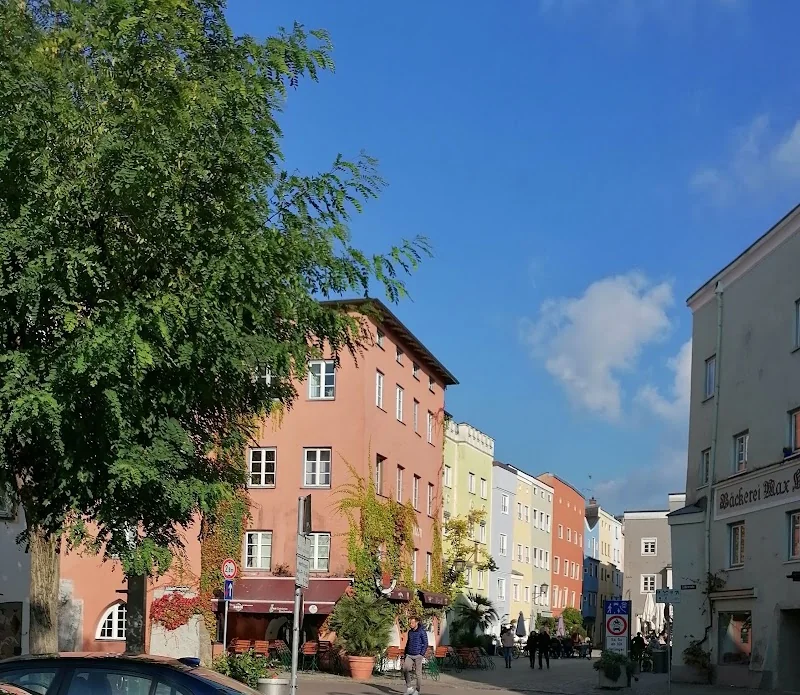
Wasserburg am Inn
Hofstatt, 83512 Wasserburg am Inn, Deutschland
Hofstatt Wasserburg | History & Parking
The Hofstatt in Wasserburg am Inn is one of those places that may seem small at first glance, but upon closer inspection tells a lot about the city. Today, the area presents itself as a traffic-calmed old town square with a small marketplace, drinking water fountain, cafés, and small shops. Those walking through the Wasserburg old town often not only pass by the Hofstatt but also consciously stop: for a short break, for the weekly market, for a coffee, or for a few photos between the historic facades. The Hofstatt's prominent presence in today's cityscape is related to its long history. For many decades, a building stood here that was used as a meat house, schoolhouse, and later for other purposes. Today, the square's layout is a reminder of this past. At the same time, the Hofstatt is an important hub for markets, events, and pedestrian traffic through the old town. This blend of history, everyday life, and vibrant city life gives this place its unique charm. ([wasserburg.de](https://www.wasserburg.de/trinkwasserbrunnen?cHash=44849f39c1f8f74c826682542aefcd84&mdrv=www.wasserburg.de&utm_source=openai))
What does Hofstatt actually mean?
The search term Hofstatt quickly leads to different meanings, and that is precisely why a brief look at the term itself is worthwhile. In common parlance, Hofstatt is a historically grown term for a courtyard or house square, meaning the place where a house with its outbuildings, garden, or other associated areas stands. The Duden describes Hofstatt as a farmhouse with a courtyard and house meadow or orchard; historical dictionaries and lexicons also explain the term as a place in the village or at the house where the building ensemble stands. For Wasserburg, this meaning is important because the Hofstatt is not a modern shopping center or an anonymous traffic area, but a historic town square with a clear topographical function. The name refers to the old settlement structure and to a form of urban space that has developed from use, neighborhood, and everyday life. Therefore, those searching for Hofstatt in Wasserburg encounter a place that connects the past and the present. This is what makes the Hofstatt so interesting for visitors: the name is not just a designation but already a piece of city history. ([duden.de](https://www.duden.de/rechtschreibung/Hofstatt?utm_source=openai))
History of the Hofstatt in Wasserburg am Inn
The historical significance of the Hofstatt can be particularly well understood in Wasserburg because there are concrete sources regarding the earlier buildings. The city archive describes the site as the location of the former meat house or meat bank, which has been documented here since 1612. In 1821, the building was converted into a schoolhouse, which was used as a boys' primary school for many decades. Overall, the school remained at the Hofstatt for almost 116 years before it was relocated in the 1930s. Later, the house served, among other things, as the district house of the NSDAP during the Nazi era before it was demolished in 1972. Today, the free square character of the Hofstatt mainly reminds us of this building, as a small marketplace was created in a traffic-calmed zone. This development beautifully illustrates how a historical place of use has changed over the centuries: from meat sales to school operations to the open square in the heart of the old town. The Hofstatt is therefore not only an attractive place to stay but also a vivid example of the urban development changes in Wasserburg. ([wasserburg.de](https://www.wasserburg.de/fileadmin/Dateien/Dateien/Stadtarchiv/Die_baulichen_Zustaende_der_Knabenvolksschule_an_der_Hofstatt.pdf))
What is particularly exciting is that the Hofstatt has not simply been forgotten but remains present in the city's history to this day. The archival texts emphasize that the former schoolhouse disappeared in 1972 and exists only in images, photos, and the memories of older Wasserburg residents. This gives the current square an additional depth: those standing there see not only a beautiful old town area but also move across a site with a documented history of use spanning several centuries. The earlier conversion from the meat bank to the schoolhouse also shows how flexibly urban buildings in Wasserburg have been repeatedly adapted to new requirements. The arguments for the later demolition, such as better traffic visibility and the creation of a new square, reflect the transformation from a historic building to an open urban space situation. For visitors, this is relevant because the Hofstatt is more than just a transit point. It is a piece of Wasserburg identity where the layers of urban development can be clearly read. ([wasserburg.de](https://www.wasserburg.de/fileadmin/Dateien/Dateien/Stadtarchiv/Die_baulichen_Zustaende_der_Knabenvolksschule_an_der_Hofstatt.pdf))
Markets and Events at the Hofstatt
The Hofstatt is particularly lively today when markets and events take place here. A central event is the Wasserburg Farmers' Market, which, according to Chiemsee-Alpenland Tourism, is held every Thursday afternoon at the Hofstatt from mid-February to mid-December. Between 11 a.m. and 4:30 p.m., there are regional products and homemade goods from the Wasserburg area. In winter, the offerings are limited, and if Thursday falls on a holiday, the market takes place on Wednesday instead. This regular use is an important identity factor for the Hofstatt because the square is not only historically significant but also has a clear function in the city's everyday life. Visitors experience Wasserburg not as a static monument but as a vibrant place with trade, encounters, and regional character. The interplay of the old town, market stalls, and short distances makes the Hofstatt a typical meeting point in Wasserburg. ([chiemsee-alpenland.de](https://www.chiemsee-alpenland.de/entdecken/essen-trinken/direktvermarkter/wasserburger-bauernmarkt-278ed7ec82?utm_source=openai))
Other events also use the Hofstatt as a stage. The Wasserburg Night Flea Market includes the Hofstatt along with Herrengasse, Kirchhofplatz, Schustergasse, Ledererzeile, Färbergasse, Salzsenderzeile, and Marienplatz as the event area. Additionally, the Musical Saturdays take place from early April to late October, with concerts every Saturday at various locations in the old town; Hofstatt is one of the official venues. The spectrum ranges from folk music and world music to jazz, rock, pop, funk, and swing. For the Hofstatt, this means: the square is not only a market location but also part of the city's cultural life. Especially on days with events, a particularly dense old town character emerges, as shopping, listening, strolling, and lingering mix in a small space. Those who only know the Hofstatt as an address therefore miss an important part of its experiential potential. ([wasserburg.de](https://www.wasserburg.de/de/tourismus-freizeit/veranstaltungen/maerkte/nachtflohmarkt-verkaeuferinfos/?utm_source=openai))
Parking and Access around the Hofstatt
Visiting the Hofstatt is relatively uncomplicated, but one should be aware of the specifics of the Wasserburg old town. The city parking plan lists several nearby parking options, including the Kellerstraße parking garage, the Überfuhrstraße parking garage, and the Unter der Rampe parking lot, where up to 4 hours of free parking is possible. Additionally, there is the Am Gries parking lot and the old town area with shorter maximum parking durations; the city also points out that mobile parking with paybyphone is possible. So, if someone just wants to quickly visit the market or a café, there are generally suitable options nearby. This is particularly important for the Hofstatt, as the square itself is traffic-calmed and the old town is very compactly built. The visit usually begins even with parking and the few minutes of walking through the historic streets. ([wasserburg.de](https://www.wasserburg.de/fileadmin/Dateien/Dateien/Wasserburg/Tourismus_Freizeit/Prospekte/stadtplan_parken_2024.pdf))
The Wasserburg old town is located on a peninsula, which has direct implications for access. According to the official parking plan, the old town is only accessible for vehicles over 3.4 meters high via Wasserburg West due to the Brucktor or the Inn Bridge. For visitors with a normal car, this is not a problem, but for larger vehicles or when planning a trip with a delivery van or bus, this note is very important. Additionally, the city's traffic concept describes the old town connection via the central bus station at the edge of the old town and the city bus line 9418, which serves the core city including Reitmehring and ensures access to the old town and train station. The train station is located about 4 kilometers outside the old town in Reitmehring but is connected to the center by the city bus. This makes the Hofstatt also accessible without a car, which is especially pleasant for day visitors, cyclists, and visitors focused on the old town. ([wasserburg.de](https://www.wasserburg.de/fileadmin/Dateien/Dateien/Wasserburg/Tourismus_Freizeit/Prospekte/stadtplan_parken_2024.pdf?utm_source=openai))
Cafés, Shops, and the Drinking Water Fountain in the Hofstatt
A special attraction in the Hofstatt is the drinking water fountain. The city of Wasserburg describes it as a fountain in the traffic-calmed area of Hofstatt, surrounded by a café and many small shops. The fountain is reminiscent of the former schoolhouse fountain, which used to stand opposite house number 15. This combination of practical use and historical memory fits excellently with the character of the Hofstatt: here stands not only a decorative element but also a part of the everyday infrastructure that significantly enhances the quality of stay in summer. Especially on hot days, this is a noticeable advantage for hikers, cyclists, families, and other visitors. The presence of small shops and a café around makes the square additionally attractive because the Hofstatt invites not only to pass through but also to stay. For search queries like Hofstatt photos or Hofstatt restaurant, this mix of fountain, gastronomy, and small-town life is crucial. ([wasserburg.de](https://www.wasserburg.de/trinkwasserbrunnen?cHash=44849f39c1f8f74c826682542aefcd84&mdrv=www.wasserburg.de&utm_source=openai))
Among the specific addresses in the square is the Deliano Coffee Roastery at Hofstatt 2. Chiemsee-Alpenland Tourism describes it as a specialty roastery in the heart of Wasserburg's old town, operated in the former bakery of the Deliano family. There, selected raw coffees are gently roasted, and the offerings range from mild and fruity to strong, full-bodied roasts. Such small, owner-operated addresses significantly shape the character of the Hofstatt more than large retail chains. Those who are here experience an old town situation where craftsmanship, gastronomy, and local identity lie closely together. This also explains why the Hofstatt is often perceived as a pleasant place for a break: one can linger briefly, have a drink, observe the market, and simultaneously take in the historic surroundings. For visitors seeking an authentic city feel, this is one of the strongest reasons to specifically plan a visit to the Hofstatt. ([chiemsee-alpenland.de](https://www.chiemsee-alpenland.de/entdecken/essen-trinken/gastronomie/deliano-kaffeeroesterei-47952e8bf2?utm_source=openai))
Discover Hofstatt on the Old Town Walk and for Photos
Those visiting the Hofstatt for the first time should ideally incorporate it into a walk through the old town. An official tour from Outdooractive leads from the Inn side through Marienplatz, Salzsenderzeile, Hofstatt, and Ledererzeile up to the castle and then back through other historic alleys. The tour is rather short at 2.2 kilometers, easy to walk, and can be completed in about 34 minutes. This illustrates very well how central the Hofstatt is in the Wasserburg urban space: it is not an outlying place but a connecting element between the most important old town areas. Especially for visitors searching for Hofstatt maps or Hofstatt photos, this circular route is ideal as it allows for multiple perspectives on the same city core. From the square, one can see the lively interplay between narrow alleys, historic house rows, and the movements of everyday city life. ([outdooractive.com](https://www.outdooractive.com/mobile/en/route/city-walk/chiemsee-alpenland/wasserburg-am-inn/109542744/))
For good photos, it is worthwhile not only to look directly at the Hofstatt but also to combine it with the surrounding streets and the typical Wasserburg perspectives. ADAC Maps describes Wasserburg as a city with a grand location on a narrow land tongue almost completely surrounded by the Inn and refers to the view from the Schönen Aussicht at Kellerberg, from which the urban order can be particularly well recognized. Combined with the Hofstatt, this creates an appealing photographic theme: first the intimate, square-like old town area with fountain and market activities, then the wide view of the historic city center. These contrasts make Wasserburg so exciting for visitors. Therefore, those wanting to photograph the Hofstatt should consider both the small details like fountains, shop fronts, and market stalls, as well as the broader effect of the old town. This way, a coherent image of a place that is equally approachable, historic, and vibrant is created. ([maps.adac.de](https://maps.adac.de/ort/wasserburg-am-inn-bayern?utm_source=openai))
Sources:
- City of Wasserburg am Inn – Drinking Water Fountain in the Old Town. ([wasserburg.de](https://www.wasserburg.de/trinkwasserbrunnen?cHash=44849f39c1f8f74c826682542aefcd84&mdrv=www.wasserburg.de&utm_source=openai))
- City Archive Wasserburg am Inn – The Building Conditions of the Boys' Primary School at the Hofstatt. ([wasserburg.de](https://www.wasserburg.de/fileadmin/Dateien/Dateien/Stadtarchiv/Die_baulichen_Zustaende_der_Knabenvolksschule_an_der_Hofstatt.pdf))
- City of Wasserburg am Inn – Night Flea Market Seller Information. ([wasserburg.de](https://www.wasserburg.de/de/tourismus-freizeit/veranstaltungen/maerkte/nachtflohmarkt-verkaeuferinfos/?utm_source=openai))
- City of Wasserburg am Inn – Musical Saturdays. ([wasserburg.de](https://www.wasserburg.de/musikalischersamstag?type=98&utm_source=openai))
- City of Wasserburg am Inn – Parking Old Town 2024. ([wasserburg.de](https://www.wasserburg.de/fileadmin/Dateien/Dateien/Wasserburg/Tourismus_Freizeit/Prospekte/stadtplan_parken_2024.pdf))
- Chiemsee-Alpenland Tourism – Wasserburg Farmers' Market and Deliano Coffee Roastery. ([chiemsee-alpenland.de](https://www.chiemsee-alpenland.de/entdecken/essen-trinken/direktvermarkter/wasserburger-bauernmarkt-278ed7ec82?utm_source=openai))
- Duden and Historical Lexicon – Meaning of Hofstatt. ([duden.de](https://www.duden.de/rechtschreibung/Hofstatt?utm_source=openai))
- Outdooractive and ADAC Maps – Old Town Walk and City Location. ([outdooractive.com](https://www.outdooractive.com/mobile/en/route/city-walk/chiemsee-alpenland/wasserburg-am-inn/109542744/))
Show moreShow less
Hofstatt Wasserburg | History & Parking
The Hofstatt in Wasserburg am Inn is one of those places that may seem small at first glance, but upon closer inspection tells a lot about the city. Today, the area presents itself as a traffic-calmed old town square with a small marketplace, drinking water fountain, cafés, and small shops. Those walking through the Wasserburg old town often not only pass by the Hofstatt but also consciously stop: for a short break, for the weekly market, for a coffee, or for a few photos between the historic facades. The Hofstatt's prominent presence in today's cityscape is related to its long history. For many decades, a building stood here that was used as a meat house, schoolhouse, and later for other purposes. Today, the square's layout is a reminder of this past. At the same time, the Hofstatt is an important hub for markets, events, and pedestrian traffic through the old town. This blend of history, everyday life, and vibrant city life gives this place its unique charm. ([wasserburg.de](https://www.wasserburg.de/trinkwasserbrunnen?cHash=44849f39c1f8f74c826682542aefcd84&mdrv=www.wasserburg.de&utm_source=openai))
What does Hofstatt actually mean?
The search term Hofstatt quickly leads to different meanings, and that is precisely why a brief look at the term itself is worthwhile. In common parlance, Hofstatt is a historically grown term for a courtyard or house square, meaning the place where a house with its outbuildings, garden, or other associated areas stands. The Duden describes Hofstatt as a farmhouse with a courtyard and house meadow or orchard; historical dictionaries and lexicons also explain the term as a place in the village or at the house where the building ensemble stands. For Wasserburg, this meaning is important because the Hofstatt is not a modern shopping center or an anonymous traffic area, but a historic town square with a clear topographical function. The name refers to the old settlement structure and to a form of urban space that has developed from use, neighborhood, and everyday life. Therefore, those searching for Hofstatt in Wasserburg encounter a place that connects the past and the present. This is what makes the Hofstatt so interesting for visitors: the name is not just a designation but already a piece of city history. ([duden.de](https://www.duden.de/rechtschreibung/Hofstatt?utm_source=openai))
History of the Hofstatt in Wasserburg am Inn
The historical significance of the Hofstatt can be particularly well understood in Wasserburg because there are concrete sources regarding the earlier buildings. The city archive describes the site as the location of the former meat house or meat bank, which has been documented here since 1612. In 1821, the building was converted into a schoolhouse, which was used as a boys' primary school for many decades. Overall, the school remained at the Hofstatt for almost 116 years before it was relocated in the 1930s. Later, the house served, among other things, as the district house of the NSDAP during the Nazi era before it was demolished in 1972. Today, the free square character of the Hofstatt mainly reminds us of this building, as a small marketplace was created in a traffic-calmed zone. This development beautifully illustrates how a historical place of use has changed over the centuries: from meat sales to school operations to the open square in the heart of the old town. The Hofstatt is therefore not only an attractive place to stay but also a vivid example of the urban development changes in Wasserburg. ([wasserburg.de](https://www.wasserburg.de/fileadmin/Dateien/Dateien/Stadtarchiv/Die_baulichen_Zustaende_der_Knabenvolksschule_an_der_Hofstatt.pdf))
What is particularly exciting is that the Hofstatt has not simply been forgotten but remains present in the city's history to this day. The archival texts emphasize that the former schoolhouse disappeared in 1972 and exists only in images, photos, and the memories of older Wasserburg residents. This gives the current square an additional depth: those standing there see not only a beautiful old town area but also move across a site with a documented history of use spanning several centuries. The earlier conversion from the meat bank to the schoolhouse also shows how flexibly urban buildings in Wasserburg have been repeatedly adapted to new requirements. The arguments for the later demolition, such as better traffic visibility and the creation of a new square, reflect the transformation from a historic building to an open urban space situation. For visitors, this is relevant because the Hofstatt is more than just a transit point. It is a piece of Wasserburg identity where the layers of urban development can be clearly read. ([wasserburg.de](https://www.wasserburg.de/fileadmin/Dateien/Dateien/Stadtarchiv/Die_baulichen_Zustaende_der_Knabenvolksschule_an_der_Hofstatt.pdf))
Markets and Events at the Hofstatt
The Hofstatt is particularly lively today when markets and events take place here. A central event is the Wasserburg Farmers' Market, which, according to Chiemsee-Alpenland Tourism, is held every Thursday afternoon at the Hofstatt from mid-February to mid-December. Between 11 a.m. and 4:30 p.m., there are regional products and homemade goods from the Wasserburg area. In winter, the offerings are limited, and if Thursday falls on a holiday, the market takes place on Wednesday instead. This regular use is an important identity factor for the Hofstatt because the square is not only historically significant but also has a clear function in the city's everyday life. Visitors experience Wasserburg not as a static monument but as a vibrant place with trade, encounters, and regional character. The interplay of the old town, market stalls, and short distances makes the Hofstatt a typical meeting point in Wasserburg. ([chiemsee-alpenland.de](https://www.chiemsee-alpenland.de/entdecken/essen-trinken/direktvermarkter/wasserburger-bauernmarkt-278ed7ec82?utm_source=openai))
Other events also use the Hofstatt as a stage. The Wasserburg Night Flea Market includes the Hofstatt along with Herrengasse, Kirchhofplatz, Schustergasse, Ledererzeile, Färbergasse, Salzsenderzeile, and Marienplatz as the event area. Additionally, the Musical Saturdays take place from early April to late October, with concerts every Saturday at various locations in the old town; Hofstatt is one of the official venues. The spectrum ranges from folk music and world music to jazz, rock, pop, funk, and swing. For the Hofstatt, this means: the square is not only a market location but also part of the city's cultural life. Especially on days with events, a particularly dense old town character emerges, as shopping, listening, strolling, and lingering mix in a small space. Those who only know the Hofstatt as an address therefore miss an important part of its experiential potential. ([wasserburg.de](https://www.wasserburg.de/de/tourismus-freizeit/veranstaltungen/maerkte/nachtflohmarkt-verkaeuferinfos/?utm_source=openai))
Parking and Access around the Hofstatt
Visiting the Hofstatt is relatively uncomplicated, but one should be aware of the specifics of the Wasserburg old town. The city parking plan lists several nearby parking options, including the Kellerstraße parking garage, the Überfuhrstraße parking garage, and the Unter der Rampe parking lot, where up to 4 hours of free parking is possible. Additionally, there is the Am Gries parking lot and the old town area with shorter maximum parking durations; the city also points out that mobile parking with paybyphone is possible. So, if someone just wants to quickly visit the market or a café, there are generally suitable options nearby. This is particularly important for the Hofstatt, as the square itself is traffic-calmed and the old town is very compactly built. The visit usually begins even with parking and the few minutes of walking through the historic streets. ([wasserburg.de](https://www.wasserburg.de/fileadmin/Dateien/Dateien/Wasserburg/Tourismus_Freizeit/Prospekte/stadtplan_parken_2024.pdf))
The Wasserburg old town is located on a peninsula, which has direct implications for access. According to the official parking plan, the old town is only accessible for vehicles over 3.4 meters high via Wasserburg West due to the Brucktor or the Inn Bridge. For visitors with a normal car, this is not a problem, but for larger vehicles or when planning a trip with a delivery van or bus, this note is very important. Additionally, the city's traffic concept describes the old town connection via the central bus station at the edge of the old town and the city bus line 9418, which serves the core city including Reitmehring and ensures access to the old town and train station. The train station is located about 4 kilometers outside the old town in Reitmehring but is connected to the center by the city bus. This makes the Hofstatt also accessible without a car, which is especially pleasant for day visitors, cyclists, and visitors focused on the old town. ([wasserburg.de](https://www.wasserburg.de/fileadmin/Dateien/Dateien/Wasserburg/Tourismus_Freizeit/Prospekte/stadtplan_parken_2024.pdf?utm_source=openai))
Cafés, Shops, and the Drinking Water Fountain in the Hofstatt
A special attraction in the Hofstatt is the drinking water fountain. The city of Wasserburg describes it as a fountain in the traffic-calmed area of Hofstatt, surrounded by a café and many small shops. The fountain is reminiscent of the former schoolhouse fountain, which used to stand opposite house number 15. This combination of practical use and historical memory fits excellently with the character of the Hofstatt: here stands not only a decorative element but also a part of the everyday infrastructure that significantly enhances the quality of stay in summer. Especially on hot days, this is a noticeable advantage for hikers, cyclists, families, and other visitors. The presence of small shops and a café around makes the square additionally attractive because the Hofstatt invites not only to pass through but also to stay. For search queries like Hofstatt photos or Hofstatt restaurant, this mix of fountain, gastronomy, and small-town life is crucial. ([wasserburg.de](https://www.wasserburg.de/trinkwasserbrunnen?cHash=44849f39c1f8f74c826682542aefcd84&mdrv=www.wasserburg.de&utm_source=openai))
Among the specific addresses in the square is the Deliano Coffee Roastery at Hofstatt 2. Chiemsee-Alpenland Tourism describes it as a specialty roastery in the heart of Wasserburg's old town, operated in the former bakery of the Deliano family. There, selected raw coffees are gently roasted, and the offerings range from mild and fruity to strong, full-bodied roasts. Such small, owner-operated addresses significantly shape the character of the Hofstatt more than large retail chains. Those who are here experience an old town situation where craftsmanship, gastronomy, and local identity lie closely together. This also explains why the Hofstatt is often perceived as a pleasant place for a break: one can linger briefly, have a drink, observe the market, and simultaneously take in the historic surroundings. For visitors seeking an authentic city feel, this is one of the strongest reasons to specifically plan a visit to the Hofstatt. ([chiemsee-alpenland.de](https://www.chiemsee-alpenland.de/entdecken/essen-trinken/gastronomie/deliano-kaffeeroesterei-47952e8bf2?utm_source=openai))
Discover Hofstatt on the Old Town Walk and for Photos
Those visiting the Hofstatt for the first time should ideally incorporate it into a walk through the old town. An official tour from Outdooractive leads from the Inn side through Marienplatz, Salzsenderzeile, Hofstatt, and Ledererzeile up to the castle and then back through other historic alleys. The tour is rather short at 2.2 kilometers, easy to walk, and can be completed in about 34 minutes. This illustrates very well how central the Hofstatt is in the Wasserburg urban space: it is not an outlying place but a connecting element between the most important old town areas. Especially for visitors searching for Hofstatt maps or Hofstatt photos, this circular route is ideal as it allows for multiple perspectives on the same city core. From the square, one can see the lively interplay between narrow alleys, historic house rows, and the movements of everyday city life. ([outdooractive.com](https://www.outdooractive.com/mobile/en/route/city-walk/chiemsee-alpenland/wasserburg-am-inn/109542744/))
For good photos, it is worthwhile not only to look directly at the Hofstatt but also to combine it with the surrounding streets and the typical Wasserburg perspectives. ADAC Maps describes Wasserburg as a city with a grand location on a narrow land tongue almost completely surrounded by the Inn and refers to the view from the Schönen Aussicht at Kellerberg, from which the urban order can be particularly well recognized. Combined with the Hofstatt, this creates an appealing photographic theme: first the intimate, square-like old town area with fountain and market activities, then the wide view of the historic city center. These contrasts make Wasserburg so exciting for visitors. Therefore, those wanting to photograph the Hofstatt should consider both the small details like fountains, shop fronts, and market stalls, as well as the broader effect of the old town. This way, a coherent image of a place that is equally approachable, historic, and vibrant is created. ([maps.adac.de](https://maps.adac.de/ort/wasserburg-am-inn-bayern?utm_source=openai))
Sources:
- City of Wasserburg am Inn – Drinking Water Fountain in the Old Town. ([wasserburg.de](https://www.wasserburg.de/trinkwasserbrunnen?cHash=44849f39c1f8f74c826682542aefcd84&mdrv=www.wasserburg.de&utm_source=openai))
- City Archive Wasserburg am Inn – The Building Conditions of the Boys' Primary School at the Hofstatt. ([wasserburg.de](https://www.wasserburg.de/fileadmin/Dateien/Dateien/Stadtarchiv/Die_baulichen_Zustaende_der_Knabenvolksschule_an_der_Hofstatt.pdf))
- City of Wasserburg am Inn – Night Flea Market Seller Information. ([wasserburg.de](https://www.wasserburg.de/de/tourismus-freizeit/veranstaltungen/maerkte/nachtflohmarkt-verkaeuferinfos/?utm_source=openai))
- City of Wasserburg am Inn – Musical Saturdays. ([wasserburg.de](https://www.wasserburg.de/musikalischersamstag?type=98&utm_source=openai))
- City of Wasserburg am Inn – Parking Old Town 2024. ([wasserburg.de](https://www.wasserburg.de/fileadmin/Dateien/Dateien/Wasserburg/Tourismus_Freizeit/Prospekte/stadtplan_parken_2024.pdf))
- Chiemsee-Alpenland Tourism – Wasserburg Farmers' Market and Deliano Coffee Roastery. ([chiemsee-alpenland.de](https://www.chiemsee-alpenland.de/entdecken/essen-trinken/direktvermarkter/wasserburger-bauernmarkt-278ed7ec82?utm_source=openai))
- Duden and Historical Lexicon – Meaning of Hofstatt. ([duden.de](https://www.duden.de/rechtschreibung/Hofstatt?utm_source=openai))
- Outdooractive and ADAC Maps – Old Town Walk and City Location. ([outdooractive.com](https://www.outdooractive.com/mobile/en/route/city-walk/chiemsee-alpenland/wasserburg-am-inn/109542744/))
Hofstatt Wasserburg | History & Parking
The Hofstatt in Wasserburg am Inn is one of those places that may seem small at first glance, but upon closer inspection tells a lot about the city. Today, the area presents itself as a traffic-calmed old town square with a small marketplace, drinking water fountain, cafés, and small shops. Those walking through the Wasserburg old town often not only pass by the Hofstatt but also consciously stop: for a short break, for the weekly market, for a coffee, or for a few photos between the historic facades. The Hofstatt's prominent presence in today's cityscape is related to its long history. For many decades, a building stood here that was used as a meat house, schoolhouse, and later for other purposes. Today, the square's layout is a reminder of this past. At the same time, the Hofstatt is an important hub for markets, events, and pedestrian traffic through the old town. This blend of history, everyday life, and vibrant city life gives this place its unique charm. ([wasserburg.de](https://www.wasserburg.de/trinkwasserbrunnen?cHash=44849f39c1f8f74c826682542aefcd84&mdrv=www.wasserburg.de&utm_source=openai))
What does Hofstatt actually mean?
The search term Hofstatt quickly leads to different meanings, and that is precisely why a brief look at the term itself is worthwhile. In common parlance, Hofstatt is a historically grown term for a courtyard or house square, meaning the place where a house with its outbuildings, garden, or other associated areas stands. The Duden describes Hofstatt as a farmhouse with a courtyard and house meadow or orchard; historical dictionaries and lexicons also explain the term as a place in the village or at the house where the building ensemble stands. For Wasserburg, this meaning is important because the Hofstatt is not a modern shopping center or an anonymous traffic area, but a historic town square with a clear topographical function. The name refers to the old settlement structure and to a form of urban space that has developed from use, neighborhood, and everyday life. Therefore, those searching for Hofstatt in Wasserburg encounter a place that connects the past and the present. This is what makes the Hofstatt so interesting for visitors: the name is not just a designation but already a piece of city history. ([duden.de](https://www.duden.de/rechtschreibung/Hofstatt?utm_source=openai))
History of the Hofstatt in Wasserburg am Inn
The historical significance of the Hofstatt can be particularly well understood in Wasserburg because there are concrete sources regarding the earlier buildings. The city archive describes the site as the location of the former meat house or meat bank, which has been documented here since 1612. In 1821, the building was converted into a schoolhouse, which was used as a boys' primary school for many decades. Overall, the school remained at the Hofstatt for almost 116 years before it was relocated in the 1930s. Later, the house served, among other things, as the district house of the NSDAP during the Nazi era before it was demolished in 1972. Today, the free square character of the Hofstatt mainly reminds us of this building, as a small marketplace was created in a traffic-calmed zone. This development beautifully illustrates how a historical place of use has changed over the centuries: from meat sales to school operations to the open square in the heart of the old town. The Hofstatt is therefore not only an attractive place to stay but also a vivid example of the urban development changes in Wasserburg. ([wasserburg.de](https://www.wasserburg.de/fileadmin/Dateien/Dateien/Stadtarchiv/Die_baulichen_Zustaende_der_Knabenvolksschule_an_der_Hofstatt.pdf))
What is particularly exciting is that the Hofstatt has not simply been forgotten but remains present in the city's history to this day. The archival texts emphasize that the former schoolhouse disappeared in 1972 and exists only in images, photos, and the memories of older Wasserburg residents. This gives the current square an additional depth: those standing there see not only a beautiful old town area but also move across a site with a documented history of use spanning several centuries. The earlier conversion from the meat bank to the schoolhouse also shows how flexibly urban buildings in Wasserburg have been repeatedly adapted to new requirements. The arguments for the later demolition, such as better traffic visibility and the creation of a new square, reflect the transformation from a historic building to an open urban space situation. For visitors, this is relevant because the Hofstatt is more than just a transit point. It is a piece of Wasserburg identity where the layers of urban development can be clearly read. ([wasserburg.de](https://www.wasserburg.de/fileadmin/Dateien/Dateien/Stadtarchiv/Die_baulichen_Zustaende_der_Knabenvolksschule_an_der_Hofstatt.pdf))
Markets and Events at the Hofstatt
The Hofstatt is particularly lively today when markets and events take place here. A central event is the Wasserburg Farmers' Market, which, according to Chiemsee-Alpenland Tourism, is held every Thursday afternoon at the Hofstatt from mid-February to mid-December. Between 11 a.m. and 4:30 p.m., there are regional products and homemade goods from the Wasserburg area. In winter, the offerings are limited, and if Thursday falls on a holiday, the market takes place on Wednesday instead. This regular use is an important identity factor for the Hofstatt because the square is not only historically significant but also has a clear function in the city's everyday life. Visitors experience Wasserburg not as a static monument but as a vibrant place with trade, encounters, and regional character. The interplay of the old town, market stalls, and short distances makes the Hofstatt a typical meeting point in Wasserburg. ([chiemsee-alpenland.de](https://www.chiemsee-alpenland.de/entdecken/essen-trinken/direktvermarkter/wasserburger-bauernmarkt-278ed7ec82?utm_source=openai))
Other events also use the Hofstatt as a stage. The Wasserburg Night Flea Market includes the Hofstatt along with Herrengasse, Kirchhofplatz, Schustergasse, Ledererzeile, Färbergasse, Salzsenderzeile, and Marienplatz as the event area. Additionally, the Musical Saturdays take place from early April to late October, with concerts every Saturday at various locations in the old town; Hofstatt is one of the official venues. The spectrum ranges from folk music and world music to jazz, rock, pop, funk, and swing. For the Hofstatt, this means: the square is not only a market location but also part of the city's cultural life. Especially on days with events, a particularly dense old town character emerges, as shopping, listening, strolling, and lingering mix in a small space. Those who only know the Hofstatt as an address therefore miss an important part of its experiential potential. ([wasserburg.de](https://www.wasserburg.de/de/tourismus-freizeit/veranstaltungen/maerkte/nachtflohmarkt-verkaeuferinfos/?utm_source=openai))
Parking and Access around the Hofstatt
Visiting the Hofstatt is relatively uncomplicated, but one should be aware of the specifics of the Wasserburg old town. The city parking plan lists several nearby parking options, including the Kellerstraße parking garage, the Überfuhrstraße parking garage, and the Unter der Rampe parking lot, where up to 4 hours of free parking is possible. Additionally, there is the Am Gries parking lot and the old town area with shorter maximum parking durations; the city also points out that mobile parking with paybyphone is possible. So, if someone just wants to quickly visit the market or a café, there are generally suitable options nearby. This is particularly important for the Hofstatt, as the square itself is traffic-calmed and the old town is very compactly built. The visit usually begins even with parking and the few minutes of walking through the historic streets. ([wasserburg.de](https://www.wasserburg.de/fileadmin/Dateien/Dateien/Wasserburg/Tourismus_Freizeit/Prospekte/stadtplan_parken_2024.pdf))
The Wasserburg old town is located on a peninsula, which has direct implications for access. According to the official parking plan, the old town is only accessible for vehicles over 3.4 meters high via Wasserburg West due to the Brucktor or the Inn Bridge. For visitors with a normal car, this is not a problem, but for larger vehicles or when planning a trip with a delivery van or bus, this note is very important. Additionally, the city's traffic concept describes the old town connection via the central bus station at the edge of the old town and the city bus line 9418, which serves the core city including Reitmehring and ensures access to the old town and train station. The train station is located about 4 kilometers outside the old town in Reitmehring but is connected to the center by the city bus. This makes the Hofstatt also accessible without a car, which is especially pleasant for day visitors, cyclists, and visitors focused on the old town. ([wasserburg.de](https://www.wasserburg.de/fileadmin/Dateien/Dateien/Wasserburg/Tourismus_Freizeit/Prospekte/stadtplan_parken_2024.pdf?utm_source=openai))
Cafés, Shops, and the Drinking Water Fountain in the Hofstatt
A special attraction in the Hofstatt is the drinking water fountain. The city of Wasserburg describes it as a fountain in the traffic-calmed area of Hofstatt, surrounded by a café and many small shops. The fountain is reminiscent of the former schoolhouse fountain, which used to stand opposite house number 15. This combination of practical use and historical memory fits excellently with the character of the Hofstatt: here stands not only a decorative element but also a part of the everyday infrastructure that significantly enhances the quality of stay in summer. Especially on hot days, this is a noticeable advantage for hikers, cyclists, families, and other visitors. The presence of small shops and a café around makes the square additionally attractive because the Hofstatt invites not only to pass through but also to stay. For search queries like Hofstatt photos or Hofstatt restaurant, this mix of fountain, gastronomy, and small-town life is crucial. ([wasserburg.de](https://www.wasserburg.de/trinkwasserbrunnen?cHash=44849f39c1f8f74c826682542aefcd84&mdrv=www.wasserburg.de&utm_source=openai))
Among the specific addresses in the square is the Deliano Coffee Roastery at Hofstatt 2. Chiemsee-Alpenland Tourism describes it as a specialty roastery in the heart of Wasserburg's old town, operated in the former bakery of the Deliano family. There, selected raw coffees are gently roasted, and the offerings range from mild and fruity to strong, full-bodied roasts. Such small, owner-operated addresses significantly shape the character of the Hofstatt more than large retail chains. Those who are here experience an old town situation where craftsmanship, gastronomy, and local identity lie closely together. This also explains why the Hofstatt is often perceived as a pleasant place for a break: one can linger briefly, have a drink, observe the market, and simultaneously take in the historic surroundings. For visitors seeking an authentic city feel, this is one of the strongest reasons to specifically plan a visit to the Hofstatt. ([chiemsee-alpenland.de](https://www.chiemsee-alpenland.de/entdecken/essen-trinken/gastronomie/deliano-kaffeeroesterei-47952e8bf2?utm_source=openai))
Discover Hofstatt on the Old Town Walk and for Photos
Those visiting the Hofstatt for the first time should ideally incorporate it into a walk through the old town. An official tour from Outdooractive leads from the Inn side through Marienplatz, Salzsenderzeile, Hofstatt, and Ledererzeile up to the castle and then back through other historic alleys. The tour is rather short at 2.2 kilometers, easy to walk, and can be completed in about 34 minutes. This illustrates very well how central the Hofstatt is in the Wasserburg urban space: it is not an outlying place but a connecting element between the most important old town areas. Especially for visitors searching for Hofstatt maps or Hofstatt photos, this circular route is ideal as it allows for multiple perspectives on the same city core. From the square, one can see the lively interplay between narrow alleys, historic house rows, and the movements of everyday city life. ([outdooractive.com](https://www.outdooractive.com/mobile/en/route/city-walk/chiemsee-alpenland/wasserburg-am-inn/109542744/))
For good photos, it is worthwhile not only to look directly at the Hofstatt but also to combine it with the surrounding streets and the typical Wasserburg perspectives. ADAC Maps describes Wasserburg as a city with a grand location on a narrow land tongue almost completely surrounded by the Inn and refers to the view from the Schönen Aussicht at Kellerberg, from which the urban order can be particularly well recognized. Combined with the Hofstatt, this creates an appealing photographic theme: first the intimate, square-like old town area with fountain and market activities, then the wide view of the historic city center. These contrasts make Wasserburg so exciting for visitors. Therefore, those wanting to photograph the Hofstatt should consider both the small details like fountains, shop fronts, and market stalls, as well as the broader effect of the old town. This way, a coherent image of a place that is equally approachable, historic, and vibrant is created. ([maps.adac.de](https://maps.adac.de/ort/wasserburg-am-inn-bayern?utm_source=openai))
Sources:
- City of Wasserburg am Inn – Drinking Water Fountain in the Old Town. ([wasserburg.de](https://www.wasserburg.de/trinkwasserbrunnen?cHash=44849f39c1f8f74c826682542aefcd84&mdrv=www.wasserburg.de&utm_source=openai))
- City Archive Wasserburg am Inn – The Building Conditions of the Boys' Primary School at the Hofstatt. ([wasserburg.de](https://www.wasserburg.de/fileadmin/Dateien/Dateien/Stadtarchiv/Die_baulichen_Zustaende_der_Knabenvolksschule_an_der_Hofstatt.pdf))
- City of Wasserburg am Inn – Night Flea Market Seller Information. ([wasserburg.de](https://www.wasserburg.de/de/tourismus-freizeit/veranstaltungen/maerkte/nachtflohmarkt-verkaeuferinfos/?utm_source=openai))
- City of Wasserburg am Inn – Musical Saturdays. ([wasserburg.de](https://www.wasserburg.de/musikalischersamstag?type=98&utm_source=openai))
- City of Wasserburg am Inn – Parking Old Town 2024. ([wasserburg.de](https://www.wasserburg.de/fileadmin/Dateien/Dateien/Wasserburg/Tourismus_Freizeit/Prospekte/stadtplan_parken_2024.pdf))
- Chiemsee-Alpenland Tourism – Wasserburg Farmers' Market and Deliano Coffee Roastery. ([chiemsee-alpenland.de](https://www.chiemsee-alpenland.de/entdecken/essen-trinken/direktvermarkter/wasserburger-bauernmarkt-278ed7ec82?utm_source=openai))
- Duden and Historical Lexicon – Meaning of Hofstatt. ([duden.de](https://www.duden.de/rechtschreibung/Hofstatt?utm_source=openai))
- Outdooractive and ADAC Maps – Old Town Walk and City Location. ([outdooractive.com](https://www.outdooractive.com/mobile/en/route/city-walk/chiemsee-alpenland/wasserburg-am-inn/109542744/))
Upcoming Events
No events found
Frequently Asked Questions
Reviews
No reviews found