
Wasserburg am Inn
Marienpl. 2, 83512 Wasserburg am Inn, Deutschland
Historic Town Hall Wasserburg a. Inn | Photos & Town Hall Room
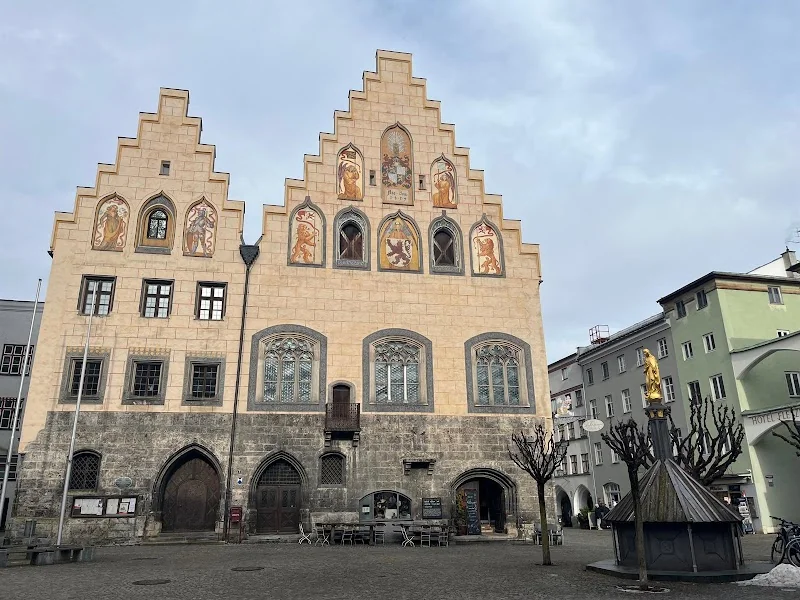
The Historic Town Hall Wasserburg a. Inn at Marienplatz 2 is much more than an administrative building: it is a prominent place in the old town, a historical landmark, and a space for culture, tours, and encounters. The city showcases the facade as well as the Large and Small Town Hall Rooms on its image page and also refers to a virtual tour and the official tour page. Especially the Large Town Hall Room shapes the image of the location, as it offers up to 384 seats and has been a charming setting for concerts for many years. Therefore, visitors to the town hall experience not only history to look at but also a building that is still in use and remains visibly present in the city. Its location directly at Marienplatz makes the visit particularly appealing for walks through the old town, while the surrounding parking options make the journey well-planned. ([wasserburg.de](https://www.wasserburg.de/sehenswuerdigkeiten-altstadt/rathaus-wasserburg-am-inn-bilder))
Historic Town Hall Wasserburg a. Inn: History and Architecture
The city of Wasserburg documents the history of its town hall in great detail. On the occasion of the 750th anniversary, a photo exhibition by the city archive was created in 2002, which makes the development of function, use, and appearance over the centuries comprehensible. This already shows: This building is not a rigid monument but an urban organism that has changed repeatedly. The historical materials and today's information pages make it clear that the construction and usage history of the house is closely linked to Wasserburg's self-understanding. The town hall stands for municipal representation, but also for change, expansion, and careful maintenance of a building located in the heart of the old town. This is particularly important for visitors seeking background knowledge, as here not only architecture but also city history can be read in several layers. Those interested in historical buildings will find at Marienplatz 2 a particularly illustrative example of how a town hall can become a political center, event venue, and tourist attraction over centuries. ([wasserburg.de](https://www.wasserburg.de/de/tourismus-freizeit/wasserburg-erleben/stadtgeschichte/750-jahre-rathaus))
Particularly impressive is the contrast between the two halls. The Small Town Hall Room with frescoes from 1564 was once the meeting room of the city council and even the site of some district days, as Wasserburg was a Bavarian imperial district city until 1806. In the current Large Town Hall Room, the former dance hall, festivities, weddings, concerts, and receptions have always taken place; the room received its detailed painting from 1902 to 1904 in the style of Neo-Renaissance. It is precisely this tension between late medieval council chamber and representative banquet hall that makes the town hall so interesting for visitors who want to not only read architectural history but also experience it in spaces. The old council chamber preserves a very early layer of the house with its frescoes, while the large hall makes visible the representative claim of the later centuries. This creates a rare mix of administrative location, banquet hall, and monument, making Wasserburg's town hall one of the most striking historical interiors of the old town. ([wasserburg.de](https://www.wasserburg.de/rathausfuehrungen))
Historic Town Hall Room Wasserburg: Concerts and Culture
Since 1973, the concert series of the Wasserburg Town Hall Concerts has been known far beyond the region. According to the official city page, five classical concerts and one special concert take place every year in the Large Town Hall Room. The program adheres to high quality standards and utilizes the special atmosphere of the historical space, which is designed not for mass but for closeness, sound, and attention. This is relevant for organizers, culture enthusiasts, and guests because the hall not only looks beautiful but also serves as a deliberately chosen setting for demanding music events. The city emphasizes the tradition and programmatic diversity of the series, and therein lies a significant part of the location's appeal. Those looking for a place for classical concerts will find here not an interchangeable multipurpose hall but a space with history, character, and a clear cultural signature. The connection between the city, district, and cultural department also shows that the place is embedded in a regional cultural concept and functions not just as a standalone backdrop but as a permanent part of cultural life. ([wasserburg.de](https://www.wasserburg.de/rathauskonzerte/rathauskonzerte-2025))
The Wasserburg Advent Singing is also closely associated with this place. In December 1966, one of the alpine Advent Singings in southern Bavaria took place in the historic Town Hall Room. Since then, singers and musicians from the region have been preparing for the holiday and the turn of the year on two evenings in the weeks before Christmas. Additionally, the city describes the Wasserburg Folk Music Days with a highlight in the historic Town Hall Room, where selected music on various themes is presented in a concert program. This means that the space is not only classically shaped but also deeply rooted in regional music and customs. For visitors, this means: The hall thrives on a cultural understanding that connects tradition and quality. It is not just a backdrop but a place of lived musical continuity. This mix of alpine music, classical concert series, and festive seasonal atmosphere is particularly attractive for travelers who want to experience authentic regional culture. ([wasserburg.de](https://www.wasserburg.de/adventsingen))
Parking and Access at Marienplatz 2
In the immediate vicinity of the Wasserburg old town, two parking garages and two parking lots are available. The city points out that the most convenient parking options are signposted at the access points: from the direction of Wasserburg West, the parking garage Überfuhrstraße and the parking lot Unter der Rampe, from the direction of Wasserburg East, the parking garage Kellerstraße and the parking lot Am Gries. Those arriving by car thus have several options, and the old town remains easily accessible on foot; every point in the old town can be reached within a maximum of 600 meters on foot, according to the city. This is practical for visiting the town hall at Marienplatz 2, as one can leisurely walk the last stretch through the historical backdrop. The parking garage Kellerstraße offers 565 parking spaces, four hours of free parking, an elevator, disabled parking spaces, and other services, making the visit to the city center even easier. Orientation is relatively simple, even if one is in Wasserburg for the first time. Especially during events or tours, it is pleasant that the city clearly and early communicates the most important parking options. ([wasserburg.de](https://www.wasserburg.de/parken))
For specific planning, it is also important that the parking garage Überfuhrstraße will be renovated from April 28, 2025, until presumably autumn 2026, with only one of the four floors being closed at a time. Therefore, those arriving on an event day should keep an eye on the current situation and possibly divert to Kellerstraße, Unter der Rampe, or Am Gries. This is not a disadvantage but rather a hint that one should consciously check the access shortly before the appointment. The city provides a well-structured parking system, including signposted access points and additional short-term parking spaces in the old town area. For visitors to the Historic Town Hall, this means: The location is centrally located, but access remains manageable if one adheres to the official recommendations. Those who arrive with a little time to spare can use the short walk from the parking lot to Marienplatz to take in the old town and the facade effect of the town hall before the appointment. ([wasserburg.de](https://www.wasserburg.de/parken))
Photos, Images, and Virtual Tour of the Town Hall
The official image page of the city is particularly important for keyword searches for photos, as it provides exactly the motifs that visitors expect: the town hall facade with distinctive stepped gables, the Large Town Hall Room, and the Small Town Hall Room. This is complemented by the sights page, which offers a virtual tour and additional image materials. This allows one to get a good impression of the atmosphere even before the visit, which is quite sensible for a historical location with sensitive spatial effects. Especially for planners of excursions, cultural evenings, or group tours, a visual impression is helpful as it shows how strongly architecture, light, and painting shape the character of the house. The images also make it visible why the town hall is such a popular photo motif: it combines a representative exterior view with interiors that do not appear sterile or functional but carry a very own historical mood. For social media or SEO purposes, such official motifs are particularly valuable as they anchor the real appearance of the location and do not rely on interchangeable stock photos. ([wasserburg.de](https://www.wasserburg.de/sehenswuerdigkeiten-altstadt/rathaus-wasserburg-am-inn-bilder))
The city's pages also provide a clear visual narrative: outside the architecture at Marienplatz, inside the transition from small council chamber to large banquet hall. This contrast makes the image world of the town hall interesting. Those looking for photos of the Historic Town Hall Wasserburg a. Inn do not get just a single icon but a small image series that brings together the facade, usage spaces, and historical details. This is also relevant for visitors who want to orient themselves in advance, as images help in deciding whether to plan a tour, a concert, or a self-guided visit. A virtual tour complements this impression and makes the facility even more tangible. Thus, the photo page becomes not just a decorative element but a real informational building block for all those who want to discover the location online and then recognize it on-site. ([wasserburg.de](https://www.wasserburg.de/sehenswuerdigkeiten-altstadt/rathaus-wasserburg-am-inn-bilder))
Visiting, Tours, and Accessibility
The city offers public town hall tours from March to the end of October, specifically on Saturdays and Sundays at fixed times; outside this time, tours can be booked upon request. The meeting point is the foyer of the town hall at Marienplatz 2, which makes orientation very easy. For groups, registration is recommended, and the group price is 50 euros for up to 50 people. For visitors who want to not just see the house but understand its content, this is a very attractive access. Because a tour through the Large and Small Town Hall Rooms conveys not only data but also the connections of city history, building development, and usage. The city also points out that during larger events in the town hall, tours may be canceled. During the Great Art Exhibition at the end of July and in August, the rooms can be visited as part of the exhibition without a tour, but with a fee. This shows that the place is used flexibly and that its accessibility adapts to the event calendar. ([wasserburg.de](https://www.wasserburg.de/rathausfuehrungen))
It is also practical that the Large Town Hall Room is open for self-guided visits from Monday to Friday between 11 a.m. and 12 p.m., provided there are no scheduling conflicts. Additionally, there is a clear note on accessibility: the hall tour is suitable for people with mobility impairments, wheelchair users, visually impaired and blind people, as well as families with strollers. The Town Hall Concerts page adds that the Large Town Hall Room is located on the second floor and is accessible by elevator from the foyer via the entrance Rathausgasse. This connects the historical substance with contemporary accessibility, which is a real plus for many visitors. Those visiting the hall with a stroller, wheelchair, or limited mobility thus have a much more manageable experience than in many other historical buildings. This combination of historical ambiance, manageable opening hours, and inclusive accessibility makes the town hall interesting for different target groups. ([wasserburg.de](https://www.wasserburg.de/rathausfuehrungen))
Events, Tips, and Visitor Experience
Those looking for the town hall as an event location quickly recognize the style: no mass hall, but a house for concentrated, high-quality cultural formats. The city mentions five classical evenings and one special concert at the town hall concerts, two pre-Christmas evenings at the Advent Singing, and additional viewing opportunities at the Great Art Exhibition. It is also noted that for the first-time use of the Historic Town Hall Room, a resolution from the main and finance committee is required. This regulation shows that the city manages the space carefully and responsibly. This is relevant for organizers because the location is not simply booked like a standardized hall but as a historical place with special protection and clear processes. For visitors, this is again a quality feature: a place that is managed so carefully and responsibly preserves its atmosphere better and remains attractive in the long term. This is exactly what one feels at the public concerts, tours, and exhibitions. ([wasserburg.de](https://www.wasserburg.de/rathauskonzerte/rathauskonzerte-2025))
In the end, a very coherent overall picture emerges. The Historic Town Hall Wasserburg a. Inn is a location for people who want to see history, hear culture, and consciously experience architecture. The Small Town Hall Room with its frescoes from 1564, the Large Town Hall Room in the style of Neo-Renaissance, the central image pages, the official tours, the clear parking situation, and the long-standing music traditions together create a coherent visitor experience. Those planning an excursion benefit from the fact that the city provides a lot of information openly and describes the paths through the old town clearly. This makes the place not only beautiful but also practical. Whether as a destination for a cultural evening, as a photo motif, as part of a city tour, or as a historical anchor point in the center of Wasserburg am Inn: This town hall convincingly combines representation, tradition, and the present. ([wasserburg.de](https://www.wasserburg.de/rathausfuehrungen))
Sources:
- City of Wasserburg am Inn - Town Hall Wasserburg am Inn Images ([wasserburg.de](https://www.wasserburg.de/sehenswuerdigkeiten-altstadt/rathaus-wasserburg-am-inn-bilder))
- City of Wasserburg am Inn - Town Hall Tours ([wasserburg.de](https://www.wasserburg.de/rathausfuehrungen))
- City of Wasserburg am Inn - Parking Old Town ([wasserburg.de](https://www.wasserburg.de/parken))
- City of Wasserburg am Inn - Sights Old Town: Town Hall ([wasserburg.de](https://www.wasserburg.de/sehenswuerdigkeiten-altstadt?type=98))
- City of Wasserburg am Inn - Town Hall Concerts 2025 ([wasserburg.de](https://www.wasserburg.de/rathauskonzerte/rathauskonzerte-2025))
- City of Wasserburg am Inn - Wasserburg Advent Singing ([wasserburg.de](https://www.wasserburg.de/adventsingen))
Show moreShow less
Historic Town Hall Wasserburg a. Inn | Photos & Town Hall Room
The Historic Town Hall Wasserburg a. Inn at Marienplatz 2 is much more than an administrative building: it is a prominent place in the old town, a historical landmark, and a space for culture, tours, and encounters. The city showcases the facade as well as the Large and Small Town Hall Rooms on its image page and also refers to a virtual tour and the official tour page. Especially the Large Town Hall Room shapes the image of the location, as it offers up to 384 seats and has been a charming setting for concerts for many years. Therefore, visitors to the town hall experience not only history to look at but also a building that is still in use and remains visibly present in the city. Its location directly at Marienplatz makes the visit particularly appealing for walks through the old town, while the surrounding parking options make the journey well-planned. ([wasserburg.de](https://www.wasserburg.de/sehenswuerdigkeiten-altstadt/rathaus-wasserburg-am-inn-bilder))
Historic Town Hall Wasserburg a. Inn: History and Architecture
The city of Wasserburg documents the history of its town hall in great detail. On the occasion of the 750th anniversary, a photo exhibition by the city archive was created in 2002, which makes the development of function, use, and appearance over the centuries comprehensible. This already shows: This building is not a rigid monument but an urban organism that has changed repeatedly. The historical materials and today's information pages make it clear that the construction and usage history of the house is closely linked to Wasserburg's self-understanding. The town hall stands for municipal representation, but also for change, expansion, and careful maintenance of a building located in the heart of the old town. This is particularly important for visitors seeking background knowledge, as here not only architecture but also city history can be read in several layers. Those interested in historical buildings will find at Marienplatz 2 a particularly illustrative example of how a town hall can become a political center, event venue, and tourist attraction over centuries. ([wasserburg.de](https://www.wasserburg.de/de/tourismus-freizeit/wasserburg-erleben/stadtgeschichte/750-jahre-rathaus))
Particularly impressive is the contrast between the two halls. The Small Town Hall Room with frescoes from 1564 was once the meeting room of the city council and even the site of some district days, as Wasserburg was a Bavarian imperial district city until 1806. In the current Large Town Hall Room, the former dance hall, festivities, weddings, concerts, and receptions have always taken place; the room received its detailed painting from 1902 to 1904 in the style of Neo-Renaissance. It is precisely this tension between late medieval council chamber and representative banquet hall that makes the town hall so interesting for visitors who want to not only read architectural history but also experience it in spaces. The old council chamber preserves a very early layer of the house with its frescoes, while the large hall makes visible the representative claim of the later centuries. This creates a rare mix of administrative location, banquet hall, and monument, making Wasserburg's town hall one of the most striking historical interiors of the old town. ([wasserburg.de](https://www.wasserburg.de/rathausfuehrungen))
Historic Town Hall Room Wasserburg: Concerts and Culture
Since 1973, the concert series of the Wasserburg Town Hall Concerts has been known far beyond the region. According to the official city page, five classical concerts and one special concert take place every year in the Large Town Hall Room. The program adheres to high quality standards and utilizes the special atmosphere of the historical space, which is designed not for mass but for closeness, sound, and attention. This is relevant for organizers, culture enthusiasts, and guests because the hall not only looks beautiful but also serves as a deliberately chosen setting for demanding music events. The city emphasizes the tradition and programmatic diversity of the series, and therein lies a significant part of the location's appeal. Those looking for a place for classical concerts will find here not an interchangeable multipurpose hall but a space with history, character, and a clear cultural signature. The connection between the city, district, and cultural department also shows that the place is embedded in a regional cultural concept and functions not just as a standalone backdrop but as a permanent part of cultural life. ([wasserburg.de](https://www.wasserburg.de/rathauskonzerte/rathauskonzerte-2025))
The Wasserburg Advent Singing is also closely associated with this place. In December 1966, one of the alpine Advent Singings in southern Bavaria took place in the historic Town Hall Room. Since then, singers and musicians from the region have been preparing for the holiday and the turn of the year on two evenings in the weeks before Christmas. Additionally, the city describes the Wasserburg Folk Music Days with a highlight in the historic Town Hall Room, where selected music on various themes is presented in a concert program. This means that the space is not only classically shaped but also deeply rooted in regional music and customs. For visitors, this means: The hall thrives on a cultural understanding that connects tradition and quality. It is not just a backdrop but a place of lived musical continuity. This mix of alpine music, classical concert series, and festive seasonal atmosphere is particularly attractive for travelers who want to experience authentic regional culture. ([wasserburg.de](https://www.wasserburg.de/adventsingen))
Parking and Access at Marienplatz 2
In the immediate vicinity of the Wasserburg old town, two parking garages and two parking lots are available. The city points out that the most convenient parking options are signposted at the access points: from the direction of Wasserburg West, the parking garage Überfuhrstraße and the parking lot Unter der Rampe, from the direction of Wasserburg East, the parking garage Kellerstraße and the parking lot Am Gries. Those arriving by car thus have several options, and the old town remains easily accessible on foot; every point in the old town can be reached within a maximum of 600 meters on foot, according to the city. This is practical for visiting the town hall at Marienplatz 2, as one can leisurely walk the last stretch through the historical backdrop. The parking garage Kellerstraße offers 565 parking spaces, four hours of free parking, an elevator, disabled parking spaces, and other services, making the visit to the city center even easier. Orientation is relatively simple, even if one is in Wasserburg for the first time. Especially during events or tours, it is pleasant that the city clearly and early communicates the most important parking options. ([wasserburg.de](https://www.wasserburg.de/parken))
For specific planning, it is also important that the parking garage Überfuhrstraße will be renovated from April 28, 2025, until presumably autumn 2026, with only one of the four floors being closed at a time. Therefore, those arriving on an event day should keep an eye on the current situation and possibly divert to Kellerstraße, Unter der Rampe, or Am Gries. This is not a disadvantage but rather a hint that one should consciously check the access shortly before the appointment. The city provides a well-structured parking system, including signposted access points and additional short-term parking spaces in the old town area. For visitors to the Historic Town Hall, this means: The location is centrally located, but access remains manageable if one adheres to the official recommendations. Those who arrive with a little time to spare can use the short walk from the parking lot to Marienplatz to take in the old town and the facade effect of the town hall before the appointment. ([wasserburg.de](https://www.wasserburg.de/parken))
Photos, Images, and Virtual Tour of the Town Hall
The official image page of the city is particularly important for keyword searches for photos, as it provides exactly the motifs that visitors expect: the town hall facade with distinctive stepped gables, the Large Town Hall Room, and the Small Town Hall Room. This is complemented by the sights page, which offers a virtual tour and additional image materials. This allows one to get a good impression of the atmosphere even before the visit, which is quite sensible for a historical location with sensitive spatial effects. Especially for planners of excursions, cultural evenings, or group tours, a visual impression is helpful as it shows how strongly architecture, light, and painting shape the character of the house. The images also make it visible why the town hall is such a popular photo motif: it combines a representative exterior view with interiors that do not appear sterile or functional but carry a very own historical mood. For social media or SEO purposes, such official motifs are particularly valuable as they anchor the real appearance of the location and do not rely on interchangeable stock photos. ([wasserburg.de](https://www.wasserburg.de/sehenswuerdigkeiten-altstadt/rathaus-wasserburg-am-inn-bilder))
The city's pages also provide a clear visual narrative: outside the architecture at Marienplatz, inside the transition from small council chamber to large banquet hall. This contrast makes the image world of the town hall interesting. Those looking for photos of the Historic Town Hall Wasserburg a. Inn do not get just a single icon but a small image series that brings together the facade, usage spaces, and historical details. This is also relevant for visitors who want to orient themselves in advance, as images help in deciding whether to plan a tour, a concert, or a self-guided visit. A virtual tour complements this impression and makes the facility even more tangible. Thus, the photo page becomes not just a decorative element but a real informational building block for all those who want to discover the location online and then recognize it on-site. ([wasserburg.de](https://www.wasserburg.de/sehenswuerdigkeiten-altstadt/rathaus-wasserburg-am-inn-bilder))
Visiting, Tours, and Accessibility
The city offers public town hall tours from March to the end of October, specifically on Saturdays and Sundays at fixed times; outside this time, tours can be booked upon request. The meeting point is the foyer of the town hall at Marienplatz 2, which makes orientation very easy. For groups, registration is recommended, and the group price is 50 euros for up to 50 people. For visitors who want to not just see the house but understand its content, this is a very attractive access. Because a tour through the Large and Small Town Hall Rooms conveys not only data but also the connections of city history, building development, and usage. The city also points out that during larger events in the town hall, tours may be canceled. During the Great Art Exhibition at the end of July and in August, the rooms can be visited as part of the exhibition without a tour, but with a fee. This shows that the place is used flexibly and that its accessibility adapts to the event calendar. ([wasserburg.de](https://www.wasserburg.de/rathausfuehrungen))
It is also practical that the Large Town Hall Room is open for self-guided visits from Monday to Friday between 11 a.m. and 12 p.m., provided there are no scheduling conflicts. Additionally, there is a clear note on accessibility: the hall tour is suitable for people with mobility impairments, wheelchair users, visually impaired and blind people, as well as families with strollers. The Town Hall Concerts page adds that the Large Town Hall Room is located on the second floor and is accessible by elevator from the foyer via the entrance Rathausgasse. This connects the historical substance with contemporary accessibility, which is a real plus for many visitors. Those visiting the hall with a stroller, wheelchair, or limited mobility thus have a much more manageable experience than in many other historical buildings. This combination of historical ambiance, manageable opening hours, and inclusive accessibility makes the town hall interesting for different target groups. ([wasserburg.de](https://www.wasserburg.de/rathausfuehrungen))
Events, Tips, and Visitor Experience
Those looking for the town hall as an event location quickly recognize the style: no mass hall, but a house for concentrated, high-quality cultural formats. The city mentions five classical evenings and one special concert at the town hall concerts, two pre-Christmas evenings at the Advent Singing, and additional viewing opportunities at the Great Art Exhibition. It is also noted that for the first-time use of the Historic Town Hall Room, a resolution from the main and finance committee is required. This regulation shows that the city manages the space carefully and responsibly. This is relevant for organizers because the location is not simply booked like a standardized hall but as a historical place with special protection and clear processes. For visitors, this is again a quality feature: a place that is managed so carefully and responsibly preserves its atmosphere better and remains attractive in the long term. This is exactly what one feels at the public concerts, tours, and exhibitions. ([wasserburg.de](https://www.wasserburg.de/rathauskonzerte/rathauskonzerte-2025))
In the end, a very coherent overall picture emerges. The Historic Town Hall Wasserburg a. Inn is a location for people who want to see history, hear culture, and consciously experience architecture. The Small Town Hall Room with its frescoes from 1564, the Large Town Hall Room in the style of Neo-Renaissance, the central image pages, the official tours, the clear parking situation, and the long-standing music traditions together create a coherent visitor experience. Those planning an excursion benefit from the fact that the city provides a lot of information openly and describes the paths through the old town clearly. This makes the place not only beautiful but also practical. Whether as a destination for a cultural evening, as a photo motif, as part of a city tour, or as a historical anchor point in the center of Wasserburg am Inn: This town hall convincingly combines representation, tradition, and the present. ([wasserburg.de](https://www.wasserburg.de/rathausfuehrungen))
Sources:
- City of Wasserburg am Inn - Town Hall Wasserburg am Inn Images ([wasserburg.de](https://www.wasserburg.de/sehenswuerdigkeiten-altstadt/rathaus-wasserburg-am-inn-bilder))
- City of Wasserburg am Inn - Town Hall Tours ([wasserburg.de](https://www.wasserburg.de/rathausfuehrungen))
- City of Wasserburg am Inn - Parking Old Town ([wasserburg.de](https://www.wasserburg.de/parken))
- City of Wasserburg am Inn - Sights Old Town: Town Hall ([wasserburg.de](https://www.wasserburg.de/sehenswuerdigkeiten-altstadt?type=98))
- City of Wasserburg am Inn - Town Hall Concerts 2025 ([wasserburg.de](https://www.wasserburg.de/rathauskonzerte/rathauskonzerte-2025))
- City of Wasserburg am Inn - Wasserburg Advent Singing ([wasserburg.de](https://www.wasserburg.de/adventsingen))
Historic Town Hall Wasserburg a. Inn | Photos & Town Hall Room
The Historic Town Hall Wasserburg a. Inn at Marienplatz 2 is much more than an administrative building: it is a prominent place in the old town, a historical landmark, and a space for culture, tours, and encounters. The city showcases the facade as well as the Large and Small Town Hall Rooms on its image page and also refers to a virtual tour and the official tour page. Especially the Large Town Hall Room shapes the image of the location, as it offers up to 384 seats and has been a charming setting for concerts for many years. Therefore, visitors to the town hall experience not only history to look at but also a building that is still in use and remains visibly present in the city. Its location directly at Marienplatz makes the visit particularly appealing for walks through the old town, while the surrounding parking options make the journey well-planned. ([wasserburg.de](https://www.wasserburg.de/sehenswuerdigkeiten-altstadt/rathaus-wasserburg-am-inn-bilder))
Historic Town Hall Wasserburg a. Inn: History and Architecture
The city of Wasserburg documents the history of its town hall in great detail. On the occasion of the 750th anniversary, a photo exhibition by the city archive was created in 2002, which makes the development of function, use, and appearance over the centuries comprehensible. This already shows: This building is not a rigid monument but an urban organism that has changed repeatedly. The historical materials and today's information pages make it clear that the construction and usage history of the house is closely linked to Wasserburg's self-understanding. The town hall stands for municipal representation, but also for change, expansion, and careful maintenance of a building located in the heart of the old town. This is particularly important for visitors seeking background knowledge, as here not only architecture but also city history can be read in several layers. Those interested in historical buildings will find at Marienplatz 2 a particularly illustrative example of how a town hall can become a political center, event venue, and tourist attraction over centuries. ([wasserburg.de](https://www.wasserburg.de/de/tourismus-freizeit/wasserburg-erleben/stadtgeschichte/750-jahre-rathaus))
Particularly impressive is the contrast between the two halls. The Small Town Hall Room with frescoes from 1564 was once the meeting room of the city council and even the site of some district days, as Wasserburg was a Bavarian imperial district city until 1806. In the current Large Town Hall Room, the former dance hall, festivities, weddings, concerts, and receptions have always taken place; the room received its detailed painting from 1902 to 1904 in the style of Neo-Renaissance. It is precisely this tension between late medieval council chamber and representative banquet hall that makes the town hall so interesting for visitors who want to not only read architectural history but also experience it in spaces. The old council chamber preserves a very early layer of the house with its frescoes, while the large hall makes visible the representative claim of the later centuries. This creates a rare mix of administrative location, banquet hall, and monument, making Wasserburg's town hall one of the most striking historical interiors of the old town. ([wasserburg.de](https://www.wasserburg.de/rathausfuehrungen))
Historic Town Hall Room Wasserburg: Concerts and Culture
Since 1973, the concert series of the Wasserburg Town Hall Concerts has been known far beyond the region. According to the official city page, five classical concerts and one special concert take place every year in the Large Town Hall Room. The program adheres to high quality standards and utilizes the special atmosphere of the historical space, which is designed not for mass but for closeness, sound, and attention. This is relevant for organizers, culture enthusiasts, and guests because the hall not only looks beautiful but also serves as a deliberately chosen setting for demanding music events. The city emphasizes the tradition and programmatic diversity of the series, and therein lies a significant part of the location's appeal. Those looking for a place for classical concerts will find here not an interchangeable multipurpose hall but a space with history, character, and a clear cultural signature. The connection between the city, district, and cultural department also shows that the place is embedded in a regional cultural concept and functions not just as a standalone backdrop but as a permanent part of cultural life. ([wasserburg.de](https://www.wasserburg.de/rathauskonzerte/rathauskonzerte-2025))
The Wasserburg Advent Singing is also closely associated with this place. In December 1966, one of the alpine Advent Singings in southern Bavaria took place in the historic Town Hall Room. Since then, singers and musicians from the region have been preparing for the holiday and the turn of the year on two evenings in the weeks before Christmas. Additionally, the city describes the Wasserburg Folk Music Days with a highlight in the historic Town Hall Room, where selected music on various themes is presented in a concert program. This means that the space is not only classically shaped but also deeply rooted in regional music and customs. For visitors, this means: The hall thrives on a cultural understanding that connects tradition and quality. It is not just a backdrop but a place of lived musical continuity. This mix of alpine music, classical concert series, and festive seasonal atmosphere is particularly attractive for travelers who want to experience authentic regional culture. ([wasserburg.de](https://www.wasserburg.de/adventsingen))
Parking and Access at Marienplatz 2
In the immediate vicinity of the Wasserburg old town, two parking garages and two parking lots are available. The city points out that the most convenient parking options are signposted at the access points: from the direction of Wasserburg West, the parking garage Überfuhrstraße and the parking lot Unter der Rampe, from the direction of Wasserburg East, the parking garage Kellerstraße and the parking lot Am Gries. Those arriving by car thus have several options, and the old town remains easily accessible on foot; every point in the old town can be reached within a maximum of 600 meters on foot, according to the city. This is practical for visiting the town hall at Marienplatz 2, as one can leisurely walk the last stretch through the historical backdrop. The parking garage Kellerstraße offers 565 parking spaces, four hours of free parking, an elevator, disabled parking spaces, and other services, making the visit to the city center even easier. Orientation is relatively simple, even if one is in Wasserburg for the first time. Especially during events or tours, it is pleasant that the city clearly and early communicates the most important parking options. ([wasserburg.de](https://www.wasserburg.de/parken))
For specific planning, it is also important that the parking garage Überfuhrstraße will be renovated from April 28, 2025, until presumably autumn 2026, with only one of the four floors being closed at a time. Therefore, those arriving on an event day should keep an eye on the current situation and possibly divert to Kellerstraße, Unter der Rampe, or Am Gries. This is not a disadvantage but rather a hint that one should consciously check the access shortly before the appointment. The city provides a well-structured parking system, including signposted access points and additional short-term parking spaces in the old town area. For visitors to the Historic Town Hall, this means: The location is centrally located, but access remains manageable if one adheres to the official recommendations. Those who arrive with a little time to spare can use the short walk from the parking lot to Marienplatz to take in the old town and the facade effect of the town hall before the appointment. ([wasserburg.de](https://www.wasserburg.de/parken))
Photos, Images, and Virtual Tour of the Town Hall
The official image page of the city is particularly important for keyword searches for photos, as it provides exactly the motifs that visitors expect: the town hall facade with distinctive stepped gables, the Large Town Hall Room, and the Small Town Hall Room. This is complemented by the sights page, which offers a virtual tour and additional image materials. This allows one to get a good impression of the atmosphere even before the visit, which is quite sensible for a historical location with sensitive spatial effects. Especially for planners of excursions, cultural evenings, or group tours, a visual impression is helpful as it shows how strongly architecture, light, and painting shape the character of the house. The images also make it visible why the town hall is such a popular photo motif: it combines a representative exterior view with interiors that do not appear sterile or functional but carry a very own historical mood. For social media or SEO purposes, such official motifs are particularly valuable as they anchor the real appearance of the location and do not rely on interchangeable stock photos. ([wasserburg.de](https://www.wasserburg.de/sehenswuerdigkeiten-altstadt/rathaus-wasserburg-am-inn-bilder))
The city's pages also provide a clear visual narrative: outside the architecture at Marienplatz, inside the transition from small council chamber to large banquet hall. This contrast makes the image world of the town hall interesting. Those looking for photos of the Historic Town Hall Wasserburg a. Inn do not get just a single icon but a small image series that brings together the facade, usage spaces, and historical details. This is also relevant for visitors who want to orient themselves in advance, as images help in deciding whether to plan a tour, a concert, or a self-guided visit. A virtual tour complements this impression and makes the facility even more tangible. Thus, the photo page becomes not just a decorative element but a real informational building block for all those who want to discover the location online and then recognize it on-site. ([wasserburg.de](https://www.wasserburg.de/sehenswuerdigkeiten-altstadt/rathaus-wasserburg-am-inn-bilder))
Visiting, Tours, and Accessibility
The city offers public town hall tours from March to the end of October, specifically on Saturdays and Sundays at fixed times; outside this time, tours can be booked upon request. The meeting point is the foyer of the town hall at Marienplatz 2, which makes orientation very easy. For groups, registration is recommended, and the group price is 50 euros for up to 50 people. For visitors who want to not just see the house but understand its content, this is a very attractive access. Because a tour through the Large and Small Town Hall Rooms conveys not only data but also the connections of city history, building development, and usage. The city also points out that during larger events in the town hall, tours may be canceled. During the Great Art Exhibition at the end of July and in August, the rooms can be visited as part of the exhibition without a tour, but with a fee. This shows that the place is used flexibly and that its accessibility adapts to the event calendar. ([wasserburg.de](https://www.wasserburg.de/rathausfuehrungen))
It is also practical that the Large Town Hall Room is open for self-guided visits from Monday to Friday between 11 a.m. and 12 p.m., provided there are no scheduling conflicts. Additionally, there is a clear note on accessibility: the hall tour is suitable for people with mobility impairments, wheelchair users, visually impaired and blind people, as well as families with strollers. The Town Hall Concerts page adds that the Large Town Hall Room is located on the second floor and is accessible by elevator from the foyer via the entrance Rathausgasse. This connects the historical substance with contemporary accessibility, which is a real plus for many visitors. Those visiting the hall with a stroller, wheelchair, or limited mobility thus have a much more manageable experience than in many other historical buildings. This combination of historical ambiance, manageable opening hours, and inclusive accessibility makes the town hall interesting for different target groups. ([wasserburg.de](https://www.wasserburg.de/rathausfuehrungen))
Events, Tips, and Visitor Experience
Those looking for the town hall as an event location quickly recognize the style: no mass hall, but a house for concentrated, high-quality cultural formats. The city mentions five classical evenings and one special concert at the town hall concerts, two pre-Christmas evenings at the Advent Singing, and additional viewing opportunities at the Great Art Exhibition. It is also noted that for the first-time use of the Historic Town Hall Room, a resolution from the main and finance committee is required. This regulation shows that the city manages the space carefully and responsibly. This is relevant for organizers because the location is not simply booked like a standardized hall but as a historical place with special protection and clear processes. For visitors, this is again a quality feature: a place that is managed so carefully and responsibly preserves its atmosphere better and remains attractive in the long term. This is exactly what one feels at the public concerts, tours, and exhibitions. ([wasserburg.de](https://www.wasserburg.de/rathauskonzerte/rathauskonzerte-2025))
In the end, a very coherent overall picture emerges. The Historic Town Hall Wasserburg a. Inn is a location for people who want to see history, hear culture, and consciously experience architecture. The Small Town Hall Room with its frescoes from 1564, the Large Town Hall Room in the style of Neo-Renaissance, the central image pages, the official tours, the clear parking situation, and the long-standing music traditions together create a coherent visitor experience. Those planning an excursion benefit from the fact that the city provides a lot of information openly and describes the paths through the old town clearly. This makes the place not only beautiful but also practical. Whether as a destination for a cultural evening, as a photo motif, as part of a city tour, or as a historical anchor point in the center of Wasserburg am Inn: This town hall convincingly combines representation, tradition, and the present. ([wasserburg.de](https://www.wasserburg.de/rathausfuehrungen))
Sources:
- City of Wasserburg am Inn - Town Hall Wasserburg am Inn Images ([wasserburg.de](https://www.wasserburg.de/sehenswuerdigkeiten-altstadt/rathaus-wasserburg-am-inn-bilder))
- City of Wasserburg am Inn - Town Hall Tours ([wasserburg.de](https://www.wasserburg.de/rathausfuehrungen))
- City of Wasserburg am Inn - Parking Old Town ([wasserburg.de](https://www.wasserburg.de/parken))
- City of Wasserburg am Inn - Sights Old Town: Town Hall ([wasserburg.de](https://www.wasserburg.de/sehenswuerdigkeiten-altstadt?type=98))
- City of Wasserburg am Inn - Town Hall Concerts 2025 ([wasserburg.de](https://www.wasserburg.de/rathauskonzerte/rathauskonzerte-2025))
- City of Wasserburg am Inn - Wasserburg Advent Singing ([wasserburg.de](https://www.wasserburg.de/adventsingen))
Frequently Asked Questions
Reviews
No reviews found