
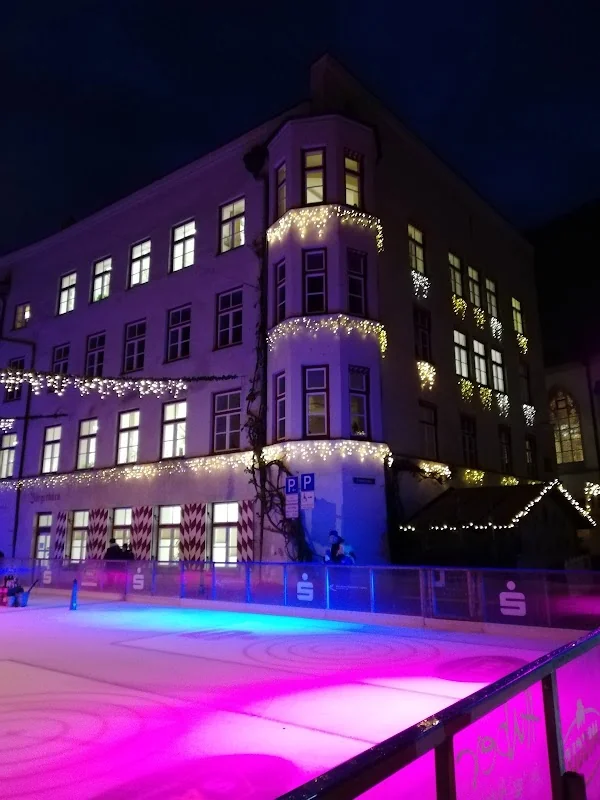
Wasserburg am Inn
Herrengasse, 83512 Wasserburg am Inn, Deutschland
Herrengasse Wasserburg am Inn | Map & Directions
The Herrengasse in Wasserburg am Inn is one of those streets that can be read not just as a path, but as a historical piece of the city. It lies in the compact core of the old town, which Wasserburg has preserved with much substance over the centuries, and it leads right into an environment of museums, small alleys, old houses, and short paths to the most important points of the center. Wasserburg itself is located in a loop of the Inn on the former salt road, which gives the city its special character to this day: medieval building structure, Mediterranean-looking facades, arcades, pergolas, and an atmosphere that reminds visitors more of a grown trading town than just a small town. In this environment, the Herrengasse acts as a connecting element between history, everyday life, and visitor experience. Therefore, those searching for Herrengasse Wasserburg am Inn, for maps, directions, or parking, do not end up at just any street, but at one of the defining spaces of the historical center. ([wasserburg.de](https://www.wasserburg.de/fileadmin/Dateien/Dateien/Wasserburg/Tourismus_Freizeit/Prospekte/flyer_stadt_english_kom.pdf))
For visitors, the Herrengasse is particularly interesting because it bundles several themes at once. On the one hand, it stands for the old Wasserburg with its councilors, merchants, and citizens' houses, and on the other hand, for the present urban space with museums, pedestrian passages, and tourist paths. The street is thus neither a museum area nor a pure residential address, but a vibrant part of the old town where past and present overlap. Those strolling through Wasserburg experience a compact network from Marienplatz, Färbergasse, Ledererzeile, the town hall area, and other historical axes from here. The charm lies precisely in the fact that many places can be reached on foot, and one repeatedly encounters architectural details, old houses, and urban stories. The Herrengasse is therefore an ideal starting point for a walk through the old town, for museum visits, and for all those who want to not only see Wasserburg but also understand it. ([historisches-lexikon-wasserburg.de](https://www.historisches-lexikon-wasserburg.de/Allwang-Durchgang))
The Historical Significance of the Herrengasse in Wasserburg am Inn
The name Herrengasse is historically very clearly anchored in Wasserburg. The Historical Lexicon of Wasserburg explains that Herr here is to be understood in its original sense of venerable or exalted and at the same time refers to the social group that lived on this street, namely influential citizens such as councilors, merchants, and traders. Thus, the Herrengasse is a classic name for a street that lay in the urban power and economic space. Particularly important is the fact that the widespread assumption that the name goes back to the Atteler Benedictines is, according to the lexicon, incorrect, as the city residences of abbots and monks were demonstrably located elsewhere. Even a look at early modern documents such as the floor plan from 1615 and the tax register from 1630 shows that the street name was deeply rooted in the urban order. The Herrengasse was therefore never just some marginal path, but part of the representative and economic structure of the old town. ([historisches-lexikon-wasserburg.de](https://www.historisches-lexikon-wasserburg.de/Herrengasse))
For today's perception, the name history of the 20th century is also interesting. In 1950, the Wasserburg city council decided to rename the Herrengasse to Herrenstraße. However, the local heritage association successfully advocated for the reversal of this decision and referred to the protection of old street names, which had already been covered by a ministerial resolution in 1905. This episode shows how strongly street names are connected to identity and how consciously Wasserburg deals with its historical heritage. The old name Herrengasse was thus preserved not by chance, but because of an active civic and cultural-historical consciousness. This is precisely what makes the street particularly interesting for visitors: it is not only part of urban planning but also part of the culture of remembrance. When one walks along the Herrengasse today, one enters a space where social hierarchies, communal history, and preserved traditions condense into a single place name. ([historisches-lexikon-wasserburg.de](https://www.historisches-lexikon-wasserburg.de/Herrengasse))
Museum Wasserburg at Herrengasse 15
One of the most important anchor points of the Herrengasse is the Museum Wasserburg at Herrengasse 15. The city describes the house as an art and cultural history collection with focuses on Inn shipping and trade, bourgeois life through the ages, crafts and trades, as well as rural living culture. Visitors receive an almost complete overview of the history and culture of the Wasserburg area, from the Neolithic period to the beginning of the 20th century. This is particularly valuable for a city street like the Herrengasse, as it not only condenses the history of the street but also that of the entire region. The museum is therefore a central reason why the Herrengasse appears repeatedly in map, museum, and old town research. ([wasserburg.de](https://www.wasserburg.de/de/kunst-kultur/museen/museum-wasserburg))
The building itself is also remarkable. According to the Historical Lexicon of Wasserburg, the core of the house at Herrengasse 15 was probably built no later than the second half of the 15th century; other parts and investigations indicate a very early, essentially unchanged basic structure to this day. Mentioned are, among other things, a barrel-vaulted passage, a storage and sales hall on the ground floor, and a clear division of the upper floors. Thus, the museum is not only an exhibition venue but also a historical testimony of urban residential and commercial construction. The house history of Herrengasse 15 and 17 also shows how closely museum, architecture, and urban development are interconnected: the Herrengasse was not just an address but part of a representative citizens' quarter. Those interested in building substance, urban history, or the development of the old town will find here a particularly dense example of how medieval and early modern structures remain legible to this day. ([historisches-lexikon-wasserburg.de](https://www.historisches-lexikon-wasserburg.de/Museum))
For practical planning, the museum is also an important orientation point. The official city website lists the address as Herrengasse 15, 83512 Wasserburg am Inn. The museum is usually open from Tuesday to Sunday, in summer from 1 PM to 5 PM and in winter until 4 PM; it is closed in January. The English museum page also lists admission prices, as well as the note that special exhibitions take place regularly. For this reason, the Herrengasse is not only a historical term but also a current cultural address. Therefore, those planning a city tour in Wasserburg can easily combine a visit to the Herrengasse with a museum visit and thus experience the historical core of the city not only from the outside but also from the inside. ([wasserburg.de](https://www.wasserburg.de/de/kunst-kultur/museen/museum-wasserburg))
Directions, Parking, and Orientation Around the Herrengasse
For visitors, the question of directions and parking around the Herrengasse is particularly important because Wasserburg's old town is located on a peninsula and the historical urban space is correspondingly compactly organized. The official parking overview of the city lists several central options: the parking garage Kellerstraße, the parking garage Überfuhrstraße, the parking lot Unter der Rampe, and the parking lot Am Gries. Additionally, bus stops and further parking spaces are noted in the old town, including Herrengasse Mitte with two coach parking spaces. Particularly practical is that parking can be done free of charge for up to four hours in the parking garages and at the parking lot Unter der Rampe; beyond that, a daily flat rate applies. However, shorter maximum parking durations apply at the parking lot Am Gries and in the old town area. For visitors arriving by car, this is a clear advantage, as the city clearly marks the routes into the old town and makes the most important parking spaces quickly identifiable. ([wasserburg.de](https://www.wasserburg.de/fileadmin/Dateien/Dateien/Wasserburg/Tourismus_Freizeit/Prospekte/stadtplan_parken_2024.pdf))
It is also important to note the structural situation of the center. According to the city map, the old town on the peninsula is only directly accessible for vehicles over 3.4 meters in height via Wasserburg West due to the Brucktor. This is a detail that is particularly relevant when arriving with a taller vehicle, by bus, or for delivery traffic. For regular cars, however, orientation is simple, as the fastest and easiest parking options are signposted from all directions. Additionally, the city allows mobile parking via paybyphone according to the overview. Therefore, those wanting to orient themselves towards the Herrengasse should not only consider the street itself but the entire old town network: From the parking lots, the path usually leads via short footpaths into the historical center, past Marienplatz, the museum, Färbergasse, and other alleys. This short distance makes the stay pleasant, as one can park the car and then explore the core of the city very well on foot. ([wasserburg.de](https://www.wasserburg.de/fileadmin/Dateien/Dateien/Wasserburg/Tourismus_Freizeit/Prospekte/stadtplan_parken_2024.pdf))
Touristically, orientation is also uncomplicated, as Wasserburg has long been designed for a compact city center visit. The official tourism brochure describes the old town as a place with a historical, Mediterranean-looking cityscape, small shops, and numerous cafés. At the same time, the city is highlighted as a former trading place on the salt road in a loop of the Inn. Therefore, those searching for Herrengasse map, Herrengasse maps, or Herrengasse directions usually want to find not just an address but understand the location within the overall structure of the old town. Official city maps, parking information, and tourist signage help with this. For a visit to the Herrengasse, it is advisable to combine the arrival with a short walk and to think ahead about the old town tour. This way, a pure destination address becomes a relaxed and well-structured city walk. ([wasserburg.de](https://www.wasserburg.de/fileadmin/Dateien/Dateien/Wasserburg/Tourismus_Freizeit/Prospekte/flyer_stadt_english_kom.pdf))
Allwang Passage, Färbergasse, and the Paths Through the Old Town
A particularly exciting neighbor of the Herrengasse is the Allwang Passage, which lies between Herrengasse and Färbergasse. The Historical Lexicon of Wasserburg describes it as one of the most well-known urban ownership paths. The name was officially established in 1927 in memory of the last Wasserburg cloth maker Johann Baptist Allwang. The passage had already been established in everyday language as a house and property name and was temporarily also called Gräfen Passage. This is interesting for the city's history because such passages show how private ownership, urban pathways, and everyday language overlapped in Wasserburg. The Allwang Passage is also a good example that the Herrengasse does not stand in isolation but is part of a finely woven old town fabric where transitions, courtyards, and passages play an important role. ([historisches-lexikon-wasserburg.de](https://www.historisches-lexikon-wasserburg.de/Allwang-Durchgang))
The lexicon also mentions historical restrictions for passage, according to which the path could only be used with hand-drawn vehicles, not with horse-drawn vehicles. For today's visitors, this is less a traffic law question than an indication of how narrow, functional, and characterful the paths of the Wasserburg old town are designed. Those moving in the Herrengasse quickly notice that the street and alley structure is strongly oriented towards pedestrians and short paths. The proximity to Färbergasse, Marienplatz, and other old town axes adds to the charm: one can switch from one historical point to the next in just a few minutes while discovering architectural details, house fronts, and hidden passages. For this reason, it is worthwhile not only to look straight ahead in the Herrengasse but also to consciously wander into the side passages. ([historisches-lexikon-wasserburg.de](https://www.historisches-lexikon-wasserburg.de/Allwang-Durchgang))
Experience Herrengasse: Walk, Cafés, and Attractions Within Walking Distance
Those visiting the Herrengasse in Wasserburg am Inn experience not just a street but an ideal starting point for a walk through the old town. The official city brochure describes Wasserburg as a place with a historical cityscape, small shops, and numerous cafés that invite you to linger. At the same time, it refers to the special location of the old trading place in the loop of the Inn on the former salt road. This combination of trading history, dense development, and vibrant city center also shapes the Herrengasse. The street is therefore well-suited for visitors who want to experience city history not abstractly but while walking. Here, one can switch from the museum address to the neighboring alleys in just a few steps and quickly get a sense of how Wasserburg functions as a medieval-grown city. ([wasserburg.de](https://www.wasserburg.de/fileadmin/Dateien/Dateien/Wasserburg/Tourismus_Freizeit/Prospekte/flyer_stadt_english_kom.pdf))
The surroundings also offer a wealth of attractions. The city of Wasserburg points to St. Jakob's Church, which was rebuilt on the site of the first town church from the 13th century, to St. Michael's Chapel as an early landmark, to the last visible stretch of the city wall, to the Red Tower as the last gatehouse of the fortification, and to Wasserburg Castle, which dates back to a castle from 1085. Additionally, there are the Holy Spirit hospital facilities and the Brucktor situation with the Inn bridge. This density of preserved building and functional sites is one of the reasons why the core around the Herrengasse is so attractive for city walks. Those who are out and about here can discover several epochs in a short distance: medieval, late Gothic, Renaissance, Baroque, and bourgeois urban development. The Herrengasse itself is therefore not an isolated destination but part of a historical route that makes the special character of Wasserburg visible. ([wasserburg.de](https://www.wasserburg.de/en/sightseeing/sights/))
From this, a clear recommendation can be derived for the day of visit: First arrive, then dive into the old town on foot and use the Herrengasse as a starting point for museums, passages, and neighboring attractions. Those with more time can complement the tourist offerings of the city, such as classic city tours, historical tours, or museum insights. The location in the city center allows for short distances, and therein lies the charm. Instead of long transfers, one experiences in Wasserburg a compact sequence of alleys, squares, and historic houses. The Herrengasse remains one of the most distinctive names because it expresses both the old social rank of the city and its current tourist and cultural significance. Those who want to understand Wasserburg should not only seek the Herrengasse but also walk through it. ([wasserburg.de](https://www.wasserburg.de/de/kunst-kultur/museen/museum-wasserburg))
Sources:
- Historical Lexicon Wasserburg – Herrengasse. ([historisches-lexikon-wasserburg.de](https://www.historisches-lexikon-wasserburg.de/Herrengasse))
- City of Wasserburg am Inn – Museum Wasserburg. ([wasserburg.de](https://www.wasserburg.de/de/kunst-kultur/museen/museum-wasserburg))
- City of Wasserburg am Inn – Sights and History. ([wasserburg.de](https://www.wasserburg.de/en/sightseeing/sights/))
- City of Wasserburg am Inn – Parking Old Town. ([wasserburg.de](https://www.wasserburg.de/fileadmin/Dateien/Dateien/Wasserburg/Tourismus_Freizeit/Prospekte/stadtplan_parken_2024.pdf))
- Historical Lexicon Wasserburg – Museum, Allwang Passage, and Frauenstraße/Town Hall Street. ([historisches-lexikon-wasserburg.de](https://www.historisches-lexikon-wasserburg.de/Museum))
- City of Wasserburg am Inn – Tourism Brochure Discover Wasserburg am Inn. ([wasserburg.de](https://www.wasserburg.de/fileadmin/Dateien/Dateien/Wasserburg/Tourismus_Freizeit/Prospekte/flyer_stadt_english_kom.pdf))
Show moreShow less
Herrengasse Wasserburg am Inn | Map & Directions
The Herrengasse in Wasserburg am Inn is one of those streets that can be read not just as a path, but as a historical piece of the city. It lies in the compact core of the old town, which Wasserburg has preserved with much substance over the centuries, and it leads right into an environment of museums, small alleys, old houses, and short paths to the most important points of the center. Wasserburg itself is located in a loop of the Inn on the former salt road, which gives the city its special character to this day: medieval building structure, Mediterranean-looking facades, arcades, pergolas, and an atmosphere that reminds visitors more of a grown trading town than just a small town. In this environment, the Herrengasse acts as a connecting element between history, everyday life, and visitor experience. Therefore, those searching for Herrengasse Wasserburg am Inn, for maps, directions, or parking, do not end up at just any street, but at one of the defining spaces of the historical center. ([wasserburg.de](https://www.wasserburg.de/fileadmin/Dateien/Dateien/Wasserburg/Tourismus_Freizeit/Prospekte/flyer_stadt_english_kom.pdf))
For visitors, the Herrengasse is particularly interesting because it bundles several themes at once. On the one hand, it stands for the old Wasserburg with its councilors, merchants, and citizens' houses, and on the other hand, for the present urban space with museums, pedestrian passages, and tourist paths. The street is thus neither a museum area nor a pure residential address, but a vibrant part of the old town where past and present overlap. Those strolling through Wasserburg experience a compact network from Marienplatz, Färbergasse, Ledererzeile, the town hall area, and other historical axes from here. The charm lies precisely in the fact that many places can be reached on foot, and one repeatedly encounters architectural details, old houses, and urban stories. The Herrengasse is therefore an ideal starting point for a walk through the old town, for museum visits, and for all those who want to not only see Wasserburg but also understand it. ([historisches-lexikon-wasserburg.de](https://www.historisches-lexikon-wasserburg.de/Allwang-Durchgang))
The Historical Significance of the Herrengasse in Wasserburg am Inn
The name Herrengasse is historically very clearly anchored in Wasserburg. The Historical Lexicon of Wasserburg explains that Herr here is to be understood in its original sense of venerable or exalted and at the same time refers to the social group that lived on this street, namely influential citizens such as councilors, merchants, and traders. Thus, the Herrengasse is a classic name for a street that lay in the urban power and economic space. Particularly important is the fact that the widespread assumption that the name goes back to the Atteler Benedictines is, according to the lexicon, incorrect, as the city residences of abbots and monks were demonstrably located elsewhere. Even a look at early modern documents such as the floor plan from 1615 and the tax register from 1630 shows that the street name was deeply rooted in the urban order. The Herrengasse was therefore never just some marginal path, but part of the representative and economic structure of the old town. ([historisches-lexikon-wasserburg.de](https://www.historisches-lexikon-wasserburg.de/Herrengasse))
For today's perception, the name history of the 20th century is also interesting. In 1950, the Wasserburg city council decided to rename the Herrengasse to Herrenstraße. However, the local heritage association successfully advocated for the reversal of this decision and referred to the protection of old street names, which had already been covered by a ministerial resolution in 1905. This episode shows how strongly street names are connected to identity and how consciously Wasserburg deals with its historical heritage. The old name Herrengasse was thus preserved not by chance, but because of an active civic and cultural-historical consciousness. This is precisely what makes the street particularly interesting for visitors: it is not only part of urban planning but also part of the culture of remembrance. When one walks along the Herrengasse today, one enters a space where social hierarchies, communal history, and preserved traditions condense into a single place name. ([historisches-lexikon-wasserburg.de](https://www.historisches-lexikon-wasserburg.de/Herrengasse))
Museum Wasserburg at Herrengasse 15
One of the most important anchor points of the Herrengasse is the Museum Wasserburg at Herrengasse 15. The city describes the house as an art and cultural history collection with focuses on Inn shipping and trade, bourgeois life through the ages, crafts and trades, as well as rural living culture. Visitors receive an almost complete overview of the history and culture of the Wasserburg area, from the Neolithic period to the beginning of the 20th century. This is particularly valuable for a city street like the Herrengasse, as it not only condenses the history of the street but also that of the entire region. The museum is therefore a central reason why the Herrengasse appears repeatedly in map, museum, and old town research. ([wasserburg.de](https://www.wasserburg.de/de/kunst-kultur/museen/museum-wasserburg))
The building itself is also remarkable. According to the Historical Lexicon of Wasserburg, the core of the house at Herrengasse 15 was probably built no later than the second half of the 15th century; other parts and investigations indicate a very early, essentially unchanged basic structure to this day. Mentioned are, among other things, a barrel-vaulted passage, a storage and sales hall on the ground floor, and a clear division of the upper floors. Thus, the museum is not only an exhibition venue but also a historical testimony of urban residential and commercial construction. The house history of Herrengasse 15 and 17 also shows how closely museum, architecture, and urban development are interconnected: the Herrengasse was not just an address but part of a representative citizens' quarter. Those interested in building substance, urban history, or the development of the old town will find here a particularly dense example of how medieval and early modern structures remain legible to this day. ([historisches-lexikon-wasserburg.de](https://www.historisches-lexikon-wasserburg.de/Museum))
For practical planning, the museum is also an important orientation point. The official city website lists the address as Herrengasse 15, 83512 Wasserburg am Inn. The museum is usually open from Tuesday to Sunday, in summer from 1 PM to 5 PM and in winter until 4 PM; it is closed in January. The English museum page also lists admission prices, as well as the note that special exhibitions take place regularly. For this reason, the Herrengasse is not only a historical term but also a current cultural address. Therefore, those planning a city tour in Wasserburg can easily combine a visit to the Herrengasse with a museum visit and thus experience the historical core of the city not only from the outside but also from the inside. ([wasserburg.de](https://www.wasserburg.de/de/kunst-kultur/museen/museum-wasserburg))
Directions, Parking, and Orientation Around the Herrengasse
For visitors, the question of directions and parking around the Herrengasse is particularly important because Wasserburg's old town is located on a peninsula and the historical urban space is correspondingly compactly organized. The official parking overview of the city lists several central options: the parking garage Kellerstraße, the parking garage Überfuhrstraße, the parking lot Unter der Rampe, and the parking lot Am Gries. Additionally, bus stops and further parking spaces are noted in the old town, including Herrengasse Mitte with two coach parking spaces. Particularly practical is that parking can be done free of charge for up to four hours in the parking garages and at the parking lot Unter der Rampe; beyond that, a daily flat rate applies. However, shorter maximum parking durations apply at the parking lot Am Gries and in the old town area. For visitors arriving by car, this is a clear advantage, as the city clearly marks the routes into the old town and makes the most important parking spaces quickly identifiable. ([wasserburg.de](https://www.wasserburg.de/fileadmin/Dateien/Dateien/Wasserburg/Tourismus_Freizeit/Prospekte/stadtplan_parken_2024.pdf))
It is also important to note the structural situation of the center. According to the city map, the old town on the peninsula is only directly accessible for vehicles over 3.4 meters in height via Wasserburg West due to the Brucktor. This is a detail that is particularly relevant when arriving with a taller vehicle, by bus, or for delivery traffic. For regular cars, however, orientation is simple, as the fastest and easiest parking options are signposted from all directions. Additionally, the city allows mobile parking via paybyphone according to the overview. Therefore, those wanting to orient themselves towards the Herrengasse should not only consider the street itself but the entire old town network: From the parking lots, the path usually leads via short footpaths into the historical center, past Marienplatz, the museum, Färbergasse, and other alleys. This short distance makes the stay pleasant, as one can park the car and then explore the core of the city very well on foot. ([wasserburg.de](https://www.wasserburg.de/fileadmin/Dateien/Dateien/Wasserburg/Tourismus_Freizeit/Prospekte/stadtplan_parken_2024.pdf))
Touristically, orientation is also uncomplicated, as Wasserburg has long been designed for a compact city center visit. The official tourism brochure describes the old town as a place with a historical, Mediterranean-looking cityscape, small shops, and numerous cafés. At the same time, the city is highlighted as a former trading place on the salt road in a loop of the Inn. Therefore, those searching for Herrengasse map, Herrengasse maps, or Herrengasse directions usually want to find not just an address but understand the location within the overall structure of the old town. Official city maps, parking information, and tourist signage help with this. For a visit to the Herrengasse, it is advisable to combine the arrival with a short walk and to think ahead about the old town tour. This way, a pure destination address becomes a relaxed and well-structured city walk. ([wasserburg.de](https://www.wasserburg.de/fileadmin/Dateien/Dateien/Wasserburg/Tourismus_Freizeit/Prospekte/flyer_stadt_english_kom.pdf))
Allwang Passage, Färbergasse, and the Paths Through the Old Town
A particularly exciting neighbor of the Herrengasse is the Allwang Passage, which lies between Herrengasse and Färbergasse. The Historical Lexicon of Wasserburg describes it as one of the most well-known urban ownership paths. The name was officially established in 1927 in memory of the last Wasserburg cloth maker Johann Baptist Allwang. The passage had already been established in everyday language as a house and property name and was temporarily also called Gräfen Passage. This is interesting for the city's history because such passages show how private ownership, urban pathways, and everyday language overlapped in Wasserburg. The Allwang Passage is also a good example that the Herrengasse does not stand in isolation but is part of a finely woven old town fabric where transitions, courtyards, and passages play an important role. ([historisches-lexikon-wasserburg.de](https://www.historisches-lexikon-wasserburg.de/Allwang-Durchgang))
The lexicon also mentions historical restrictions for passage, according to which the path could only be used with hand-drawn vehicles, not with horse-drawn vehicles. For today's visitors, this is less a traffic law question than an indication of how narrow, functional, and characterful the paths of the Wasserburg old town are designed. Those moving in the Herrengasse quickly notice that the street and alley structure is strongly oriented towards pedestrians and short paths. The proximity to Färbergasse, Marienplatz, and other old town axes adds to the charm: one can switch from one historical point to the next in just a few minutes while discovering architectural details, house fronts, and hidden passages. For this reason, it is worthwhile not only to look straight ahead in the Herrengasse but also to consciously wander into the side passages. ([historisches-lexikon-wasserburg.de](https://www.historisches-lexikon-wasserburg.de/Allwang-Durchgang))
Experience Herrengasse: Walk, Cafés, and Attractions Within Walking Distance
Those visiting the Herrengasse in Wasserburg am Inn experience not just a street but an ideal starting point for a walk through the old town. The official city brochure describes Wasserburg as a place with a historical cityscape, small shops, and numerous cafés that invite you to linger. At the same time, it refers to the special location of the old trading place in the loop of the Inn on the former salt road. This combination of trading history, dense development, and vibrant city center also shapes the Herrengasse. The street is therefore well-suited for visitors who want to experience city history not abstractly but while walking. Here, one can switch from the museum address to the neighboring alleys in just a few steps and quickly get a sense of how Wasserburg functions as a medieval-grown city. ([wasserburg.de](https://www.wasserburg.de/fileadmin/Dateien/Dateien/Wasserburg/Tourismus_Freizeit/Prospekte/flyer_stadt_english_kom.pdf))
The surroundings also offer a wealth of attractions. The city of Wasserburg points to St. Jakob's Church, which was rebuilt on the site of the first town church from the 13th century, to St. Michael's Chapel as an early landmark, to the last visible stretch of the city wall, to the Red Tower as the last gatehouse of the fortification, and to Wasserburg Castle, which dates back to a castle from 1085. Additionally, there are the Holy Spirit hospital facilities and the Brucktor situation with the Inn bridge. This density of preserved building and functional sites is one of the reasons why the core around the Herrengasse is so attractive for city walks. Those who are out and about here can discover several epochs in a short distance: medieval, late Gothic, Renaissance, Baroque, and bourgeois urban development. The Herrengasse itself is therefore not an isolated destination but part of a historical route that makes the special character of Wasserburg visible. ([wasserburg.de](https://www.wasserburg.de/en/sightseeing/sights/))
From this, a clear recommendation can be derived for the day of visit: First arrive, then dive into the old town on foot and use the Herrengasse as a starting point for museums, passages, and neighboring attractions. Those with more time can complement the tourist offerings of the city, such as classic city tours, historical tours, or museum insights. The location in the city center allows for short distances, and therein lies the charm. Instead of long transfers, one experiences in Wasserburg a compact sequence of alleys, squares, and historic houses. The Herrengasse remains one of the most distinctive names because it expresses both the old social rank of the city and its current tourist and cultural significance. Those who want to understand Wasserburg should not only seek the Herrengasse but also walk through it. ([wasserburg.de](https://www.wasserburg.de/de/kunst-kultur/museen/museum-wasserburg))
Sources:
- Historical Lexicon Wasserburg – Herrengasse. ([historisches-lexikon-wasserburg.de](https://www.historisches-lexikon-wasserburg.de/Herrengasse))
- City of Wasserburg am Inn – Museum Wasserburg. ([wasserburg.de](https://www.wasserburg.de/de/kunst-kultur/museen/museum-wasserburg))
- City of Wasserburg am Inn – Sights and History. ([wasserburg.de](https://www.wasserburg.de/en/sightseeing/sights/))
- City of Wasserburg am Inn – Parking Old Town. ([wasserburg.de](https://www.wasserburg.de/fileadmin/Dateien/Dateien/Wasserburg/Tourismus_Freizeit/Prospekte/stadtplan_parken_2024.pdf))
- Historical Lexicon Wasserburg – Museum, Allwang Passage, and Frauenstraße/Town Hall Street. ([historisches-lexikon-wasserburg.de](https://www.historisches-lexikon-wasserburg.de/Museum))
- City of Wasserburg am Inn – Tourism Brochure Discover Wasserburg am Inn. ([wasserburg.de](https://www.wasserburg.de/fileadmin/Dateien/Dateien/Wasserburg/Tourismus_Freizeit/Prospekte/flyer_stadt_english_kom.pdf))
Herrengasse Wasserburg am Inn | Map & Directions
The Herrengasse in Wasserburg am Inn is one of those streets that can be read not just as a path, but as a historical piece of the city. It lies in the compact core of the old town, which Wasserburg has preserved with much substance over the centuries, and it leads right into an environment of museums, small alleys, old houses, and short paths to the most important points of the center. Wasserburg itself is located in a loop of the Inn on the former salt road, which gives the city its special character to this day: medieval building structure, Mediterranean-looking facades, arcades, pergolas, and an atmosphere that reminds visitors more of a grown trading town than just a small town. In this environment, the Herrengasse acts as a connecting element between history, everyday life, and visitor experience. Therefore, those searching for Herrengasse Wasserburg am Inn, for maps, directions, or parking, do not end up at just any street, but at one of the defining spaces of the historical center. ([wasserburg.de](https://www.wasserburg.de/fileadmin/Dateien/Dateien/Wasserburg/Tourismus_Freizeit/Prospekte/flyer_stadt_english_kom.pdf))
For visitors, the Herrengasse is particularly interesting because it bundles several themes at once. On the one hand, it stands for the old Wasserburg with its councilors, merchants, and citizens' houses, and on the other hand, for the present urban space with museums, pedestrian passages, and tourist paths. The street is thus neither a museum area nor a pure residential address, but a vibrant part of the old town where past and present overlap. Those strolling through Wasserburg experience a compact network from Marienplatz, Färbergasse, Ledererzeile, the town hall area, and other historical axes from here. The charm lies precisely in the fact that many places can be reached on foot, and one repeatedly encounters architectural details, old houses, and urban stories. The Herrengasse is therefore an ideal starting point for a walk through the old town, for museum visits, and for all those who want to not only see Wasserburg but also understand it. ([historisches-lexikon-wasserburg.de](https://www.historisches-lexikon-wasserburg.de/Allwang-Durchgang))
The Historical Significance of the Herrengasse in Wasserburg am Inn
The name Herrengasse is historically very clearly anchored in Wasserburg. The Historical Lexicon of Wasserburg explains that Herr here is to be understood in its original sense of venerable or exalted and at the same time refers to the social group that lived on this street, namely influential citizens such as councilors, merchants, and traders. Thus, the Herrengasse is a classic name for a street that lay in the urban power and economic space. Particularly important is the fact that the widespread assumption that the name goes back to the Atteler Benedictines is, according to the lexicon, incorrect, as the city residences of abbots and monks were demonstrably located elsewhere. Even a look at early modern documents such as the floor plan from 1615 and the tax register from 1630 shows that the street name was deeply rooted in the urban order. The Herrengasse was therefore never just some marginal path, but part of the representative and economic structure of the old town. ([historisches-lexikon-wasserburg.de](https://www.historisches-lexikon-wasserburg.de/Herrengasse))
For today's perception, the name history of the 20th century is also interesting. In 1950, the Wasserburg city council decided to rename the Herrengasse to Herrenstraße. However, the local heritage association successfully advocated for the reversal of this decision and referred to the protection of old street names, which had already been covered by a ministerial resolution in 1905. This episode shows how strongly street names are connected to identity and how consciously Wasserburg deals with its historical heritage. The old name Herrengasse was thus preserved not by chance, but because of an active civic and cultural-historical consciousness. This is precisely what makes the street particularly interesting for visitors: it is not only part of urban planning but also part of the culture of remembrance. When one walks along the Herrengasse today, one enters a space where social hierarchies, communal history, and preserved traditions condense into a single place name. ([historisches-lexikon-wasserburg.de](https://www.historisches-lexikon-wasserburg.de/Herrengasse))
Museum Wasserburg at Herrengasse 15
One of the most important anchor points of the Herrengasse is the Museum Wasserburg at Herrengasse 15. The city describes the house as an art and cultural history collection with focuses on Inn shipping and trade, bourgeois life through the ages, crafts and trades, as well as rural living culture. Visitors receive an almost complete overview of the history and culture of the Wasserburg area, from the Neolithic period to the beginning of the 20th century. This is particularly valuable for a city street like the Herrengasse, as it not only condenses the history of the street but also that of the entire region. The museum is therefore a central reason why the Herrengasse appears repeatedly in map, museum, and old town research. ([wasserburg.de](https://www.wasserburg.de/de/kunst-kultur/museen/museum-wasserburg))
The building itself is also remarkable. According to the Historical Lexicon of Wasserburg, the core of the house at Herrengasse 15 was probably built no later than the second half of the 15th century; other parts and investigations indicate a very early, essentially unchanged basic structure to this day. Mentioned are, among other things, a barrel-vaulted passage, a storage and sales hall on the ground floor, and a clear division of the upper floors. Thus, the museum is not only an exhibition venue but also a historical testimony of urban residential and commercial construction. The house history of Herrengasse 15 and 17 also shows how closely museum, architecture, and urban development are interconnected: the Herrengasse was not just an address but part of a representative citizens' quarter. Those interested in building substance, urban history, or the development of the old town will find here a particularly dense example of how medieval and early modern structures remain legible to this day. ([historisches-lexikon-wasserburg.de](https://www.historisches-lexikon-wasserburg.de/Museum))
For practical planning, the museum is also an important orientation point. The official city website lists the address as Herrengasse 15, 83512 Wasserburg am Inn. The museum is usually open from Tuesday to Sunday, in summer from 1 PM to 5 PM and in winter until 4 PM; it is closed in January. The English museum page also lists admission prices, as well as the note that special exhibitions take place regularly. For this reason, the Herrengasse is not only a historical term but also a current cultural address. Therefore, those planning a city tour in Wasserburg can easily combine a visit to the Herrengasse with a museum visit and thus experience the historical core of the city not only from the outside but also from the inside. ([wasserburg.de](https://www.wasserburg.de/de/kunst-kultur/museen/museum-wasserburg))
Directions, Parking, and Orientation Around the Herrengasse
For visitors, the question of directions and parking around the Herrengasse is particularly important because Wasserburg's old town is located on a peninsula and the historical urban space is correspondingly compactly organized. The official parking overview of the city lists several central options: the parking garage Kellerstraße, the parking garage Überfuhrstraße, the parking lot Unter der Rampe, and the parking lot Am Gries. Additionally, bus stops and further parking spaces are noted in the old town, including Herrengasse Mitte with two coach parking spaces. Particularly practical is that parking can be done free of charge for up to four hours in the parking garages and at the parking lot Unter der Rampe; beyond that, a daily flat rate applies. However, shorter maximum parking durations apply at the parking lot Am Gries and in the old town area. For visitors arriving by car, this is a clear advantage, as the city clearly marks the routes into the old town and makes the most important parking spaces quickly identifiable. ([wasserburg.de](https://www.wasserburg.de/fileadmin/Dateien/Dateien/Wasserburg/Tourismus_Freizeit/Prospekte/stadtplan_parken_2024.pdf))
It is also important to note the structural situation of the center. According to the city map, the old town on the peninsula is only directly accessible for vehicles over 3.4 meters in height via Wasserburg West due to the Brucktor. This is a detail that is particularly relevant when arriving with a taller vehicle, by bus, or for delivery traffic. For regular cars, however, orientation is simple, as the fastest and easiest parking options are signposted from all directions. Additionally, the city allows mobile parking via paybyphone according to the overview. Therefore, those wanting to orient themselves towards the Herrengasse should not only consider the street itself but the entire old town network: From the parking lots, the path usually leads via short footpaths into the historical center, past Marienplatz, the museum, Färbergasse, and other alleys. This short distance makes the stay pleasant, as one can park the car and then explore the core of the city very well on foot. ([wasserburg.de](https://www.wasserburg.de/fileadmin/Dateien/Dateien/Wasserburg/Tourismus_Freizeit/Prospekte/stadtplan_parken_2024.pdf))
Touristically, orientation is also uncomplicated, as Wasserburg has long been designed for a compact city center visit. The official tourism brochure describes the old town as a place with a historical, Mediterranean-looking cityscape, small shops, and numerous cafés. At the same time, the city is highlighted as a former trading place on the salt road in a loop of the Inn. Therefore, those searching for Herrengasse map, Herrengasse maps, or Herrengasse directions usually want to find not just an address but understand the location within the overall structure of the old town. Official city maps, parking information, and tourist signage help with this. For a visit to the Herrengasse, it is advisable to combine the arrival with a short walk and to think ahead about the old town tour. This way, a pure destination address becomes a relaxed and well-structured city walk. ([wasserburg.de](https://www.wasserburg.de/fileadmin/Dateien/Dateien/Wasserburg/Tourismus_Freizeit/Prospekte/flyer_stadt_english_kom.pdf))
Allwang Passage, Färbergasse, and the Paths Through the Old Town
A particularly exciting neighbor of the Herrengasse is the Allwang Passage, which lies between Herrengasse and Färbergasse. The Historical Lexicon of Wasserburg describes it as one of the most well-known urban ownership paths. The name was officially established in 1927 in memory of the last Wasserburg cloth maker Johann Baptist Allwang. The passage had already been established in everyday language as a house and property name and was temporarily also called Gräfen Passage. This is interesting for the city's history because such passages show how private ownership, urban pathways, and everyday language overlapped in Wasserburg. The Allwang Passage is also a good example that the Herrengasse does not stand in isolation but is part of a finely woven old town fabric where transitions, courtyards, and passages play an important role. ([historisches-lexikon-wasserburg.de](https://www.historisches-lexikon-wasserburg.de/Allwang-Durchgang))
The lexicon also mentions historical restrictions for passage, according to which the path could only be used with hand-drawn vehicles, not with horse-drawn vehicles. For today's visitors, this is less a traffic law question than an indication of how narrow, functional, and characterful the paths of the Wasserburg old town are designed. Those moving in the Herrengasse quickly notice that the street and alley structure is strongly oriented towards pedestrians and short paths. The proximity to Färbergasse, Marienplatz, and other old town axes adds to the charm: one can switch from one historical point to the next in just a few minutes while discovering architectural details, house fronts, and hidden passages. For this reason, it is worthwhile not only to look straight ahead in the Herrengasse but also to consciously wander into the side passages. ([historisches-lexikon-wasserburg.de](https://www.historisches-lexikon-wasserburg.de/Allwang-Durchgang))
Experience Herrengasse: Walk, Cafés, and Attractions Within Walking Distance
Those visiting the Herrengasse in Wasserburg am Inn experience not just a street but an ideal starting point for a walk through the old town. The official city brochure describes Wasserburg as a place with a historical cityscape, small shops, and numerous cafés that invite you to linger. At the same time, it refers to the special location of the old trading place in the loop of the Inn on the former salt road. This combination of trading history, dense development, and vibrant city center also shapes the Herrengasse. The street is therefore well-suited for visitors who want to experience city history not abstractly but while walking. Here, one can switch from the museum address to the neighboring alleys in just a few steps and quickly get a sense of how Wasserburg functions as a medieval-grown city. ([wasserburg.de](https://www.wasserburg.de/fileadmin/Dateien/Dateien/Wasserburg/Tourismus_Freizeit/Prospekte/flyer_stadt_english_kom.pdf))
The surroundings also offer a wealth of attractions. The city of Wasserburg points to St. Jakob's Church, which was rebuilt on the site of the first town church from the 13th century, to St. Michael's Chapel as an early landmark, to the last visible stretch of the city wall, to the Red Tower as the last gatehouse of the fortification, and to Wasserburg Castle, which dates back to a castle from 1085. Additionally, there are the Holy Spirit hospital facilities and the Brucktor situation with the Inn bridge. This density of preserved building and functional sites is one of the reasons why the core around the Herrengasse is so attractive for city walks. Those who are out and about here can discover several epochs in a short distance: medieval, late Gothic, Renaissance, Baroque, and bourgeois urban development. The Herrengasse itself is therefore not an isolated destination but part of a historical route that makes the special character of Wasserburg visible. ([wasserburg.de](https://www.wasserburg.de/en/sightseeing/sights/))
From this, a clear recommendation can be derived for the day of visit: First arrive, then dive into the old town on foot and use the Herrengasse as a starting point for museums, passages, and neighboring attractions. Those with more time can complement the tourist offerings of the city, such as classic city tours, historical tours, or museum insights. The location in the city center allows for short distances, and therein lies the charm. Instead of long transfers, one experiences in Wasserburg a compact sequence of alleys, squares, and historic houses. The Herrengasse remains one of the most distinctive names because it expresses both the old social rank of the city and its current tourist and cultural significance. Those who want to understand Wasserburg should not only seek the Herrengasse but also walk through it. ([wasserburg.de](https://www.wasserburg.de/de/kunst-kultur/museen/museum-wasserburg))
Sources:
- Historical Lexicon Wasserburg – Herrengasse. ([historisches-lexikon-wasserburg.de](https://www.historisches-lexikon-wasserburg.de/Herrengasse))
- City of Wasserburg am Inn – Museum Wasserburg. ([wasserburg.de](https://www.wasserburg.de/de/kunst-kultur/museen/museum-wasserburg))
- City of Wasserburg am Inn – Sights and History. ([wasserburg.de](https://www.wasserburg.de/en/sightseeing/sights/))
- City of Wasserburg am Inn – Parking Old Town. ([wasserburg.de](https://www.wasserburg.de/fileadmin/Dateien/Dateien/Wasserburg/Tourismus_Freizeit/Prospekte/stadtplan_parken_2024.pdf))
- Historical Lexicon Wasserburg – Museum, Allwang Passage, and Frauenstraße/Town Hall Street. ([historisches-lexikon-wasserburg.de](https://www.historisches-lexikon-wasserburg.de/Museum))
- City of Wasserburg am Inn – Tourism Brochure Discover Wasserburg am Inn. ([wasserburg.de](https://www.wasserburg.de/fileadmin/Dateien/Dateien/Wasserburg/Tourismus_Freizeit/Prospekte/flyer_stadt_english_kom.pdf))
Upcoming Events
No events found
Frequently Asked Questions
Reviews
No reviews found