
Oberaudorf
Im, Am Burgtor 7, 83080 Oberaudorf, Deutschland
Audorfer Museum in the Burgtor | Opening Hours & History
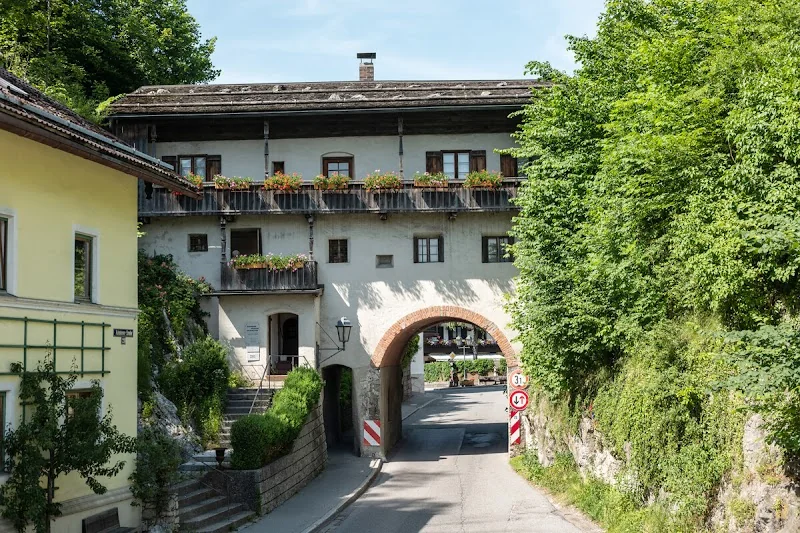
The Audorfer Museum in the Burgtor is not just a museum to visit, but a place where Oberaudorf's history is condensed into a single building. The historic Burgtor itself is part of this narrative: a distinctive landmark that has shaped the town for centuries and today serves as a framework for a local historical exhibition. Those who enter here do not encounter an abstract collection of data, but a clear, vibrant journey through landscape, settlement, trade, war, customs, and tourism. Especially for guests seeing Oberaudorf for the first time, the museum provides a quick yet deep introduction to the identity of the place. It explains why this location at the border, by the river, and at the foot of the Alps has held significance since early times, and why history, nature, and regional culture continue to overlap so closely here. The themes range from fossils and geological development to the Auerburg, from shipping on the Inn to the mountain riflemen, from the first traces of settlement to the modern holiday resort. ([tourismus-oberaudorf.de](https://www.tourismus-oberaudorf.de/audorfer-museum/))
Opening Hours of the Museum in the Burgtor: When is a Visit Worthwhile?
For practical planning, the museum is pleasantly uncomplicated. The official tourism site states that the season runs from early May to the end of October, every Tuesday and Sunday from 2:00 PM to 6:00 PM; the museum portal confirms the same season with the two visiting days. This makes the museum an ideal destination for an afternoon outing, especially if one wants to combine a local tour, a hike, or a family visit with a historical program point. The structure of the offerings is also intentionally manageable: instead of a crowded, time-constrained museum visit, guests can expect a focused tour that allows enough space to absorb the exhibits and explanatory content at leisure. Group tours are available upon request, making the museum interesting for associations, school classes, or travel groups. The admission prices are also kept low and fit well with the character of a regional local museum. ([tourismus-oberaudorf.de](https://www.tourismus-oberaudorf.de/audorfer-museum/))
Especially due to this seasonal opening, it is worthwhile to coordinate the visit with the weather and the day's program. Those who want to explore Oberaudorf on foot can plan the museum in the afternoon as a cultural highlight between a walk, a café visit, and a subsequent detour to the Auerburg. Those traveling with children benefit from the fact that the exhibition is not only aimed at a specialist audience but also works with illustrative themes and clear local references. The admission policy with free access for children up to and including twelve years makes the visit additionally family-friendly. Thus, the museum is not a place for hurried obligatory appointments, but for a calm, planned, and simultaneously content-rich visit. Those who want to understand Oberaudorf should build their calendar around these two weekend and afternoon slots rather than a random stopover. ([tourismus-oberaudorf.de](https://www.tourismus-oberaudorf.de/audorfer-museum/))
The Burgtor from 1489 and the Auerburg: The Historical Heart of Oberaudorf
The special charm of the Audorfer Museum lies in its architectural shell. The Burgtor is not just a museum space but a historical document in itself. According to the museum portal, it was built in 1489 and has been a prominent landmark of Oberaudorf for about 500 years. It once served as a toll and customs barrier, visibly demonstrating the importance of this passage on the trade route to Italy. This connection between traffic, power, and local development is central to Oberaudorf: the town has never been on the fringes of history but on a route where people, goods, and political interests intersected. That the local historical museum is located here is therefore particularly logical. The exhibition is in the right place because the building itself already explains why Oberaudorf had early strategic significance. Additionally, there is the memory of the Auerburg, which was located above the town and was destroyed in 1745. The Burgtor thus simultaneously refers to the protective function of the Middle Ages and the loss of a once-powerful center of power. ([museen-in-bayern.de](https://museen-in-bayern.de/museen/detailseite-museum/audorfer-museum-im-burgtor))
The historical line extends even further back. The flyer from the tourist information describes that Emperor Ludwig the Bavarian expanded the Auerburg as a bastion in the Inn Valley around 1320, created the Auerburg district court, and granted the town market rights. As a border fortress, it proved its worth until the 16th century but was destroyed in the succession wars of the 18th century because it no longer met the changed military requirements. For visitors, it is particularly appealing that the Burgtor Museum and the ruins of the Auerburg can now be experienced as an ensemble. Right next to the museum, a short historical walk leads to the castle hill and the remains of the ruin. Thus, a museum visit becomes not an isolated indoor experience but a coherent local image: below, the Burgtor as a gateway to history, above, the ruin as a visible echo of former power. This connection between exhibition and landscape makes the place a particularly harmonious destination for culture-interested guests. ([tourismus-oberaudorf.de](https://www.tourismus-oberaudorf.de/wp-content/uploads/2021/04/Museum-im-Burgtor_Flyer2021-homepage.pdf))
Geology, Settlement, and Shipping on the Inn: The History Behind the Museum is Very Old
The exhibition does not begin in the Middle Ages but much earlier. Oberaudorf is located at the edge of the northern limestone Alps, and the flyer from the tourist information emphasizes the geological diversity of the region: fossils from the Triassic, Jurassic, Cretaceous, and Tertiary periods make the landscape an archive of millions of years. Additionally, the ice and interglacial periods have shaped the current relief. The museum translates these dimensions into a local history that shows how a geologically shaped landscape became a living space. After the glaciers melted and with increasing vegetation, the first traces of Ice Age hunters appear in the Inn Valley. This is important because it changes the perspective on Oberaudorf: the town no longer appears merely as a holiday destination or historical site but as a space that has been used for a very long time and whose natural conditions made human settlement possible. For visitors, this is particularly vivid because natural history and cultural history are not treated separately here but are embedded in a common narrative arc. ([tourismus-oberaudorf.de](https://www.tourismus-oberaudorf.de/wp-content/uploads/2021/04/Museum-im-Burgtor_Flyer2021-homepage.pdf))
The settlement is also addressed very early in the museum. The Inn Valley was one of the most important traffic and trade routes through the Alps and was already used in the younger Stone Age; in Oberaudorf, human traces have been detectable since the Bronze Age around 3500 years ago. The flyer points to recent archaeological finds in the immediate vicinity of the museum, which provide insights into the time of the Celts and the castles of the Middle Ages. Original finds and research results that can be seen in the museum are also included. Particularly exciting is the shipping on the Inn: the Romans already used the Inn as a transport route, in the Middle Ages, shipping reached its peak, and the ships transported goods, troops, and even royal courts upstream and downstream. The museum thus makes it clear that Oberaudorf is not only located by a river but on a historical artery. With the construction of the railway in 1858, shipping on the Inn quickly came to an end, which again shows how technological upheavals can replace entire economic forms. This perspective makes the exhibition interesting for all who want to understand history not just as a sequence of dates but as a change in mobility and lifestyle. ([tourismus-oberaudorf.de](https://www.tourismus-oberaudorf.de/wp-content/uploads/2021/04/Museum-im-Burgtor_Flyer2021-homepage.pdf))
Mountain Riflemen and Tourism: Why Oberaudorf Became a Well-Known Holiday Resort Early On
A dedicated thematic block in the museum is devoted to the mountain riflemen, and this area particularly links local history with social self-organization. According to the flyer, the Audorfer mountain riflemen were founded as self-help against enemy attacks and natural dangers and initially did not fall under any military authority. In 1542, they first appeared as a rifle company in fixed formation and reinforced the local militia. Around 1805, the responsibility changed, and later the company was under the leadership of the district judge of Rosenheim. In 1860, it disbanded because municipal and public institutions took over the tasks; in 1952, it was re-established as a customs association. This is a good example of how the museum not only addresses war and politics but also the history of community, responsibility, and regional tradition. The mountain riflemen symbolically represent a local culture that had to adapt but has not disappeared. Therefore, those who visit the exhibition also better understand why customs in Oberaudorf are not perceived as folklore on the periphery but as a lived part of local identity. ([tourismus-oberaudorf.de](https://www.tourismus-oberaudorf.de/wp-content/uploads/2021/04/Museum-im-Burgtor_Flyer2021-homepage.pdf))
Equally important is the perspective on tourism, as Oberaudorf developed an early reputation as a holiday resort. The flyer describes a development that began in the stagecoach era when a rocky alcove was converted into the Weber inn and attracted travelers due to the special location. Later, the fiery Tatzlwurm also played a role, and Ludwig Steub and his circle of artists supported the opening in 1863. With the railway, city dwellers came for summer vacations, mountaineering and winter sports became popular, and in 1905, the first international toboggan championship took place from the Brünnsteinhaus. Organized tourism developed around 1930 and established Oberaudorf's reputation as the oldest and most significant tourist destination in the Bavarian Inn Valley. This development explains why the museum not only preserves local history but also makes visible the cultural background of a still vibrant holiday resort. Those who know Oberaudorf only as a starting point for hikes will discover the historical roots of this image here. The museum shows: the tourist character of the place is not a coincidence but the result of a long development from scenic attraction, favorable location, and cultural staging. ([tourismus-oberaudorf.de](https://www.tourismus-oberaudorf.de/wp-content/uploads/2021/04/Museum-im-Burgtor_Flyer2021-homepage.pdf))
Directions, Parking, and the Walk to the Auerburg Ruins
The location of the museum is practical and historical for visitors. The official address is Im Burgtor 2 in 83080 Oberaudorf, right in the middle of a district that is easily accessible on foot. Those arriving by car will find specific information in the flyer: free parking is available for one hour at the town hall square, and the parking lot at Luegsteinsee offers a day ticket for 3 euros. This is convenient for a museum visit in the town center, as the path from the parking lots to the museum can become part of a small local tour. Especially travelers who come not just for the museum itself but want to experience Oberaudorf as a whole benefit from this location. The journey is therefore not a hurdle but rather the beginning of a historical walk through the town. Furthermore, the museum's location clearly shows how closely culture and topography are linked here: the Burgtor sits where control, passage, and border experience once came together. Today, the same place is the ideal starting point for a relaxed and informative visit. ([tourismus-oberaudorf.de](https://www.tourismus-oberaudorf.de/audorfer-museum/))
Particularly attractive is the combinable walk to the Auerburg. The flyer describes that next to the museum, a small walk along historical paths leads comfortably to the ruins on the castle hill, rewarded with a beautiful view. The tourist information also uses the museum as a starting point for historical offerings: In 2025, the Oberaudorf history trail was opened, which leads from the tourist information through historical points such as the Auerburg, the Florianiberg, and the Luegsteinsee, incorporating the museum in the Burgtor as an informative highlight at the end. For visitors, this means that one can excellently combine the museum visit with movement in the fresh air. Those who see the ruin experience history not just as explanatory text but as a landscape experience. This is precisely why it becomes clear why the place is so strongly shaped by its location. The museum is therefore not the final endpoint of a visit but the hub of several paths: up to the ruin, through the town, and into Oberaudorf's historical narrative. ([tourismus-oberaudorf.de](https://www.tourismus-oberaudorf.de/wp-content/uploads/2021/04/Museum-im-Burgtor_Flyer2021-homepage.pdf))
Group Tours, History Trail, and Practical Visiting Tips for Oberaudorf
Those arriving with a group receive additional options at the Audorfer Museum in the Burgtor. The tourist information explicitly points out that special tours are offered upon request. This is sensible because the exhibition is suitable for different target groups: school classes benefit from the clear historical themes, associations and excursion groups from the connection between local history and landscape, and culture-interested guests from the many points of connection to the Auerburg, the shipping on the Inn, or the development of the holiday resort. The Historical Association Audorf also emphasizes that the Burgtor serves as a framework for the local historical museum and makes the development of the town understandable from the first traces of settlement to the present. Therefore, those planning a visit should not only look at the opening hours but also at the possibility of combining the appointment with a guided tour or a historical walk. This way, a short museum stop becomes a thematically rounded excursion. ([tourismus-oberaudorf.de](https://www.tourismus-oberaudorf.de/audorfer-museum/))
The visit is particularly coherent when it is embedded in a small Oberaudorf route. The new history trail, which was opened in 2025, shows how well the museum, local history, and hiking can be connected. Those who visit the tourist information and historical points in the town first in the morning or at noon can choose the museum as a conclusion in the afternoon and categorize the places seen earlier inside the Burgtor. This is precisely what makes the strength of this location: it is not just an exhibition space but an explanatory center for the entire town. Therefore, it is worthwhile to plan a bit more time than one might expect for a classic local museum. The exhibition is compact but content-rich, and the historical context outside the door is so strong that a quick walkthrough would hardly exhaust the richness of the offerings. Those who seriously want to get to know Oberaudorf should consider the Burgtor Museum as a key: it provides orientation, deepens the view of the surroundings, and turns an outing into a comprehensible historical visit. ([tourismus-oberaudorf.de](https://www.tourismus-oberaudorf.de/eroeffnung-neuer-geschichtsweg/?utm_source=openai))
Sources:
Show moreShow less
Audorfer Museum in the Burgtor | Opening Hours & History
The Audorfer Museum in the Burgtor is not just a museum to visit, but a place where Oberaudorf's history is condensed into a single building. The historic Burgtor itself is part of this narrative: a distinctive landmark that has shaped the town for centuries and today serves as a framework for a local historical exhibition. Those who enter here do not encounter an abstract collection of data, but a clear, vibrant journey through landscape, settlement, trade, war, customs, and tourism. Especially for guests seeing Oberaudorf for the first time, the museum provides a quick yet deep introduction to the identity of the place. It explains why this location at the border, by the river, and at the foot of the Alps has held significance since early times, and why history, nature, and regional culture continue to overlap so closely here. The themes range from fossils and geological development to the Auerburg, from shipping on the Inn to the mountain riflemen, from the first traces of settlement to the modern holiday resort. ([tourismus-oberaudorf.de](https://www.tourismus-oberaudorf.de/audorfer-museum/))
Opening Hours of the Museum in the Burgtor: When is a Visit Worthwhile?
For practical planning, the museum is pleasantly uncomplicated. The official tourism site states that the season runs from early May to the end of October, every Tuesday and Sunday from 2:00 PM to 6:00 PM; the museum portal confirms the same season with the two visiting days. This makes the museum an ideal destination for an afternoon outing, especially if one wants to combine a local tour, a hike, or a family visit with a historical program point. The structure of the offerings is also intentionally manageable: instead of a crowded, time-constrained museum visit, guests can expect a focused tour that allows enough space to absorb the exhibits and explanatory content at leisure. Group tours are available upon request, making the museum interesting for associations, school classes, or travel groups. The admission prices are also kept low and fit well with the character of a regional local museum. ([tourismus-oberaudorf.de](https://www.tourismus-oberaudorf.de/audorfer-museum/))
Especially due to this seasonal opening, it is worthwhile to coordinate the visit with the weather and the day's program. Those who want to explore Oberaudorf on foot can plan the museum in the afternoon as a cultural highlight between a walk, a café visit, and a subsequent detour to the Auerburg. Those traveling with children benefit from the fact that the exhibition is not only aimed at a specialist audience but also works with illustrative themes and clear local references. The admission policy with free access for children up to and including twelve years makes the visit additionally family-friendly. Thus, the museum is not a place for hurried obligatory appointments, but for a calm, planned, and simultaneously content-rich visit. Those who want to understand Oberaudorf should build their calendar around these two weekend and afternoon slots rather than a random stopover. ([tourismus-oberaudorf.de](https://www.tourismus-oberaudorf.de/audorfer-museum/))
The Burgtor from 1489 and the Auerburg: The Historical Heart of Oberaudorf
The special charm of the Audorfer Museum lies in its architectural shell. The Burgtor is not just a museum space but a historical document in itself. According to the museum portal, it was built in 1489 and has been a prominent landmark of Oberaudorf for about 500 years. It once served as a toll and customs barrier, visibly demonstrating the importance of this passage on the trade route to Italy. This connection between traffic, power, and local development is central to Oberaudorf: the town has never been on the fringes of history but on a route where people, goods, and political interests intersected. That the local historical museum is located here is therefore particularly logical. The exhibition is in the right place because the building itself already explains why Oberaudorf had early strategic significance. Additionally, there is the memory of the Auerburg, which was located above the town and was destroyed in 1745. The Burgtor thus simultaneously refers to the protective function of the Middle Ages and the loss of a once-powerful center of power. ([museen-in-bayern.de](https://museen-in-bayern.de/museen/detailseite-museum/audorfer-museum-im-burgtor))
The historical line extends even further back. The flyer from the tourist information describes that Emperor Ludwig the Bavarian expanded the Auerburg as a bastion in the Inn Valley around 1320, created the Auerburg district court, and granted the town market rights. As a border fortress, it proved its worth until the 16th century but was destroyed in the succession wars of the 18th century because it no longer met the changed military requirements. For visitors, it is particularly appealing that the Burgtor Museum and the ruins of the Auerburg can now be experienced as an ensemble. Right next to the museum, a short historical walk leads to the castle hill and the remains of the ruin. Thus, a museum visit becomes not an isolated indoor experience but a coherent local image: below, the Burgtor as a gateway to history, above, the ruin as a visible echo of former power. This connection between exhibition and landscape makes the place a particularly harmonious destination for culture-interested guests. ([tourismus-oberaudorf.de](https://www.tourismus-oberaudorf.de/wp-content/uploads/2021/04/Museum-im-Burgtor_Flyer2021-homepage.pdf))
Geology, Settlement, and Shipping on the Inn: The History Behind the Museum is Very Old
The exhibition does not begin in the Middle Ages but much earlier. Oberaudorf is located at the edge of the northern limestone Alps, and the flyer from the tourist information emphasizes the geological diversity of the region: fossils from the Triassic, Jurassic, Cretaceous, and Tertiary periods make the landscape an archive of millions of years. Additionally, the ice and interglacial periods have shaped the current relief. The museum translates these dimensions into a local history that shows how a geologically shaped landscape became a living space. After the glaciers melted and with increasing vegetation, the first traces of Ice Age hunters appear in the Inn Valley. This is important because it changes the perspective on Oberaudorf: the town no longer appears merely as a holiday destination or historical site but as a space that has been used for a very long time and whose natural conditions made human settlement possible. For visitors, this is particularly vivid because natural history and cultural history are not treated separately here but are embedded in a common narrative arc. ([tourismus-oberaudorf.de](https://www.tourismus-oberaudorf.de/wp-content/uploads/2021/04/Museum-im-Burgtor_Flyer2021-homepage.pdf))
The settlement is also addressed very early in the museum. The Inn Valley was one of the most important traffic and trade routes through the Alps and was already used in the younger Stone Age; in Oberaudorf, human traces have been detectable since the Bronze Age around 3500 years ago. The flyer points to recent archaeological finds in the immediate vicinity of the museum, which provide insights into the time of the Celts and the castles of the Middle Ages. Original finds and research results that can be seen in the museum are also included. Particularly exciting is the shipping on the Inn: the Romans already used the Inn as a transport route, in the Middle Ages, shipping reached its peak, and the ships transported goods, troops, and even royal courts upstream and downstream. The museum thus makes it clear that Oberaudorf is not only located by a river but on a historical artery. With the construction of the railway in 1858, shipping on the Inn quickly came to an end, which again shows how technological upheavals can replace entire economic forms. This perspective makes the exhibition interesting for all who want to understand history not just as a sequence of dates but as a change in mobility and lifestyle. ([tourismus-oberaudorf.de](https://www.tourismus-oberaudorf.de/wp-content/uploads/2021/04/Museum-im-Burgtor_Flyer2021-homepage.pdf))
Mountain Riflemen and Tourism: Why Oberaudorf Became a Well-Known Holiday Resort Early On
A dedicated thematic block in the museum is devoted to the mountain riflemen, and this area particularly links local history with social self-organization. According to the flyer, the Audorfer mountain riflemen were founded as self-help against enemy attacks and natural dangers and initially did not fall under any military authority. In 1542, they first appeared as a rifle company in fixed formation and reinforced the local militia. Around 1805, the responsibility changed, and later the company was under the leadership of the district judge of Rosenheim. In 1860, it disbanded because municipal and public institutions took over the tasks; in 1952, it was re-established as a customs association. This is a good example of how the museum not only addresses war and politics but also the history of community, responsibility, and regional tradition. The mountain riflemen symbolically represent a local culture that had to adapt but has not disappeared. Therefore, those who visit the exhibition also better understand why customs in Oberaudorf are not perceived as folklore on the periphery but as a lived part of local identity. ([tourismus-oberaudorf.de](https://www.tourismus-oberaudorf.de/wp-content/uploads/2021/04/Museum-im-Burgtor_Flyer2021-homepage.pdf))
Equally important is the perspective on tourism, as Oberaudorf developed an early reputation as a holiday resort. The flyer describes a development that began in the stagecoach era when a rocky alcove was converted into the Weber inn and attracted travelers due to the special location. Later, the fiery Tatzlwurm also played a role, and Ludwig Steub and his circle of artists supported the opening in 1863. With the railway, city dwellers came for summer vacations, mountaineering and winter sports became popular, and in 1905, the first international toboggan championship took place from the Brünnsteinhaus. Organized tourism developed around 1930 and established Oberaudorf's reputation as the oldest and most significant tourist destination in the Bavarian Inn Valley. This development explains why the museum not only preserves local history but also makes visible the cultural background of a still vibrant holiday resort. Those who know Oberaudorf only as a starting point for hikes will discover the historical roots of this image here. The museum shows: the tourist character of the place is not a coincidence but the result of a long development from scenic attraction, favorable location, and cultural staging. ([tourismus-oberaudorf.de](https://www.tourismus-oberaudorf.de/wp-content/uploads/2021/04/Museum-im-Burgtor_Flyer2021-homepage.pdf))
Directions, Parking, and the Walk to the Auerburg Ruins
The location of the museum is practical and historical for visitors. The official address is Im Burgtor 2 in 83080 Oberaudorf, right in the middle of a district that is easily accessible on foot. Those arriving by car will find specific information in the flyer: free parking is available for one hour at the town hall square, and the parking lot at Luegsteinsee offers a day ticket for 3 euros. This is convenient for a museum visit in the town center, as the path from the parking lots to the museum can become part of a small local tour. Especially travelers who come not just for the museum itself but want to experience Oberaudorf as a whole benefit from this location. The journey is therefore not a hurdle but rather the beginning of a historical walk through the town. Furthermore, the museum's location clearly shows how closely culture and topography are linked here: the Burgtor sits where control, passage, and border experience once came together. Today, the same place is the ideal starting point for a relaxed and informative visit. ([tourismus-oberaudorf.de](https://www.tourismus-oberaudorf.de/audorfer-museum/))
Particularly attractive is the combinable walk to the Auerburg. The flyer describes that next to the museum, a small walk along historical paths leads comfortably to the ruins on the castle hill, rewarded with a beautiful view. The tourist information also uses the museum as a starting point for historical offerings: In 2025, the Oberaudorf history trail was opened, which leads from the tourist information through historical points such as the Auerburg, the Florianiberg, and the Luegsteinsee, incorporating the museum in the Burgtor as an informative highlight at the end. For visitors, this means that one can excellently combine the museum visit with movement in the fresh air. Those who see the ruin experience history not just as explanatory text but as a landscape experience. This is precisely why it becomes clear why the place is so strongly shaped by its location. The museum is therefore not the final endpoint of a visit but the hub of several paths: up to the ruin, through the town, and into Oberaudorf's historical narrative. ([tourismus-oberaudorf.de](https://www.tourismus-oberaudorf.de/wp-content/uploads/2021/04/Museum-im-Burgtor_Flyer2021-homepage.pdf))
Group Tours, History Trail, and Practical Visiting Tips for Oberaudorf
Those arriving with a group receive additional options at the Audorfer Museum in the Burgtor. The tourist information explicitly points out that special tours are offered upon request. This is sensible because the exhibition is suitable for different target groups: school classes benefit from the clear historical themes, associations and excursion groups from the connection between local history and landscape, and culture-interested guests from the many points of connection to the Auerburg, the shipping on the Inn, or the development of the holiday resort. The Historical Association Audorf also emphasizes that the Burgtor serves as a framework for the local historical museum and makes the development of the town understandable from the first traces of settlement to the present. Therefore, those planning a visit should not only look at the opening hours but also at the possibility of combining the appointment with a guided tour or a historical walk. This way, a short museum stop becomes a thematically rounded excursion. ([tourismus-oberaudorf.de](https://www.tourismus-oberaudorf.de/audorfer-museum/))
The visit is particularly coherent when it is embedded in a small Oberaudorf route. The new history trail, which was opened in 2025, shows how well the museum, local history, and hiking can be connected. Those who visit the tourist information and historical points in the town first in the morning or at noon can choose the museum as a conclusion in the afternoon and categorize the places seen earlier inside the Burgtor. This is precisely what makes the strength of this location: it is not just an exhibition space but an explanatory center for the entire town. Therefore, it is worthwhile to plan a bit more time than one might expect for a classic local museum. The exhibition is compact but content-rich, and the historical context outside the door is so strong that a quick walkthrough would hardly exhaust the richness of the offerings. Those who seriously want to get to know Oberaudorf should consider the Burgtor Museum as a key: it provides orientation, deepens the view of the surroundings, and turns an outing into a comprehensible historical visit. ([tourismus-oberaudorf.de](https://www.tourismus-oberaudorf.de/eroeffnung-neuer-geschichtsweg/?utm_source=openai))
Sources:
Audorfer Museum in the Burgtor | Opening Hours & History
The Audorfer Museum in the Burgtor is not just a museum to visit, but a place where Oberaudorf's history is condensed into a single building. The historic Burgtor itself is part of this narrative: a distinctive landmark that has shaped the town for centuries and today serves as a framework for a local historical exhibition. Those who enter here do not encounter an abstract collection of data, but a clear, vibrant journey through landscape, settlement, trade, war, customs, and tourism. Especially for guests seeing Oberaudorf for the first time, the museum provides a quick yet deep introduction to the identity of the place. It explains why this location at the border, by the river, and at the foot of the Alps has held significance since early times, and why history, nature, and regional culture continue to overlap so closely here. The themes range from fossils and geological development to the Auerburg, from shipping on the Inn to the mountain riflemen, from the first traces of settlement to the modern holiday resort. ([tourismus-oberaudorf.de](https://www.tourismus-oberaudorf.de/audorfer-museum/))
Opening Hours of the Museum in the Burgtor: When is a Visit Worthwhile?
For practical planning, the museum is pleasantly uncomplicated. The official tourism site states that the season runs from early May to the end of October, every Tuesday and Sunday from 2:00 PM to 6:00 PM; the museum portal confirms the same season with the two visiting days. This makes the museum an ideal destination for an afternoon outing, especially if one wants to combine a local tour, a hike, or a family visit with a historical program point. The structure of the offerings is also intentionally manageable: instead of a crowded, time-constrained museum visit, guests can expect a focused tour that allows enough space to absorb the exhibits and explanatory content at leisure. Group tours are available upon request, making the museum interesting for associations, school classes, or travel groups. The admission prices are also kept low and fit well with the character of a regional local museum. ([tourismus-oberaudorf.de](https://www.tourismus-oberaudorf.de/audorfer-museum/))
Especially due to this seasonal opening, it is worthwhile to coordinate the visit with the weather and the day's program. Those who want to explore Oberaudorf on foot can plan the museum in the afternoon as a cultural highlight between a walk, a café visit, and a subsequent detour to the Auerburg. Those traveling with children benefit from the fact that the exhibition is not only aimed at a specialist audience but also works with illustrative themes and clear local references. The admission policy with free access for children up to and including twelve years makes the visit additionally family-friendly. Thus, the museum is not a place for hurried obligatory appointments, but for a calm, planned, and simultaneously content-rich visit. Those who want to understand Oberaudorf should build their calendar around these two weekend and afternoon slots rather than a random stopover. ([tourismus-oberaudorf.de](https://www.tourismus-oberaudorf.de/audorfer-museum/))
The Burgtor from 1489 and the Auerburg: The Historical Heart of Oberaudorf
The special charm of the Audorfer Museum lies in its architectural shell. The Burgtor is not just a museum space but a historical document in itself. According to the museum portal, it was built in 1489 and has been a prominent landmark of Oberaudorf for about 500 years. It once served as a toll and customs barrier, visibly demonstrating the importance of this passage on the trade route to Italy. This connection between traffic, power, and local development is central to Oberaudorf: the town has never been on the fringes of history but on a route where people, goods, and political interests intersected. That the local historical museum is located here is therefore particularly logical. The exhibition is in the right place because the building itself already explains why Oberaudorf had early strategic significance. Additionally, there is the memory of the Auerburg, which was located above the town and was destroyed in 1745. The Burgtor thus simultaneously refers to the protective function of the Middle Ages and the loss of a once-powerful center of power. ([museen-in-bayern.de](https://museen-in-bayern.de/museen/detailseite-museum/audorfer-museum-im-burgtor))
The historical line extends even further back. The flyer from the tourist information describes that Emperor Ludwig the Bavarian expanded the Auerburg as a bastion in the Inn Valley around 1320, created the Auerburg district court, and granted the town market rights. As a border fortress, it proved its worth until the 16th century but was destroyed in the succession wars of the 18th century because it no longer met the changed military requirements. For visitors, it is particularly appealing that the Burgtor Museum and the ruins of the Auerburg can now be experienced as an ensemble. Right next to the museum, a short historical walk leads to the castle hill and the remains of the ruin. Thus, a museum visit becomes not an isolated indoor experience but a coherent local image: below, the Burgtor as a gateway to history, above, the ruin as a visible echo of former power. This connection between exhibition and landscape makes the place a particularly harmonious destination for culture-interested guests. ([tourismus-oberaudorf.de](https://www.tourismus-oberaudorf.de/wp-content/uploads/2021/04/Museum-im-Burgtor_Flyer2021-homepage.pdf))
Geology, Settlement, and Shipping on the Inn: The History Behind the Museum is Very Old
The exhibition does not begin in the Middle Ages but much earlier. Oberaudorf is located at the edge of the northern limestone Alps, and the flyer from the tourist information emphasizes the geological diversity of the region: fossils from the Triassic, Jurassic, Cretaceous, and Tertiary periods make the landscape an archive of millions of years. Additionally, the ice and interglacial periods have shaped the current relief. The museum translates these dimensions into a local history that shows how a geologically shaped landscape became a living space. After the glaciers melted and with increasing vegetation, the first traces of Ice Age hunters appear in the Inn Valley. This is important because it changes the perspective on Oberaudorf: the town no longer appears merely as a holiday destination or historical site but as a space that has been used for a very long time and whose natural conditions made human settlement possible. For visitors, this is particularly vivid because natural history and cultural history are not treated separately here but are embedded in a common narrative arc. ([tourismus-oberaudorf.de](https://www.tourismus-oberaudorf.de/wp-content/uploads/2021/04/Museum-im-Burgtor_Flyer2021-homepage.pdf))
The settlement is also addressed very early in the museum. The Inn Valley was one of the most important traffic and trade routes through the Alps and was already used in the younger Stone Age; in Oberaudorf, human traces have been detectable since the Bronze Age around 3500 years ago. The flyer points to recent archaeological finds in the immediate vicinity of the museum, which provide insights into the time of the Celts and the castles of the Middle Ages. Original finds and research results that can be seen in the museum are also included. Particularly exciting is the shipping on the Inn: the Romans already used the Inn as a transport route, in the Middle Ages, shipping reached its peak, and the ships transported goods, troops, and even royal courts upstream and downstream. The museum thus makes it clear that Oberaudorf is not only located by a river but on a historical artery. With the construction of the railway in 1858, shipping on the Inn quickly came to an end, which again shows how technological upheavals can replace entire economic forms. This perspective makes the exhibition interesting for all who want to understand history not just as a sequence of dates but as a change in mobility and lifestyle. ([tourismus-oberaudorf.de](https://www.tourismus-oberaudorf.de/wp-content/uploads/2021/04/Museum-im-Burgtor_Flyer2021-homepage.pdf))
Mountain Riflemen and Tourism: Why Oberaudorf Became a Well-Known Holiday Resort Early On
A dedicated thematic block in the museum is devoted to the mountain riflemen, and this area particularly links local history with social self-organization. According to the flyer, the Audorfer mountain riflemen were founded as self-help against enemy attacks and natural dangers and initially did not fall under any military authority. In 1542, they first appeared as a rifle company in fixed formation and reinforced the local militia. Around 1805, the responsibility changed, and later the company was under the leadership of the district judge of Rosenheim. In 1860, it disbanded because municipal and public institutions took over the tasks; in 1952, it was re-established as a customs association. This is a good example of how the museum not only addresses war and politics but also the history of community, responsibility, and regional tradition. The mountain riflemen symbolically represent a local culture that had to adapt but has not disappeared. Therefore, those who visit the exhibition also better understand why customs in Oberaudorf are not perceived as folklore on the periphery but as a lived part of local identity. ([tourismus-oberaudorf.de](https://www.tourismus-oberaudorf.de/wp-content/uploads/2021/04/Museum-im-Burgtor_Flyer2021-homepage.pdf))
Equally important is the perspective on tourism, as Oberaudorf developed an early reputation as a holiday resort. The flyer describes a development that began in the stagecoach era when a rocky alcove was converted into the Weber inn and attracted travelers due to the special location. Later, the fiery Tatzlwurm also played a role, and Ludwig Steub and his circle of artists supported the opening in 1863. With the railway, city dwellers came for summer vacations, mountaineering and winter sports became popular, and in 1905, the first international toboggan championship took place from the Brünnsteinhaus. Organized tourism developed around 1930 and established Oberaudorf's reputation as the oldest and most significant tourist destination in the Bavarian Inn Valley. This development explains why the museum not only preserves local history but also makes visible the cultural background of a still vibrant holiday resort. Those who know Oberaudorf only as a starting point for hikes will discover the historical roots of this image here. The museum shows: the tourist character of the place is not a coincidence but the result of a long development from scenic attraction, favorable location, and cultural staging. ([tourismus-oberaudorf.de](https://www.tourismus-oberaudorf.de/wp-content/uploads/2021/04/Museum-im-Burgtor_Flyer2021-homepage.pdf))
Directions, Parking, and the Walk to the Auerburg Ruins
The location of the museum is practical and historical for visitors. The official address is Im Burgtor 2 in 83080 Oberaudorf, right in the middle of a district that is easily accessible on foot. Those arriving by car will find specific information in the flyer: free parking is available for one hour at the town hall square, and the parking lot at Luegsteinsee offers a day ticket for 3 euros. This is convenient for a museum visit in the town center, as the path from the parking lots to the museum can become part of a small local tour. Especially travelers who come not just for the museum itself but want to experience Oberaudorf as a whole benefit from this location. The journey is therefore not a hurdle but rather the beginning of a historical walk through the town. Furthermore, the museum's location clearly shows how closely culture and topography are linked here: the Burgtor sits where control, passage, and border experience once came together. Today, the same place is the ideal starting point for a relaxed and informative visit. ([tourismus-oberaudorf.de](https://www.tourismus-oberaudorf.de/audorfer-museum/))
Particularly attractive is the combinable walk to the Auerburg. The flyer describes that next to the museum, a small walk along historical paths leads comfortably to the ruins on the castle hill, rewarded with a beautiful view. The tourist information also uses the museum as a starting point for historical offerings: In 2025, the Oberaudorf history trail was opened, which leads from the tourist information through historical points such as the Auerburg, the Florianiberg, and the Luegsteinsee, incorporating the museum in the Burgtor as an informative highlight at the end. For visitors, this means that one can excellently combine the museum visit with movement in the fresh air. Those who see the ruin experience history not just as explanatory text but as a landscape experience. This is precisely why it becomes clear why the place is so strongly shaped by its location. The museum is therefore not the final endpoint of a visit but the hub of several paths: up to the ruin, through the town, and into Oberaudorf's historical narrative. ([tourismus-oberaudorf.de](https://www.tourismus-oberaudorf.de/wp-content/uploads/2021/04/Museum-im-Burgtor_Flyer2021-homepage.pdf))
Group Tours, History Trail, and Practical Visiting Tips for Oberaudorf
Those arriving with a group receive additional options at the Audorfer Museum in the Burgtor. The tourist information explicitly points out that special tours are offered upon request. This is sensible because the exhibition is suitable for different target groups: school classes benefit from the clear historical themes, associations and excursion groups from the connection between local history and landscape, and culture-interested guests from the many points of connection to the Auerburg, the shipping on the Inn, or the development of the holiday resort. The Historical Association Audorf also emphasizes that the Burgtor serves as a framework for the local historical museum and makes the development of the town understandable from the first traces of settlement to the present. Therefore, those planning a visit should not only look at the opening hours but also at the possibility of combining the appointment with a guided tour or a historical walk. This way, a short museum stop becomes a thematically rounded excursion. ([tourismus-oberaudorf.de](https://www.tourismus-oberaudorf.de/audorfer-museum/))
The visit is particularly coherent when it is embedded in a small Oberaudorf route. The new history trail, which was opened in 2025, shows how well the museum, local history, and hiking can be connected. Those who visit the tourist information and historical points in the town first in the morning or at noon can choose the museum as a conclusion in the afternoon and categorize the places seen earlier inside the Burgtor. This is precisely what makes the strength of this location: it is not just an exhibition space but an explanatory center for the entire town. Therefore, it is worthwhile to plan a bit more time than one might expect for a classic local museum. The exhibition is compact but content-rich, and the historical context outside the door is so strong that a quick walkthrough would hardly exhaust the richness of the offerings. Those who seriously want to get to know Oberaudorf should consider the Burgtor Museum as a key: it provides orientation, deepens the view of the surroundings, and turns an outing into a comprehensible historical visit. ([tourismus-oberaudorf.de](https://www.tourismus-oberaudorf.de/eroeffnung-neuer-geschichtsweg/?utm_source=openai))
Sources:
Upcoming Events
No events found
Frequently Asked Questions
Reviews
No reviews found