
Werner Herzog
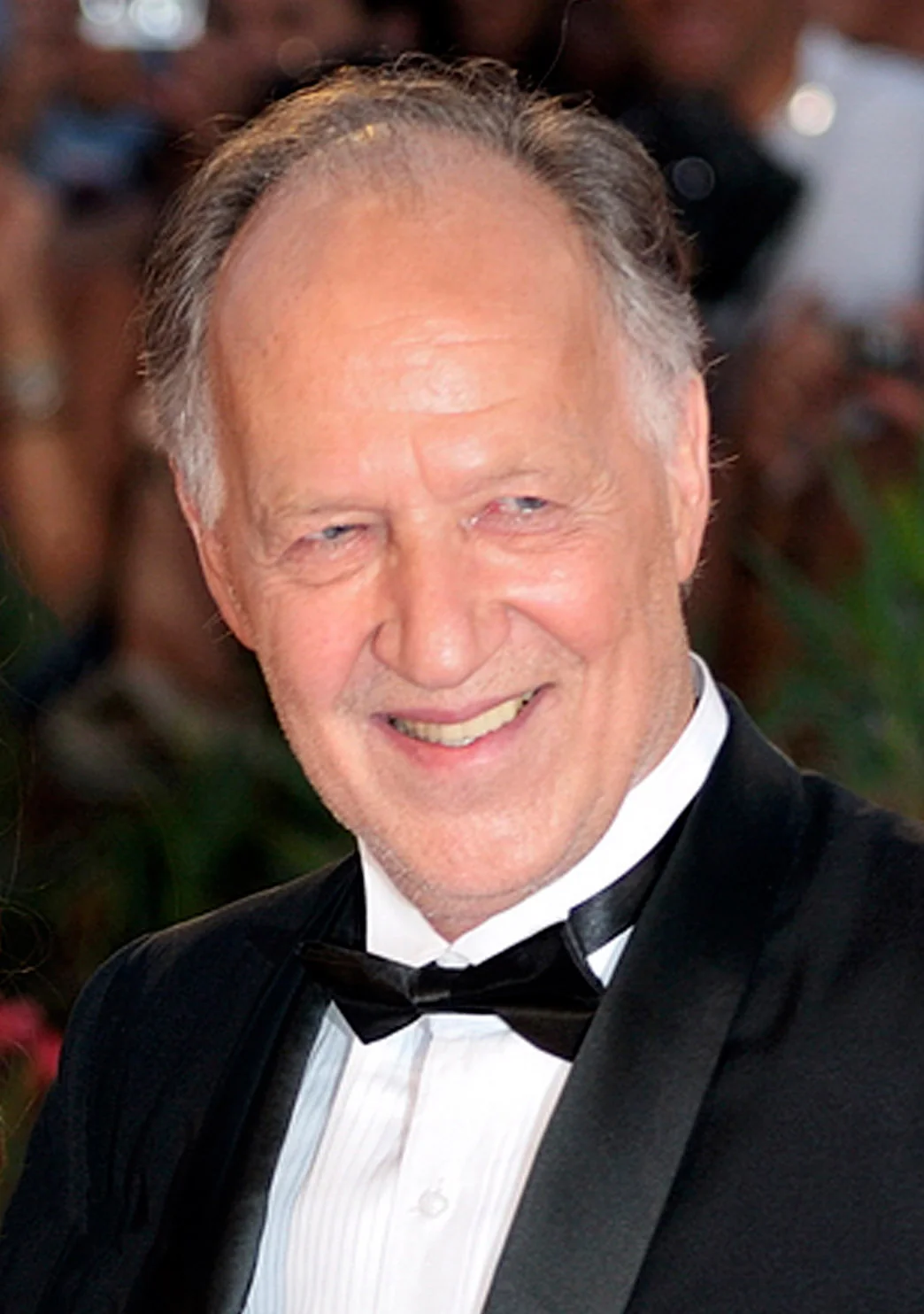
Image from Wikipedia
Image from Wikipedia
Werner Herzog – The Radical Chronicler of the Extreme Between Cinema, Literature, and Documentary Ecstasy
An Exceptional Artist Who Has Shaped World Cinema for Decades
Werner Herzog is one of the most distinctive personalities in international cinema. Born on September 5, 1942, in Munich, he evolved from a young filmmaker in the post-war era into an author, director, producer, actor, and writer of global significance. His works combine a spirit of adventure, philosophical depth, and an uncompromising visual language that continually re-measures the relationship between humanity, nature, and perception. ([wernerherzog.com](https://www.wernerherzog.com/))
Herzog represents a style that does not settle for conventional narration. His films revolve around boundary experiences, obsessions, and characters who either grow or break under their visions. At the same time, he has established himself as a voice that intertwines literature, opera, essayism, and cinematic art, thus creating a singular body of work. ([wernerherzog.com](https://www.wernerherzog.com/))
Biographical Roots: Munich, Bavaria, and the Early Will to Make Films
Werner Herzog grew up in Munich and in a remote Bavarian mountain village. After studying history and German literature in Munich and Pittsburgh, he made his first film at the age of 19 in 1961. This early connection of intellectual interest and practical image work continues to shape his oeuvre: Herzog does not conceive of cinema as mere entertainment, but as a form of knowledge. ([wernerherzog.com](https://www.wernerherzog.com/))
Even in his early years, he developed that independence which later became his trademark. He navigated the era of the New German Cinema alongside Wim Wenders, Volker Schlöndorff, Edgar Reitz, Werner Schroeter, and Rainer Werner Fassbinder, but he never became part of a school in the strict sense. From the beginning, Herzog sought his own path, often against currents, expectations, and production logics. ([wernerherzog.com](https://www.wernerherzog.com/long-biography.html))
The International Breakthrough: From “Kaspar Hauser” to “Fitzcarraldo”
An important milestone in Herzog's career was Jeder für sich und Gott gegen alle from 1974, internationally known as The Enigma of Kaspar Hauser. The film premiered at Cannes in 1975 and won the Grand Prix, which ultimately established Herzog as a significant voice in European auteur cinema. This award marked not only a triumph but also the recognition of an attitude: Herzog told stories from the margins of society, transforming them into great cinematic poetry. ([wernerherzog.com](https://www.wernerherzog.com/long-biography.html))
With Fitzcarraldo, this attitude reached its legendary peak. The production about an opera fanatic who seeks to build an opera house in the Peruvian jungle became a myth in itself: over the years, accompanied by disasters and changing casts, the film evolved into a monument of will. In 1982, Herzog won the award for Best Direction at Cannes for this film. It exemplifies his musical career in the broadest sense: as a director, he merges opera, sound, rhythm, and staging into a dramatic overall score. ([wernerherzog.com](https://www.wernerherzog.com/long-biography.html))
Between Fiction and Documentary: Herzog's Aesthetic Signature
Herzog's work thrives on a productive unrest between feature film and documentary. His films are often built around characters who encounter boundaries: geographical, psychological, or existential. He describes his work as a search for a truth beyond mere factual accuracy, an approach that has often been discussed as “ecstatic truth” and permeates his entire oeuvre. It is precisely in this that the authority of his cinema lies: it does not merely observe; it condenses reality into experience. ([wernerherzog.com](https://www.wernerherzog.com/long-biography.html))
In the 1990s and 2000s, Herzog increasingly shifted his focus to documentaries. Works such as Lessons of Darkness, Little Dieter Needs to Fly, Wings of Hope, Grizzly Man, and Encounters at the End of the World demonstrate his fascination with extreme conditions of life, natural forces, and people who act with unwavering determination. In particular, Grizzly Man became an international reference point in modern documentary filmmaking and solidified Herzog's reputation as a director who continually redefines the form. ([wernerherzog.com](https://www.wernerherzog.com/long-biography.html))
Opera, Literature, and the Expansion of the Artistic Cosmos
Herzog's work does not end with film. Since 1986, he has directed operas, resulting in 27 productions worldwide. He has also published more than a dozen prose collections as well as essays and texts that reflect and deepen his cinematic world in literary form. This versatility makes him an artist whose artistic development is not linear but transversal: image, word, and stage interconnect. ([wernerherzog.com](https://www.wernerherzog.com/long-biography.html))
In 2021, The Twilight World marked his first novel, followed by further literary and journalistic works in 2022, including his memoirs Jeder für sich und Gott gegen alle or Every Man for Himself and God Against All and The Fire Within, a work about volcanologists Katia and Maurice Krafft. Herzog's late literature confirms him as an author who translates cinematic images into language while unleashing the same suggestive power as in cinema. ([wernerherzog.com](https://www.wernerherzog.com/))
Current Projects and Recent Releases
Even in the 2020s, Herzog remains productive. His documentary Ghost Elephants is highlighted as his latest work on the official website; the film follows the search for a mysterious herd of elephants in Angola. In connection with the premiere at the Venice Film Festival in 2025, Herzog was awarded the Golden Lion for his lifetime achievement. This honor underscores how strong his influence on world cinema remains to this day. ([wernerherzog.com](https://www.wernerherzog.com/))
Additionally, 2025 saw reports of another project: Bucking Fastard, an upcoming drama that Herzog is directing and writing. There have also been reports of an animation project based on The Twilight World as well as his involvement as a voice actor in an upcoming animated film by Bong Joon Ho. This indicates that Herzog remains a restless storyteller who continuously opens new forms and production spaces. ([en.wikipedia.org](https://en.wikipedia.org/wiki/Bucking_Fastard?utm_source=openai))
Awards, Reputation, and Cultural Influence
Herzog's reputation is based not only on festival awards but also on the breadth of his cultural impact. In 2009, Time Magazine named him one of the 100 most influential people in the world; in 2022, he received the Honorary Award from the German Documentary Film Award for his lifetime achievement, and in 2025, he was honored in Venice with the Golden Lion for his lifetime achievement. Such awards do not document a fad but a lasting authority in the international cultural sector. ([wernerherzog.com](https://www.wernerherzog.com/long-biography.html))
His cultural influence is also evident in the reception of his characters and motifs. Herzog has shaped cinema of the extremes: his protagonists are driven individuals, explorers, visionaries, or lost souls placed against landscapes of great power. Whether in the jungle, in the desert, in ice, or in the depths of human obsessions – his work has expanded the image of European auteur cinema far beyond Germany. ([wernerherzog.com](https://www.wernerherzog.com/long-biography.html))
Style, Voice, and the Distinctive Stage Presence
Part of Herzog's distinctive presence is also his voice. As a narrator, performer, and occasional actor, he brings a nearly hypnotic authority to both foreign and his own works. The official website lists roles and voice acting in productions such as Jack Reacher, The Mandalorian, Rick and Morty, and The Simpsons. This illustrates how much his artistic development continually expands into new media and formats. ([wernerherzog.com](https://www.wernerherzog.com/long-biography.html))
His public persona also follows a clear line. Herzog was long known for his distance from the digital everyday life; later, he opened up through an Instagram account without giving up his quirkiness. This late presence on the internet expands his stage presence into the present while maintaining the core of his artistic identity. The figure of Herzog thus remains as consistent as it is surprising. ([time.com](https://time.com/4476537/werner-herzog-documentary-internet/?utm_source=openai))
Conclusion: An Artist Who Understands Cinema as an Adventure of Thinking
Werner Herzog is compelling because he has never understood cinema as mere storytelling but as an existential expedition. His films, books, and opera productions seek images and sentences that are larger than their subject. It is precisely therein that his enduring fascination lies: Herzog forces audiences and critics to continually renegotiate the boundaries of truth, fiction, and imagination. ([wernerherzog.com](https://www.wernerherzog.com/long-biography.html))
Experiencing his works means encountering one of the last great loners in film history, an author of maximum consistency and a distinctive handwriting. For this reason alone, it is worthwhile to rediscover his films on the big screen, during retrospectives, or in conversation with his literature. Herzog remains an event – in cinema, on stage, and in cultural memory. ([wernerherzog.com](https://www.wernerherzog.com/))
Official Channels of Werner Herzog:
- Instagram: https://www.instagram.com/wernerherzogofficial/
- Facebook: no official profile found
- YouTube: no official profile found
- Spotify: no official profile found
- TikTok: no official profile found
Sources:
Upcoming Events
Hike to Werner Herzog Places in the Mountain Climber Village of Sachrang with Reading from His Memoirs
Werner Herzog Open Air Cinema 2026 in the Mountain Climbing Village of Sachrang
Werner Herzog in Sachrang: Hike and Reading from the Memoirs
Nosferatu in Sachrang – Werner Herzog Open Air Cinema 2026