
Walter Trier
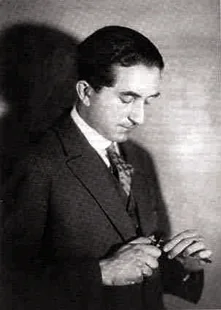
Image from Wikipedia
Image from Wikipedia
Walter Trier: The Master of Drawing Who Transformed Humor and Narrative into Images
Walter Trier – An Illustrator, Cartoonist, and Visual Conscience of His Time
Walter Trier was born on June 25, 1890, in Prague and died on July 8, 1951, in Craigleith near Collingwood in Ontario, Canada. He was one of the formative illustrators in the German-speaking cultural sphere of the 20th century and made a name for himself as an illustrator, cartoonist, and graphic designer whose impact extended far beyond the confines of magazines and book covers. He became particularly famous for his work with Erich Kästner, combining children's literature, satire, and modern visual language in a new way. ([de.wikipedia.org](https://de.wikipedia.org/wiki/Walter_Trier?utm_source=openai))
Childhood, Education, and the Path to Modernity
Trier grew up in Prague and initially received his artistic training in applied arts before studying at the Academy of Fine Arts in Munich. There, he was influenced by teachers such as Franz Stuck and Erwin Knirr, which imparted a solid drawing discipline and a keen sense of figure, rhythm, and composition to his later work. He displayed an early ability to translate observation into pointed form. ([en.wikipedia.org](https://en.wikipedia.org/wiki/Walter_Trier?utm_source=openai))
In 1910, Trier moved to Berlin, where his artistic profile sharpened significantly. In the capital of the Weimar era, he found an environment where press, satire, illustration, and advertising could closely interweave. For magazines like Simplicissimus, Jugend, Lustige Blätter, and Berliner Illustrirte Zeitung, he developed a distinctive style that combined lightness with precise social observation. ([en.wikipedia.org](https://en.wikipedia.org/wiki/Walter_Trier?utm_source=openai))
Berlin Years: Satire, Press, and Cultural Presence
In Berlin, Trier established himself as an artist with a great sensitivity to the rapid language of mass media. His cartoons responded to current events, urban environments, and societal roles, without losing sight of elegance and narrative clarity. It was this balance between mockery and precision that made him a sought-after illustrator during a time when illustration became a central medium of cultural public life. ([lambiek.net](https://www.lambiek.net/artists/t/trier_walter.htm?utm_source=openai))
Trier also expanded his artistic field as a designer of stage sets, costumes, and program booklets. He developed visual concepts for revues, plays, cabarets, and operas that transferred the principle of the modern Gesamtkunstwerk into popular entertainment. His work in theater and print graphics demonstrates the breadth of his understanding of art and graphic design. ([deutsche-biographie.de](https://www.deutsche-biographie.de/dboT3137.html?utm_source=openai))
Collaboration with Erich Kästner: Images that Shaped Literature
In 1929, Walter Trier was introduced to Erich Kästner by the publisher Edith Jacobsohn. That same year, he illustrated Emil and the Detectives, creating one of the most famous children's book editions of the 20th century. The connection between Kästner's pointed language and Trier's cheerful yet precise imagery became a cultural stroke of luck that significantly influenced the reception history of German children's literature. ([de.wikipedia.org](https://de.wikipedia.org/wiki/Walter_Trier?utm_source=openai))
The illustrations for Kästner brought Trier international recognition and solidified his reputation as an artist who could reveal entire scenes, moods, and characters with just a few lines. His figures often appear lively, nimble, and humorous, yet never arbitrary. This embodies the strength of his artistic development: he combined narrative economy with a clear visual signature. ([de.wikipedia.org](https://de.wikipedia.org/wiki/Walter_Trier?utm_source=openai))
Exile, Resistance, and the Fragility of a European Artist's Life
Walter Trier was a staunch opponent of National Socialism, and his political cartoons met with strong opposition from the Nazis. In 1936, he emigrated to London, where he collaborated with the British Information Ministry on anti-Fascist leaflets and propaganda materials during World War II. His biography thus tells a story not only of artistic success but also of political stance, emigration, and the loss of cultural homeland. ([en.wikipedia.org](https://en.wikipedia.org/wiki/Walter_Trier?utm_source=openai))
In 1947, Walter Trier and his wife became British citizens, and that same year, the couple moved to Canada to live near their daughter. The later years of the artist are exemplary of many emigrant biographies of the 20th century: a life between recognition, new beginnings, and the difficulty of maintaining the same visibility in exile as he had in his European years. The fact that Trier died in Canada in 1951 marks the end of a body of work whose European impact, however, remains present to this day. ([en.wikipedia.org](https://en.wikipedia.org/wiki/Walter_Trier?utm_source=openai))
Style, Technique, and Artistic Signature
Trier's style combines precision, humor, and an astonishing lightness of line. His drawings often appear spontaneous, yet are highly controlled in craft and designed for clear readability. This mixture of caricature, illustration, and modern graphic design made him an artist who not only adorned content but also shaped meaning. ([deutsche-biographie.de](https://www.deutsche-biographie.de/dboT3137.html?utm_source=openai))
His sensitivity to types and situations is particularly remarkable. Trier worked with reduced means, employing gesture, gaze direction, and proportions in such a way that even small shifts elicited comedic or narrative effects. His visual language aligns perfectly with the literary precision of Kästner and the satirical culture of the Weimar years. ([lambiek.net](https://www.lambiek.net/artists/t/trier_walter.htm?utm_source=openai))
Trier was also pioneering in the field of book art. The Deutsche Biographie emphasizes that he extended the illustrator's tasks beyond book covers and text illustrations to typography, dust jackets, advertising, and marketing initiatives, significantly advancing modern graphic design. Thus, he is among those artists who productively dissolved the boundary between art and applied design. ([deutsche-biographie.de](https://www.deutsche-biographie.de/dboT3137.html?utm_source=openai))
Cultural Influence and Legacy
Trier's significance lies not only in individual images but in the way he brought visual culture into everyday life. He shaped magazine pages, book shelves, stage designs, and the perception of entire generations of readers. His works are a key to understanding graphic modernity in the German-speaking world. ([lambiek.net](https://www.lambiek.net/artists/t/trier_walter.htm?utm_source=openai))
His legacy is also evident in the holdings of the Art Gallery of Ontario, which has established a Walter Trier Gallery and received a significant donation of over 1100 works in 1976. This institutional presence underscores that Trier is far more than just a historical book illustrator but an internationally recognized visual artist with museum relevance. ([en.wikipedia.org](https://en.wikipedia.org/wiki/Walter_Trier?utm_source=openai))
His work remains exciting because it never separates humor from conviction. Trier was able to entertain, comment, and condense without losing the elegance of form. Especially in a time when visual communication possesses central cultural power again, his work feels surprisingly modern. ([deutsche-biographie.de](https://www.deutsche-biographie.de/dboT3137.html?utm_source=openai))
Discography, Hits, and Musical Classification
Walter Trier was not a musician, had no discography, and published no albums, singles, or musical projects. Search results for current releases, charts, and music press contain no relevant hits related to a musical work by Walter Trier but confirm his role as a draftsman, illustrator, and cartoonist. Therefore, a musical biography would be factually incorrect. ([de.wikipedia.org](https://de.wikipedia.org/wiki/Walter_Trier?utm_source=openai))
This distinction is important for a serious artist page: Walter Trier's cultural achievement lies in the visual, not in the auditory. His “hits” are the iconic illustrations, his “critique” the satirical sharpness of the drawings, and his “reception” the lasting appreciation in literary, artistic, and exhibition contexts. Those searching for a discography will find a different but equally significant archive of artistic work in Walter Trier. ([deutsche-biographie.de](https://www.deutsche-biographie.de/dboT3137.html?utm_source=openai))
Conclusion: Why Walter Trier Continues to Fascinate
Walter Trier remains fascinating because he embodies a rare connection of craftsmanship, humor, cultural observation, and historical experience. His drawings narrate an era in transition, reflecting Berlin's modernity, exile, and the power of illustration as an independent art form. Anyone seeking to understand how visual language can shape literature, satire, and public discourse must engage with Trier. ([deutsche-biographie.de](https://www.deutsche-biographie.de/dboT3137.html?utm_source=openai))
There is no live experience in the musical sense with Walter Trier, yet his works continue to hold immediate presence in exhibitions, books, and archives. This is precisely why engaging with his oeuvre is worthwhile: a glimpse into an artist who made an entire culture readable with lines, colors, and gestures. ([en.wikipedia.org](https://en.wikipedia.org/wiki/Walter_Trier?utm_source=openai))
Official Channels of Walter Trier:
- Instagram: No official profile found
- Facebook: No official profile found
- YouTube: No official profile found
- Spotify: No official profile found
- TikTok: No official profile found
Sources:
Upcoming Events
It's All About the Children. Walter Trier, the Illustrator of Erich Kästner's Children's Books