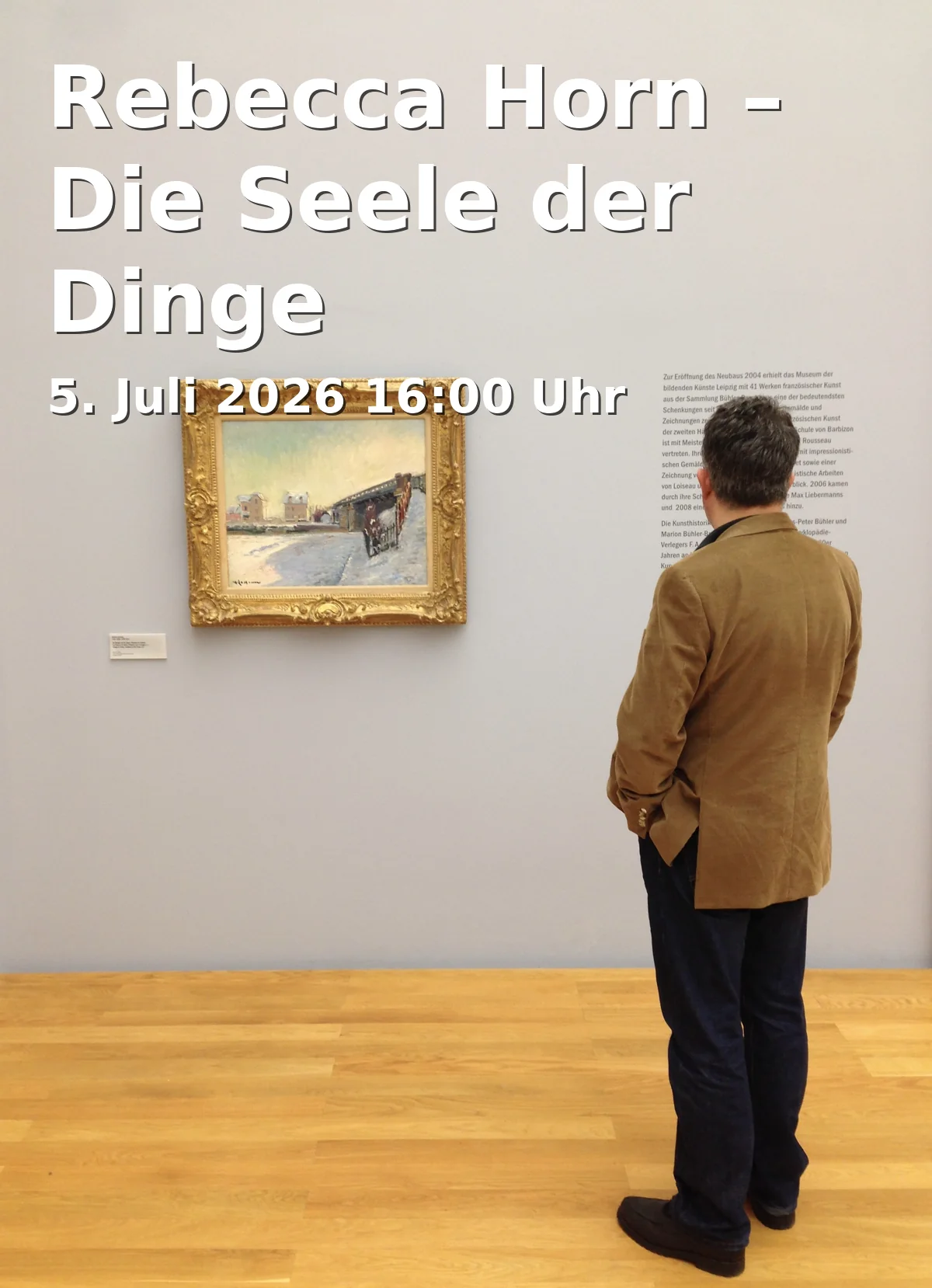
Rebecca Horn
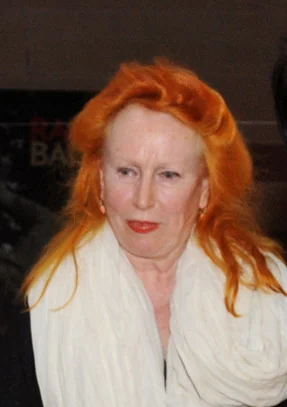
Image from Wikipedia
Image from Wikipedia
Rebecca Horn: The Poetic Power of Performance, Sculpture, and Cinematic Imagination
An Exceptional Artist Between Body, Space, and Movement
Rebecca Horn was one of the defining German contemporary artists of the 20th and early 21st centuries. Her work combined sculpture, performance art, film, drawing, installation, and poetic language into a distinctive artistic signature that never isolated the body but always conceived it as part of a larger space, a choreography, and a technical as well as symbolic order. Born in 1944 in Michelstadt and passed away in 2024 in Bad König, she left behind a transmedial oeuvre that wrote international art history. ([en.wikipedia.org](https://en.wikipedia.org/wiki/Rebecca_Horn))
Biography: From Michelstadt to the International Art World
Rebecca Horn grew up in Germany after World War II, an experience that profoundly shaped her sensitivity to language, identity, and vulnerability. She began drawing at an early age, influenced among others by her Romanian governess, and after initial studies in economics and philosophy, she eventually turned to art. Her study at the Hochschule für bildende Künste Hamburg marked the beginning of a career that consistently transcended the boundaries of classical art forms. ([en.wikipedia.org](https://en.wikipedia.org/wiki/Rebecca_Horn))
In the early 1970s, Horn began creating performances in which she redefined the body through prosthetics, masks, and extensions. This work quickly gained her recognition beyond the local scene, leading to her participation in documenta 5 in 1972, where she appeared as one of the youngest participants. This was followed by her first solo exhibition in 1973 in West Berlin, additional international exhibitions, and a growing reputation as an artist whose works oscillate between controlled mechanics and poetic strangeness. ([en.wikipedia.org](https://en.wikipedia.org/wiki/Rebecca_Horn))
The Breakthrough: Body Extension as Artistic Revolution
Horn developed early on a visual language that understood the human body not as a closed form but as a mutable system. Her legendary body extensions and object works of the 1970s explored the boundaries of balance, constraint, and freedom, putting the body in relation to the architecture of space. Works like Einhorn became icons of performance art because they condensed physical presence, vulnerability, and surreal elevation into a single, unforgettable gesture. ([en.wikipedia.org](https://en.wikipedia.org/wiki/Rebecca_Horn))
The official biography describes Horn's work as a precisely calculated relationship between space, light, corporeality, sound, and rhythm. This is precisely where her modernity lies: Her performances are not mere actions but choreographic modes of thought that restructure perception and spatial arrangement. Later, she increasingly replaced the human body with kinetic sculptures that developed their own, almost organic logic. ([rebecca-horn.de](https://rebecca-horn.de/pages-en/biography.html))
Film, Kinetics, and Installation: The Dynamic Whole
Rebecca Horn's oeuvre was never confined to a single medium. In the 1970s and 1980s, she created films, kinetic objects, and sculptures where movement, machine, and metaphor intertwined. Her works such as The Feathered Prison Fan in Der Eintänzer or The Peacock Machine in La Ferdinanda demonstrate how she linked mechanical processes with narrative and symbolic layers. ([rebecca-horn.de](https://rebecca-horn.de/pages-en/biography.html))
In the 1980s and 1990s, her installations became larger, more spatial, and historically charged. Horn worked with violins, suitcases, ladders, pianos, fans, metronomes, and other objects that became carriers of memory, music, and inner tension in her hands. This combination of technical precision and imaginative charge made her work a reference point for museums, curators, and art historians worldwide. ([rebecca-horn.de](https://rebecca-horn.de/pages-en/biography.html))
Exhibitions, Recognition, and Museum Authority
Rebecca Horn was one of the few female artists invited to documenta four times. She participated in the Venice Biennale, the Münster Sculpture Projects, and the Sydney Biennale, and received significant museum exhibitions in New York, London, Berlin, Vienna, and other metropolises. In 1993, the Solomon R. Guggenheim Museum in New York held a major mid-career retrospective, followed by a comprehensive show at the Hayward Gallery in London in 2005. ([en.wikipedia.org](https://en.wikipedia.org/wiki/Rebecca_Horn))
In 2024, Haus der Kunst Munich honored Horn with a large retrospective covering six decades of her work. The exhibition focused on performative aspects, corporeality, sound, rhythm, and the relationship between nature, culture, and technology. The catalog and accompanying events emphasized Horn's role as choreographer, inventor, director, author, composer, and poet—a self-identification that aptly describes her versatility. ([hausderkunst.de](https://www.hausderkunst.de/uploads/newsroom/Ausstellungen-und-Veranstaltungen/2024/Rebecca-Horn/PDFs/HDK_RebeccaHorn_Press-Release_EN.pdf))
Artistic Development: Between Music, Technology, and Poetry
Although Rebecca Horn was not a musician in the strict sense, music runs through her work as a structural principle. Sound, rhythm, and musical qualities play a central role in her installations; even mechanical movements in many works appear like a visual score. The Haus der Kunst describes how, in her later installations, she rearranges music and thinks from the language of choreography. ([hausderkunst.de](https://www.hausderkunst.de/uploads/newsroom/Ausstellungen-und-Veranstaltungen/2024/Rebecca-Horn/PDFs/HDK_RebeccaHorn_Press-Release_EN.pdf))
This synesthetic quality is precisely what makes Horn so special. She does not construct pure objects but scenes of time, movement, and tension in which each element responds to the others. Her art is therefore not static but processual: an ongoing composition of space, body, and memory that systematically dissolves the boundaries between sculpture, performance, and film. ([rebecca-horn.de](https://rebecca-horn.de/pages-en/biography.html))
Cultural Influence and Critical Reception
Rebecca Horn's influence runs deep into the history of international art and exhibitions. Her works are now part of significant public collections, including MoMA, the Guggenheim Museum, Tate, Centre Pompidou, and ZKM Karlsruhe. This presence in central institutions not only attests to her significance but also to the ongoing relevance of her visual language for issues of body politics, technology, and perception. ([en.wikipedia.org](https://en.wikipedia.org/wiki/Rebecca_Horn))
Art criticism recognized Horn for decades as an artist who infused mechanical apparatuses with metaphysical depth. Following her death in 2024, several obituaries highlighted her status as one of the most renowned German contemporary artists and as a master of enigmatic, often ethereal visual realms. Her work remains engaging because it not only narrates art history but also anticipates current discourses about the human body in the technical age. ([diepresse.com](https://www.diepresse.com/18840072/grande-dame-der-deutschen-kunst-rebecca-horn-ist-tot?utm_source=openai))
Awards and Honors
Horn received numerous honors, including the prestigious Goslarer Kaiserring in 1992, being the first woman to do so. Later, she was awarded the Praemium Imperiale in the sculpture category and the Grande Médaille des Arts Plastiques from the Académie d'Architecture de Paris. These awards reflect not only her rank in the international art world but also the breadth of her work across sculpture, performance, film, and installation. ([en.wikipedia.org](https://en.wikipedia.org/wiki/Rebecca_Horn))
Current Positioning and Legacy
Since Rebecca Horn passed away in 2024, there are no new musical releases or current projects in the strict sense. However, her legacy continues to live on through retrospective exhibitions, scholarly publications, and the ongoing reception of her works. The 2024 retrospective in Munich and the continuously documented collections in significant museums demonstrate how vibrant and present her oeuvre remains. ([en.wikipedia.org](https://en.wikipedia.org/wiki/Rebecca_Horn))
Conclusion: Why Rebecca Horn Continues to Fascinate Today
Rebecca Horn is an artist for those who understand art as a physical experience, a space for thought, and a poetic energy. Her works are radical, sensual, and intellectual at the same time; they connect machinery with vulnerability, music with sculpture, movement with memory. Anyone who experiences her works encounters not decorative art but a universal visual language about humanity within the tensions of technology, history, and desire. ([rebecca-horn.de](https://rebecca-horn.de/pages-en/biography.html))
For this reason alone, Rebecca Horn remains a compelling recommendation for art lovers worldwide. Her exhibitions and collection presentations reveal a stage presence without a stage, a choreography without dancers, and a composition without a traditional orchestra. Her art invites one to engage with the mysterious—and to experience it with their own eyes, in space, and within their own body. ([rebecca-horn.de](https://rebecca-horn.de/pages-en/biography.html))
Official Channels of Rebecca Horn:
- Instagram: No official profile found
- Facebook: No official profile found
- YouTube: No official profile found
- Spotify: No official profile found
- TikTok: No official profile found
Sources:
- Rebecca Horn - official website: Biography
- Haus der Kunst Munich - Press Release: Rebecca Horn
- Haus der Kunst Munich - Exhibition Catalogue: Rebecca Horn
- Haus der Kunst Munich - Exhibition Page: Rebecca Horn
- Wikipedia - Rebecca Horn (English)
- Wikipedia - Rebecca Horn (Deutsch)
- Deutsche Biographie - Horn, Rebecca
- Praemium Imperiale - Official Website
- Kunsthalle Mannheim - Rebecca Horn
Upcoming Events
Rebecca Horn – The Soul of Things