
Joseph Görres
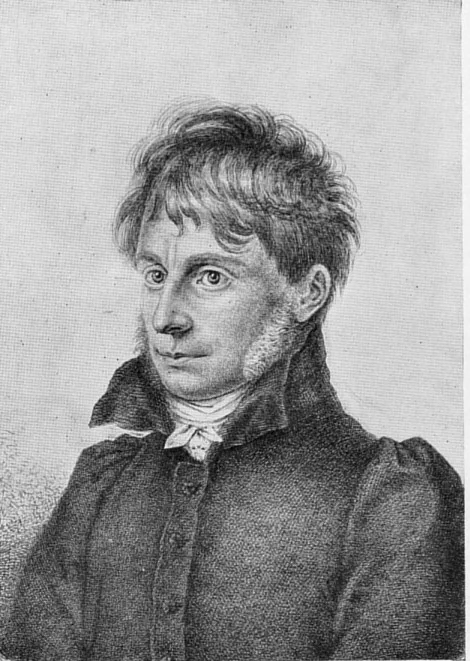
Image from Wikipedia
Image from Wikipedia
Joseph Görres: The Uncompromising Thinker Between Romanticism, Politics, and Catholic Journalism
An Eccentric Intellectual Who Shaped the 19th Century
Joseph Görres is one of those German intellectuals who cannot be easily pigeonholed. As a high school and university teacher, journalist, natural philosopher, and political commentator, he combined scientific curiosity with sharp polemics and a fearless sense of the public sphere. His life, spent between Koblenz, Heidelberg, Strasbourg, Munich, and intellectual exile, speaks of conflict, conviction, and indomitable influence.
Born on January 25, 1776, in Koblenz and died on January 29, 1848, in Munich, Görres stood at the fault lines of an era marked by revolution, restoration, national movements, and religious reorientation. He became a voice that intervened, interpreted, attacked, and organized. It is precisely this mix of political passion, philosophical breadth, and Catholic renewal that makes him a fascinating figure in the history of German culture to this day.
Early Years: Education, Departure, and Intellectual Formation
Joseph Görres grew up in a time when the ideas of the Enlightenment, the French Revolution, and the Romantic counter-movement were changing the intellectual climate of Europe. Early on, he showed interest in natural sciences, history, and philosophy—fields of knowledge from which his extensive journalistic work would later emerge. In Koblenz, he initially developed into a teacher with a broad horizon, who not only imparted knowledge but also cultivated interpretative eagerness and argumentative strength.
From 1800 to 1814, Görres served as a natural science teacher in Koblenz, interrupted by a two-year position as a lecturer in Heidelberg. These years sharpened his awareness of the tensions between theory and reality. The pedagogical practice and academic environment simultaneously equipped him with the tools for his journalistic stage presence, which he repeatedly utilized to intervene in political and cultural debates.
Breakthrough as a Journalist: The Rheinischer Merkur and Political Public Life
Görres experienced his true public breakthrough in 1814 with the editorship of the Rheinischer Merkur. The newspaper opposed Napoleon's expansionist policies while also critically addressing restorative forces and advocating for German unity. Görres thus became a voice that not only commented on the political present but also shaped it with lasting impact. His language was pointed, his stance unequivocal, and his effect significant.
The Rheinischer Merkur made Görres a keen observer and active participant in the German public domain. He did not write from a distance but as an engaged participant in the conflicts of his time. This journalistic energy characterized his entire music career in the metaphorical sense of cultural production: not as a musician but as an auditory figure of language, whose rhythm, pressure, and tone determined the discourse.
Exile, Break, and Radicalization of Thought
In 1819, after the publication of Teutschland und die Revolution, Görres had to go into exile. His stops included Strasbourg and later Aarau in Switzerland. This shift marked a turning point in his intellectual biography, as the political journalist increasingly became a religious and cultural philosopher. The break with German domestic politics sharpened his focus on Europe, history, and the spiritual foundations of society.
In 1821, Europa und die Revolution was published, in which Görres predicted an imminent revolutionary outbreak across Europe. Even though his positions in exile became increasingly nationalistic and not free of anti-Semitism, his argumentative energy remained unbroken. It is precisely this ambivalence that demands a nuanced reading: Görres should not be understood as a hero or merely a reactionary, but as a historically impactful thinker with colorful, sometimes contradictory convictions.
Munich Years: Catholic Catholicism, Natural Philosophy, and Intellectual Center
In 1827, King Ludwig I appointed Görres as a professor of history at the University of Munich and later ennobled him. In Munich, he gathered a circle of followers that became an intellectual center of political Catholicism. This phase shows Görres as a networker of ideas, a mentor, and an intellectual magnet whose authority extended far beyond the lecture hall.
His later work increasingly turned towards Christian mysticism. He became particularly well-known for the four-volume Christliche Mystik, in which he connected religious experience, natural philosophy, and historical reflection. This work is considered a key text of his late thought and demonstrates his ability to condense complex intellectual relationships into a dense, impressive form. In the language of his time, theological thought, mystical imagination, and philosophical systematics fused into an extraordinary intellectual composition.
The Cologne Church Controversy and the Struggle for Authority
In 1837, Görres wrote the pamphlet Athanasius during the Cologne Church Controversy, a vehement polemic against the Prussian state. From 1838, he contributed to the Historisch-politischen Blättern für das katholische Deutschland, co-founded and published by his son Guido Görres, his daughter Marie Görres, and the jurist George Phillips. This made Görres the spokesperson for a Catholic counterweight against state appropriation and political paternalism.
In 1841/1842, he was one of the initiators of the Central Cathedral Construction Association in Cologne, alongside Sulpiz Boisserée and August Reichensperger. This initiative illustrates how deeply Görres thought spiritual renewal and cultural action were intertwined. The cathedral stood not only as a structure but as a symbol of historical continuity, religious identity, and national self-affirmation. His appointment as an ordinary member of the Bavarian Academy of Sciences in 1842 further highlights his scientific and cultural authority.
Literary Style: Between Polemic, Vision, and Scholarship
Görres wrote with high linguistic intensity. His texts combine historical argumentation, polemical intensification, and philosophical foresight. It is precisely this mixture that makes them so characteristic: he did not analyze dryly but with emotional energy, rhetorical force, and a willingness to openly engage in intellectual conflicts. His journalism was never merely information but always intervention.
As a natural philosopher and later mystic, Görres emphasized connections rather than separations. For him, nature, history, religion, and politics did not stand isolated next to each other but formed a dense field of tension. Those who read his works encounter an author who makes significant leaps in thought while also arguing in detail. This breadth lends his discography of ideas a remarkable inner dramaturgy, so to speak.
Cultural Influence: A Defining Figure of Political Catholicism
Görres became an important reference figure of political Catholicism in 19th-century Germany. In Munich, he formed a circle that sustainably influenced Catholic journalism, historical interpretation, and political self-assertion. His writings resonated in debates about state, church, and national identity long after his death. As a result, his name remained present not only in academic contexts but also in the history of political ideas.
His influence also extends into Romanticism, historiography, and the intellectual culture of the Vormärz. The Rheinischer Merkur, Athanasius, and Christliche Mystik together form a profile of work that oscillates between critical present journalism and religious depth. Görres thus represents an intellectual stance that understood thinking as public action.
Contemporary Relevance: Why Joseph Görres Remains Significant
From today's perspective, Görres appears both attractive and challenging. His rhetorical power, intellectual audacity, and ability to place political and religious questions in large historical contexts make him a perpetually intriguing figure. At the same time, some of his later positions call for critical distance and historical precision. However, this very ambivalence enhances his value as an object of study for cultural, religious, and intellectual history.
Those who read Joseph Görres encounter an author who fought passionately for his convictions and viewed public debate as a central form of intellectual impact. His biography tells a story of departure, conflict, and renewal. This not only makes him a historical figure but also an impressive example of how literature, journalism, and political stance can shape a life.
Conclusion: An Uncomfortable Classic with Great Intellectual Resonance
Joseph Görres remains fascinating because he was never committed to just one cause but always worked at the intersections of politics, religion, history, and philosophy. His texts possess a spirit of contention, depth, and historical weight. Those who engage with him discover a thinker whose work mirrors the intellectual struggles of the 19th century in concentrated form.
For this reason, a renewed reading of his writings and an engagement with his biography is worthwhile. Görres is not a smooth classic but an author with friction, profile, and resonance. Anyone wishing to understand the broad lines of German intellectual history should not only read him but rediscover him with a critical eye.
Official Channels of Joseph Görres:
- Instagram: no official profile found
- Facebook: no official profile found
- YouTube: no official profile found
- Spotify: no official profile found
- TikTok: no official profile found