
Deutsches Filmorchester Babelsberg
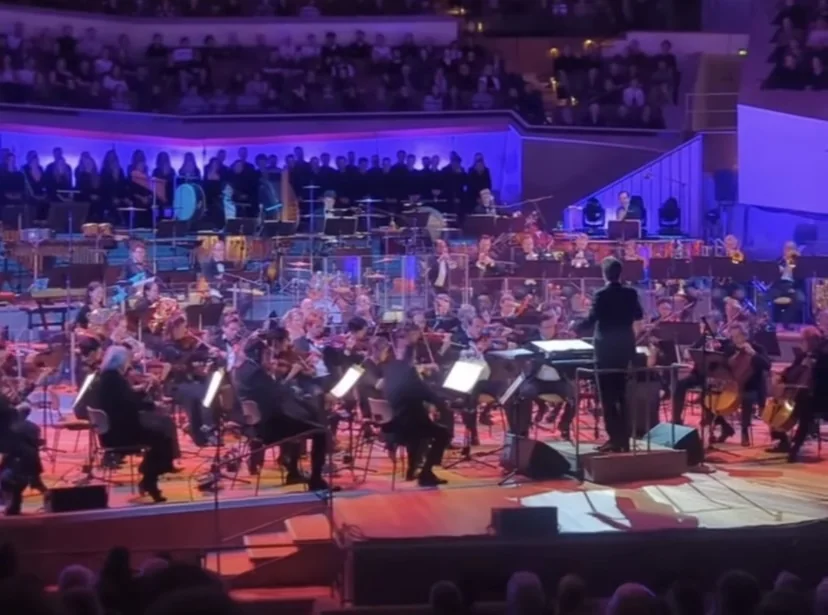
Image from Wikipedia
Image from Wikipedia
German Film Orchestra Babelsberg: Sonic Power from Film History
An Orchestra between Screen, Studio Art, and Grand Stage Presence
The German Film Orchestra Babelsberg is much more than a classical orchestra: it is a sonic entity with historical weight, a specialized sound studio, and a key player in German film and television music. Based in Studio Babelsberg in Potsdam, the ensemble combines a rich orchestral culture with modern production practices and has shaped the musical landscape between cinema, game soundtracks, TV formats, and concert stages for decades.
Its artistic identity is rooted in an extraordinary history dating back to 1918. Evolving from the first film orchestra in Germany, the ensemble has navigated numerous political and aesthetic upheavals to become known today as the German Film Orchestra Babelsberg, celebrated worldwide for its orchestral precision, flexible studio production, and striking stage presence. It is precisely this combination of historical depth and current working methods that makes the orchestra exciting for music lovers, film fans, and cultural audiences alike.
The Roots: From UFA to the First Film Orchestra in Germany
The history of the German Film Orchestra Babelsberg begins with UFA in Babelsberg, where the UFA Symphony Orchestra was founded in 1918. This marked the birth of Germany's first film orchestra, which set standards even during the silent film era. Early musical accompaniments to works such as Fritz Lang's "Metropolis," Carl Mayer's "The Cabinet of Dr. Caligari," and Walter Ruttmann's "Berlin: Symphony of a Metropolis" were part of the repertoire of an orchestra that was closely linked to cinematic innovation from the very outset.
With the advent of sound films, the demands for sound design, synchronization, and production changed fundamentally. In 1932, the orchestra was adapted to these new conditions and subsequently participated in many milestones of film history. Productions like "The Blue Angel," "The Three from the Gas Station," and "The Fire Tongs Bowl" illustrate how deeply the orchestra is embedded in the musical culture of German film.
Post-War, DEFA, and the Continuity of a Sonic Entity
After World War II, the orchestra continued its work at its original location in Babelsberg and became part of the DEFA music department in 1946. During this phase, it contributed to key film classics, including "The Murderers Are Among Us" and "Affaire Blum." The orchestra thereby transformed into a musical engine of East German film production and remained a reliable partner for directors, composition, and recording management.
In the decades of the DEFA era, the ensemble shaped numerous productions, including "The Legend of Paul and Paula," "Spring Symphony," and every episode of the TV series "Polizeiruf 110." The collaboration with composers such as Karl-Ernst Sasse, Peter Gotthardt, Günther Fischer, Manfred Rosenberg, and Bernd Wefelmeyer was particularly influential. This resulted in a repertoire that exhibits a remarkable stylistic range between dramatic film music, popular melodies, and orchestral depth.
The Reestablishment in 1993 and the Rise to a Modern Production House
After the liquidation of the DEFA Studios, the orchestra and musicians initially became part of the Brandenburg Philharmonic in Potsdam. In 1993, it was reestablished in its current form as the German Film Orchestra Babelsberg. This step was not merely a renaming but a conscious continuation of a developed tradition under new institutional conditions.
Since its reestablishment, DFOB has pursued two closely intertwined business areas: the production of film, television, and audio music, alongside a comprehensive concert activity featuring film live concerts, film music programs, guest performances, and tours. Between 1993 and 2007, approximately 400 soundtracks and over 80 CD productions were created in its own studios. In 2007, the orchestra returned to its historical location in Babelsberg, where the restored Studio A was brought to international top standards technically and acoustically.
Studio Production at the Highest Level
Today, the German Film Orchestra Babelsberg, with its recording studio and the associated Scoring Stage Babelsberg, specializes in orchestral music. The ensemble operates in an environment tailored to professional soundtrack production, drawing on decades of experience in the film, music, and gaming industries. This expertise is evident not only in the number of productions but also in the stylistic flexibility between symphonic film music, pop arrangements, game scores, and crossover projects.
The official self-presentation refers to more than 1,000 national and international film music productions as well as over 500 audio productions. Practically speaking, this means that the orchestra is not merely an interpreter but also a creative production partner that translates compositional ideas into viable orchestral forms. This is precisely where its special authority lies in the German-speaking music and media industry.
Concert Activities, TV Presence, and an Audience Beyond the Classical World
Alongside its studio work, the German Film Orchestra Babelsberg has built an impressive concert history. According to official representation, the ensemble has performed well over 1,000 concerts and television appearances. The range spans from classical film music evenings to gala formats and performances at renowned venues such as the Academy of Motion Picture Arts and Sciences in Los Angeles.
This concert activity significantly shapes the public perception of the orchestra. Here, not only craft precision is displayed, but also a strong stage presence that makes orchestral music accessible to a broad audience. Especially film live concerts and thematic programs have granted the ensemble a special closeness to young listeners, cinephiles, and families interested in culture.
Current Projects and Releases: The DFOB in 2024 and 2025
The current credits of the orchestra showcase a remarkable breadth and an unbroken presence in film, TV, and album production. In 2024, the DFOB worked on "Mia Brentano’s American Diary," "The Outrun," "Eine Million Minuten," "The End," "Zusammen," "September 5," "Riefenstahl," "Der Spitzname," and "Die Heinzel - Neue Mützen, neue Mission." Additional projects included "Secret Level (Episode: Dungeons & Dragons)," "Eusexa," "REKA," "Zitronenherzen," "Der Palast – Staffel 2," and "Erzgebirgskrimi: Die letzte Note."
The official credits list for 2025 also highlights important works, including "Calle Malaga," "Guitarevolution Symphonic," "Dahlmanns letzte Bescherung," "The Carpenter’s Son," "Ein Mädchen namens Willow," "Das Kanu des Manitu," "Der Held vom Bahnhof Friedrichstraße," and "Marcel et Monsieur Pagnol." This selection clearly illustrates how broadly the orchestra is positioned in the current media business and how naturally it mediates between cinema, children's films, TV, and orchestral albums.
Discography and Musical Range
The discography of the German Film Orchestra Babelsberg is not a rigid album archive but a dynamic working field of soundtracks, collaborations, and crossover releases. Notable titles include "Megaloh und das Deutsche Filmorchester Babelsberg Live" from 2023, "Out of Babelsberg" from 2023, "TikTok Classics - memes & viral Hits" from 2022, as well as "Mia Brentano’s American Diary" from 2024. These releases clearly demonstrate how open the ensemble is to various genres and musical contexts.
Additional projects include collaborations with Alphaville, Rammstein, Element of Crime, Karat, Calexico, Dear Reader, Avantasia, Max Richter, FKA twigs, and other artists. Such collaborations demonstrate a rare form of orchestral adaptability: the orchestra adds a symphonic dimension to pop, rock, electronic, and contemporary music without losing the original character of the works. This is a significant part of its cultural added value.
Style, Sonic Language, and Artistic Development
Stylistically, the German Film Orchestra Babelsberg represents a sonic language rooted in the tradition of great film orchestras while also embracing contemporary production aesthetics. The arrangements feature precise string leadership, supportive brass, flexible woodwind colors, and a production framework that adapts effortlessly to various compositions. This results in an orchestral character that combines emotional depth, dramatic tension, and technically clean recording quality.
The connection between studio work and concert format has particularly influenced the artistic development of the orchestra. In a live context, the ensemble unleashes an immediate power that differs from pure film scores, yet is nourished by the same tradition. The interpretations feel neither museum-like nor stale but instead are present, dynamic, and designed for audience impact.
Cultural Influence and Musical Authority
The German Film Orchestra Babelsberg occupies a special position in the German-speaking music scene because it consolidates film history, media production, and concert culture within one institution. Its work ranges from early silent film classics to contemporary streaming, TV, and game projects. Therefore, the orchestra not only documents cultural continuity but also the adaptability of orchestral music in a digitized media landscape.
The significance of the ensemble is also reflected in current awards and public collaborations. For instance, the music for "Ein Mädchen namens Willow" was created in collaboration with the orchestra and recorded in the Scoring Stage Babelsberg; the German Film Music Award 2025 recognized this work in the category of "Best Music in a Children's Film." Such examples underscore the orchestra's authority as a partner for high-quality production and as a brand with cultural influence.
Conclusion: Why the German Film Orchestra Babelsberg Remains So Exciting
The German Film Orchestra Babelsberg fascinates because it does not archive tradition but translates it into the present. It is an orchestra with historical memory, technical excellence, and artistic agility that operates confidently between film music, audio production, and live stage performance. Anyone wishing to understand orchestral music as part of pop, cinema, and media culture will find an ensemble of extraordinary significance here.
This blend of history, precision, and emotional weight makes the DFOB a sound entity that one should experience live. On stage, the extent to which its repertoire thrives on sound colors, dynamics, and dramatic presence becomes evident. A concert with the German Film Orchestra Babelsberg is not only a musical event but also an impressive look at more than a century of film and music history.
Official Channels of the German Film Orchestra Babelsberg:
- Instagram: https://www.instagram.com/filmorchester_babelsberg/
- Facebook: https://www.facebook.com/DeutschesFilmorchesterBabelsberg/
- YouTube: https://www.youtube.com/channel/UCB9zKE7iQAQ6puQQCFElZ-g/featured
- Spotify: No official profile found
- TikTok: No official profile found
Sources:
Upcoming Events
Babelsberg Castle Concerts: German Film Orchestra Babelsberg at Babelsberg Castle
Babelsberg Castle Concerts: Film Orchestra & Selke Brothers
Babelsberg Castle Concerts
80 Years of DEFA - The Film Music Gala