Discover Children's University and Science Events in Chiemgau
Children's University & Science Events in Chiemgau: Research Like the Grown-Ups (Preview & Family Guide)
What does it feel like when a child sits in a lecture hall for the first time – with a microphone, projector, and experiments? In Chiemgau, children's university formats and science events will continue to offer exciting opportunities in the coming months to experience STEM (Science, Technology, Engineering, Mathematics) in a playful way – for children as well as for parents and educators.
What does a typical Children's University afternoon look like?
Depending on the organizer and topic, details may vary, but many Children's University events follow a similar structure:
- Welcome & child-friendly lecture: A speaker (e.g., from a university, research, or practice) introduces the topic – with everyday examples and room for questions.
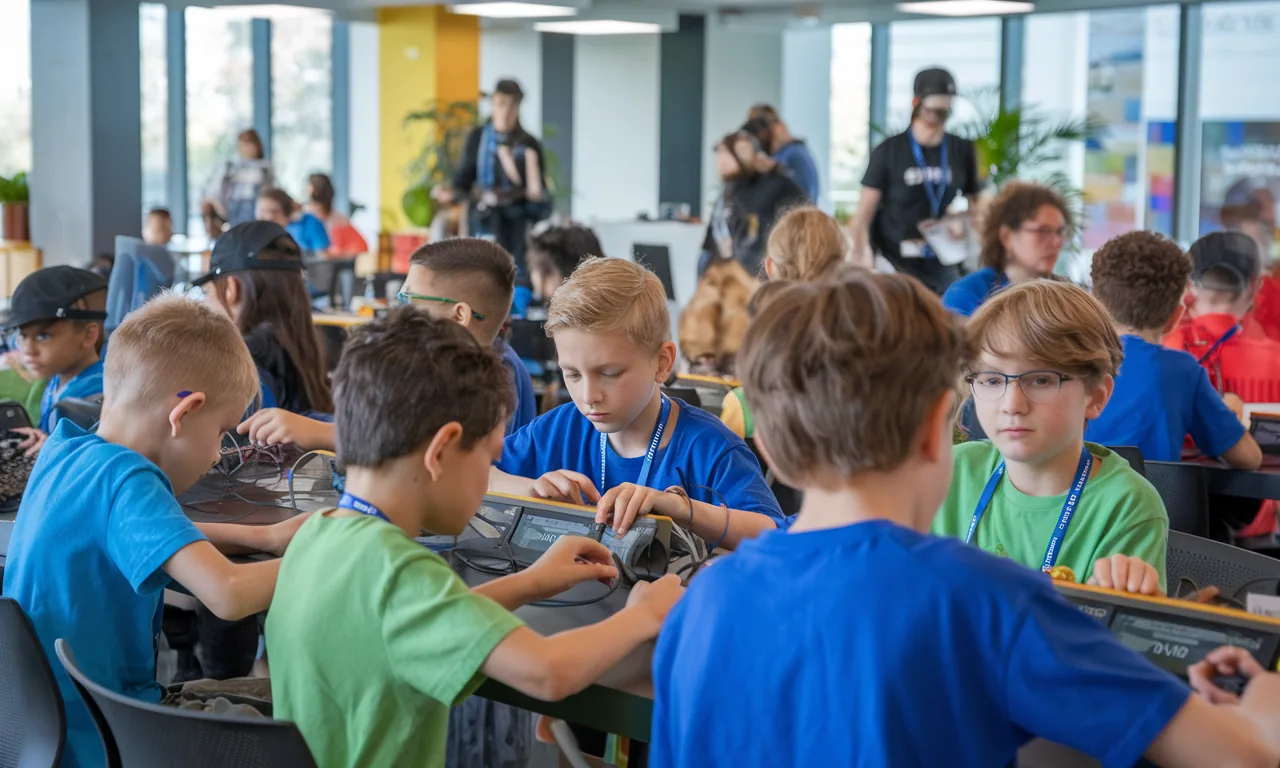
- Practical stations, experiments & mini-workshops: Children build, test, observe, or program in small groups. The goal is not “right or wrong,” but curiosity, confidence in trying things out, and a first understanding of scientific work.
- Parallel offer for adults: There is often a parent café, short talks, or hands-on stations (e.g., digital tools, VR/AR demos). This allows adults to learn how to address questions about technology, media, and science in everyday family life.
A common principle: Children should be able to ask questions and experiment as freely as possible. Adults provide organizational support – and at the same time get ideas on how to further encourage STEM curiosity at home or at school.
Which topics will be especially in demand in the future?
For upcoming Children's University and science events, topics that children experience daily (smartphones, electricity, transportation, environment) and that strengthen future skills are particularly relevant:
- Artificial Intelligence (AI) & media literacy: How are texts, images, or voices created on a computer? How can you spot errors, distortions, or manipulation?
- Energy, climate & technology in everyday life: What is energy, how is it stored, and why are efficiency and safety important?
- Robotics & sensors: How does a robot “know” where it is? What do sensors do, and why are clear rules so important in programming?
- Experimenting with chemistry & physics: Safe show experiments can inspire awe – and at the same time explain what is really happening.
Such focal points are well suited for families because children can train both creativity and critical thinking: “What can technology do?” and “Where are the limits?” go hand in hand.
Sample Program: Discovering AI Creatively & Critically
An AI afternoon can be designed so that children experience not only “Wow, a computer can do that!” but also “I can check results.” A possible program (depending on equipment and age group):
1) Introduction: What is AI – and what is it not?
In a short lecture, it can be explained that many AI systems recognize patterns in data and derive suggestions from them. Children learn terms like training, prediction, and error – without technical jargon.
2) Creative stations: Text, image, sound
- Story workshop: Children provide a few keywords and compare different continuations. This makes it clear: Results can vary in plausibility.
- Images from ideas: Images are created from short descriptions. Afterwards, it is checked: Does the image really match the description? Where does the system “hallucinate” details?
- Audio & voices: Simple examples (age-appropriate and without intent to deceive) can show how easily content can be changed – and why sources are important.
3) Critical view: Check instead of believe
A key learning moment is the question: How do I know if something is reliable? Children can take away simple checking rules, e.g., “Do several independent sources agree?”, “Are there any proofs?”, “Does it just sound convincing – or is it verifiable?”
4) Adult program in parallel
For parents, there can be short talks in parallel – for example, on child-friendly media rules, opportunities/risks of generative AI, and practical conversation starters (“How did you check if that's true?”).
Sample Program: Energy Show, Chemistry & Robotics
Many families want formats where children can “see” and “touch” science. Recurring event types are also suitable for this:
Energy or physics show (safe & child-friendly)
In a moderated show, energy transformations can be explained vividly – for example, with light, heat, or movement. It is important that experiments are age-appropriate, safe, and clearly visible. The added value: Children connect effects (e.g., light, bang, movement) with understandable explanations.
Chemistry to marvel at – with clear rules
Chemistry stations can show how reactions occur, why safety rules apply, and how to document observations. Transparency is especially important here: What exactly is happening, and why shouldn't you just try this at home?
Robotics afternoon: Build, control, understand
Robotics is particularly suitable for elementary school age: Children can control or program simple robots, test sensors (e.g., distance, light), and experience how clear instructions lead to behavior. The goal is a first understanding of logic, error analysis, and teamwork.
Registration, Participation & Practical Tips for Families
Children's University events often have limited spots. These tried-and-tested steps help make participation realistic:
- Check the program early: Many organizers publish dates as a semester or seasonal program. Those who look early can choose suitable topics and avoid conflicts (school, training, holidays).
- Take age recommendations seriously: The recommendations are not “just approximate”: If children are too young, frustration prevails; if too old, it quickly becomes boring. Good formats state age ranges clearly.
- Expect last-minute sellouts: If a registration portal has fixed start times, it's worth being ready on time and having all necessary data at hand.
- Prepare questions: A simple trick: Have children write down 2–3 questions in advance (“How does a robot detect an obstacle?”). This lowers inhibitions in the lecture hall.
- Make it a trip – without stress: A short walk or an ice cream afterwards often acts as an “anchor”: Children associate learning with a good sense of community, not with performance pressure.
Note: Specific dates, locations, participation requirements, and registration deadlines vary by organizer. The information in the official program and registration portal is always binding.
More than Children's University: Science Events & STEM Calendar
Children's University series often give rise to additional educational offerings that complement each other well – such as hands-on fairs, robotics days, family lectures, or training for educational professionals. A regional STEM event calendar is practical, bundling dates and simplifying the search.
For families in Chiemgau, this can mean: Instead of individual highlights, a “learning path” can be put together throughout the year – sometimes creative (AI, media), sometimes hands-on (robotics, physics), sometimes scientific (chemistry, energy).
Why These Events Are Worthwhile for Chiemgau
- For children: They experience science as something that starts with their own questions – and that mistakes are part of learning.
- For parents: They gain orientation on topics that are becoming increasingly present in everyday life (e.g., AI content, digital skills) and learn practical conversation strategies.
- For schools & daycares: Impulses from workshops and training can be continued as projects, research stations, or action days.
- For the region: Visible educational offerings strengthen the location – and show that future skills can also be excellently taught in rural areas.