
Jean-Claude Grumberg
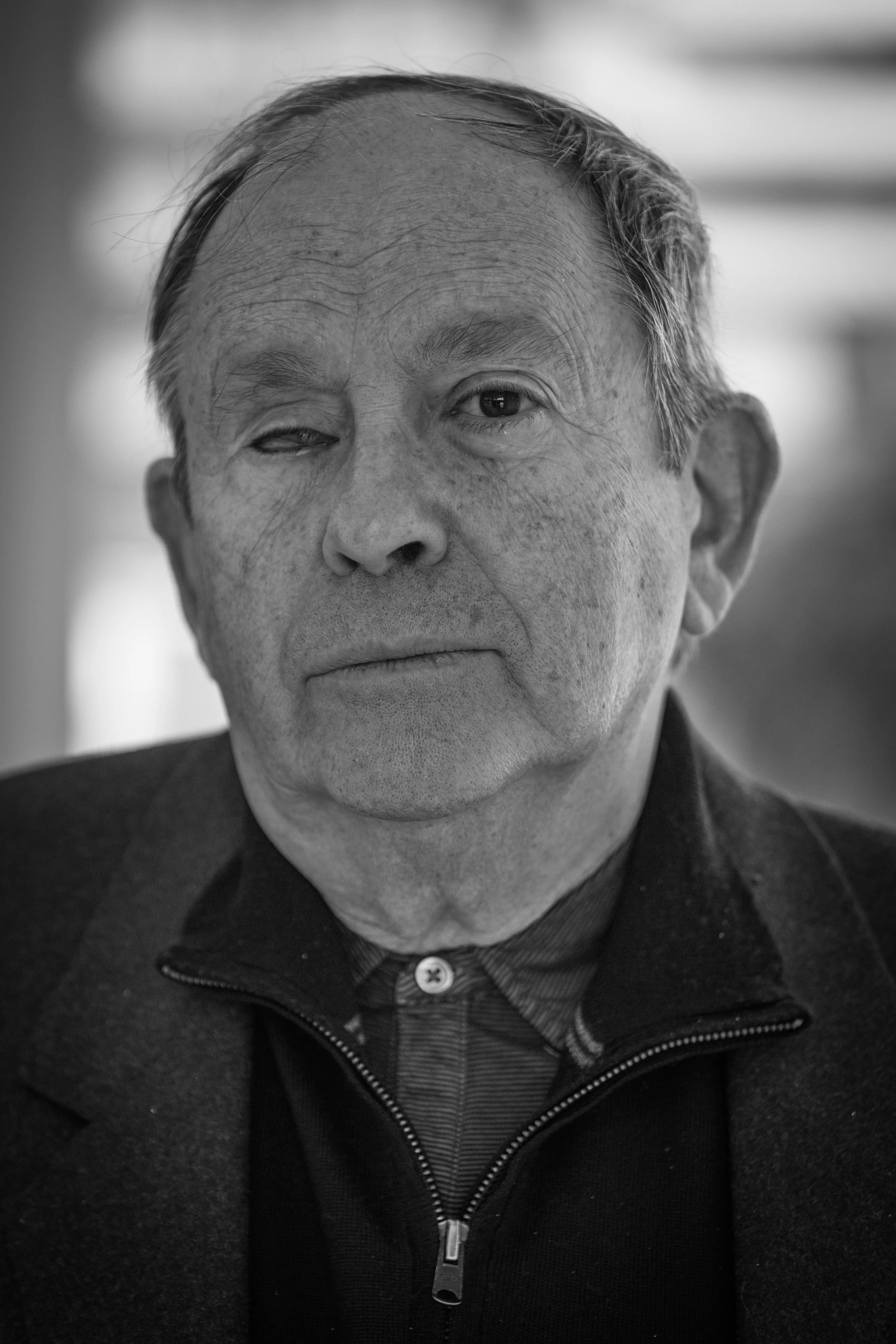
Image from Wikipedia
Image from Wikipedia
Jean-Claude Grumberg: The French Master of Bitter Humor and Historical Theater
Jean-Claude Grumberg – An Author Who Transforms Memory Into Living Theater
Jean-Claude Grumberg, born on July 26, 1939, in Paris, is one of the most prominent French playwrights, screenwriters, and actors of his generation. His work revolves around Jewish experience, persecution, everyday comedy, and the fragile dignity of humanity, without ever descending into mere didacticism. This combination of historical weight and fine humor makes him a distinctive voice in the history of French literature and theater. ([de.wikipedia.org](https://de.wikipedia.org/wiki/Jean-Claude_Grumberg))
Biography: Childhood, Loss, and the Shaping of a Whole Body of Work
Grumberg's biography is inseparably linked to the history of Europe in the 20th century. According to Radio France, his father, Zacharie Grumberg, was arrested and deported during his early childhood; the experience of war, loss, and persecution became the underlying tone of his later writing. Larousse also emphasizes that, as the son of a tailor who died during deportation, he initially completed an apprenticeship as a tailor himself before turning to theater. This background explains the social and moral accuracy of his perspective on ordinary people, work, humiliation, and survival. ([radiofrance.fr](https://www.radiofrance.fr/personnes/jean-claude-grumberg?p=2))
After his training, Grumberg initially worked in professions that gave no hint of a future breakthrough in theater, gradually approaching the stage through acting classes and amateur groups. Since 1961, he collaborated with the Compagnie Jacques Fabri, where his literary career began. His development was not a smooth ascent, but a gradual intensification of observation, dialogue skills, and moral urgency. This process led to a writing style that later became regarded as one of the most distinctive in French post-war theater. ([de.wikipedia.org](https://de.wikipedia.org/wiki/Jean-Claude_Grumberg))
The Breakthrough: From One-Act Play to Significant Theater Author
His first performed play was the one-act play Michu in 1967, in which he dealt with antisemitism. Early works such as Morgen, ein Fenster zur Straße and Amorphe d’Ottenburg incorporated elements of absurd theater while simultaneously exhibiting the later typical blend of social observation and tragicomic access. With Dreyfus, he achieved his definitive breakthrough in 1974; the play premiered in Germany at the Münchner Kammerspielen and brought Grumberg international visibility. ([de.wikipedia.org](https://de.wikipedia.org/wiki/Jean-Claude_Grumberg))
Particularly remarkable is how Grumberg handles historical material not in a museum-like fashion but in a contemporary manner. In Dreyfus, the Dreyfus Affair is not only discussed as a political scandal but also as a reflection of collective prejudices, theater within theater, and societal blindness. Grumberg described the play as a "fictional biography" of his parents; it condenses his entire poetic approach. Personal memory, Jewish history, and political analysis merge into dramatic tension. ([de.wikipedia.org](https://de.wikipedia.org/wiki/Jean-Claude_Grumberg))
Dramaturgy and Themes: Humor as a Form of Survival
For decades, critics have recognized Grumberg as an author who approaches heavy themes with lightness, timing, and humanity. Encyclopedia.com describes him as a playwright who depicts the experiences of Jewish people during and after World War II, merging dark themes with humor. His plays utilize elliptical, everyday language, with fragments, pauses, and seemingly incidental turns from which great emotional truth emerges. This technique gives his dialogues a special stage presence. ([encyclopedia.com](https://www.encyclopedia.com/arts/educational-magazines/grumberg-jean-claude-1939))
Recurring motifs in his work include antisemitism, racial discrimination, chauvinism, and the moral confusion of the ordinary milieu. At the same time, Grumberg deprives his characters of any schematic victim role; he portrays them as contradictory, vulnerable, and often surprisingly witty individuals. This is where his literary authority lies: he makes memory not pathetic, but vivid. For him, theater becomes a place of survival, self-assertion, and quiet indictment. ([de.wikipedia.org](https://de.wikipedia.org/wiki/Jean-Claude_Grumberg))
The Workshop, Zone libre, and the Great Trilogy of Memory
Among his best-known plays is Das Atelier from 1979, which tells the fate of a Jewish tailor in the Parisian Quartier des Halles after World War II. Encyclopedia.com classifies Dreyfus, L’Atelier, and Zone libre as a Holocaust trilogy, emphasizing that Grumberg depicts the everyday lives of ordinary people through a theatrical approach that relies on natural language and loosely connected episodes. This form creates an immediate closeness between the audience and the characters. ([de.wikipedia.org](https://de.wikipedia.org/wiki/Jean-Claude_Grumberg))
Especially L’Atelier exemplifies how Grumberg transforms the historical post-war reality into intimate, social theater art. Not the grand gesture is at the forefront but the working world, the faces of memory, and the harshness of starting anew. The stage becomes an archive of small existences, in which Europe reassembles itself after 1945. This explains why his plays resonate far beyond the French context. ([de.wikipedia.org](https://de.wikipedia.org/wiki/Jean-Claude_Grumberg))
Screenwriting and Film: Collaboration with Costa-Gavras
Another significant strand of his career is his work in cinema. Together with Constantin Costa-Gavras, Grumberg co-wrote the screenplay for Der Stellvertreter; this was followed by further collaborations such as Die Axt, Der Oberst und ich, and Eden is West. Filmography entries at AlloCiné and other profiles confirm that Grumberg is a precise constructor of tension, morality, and dialogue in film as well. His theater experience never feels like a burden, but rather as a school of condensation. ([de.wikipedia.org](https://de.wikipedia.org/wiki/Jean-Claude_Grumberg))
For this screenwriting work, he and Costa-Gavras received the César for Best Adapted Screenplay in 2003 for Amen, which is based on Der Stellvertreter. He had already been awarded the Prix Molière in 1991 for Freie Zone and received the Grand Prix from the Académie française that same year for his dramatic oeuvre. These awards indicate that Grumberg's significance is not limited to a single successful piece but that his entire body of work has been recognized as a cultural achievement. ([de.wikipedia.org](https://de.wikipedia.org/wiki/Jean-Claude_Grumberg))
Current Projects and Late Recognition
Even in old age, Grumberg remained productive and present. In 2024, his novel La Plus Précieuse des marchandises gained attention when Michel Hazanavicius adapted the work into an animated film that was released in theaters in 2024. Cannes, Le Parisien, and AlloCiné refer to the close collaboration between author and director; the film brought Grumberg's poetic narrative style to a new medium and a new audience, providing his work with another contemporary interpretation. ([festival-cannes.com](https://www.festival-cannes.com/2024/la-plus-precieuse-des-marchandises-le-conte-anime-de-michel-hazanavicius/?utm_source=openai))
In 2025, Quand la terre était plate was also published, as reported by En attendant Nadeau, as a new text in the context of the re-release of La Plus précieuse des marchandises. This shows that Grumberg's writing remains driven by memory, family history, and literary precision even in his later works. His themes do not change radically, but with each work, they gain depth, maturity, and painful beauty. ([en-attendant-nadeau.fr](https://www.en-attendant-nadeau.fr/2025/02/17/la-plus-precieuse-des-marchandises-quand-la-terre-etait-plate/?utm_source=openai))
Cultural Influence: Jean-Claude Grumberg as Chronicler of the 20th Century
Grumberg is among the authors who shape a universal language from personal trauma. His plays and screenplays have shaped French post-war theater because they do not explain historical violence abstractly but make it tangible through concrete characters and linguistic precision. His relevance lies in the connection of moral clarity and artistic elegance. This constitutes his cultural influence: he keeps memory open without letting it freeze. ([de.wikipedia.org](https://de.wikipedia.org/wiki/Jean-Claude_Grumberg))
His work continues to influence theaters, publishing houses, film directors, and readers who discover in him an author who does not sugarcoat European history. The blend of sadness, irony, and keen observation makes his texts resonate across generations. Grumberg remains an author who, from the stage, not only tells stories but makes emotional and political realities visible. This is precisely what substantiates his enduring authority. ([encyclopedia.com](https://www.encyclopedia.com/arts/educational-magazines/grumberg-jean-claude-1939))
Conclusion: Why Jean-Claude Grumberg Remains Fascinating
Jean-Claude Grumberg is captivating because his work combines personal history, Jewish memory, theatrical artistry, and social criticism in a distinctive language. He writes with the precision of a chronicler and the warmth of a storyteller who never betrays his characters. Those who read Grumberg or experience him on stage encounter an author of rare intensity, intertwining historical truth and human dignity. His plays and texts deserve the attention of every theater and literature audience. ([de.wikipedia.org](https://de.wikipedia.org/wiki/Jean-Claude_Grumberg))
Those who experience Jean-Claude Grumberg live on stage immediately feel the power of his dialogue, the sharpness of his humor, and the emotional depth of his characters. His works are among the most impressive testimonies of contemporary French theater and retain their impact far beyond the moment of performance. An evening with Grumberg is always an evening about memory, resistance, and the unbroken power of storytelling. ([de.wikipedia.org](https://de.wikipedia.org/wiki/Jean-Claude_Grumberg))
Official Channels of Jean-Claude Grumberg:
- Instagram: No official profile found
- Facebook: No official profile found
- YouTube: No official profile found
- Spotify: No official profile found
- TikTok: No official profile found
Sources:
- Wikipedia – Jean-Claude Grumberg
- Larousse – Jean-Claude Grumberg
- Encyclopedia.com – Grumberg, Jean-Claude 1939-
- Radio France – Jean-Claude Grumberg: Podcasts and News
- AlloCiné – Jean-Claude Grumberg
- Festival de Cannes – La plus précieuse des marchandises, le conte animé de Michel Hazanavicius
- Le Parisien – La Plus Précieuse des marchandises: why Hazanavicius and Grumberg chose animated film to tell the Shoah
- En attendant Nadeau – Quand la terre était plate, by Jean-Claude Grumberg