
Bart
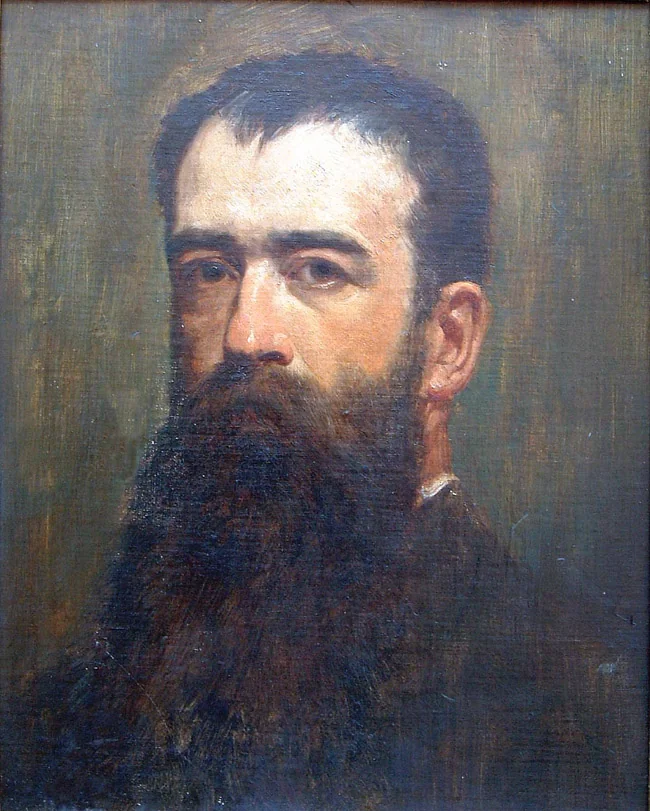
Image from Wikipedia
Image from Wikipedia
Bart – The Cultural History of Facial Hair Between Style, Symbolism, and Identity
An Untreated Motif with Astonishing Depth
The beard is neither a musician nor an artist in the biographical sense, but rather a part of human body hair. Nevertheless, it possesses a cultural radiance that has made it an aesthetic, social, and symbolic subject for centuries. The foundational Wikipedia entry describes the beard as hair growth in the area of the mouth, chin, cheeks, and front neck, typically with a thicker shaft and greater stiffness than head hair. ([de.wikipedia.org](https://de.wikipedia.org/wiki/Bart?utm_source=openai))
Precisely because the beard does not yield a classic artist profile, it is worthwhile to examine its cultural significance. In many societies, it has represented maturity, authority, masculinity, religion, resistance, or fashionable self-presentation. The beard thus tells a story about identity, body politics, and style—far beyond mere hair biology. ([die-bibel.de](https://www.die-bibel.de/stichwort/20185/?utm_source=openai))
Biology and Appearance: The Beard as a Distinct Physical Feature
Beard hair differs significantly from head hair. It grows in a different structure, usually appears coarser, shorter, and less flexible, giving the beard its characteristic texture. The growth zones typically concentrate on the chin, cheeks, upper lip, and neck, allowing for the development of very different beard shapes. ([de.wikipedia.org](https://de.wikipedia.org/wiki/Bart?utm_source=openai))
This physical characteristic explains why beards are so highly moldable in grooming. From narrow mustaches to full beards, there is a visual spectrum that works with lines, contours, and density. The beard thus becomes almost a little portrait on the face—an area where people make style, attitude, and belonging visible. ([de.wikipedia.org](https://de.wikipedia.org/wiki/Bart?utm_source=openai))
Cultural Significance: Between Power, Dignity, and Provocation
Since antiquity, the beard has been a culturally charged symbol. Historical and religious contexts give it meaning as an expression of age, status, authority, or piety; at the same time, it can also be read as a sign of differentiation or rebellion. The Bible further conveys traditions in which beard and hair are explicitly associated with control, purity, and social order. ([die-bibel.de](https://www.die-bibel.de/stichwort/20185/?utm_source=openai))
In folklore and cultural history, the beard also appears as a marker of power and status. A well-groomed beard could convey dignity, while an undercut or radically styled beard could provoke. It is precisely in this tension that its lasting fascination lies: the beard is never merely hair but always a statement. ([austria-forum.org](https://austria-forum.org/af/Wissenssammlungen/ABC_zur_Volkskunde_%C3%96sterreichs/Bart?utm_source=openai))
Language History and Origins: An Old Word with Far-Reaching Branches
The word "beard" has a long linguistic tradition. Etymological hints trace the term back to old Germanic roots; related forms are found in several European languages. The word thus stands not only for a physical feature but also for an ancient cultural word deeply embedded in European language history. ([duden.de](https://www.duden.de/rechtschreibung/Bart?utm_source=openai))
This origin makes the beard a term with remarkable reach. It appears in idioms, historical descriptions, and symbolic interpretations. The linguistic stability of the word shows how permanently this physical feature remains present in cultural consciousness. ([dictionary.cambridge.org](https://dictionary.cambridge.org/dictionary/german-english/bart?utm_source=openai))
Fashion, Style, and Self-Representation: The Beard as an Aesthetic Decision
Today, the beard is undoubtedly part of the fashion and style economy. Whether accurately contoured, deliberately wild, full, short, pointed, or symmetrically shaped—each variant produces a different effect on the face. Shaping becomes a means of self-presentation, similar to hairstyles, clothing, or accessories. ([de.wikipedia.org](https://de.wikipedia.org/wiki/Bart?utm_source=openai))
Especially in pop culture and urban scenes, the beard has gained new visibility. It can radiate modernity, individuality, and artisanal care, but it can also mark a return to tradition, grounding, or images of masculinity. Thus, it remains a mutable sign that can be interpreted anew over and over again. ([symbolonline.eu](https://symbolonline.eu/index.php?title=Bart&utm_source=openai))
Ritual, Religion, and Society: A Face Full of Meanings
In religious and social contexts, the beard was often understood not as a trivial matter but as a conscious sign. Beard and hair fashion could make belonging, belief systems, or social roles visible. In some traditions, wearing or trimming the beard is even directly linked to norms and rules. ([die-bibel.de](https://www.die-bibel.de/stichwort/20185/?utm_source=openai))
This makes the beard a fascinating boundary object between nature and culture. It grows biologically but is culturally shaped, valued, and interpreted. It is exactly this dual existence that makes it so interesting: the beard belongs to the body, but its meaning only emerges in the social gaze. ([de.wikipedia.org](https://de.wikipedia.org/wiki/K%C3%B6rperbehaarung?utm_source=openai))
Why the Beard Continues to Fascinate Today
The beard remains intriguing because it is simultaneously simple and ambiguous. It is an everyday physical feature and a strong symbol of age, maturity, attitude, and aesthetics. In a time when identity is becoming increasingly visible, the beard retains its role as a direct, immediately readable statement. ([symbolonline.eu](https://symbolonline.eu/index.php?title=Bart&utm_source=openai))
Those who want to experience the beard live need not a stage but an open eye for cultural history, body images, and shifting styles. Precisely in its unspectacular self-evidence does its power manifest: the beard is a small detail with a great impact—and therefore has been an inexhaustible topic for centuries. ([austria-forum.org](https://austria-forum.org/af/Wissenssammlungen/ABC_zur_Volkskunde_%C3%96sterreichs/Bart?utm_source=openai))
Conclusion: A Symbol with Character and History
The beard is compelling because it bundles biology, culture, and symbolism into a single feature. It stands for tradition and modernity, for discipline and disorder, for dignity and contradiction. Anyone who examines its history quickly realizes: the beard is not merely a detail of the face but a cultural means of expression with astonishing depth. ([die-bibel.de](https://www.die-bibel.de/stichwort/20185/?utm_source=openai))
For this reason, it is worthwhile to consider the beard not only as hair growth but as an aesthetic and historical phenomenon. Its adaptability makes it timeless. And its cultural resonance ensures that it will remain a visible sign of personality in the future. ([de.wikipedia.org](https://de.wikipedia.org/wiki/Bart?utm_source=openai))
Official Channels of Bart:
- Instagram: No official profile found
- Facebook: No official profile found
- YouTube: No official profile found
- Spotify: No official profile found
- TikTok: No official profile found
Sources:
Upcoming Events
DJ - Party Bart Spencer
Reception State. Collection Accessions from 2021-2025
State of Acquisition. Collection Accessions from 2021-2025
State of Acquisition. Collection Accessions from 2021-2025
Condition of Acquisition. Collection Accessions from the Years 2021-2025
State of Acquisition. Collection Access from 2021-2025
State of Recording – Collection Acquisitions from 2021–2025
Condition of Entry. Collection Additions from 2021-2025
State of Acquisition. Collection Accessions from 2021-2025