
Anastassija Wladimirowna Kobekina
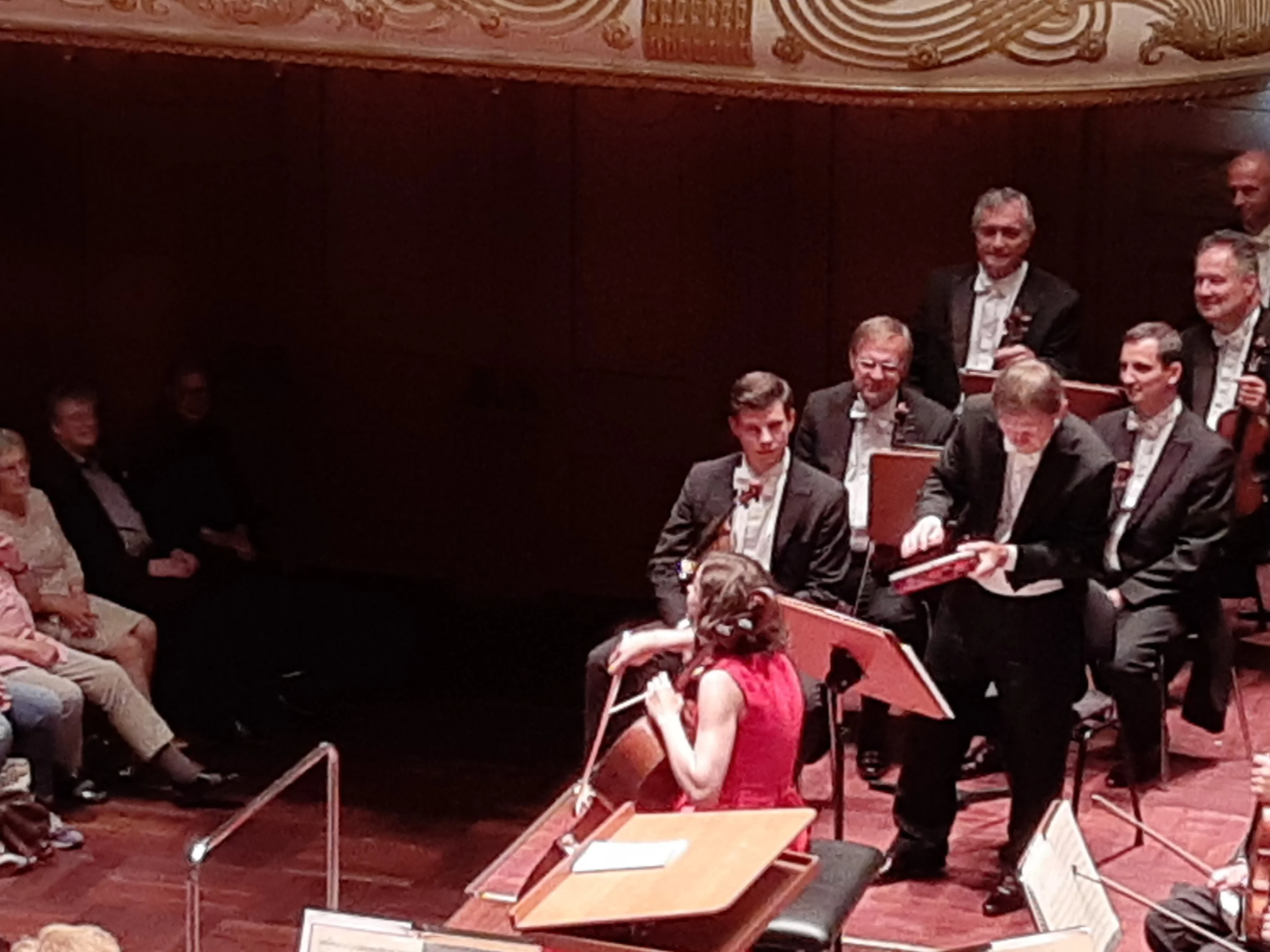
Image from Wikipedia
Image from Wikipedia
Anastasia Kobekina: The Charismatic Cellist Between Baroque, Contemporary, and Worldwide Success
An Exceptional Artist with Musical Depth
Anastasia Vladimirovna Kobekina, internationally known as Anastasia Kobekina, is among the most exciting cellists of her generation. Born on August 26, 1994, in Yekaterinburg, she grew up in a musical environment and began playing the cello at the age of four. Her career combines technical brilliance, stylistic openness, and a stage presence that makes classical music feel immediate and vibrant rather than museum-like. ([de.wikipedia.org](https://de.wikipedia.org/wiki/Anastassija_Wladimirowna_Kobekina?utm_source=openai))
Early Influences: Music as a Family Affair
Kobekina's artistic biography is closely tied to her family. Her father, composer Vladimir Kobekin, wrote works for her at a young age, which they rehearsed together; her mother also played a vital role by introducing her to the world of music school early on. This background explains why Kobekina has always been perceived not just as an interpreter but also as a musical storyteller. ([vogue.de](https://www.vogue.de/artikel/anastasia-kobekina-cello-spielerin-interview))
At the age of twelve, she was admitted to the Moscow Conservatory, and in 2012, she began her studies at the Kronberg Academy. She later studied in Germany, Paris, and Frankfurt with renowned teachers such as Frans Helmerson, Jens-Peter Maintz, Jérôme Pernoo, and Kristin von der Goltz. This education shaped her artistic development, bridging a great romantic tradition, historically informed performance practices, and a modern, curious repertoire approach. ([vogue.de](https://www.vogue.de/artikel/anastasia-kobekina-cello-spielerin-interview))
Breakthrough and International Recognition
Kobekina's path to success has not been marked by volume but by substance. She gained recognition in international competitions, including the Tchaikovsky Competition in 2019 and the Enescu Competition in 2016. Between 2018 and 2021, she was a BBC New Generation Artist, and in 2022, she received the Borletti-Buitoni Trust Award. Such accolades not only signify talent but also highlight the sustainable recognition of an artist with a distinct profile. ([kobekina.info](https://www.kobekina.info/about))
She also established herself step by step on major stages. Kobekina has concerted with orchestras such as the Kremerata Baltica, Ural Philharmonic Orchestra, Vienna Symphony, and Mariinsky Theatre Orchestra. Her performances have taken her to significant venues and festivals worldwide, including Wigmore Hall, Concertgebouw Amsterdam, Lincoln Center, Berlin Philharmonie, Elbphilharmonie Hamburg, and Verbier Festival. This showcases a music career that thrives on both international reach and artistic credibility. ([de.wikipedia.org](https://de.wikipedia.org/wiki/Anastassija_Wladimirowna_Kobekina?utm_source=openai))
The Artistic Signature: Sound, Color, and Dramaturgy
In reviews, Kobekina is repeatedly praised for her expressiveness, multi-layered interpretations, and charismatic presence. Le Figaro calls her an “unrivaled musician,” while Vogue highlights her precision, rich colors, and clear phrasing. This points to a playing style where technical mastery never becomes an end in itself, but transitions into a narrative approach to music. ([kobekina.info](https://www.kobekina.info/about))
Her stylistic versatility is particularly noteworthy. Kobekina effortlessly navigates between Baroque and modern, between historical sound expression and contemporary directness. Her official artist profile describes her as a musician equally familiar with both instrumental worlds and communicating across styles; this is a significant part of her appeal. She is not seen as a specialist confined to a narrow repertoire, but as an artist who productively connects musical epochs. ([kobekina.info](https://www.kobekina.info/about))
Discography: From “Venice” to Bach
A pivotal career milestone was her exclusive contract with Sony Classical in May 2023. In February 2024, her debut album “Venice” was released, documenting her versatility across early music, lyrical sensibility, and sonic imagination. The album was presented live and recognized as an impressive calling card from a young cellist unafraid of stylistic breadth. ([kobekina.info](https://www.kobekina.info/about))
“Venice” is more than an ordinary debut album. The recording reflects places, memories, and musical timelines, connecting works by Monteverdi, Vivaldi, Dowland, and Silvestrov with a personal, almost essayistic dramaturgy. On her own website, Kobekina describes the album as a conversation between past and present, a kaleidoscopic portrait of a city and an artistic inner world. This concept makes the release a striking example of modern classical programming. ([kobekina.info](https://www.kobekina.info/discography))
In 2025, the next significant step will follow: an album featuring the solo suites of J. S. Bach, set to be released in September 2025 according to the official website. This work is considered a benchmark for every cellist, and here, Kobekina's ambition to understand sound as self-portrait comes into play. Sony Classical also emphasizes that she perceives Bach as an inner journey that opens up new emotional and musical perspectives each time. ([kobekina.info](https://www.kobekina.info/about))
Current Projects, Awards, and Artistic Presence
The years 2024 and 2025 will mark a phase of intense visibility. Kobekina received the Leonard Bernstein Award in 2024 and was the focus artist of the Rheingau Music Festival in 2024. In 2025, she will take on residencies at the Mecklenburg-Vorpommern Festival and the Beethoven Festival Bonn; she will also return for further performances at the Royal Albert Hall and within the BBC Proms context. This solidifies her status as an internationally sought-after soloist with high media and artistic presence. ([kobekina.info](https://www.kobekina.info/about))
Another sign of her standing is the cello concerto written especially for her by Bryce Dessner, whose premiere is among the highlights of her upcoming season. Dessner, who has already collaborated with her on “Solos,” adds a clear contemporary dimension to Kobekina's profile. She thus represents not only the preservation of the repertoire but also the creation of new music. ([kobekina.info](https://www.kobekina.info/about))
Public Perception and Cultural Context
Kobekina is not only a virtuoso cellist but also an artist of contemporary culture. In 2025, ARD released a four-part documentary about her, focusing on tour life, daily rehearsals, social media pressures, and the journey to international breakthrough. The series shows how intertwined musical excellence, self-presentation, and artistic discipline have become today. ([ard.de](https://www.ard.de/ardkultur/musik/klassische-musik/anastasia-kobekina-jetzt-oder-nie%2Cserie-anastasia-kobekina-jetzt-oder-nie-cello-wdr-100.html))
Her response to social tensions is also part of her public role. In connection with the war against Ukraine, she expressed early and public criticism of the Russian invasion and made her solidarity known. This stance adds an additional seriousness to her profile and underscores that her music career does not unfold independently from the world in which it takes place. ([vogue.de](https://www.vogue.de/artikel/anastasia-kobekina-cello-spielerin-interview))
Instrument, Technique, and Repertoire Awareness
Kobekina plays a Stradivari cello from 1717, the “Bonamy Dobree-Suggia,” which is provided to her by a foundation. Such an instrument represents not only prestige but also sonic responsibility: it demands a high level of control, breath, and differentiated bow technique. The fact that she masters this instrument at such a natural level aligns with her reputation as an artist of extraordinary maturity. ([kobekina.info](https://www.kobekina.info/about))
Her repertoire ranges from Baroque to Classical and Romantic to contemporary works. This very range makes her discography and concert planning so attractive: she stands for historical awareness but also curiosity about new forms of composition and arrangement. In a classical landscape that often fluctuates between specialization and popular appeal, Kobekina embodies a rare balance. ([kobekina.info](https://www.kobekina.info/about))
Conclusion: A Cellist Keeping the Great Conversation of Music Alive
Anastasia Kobekina fascinates by combining virtuosity with intellect, depth of repertoire with contemporary energy, and technical precision with genuine stage presence. Her career showcases an artist who not only interprets classical music but also places it in new contexts. Those who experience her live see not just a mere soloist but a musician who turns every performance into a concentrated, personal, and simultaneously universal event. ([kobekina.info](https://www.kobekina.info/about))
It is precisely in her blend of sonic sophistication, bold programming, and international presence that her unique tension lies. Whether with Bach, Vivaldi, contemporary premieres, or in the grand concert halls of Europe: Anastasia Kobekina is one of those artists whose development should be closely followed. Anyone serious about modern classical music should experience her live. ([kobekina.info](https://www.kobekina.info/about))
Official Channels of Anastasia Kobekina:
- Instagram: no official profile found
- Facebook: no official profile found
- YouTube: no official profile found
- Spotify: https://open.spotify.com/artist/3gyMSbylsDuJor2dpGQ96m
- TikTok: no official profile found
Sources:
- Kobekina.info – About
- Kobekina.info – Discography
- ARD Culture – Anastasia Kobekina: Now or Never!
- AllMusic – Anastasia Kobekina Biography, Discography, Albums & Expert Reviews
- Sony Classical – Anastasia Kobekina
- Vogue Germany – Anastasia Kobekina: This Young Cellist is Among the Most Exciting Rising Stars in Classical Music
- Festival International de Colmar – Anastasia Kobekina
- Spotify – Anastasia Kobekina
- Wikipedia: Image and Text Source