

Eggstätt
Obinger Str. 3, 83125 Eggstätt, Deutschland
GTEV D’Hartseer Eggstätt | Trachtenheim & Events
The GTEV D’Hartseer Eggstätt is much more than a classic traditional costume club: it is a grown part of local life, a place for community, and a visible piece of vibrant cultural heritage in Eggstätt. Its clubhouse is located in the middle of the village in the listed Heistracherhaus at Obinger Str. 3, in a location that the club itself describes as particularly beautiful, as Eggstätt is situated in the Chiemgau between mountains, Chiemsee, and the Eggstätter lake district. Since 1924, the club has been part of Gauverband I, and with around 360 active, supporting, and assisting members, it shows how strongly the club culture is still upheld today. Those searching for GTEV Eggstätt, Hartseer Eggstätt, or Trachtenverein Eggstätt will find a club that connects traditional costumes, folk music, church processions, annual services, club outings, and community events. This mix of tradition and present makes the character of the D’Hartseer and explains why the club has a firm place in the village and the region. ([hartseer.de](https://hartseer.de/allgemeines/))
History and Chronicle of GTEV D’Hartseer Eggstätt
The roots of the club go back to November 1921. At that time, young people, mainly peat workers from Weitmoos, came together and decided to found a traditional costume club under the name D’Sulzbergler Weitmoos. Shortly thereafter, many Eggstätt Dirndl and Buam joined, and the monthly meetings as well as the Plattler rehearsals were moved to Eggstätt. From this initial phase, the club developed step by step, initially having to assert itself with changing names and structures, and finally acquired its current character as a Mountain Traditional Costume Preservation Club D’Hartseer. A particularly significant moment was the entry in the register of associations on 17.10.2003, since then the club has officially carried the name GTEV D’Hartseer e.V. This continuity shows that from a small founding group, a lasting cultural bearer has emerged that consciously documents and maintains its history. ([hartseer.de](https://hartseer.de/geschichte/))
The chronicle also shows how closely club history and local history are intertwined. Already in 1924, the flag was consecrated in the parish church, accompanied by 37 traditional costume clubs, and in the same year, the club joined Gauverband I. In the following decades, many milestones followed: in 1930, the club participated in a large traditional costume parade in Rosenheim, in 1948 the 25th anniversary was celebrated, in 1963 a new flag was consecrated for the 40th anniversary, in 1972 the Maypole was re-erected and the youth was more involved, in 1983 the 60th founding festival was celebrated with many clubs, in 1993 the 70th anniversary was celebrated, in 1996 the clubhouse in Heistracherhaus was expanded, and in 1998 another flag was consecrated. The 80th anniversary in 2003 and the 90th founding festival in 2013 also mark important milestones. This chronicle makes it clear: the club thrives on regular renewal but remains committed to its origins, the traditional costume matter, and club cohesion. ([hartseer.de](https://hartseer.de/geschichte/))
Events, Price Watten, and Annual Program
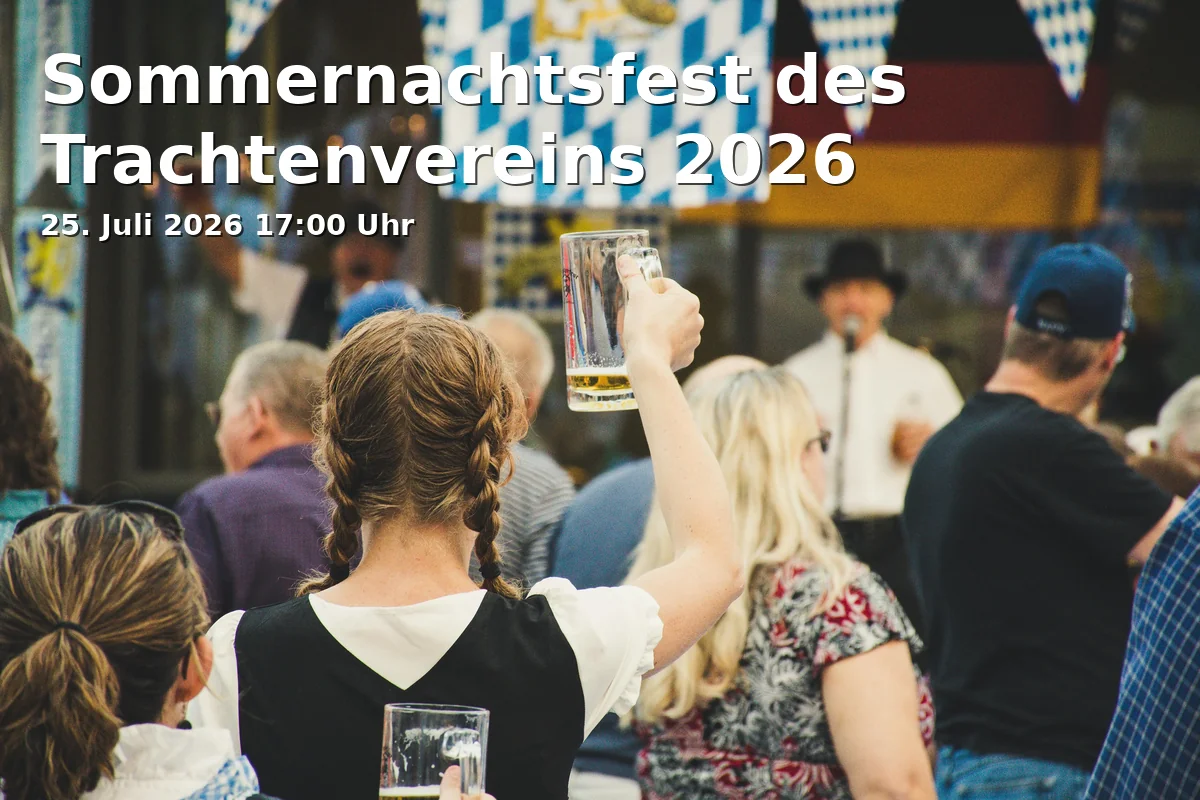
For many visitors, the event program is the most important entry point into the world of D’Hartseer. On the official club page, the dates for 2026 are clearly and publicly announced: Price Watten in the Trachtenheim on January 17, the Gau Spring Meeting in Traunstein on March 22, the Annual General Meeting with new elections and honors on March 29 at Unterwirt, the regional price platteln in Seebruck on May 9, the 76th Gau Traditional Costume Pilgrimage to Maria Eck on May 17, the 120th founding festival of D’Chiemseer Breitbrunn at the end of May, the club's annual day with a service on June 14, the Gau Meeting and Gau Heimat Evening on July 18, the Summer Night Festival at the Trachtenheim on July 25, the Gau Youth Price Platteln in September, the Gau Meeting in October, and the Nikolaus Celebration in December. This variety shows that the club year does not consist of a single festival but of a rhythmically structured calendar with customs, community, and regional exchange. ([hartseer.de](https://hartseer.de/veranstaltungen/))
Particularly typical for the club are events that combine tradition and sociability. The Price Watten is considered a classic start to the year on the website and is held in the Trachtenheim. The club's annual day with a service keeps the memory of deceased members alive and incorporates the church tradition. The Gau Traditional Costume Pilgrimage to Maria Eck emphasizes the religious and communal character of the club, while the Summer Night Festival at the Trachtenheim is a more open, summery gathering in the village. In retrospect, previous contributions on the website also show that the club continually maintains formats such as Nikolaus celebrations, godparent requests, Kirtahutschn, or Price Watten, thus preserving a lively mix of customs, sociability, and youth development. This mix makes GTEV D’Hartseer Eggstätt interesting for locals and guests alike, as here customs are not just a historical term but an up-to-date event calendar with recurring fixed points. ([hartseer.de](https://hartseer.de/preiswatten/?utm_source=openai))
Traditional Costume, Flag, and Customs in the Club
The traditional costume is a central identity signal in GTEV D’Hartseer Eggstätt. The club's website describes that the children's costume essentially looks like that of the active members, but with small differences: the Dirndl lacks the silver cord, and the Buam lack the backpack and club suspenders; instead, they wear children's suspenders with the Bavarian state coat of arms. These details make it clear that the traditional costume not only looks festive but also visibly represents rules, belonging, and age groups. This is particularly important for families, as children grow into the club community early and get to know the external signs of customs. The club emphasizes that it takes the care and preservation of traditional costumes and folk culture seriously and consciously aligns the children's costumes with those of the active members. Thus, tradition is passed on without overwhelming or excluding the youth. ([hartseer.de](https://hartseer.de/tracht/))
Equally significant is the flag. It is described on the website as the external sign of the community and is carried at all important occasions and celebrations. The club owns three elaborately crafted flags, which already reflect the long history of the club. The chronicle and the flag page show several consecration and anniversary milestones: in 1924 the first flag was consecrated, in 1963 a new flag was consecrated for the 40th anniversary, and in 1998 another flag was consecrated for the 75th anniversary with a large parade. Such moments are never just decoration in the life of the traditional costume club but expressions of responsibility, connectedness, and public visibility. When GTEV D’Hartseer Eggstätt participates in parades or church festivals, the flag carries this history outward and makes the club immediately recognizable in the village landscape. Together with the traditional costume, a strong ensemble of symbols is created that connects the club across generations and also clearly positions it outwardly. ([hartseer.de](https://hartseer.de/fahne/))
Location in Eggstätt and the Trachtenheim at Obinger Str. 3
The location of the club is an important part of its search profile. The clubhouse is not located somewhere on the outskirts but right in the center of Eggstätt in the listed Heistracherhaus at Obinger Str. 3. This central address makes the club easy to find and explains why many activities take place directly in the village center. The official website explicitly describes the location as part of a special environment: Eggstätt is located in Chiemgau, close to the mountains, near Chiemsee, and at the Eggstätter lake district. Thus, the Trachtenheim is not just a club room but also a meeting point in a very attractive landscape community. Those searching for Trachtenheim Eggstätt, clubhouse Eggstätt, or Hartseer Eggstätt will therefore not find an anonymous event location but a place with a clear anchoring in the village and the region. ([hartseer.de](https://hartseer.de/allgemeines/))
The chronicle shows that this house has taken on a special function for the club. In 1996, the club was able to expand a clubhouse in the listed Heistracherhaus with the support of the municipality and with 2000 voluntarily provided working hours. Since then, the honors from traditional costume festivals and price platteln successes have found a worthy place there, and a singing group founded by a former board member also uses the house as a rehearsal room. As early as 1984, the club had also set up a rehearsal room in the old school building, which is now the town hall. This shows that the club has been flexible over the years, creating spaces for rehearsals, meetings, and community. For visitors and interested parties, this means: the club is visible not only through events but also through a fixed, historically grown place where rehearsals, meetings, and club work come together. That is why the term Trachtenheim does not seem like a label for the D’Hartseer but like a lived address of tradition. ([hartseer.de](https://hartseer.de/geschichte/))
Children, Youth, and Active Groups in Club Life
A strong traditional costume club thrives on its youth, and this is where GTEV D’Hartseer Eggstätt visibly focuses. The official website lists separate times for the children's and youth traditional costume rehearsals as well as for the active traditional costume rehearsal. The children's and youth rehearsal takes place on Mondays from 5:30 PM to 6:30 PM, and the active rehearsal on Mondays from 8:00 PM to 9:00 PM. Additionally, there are specific roles for youth leaders, Dirndl representatives, pre-plattlers, traditional costume caretakers, and other responsible members on the board page. This organizational structure shows that the preservation of customs is not left to chance here but functions in a structured and intergenerational manner. For inquiries about Trachtenverein Eggstätt, children's costume Eggstätt, or youth costume Eggstätt, this is important information, as it shows that families and young people have a conscious place in the club's daily life. ([hartseer.de](https://hartseer.de/?utm_source=openai))
The youth is not only involved through rehearsals but also through experiential formats. The website features contributions about holiday programs, treasure hunts in the village, and overnight stays in the Trachtenheim. There, children learned about Bavarian customs, traditions, and language in a playful way and could also experience the clubhouse as a vibrant place. The active invitation to visit the Trachtenheim also shows the open character of the club. Anyone interested in traditional costumes, platteln, Dirndldrahn, folk music, or social interaction will find a club here that not only manages historical values but also passes them on in everyday life. The youth is thus not a side issue but a core part of the club's profile. This makes GTEV D’Hartseer Eggstätt attractive for parents, grandparents, and young adults looking for a place where community, movement, and a sense of home come together naturally. ([hartseer.de](https://hartseer.de/?utm_source=openai))
Club Life, Folk Music, and Church Festivals
GTEV D’Hartseer Eggstätt explicitly sees itself as a cultural contributor to the community. The official page states that the club enriches cultural events with traditional customs events, participates in church processions, commemorates its deceased members with an annual service, strives for folk music and folk song preservation, and undertakes an annual club outing. Furthermore, the club visits anniversaries of brother clubs whenever possible, participates in Gau festivals, and sees price platteln as an honor. This description makes it clear that the club not only maintains internal sociability but is also consciously present in public. In combination with the old and new festivals, a profile emerges that relies on both tradition and active club life. Those searching for customs in Eggstätt will quickly land at a club that does not explain culture but lives it. ([hartseer.de](https://hartseer.de/allgemeines/))
The interregional and regional networking is also remarkable. The chronicle mentions sponsorships with neighboring clubs, including Breitbrunn and Aindorf-Pittenhart, and describes how the club regularly participates in flag consecrations, anniversaries, and festivals. In the official environment of the municipality of Eggstätt, cultural contacts to Pianoro, which the traditional costume club has been maintaining regularly since 2004, are also referenced. This shows that the club is not closed off but builds bridges: to neighboring clubs, to church events, to municipal festivals, and even across municipal borders. For the external effect, this is important because the name GTEV D’Hartseer Eggstätt thus stands not only for a place but for a vibrant network of customs, a sense of home, and community. This mix gives the location its emotional depth and explains why it is relevant for event, club, and culture enthusiasts alike. ([hartseer.de](https://hartseer.de/geschichte/))
Sources:
Mehr anzeigenWeniger anzeigen
GTEV D’Hartseer Eggstätt | Trachtenheim & Events
The GTEV D’Hartseer Eggstätt is much more than a classic traditional costume club: it is a grown part of local life, a place for community, and a visible piece of vibrant cultural heritage in Eggstätt. Its clubhouse is located in the middle of the village in the listed Heistracherhaus at Obinger Str. 3, in a location that the club itself describes as particularly beautiful, as Eggstätt is situated in the Chiemgau between mountains, Chiemsee, and the Eggstätter lake district. Since 1924, the club has been part of Gauverband I, and with around 360 active, supporting, and assisting members, it shows how strongly the club culture is still upheld today. Those searching for GTEV Eggstätt, Hartseer Eggstätt, or Trachtenverein Eggstätt will find a club that connects traditional costumes, folk music, church processions, annual services, club outings, and community events. This mix of tradition and present makes the character of the D’Hartseer and explains why the club has a firm place in the village and the region. ([hartseer.de](https://hartseer.de/allgemeines/))
History and Chronicle of GTEV D’Hartseer Eggstätt
The roots of the club go back to November 1921. At that time, young people, mainly peat workers from Weitmoos, came together and decided to found a traditional costume club under the name D’Sulzbergler Weitmoos. Shortly thereafter, many Eggstätt Dirndl and Buam joined, and the monthly meetings as well as the Plattler rehearsals were moved to Eggstätt. From this initial phase, the club developed step by step, initially having to assert itself with changing names and structures, and finally acquired its current character as a Mountain Traditional Costume Preservation Club D’Hartseer. A particularly significant moment was the entry in the register of associations on 17.10.2003, since then the club has officially carried the name GTEV D’Hartseer e.V. This continuity shows that from a small founding group, a lasting cultural bearer has emerged that consciously documents and maintains its history. ([hartseer.de](https://hartseer.de/geschichte/))
The chronicle also shows how closely club history and local history are intertwined. Already in 1924, the flag was consecrated in the parish church, accompanied by 37 traditional costume clubs, and in the same year, the club joined Gauverband I. In the following decades, many milestones followed: in 1930, the club participated in a large traditional costume parade in Rosenheim, in 1948 the 25th anniversary was celebrated, in 1963 a new flag was consecrated for the 40th anniversary, in 1972 the Maypole was re-erected and the youth was more involved, in 1983 the 60th founding festival was celebrated with many clubs, in 1993 the 70th anniversary was celebrated, in 1996 the clubhouse in Heistracherhaus was expanded, and in 1998 another flag was consecrated. The 80th anniversary in 2003 and the 90th founding festival in 2013 also mark important milestones. This chronicle makes it clear: the club thrives on regular renewal but remains committed to its origins, the traditional costume matter, and club cohesion. ([hartseer.de](https://hartseer.de/geschichte/))
Events, Price Watten, and Annual Program
For many visitors, the event program is the most important entry point into the world of D’Hartseer. On the official club page, the dates for 2026 are clearly and publicly announced: Price Watten in the Trachtenheim on January 17, the Gau Spring Meeting in Traunstein on March 22, the Annual General Meeting with new elections and honors on March 29 at Unterwirt, the regional price platteln in Seebruck on May 9, the 76th Gau Traditional Costume Pilgrimage to Maria Eck on May 17, the 120th founding festival of D’Chiemseer Breitbrunn at the end of May, the club's annual day with a service on June 14, the Gau Meeting and Gau Heimat Evening on July 18, the Summer Night Festival at the Trachtenheim on July 25, the Gau Youth Price Platteln in September, the Gau Meeting in October, and the Nikolaus Celebration in December. This variety shows that the club year does not consist of a single festival but of a rhythmically structured calendar with customs, community, and regional exchange. ([hartseer.de](https://hartseer.de/veranstaltungen/))
Particularly typical for the club are events that combine tradition and sociability. The Price Watten is considered a classic start to the year on the website and is held in the Trachtenheim. The club's annual day with a service keeps the memory of deceased members alive and incorporates the church tradition. The Gau Traditional Costume Pilgrimage to Maria Eck emphasizes the religious and communal character of the club, while the Summer Night Festival at the Trachtenheim is a more open, summery gathering in the village. In retrospect, previous contributions on the website also show that the club continually maintains formats such as Nikolaus celebrations, godparent requests, Kirtahutschn, or Price Watten, thus preserving a lively mix of customs, sociability, and youth development. This mix makes GTEV D’Hartseer Eggstätt interesting for locals and guests alike, as here customs are not just a historical term but an up-to-date event calendar with recurring fixed points. ([hartseer.de](https://hartseer.de/preiswatten/?utm_source=openai))
Traditional Costume, Flag, and Customs in the Club
The traditional costume is a central identity signal in GTEV D’Hartseer Eggstätt. The club's website describes that the children's costume essentially looks like that of the active members, but with small differences: the Dirndl lacks the silver cord, and the Buam lack the backpack and club suspenders; instead, they wear children's suspenders with the Bavarian state coat of arms. These details make it clear that the traditional costume not only looks festive but also visibly represents rules, belonging, and age groups. This is particularly important for families, as children grow into the club community early and get to know the external signs of customs. The club emphasizes that it takes the care and preservation of traditional costumes and folk culture seriously and consciously aligns the children's costumes with those of the active members. Thus, tradition is passed on without overwhelming or excluding the youth. ([hartseer.de](https://hartseer.de/tracht/))
Equally significant is the flag. It is described on the website as the external sign of the community and is carried at all important occasions and celebrations. The club owns three elaborately crafted flags, which already reflect the long history of the club. The chronicle and the flag page show several consecration and anniversary milestones: in 1924 the first flag was consecrated, in 1963 a new flag was consecrated for the 40th anniversary, and in 1998 another flag was consecrated for the 75th anniversary with a large parade. Such moments are never just decoration in the life of the traditional costume club but expressions of responsibility, connectedness, and public visibility. When GTEV D’Hartseer Eggstätt participates in parades or church festivals, the flag carries this history outward and makes the club immediately recognizable in the village landscape. Together with the traditional costume, a strong ensemble of symbols is created that connects the club across generations and also clearly positions it outwardly. ([hartseer.de](https://hartseer.de/fahne/))
Location in Eggstätt and the Trachtenheim at Obinger Str. 3
The location of the club is an important part of its search profile. The clubhouse is not located somewhere on the outskirts but right in the center of Eggstätt in the listed Heistracherhaus at Obinger Str. 3. This central address makes the club easy to find and explains why many activities take place directly in the village center. The official website explicitly describes the location as part of a special environment: Eggstätt is located in Chiemgau, close to the mountains, near Chiemsee, and at the Eggstätter lake district. Thus, the Trachtenheim is not just a club room but also a meeting point in a very attractive landscape community. Those searching for Trachtenheim Eggstätt, clubhouse Eggstätt, or Hartseer Eggstätt will therefore not find an anonymous event location but a place with a clear anchoring in the village and the region. ([hartseer.de](https://hartseer.de/allgemeines/))
The chronicle shows that this house has taken on a special function for the club. In 1996, the club was able to expand a clubhouse in the listed Heistracherhaus with the support of the municipality and with 2000 voluntarily provided working hours. Since then, the honors from traditional costume festivals and price platteln successes have found a worthy place there, and a singing group founded by a former board member also uses the house as a rehearsal room. As early as 1984, the club had also set up a rehearsal room in the old school building, which is now the town hall. This shows that the club has been flexible over the years, creating spaces for rehearsals, meetings, and community. For visitors and interested parties, this means: the club is visible not only through events but also through a fixed, historically grown place where rehearsals, meetings, and club work come together. That is why the term Trachtenheim does not seem like a label for the D’Hartseer but like a lived address of tradition. ([hartseer.de](https://hartseer.de/geschichte/))
Children, Youth, and Active Groups in Club Life
A strong traditional costume club thrives on its youth, and this is where GTEV D’Hartseer Eggstätt visibly focuses. The official website lists separate times for the children's and youth traditional costume rehearsals as well as for the active traditional costume rehearsal. The children's and youth rehearsal takes place on Mondays from 5:30 PM to 6:30 PM, and the active rehearsal on Mondays from 8:00 PM to 9:00 PM. Additionally, there are specific roles for youth leaders, Dirndl representatives, pre-plattlers, traditional costume caretakers, and other responsible members on the board page. This organizational structure shows that the preservation of customs is not left to chance here but functions in a structured and intergenerational manner. For inquiries about Trachtenverein Eggstätt, children's costume Eggstätt, or youth costume Eggstätt, this is important information, as it shows that families and young people have a conscious place in the club's daily life. ([hartseer.de](https://hartseer.de/?utm_source=openai))
The youth is not only involved through rehearsals but also through experiential formats. The website features contributions about holiday programs, treasure hunts in the village, and overnight stays in the Trachtenheim. There, children learned about Bavarian customs, traditions, and language in a playful way and could also experience the clubhouse as a vibrant place. The active invitation to visit the Trachtenheim also shows the open character of the club. Anyone interested in traditional costumes, platteln, Dirndldrahn, folk music, or social interaction will find a club here that not only manages historical values but also passes them on in everyday life. The youth is thus not a side issue but a core part of the club's profile. This makes GTEV D’Hartseer Eggstätt attractive for parents, grandparents, and young adults looking for a place where community, movement, and a sense of home come together naturally. ([hartseer.de](https://hartseer.de/?utm_source=openai))
Club Life, Folk Music, and Church Festivals
GTEV D’Hartseer Eggstätt explicitly sees itself as a cultural contributor to the community. The official page states that the club enriches cultural events with traditional customs events, participates in church processions, commemorates its deceased members with an annual service, strives for folk music and folk song preservation, and undertakes an annual club outing. Furthermore, the club visits anniversaries of brother clubs whenever possible, participates in Gau festivals, and sees price platteln as an honor. This description makes it clear that the club not only maintains internal sociability but is also consciously present in public. In combination with the old and new festivals, a profile emerges that relies on both tradition and active club life. Those searching for customs in Eggstätt will quickly land at a club that does not explain culture but lives it. ([hartseer.de](https://hartseer.de/allgemeines/))
The interregional and regional networking is also remarkable. The chronicle mentions sponsorships with neighboring clubs, including Breitbrunn and Aindorf-Pittenhart, and describes how the club regularly participates in flag consecrations, anniversaries, and festivals. In the official environment of the municipality of Eggstätt, cultural contacts to Pianoro, which the traditional costume club has been maintaining regularly since 2004, are also referenced. This shows that the club is not closed off but builds bridges: to neighboring clubs, to church events, to municipal festivals, and even across municipal borders. For the external effect, this is important because the name GTEV D’Hartseer Eggstätt thus stands not only for a place but for a vibrant network of customs, a sense of home, and community. This mix gives the location its emotional depth and explains why it is relevant for event, club, and culture enthusiasts alike. ([hartseer.de](https://hartseer.de/geschichte/))
Sources:
GTEV D’Hartseer Eggstätt | Trachtenheim & Events
The GTEV D’Hartseer Eggstätt is much more than a classic traditional costume club: it is a grown part of local life, a place for community, and a visible piece of vibrant cultural heritage in Eggstätt. Its clubhouse is located in the middle of the village in the listed Heistracherhaus at Obinger Str. 3, in a location that the club itself describes as particularly beautiful, as Eggstätt is situated in the Chiemgau between mountains, Chiemsee, and the Eggstätter lake district. Since 1924, the club has been part of Gauverband I, and with around 360 active, supporting, and assisting members, it shows how strongly the club culture is still upheld today. Those searching for GTEV Eggstätt, Hartseer Eggstätt, or Trachtenverein Eggstätt will find a club that connects traditional costumes, folk music, church processions, annual services, club outings, and community events. This mix of tradition and present makes the character of the D’Hartseer and explains why the club has a firm place in the village and the region. ([hartseer.de](https://hartseer.de/allgemeines/))
History and Chronicle of GTEV D’Hartseer Eggstätt
The roots of the club go back to November 1921. At that time, young people, mainly peat workers from Weitmoos, came together and decided to found a traditional costume club under the name D’Sulzbergler Weitmoos. Shortly thereafter, many Eggstätt Dirndl and Buam joined, and the monthly meetings as well as the Plattler rehearsals were moved to Eggstätt. From this initial phase, the club developed step by step, initially having to assert itself with changing names and structures, and finally acquired its current character as a Mountain Traditional Costume Preservation Club D’Hartseer. A particularly significant moment was the entry in the register of associations on 17.10.2003, since then the club has officially carried the name GTEV D’Hartseer e.V. This continuity shows that from a small founding group, a lasting cultural bearer has emerged that consciously documents and maintains its history. ([hartseer.de](https://hartseer.de/geschichte/))
The chronicle also shows how closely club history and local history are intertwined. Already in 1924, the flag was consecrated in the parish church, accompanied by 37 traditional costume clubs, and in the same year, the club joined Gauverband I. In the following decades, many milestones followed: in 1930, the club participated in a large traditional costume parade in Rosenheim, in 1948 the 25th anniversary was celebrated, in 1963 a new flag was consecrated for the 40th anniversary, in 1972 the Maypole was re-erected and the youth was more involved, in 1983 the 60th founding festival was celebrated with many clubs, in 1993 the 70th anniversary was celebrated, in 1996 the clubhouse in Heistracherhaus was expanded, and in 1998 another flag was consecrated. The 80th anniversary in 2003 and the 90th founding festival in 2013 also mark important milestones. This chronicle makes it clear: the club thrives on regular renewal but remains committed to its origins, the traditional costume matter, and club cohesion. ([hartseer.de](https://hartseer.de/geschichte/))
Events, Price Watten, and Annual Program
For many visitors, the event program is the most important entry point into the world of D’Hartseer. On the official club page, the dates for 2026 are clearly and publicly announced: Price Watten in the Trachtenheim on January 17, the Gau Spring Meeting in Traunstein on March 22, the Annual General Meeting with new elections and honors on March 29 at Unterwirt, the regional price platteln in Seebruck on May 9, the 76th Gau Traditional Costume Pilgrimage to Maria Eck on May 17, the 120th founding festival of D’Chiemseer Breitbrunn at the end of May, the club's annual day with a service on June 14, the Gau Meeting and Gau Heimat Evening on July 18, the Summer Night Festival at the Trachtenheim on July 25, the Gau Youth Price Platteln in September, the Gau Meeting in October, and the Nikolaus Celebration in December. This variety shows that the club year does not consist of a single festival but of a rhythmically structured calendar with customs, community, and regional exchange. ([hartseer.de](https://hartseer.de/veranstaltungen/))
Particularly typical for the club are events that combine tradition and sociability. The Price Watten is considered a classic start to the year on the website and is held in the Trachtenheim. The club's annual day with a service keeps the memory of deceased members alive and incorporates the church tradition. The Gau Traditional Costume Pilgrimage to Maria Eck emphasizes the religious and communal character of the club, while the Summer Night Festival at the Trachtenheim is a more open, summery gathering in the village. In retrospect, previous contributions on the website also show that the club continually maintains formats such as Nikolaus celebrations, godparent requests, Kirtahutschn, or Price Watten, thus preserving a lively mix of customs, sociability, and youth development. This mix makes GTEV D’Hartseer Eggstätt interesting for locals and guests alike, as here customs are not just a historical term but an up-to-date event calendar with recurring fixed points. ([hartseer.de](https://hartseer.de/preiswatten/?utm_source=openai))
Traditional Costume, Flag, and Customs in the Club
The traditional costume is a central identity signal in GTEV D’Hartseer Eggstätt. The club's website describes that the children's costume essentially looks like that of the active members, but with small differences: the Dirndl lacks the silver cord, and the Buam lack the backpack and club suspenders; instead, they wear children's suspenders with the Bavarian state coat of arms. These details make it clear that the traditional costume not only looks festive but also visibly represents rules, belonging, and age groups. This is particularly important for families, as children grow into the club community early and get to know the external signs of customs. The club emphasizes that it takes the care and preservation of traditional costumes and folk culture seriously and consciously aligns the children's costumes with those of the active members. Thus, tradition is passed on without overwhelming or excluding the youth. ([hartseer.de](https://hartseer.de/tracht/))
Equally significant is the flag. It is described on the website as the external sign of the community and is carried at all important occasions and celebrations. The club owns three elaborately crafted flags, which already reflect the long history of the club. The chronicle and the flag page show several consecration and anniversary milestones: in 1924 the first flag was consecrated, in 1963 a new flag was consecrated for the 40th anniversary, and in 1998 another flag was consecrated for the 75th anniversary with a large parade. Such moments are never just decoration in the life of the traditional costume club but expressions of responsibility, connectedness, and public visibility. When GTEV D’Hartseer Eggstätt participates in parades or church festivals, the flag carries this history outward and makes the club immediately recognizable in the village landscape. Together with the traditional costume, a strong ensemble of symbols is created that connects the club across generations and also clearly positions it outwardly. ([hartseer.de](https://hartseer.de/fahne/))
Location in Eggstätt and the Trachtenheim at Obinger Str. 3
The location of the club is an important part of its search profile. The clubhouse is not located somewhere on the outskirts but right in the center of Eggstätt in the listed Heistracherhaus at Obinger Str. 3. This central address makes the club easy to find and explains why many activities take place directly in the village center. The official website explicitly describes the location as part of a special environment: Eggstätt is located in Chiemgau, close to the mountains, near Chiemsee, and at the Eggstätter lake district. Thus, the Trachtenheim is not just a club room but also a meeting point in a very attractive landscape community. Those searching for Trachtenheim Eggstätt, clubhouse Eggstätt, or Hartseer Eggstätt will therefore not find an anonymous event location but a place with a clear anchoring in the village and the region. ([hartseer.de](https://hartseer.de/allgemeines/))
The chronicle shows that this house has taken on a special function for the club. In 1996, the club was able to expand a clubhouse in the listed Heistracherhaus with the support of the municipality and with 2000 voluntarily provided working hours. Since then, the honors from traditional costume festivals and price platteln successes have found a worthy place there, and a singing group founded by a former board member also uses the house as a rehearsal room. As early as 1984, the club had also set up a rehearsal room in the old school building, which is now the town hall. This shows that the club has been flexible over the years, creating spaces for rehearsals, meetings, and community. For visitors and interested parties, this means: the club is visible not only through events but also through a fixed, historically grown place where rehearsals, meetings, and club work come together. That is why the term Trachtenheim does not seem like a label for the D’Hartseer but like a lived address of tradition. ([hartseer.de](https://hartseer.de/geschichte/))
Children, Youth, and Active Groups in Club Life
A strong traditional costume club thrives on its youth, and this is where GTEV D’Hartseer Eggstätt visibly focuses. The official website lists separate times for the children's and youth traditional costume rehearsals as well as for the active traditional costume rehearsal. The children's and youth rehearsal takes place on Mondays from 5:30 PM to 6:30 PM, and the active rehearsal on Mondays from 8:00 PM to 9:00 PM. Additionally, there are specific roles for youth leaders, Dirndl representatives, pre-plattlers, traditional costume caretakers, and other responsible members on the board page. This organizational structure shows that the preservation of customs is not left to chance here but functions in a structured and intergenerational manner. For inquiries about Trachtenverein Eggstätt, children's costume Eggstätt, or youth costume Eggstätt, this is important information, as it shows that families and young people have a conscious place in the club's daily life. ([hartseer.de](https://hartseer.de/?utm_source=openai))
The youth is not only involved through rehearsals but also through experiential formats. The website features contributions about holiday programs, treasure hunts in the village, and overnight stays in the Trachtenheim. There, children learned about Bavarian customs, traditions, and language in a playful way and could also experience the clubhouse as a vibrant place. The active invitation to visit the Trachtenheim also shows the open character of the club. Anyone interested in traditional costumes, platteln, Dirndldrahn, folk music, or social interaction will find a club here that not only manages historical values but also passes them on in everyday life. The youth is thus not a side issue but a core part of the club's profile. This makes GTEV D’Hartseer Eggstätt attractive for parents, grandparents, and young adults looking for a place where community, movement, and a sense of home come together naturally. ([hartseer.de](https://hartseer.de/?utm_source=openai))
Club Life, Folk Music, and Church Festivals
GTEV D’Hartseer Eggstätt explicitly sees itself as a cultural contributor to the community. The official page states that the club enriches cultural events with traditional customs events, participates in church processions, commemorates its deceased members with an annual service, strives for folk music and folk song preservation, and undertakes an annual club outing. Furthermore, the club visits anniversaries of brother clubs whenever possible, participates in Gau festivals, and sees price platteln as an honor. This description makes it clear that the club not only maintains internal sociability but is also consciously present in public. In combination with the old and new festivals, a profile emerges that relies on both tradition and active club life. Those searching for customs in Eggstätt will quickly land at a club that does not explain culture but lives it. ([hartseer.de](https://hartseer.de/allgemeines/))
The interregional and regional networking is also remarkable. The chronicle mentions sponsorships with neighboring clubs, including Breitbrunn and Aindorf-Pittenhart, and describes how the club regularly participates in flag consecrations, anniversaries, and festivals. In the official environment of the municipality of Eggstätt, cultural contacts to Pianoro, which the traditional costume club has been maintaining regularly since 2004, are also referenced. This shows that the club is not closed off but builds bridges: to neighboring clubs, to church events, to municipal festivals, and even across municipal borders. For the external effect, this is important because the name GTEV D’Hartseer Eggstätt thus stands not only for a place but for a vibrant network of customs, a sense of home, and community. This mix gives the location its emotional depth and explains why it is relevant for event, club, and culture enthusiasts alike. ([hartseer.de](https://hartseer.de/geschichte/))
Sources:
Frequently Asked Questions
Reviews
No reviews found