
Weimar
Buchenwald 7, 99427 Weimar, Deutschland
Buchenwald Memorial | Tours & Admission
The Buchenwald Memorial is a historical site with several layers of remembrance: From 1937, the concentration camp was located on the Ettersberg near Weimar, later the Soviet occupying power used the area as a special camp, and in the GDR, a large national memorial and commemorative site was established there. Today, Buchenwald is a place of remembrance, historical education, and critical engagement with Nazi violence, persecution, and the history of the site after 1945. Visitors to the memorial do not experience a classic excursion destination, but rather a vast area with exhibitions, historical sites, information offerings, and a very clear visitor concept. For this reason, good preparation is advisable: The area is large, the paths can be demanding, and some offerings have fixed time slots or reservation requirements. For an initial overview, visitors should plan at least three hours, preferably more, if they want to experience the tour, exhibition, and historical sites together. ([buchenwald.de](https://www.buchenwald.de/geschichte/chronologie))
The memorial combines independent visits to the outdoor area with guided tours, an introductory film, an app, a multilingual guide, and various permanent exhibitions. This makes the site accessible without losing its historical weight. Particularly important is the clear separation between freely accessible areas and those that can only be visited under certain conditions, such as the former crematorium at specific times or the large historical exhibition with online reservation. This creates a visit that can be both individual and pedagogically accompanied. Those who inform themselves in advance about the site plan, access, parking, dogs, children, or barrier-free offerings can plan their stay more calmly and respectfully. The following sections are specifically designed for this purpose: They summarize the most important facts and are oriented towards the most common search queries regarding admission, tours, site plan, exhibitions, and practical tips. ([buchenwald.de](https://www.buchenwald.de/besuch/praktische-infos))
Opening Hours, Admission, and Ticket Reservation
The opening hours of the memorial are clearly regulated. The outdoor area with the former prisoner camp, SS area, memorial, graves of the Soviet special camp No. 2, and other outdoor facilities can be visited daily until dusk. The exhibitions themselves are closed on Mondays; from Tuesday to Sunday, different times apply depending on the season. From April to October, they are usually open from 10 a.m. to 6 p.m., and from November to March from 10 a.m. to 4 p.m. There is an additional restriction at the former crematorium: from Tuesday to Thursday, access between 11 a.m. and 2 p.m. is only possible as part of guided tours. This regulation shows that Buchenwald is not only a place of visitation but also a place of conscious, guided engagement. Those who want flexible daily planning should check the various time slots in advance. ([buchenwald.de](https://www.buchenwald.de/besuch/oeffnungszeiten?utm_source=openai))
Regarding admission, the most important information for many visitors is: The visit to the memorial and the exhibitions is free. Costs only arise for additional educational offerings such as public tours or the rental of multimedia guides. For the large historical exhibition on the history of the Buchenwald concentration camp, an online reservation of a time slot is required in advance; spontaneous participation is only possible if capacity allows, but is not guaranteed. This combination of free access and reservation-required parts makes planning pleasantly transparent: Those who want to explore the area independently can do so without having to pay admission. However, those seeking a deeper understanding benefit from the reservation and the pedagogical support. It is also practical that brochures, an introductory film, and digital aids for orientation are available on the site. Those who want to see everything at a leisurely pace should not only think about the opening hours but also about the reservation and sufficient time on site. ([buchenwald.de](https://www.buchenwald.de/besuch/praktische-infos))
Tours and Public Walks
The public tours are among the most important offerings of the memorial. They are conducted by trained educational staff, last about two hours, and are available for individual visitors at fixed times from Tuesday to Sunday. During the main season from April to October, they take place several times a day; in spring, autumn, and winter, the number of appointments is reduced. Additionally, there are English-language tours in the summer. The group size is limited to 30 people, and the recommended minimum age is 15 years. This is an important note for families and school groups, as the memorial is a place of high historical and emotional density. The ticket prices for public tours are clearly stated: Adults pay 10 euros, reduced tickets cost 5 euros. Tickets are available at the visitor information at the parking lot, and prior reservation is possible by phone or email. ([buchenwald.de](https://www.buchenwald.de/de/besuch/fuehrungen))
For groups and school classes, the memorial offers additional booking options. The route through the visitor information is particularly practical for individual visitors, while groups request their tours through a separate form. The tour is particularly worthwhile because the area is very extensive, and many historical sites would be difficult to understand without context. Those who explore the site on their own will see many traces, but only with a guided tour does the connection between camp structure, memorial, exhibitions, and the later history of the memorial become clear. Additionally, there is a free film offering in the cinema behind the visitor information, which runs on the hour and provides a good introduction to the history of the site. This creates a visit model that covers different needs: brief orientation, in-depth tours, group bookings, or independent exploration with the app and guide. This combination is particularly helpful for those searching for the terms tours, contact, and prices. ([buchenwald.de](https://www.buchenwald.de/besuch/praktische-infos))
Access, Parking, and Site Plan
The memorial is located on the Ettersberg near Weimar, about ten kilometers northwest of the city center. The official address is Buchenwald, 99427 Weimar. The site is accessible by public transport via bus line 6, which runs several times daily from Goetheplatz and the main train station towards Buchenwald; the journey takes about 20 minutes. Additionally, on weekends and partially also supplementing, bus line 4 goes towards Ettersburg. Those arriving by car should follow the official signs via A4, A9, A71, or the federal roads B7 and B85, depending on the direction. This is important for many visitors because the ascent to the Ettersberg and the location outside the city center make spontaneous visits without planning less convenient. Therefore, it is advisable to check the route in advance and allow enough time for the ascent. ([buchenwald.de](https://www.buchenwald.de/besuch/praktische-infos))
At the visitor parking lot, there are a large number of free parking spaces available, and tour buses can also pick up and drop off passengers there. The information building is located directly at the parking lot and is thus the most important starting point for the visit. It is here that guests receive brochures, information, and, if needed, further orientation for the area. Those who want to view a site plan in advance can find an initial overview of historical sites, exhibitions, information, and service offerings with the interactive map What is where? The guide through the memorial complements this overview in several languages and is available in printed form or for download. For those arriving by bicycle, it is also important to note: Cycling on the memorial grounds is not permitted, but bicycles can be secured at the bike rack by the museum café. Overall, accessibility is well organized but consciously adapted to the character of the site: parking, orientation, and visitor guidance begin right at the entrance to the grounds. ([buchenwald.de](https://www.buchenwald.de/besuch/praktische-infos))
Exhibitions, App, and Multimedia Guide
The exhibitions of the Buchenwald Memorial form the content core of the visit. Particularly important is the permanent exhibition “Buchenwald. Exclusion and Violence 1937 to 1945,” which shows the history of the camp and its embedding in German society over approximately 2,000 square meters. Additionally, there is the art exhibition “Survival Food – Testimony – Artwork – Visual Memory” in the former disinfection area covering about 400 square meters with around 200 exhibits. Outside, the outdoor exhibition “Buchenwald 1945” with twelve steles complements the historical topography of the liberated camp. There is also an exhibition on the history of the memorial itself, which is located near the memorial and covers approximately 300 square meters but is currently closed. Thus, Buchenwald not only shows the camp history but also the history of remembrance of this site. Those interested in exhibitions, programs, and background will find a wide range of content rather than a single, linear narrative. ([buchenwald.de](https://www.buchenwald.de/besuch/ausstellungen))
For orientation on site, there are several digital and analog aids. The guide through the memorial is available in several languages, the information building at the parking lot offers brochures, and additionally, the Buchenwald app is available for download. On site, multimedia guides can also be borrowed, and a free introductory film runs in the cinema behind the visitor information every hour. This is particularly useful if visitors have little time or want to get an overview first. For the search queries app, site plan, and admission, it is important to know: Access to the exhibitions is generally free, but the large concentration camp exhibition requires a time reservation. Therefore, those planning a structured visit should best combine the app, guide, film, and exhibition ticket. This way, the area can also be well explored without a guided tour, without losing the historical seriousness of the site. The digital offering complements traditional memorial education but does not replace it. ([buchenwald.de](https://www.buchenwald.de/besuch/praktische-infos))
Dogs, Children, and Accessibility
Regarding the practical rules on site, there are some important points that many visitors want to know in advance. Dogs are not allowed on the grounds of the former prisoner camp, as this area is considered a cemetery. Exceptions are guide dogs and assistance dogs with identification vests; outside this area, dogs may be brought on a leash. Those looking for food and drink will find Café Paul directly at the visitor parking lot with food and beverages, but the memorial points out that it may be limited in opening hours due to staffing issues. For families, it is also relevant that the memorial recommends not visiting the museum, the prison cells, and the former crematorium with children under 12 years. These guidelines are not intended as a barrier but as an expression of respect for the site and its historical meanings. Especially because Buchenwald is a former camp and cemetery site, behavior, clothing, and movement are particularly consciously regulated. ([buchenwald.de](https://www.buchenwald.de/de/buchenwald/besuch/faq))
Accessibility should also be viewed in a nuanced way. The outdoor area is extensive and has a noticeable slope; many paths are only partially accessible for wheelchair users and people with mobility impairments. Additionally, there are gravel paths, steps, uneven surfaces, and longer waiting times, especially in cold weather. At the same time, there is support at important points: The visitor information, the bookstore, and the museum café are accessible, there are ramps and a wheelchair-accessible restroom, and for blind and visually impaired visitors, a tactile map is available for loan in the information building. In the permanent exhibitions on the concentration camp history and the Soviet special camp, the buildings are partially accessible, and the Buchenwald app offers an audio guide also in German sign language. This mix of real limitations and practical aids is typical for a historical site that cannot be fully modernized but still makes many things accessible. ([buchenwald.de](https://www.buchenwald.de/besuch/barrierearmut))
History and Special Places of the Memorial
The history of Buchenwald begins in 1937 when the SS established a concentration camp on the Ettersberg near Weimar. The name Buchenwald later became synonymous with Nazi crimes. After 1945, the Soviets used the site as a special camp before the GDR established the large German concentration camp memorial from 1950. In 1990, Buchenwald was re-conceived and opened for the remembrance of other victim groups. This chronology is important because it shows that Buchenwald is not only a place of camp history but also a place of later political and cultural interpretations of remembrance. This explains why the facility today consists of various layers: historical buildings, memorials, exhibitions, commemorative sites, and new educational offerings lie side by side. Those interested in history will thus experience not only documentation here but also the history of remembrance itself. ([buchenwald.de](https://www.buchenwald.de/geschichte/chronologie))
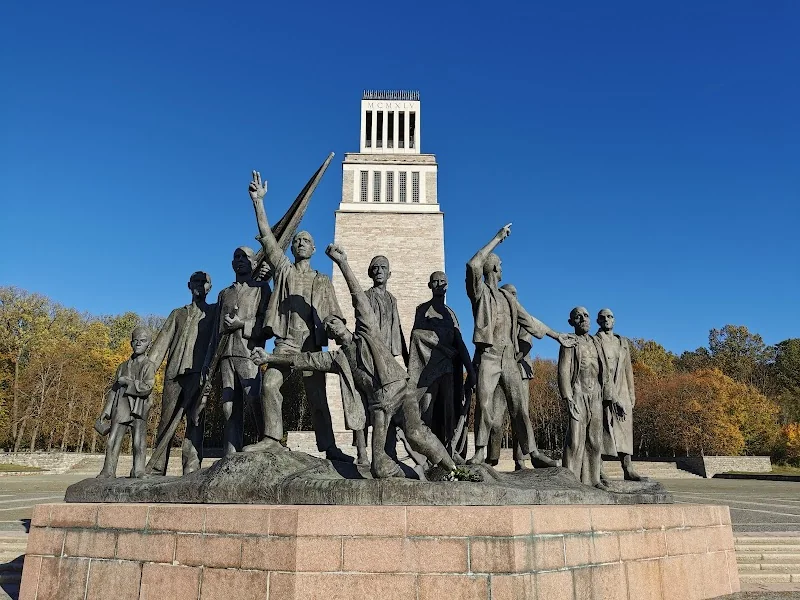
Among the special places of the memorial is the Buchenwald memorial, which is also the burial site of thousands of concentration camp inmates and is now considered the largest monument in memory of a Nazi concentration camp in Europe. Important memorial sites include the memorial for all the dead on the former roll call square, the forest cemetery for the deceased of the Soviet special camp No. 2, the Jewish memorial, the memorial for the murdered Sinti and Roma, and the memorial stone for women. These places make it clear that remembrance at Buchenwald is not one-dimensional but encompasses many victim groups and historical levels. This is precisely the uniqueness of the site: It is not a static exhibition but a spatially experienceable network of camp grounds, memorials, commemorative signs, and exhibitions. Thus, those who visit Buchenwald encounter both the history of the concentration camp and the history of later remembrance of this site. ([buchenwald.de](https://www.buchenwald.de/geschichte/historischer-ort/gedenkstaette))
Sources:
Mehr anzeigenWeniger anzeigen
Buchenwald Memorial | Tours & Admission
The Buchenwald Memorial is a historical site with several layers of remembrance: From 1937, the concentration camp was located on the Ettersberg near Weimar, later the Soviet occupying power used the area as a special camp, and in the GDR, a large national memorial and commemorative site was established there. Today, Buchenwald is a place of remembrance, historical education, and critical engagement with Nazi violence, persecution, and the history of the site after 1945. Visitors to the memorial do not experience a classic excursion destination, but rather a vast area with exhibitions, historical sites, information offerings, and a very clear visitor concept. For this reason, good preparation is advisable: The area is large, the paths can be demanding, and some offerings have fixed time slots or reservation requirements. For an initial overview, visitors should plan at least three hours, preferably more, if they want to experience the tour, exhibition, and historical sites together. ([buchenwald.de](https://www.buchenwald.de/geschichte/chronologie))
The memorial combines independent visits to the outdoor area with guided tours, an introductory film, an app, a multilingual guide, and various permanent exhibitions. This makes the site accessible without losing its historical weight. Particularly important is the clear separation between freely accessible areas and those that can only be visited under certain conditions, such as the former crematorium at specific times or the large historical exhibition with online reservation. This creates a visit that can be both individual and pedagogically accompanied. Those who inform themselves in advance about the site plan, access, parking, dogs, children, or barrier-free offerings can plan their stay more calmly and respectfully. The following sections are specifically designed for this purpose: They summarize the most important facts and are oriented towards the most common search queries regarding admission, tours, site plan, exhibitions, and practical tips. ([buchenwald.de](https://www.buchenwald.de/besuch/praktische-infos))
Opening Hours, Admission, and Ticket Reservation
The opening hours of the memorial are clearly regulated. The outdoor area with the former prisoner camp, SS area, memorial, graves of the Soviet special camp No. 2, and other outdoor facilities can be visited daily until dusk. The exhibitions themselves are closed on Mondays; from Tuesday to Sunday, different times apply depending on the season. From April to October, they are usually open from 10 a.m. to 6 p.m., and from November to March from 10 a.m. to 4 p.m. There is an additional restriction at the former crematorium: from Tuesday to Thursday, access between 11 a.m. and 2 p.m. is only possible as part of guided tours. This regulation shows that Buchenwald is not only a place of visitation but also a place of conscious, guided engagement. Those who want flexible daily planning should check the various time slots in advance. ([buchenwald.de](https://www.buchenwald.de/besuch/oeffnungszeiten?utm_source=openai))
Regarding admission, the most important information for many visitors is: The visit to the memorial and the exhibitions is free. Costs only arise for additional educational offerings such as public tours or the rental of multimedia guides. For the large historical exhibition on the history of the Buchenwald concentration camp, an online reservation of a time slot is required in advance; spontaneous participation is only possible if capacity allows, but is not guaranteed. This combination of free access and reservation-required parts makes planning pleasantly transparent: Those who want to explore the area independently can do so without having to pay admission. However, those seeking a deeper understanding benefit from the reservation and the pedagogical support. It is also practical that brochures, an introductory film, and digital aids for orientation are available on the site. Those who want to see everything at a leisurely pace should not only think about the opening hours but also about the reservation and sufficient time on site. ([buchenwald.de](https://www.buchenwald.de/besuch/praktische-infos))
Tours and Public Walks
The public tours are among the most important offerings of the memorial. They are conducted by trained educational staff, last about two hours, and are available for individual visitors at fixed times from Tuesday to Sunday. During the main season from April to October, they take place several times a day; in spring, autumn, and winter, the number of appointments is reduced. Additionally, there are English-language tours in the summer. The group size is limited to 30 people, and the recommended minimum age is 15 years. This is an important note for families and school groups, as the memorial is a place of high historical and emotional density. The ticket prices for public tours are clearly stated: Adults pay 10 euros, reduced tickets cost 5 euros. Tickets are available at the visitor information at the parking lot, and prior reservation is possible by phone or email. ([buchenwald.de](https://www.buchenwald.de/de/besuch/fuehrungen))
For groups and school classes, the memorial offers additional booking options. The route through the visitor information is particularly practical for individual visitors, while groups request their tours through a separate form. The tour is particularly worthwhile because the area is very extensive, and many historical sites would be difficult to understand without context. Those who explore the site on their own will see many traces, but only with a guided tour does the connection between camp structure, memorial, exhibitions, and the later history of the memorial become clear. Additionally, there is a free film offering in the cinema behind the visitor information, which runs on the hour and provides a good introduction to the history of the site. This creates a visit model that covers different needs: brief orientation, in-depth tours, group bookings, or independent exploration with the app and guide. This combination is particularly helpful for those searching for the terms tours, contact, and prices. ([buchenwald.de](https://www.buchenwald.de/besuch/praktische-infos))
Access, Parking, and Site Plan
The memorial is located on the Ettersberg near Weimar, about ten kilometers northwest of the city center. The official address is Buchenwald, 99427 Weimar. The site is accessible by public transport via bus line 6, which runs several times daily from Goetheplatz and the main train station towards Buchenwald; the journey takes about 20 minutes. Additionally, on weekends and partially also supplementing, bus line 4 goes towards Ettersburg. Those arriving by car should follow the official signs via A4, A9, A71, or the federal roads B7 and B85, depending on the direction. This is important for many visitors because the ascent to the Ettersberg and the location outside the city center make spontaneous visits without planning less convenient. Therefore, it is advisable to check the route in advance and allow enough time for the ascent. ([buchenwald.de](https://www.buchenwald.de/besuch/praktische-infos))
At the visitor parking lot, there are a large number of free parking spaces available, and tour buses can also pick up and drop off passengers there. The information building is located directly at the parking lot and is thus the most important starting point for the visit. It is here that guests receive brochures, information, and, if needed, further orientation for the area. Those who want to view a site plan in advance can find an initial overview of historical sites, exhibitions, information, and service offerings with the interactive map What is where? The guide through the memorial complements this overview in several languages and is available in printed form or for download. For those arriving by bicycle, it is also important to note: Cycling on the memorial grounds is not permitted, but bicycles can be secured at the bike rack by the museum café. Overall, accessibility is well organized but consciously adapted to the character of the site: parking, orientation, and visitor guidance begin right at the entrance to the grounds. ([buchenwald.de](https://www.buchenwald.de/besuch/praktische-infos))
Exhibitions, App, and Multimedia Guide
The exhibitions of the Buchenwald Memorial form the content core of the visit. Particularly important is the permanent exhibition “Buchenwald. Exclusion and Violence 1937 to 1945,” which shows the history of the camp and its embedding in German society over approximately 2,000 square meters. Additionally, there is the art exhibition “Survival Food – Testimony – Artwork – Visual Memory” in the former disinfection area covering about 400 square meters with around 200 exhibits. Outside, the outdoor exhibition “Buchenwald 1945” with twelve steles complements the historical topography of the liberated camp. There is also an exhibition on the history of the memorial itself, which is located near the memorial and covers approximately 300 square meters but is currently closed. Thus, Buchenwald not only shows the camp history but also the history of remembrance of this site. Those interested in exhibitions, programs, and background will find a wide range of content rather than a single, linear narrative. ([buchenwald.de](https://www.buchenwald.de/besuch/ausstellungen))
For orientation on site, there are several digital and analog aids. The guide through the memorial is available in several languages, the information building at the parking lot offers brochures, and additionally, the Buchenwald app is available for download. On site, multimedia guides can also be borrowed, and a free introductory film runs in the cinema behind the visitor information every hour. This is particularly useful if visitors have little time or want to get an overview first. For the search queries app, site plan, and admission, it is important to know: Access to the exhibitions is generally free, but the large concentration camp exhibition requires a time reservation. Therefore, those planning a structured visit should best combine the app, guide, film, and exhibition ticket. This way, the area can also be well explored without a guided tour, without losing the historical seriousness of the site. The digital offering complements traditional memorial education but does not replace it. ([buchenwald.de](https://www.buchenwald.de/besuch/praktische-infos))
Dogs, Children, and Accessibility
Regarding the practical rules on site, there are some important points that many visitors want to know in advance. Dogs are not allowed on the grounds of the former prisoner camp, as this area is considered a cemetery. Exceptions are guide dogs and assistance dogs with identification vests; outside this area, dogs may be brought on a leash. Those looking for food and drink will find Café Paul directly at the visitor parking lot with food and beverages, but the memorial points out that it may be limited in opening hours due to staffing issues. For families, it is also relevant that the memorial recommends not visiting the museum, the prison cells, and the former crematorium with children under 12 years. These guidelines are not intended as a barrier but as an expression of respect for the site and its historical meanings. Especially because Buchenwald is a former camp and cemetery site, behavior, clothing, and movement are particularly consciously regulated. ([buchenwald.de](https://www.buchenwald.de/de/buchenwald/besuch/faq))
Accessibility should also be viewed in a nuanced way. The outdoor area is extensive and has a noticeable slope; many paths are only partially accessible for wheelchair users and people with mobility impairments. Additionally, there are gravel paths, steps, uneven surfaces, and longer waiting times, especially in cold weather. At the same time, there is support at important points: The visitor information, the bookstore, and the museum café are accessible, there are ramps and a wheelchair-accessible restroom, and for blind and visually impaired visitors, a tactile map is available for loan in the information building. In the permanent exhibitions on the concentration camp history and the Soviet special camp, the buildings are partially accessible, and the Buchenwald app offers an audio guide also in German sign language. This mix of real limitations and practical aids is typical for a historical site that cannot be fully modernized but still makes many things accessible. ([buchenwald.de](https://www.buchenwald.de/besuch/barrierearmut))
History and Special Places of the Memorial
The history of Buchenwald begins in 1937 when the SS established a concentration camp on the Ettersberg near Weimar. The name Buchenwald later became synonymous with Nazi crimes. After 1945, the Soviets used the site as a special camp before the GDR established the large German concentration camp memorial from 1950. In 1990, Buchenwald was re-conceived and opened for the remembrance of other victim groups. This chronology is important because it shows that Buchenwald is not only a place of camp history but also a place of later political and cultural interpretations of remembrance. This explains why the facility today consists of various layers: historical buildings, memorials, exhibitions, commemorative sites, and new educational offerings lie side by side. Those interested in history will thus experience not only documentation here but also the history of remembrance itself. ([buchenwald.de](https://www.buchenwald.de/geschichte/chronologie))
Among the special places of the memorial is the Buchenwald memorial, which is also the burial site of thousands of concentration camp inmates and is now considered the largest monument in memory of a Nazi concentration camp in Europe. Important memorial sites include the memorial for all the dead on the former roll call square, the forest cemetery for the deceased of the Soviet special camp No. 2, the Jewish memorial, the memorial for the murdered Sinti and Roma, and the memorial stone for women. These places make it clear that remembrance at Buchenwald is not one-dimensional but encompasses many victim groups and historical levels. This is precisely the uniqueness of the site: It is not a static exhibition but a spatially experienceable network of camp grounds, memorials, commemorative signs, and exhibitions. Thus, those who visit Buchenwald encounter both the history of the concentration camp and the history of later remembrance of this site. ([buchenwald.de](https://www.buchenwald.de/geschichte/historischer-ort/gedenkstaette))
Sources:
Buchenwald Memorial | Tours & Admission
The Buchenwald Memorial is a historical site with several layers of remembrance: From 1937, the concentration camp was located on the Ettersberg near Weimar, later the Soviet occupying power used the area as a special camp, and in the GDR, a large national memorial and commemorative site was established there. Today, Buchenwald is a place of remembrance, historical education, and critical engagement with Nazi violence, persecution, and the history of the site after 1945. Visitors to the memorial do not experience a classic excursion destination, but rather a vast area with exhibitions, historical sites, information offerings, and a very clear visitor concept. For this reason, good preparation is advisable: The area is large, the paths can be demanding, and some offerings have fixed time slots or reservation requirements. For an initial overview, visitors should plan at least three hours, preferably more, if they want to experience the tour, exhibition, and historical sites together. ([buchenwald.de](https://www.buchenwald.de/geschichte/chronologie))
The memorial combines independent visits to the outdoor area with guided tours, an introductory film, an app, a multilingual guide, and various permanent exhibitions. This makes the site accessible without losing its historical weight. Particularly important is the clear separation between freely accessible areas and those that can only be visited under certain conditions, such as the former crematorium at specific times or the large historical exhibition with online reservation. This creates a visit that can be both individual and pedagogically accompanied. Those who inform themselves in advance about the site plan, access, parking, dogs, children, or barrier-free offerings can plan their stay more calmly and respectfully. The following sections are specifically designed for this purpose: They summarize the most important facts and are oriented towards the most common search queries regarding admission, tours, site plan, exhibitions, and practical tips. ([buchenwald.de](https://www.buchenwald.de/besuch/praktische-infos))
Opening Hours, Admission, and Ticket Reservation
The opening hours of the memorial are clearly regulated. The outdoor area with the former prisoner camp, SS area, memorial, graves of the Soviet special camp No. 2, and other outdoor facilities can be visited daily until dusk. The exhibitions themselves are closed on Mondays; from Tuesday to Sunday, different times apply depending on the season. From April to October, they are usually open from 10 a.m. to 6 p.m., and from November to March from 10 a.m. to 4 p.m. There is an additional restriction at the former crematorium: from Tuesday to Thursday, access between 11 a.m. and 2 p.m. is only possible as part of guided tours. This regulation shows that Buchenwald is not only a place of visitation but also a place of conscious, guided engagement. Those who want flexible daily planning should check the various time slots in advance. ([buchenwald.de](https://www.buchenwald.de/besuch/oeffnungszeiten?utm_source=openai))
Regarding admission, the most important information for many visitors is: The visit to the memorial and the exhibitions is free. Costs only arise for additional educational offerings such as public tours or the rental of multimedia guides. For the large historical exhibition on the history of the Buchenwald concentration camp, an online reservation of a time slot is required in advance; spontaneous participation is only possible if capacity allows, but is not guaranteed. This combination of free access and reservation-required parts makes planning pleasantly transparent: Those who want to explore the area independently can do so without having to pay admission. However, those seeking a deeper understanding benefit from the reservation and the pedagogical support. It is also practical that brochures, an introductory film, and digital aids for orientation are available on the site. Those who want to see everything at a leisurely pace should not only think about the opening hours but also about the reservation and sufficient time on site. ([buchenwald.de](https://www.buchenwald.de/besuch/praktische-infos))
Tours and Public Walks
The public tours are among the most important offerings of the memorial. They are conducted by trained educational staff, last about two hours, and are available for individual visitors at fixed times from Tuesday to Sunday. During the main season from April to October, they take place several times a day; in spring, autumn, and winter, the number of appointments is reduced. Additionally, there are English-language tours in the summer. The group size is limited to 30 people, and the recommended minimum age is 15 years. This is an important note for families and school groups, as the memorial is a place of high historical and emotional density. The ticket prices for public tours are clearly stated: Adults pay 10 euros, reduced tickets cost 5 euros. Tickets are available at the visitor information at the parking lot, and prior reservation is possible by phone or email. ([buchenwald.de](https://www.buchenwald.de/de/besuch/fuehrungen))
For groups and school classes, the memorial offers additional booking options. The route through the visitor information is particularly practical for individual visitors, while groups request their tours through a separate form. The tour is particularly worthwhile because the area is very extensive, and many historical sites would be difficult to understand without context. Those who explore the site on their own will see many traces, but only with a guided tour does the connection between camp structure, memorial, exhibitions, and the later history of the memorial become clear. Additionally, there is a free film offering in the cinema behind the visitor information, which runs on the hour and provides a good introduction to the history of the site. This creates a visit model that covers different needs: brief orientation, in-depth tours, group bookings, or independent exploration with the app and guide. This combination is particularly helpful for those searching for the terms tours, contact, and prices. ([buchenwald.de](https://www.buchenwald.de/besuch/praktische-infos))
Access, Parking, and Site Plan
The memorial is located on the Ettersberg near Weimar, about ten kilometers northwest of the city center. The official address is Buchenwald, 99427 Weimar. The site is accessible by public transport via bus line 6, which runs several times daily from Goetheplatz and the main train station towards Buchenwald; the journey takes about 20 minutes. Additionally, on weekends and partially also supplementing, bus line 4 goes towards Ettersburg. Those arriving by car should follow the official signs via A4, A9, A71, or the federal roads B7 and B85, depending on the direction. This is important for many visitors because the ascent to the Ettersberg and the location outside the city center make spontaneous visits without planning less convenient. Therefore, it is advisable to check the route in advance and allow enough time for the ascent. ([buchenwald.de](https://www.buchenwald.de/besuch/praktische-infos))
At the visitor parking lot, there are a large number of free parking spaces available, and tour buses can also pick up and drop off passengers there. The information building is located directly at the parking lot and is thus the most important starting point for the visit. It is here that guests receive brochures, information, and, if needed, further orientation for the area. Those who want to view a site plan in advance can find an initial overview of historical sites, exhibitions, information, and service offerings with the interactive map What is where? The guide through the memorial complements this overview in several languages and is available in printed form or for download. For those arriving by bicycle, it is also important to note: Cycling on the memorial grounds is not permitted, but bicycles can be secured at the bike rack by the museum café. Overall, accessibility is well organized but consciously adapted to the character of the site: parking, orientation, and visitor guidance begin right at the entrance to the grounds. ([buchenwald.de](https://www.buchenwald.de/besuch/praktische-infos))
Exhibitions, App, and Multimedia Guide
The exhibitions of the Buchenwald Memorial form the content core of the visit. Particularly important is the permanent exhibition “Buchenwald. Exclusion and Violence 1937 to 1945,” which shows the history of the camp and its embedding in German society over approximately 2,000 square meters. Additionally, there is the art exhibition “Survival Food – Testimony – Artwork – Visual Memory” in the former disinfection area covering about 400 square meters with around 200 exhibits. Outside, the outdoor exhibition “Buchenwald 1945” with twelve steles complements the historical topography of the liberated camp. There is also an exhibition on the history of the memorial itself, which is located near the memorial and covers approximately 300 square meters but is currently closed. Thus, Buchenwald not only shows the camp history but also the history of remembrance of this site. Those interested in exhibitions, programs, and background will find a wide range of content rather than a single, linear narrative. ([buchenwald.de](https://www.buchenwald.de/besuch/ausstellungen))
For orientation on site, there are several digital and analog aids. The guide through the memorial is available in several languages, the information building at the parking lot offers brochures, and additionally, the Buchenwald app is available for download. On site, multimedia guides can also be borrowed, and a free introductory film runs in the cinema behind the visitor information every hour. This is particularly useful if visitors have little time or want to get an overview first. For the search queries app, site plan, and admission, it is important to know: Access to the exhibitions is generally free, but the large concentration camp exhibition requires a time reservation. Therefore, those planning a structured visit should best combine the app, guide, film, and exhibition ticket. This way, the area can also be well explored without a guided tour, without losing the historical seriousness of the site. The digital offering complements traditional memorial education but does not replace it. ([buchenwald.de](https://www.buchenwald.de/besuch/praktische-infos))
Dogs, Children, and Accessibility
Regarding the practical rules on site, there are some important points that many visitors want to know in advance. Dogs are not allowed on the grounds of the former prisoner camp, as this area is considered a cemetery. Exceptions are guide dogs and assistance dogs with identification vests; outside this area, dogs may be brought on a leash. Those looking for food and drink will find Café Paul directly at the visitor parking lot with food and beverages, but the memorial points out that it may be limited in opening hours due to staffing issues. For families, it is also relevant that the memorial recommends not visiting the museum, the prison cells, and the former crematorium with children under 12 years. These guidelines are not intended as a barrier but as an expression of respect for the site and its historical meanings. Especially because Buchenwald is a former camp and cemetery site, behavior, clothing, and movement are particularly consciously regulated. ([buchenwald.de](https://www.buchenwald.de/de/buchenwald/besuch/faq))
Accessibility should also be viewed in a nuanced way. The outdoor area is extensive and has a noticeable slope; many paths are only partially accessible for wheelchair users and people with mobility impairments. Additionally, there are gravel paths, steps, uneven surfaces, and longer waiting times, especially in cold weather. At the same time, there is support at important points: The visitor information, the bookstore, and the museum café are accessible, there are ramps and a wheelchair-accessible restroom, and for blind and visually impaired visitors, a tactile map is available for loan in the information building. In the permanent exhibitions on the concentration camp history and the Soviet special camp, the buildings are partially accessible, and the Buchenwald app offers an audio guide also in German sign language. This mix of real limitations and practical aids is typical for a historical site that cannot be fully modernized but still makes many things accessible. ([buchenwald.de](https://www.buchenwald.de/besuch/barrierearmut))
History and Special Places of the Memorial
The history of Buchenwald begins in 1937 when the SS established a concentration camp on the Ettersberg near Weimar. The name Buchenwald later became synonymous with Nazi crimes. After 1945, the Soviets used the site as a special camp before the GDR established the large German concentration camp memorial from 1950. In 1990, Buchenwald was re-conceived and opened for the remembrance of other victim groups. This chronology is important because it shows that Buchenwald is not only a place of camp history but also a place of later political and cultural interpretations of remembrance. This explains why the facility today consists of various layers: historical buildings, memorials, exhibitions, commemorative sites, and new educational offerings lie side by side. Those interested in history will thus experience not only documentation here but also the history of remembrance itself. ([buchenwald.de](https://www.buchenwald.de/geschichte/chronologie))
Among the special places of the memorial is the Buchenwald memorial, which is also the burial site of thousands of concentration camp inmates and is now considered the largest monument in memory of a Nazi concentration camp in Europe. Important memorial sites include the memorial for all the dead on the former roll call square, the forest cemetery for the deceased of the Soviet special camp No. 2, the Jewish memorial, the memorial for the murdered Sinti and Roma, and the memorial stone for women. These places make it clear that remembrance at Buchenwald is not one-dimensional but encompasses many victim groups and historical levels. This is precisely the uniqueness of the site: It is not a static exhibition but a spatially experienceable network of camp grounds, memorials, commemorative signs, and exhibitions. Thus, those who visit Buchenwald encounter both the history of the concentration camp and the history of later remembrance of this site. ([buchenwald.de](https://www.buchenwald.de/geschichte/historischer-ort/gedenkstaette))
Sources:

Frequently Asked Questions
Reviews
No reviews found