
Oberaudorf
Schweinbergstraße 1, 83080 Oberaudorf-Schweinberg, Deutschland
Florianiberg Chapel | Florian Chapel & Stations of the Cross
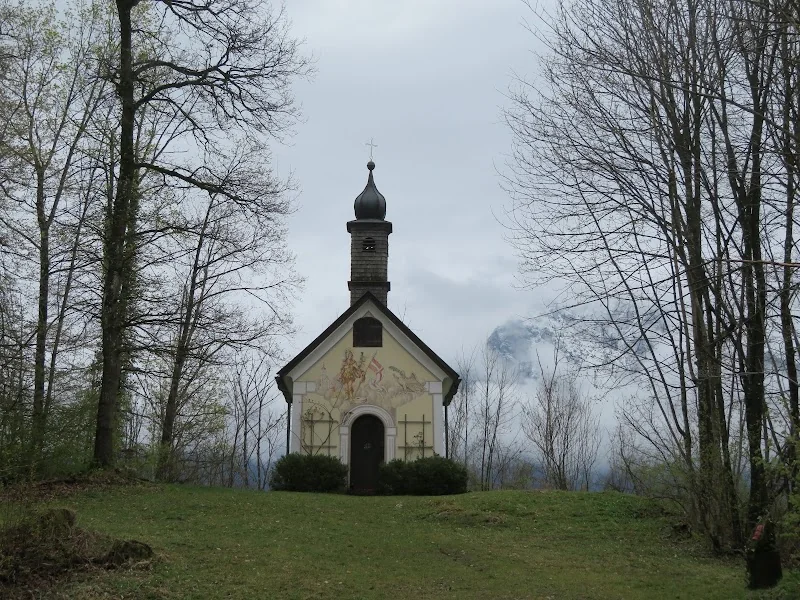
The Florianiberg Chapel in Oberaudorf is a quiet, historically significant place on the edge of the Bavarian Alps. Under the search terms Florianiberg Chapel, Florian Chapel, Florianikapelle Oberaudorf, and Chapel St. Florian, the same small house of worship is known. It stands on the Florianiberg in the area of Schweinberg and belongs to the municipality of Oberaudorf in the district of Rosenheim. The address is given as Schweinbergstraße 1, 83080 Oberaudorf-Schweinberg. Unlike large venues, the chapel is not a concert hall or a modern event location. Its significance lies in the connection of religious memory, regional history, monument-protected architecture, and a traditional Stations of the Cross.
Those who visit the Florianiberg will find a historical site that is particularly suitable for a quiet walk, a cultural-historical exploration, or a personal devotion. Fourteen Stations of the Cross line the path to the chapel, making the ascent an independent experience. The building itself is described as a gabled roof structure with a shingled bell tower and onion dome. The current chapel is dated to the year 1815 and is associated with an interior that shapes the character of the place. The location on the former Schweinberg also connects the chapel with the landscape and local history of Oberaudorf.
The Florianiberg Chapel is thus a destination for people who are not only looking for a photo motif but want to discover a place with multiple layers of meaning. It connects agricultural-rooted local history, Catholic piety, and the memory of earlier generations. Those searching for images of Chapel St. Florian in Oberaudorf will find views of the building, the bell tower, the path, and the surrounding landscape. For a visit, it is advisable to walk the path attentively and considerately, to respect the religious function of the place, and to inquire about current information on accessibility or services from the responsible parish association.
Discovering the Florianiberg Chapel and Florian Chapel in Oberaudorf
The most important search queries related to the site use different spellings but usually refer to the same destination: the Florianiberg Chapel near Oberaudorf. Florianiberg Chapel describes the location and the building. Florian Chapel and Florianikapelle refer to the patronage of Saint Florian. The designation Chapel St. Florian emphasizes the saint's name, while Florianiberg Oberaudorf establishes the connection to the community and the landscape. For visitors, this variety is helpful because it shows that the building can appear under several names in maps, image archives, church information, and tourist directories.
The chapel is not located as a freestanding building in a busy town center but on a historical ridge above or at the edge of the Oberaudorf settlement area. The Florianiberg is an eastern foothill of the Luegsteinwand and reaches a height of 528 meters according to historical data. The mountain was formerly called Schweinberg. This name is associated with the former use of the land: oaks, beeches, and mixed forest apparently provided a suitable environment where pigs from the village were driven to pasture or fattening. The later name Florianiberg became established in connection with the chapel and Saint Florian.
Saint Florian is traditionally associated with protection from fire. This significance fits the origin story of the place. After the great fire in Oberaudorf in August 1703, the parish community vowed to build a chapel in honor of Saint Florian. Thus, the house of worship was from the beginning more than just an arbitrary building along the way. It stood for gratitude, plea, and communal memory. To this day, this historical connection is a key reason why the Florianiberg Chapel holds a special position for Oberaudorf.
The chapel is therefore less suitable for a quick stopover than for a conscious encounter with the place. Those who take their time can perceive the various levels: the path through the landscape, the individual stations, the simple architecture, the religious signs, and the traditions from the community. It is precisely this connection that makes the Florian Chapel interesting for culture-interested guests, hikers, locals, and photographers.
History of the Florian Chapel and the Florianiberg
The history of the Florianiberg goes back further than the current chapel. Historical records state that the ridge was formerly called Schweinberg. The name Schweinberg appears in a property description of the Auerburg from the late 16th century. The landscape was characterized by woods, particularly oaks and beeches. In connection with the earlier agricultural use, it is explained that pigs from the village were driven to pasture on the mountain. Such field names often preserve clues about earlier forms of economy that are hardly recognizable in today's landscape.
A significant turning point was the great fire in Oberaudorf in August 1703. In this context, the parish community vowed to erect a chapel in honor of Saint Florian. Saint Florian is regarded in Catholic tradition as the patron saint against fire and is still particularly revered by firefighters today. Around 1710, a two-bay building with a three-sided closure was constructed according to church and local historical records. Paul Neuner is mentioned as a significant supporter or main initiator, whose property is said to have been spared by the fire.
However, the early chapel did not remain unchanged. At the beginning of the 19th century, the small house of worship was demolished at the request of the responsible district judge due to its dilapidation and the required structural cleanliness. The loss did not mean the end of the place. Just a few years later, restoration was made possible. For the consecration of the newly built Florian Chapel, Pastor Johann Evangelist Schaderer received the corresponding permission from the Archiepiscopal Ordinariate on March 14, 1818. The current structure is recorded in the monument documentation with the year of construction 1815.
This chronological sequence explains why both the time around 1710 and the year 1815 or the consecration in 1818 can be mentioned in representations. These are not necessarily contradictory statements but different reference points: the vow and the first building, the construction of the current chapel, and the canonical consecration. For regional history, this development is particularly enlightening because it shows how a religious place was created after a fire, later fell into disrepair, was rebuilt, and was cared for over generations.
The Florianiberg Chapel today belongs to the ecclesiastical environment of the Upper Inn Valley parish association and is also documented as a listed building. Its history is closely linked to Oberaudorf, the Auerburg, the Schweinberg, and the agricultural cultural landscape of the Inn Valley. Therefore, those who visit the chapel move through a place where landscape history, local history, and piety history come together directly.
Stations of the Cross on Florianiberg with 14 Stations
A central feature of the Florianiberg Chapel is the Stations of the Cross. A total of 14 Stations of the Cross accompany the path to the chapel and make the Florianiberg a religious path installation. The stations are not just complementary elements but shape the perception of the entire place. The visit does not begin only at the entrance of the chapel. The path upwards already leads through a sequence of images, niches, and small structures that invite pause and contemplation.
The creation of the stations is associated with the early 18th century in historical accounts. It is reported that Stations of the Cross were already established on the Floriansberg in 1729 and 1790. The stations of the current or later renewed installation are connected in the monument documentation with the year 1815. One station, the eleventh station, is additionally mentioned with the year 1817. These dates show that the Stations of the Cross did not emerge in a single short work step but were shaped over several construction and maintenance phases.
The individual Stations of the Cross were erected according to church traditions by various families and individuals from the surrounding area. These included innkeepers, farmers, craftsmen, and village communities from Oberaudorf, Niederaudorf, Mühlbach, and other localities. This private and communal sponsorship is a characteristic feature of historical Stations of the Cross. Each station could be associated with a family, a farm, or a local group. The Stations of the Cross thus became a visible expression of local piety and social responsibility.
Over time, the stations were renovated multiple times. In 1916, a comprehensive renewal took place at the suggestion of the cooperator Johann Neuhäusler. The station images were painted, among others, by Josef Behamgruber, a native of Oberaudorf. Later, individual images had to be replaced because the representations painted on metal plates had been damaged by rust. Local artists also contributed to the restoration. The tradition mentions Alois Kranz, Gusti Fritz, and Michael Brandmüller. This way, the Stations of the Cross remained not only architecturally but also artistically connected to the region.
In 2009, new Stations of the Cross images and a statue of Florian were consecrated in the chapel. These recent preservation measures show that the Stations of the Cross are not regarded as mere historical relics. They remain a vibrant part of religious and cultural life. Visitors should view the stations with distance and respect, refrain from touching any images or building parts, and maintain the tranquility of the path. It is precisely the combination of nature, movement, and contemplation that makes the Stations of the Cross on Florianiberg a special destination in Oberaudorf.
Construction, Monument, and Images of Chapel St. Florian
The Florianiberg Chapel is architecturally a rather small, regionally shaped sacred building. In the monument documentation, it is described as a gabled roof structure with a wooden, shingled bell tower and an onion dome. These elements give the building its characteristic silhouette. Especially the bell tower makes the chapel recognizable as a sacred building from some distance. The combination of gabled roof, wooden shingling, and onion dome fits into the Bavarian architectural culture of the alpine foothills.
The chapel is protected as a listed building. The monument-protected site includes not only the building structure and its furnishings but also the historical Stations of the Cross. In the official monument data, the chapel is recorded with the number D-1-87-157-27. This entry underscores that it is a historically significant building of the municipality of Oberaudorf. Monument status also means that changes, renovations, and interventions require special coordination. For visitors, this leads to the request to treat the building, the furnishings, and the stations with care.
Those searching for images of Chapel St. Florian Oberaudorf will find various perspectives of the building and its surroundings. Image collections show the chapel from the front, from side angles, or embedded in the landscape of the Florianiberg. Photographs often highlight the bell tower, the shingled construction, and the location between forest, path, and mountain landscape. Other photos focus on the Stations of the Cross or the distant view towards the Kaisergebirge. Care should always be taken regarding the respective image rights and licensing conditions, especially if photographs are to be reused or published.
The visual impact of the Florianiberg Chapel changes with the seasons. In spring and summer, the chapel stands in a green environment, while autumn images can highlight the connection of wood, foliage, and warm colors. In winter, the building can appear particularly calm and clear. However, such impressions are weather- and light-dependent and should not be understood as guaranteed views or fixed visiting conditions. The true uniqueness lies not in a spectacular staging but in the authentic, understated atmosphere of the place.
The interior furnishings also contribute to the significance of the chapel. Church sources report on a statue of Florian and renewed images of the Stations of the Cross. Opening hours of the interior, regular visiting opportunities, or special dates may change and are not guaranteed to be published permanently. Those wishing to see the interior or attend a service should obtain current information from the Upper Inn Valley parish association. This way, the visit can be reconciled with the protection of the monument and the religious use.
Directions, Location, and Visit at Schweinberg
The address of the Florianiberg Chapel is given as Schweinbergstraße 1, 83080 Oberaudorf-Schweinberg, Germany. This places the site in the area of Schweinberg and the municipality of Oberaudorf. For travel, it is advisable to use current digital maps or local signposts, as access options, private paths, construction sites, and parking regulations may change temporarily. The chapel is located on or at the Florianiberg and is to be understood as a destination of a path with Stations of the Cross, not as a classic parking lot directly in front of a large event venue.
The Schweinbergstraße opens up the area in Oberaudorf and may have the character of a side road or access road depending on the section. This means that drivers should pay particular attention to signage, road width, local traffic, and private properties. Parking should only occur where it is explicitly permitted. A generally published large visitor parking area directly at the chapel is not documented. Therefore, guests should not automatically assume they can drive up to the building or turn around there.
The Stations of the Cross make the visit a short cultural-historical path experience. Depending on the chosen starting point, personal pace, and path condition, the walk can take varying amounts of time. Sturdy footwear is advisable, especially in wet conditions, leaves, snow, or uneven ground. Families with children, older adults, and individuals with limited mobility should check in advance whether the path conditions and incline match their capabilities. The historical site is not to be equated with a fully barrier-free museum path.
For a considerate visit, simple principles apply: the stations and the chapel are not to be climbed, religious objects remain untouched, waste is taken away, and the tranquility of other visitors is respected. Dogs should only be brought in a manner that does not disturb other people, religious actions, and the surroundings. During services or devotions, the religious use takes precedence. Photographing can generally be interesting but should be done discreetly, especially when people are in prayer or at a church celebration.
The best preparation is to check accessibility, possible parking options, and current church notices before traveling. The weather also plays a role. In winter conditions, heavy rain, or storms, the path can be slippery or less pleasant. Those connecting a visit to the Florianiberg Chapel with a stay in Oberaudorf can plan the visit as a quiet component of a day in the region. The chapel is particularly suitable for people who want to connect history and landscape without seeking a heavily commercialized excursion site.
Religious Significance and Special Atmosphere at Florianiberg
The Florianiberg Chapel is closely connected to Saint Florian. In Catholic tradition, Florian particularly stands for protection from fire. For a community that was affected by a great fire, this patronage took on a concrete and communal significance. The chapel thus not only commemorates a religious figure but also a historical experience of the population. The vow after the fire of 1703 makes it understandable why the establishment of a house of worship on the mountain was seen as an expression of gratitude and plea.
The religious character of the place is evident on several levels. The chapel itself forms the destination of the path. The 14 stations structure the ascent and invite contemplation of the Passion of Christ. The statue of Florian and the renewed images of the Stations of the Cross connect the historical site with later times. At the same time, the place is not exclusively limited to regular church services. Even people without a fixed church affiliation can perceive the chapel as a quiet cultural and memorial site, as long as they respect its religious significance.
A special atmosphere arises from the absence of large productions. There is no broad event infrastructure, no large crowds of visitors, and no entertainment-oriented operation. Instead, the path, the small stations, the chapel, the landscape, and the transmitted stories shape the impression. This understated character is an essential part of the quality of the Florianiberg. It makes the place suitable for a short pause, a quiet devotion, a historical exploration, or a conscious photographic observation.
The name Florianiberg also carries significance. The older field name Schweinberg refers to the usage history of the landscape, while Florianiberg visibly makes the religious imprint of the place. Both names belong to the identity of the site. They tell of a time when village, forest, pasture, craft, church, and nature were more closely connected than today. Thus, those who walk the path encounter not just a single building but a small historical landscape ensemble.
On Florian Day or during special church occasions, the place can gain additional significance for the local community. Notices about devotions, services, or events should always be checked for current information with the responsible parish association. Dates may change, and not every church occasion occurs in the same form every year. However, the fundamental role of the chapel as a place of remembrance, veneration of Saint Florian, and regional tradition is certain.
Florianiberg Chapel as a Sight in Oberaudorf
Oberaudorf is located in the Upper Bavarian Inn Valley and is characterized by a diverse landscape between the foothills of the Alps and the Kaisergebirge. In this environment, the Florianiberg Chapel complements the offerings of historical and religious sights. It is not an isolated object but part of a larger local history, which includes the Auerburg, historical paths, churches, chapels, and agricultural buildings. Therefore, the visit can be well combined with a general exploration of the community without the chapel losing its own quiet identity.
A special added value lies in the connection of nature and history. Many sights are visited primarily for their architecture or for their landscape. At Florianiberg, both aspects come together. The path leads through an environment whose former names and uses are transmitted. The stations make the history of piety visible. The chapel showcases a regional building form. The view and the surroundings anchor the ensemble in the Inn Valley. This combination appeals to hikers, families, local historians, photography enthusiasts, and spiritually interested guests alike.
For tourist classification, it is sensible to regard the chapel as a small historical sight. It does not offer an exhibition with a ticket office, no extensive visitor center, and no fixed entertainment program. Information primarily arises from the site itself, church explanations, historical texts, and the perception of the site. Those wanting to learn more about the Florianiberg can additionally look for regional historical paths and information boards. In Oberaudorf, a historical path has been established that addresses the Florianiberg and the emergence and significance of the Stations of the Cross.
A visit can be designed differently depending on interest. Some guests consciously walk the Stations of the Cross station by station. Others are more interested in the architecture and photograph the bell tower or the chapel in the landscape. Still, others connect the place with a personal devotion. None of these forms need to be in the foreground as long as they are compatible with the dignity of the place. It is precisely the openness to various forms of approach that makes the Florianiberg Chapel a versatile destination.
Those traveling with children can explain the history of the former Schweinberg and the significance of Saint Florian in an age-appropriate manner. For history-interested adults, the years 1703, 1710, 1815, and 1818 provide a good entry point into the development of the site. Photography enthusiasts find motifs in the chapel, the stations, the path, and the natural environment. For religious visitors, the connection of the Stations of the Cross and the veneration of Florian is central. Thus, the same place can convey different impressions depending on the perspective.
Practical Information on Opening, Prayer, and Events
The Florianiberg Chapel is not a regular event venue with a published hall plan, ticket sales, or fixed seating capacity. Search terms like program, tickets, or seats therefore only partially fit this building. Those looking for an event or wedding venue should distinguish between the religious chapel and professional event spaces in Oberaudorf. Use for church celebrations, devotions, or special dates must be coordinated with the responsible Upper Inn Valley parish association.
Opening hours of the interior may depend on church dates, maintenance work, renovations, and local decisions. A permanently guaranteed daily opening is not indicated. Visitors should therefore not assume that the chapel can be entered at any time. Even with the door open, the interior is a sacred place, not a freely usable area. Quietness, appropriate clothing, and respectful handling of furnishings and images are a matter of course.
Those planning a devotion, service, or church celebration should contact the Upper Inn Valley parish association early. There, questions about dates, accessibility, liturgical use, and possible restrictions can be answered. For private celebrations, additional requirements regarding monument protection, participant numbers, musical arrangements, and behavior in the surroundings may apply. Since no general capacity is published, the number of participants should always be clarified individually.
Coordination may also be sensible for photographic projects or publications. Outdoor shots are a popular way to document the chapel and the Florianiberg. However, additional rules may apply for commercial shots, drone flights, larger groups, or setups. Drones should especially not be used without checking the applicable regulations. The protection of privacy, the monument, and the tranquility of the place should always take precedence over a spectacular image.
For a simple visit, good shoes, sufficient time, and a considerate attitude are usually sufficient. Those wishing to research historical details can familiarize themselves in advance with the history of the Florianiberg, the great fire of 1703, the reconstruction in the early 19th century, and the Stations of the Cross. This will make the visit more intense, as the individual elements of the site are perceived not just as buildings but as parts of a transmitted history.
Why Visiting the Florian Chapel is Worthwhile
The Florianiberg Chapel is a destination for people seeking an authentic connection of landscape, religion, and regional history. Its strength lies not in size or furnishings but in the density of meaning. In a small space, the former field name Schweinberg, the memory of the fire of 1703, the vow for Saint Florian, the chapel of 1815, the consecration of 1818, and the Stations of the Cross with 14 stations come together. This history is readable in the landscape and makes the place unmistakable.
The chapel also shows how regional culture is passed down through generations. Families, craftsmen, farmers, innkeepers, and village communities were involved in the creation and maintenance of the stations. Later renovations and new images kept the site alive. The connection of local initiative and church tradition is an essential part of the identity of the Florianiberg. It explains why the place is also important for the local history of Oberaudorf.
For photographers, the chapel offers various motifs without the place appearing artificially designed. The bell tower with the onion dome, the shingled components, the stations, the path, and the landscape create different photographic situations depending on the season. Those searching for images of Chapel St. Florian in Oberaudorf should not only view the building in isolation. Particularly expressive are shots that show the chapel in its historical and landscape context.
For walkers, the path is a quiet excursion with a manageable cultural-historical goal. For religious visitors, the Stations of the Cross offer an opportunity for reflection. For families, the story of Saint Florian can provide a child-friendly access to local history and customs. For guests of Oberaudorf, the chapel is a less noisy alternative to heavily frequented excursion destinations. These different perspectives can coexist and make the site versatile.
In the end, the Florianiberg Chapel remains a place that is not better experienced through as many program points as possible. Its effect arises from slowness: walking the path, contemplating the stations, perceiving the architectural form, reading the tradition, and letting the landscape have an effect on oneself. Those who respect this character will discover a special part of Oberaudorf in the Florian Chapel. It stands for remembrance, protection, gratitude, and the lasting connection of a community with its history.
Sources:
- Parish Association Upper Inn Valley – Florianiberg Chapel, History and Background
- Parish Association Upper Inn Valley – Stations of the Cross to Florianiberg, Part 2
- Chiemsee-Alpenland – Florianiberg Chapel in Oberaudorf
- Municipality of Oberaudorf – Integrated Urban Development Concept and Monument Data
- Wikimedia Commons – Category Florianikapelle Oberaudorf, Images and Location Information
- Wikimedia Commons – Chapel St. Florian Florianiberg Oberaudorf
- Oberaudorf Tourism – Historical Path and Florianiberg
Mehr anzeigenWeniger anzeigen
Florianiberg Chapel | Florian Chapel & Stations of the Cross
The Florianiberg Chapel in Oberaudorf is a quiet, historically significant place on the edge of the Bavarian Alps. Under the search terms Florianiberg Chapel, Florian Chapel, Florianikapelle Oberaudorf, and Chapel St. Florian, the same small house of worship is known. It stands on the Florianiberg in the area of Schweinberg and belongs to the municipality of Oberaudorf in the district of Rosenheim. The address is given as Schweinbergstraße 1, 83080 Oberaudorf-Schweinberg. Unlike large venues, the chapel is not a concert hall or a modern event location. Its significance lies in the connection of religious memory, regional history, monument-protected architecture, and a traditional Stations of the Cross.
Those who visit the Florianiberg will find a historical site that is particularly suitable for a quiet walk, a cultural-historical exploration, or a personal devotion. Fourteen Stations of the Cross line the path to the chapel, making the ascent an independent experience. The building itself is described as a gabled roof structure with a shingled bell tower and onion dome. The current chapel is dated to the year 1815 and is associated with an interior that shapes the character of the place. The location on the former Schweinberg also connects the chapel with the landscape and local history of Oberaudorf.
The Florianiberg Chapel is thus a destination for people who are not only looking for a photo motif but want to discover a place with multiple layers of meaning. It connects agricultural-rooted local history, Catholic piety, and the memory of earlier generations. Those searching for images of Chapel St. Florian in Oberaudorf will find views of the building, the bell tower, the path, and the surrounding landscape. For a visit, it is advisable to walk the path attentively and considerately, to respect the religious function of the place, and to inquire about current information on accessibility or services from the responsible parish association.
Discovering the Florianiberg Chapel and Florian Chapel in Oberaudorf
The most important search queries related to the site use different spellings but usually refer to the same destination: the Florianiberg Chapel near Oberaudorf. Florianiberg Chapel describes the location and the building. Florian Chapel and Florianikapelle refer to the patronage of Saint Florian. The designation Chapel St. Florian emphasizes the saint's name, while Florianiberg Oberaudorf establishes the connection to the community and the landscape. For visitors, this variety is helpful because it shows that the building can appear under several names in maps, image archives, church information, and tourist directories.
The chapel is not located as a freestanding building in a busy town center but on a historical ridge above or at the edge of the Oberaudorf settlement area. The Florianiberg is an eastern foothill of the Luegsteinwand and reaches a height of 528 meters according to historical data. The mountain was formerly called Schweinberg. This name is associated with the former use of the land: oaks, beeches, and mixed forest apparently provided a suitable environment where pigs from the village were driven to pasture or fattening. The later name Florianiberg became established in connection with the chapel and Saint Florian.
Saint Florian is traditionally associated with protection from fire. This significance fits the origin story of the place. After the great fire in Oberaudorf in August 1703, the parish community vowed to build a chapel in honor of Saint Florian. Thus, the house of worship was from the beginning more than just an arbitrary building along the way. It stood for gratitude, plea, and communal memory. To this day, this historical connection is a key reason why the Florianiberg Chapel holds a special position for Oberaudorf.
The chapel is therefore less suitable for a quick stopover than for a conscious encounter with the place. Those who take their time can perceive the various levels: the path through the landscape, the individual stations, the simple architecture, the religious signs, and the traditions from the community. It is precisely this connection that makes the Florian Chapel interesting for culture-interested guests, hikers, locals, and photographers.
History of the Florian Chapel and the Florianiberg
The history of the Florianiberg goes back further than the current chapel. Historical records state that the ridge was formerly called Schweinberg. The name Schweinberg appears in a property description of the Auerburg from the late 16th century. The landscape was characterized by woods, particularly oaks and beeches. In connection with the earlier agricultural use, it is explained that pigs from the village were driven to pasture on the mountain. Such field names often preserve clues about earlier forms of economy that are hardly recognizable in today's landscape.
A significant turning point was the great fire in Oberaudorf in August 1703. In this context, the parish community vowed to erect a chapel in honor of Saint Florian. Saint Florian is regarded in Catholic tradition as the patron saint against fire and is still particularly revered by firefighters today. Around 1710, a two-bay building with a three-sided closure was constructed according to church and local historical records. Paul Neuner is mentioned as a significant supporter or main initiator, whose property is said to have been spared by the fire.
However, the early chapel did not remain unchanged. At the beginning of the 19th century, the small house of worship was demolished at the request of the responsible district judge due to its dilapidation and the required structural cleanliness. The loss did not mean the end of the place. Just a few years later, restoration was made possible. For the consecration of the newly built Florian Chapel, Pastor Johann Evangelist Schaderer received the corresponding permission from the Archiepiscopal Ordinariate on March 14, 1818. The current structure is recorded in the monument documentation with the year of construction 1815.
This chronological sequence explains why both the time around 1710 and the year 1815 or the consecration in 1818 can be mentioned in representations. These are not necessarily contradictory statements but different reference points: the vow and the first building, the construction of the current chapel, and the canonical consecration. For regional history, this development is particularly enlightening because it shows how a religious place was created after a fire, later fell into disrepair, was rebuilt, and was cared for over generations.
The Florianiberg Chapel today belongs to the ecclesiastical environment of the Upper Inn Valley parish association and is also documented as a listed building. Its history is closely linked to Oberaudorf, the Auerburg, the Schweinberg, and the agricultural cultural landscape of the Inn Valley. Therefore, those who visit the chapel move through a place where landscape history, local history, and piety history come together directly.
Stations of the Cross on Florianiberg with 14 Stations
A central feature of the Florianiberg Chapel is the Stations of the Cross. A total of 14 Stations of the Cross accompany the path to the chapel and make the Florianiberg a religious path installation. The stations are not just complementary elements but shape the perception of the entire place. The visit does not begin only at the entrance of the chapel. The path upwards already leads through a sequence of images, niches, and small structures that invite pause and contemplation.
The creation of the stations is associated with the early 18th century in historical accounts. It is reported that Stations of the Cross were already established on the Floriansberg in 1729 and 1790. The stations of the current or later renewed installation are connected in the monument documentation with the year 1815. One station, the eleventh station, is additionally mentioned with the year 1817. These dates show that the Stations of the Cross did not emerge in a single short work step but were shaped over several construction and maintenance phases.
The individual Stations of the Cross were erected according to church traditions by various families and individuals from the surrounding area. These included innkeepers, farmers, craftsmen, and village communities from Oberaudorf, Niederaudorf, Mühlbach, and other localities. This private and communal sponsorship is a characteristic feature of historical Stations of the Cross. Each station could be associated with a family, a farm, or a local group. The Stations of the Cross thus became a visible expression of local piety and social responsibility.
Over time, the stations were renovated multiple times. In 1916, a comprehensive renewal took place at the suggestion of the cooperator Johann Neuhäusler. The station images were painted, among others, by Josef Behamgruber, a native of Oberaudorf. Later, individual images had to be replaced because the representations painted on metal plates had been damaged by rust. Local artists also contributed to the restoration. The tradition mentions Alois Kranz, Gusti Fritz, and Michael Brandmüller. This way, the Stations of the Cross remained not only architecturally but also artistically connected to the region.
In 2009, new Stations of the Cross images and a statue of Florian were consecrated in the chapel. These recent preservation measures show that the Stations of the Cross are not regarded as mere historical relics. They remain a vibrant part of religious and cultural life. Visitors should view the stations with distance and respect, refrain from touching any images or building parts, and maintain the tranquility of the path. It is precisely the combination of nature, movement, and contemplation that makes the Stations of the Cross on Florianiberg a special destination in Oberaudorf.
Construction, Monument, and Images of Chapel St. Florian
The Florianiberg Chapel is architecturally a rather small, regionally shaped sacred building. In the monument documentation, it is described as a gabled roof structure with a wooden, shingled bell tower and an onion dome. These elements give the building its characteristic silhouette. Especially the bell tower makes the chapel recognizable as a sacred building from some distance. The combination of gabled roof, wooden shingling, and onion dome fits into the Bavarian architectural culture of the alpine foothills.
The chapel is protected as a listed building. The monument-protected site includes not only the building structure and its furnishings but also the historical Stations of the Cross. In the official monument data, the chapel is recorded with the number D-1-87-157-27. This entry underscores that it is a historically significant building of the municipality of Oberaudorf. Monument status also means that changes, renovations, and interventions require special coordination. For visitors, this leads to the request to treat the building, the furnishings, and the stations with care.
Those searching for images of Chapel St. Florian Oberaudorf will find various perspectives of the building and its surroundings. Image collections show the chapel from the front, from side angles, or embedded in the landscape of the Florianiberg. Photographs often highlight the bell tower, the shingled construction, and the location between forest, path, and mountain landscape. Other photos focus on the Stations of the Cross or the distant view towards the Kaisergebirge. Care should always be taken regarding the respective image rights and licensing conditions, especially if photographs are to be reused or published.
The visual impact of the Florianiberg Chapel changes with the seasons. In spring and summer, the chapel stands in a green environment, while autumn images can highlight the connection of wood, foliage, and warm colors. In winter, the building can appear particularly calm and clear. However, such impressions are weather- and light-dependent and should not be understood as guaranteed views or fixed visiting conditions. The true uniqueness lies not in a spectacular staging but in the authentic, understated atmosphere of the place.
The interior furnishings also contribute to the significance of the chapel. Church sources report on a statue of Florian and renewed images of the Stations of the Cross. Opening hours of the interior, regular visiting opportunities, or special dates may change and are not guaranteed to be published permanently. Those wishing to see the interior or attend a service should obtain current information from the Upper Inn Valley parish association. This way, the visit can be reconciled with the protection of the monument and the religious use.
Directions, Location, and Visit at Schweinberg
The address of the Florianiberg Chapel is given as Schweinbergstraße 1, 83080 Oberaudorf-Schweinberg, Germany. This places the site in the area of Schweinberg and the municipality of Oberaudorf. For travel, it is advisable to use current digital maps or local signposts, as access options, private paths, construction sites, and parking regulations may change temporarily. The chapel is located on or at the Florianiberg and is to be understood as a destination of a path with Stations of the Cross, not as a classic parking lot directly in front of a large event venue.
The Schweinbergstraße opens up the area in Oberaudorf and may have the character of a side road or access road depending on the section. This means that drivers should pay particular attention to signage, road width, local traffic, and private properties. Parking should only occur where it is explicitly permitted. A generally published large visitor parking area directly at the chapel is not documented. Therefore, guests should not automatically assume they can drive up to the building or turn around there.
The Stations of the Cross make the visit a short cultural-historical path experience. Depending on the chosen starting point, personal pace, and path condition, the walk can take varying amounts of time. Sturdy footwear is advisable, especially in wet conditions, leaves, snow, or uneven ground. Families with children, older adults, and individuals with limited mobility should check in advance whether the path conditions and incline match their capabilities. The historical site is not to be equated with a fully barrier-free museum path.
For a considerate visit, simple principles apply: the stations and the chapel are not to be climbed, religious objects remain untouched, waste is taken away, and the tranquility of other visitors is respected. Dogs should only be brought in a manner that does not disturb other people, religious actions, and the surroundings. During services or devotions, the religious use takes precedence. Photographing can generally be interesting but should be done discreetly, especially when people are in prayer or at a church celebration.
The best preparation is to check accessibility, possible parking options, and current church notices before traveling. The weather also plays a role. In winter conditions, heavy rain, or storms, the path can be slippery or less pleasant. Those connecting a visit to the Florianiberg Chapel with a stay in Oberaudorf can plan the visit as a quiet component of a day in the region. The chapel is particularly suitable for people who want to connect history and landscape without seeking a heavily commercialized excursion site.
Religious Significance and Special Atmosphere at Florianiberg
The Florianiberg Chapel is closely connected to Saint Florian. In Catholic tradition, Florian particularly stands for protection from fire. For a community that was affected by a great fire, this patronage took on a concrete and communal significance. The chapel thus not only commemorates a religious figure but also a historical experience of the population. The vow after the fire of 1703 makes it understandable why the establishment of a house of worship on the mountain was seen as an expression of gratitude and plea.
The religious character of the place is evident on several levels. The chapel itself forms the destination of the path. The 14 stations structure the ascent and invite contemplation of the Passion of Christ. The statue of Florian and the renewed images of the Stations of the Cross connect the historical site with later times. At the same time, the place is not exclusively limited to regular church services. Even people without a fixed church affiliation can perceive the chapel as a quiet cultural and memorial site, as long as they respect its religious significance.
A special atmosphere arises from the absence of large productions. There is no broad event infrastructure, no large crowds of visitors, and no entertainment-oriented operation. Instead, the path, the small stations, the chapel, the landscape, and the transmitted stories shape the impression. This understated character is an essential part of the quality of the Florianiberg. It makes the place suitable for a short pause, a quiet devotion, a historical exploration, or a conscious photographic observation.
The name Florianiberg also carries significance. The older field name Schweinberg refers to the usage history of the landscape, while Florianiberg visibly makes the religious imprint of the place. Both names belong to the identity of the site. They tell of a time when village, forest, pasture, craft, church, and nature were more closely connected than today. Thus, those who walk the path encounter not just a single building but a small historical landscape ensemble.
On Florian Day or during special church occasions, the place can gain additional significance for the local community. Notices about devotions, services, or events should always be checked for current information with the responsible parish association. Dates may change, and not every church occasion occurs in the same form every year. However, the fundamental role of the chapel as a place of remembrance, veneration of Saint Florian, and regional tradition is certain.
Florianiberg Chapel as a Sight in Oberaudorf
Oberaudorf is located in the Upper Bavarian Inn Valley and is characterized by a diverse landscape between the foothills of the Alps and the Kaisergebirge. In this environment, the Florianiberg Chapel complements the offerings of historical and religious sights. It is not an isolated object but part of a larger local history, which includes the Auerburg, historical paths, churches, chapels, and agricultural buildings. Therefore, the visit can be well combined with a general exploration of the community without the chapel losing its own quiet identity.
A special added value lies in the connection of nature and history. Many sights are visited primarily for their architecture or for their landscape. At Florianiberg, both aspects come together. The path leads through an environment whose former names and uses are transmitted. The stations make the history of piety visible. The chapel showcases a regional building form. The view and the surroundings anchor the ensemble in the Inn Valley. This combination appeals to hikers, families, local historians, photography enthusiasts, and spiritually interested guests alike.
For tourist classification, it is sensible to regard the chapel as a small historical sight. It does not offer an exhibition with a ticket office, no extensive visitor center, and no fixed entertainment program. Information primarily arises from the site itself, church explanations, historical texts, and the perception of the site. Those wanting to learn more about the Florianiberg can additionally look for regional historical paths and information boards. In Oberaudorf, a historical path has been established that addresses the Florianiberg and the emergence and significance of the Stations of the Cross.
A visit can be designed differently depending on interest. Some guests consciously walk the Stations of the Cross station by station. Others are more interested in the architecture and photograph the bell tower or the chapel in the landscape. Still, others connect the place with a personal devotion. None of these forms need to be in the foreground as long as they are compatible with the dignity of the place. It is precisely the openness to various forms of approach that makes the Florianiberg Chapel a versatile destination.
Those traveling with children can explain the history of the former Schweinberg and the significance of Saint Florian in an age-appropriate manner. For history-interested adults, the years 1703, 1710, 1815, and 1818 provide a good entry point into the development of the site. Photography enthusiasts find motifs in the chapel, the stations, the path, and the natural environment. For religious visitors, the connection of the Stations of the Cross and the veneration of Florian is central. Thus, the same place can convey different impressions depending on the perspective.
Practical Information on Opening, Prayer, and Events
The Florianiberg Chapel is not a regular event venue with a published hall plan, ticket sales, or fixed seating capacity. Search terms like program, tickets, or seats therefore only partially fit this building. Those looking for an event or wedding venue should distinguish between the religious chapel and professional event spaces in Oberaudorf. Use for church celebrations, devotions, or special dates must be coordinated with the responsible Upper Inn Valley parish association.
Opening hours of the interior may depend on church dates, maintenance work, renovations, and local decisions. A permanently guaranteed daily opening is not indicated. Visitors should therefore not assume that the chapel can be entered at any time. Even with the door open, the interior is a sacred place, not a freely usable area. Quietness, appropriate clothing, and respectful handling of furnishings and images are a matter of course.
Those planning a devotion, service, or church celebration should contact the Upper Inn Valley parish association early. There, questions about dates, accessibility, liturgical use, and possible restrictions can be answered. For private celebrations, additional requirements regarding monument protection, participant numbers, musical arrangements, and behavior in the surroundings may apply. Since no general capacity is published, the number of participants should always be clarified individually.
Coordination may also be sensible for photographic projects or publications. Outdoor shots are a popular way to document the chapel and the Florianiberg. However, additional rules may apply for commercial shots, drone flights, larger groups, or setups. Drones should especially not be used without checking the applicable regulations. The protection of privacy, the monument, and the tranquility of the place should always take precedence over a spectacular image.
For a simple visit, good shoes, sufficient time, and a considerate attitude are usually sufficient. Those wishing to research historical details can familiarize themselves in advance with the history of the Florianiberg, the great fire of 1703, the reconstruction in the early 19th century, and the Stations of the Cross. This will make the visit more intense, as the individual elements of the site are perceived not just as buildings but as parts of a transmitted history.
Why Visiting the Florian Chapel is Worthwhile
The Florianiberg Chapel is a destination for people seeking an authentic connection of landscape, religion, and regional history. Its strength lies not in size or furnishings but in the density of meaning. In a small space, the former field name Schweinberg, the memory of the fire of 1703, the vow for Saint Florian, the chapel of 1815, the consecration of 1818, and the Stations of the Cross with 14 stations come together. This history is readable in the landscape and makes the place unmistakable.
The chapel also shows how regional culture is passed down through generations. Families, craftsmen, farmers, innkeepers, and village communities were involved in the creation and maintenance of the stations. Later renovations and new images kept the site alive. The connection of local initiative and church tradition is an essential part of the identity of the Florianiberg. It explains why the place is also important for the local history of Oberaudorf.
For photographers, the chapel offers various motifs without the place appearing artificially designed. The bell tower with the onion dome, the shingled components, the stations, the path, and the landscape create different photographic situations depending on the season. Those searching for images of Chapel St. Florian in Oberaudorf should not only view the building in isolation. Particularly expressive are shots that show the chapel in its historical and landscape context.
For walkers, the path is a quiet excursion with a manageable cultural-historical goal. For religious visitors, the Stations of the Cross offer an opportunity for reflection. For families, the story of Saint Florian can provide a child-friendly access to local history and customs. For guests of Oberaudorf, the chapel is a less noisy alternative to heavily frequented excursion destinations. These different perspectives can coexist and make the site versatile.
In the end, the Florianiberg Chapel remains a place that is not better experienced through as many program points as possible. Its effect arises from slowness: walking the path, contemplating the stations, perceiving the architectural form, reading the tradition, and letting the landscape have an effect on oneself. Those who respect this character will discover a special part of Oberaudorf in the Florian Chapel. It stands for remembrance, protection, gratitude, and the lasting connection of a community with its history.
Sources:
- Parish Association Upper Inn Valley – Florianiberg Chapel, History and Background
- Parish Association Upper Inn Valley – Stations of the Cross to Florianiberg, Part 2
- Chiemsee-Alpenland – Florianiberg Chapel in Oberaudorf
- Municipality of Oberaudorf – Integrated Urban Development Concept and Monument Data
- Wikimedia Commons – Category Florianikapelle Oberaudorf, Images and Location Information
- Wikimedia Commons – Chapel St. Florian Florianiberg Oberaudorf
- Oberaudorf Tourism – Historical Path and Florianiberg
Upcoming Events
No events found
Frequently Asked Questions
Reviews
No reviews found