emilian
10. February 2024
Top

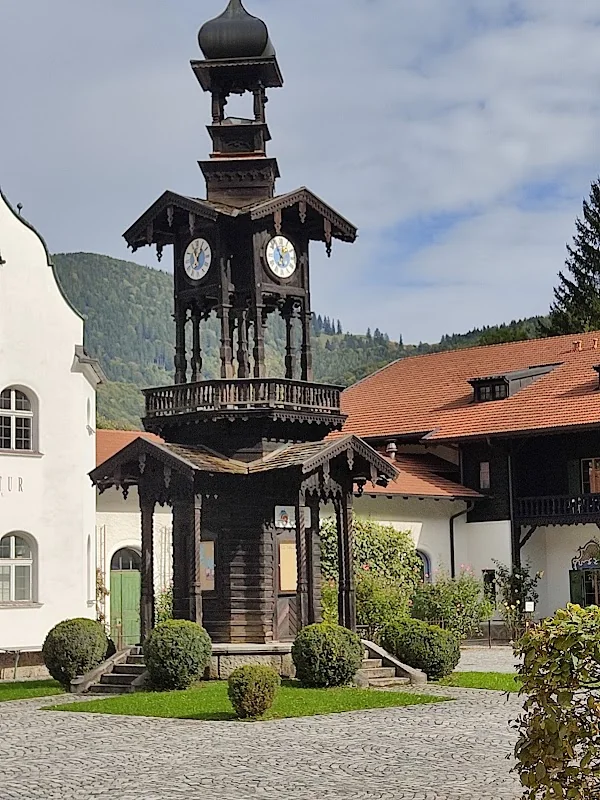
The Festhalle Hohenaschau is a versatile event location in the district of Hohenaschau in Aschau im Chiemgau. It is located below Hohenaschau Castle, at the foot of the Kampenwand, and amidst a landscape characterized by mountains, historic buildings, and the Priental valley. This combination of a historically rich ambiance, generous spaces, and modern event equipment makes the place a special address for celebrations and cultural events.
Whether concert, theater performance, local evening, wedding, corporate event, conference, or anniversary: the former riding hall can be used for various event formats. According to official information, events with up to 572 seats or up to 800 standing places are possible. The seating and room design are arranged individually depending on the occasion. Additionally, there is a spacious forecourt, a large parking lot, barrier-free access, barrier-free restrooms, catering options, and artist dressing rooms with shower and toilet.
For visitors, the location is an important plus point. The Festhalle is not located in an anonymous industrial area but in a historic ensemble directly below the castle. The Schlossbergalm, old linden trees, natural stone walls, and the view of the Chiemgau mountains create an atmosphere that is rarely found in an ordinary multipurpose hall. Therefore, those seeking the Festhalle Hohenaschau for an event discover a location that combines practical functions with a distinctive regional character.
The search queries around Festhalle Hohenaschau events, Fest Hohenaschau, and Festhalle Aschau events show that visitors are mainly looking for the current program and the different types of events. The Festhalle is part of the cultural life in Aschau im Chiemgau and is used for a wide range of dates. This includes concerts, theater, local evenings, receptions, weddings, corporate events, seminars, lectures, and private celebrations. Depending on the season, additional formats are announced in the regional event calendar.
An important focus is on events that reflect the character of the Chiemgau. Local evenings, traditional festivals, and musical events can make regional culture experienceable in a historic setting. At the same time, the hall offers sufficient flexibility for modern events. Concerts can be organized with seating or as standing events, while a reception or corporate event can be more focused on interaction, catering, and communication.
Cultural and social events also regularly take place in the surrounding area of Aschau. The municipality refers to beer festivals, spa concerts by the brass band, sports events, exhibitions, alpine dances, and folk theater. The Festhalle Hohenaschau is situated in an environment where tradition and tourism are closely linked. For visitors, this means that an event in the hall can be well combined with a stay in Aschau, a walk through Hohenaschau, or a view of Hohenaschau Castle.
Those looking for the current program should always check the official event calendars of the municipality of Aschau im Chiemgau, the Tourist Information, and the respective event organizer. A general annual program cannot be permanently established, as concerts, festivals, weddings, and closed events take place at different times. For tickets, the notes of the respective organizer apply. For individual cultural events, ticket sales may occur through regional ticket systems, while private celebrations and closed dates are not publicly bookable.
The location below the castle also gives smaller events a special effect. A concert receives a historical backdrop, a local evening remains closely connected to the place, and a wedding can combine indoor spaces, forecourt, and the surroundings. This connection of program diversity and regional atmosphere explains why the Festhalle is perceived not only as a hall but as a venue for special occasions.
The parking lot at the Festhalle Hohenaschau is one of the most sought-after practical information. The official information mentions a large parking lot that is also suitable for buses. Thus, the location provides important infrastructure for events with many guests and for group travel. The postal address is given as An der Festhalle 6, 83229 Aschau im Chiemgau. In some local and event listings, it appears shortened as An der Festhalle without a house number; for navigation, the complete event address should be used.
The Festhalle is located in the district of Hohenaschau, north or below Hohenaschau Castle. Visitors reach the site via the local access road towards the castle and Festhalle. Since the traffic situation can be busier during larger events, weddings, or festivals, it is advisable to allow enough time for arrival and parking search. For groups, tour buses, or special setups, access should be coordinated in advance with the organizer.
The official location information indicates that there are sufficient parking spaces available. At the same time, the specific availability, possible fees, or special restrictions may depend on the respective event day. Therefore, visitors should pay attention to the notes on the ticket, in the event calendar, or with the event organization. For castle tours and other offers in the area, additional regulations may apply. A parking space near the Festhalle does not automatically mean that every area is freely accessible for every event or use.
The connection to Aschau im Chiemgau is also interesting for excursions. Hohenaschau is located in a touristy area at the foot of the Kampenwand. Those who have time before or after an event can explore the historic surroundings or combine their stay with a visit to local gastronomy. The Festhalle and the Schlossbergalm are located in the same event area, allowing for arrival, reception, catering, and celebration to be organized in a closely connected location.
For people arriving by public transport or without their own car, the specific connection should be checked depending on the event date. Timetables, stops, and seasonal offers may change. Therefore, the official information from the municipality, the regional transport association, and the organizer are the most reliable points of contact. For evening events, special attention should be paid to the return journey, as not every connection is available late at night in rural areas.
The travel planning should also take into account that the Festhalle is located in a historic and environmentally sensitive setting. Access roads, emergency routes, and designated parking spaces must be kept clear. For larger celebrations, guides, signage, or special parking regulations may be employed. Those arriving with strollers, wheelchairs, or limited mobility should inquire about the barrier-free access and the nearest suitable parking space in advance with the organizer.
The capacity is a central decision criterion for organizers. The official information states up to 572 seats and up to 800 standing places. These numbers describe different event variants and should not be understood as the number of simultaneously usable seats and standing places. Depending on the seating arrangement, stage, dance floor, catering area, technology, safety requirements, and event process, the actually usable capacity may vary.
The room and seating design is arranged individually. This allows the Festhalle to respond to various occasions. Different requirements apply for a concert with row seating than for a local evening with tables, a wedding with a dance floor, or a corporate event with a lecture and buffet. Organizers should consider not only the desired number of people but also the stage, technology, catering, wardrobe, entry, escape routes, and the timing during planning.
According to the official description, the hall has a total area of approximately 600 square meters, of which about 150 square meters are allocated to the stage. Additionally, an attached winter garden is mentioned, which can provide space for approximately 30 to 80 people depending on usage. The spacious hall forecourt can also be included for certain formats and is described with a capacity of up to 2,000 people. The specific use of the outdoor area naturally depends on permits, weather, safety concepts, and the type of event.
The equipment includes modern stage technology and full equipment for events. The hall also has artist dressing rooms with shower and toilet. For productions with music, theater, or moderation, these rooms are practical because artists and participants receive their own retreat area. Technical details such as sound system, lighting, stage setup, power connections, or additional rental equipment should be clarified directly with the operator and the respective event planning.
There are also catering options for guest service. Thus, the Festhalle can be used not only as an empty hall but as an organizable event location for different processes. At weddings, reception, dining, and celebration can be combined. At corporate events, lectures, break catering, and communal dining can be combined. At concerts or theater events, catering can take place before, during the break, or in the outdoor area, depending on the concept.
Barrier-free access and restrooms are explicitly mentioned in the official brief information. However, specific requirements should always be discussed in advance, as accessibility at an event encompasses more than just access to the building. Relevant may be the position of wheelchair spaces, the distance to restrooms, the condition of the forecourt, assistance at entry, and the accessibility of catering areas. Timely coordination creates more security for guests and organizers.
The Festhalle Hohenaschau is closely connected to the Schlossbergalm Hohenaschau and the historic surroundings of Hohenaschau Castle. The location is situated in an area characterized by a historic natural stone wall, open meadows, and old linden trees. The Schlossbergalm is located directly next to the Festhalle and offers a beer garden in a park-like setting with a view of the surrounding mountains and Hohenaschau Castle. This creates an event area for visitors that connects indoor and outdoor spaces.
The history of the hall dates back to 1895. At that time, the Aschauer castle owner Theodor von Cramer-Klett had a generous riding facility with stables built on the north side of the castle hill of Hohenaschau. The area covered approximately 18,000 square meters according to official information. The original function as a riding facility explains the special character of the building and the generous spatial effect that is still associated with the location today.
During World War I, the former riding facility was used as a private hospital. In 1935, the owner made the premises available to the Aschau Tourist Association for events. During this time, the riding hall developed into a fixed part of local event life. The use as a Festhalle thus connects to a long tradition that ranges from the noble past through the tourist development to modern event use.
Over the years, the buildings showed clear signs of wear. Especially the areas not directly used in the middle and eastern side wings were in need of renovation. The interior of the hall also no longer met contemporary expectations for an event location. In 1997, the idea arose to lease and renovate the Festhalle including the parking areas in the long term. The renovation work by the municipality of Aschau im Chiemgau was completed in June 1999.
The modernization changed the functionality without giving up the historical character. This is a significant advantage for organizers and guests. The hall offers contemporary conditions for stage, catering, and visitor organization while remaining visually and atmospherically connected to the historic ensemble. This creates an impression at a celebration that goes far beyond the mere practicality of a modern hall.
The surroundings of Hohenaschau Castle and Kampenwand enhance the regional identity. An event in the Festhalle can be connected with Bavarian tradition, Chiemgau landscape, and the historical traces of the place. This is particularly interesting for weddings, family celebrations, corporate events with regional reference, and cultural formats. Photos also benefit from the backdrop of natural stone, old buildings, castle views, and mountain landscapes. At the same time, visitors should note that Hohenaschau Castle and its areas may be subject to their own regulations and access times.
The Festhalle Hohenaschau is suitable for private and business events because it combines various room sizes and usage scenarios. At a wedding, reception, dining, music, and dancing can be organized within one location. The historic setting below Hohenaschau Castle gives the day a unique atmosphere, while the forecourt and surroundings offer additional possibilities for arrival, group photos, or an outdoor reception.
For weddings, the combination of Festhalle and Schlossbergalm is particularly interesting. The Schlossbergalm is located directly next to the hall and complements the event offer with a gastronomically oriented area with a beer garden and mountain view. Depending on the concept, indoor and outdoor areas can be used differently. Whether a sparkling wine reception, communal dining, coffee break, or casual conclusion is possible depends on the agreement with the operator, the number of guests, the weather, and the organizational framework.
Corporate events, conferences, and seminars can also take place in the hall. The location provides space for lectures, presentations, receptions, and shared meals. The historic surroundings can serve as a conscious contrast to classic conference hotels. A business appointment can be combined with a stay in the Chiemgau landscape without having to forgo a central event space with stage, technology, and catering.
For corporate events, it should be clarified early on what seating arrangement and technical equipment are needed. A lecture with row seating, a conference with table groups, and an evening event with a dance floor present different requirements. Delivery, setup times, parking options for participants, bus access, catering, and teardown should also be part of the schedule. The operator can check based on this information which rooms and services are available for the desired date.
Family celebrations, anniversaries, and company parties benefit from flexible room design. The official description mentions Christmas parties, birthday parties, anniversaries, company parties, receptions, and company outings as possible uses. The wide range shows that the Festhalle is not limited to a single event genre. The individual planning of the number of people, seating, stage, food, music, and desired atmosphere is crucial.
For larger public festivals, the hall forecourt and the surrounding area can play an important role. The outdoor area creates space for arrival, encounters, and additional program points. However, when holding events outdoors, weather, safety, noise protection, emergency routes, and permits must be considered. The stated capacity of the forecourt is therefore not automatically a visitor number for any event but an indication of the spatial possibilities of the area.
Those wishing to rent the Festhalle Hohenaschau should contact as early as possible. Particularly sought-after dates for weddings, summer festivals, and year-end celebrations are planned long in advance. For an inquiry, date, type of event, expected number of guests, desired seating, catering, technology, and required setup times are helpful. Based on this, operators and organizers can clarify whether the desired arrangement is compatible with the spatial and organizational framework.
The search query Festhalle Hohenaschau photos is understandable because the location thrives on its surroundings. Images can show the historic character of the former riding hall, the size of the area, the natural stone wall, the parking lot, the Schlossbergalm, and the view of Hohenaschau Castle. For organizers, photos provide initial orientation but do not replace a visit. The effect of a hall depends on seating, lighting, decoration, and event setup.
Particularly striking is the ensemble of Festhalle, Schlossbergalm, and castle hill. Under old linden trees and near historic buildings, a landscape-shaped ambiance is created. The mountains of the Chiemgau form a natural backdrop, while Hohenaschau Castle makes the place unmistakable. This combination can be used for invitations, event photos, and the design of a celebration, provided that private areas, event rights, and the respective guidelines on site are taken into account.
Guests should plan comfortable clothing appropriate for the weather for an event. Even if the central part of the program takes place in the hall, paths, forecourt, and outdoor areas may be used. In case of rain or winter conditions, the ground and paths may be different from dry weather. For wheelchair users, people with walking aids, and families with strollers, it is advisable to inquire in advance about the specific route to the entrance and the available assistance.
At public events, tickets, entry times, and notes from the organizer should be observed. The Festhalle itself is not automatically freely accessible at all times. Some dates are public, while other events such as weddings, corporate parties, or private anniversaries take place in closed settings. The opening hours of the Schlossbergalm or other offers in Hohenaschau may also vary seasonally. A prior check prevents unnecessary trips.
Those traveling from the surrounding area can combine their visit with other destinations in Aschau im Chiemgau. The area is characterized by its proximity to the Kampenwand, the Priental valley, and the historic castle ensemble. Therefore, an event day can be combined with a walk, a restaurant visit, or a tourist stay. When planning excursions and hikes, visitors should consider the current weather conditions, trail conditions, and seasonal opening hours.
For organizers, a visit at a comparable time of day to the planned event is recommended. This allows for a realistic assessment of lighting conditions, access, parking situation, and outdoor areas. At an evening event, it can be checked how guests get from the parking lot to the hall and what lighting is required. For a summer wedding, shaded areas, weather alternatives, and the use of the forecourt are important topics. In contrast, at a concert, acoustics, stage, entry, wardrobe, and seating arrangement are the focus.
The Festhalle Hohenaschau thus combines several advantages: historical substance, flexible usability, a striking landscape, parking options, and equipment for different event forms. The best planning arises when the official information is supplemented with a specific inquiry. The number of people, room layout, technical requirements, catering, and accessibility should not be assumed generically but confirmed for the respective date.
For the reservation of the Festhalle Hohenaschau, the Tourist Information Aschau im Chiemgau and the Festhallenservice are named as contacts. The Tourist Information assists with questions about the location and is available at the specified times. The operator Festhallenservice is responsible for specific event inquiries, date coordination, and organization on site. Contact details and current availability should be checked again on the official pages before a binding booking.
A complete inquiry should contain as much information as possible. This includes the desired event date, an alternative date, the type of event, the expected number of visitors, and the desired seating or standing solution. Additionally, organizers should specify whether a stage, sound and lighting technology, artist dressing rooms, catering, dance floor, buffet, outdoor area, or special accessibility requirements are needed.
For public events, questions about tickets, entry, box office, security concept, and signage are also relevant. For private events, menu, beverage service, decoration, music, setup, and teardown are often the focus. Corporate clients may require precise seating arrangements, projection options, break catering, and a clear timeline. The flexible orientation of the hall is an advantage but requires individual coordination.
The capacity information of up to 572 seats and up to 800 standing places provides initial orientation. However, for a binding plan, the desired room layout and safety requirements must be considered. A stage, tables, dance floor, buffet, technology, and escape routes reduce the freely available area. Therefore, the maximum number should not automatically be set as a target size for every event.
Parking planning is also part of the preparation. For an event with many guests, it should be clarified how the access will be signposted, whether buses are expected, which parking spaces may be used, and whether a fee regulation applies. For weddings, reserved areas for service providers or older guests may be sensible. For public events, guides and a separate organization of delivery and visitor access can improve the process.
The historic surroundings require a responsible approach to the building and grounds. Decorations, fixtures, technology, fire, fog, outdoor setups, and advertising should only be used after consultation. Organizers should also consider the residents, guests of other offers, and the surrounding landscape. The operator can inform which guidelines apply for setup, teardown, cleaning, and use of outdoor areas.
Those visiting the Festhalle Hohenaschau for the first time will find a location that impresses not only with its size but also with its history and location. The former riding hall has been further developed as an event venue without losing its historical character. Today, it offers space for culture, tradition, private celebrations, and business encounters. With good preparation, the potential of the hall can be utilized while preserving the special atmosphere of Hohenaschau.
No events found
10. February 2024
Top
9. February 2024
Cool location
10. October 2026
Stunning place and natural backdrop.
22. April 2026
Street food and flea market. Great setting. Awesome vibe. Delicious food 😋
23. July 2024
We were guests at the LSH prom. The food was great and the service was super nice and fast. It's really highly recommended for events.