
Rosenheim
Königstraße 7b, 83022 Rosenheim, Deutschland
Citizen Foundation Rosenheim | Old Printing House & Events
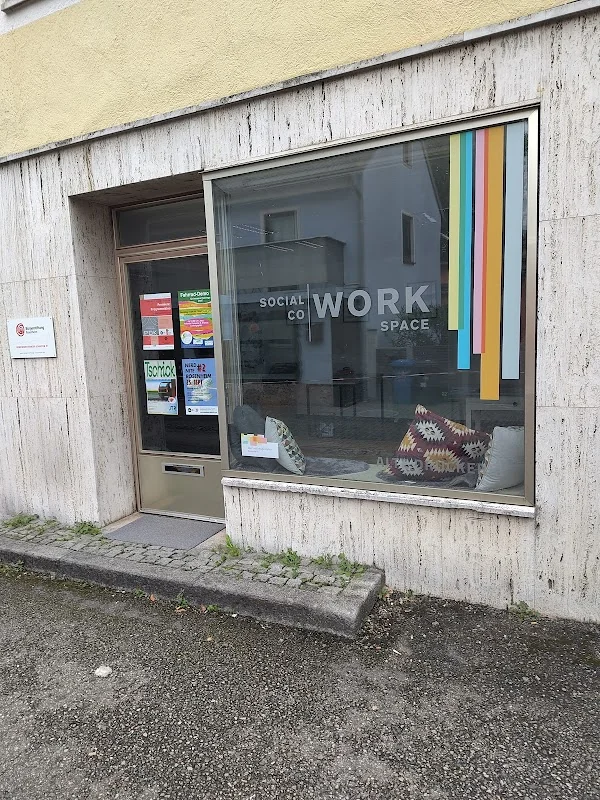
The Citizen Foundation Rosenheim is much more than a classic foundation with an office address. It stands for civic engagement, local connectedness, and concrete support for life in the city. Since its founding in 2012, the initiative from the merger of committed citizens has developed into a fixed address for the common good, volunteer work, and cultural exchange. This is particularly visible at its location in the Old Printing House at Königsstraße 7b, where the team has been using new spaces since December 2020. Projects are created there, encounters take place, and formats are developed that directly benefit Rosenheim. The central location in the city center enhances the foundation's visibility and makes the place easily accessible for visitors, partners, and interested parties. At the same time, the Old Printing House does not feel like a closed administrative space, but like an open house where culture, society, and practical support come together. This mix of urban presence, social mission, and vibrant use continues to shape the character of the Citizen Foundation Rosenheim to this day. ([buergerstiftung-rosenheim.de](https://buergerstiftung-rosenheim.de/))
What is behind the Citizen Foundation Rosenheim?
The Citizen Foundation Rosenheim emerged from an idea that took shape at the end of 2008 and culminated in its official founding in 2012. The foundation's website makes it clear that the participants were concerned from the beginning with more than just financial support: The foundation aims to strengthen civic engagement across all population groups, work in partnership with citizens, businesses, administration, and politics, and set socio-political impulses for Rosenheim. More than 70 founders have collectively built a foundation capital of over 70,000 euros, demonstrating the broad anchoring of the project in the city. The foundation operates where state or municipal support is insufficient and relies on a mix of self-initiative, responsibility, and solidarity. Particularly important is the idea of filling specific gaps in social and cultural life without appearing didactic or distant. Instead, a network of people emerges who contribute with time, knowledge, donations, or their own ideas. This attitude shapes the perception of the Citizen Foundation in Rosenheim and also explains why its name is repeatedly associated with commitment, diversity, and community spirit. Therefore, those searching for the Citizen Foundation Rosenheim are not just looking for a place, but for an attitude: to participate, support, initiate, connect, and create opportunities together. ([buergerstiftung-rosenheim.de](https://buergerstiftung-rosenheim.de/ueber-uns/))
The strength of this foundation lies in its practical work. The website and project area clearly show the wide range of initiatives: from sponsorships for refugees to swimming projects in primary schools to music projects in nursing homes, the spectrum of initiatives directly reaching people is vast. This includes reading mentors, learning and homework projects, initiatives around nutrition, mobility, community, and social participation. The Citizen Foundation not only bundles money or organizational help but also builds social infrastructure. This is particularly valuable for a city like Rosenheim, as many projects target children, families, seniors, and volunteers simultaneously. The organizational structure also shows how strongly volunteer work is integrated: The board, foundation council, and management work with people from very different professional fields. This keeps the foundation approachable and versatile. The theme of community is not just a guiding principle but a working principle. From this perspective, the Citizen Foundation Rosenheim is also an example of how local engagement creates long-term structures that do not depend on short-term trends but on a reliable willingness to co-create. ([buergerstiftung-rosenheim.de](https://buergerstiftung-rosenheim.de/ueber-uns/))
The Old Printing House as a Socio-Cultural Center
The Old Printing House is the place where the Citizen Foundation Rosenheim makes its claim visible in everyday life. On the Creative Places portal, it is described as a vacant city center building that is temporarily used as a socio-cultural center. This is precisely where its special quality lies: The place is not designed as a rigid event machine but as a flexible space for encounters, creativity, and collaborative work. The official project page describes the office of the Citizen Foundation and the project rooms as a socio-cultural center and co-working space. Additionally, various network partners use the spaces, including the Young Theater Rosenheim, a painting course, counseling centers, social space teams, the DJK Rosenheim sports association, the Culture Club Rosenheim, the cultural office of the city of Rosenheim, educational institutions such as TH Rosenheim, and other actors. This creates a place where not just a single organizer is present, but a whole network of initiatives, groups, and organizations. This openness creates a special dynamic, allowing people with very different backgrounds to meet. The building is thus not just an address but a platform for exchange, cooperation, and creative use. ([staatspreis-kreativorte.bayern](https://staatspreis-kreativorte.bayern/kreativorte/alte-druckerei/))
Architecturally and atmospherically, the Old Printing House has its own character. The Creative Places portal points out that the character of the glass house, with its technical limitations, shapes the openness of the place. Mechanical technology with gear drives, simple building elements, lack of heating, and limited sun protection are mentioned. Such features are not to be understood as flaws but as part of an experimental and creative environment that intentionally functions differently than a styled conference room. The space invites experimentation rather than consumption. Theater, film, music, and exhibitions have space there, as do networking and creative work. This is precisely what makes the Old Printing House interesting for cultural and creative professionals, as it offers not just walls and tables but an atmosphere where ideas can grow. The Citizen Foundation uses these characteristics very consistently: Instead of creating a perfect, isolated event location, it focuses on a lively place that can be opened up for many uses. For search queries like Old Printing House Rosenheim, socio-cultural center Rosenheim, or co-working Rosenheim, this multifunctionality is the decisive added value. ([staatspreis-kreativorte.bayern](https://staatspreis-kreativorte.bayern/kreativorte/alte-druckerei/))
Events, Concerts, and Exhibitions on Site
Those looking for events in the Old Printing House will find a location that consciously opens itself to a wide cultural spectrum. The Citizen Foundation Rosenheim states that concerts and art exhibitions regularly take place in the rooms and that the offerings are well received because they provide easy access to culture. The project area complements the picture with concrete examples such as the clothing market for young and old in the Old Printing House and the Old Printing House Festival with backyard concerts in the city center. Other event portals also list the location as an active place with changing formats, including art and craft markets, podcast live talks, workshops, and other event series. For visitors, this is important because the Old Printing House cannot be limited to a single type of event. Instead, a lively program emerges that connects music, craftsmanship, dialogue, education, and art. This diversity fits well with the orientation of the Citizen Foundation, which promotes not only social projects but also cultural participation. For this reason, the Old Printing House in Rosenheim is often described as a place where creativity, commitment, and community come together in one space. ([buergerstiftung-rosenheim.de](https://buergerstiftung-rosenheim.de/projekte/soziokulturelle-zentrum-alte-druckerei/))
A good example of this is the art and craft market KuH-MARKT in the Old Printing House. The event portal describes it as a mix of regional art, crafts, slow food, workshops, and a creative, relaxed atmosphere. Additionally, there is the event series Festival with V, which connects various places and formats in the city center of Rosenheim. The Citizen Foundation itself lists events where the Old Printing House serves as a meeting point for live concerts. Such formats show that the spaces are not only used for internal meetings or project work but are repeatedly opened for public cultural events. The open character is particularly valuable: The location feels small enough for personal encounters while being large enough to appeal to a wide range of target groups. Those looking for a place for workshops, concerts, markets, discussion formats, or exhibitions will find an address with a clear cultural identity here. In SEO terms, terms like concerts Old Printing House, events Old Printing House, exhibitions Old Printing House, and culture Rosenheim are therefore not coincidentally relevant but reflect the actual use. The strength of the house lies precisely in fulfilling multiple search intentions simultaneously: discover, participate, engage, and network. ([stadttipps-rosenheim.de](https://www.stadttipps-rosenheim.de/veranstaltungskalender/markt/kuh-markt.html))
Directions, Parking, and Central Location in Rosenheim
The location of the Old Printing House is a great advantage for visitors. The address Königsstraße 7b is located right in the center of Rosenheim and thus in an area that is easily accessible on foot. An event notice mentions about a 5-minute walk to the pedestrian zone and around a 15-minute walk to the train station. This makes the location attractive for people arriving by train or wishing to combine a city visit with an event. The location is also easy for regional guests to remember, as it is directly connected to Königsstraße. The Citizen Foundation itself emphasizes the central location in the city center as an important step for its public perception. For practical planning, it is also relevant that several parking garages are available in the immediate vicinity. The city of Rosenheim operates two suitable inner-city parking garages, P3 Rathaus and P7 Altstadt Ost, which provide clear orientation for visitors to the city center. P3 is accessed via Königsstraße, P7 via In der Schmucken. This means that the Old Printing House is embedded in an urban environment that works well both on foot and by car or from the train station. For search queries like parking Old Printing House Rosenheim or directions Old Printing House Rosenheim, this information is crucial as it conveys real usability instead of just listing an address. ([stadttipps-rosenheim.de](https://www.stadttipps-rosenheim.de/veranstaltungskalender/markt/kuh-markt.html))
Those who take a closer look at the parking options recognize the typical city center character of Rosenheim: short distances, various parking options, and a close interplay between public space and event location. According to the city website, the P3 Rathaus offers access via Königsstraße, is open on weekdays and Saturdays, and provides short-term parking. The P7 Altstadt Ost is open continuously and has short-term parking spaces, making it particularly practical for flexible visits. This is relevant for the Old Printing House because many formats there are not designed for large traveling groups but for local and regional audiences. Therefore, anyone coming to an evening event, workshop, or project meeting can plan their arrival easily. The short walk to the pedestrian zone is also a plus: one can quickly be in the center, take care of something beforehand, or combine the visit with a city stroll. Overall, the location conveys the impression of an urban but not overwhelming address. It is well visible, easily accessible, and close enough to the most important inner-city points to fit seamlessly into the everyday life of event planning. This combination of location, parking, and pedestrian access makes the Old Printing House equally interesting for guests, organizers, and project partners. ([rosenheim.de](https://www.rosenheim.de/buergerservice/mobilitaet/parken/p3-rathaus))
Photos, Contact, and Practical Information
Those who want to get an impression of the Old Printing House in advance will find several visual references on the official and thematically relevant pages. The project page of the Citizen Foundation shows images from concerts in the Old Printing House, while the Creative Places portal also presents the location with image and location references. Event portals also use photos and preview images to categorize events at this location. For practical orientation, contact information is also important: On the official page, Christian Hlatky is mentioned as the contact person with a phone number and email address. Additionally, there is a clear postal address at Königsstraße 7b, 83022 Rosenheim. For visitors, this means: The location is not anonymous but personally managed and transparently accessible. This is particularly helpful for project inquiries, collaborations, or questions about rooms and usage. At the same time, the presentation style shows that the Old Printing House is intentionally kept flexible. There is no classic large arena with a fixed standard seating plan, but a place that is used differently depending on the format. This openness is what makes it charming, but it also means that for specific questions about room layout, process, or usage options, it is best to contact directly. For the search intent photos Old Printing House Rosenheim, it is important to know: Impressions are available online, but the images primarily serve to show the atmosphere and use of the place, not to replace a fixed seating plan. ([buergerstiftung-rosenheim.de](https://buergerstiftung-rosenheim.de/projekte/soziokulturelle-zentrum-alte-druckerei/))
Practically speaking, the Old Printing House is a place that mediates between office, project site, and event space. Precisely for this reason, it appears in different contexts: as the contact address of the Citizen Foundation, as a creative place, as an event venue, and as a meeting point for cultural initiatives. This multifunctionality also explains why the location is interesting for many user groups. For non-profit projects, it offers proximity and networks; for cultural events, a relaxed atmosphere; for workshops and seminars, a clear framework; and for visitors, a manageable, central place in the city. Those looking for Citizen Foundation Rosenheim contact will find not only data but a clear access to an organization that enables direct collaboration. Those searching for Old Printing House Rosenheim photos will receive impressions of a space that conveys openness rather than staging. And those simply wanting to know if a visit is worthwhile can refer to the numerous image and event references that show the place as a vibrant part of Rosenheim's urban life. The Old Printing House is thus a good example that a cultural and project space does not need to be large to be visible. What matters is that it is used, shared, and filled with life. Exactly that happens here in a remarkable way. ([buergerstiftung-rosenheim.de](https://buergerstiftung-rosenheim.de/projekte/soziokulturelle-zentrum-alte-druckerei/))
Volunteering, Projects, and Social Value in Rosenheim
The Citizen Foundation Rosenheim is particularly strong because it connects its premises with a broad social mission. The project page and the about us section make it clear that the foundation is not only concerned with culture or presence but with concrete help and sustainable impact in the city. Projects such as the swimming project, the reading mentors project, the learning and homework project, bicycle courses, or community meal offerings demonstrate the diversity of its work. Additional initiatives include snack boxes for elementary school students, support for refugees from Ukraine, or community-building formats in western Rosenheim. The crucial aspect is: The Old Printing House is not just a backdrop but an organizational and symbolic center from which such projects become visible. When people search for Citizen Foundation Rosenheim projects, social engagement Rosenheim, or volunteering Rosenheim, they encounter a foundation that practically implements local responsibility. The spaces in the Old Printing House serve as a meeting point, coordination site, and encounter area. This creates added value that goes beyond the individual event. The foundation builds relationships, activates people, and creates structures that can also have lasting effects. ([buergerstiftung-rosenheim.de](https://buergerstiftung-rosenheim.de/projekte/))
Particularly relevant is the idea that the Citizen Foundation addresses areas where state or municipal support is not fully effective. This is not an abstract guiding principle but a hands-on approach. Volunteers, founders, project partners, and supporters work together to close social and cultural gaps. The Old Printing House exemplifies this because it facilitates exchange between very different groups: children and seniors, cultural creators and association partners, project initiatives and engaged volunteers, local institutions and interested citizens. From an SEO perspective, this multifacetedness is important because it makes the place relevant in search queries related to culture, engagement, co-working, city center location, seminars, and events. The Citizen Foundation Rosenheim thus creates a place that not only offers something but also changes something. The Old Printing House is not a finished end product but a space that can be further developed for Rosenheim. Those who visit it encounter community in action, ideas with real-world relevance, and a place committed to benefiting the city. This is what makes the address so interesting for visitors, partners, and all those looking for an authentic, vibrant, and meaningful location in Rosenheim. ([buergerstiftung-rosenheim.de](https://buergerstiftung-rosenheim.de/projekte/))
Sources:
- Citizen Foundation Rosenheim – Official Website
- Citizen Foundation Rosenheim – About Us
- Citizen Foundation Rosenheim – Socio-Cultural Center Old Printing House
- State Prize for Bavarian Creative Places – Old Printing House
- City of Rosenheim – P3 Rathaus
- City of Rosenheim – P7 Altstadt Ost
- City Tips Rosenheim – KuH-MARKT in the Old Printing House
- aROund Rosenheim – Old Printing House
Mehr anzeigenWeniger anzeigen
Citizen Foundation Rosenheim | Old Printing House & Events
The Citizen Foundation Rosenheim is much more than a classic foundation with an office address. It stands for civic engagement, local connectedness, and concrete support for life in the city. Since its founding in 2012, the initiative from the merger of committed citizens has developed into a fixed address for the common good, volunteer work, and cultural exchange. This is particularly visible at its location in the Old Printing House at Königsstraße 7b, where the team has been using new spaces since December 2020. Projects are created there, encounters take place, and formats are developed that directly benefit Rosenheim. The central location in the city center enhances the foundation's visibility and makes the place easily accessible for visitors, partners, and interested parties. At the same time, the Old Printing House does not feel like a closed administrative space, but like an open house where culture, society, and practical support come together. This mix of urban presence, social mission, and vibrant use continues to shape the character of the Citizen Foundation Rosenheim to this day. ([buergerstiftung-rosenheim.de](https://buergerstiftung-rosenheim.de/))
What is behind the Citizen Foundation Rosenheim?
The Citizen Foundation Rosenheim emerged from an idea that took shape at the end of 2008 and culminated in its official founding in 2012. The foundation's website makes it clear that the participants were concerned from the beginning with more than just financial support: The foundation aims to strengthen civic engagement across all population groups, work in partnership with citizens, businesses, administration, and politics, and set socio-political impulses for Rosenheim. More than 70 founders have collectively built a foundation capital of over 70,000 euros, demonstrating the broad anchoring of the project in the city. The foundation operates where state or municipal support is insufficient and relies on a mix of self-initiative, responsibility, and solidarity. Particularly important is the idea of filling specific gaps in social and cultural life without appearing didactic or distant. Instead, a network of people emerges who contribute with time, knowledge, donations, or their own ideas. This attitude shapes the perception of the Citizen Foundation in Rosenheim and also explains why its name is repeatedly associated with commitment, diversity, and community spirit. Therefore, those searching for the Citizen Foundation Rosenheim are not just looking for a place, but for an attitude: to participate, support, initiate, connect, and create opportunities together. ([buergerstiftung-rosenheim.de](https://buergerstiftung-rosenheim.de/ueber-uns/))
The strength of this foundation lies in its practical work. The website and project area clearly show the wide range of initiatives: from sponsorships for refugees to swimming projects in primary schools to music projects in nursing homes, the spectrum of initiatives directly reaching people is vast. This includes reading mentors, learning and homework projects, initiatives around nutrition, mobility, community, and social participation. The Citizen Foundation not only bundles money or organizational help but also builds social infrastructure. This is particularly valuable for a city like Rosenheim, as many projects target children, families, seniors, and volunteers simultaneously. The organizational structure also shows how strongly volunteer work is integrated: The board, foundation council, and management work with people from very different professional fields. This keeps the foundation approachable and versatile. The theme of community is not just a guiding principle but a working principle. From this perspective, the Citizen Foundation Rosenheim is also an example of how local engagement creates long-term structures that do not depend on short-term trends but on a reliable willingness to co-create. ([buergerstiftung-rosenheim.de](https://buergerstiftung-rosenheim.de/ueber-uns/))
The Old Printing House as a Socio-Cultural Center
The Old Printing House is the place where the Citizen Foundation Rosenheim makes its claim visible in everyday life. On the Creative Places portal, it is described as a vacant city center building that is temporarily used as a socio-cultural center. This is precisely where its special quality lies: The place is not designed as a rigid event machine but as a flexible space for encounters, creativity, and collaborative work. The official project page describes the office of the Citizen Foundation and the project rooms as a socio-cultural center and co-working space. Additionally, various network partners use the spaces, including the Young Theater Rosenheim, a painting course, counseling centers, social space teams, the DJK Rosenheim sports association, the Culture Club Rosenheim, the cultural office of the city of Rosenheim, educational institutions such as TH Rosenheim, and other actors. This creates a place where not just a single organizer is present, but a whole network of initiatives, groups, and organizations. This openness creates a special dynamic, allowing people with very different backgrounds to meet. The building is thus not just an address but a platform for exchange, cooperation, and creative use. ([staatspreis-kreativorte.bayern](https://staatspreis-kreativorte.bayern/kreativorte/alte-druckerei/))
Architecturally and atmospherically, the Old Printing House has its own character. The Creative Places portal points out that the character of the glass house, with its technical limitations, shapes the openness of the place. Mechanical technology with gear drives, simple building elements, lack of heating, and limited sun protection are mentioned. Such features are not to be understood as flaws but as part of an experimental and creative environment that intentionally functions differently than a styled conference room. The space invites experimentation rather than consumption. Theater, film, music, and exhibitions have space there, as do networking and creative work. This is precisely what makes the Old Printing House interesting for cultural and creative professionals, as it offers not just walls and tables but an atmosphere where ideas can grow. The Citizen Foundation uses these characteristics very consistently: Instead of creating a perfect, isolated event location, it focuses on a lively place that can be opened up for many uses. For search queries like Old Printing House Rosenheim, socio-cultural center Rosenheim, or co-working Rosenheim, this multifunctionality is the decisive added value. ([staatspreis-kreativorte.bayern](https://staatspreis-kreativorte.bayern/kreativorte/alte-druckerei/))
Events, Concerts, and Exhibitions on Site
Those looking for events in the Old Printing House will find a location that consciously opens itself to a wide cultural spectrum. The Citizen Foundation Rosenheim states that concerts and art exhibitions regularly take place in the rooms and that the offerings are well received because they provide easy access to culture. The project area complements the picture with concrete examples such as the clothing market for young and old in the Old Printing House and the Old Printing House Festival with backyard concerts in the city center. Other event portals also list the location as an active place with changing formats, including art and craft markets, podcast live talks, workshops, and other event series. For visitors, this is important because the Old Printing House cannot be limited to a single type of event. Instead, a lively program emerges that connects music, craftsmanship, dialogue, education, and art. This diversity fits well with the orientation of the Citizen Foundation, which promotes not only social projects but also cultural participation. For this reason, the Old Printing House in Rosenheim is often described as a place where creativity, commitment, and community come together in one space. ([buergerstiftung-rosenheim.de](https://buergerstiftung-rosenheim.de/projekte/soziokulturelle-zentrum-alte-druckerei/))
A good example of this is the art and craft market KuH-MARKT in the Old Printing House. The event portal describes it as a mix of regional art, crafts, slow food, workshops, and a creative, relaxed atmosphere. Additionally, there is the event series Festival with V, which connects various places and formats in the city center of Rosenheim. The Citizen Foundation itself lists events where the Old Printing House serves as a meeting point for live concerts. Such formats show that the spaces are not only used for internal meetings or project work but are repeatedly opened for public cultural events. The open character is particularly valuable: The location feels small enough for personal encounters while being large enough to appeal to a wide range of target groups. Those looking for a place for workshops, concerts, markets, discussion formats, or exhibitions will find an address with a clear cultural identity here. In SEO terms, terms like concerts Old Printing House, events Old Printing House, exhibitions Old Printing House, and culture Rosenheim are therefore not coincidentally relevant but reflect the actual use. The strength of the house lies precisely in fulfilling multiple search intentions simultaneously: discover, participate, engage, and network. ([stadttipps-rosenheim.de](https://www.stadttipps-rosenheim.de/veranstaltungskalender/markt/kuh-markt.html))
Directions, Parking, and Central Location in Rosenheim
The location of the Old Printing House is a great advantage for visitors. The address Königsstraße 7b is located right in the center of Rosenheim and thus in an area that is easily accessible on foot. An event notice mentions about a 5-minute walk to the pedestrian zone and around a 15-minute walk to the train station. This makes the location attractive for people arriving by train or wishing to combine a city visit with an event. The location is also easy for regional guests to remember, as it is directly connected to Königsstraße. The Citizen Foundation itself emphasizes the central location in the city center as an important step for its public perception. For practical planning, it is also relevant that several parking garages are available in the immediate vicinity. The city of Rosenheim operates two suitable inner-city parking garages, P3 Rathaus and P7 Altstadt Ost, which provide clear orientation for visitors to the city center. P3 is accessed via Königsstraße, P7 via In der Schmucken. This means that the Old Printing House is embedded in an urban environment that works well both on foot and by car or from the train station. For search queries like parking Old Printing House Rosenheim or directions Old Printing House Rosenheim, this information is crucial as it conveys real usability instead of just listing an address. ([stadttipps-rosenheim.de](https://www.stadttipps-rosenheim.de/veranstaltungskalender/markt/kuh-markt.html))
Those who take a closer look at the parking options recognize the typical city center character of Rosenheim: short distances, various parking options, and a close interplay between public space and event location. According to the city website, the P3 Rathaus offers access via Königsstraße, is open on weekdays and Saturdays, and provides short-term parking. The P7 Altstadt Ost is open continuously and has short-term parking spaces, making it particularly practical for flexible visits. This is relevant for the Old Printing House because many formats there are not designed for large traveling groups but for local and regional audiences. Therefore, anyone coming to an evening event, workshop, or project meeting can plan their arrival easily. The short walk to the pedestrian zone is also a plus: one can quickly be in the center, take care of something beforehand, or combine the visit with a city stroll. Overall, the location conveys the impression of an urban but not overwhelming address. It is well visible, easily accessible, and close enough to the most important inner-city points to fit seamlessly into the everyday life of event planning. This combination of location, parking, and pedestrian access makes the Old Printing House equally interesting for guests, organizers, and project partners. ([rosenheim.de](https://www.rosenheim.de/buergerservice/mobilitaet/parken/p3-rathaus))
Photos, Contact, and Practical Information
Those who want to get an impression of the Old Printing House in advance will find several visual references on the official and thematically relevant pages. The project page of the Citizen Foundation shows images from concerts in the Old Printing House, while the Creative Places portal also presents the location with image and location references. Event portals also use photos and preview images to categorize events at this location. For practical orientation, contact information is also important: On the official page, Christian Hlatky is mentioned as the contact person with a phone number and email address. Additionally, there is a clear postal address at Königsstraße 7b, 83022 Rosenheim. For visitors, this means: The location is not anonymous but personally managed and transparently accessible. This is particularly helpful for project inquiries, collaborations, or questions about rooms and usage. At the same time, the presentation style shows that the Old Printing House is intentionally kept flexible. There is no classic large arena with a fixed standard seating plan, but a place that is used differently depending on the format. This openness is what makes it charming, but it also means that for specific questions about room layout, process, or usage options, it is best to contact directly. For the search intent photos Old Printing House Rosenheim, it is important to know: Impressions are available online, but the images primarily serve to show the atmosphere and use of the place, not to replace a fixed seating plan. ([buergerstiftung-rosenheim.de](https://buergerstiftung-rosenheim.de/projekte/soziokulturelle-zentrum-alte-druckerei/))
Practically speaking, the Old Printing House is a place that mediates between office, project site, and event space. Precisely for this reason, it appears in different contexts: as the contact address of the Citizen Foundation, as a creative place, as an event venue, and as a meeting point for cultural initiatives. This multifunctionality also explains why the location is interesting for many user groups. For non-profit projects, it offers proximity and networks; for cultural events, a relaxed atmosphere; for workshops and seminars, a clear framework; and for visitors, a manageable, central place in the city. Those looking for Citizen Foundation Rosenheim contact will find not only data but a clear access to an organization that enables direct collaboration. Those searching for Old Printing House Rosenheim photos will receive impressions of a space that conveys openness rather than staging. And those simply wanting to know if a visit is worthwhile can refer to the numerous image and event references that show the place as a vibrant part of Rosenheim's urban life. The Old Printing House is thus a good example that a cultural and project space does not need to be large to be visible. What matters is that it is used, shared, and filled with life. Exactly that happens here in a remarkable way. ([buergerstiftung-rosenheim.de](https://buergerstiftung-rosenheim.de/projekte/soziokulturelle-zentrum-alte-druckerei/))
Volunteering, Projects, and Social Value in Rosenheim
The Citizen Foundation Rosenheim is particularly strong because it connects its premises with a broad social mission. The project page and the about us section make it clear that the foundation is not only concerned with culture or presence but with concrete help and sustainable impact in the city. Projects such as the swimming project, the reading mentors project, the learning and homework project, bicycle courses, or community meal offerings demonstrate the diversity of its work. Additional initiatives include snack boxes for elementary school students, support for refugees from Ukraine, or community-building formats in western Rosenheim. The crucial aspect is: The Old Printing House is not just a backdrop but an organizational and symbolic center from which such projects become visible. When people search for Citizen Foundation Rosenheim projects, social engagement Rosenheim, or volunteering Rosenheim, they encounter a foundation that practically implements local responsibility. The spaces in the Old Printing House serve as a meeting point, coordination site, and encounter area. This creates added value that goes beyond the individual event. The foundation builds relationships, activates people, and creates structures that can also have lasting effects. ([buergerstiftung-rosenheim.de](https://buergerstiftung-rosenheim.de/projekte/))
Particularly relevant is the idea that the Citizen Foundation addresses areas where state or municipal support is not fully effective. This is not an abstract guiding principle but a hands-on approach. Volunteers, founders, project partners, and supporters work together to close social and cultural gaps. The Old Printing House exemplifies this because it facilitates exchange between very different groups: children and seniors, cultural creators and association partners, project initiatives and engaged volunteers, local institutions and interested citizens. From an SEO perspective, this multifacetedness is important because it makes the place relevant in search queries related to culture, engagement, co-working, city center location, seminars, and events. The Citizen Foundation Rosenheim thus creates a place that not only offers something but also changes something. The Old Printing House is not a finished end product but a space that can be further developed for Rosenheim. Those who visit it encounter community in action, ideas with real-world relevance, and a place committed to benefiting the city. This is what makes the address so interesting for visitors, partners, and all those looking for an authentic, vibrant, and meaningful location in Rosenheim. ([buergerstiftung-rosenheim.de](https://buergerstiftung-rosenheim.de/projekte/))
Sources:
- Citizen Foundation Rosenheim – Official Website
- Citizen Foundation Rosenheim – About Us
- Citizen Foundation Rosenheim – Socio-Cultural Center Old Printing House
- State Prize for Bavarian Creative Places – Old Printing House
- City of Rosenheim – P3 Rathaus
- City of Rosenheim – P7 Altstadt Ost
- City Tips Rosenheim – KuH-MARKT in the Old Printing House
- aROund Rosenheim – Old Printing House
Citizen Foundation Rosenheim | Old Printing House & Events
The Citizen Foundation Rosenheim is much more than a classic foundation with an office address. It stands for civic engagement, local connectedness, and concrete support for life in the city. Since its founding in 2012, the initiative from the merger of committed citizens has developed into a fixed address for the common good, volunteer work, and cultural exchange. This is particularly visible at its location in the Old Printing House at Königsstraße 7b, where the team has been using new spaces since December 2020. Projects are created there, encounters take place, and formats are developed that directly benefit Rosenheim. The central location in the city center enhances the foundation's visibility and makes the place easily accessible for visitors, partners, and interested parties. At the same time, the Old Printing House does not feel like a closed administrative space, but like an open house where culture, society, and practical support come together. This mix of urban presence, social mission, and vibrant use continues to shape the character of the Citizen Foundation Rosenheim to this day. ([buergerstiftung-rosenheim.de](https://buergerstiftung-rosenheim.de/))
What is behind the Citizen Foundation Rosenheim?
The Citizen Foundation Rosenheim emerged from an idea that took shape at the end of 2008 and culminated in its official founding in 2012. The foundation's website makes it clear that the participants were concerned from the beginning with more than just financial support: The foundation aims to strengthen civic engagement across all population groups, work in partnership with citizens, businesses, administration, and politics, and set socio-political impulses for Rosenheim. More than 70 founders have collectively built a foundation capital of over 70,000 euros, demonstrating the broad anchoring of the project in the city. The foundation operates where state or municipal support is insufficient and relies on a mix of self-initiative, responsibility, and solidarity. Particularly important is the idea of filling specific gaps in social and cultural life without appearing didactic or distant. Instead, a network of people emerges who contribute with time, knowledge, donations, or their own ideas. This attitude shapes the perception of the Citizen Foundation in Rosenheim and also explains why its name is repeatedly associated with commitment, diversity, and community spirit. Therefore, those searching for the Citizen Foundation Rosenheim are not just looking for a place, but for an attitude: to participate, support, initiate, connect, and create opportunities together. ([buergerstiftung-rosenheim.de](https://buergerstiftung-rosenheim.de/ueber-uns/))
The strength of this foundation lies in its practical work. The website and project area clearly show the wide range of initiatives: from sponsorships for refugees to swimming projects in primary schools to music projects in nursing homes, the spectrum of initiatives directly reaching people is vast. This includes reading mentors, learning and homework projects, initiatives around nutrition, mobility, community, and social participation. The Citizen Foundation not only bundles money or organizational help but also builds social infrastructure. This is particularly valuable for a city like Rosenheim, as many projects target children, families, seniors, and volunteers simultaneously. The organizational structure also shows how strongly volunteer work is integrated: The board, foundation council, and management work with people from very different professional fields. This keeps the foundation approachable and versatile. The theme of community is not just a guiding principle but a working principle. From this perspective, the Citizen Foundation Rosenheim is also an example of how local engagement creates long-term structures that do not depend on short-term trends but on a reliable willingness to co-create. ([buergerstiftung-rosenheim.de](https://buergerstiftung-rosenheim.de/ueber-uns/))
The Old Printing House as a Socio-Cultural Center
The Old Printing House is the place where the Citizen Foundation Rosenheim makes its claim visible in everyday life. On the Creative Places portal, it is described as a vacant city center building that is temporarily used as a socio-cultural center. This is precisely where its special quality lies: The place is not designed as a rigid event machine but as a flexible space for encounters, creativity, and collaborative work. The official project page describes the office of the Citizen Foundation and the project rooms as a socio-cultural center and co-working space. Additionally, various network partners use the spaces, including the Young Theater Rosenheim, a painting course, counseling centers, social space teams, the DJK Rosenheim sports association, the Culture Club Rosenheim, the cultural office of the city of Rosenheim, educational institutions such as TH Rosenheim, and other actors. This creates a place where not just a single organizer is present, but a whole network of initiatives, groups, and organizations. This openness creates a special dynamic, allowing people with very different backgrounds to meet. The building is thus not just an address but a platform for exchange, cooperation, and creative use. ([staatspreis-kreativorte.bayern](https://staatspreis-kreativorte.bayern/kreativorte/alte-druckerei/))
Architecturally and atmospherically, the Old Printing House has its own character. The Creative Places portal points out that the character of the glass house, with its technical limitations, shapes the openness of the place. Mechanical technology with gear drives, simple building elements, lack of heating, and limited sun protection are mentioned. Such features are not to be understood as flaws but as part of an experimental and creative environment that intentionally functions differently than a styled conference room. The space invites experimentation rather than consumption. Theater, film, music, and exhibitions have space there, as do networking and creative work. This is precisely what makes the Old Printing House interesting for cultural and creative professionals, as it offers not just walls and tables but an atmosphere where ideas can grow. The Citizen Foundation uses these characteristics very consistently: Instead of creating a perfect, isolated event location, it focuses on a lively place that can be opened up for many uses. For search queries like Old Printing House Rosenheim, socio-cultural center Rosenheim, or co-working Rosenheim, this multifunctionality is the decisive added value. ([staatspreis-kreativorte.bayern](https://staatspreis-kreativorte.bayern/kreativorte/alte-druckerei/))
Events, Concerts, and Exhibitions on Site
Those looking for events in the Old Printing House will find a location that consciously opens itself to a wide cultural spectrum. The Citizen Foundation Rosenheim states that concerts and art exhibitions regularly take place in the rooms and that the offerings are well received because they provide easy access to culture. The project area complements the picture with concrete examples such as the clothing market for young and old in the Old Printing House and the Old Printing House Festival with backyard concerts in the city center. Other event portals also list the location as an active place with changing formats, including art and craft markets, podcast live talks, workshops, and other event series. For visitors, this is important because the Old Printing House cannot be limited to a single type of event. Instead, a lively program emerges that connects music, craftsmanship, dialogue, education, and art. This diversity fits well with the orientation of the Citizen Foundation, which promotes not only social projects but also cultural participation. For this reason, the Old Printing House in Rosenheim is often described as a place where creativity, commitment, and community come together in one space. ([buergerstiftung-rosenheim.de](https://buergerstiftung-rosenheim.de/projekte/soziokulturelle-zentrum-alte-druckerei/))
A good example of this is the art and craft market KuH-MARKT in the Old Printing House. The event portal describes it as a mix of regional art, crafts, slow food, workshops, and a creative, relaxed atmosphere. Additionally, there is the event series Festival with V, which connects various places and formats in the city center of Rosenheim. The Citizen Foundation itself lists events where the Old Printing House serves as a meeting point for live concerts. Such formats show that the spaces are not only used for internal meetings or project work but are repeatedly opened for public cultural events. The open character is particularly valuable: The location feels small enough for personal encounters while being large enough to appeal to a wide range of target groups. Those looking for a place for workshops, concerts, markets, discussion formats, or exhibitions will find an address with a clear cultural identity here. In SEO terms, terms like concerts Old Printing House, events Old Printing House, exhibitions Old Printing House, and culture Rosenheim are therefore not coincidentally relevant but reflect the actual use. The strength of the house lies precisely in fulfilling multiple search intentions simultaneously: discover, participate, engage, and network. ([stadttipps-rosenheim.de](https://www.stadttipps-rosenheim.de/veranstaltungskalender/markt/kuh-markt.html))
Directions, Parking, and Central Location in Rosenheim
The location of the Old Printing House is a great advantage for visitors. The address Königsstraße 7b is located right in the center of Rosenheim and thus in an area that is easily accessible on foot. An event notice mentions about a 5-minute walk to the pedestrian zone and around a 15-minute walk to the train station. This makes the location attractive for people arriving by train or wishing to combine a city visit with an event. The location is also easy for regional guests to remember, as it is directly connected to Königsstraße. The Citizen Foundation itself emphasizes the central location in the city center as an important step for its public perception. For practical planning, it is also relevant that several parking garages are available in the immediate vicinity. The city of Rosenheim operates two suitable inner-city parking garages, P3 Rathaus and P7 Altstadt Ost, which provide clear orientation for visitors to the city center. P3 is accessed via Königsstraße, P7 via In der Schmucken. This means that the Old Printing House is embedded in an urban environment that works well both on foot and by car or from the train station. For search queries like parking Old Printing House Rosenheim or directions Old Printing House Rosenheim, this information is crucial as it conveys real usability instead of just listing an address. ([stadttipps-rosenheim.de](https://www.stadttipps-rosenheim.de/veranstaltungskalender/markt/kuh-markt.html))
Those who take a closer look at the parking options recognize the typical city center character of Rosenheim: short distances, various parking options, and a close interplay between public space and event location. According to the city website, the P3 Rathaus offers access via Königsstraße, is open on weekdays and Saturdays, and provides short-term parking. The P7 Altstadt Ost is open continuously and has short-term parking spaces, making it particularly practical for flexible visits. This is relevant for the Old Printing House because many formats there are not designed for large traveling groups but for local and regional audiences. Therefore, anyone coming to an evening event, workshop, or project meeting can plan their arrival easily. The short walk to the pedestrian zone is also a plus: one can quickly be in the center, take care of something beforehand, or combine the visit with a city stroll. Overall, the location conveys the impression of an urban but not overwhelming address. It is well visible, easily accessible, and close enough to the most important inner-city points to fit seamlessly into the everyday life of event planning. This combination of location, parking, and pedestrian access makes the Old Printing House equally interesting for guests, organizers, and project partners. ([rosenheim.de](https://www.rosenheim.de/buergerservice/mobilitaet/parken/p3-rathaus))
Photos, Contact, and Practical Information
Those who want to get an impression of the Old Printing House in advance will find several visual references on the official and thematically relevant pages. The project page of the Citizen Foundation shows images from concerts in the Old Printing House, while the Creative Places portal also presents the location with image and location references. Event portals also use photos and preview images to categorize events at this location. For practical orientation, contact information is also important: On the official page, Christian Hlatky is mentioned as the contact person with a phone number and email address. Additionally, there is a clear postal address at Königsstraße 7b, 83022 Rosenheim. For visitors, this means: The location is not anonymous but personally managed and transparently accessible. This is particularly helpful for project inquiries, collaborations, or questions about rooms and usage. At the same time, the presentation style shows that the Old Printing House is intentionally kept flexible. There is no classic large arena with a fixed standard seating plan, but a place that is used differently depending on the format. This openness is what makes it charming, but it also means that for specific questions about room layout, process, or usage options, it is best to contact directly. For the search intent photos Old Printing House Rosenheim, it is important to know: Impressions are available online, but the images primarily serve to show the atmosphere and use of the place, not to replace a fixed seating plan. ([buergerstiftung-rosenheim.de](https://buergerstiftung-rosenheim.de/projekte/soziokulturelle-zentrum-alte-druckerei/))
Practically speaking, the Old Printing House is a place that mediates between office, project site, and event space. Precisely for this reason, it appears in different contexts: as the contact address of the Citizen Foundation, as a creative place, as an event venue, and as a meeting point for cultural initiatives. This multifunctionality also explains why the location is interesting for many user groups. For non-profit projects, it offers proximity and networks; for cultural events, a relaxed atmosphere; for workshops and seminars, a clear framework; and for visitors, a manageable, central place in the city. Those looking for Citizen Foundation Rosenheim contact will find not only data but a clear access to an organization that enables direct collaboration. Those searching for Old Printing House Rosenheim photos will receive impressions of a space that conveys openness rather than staging. And those simply wanting to know if a visit is worthwhile can refer to the numerous image and event references that show the place as a vibrant part of Rosenheim's urban life. The Old Printing House is thus a good example that a cultural and project space does not need to be large to be visible. What matters is that it is used, shared, and filled with life. Exactly that happens here in a remarkable way. ([buergerstiftung-rosenheim.de](https://buergerstiftung-rosenheim.de/projekte/soziokulturelle-zentrum-alte-druckerei/))
Volunteering, Projects, and Social Value in Rosenheim
The Citizen Foundation Rosenheim is particularly strong because it connects its premises with a broad social mission. The project page and the about us section make it clear that the foundation is not only concerned with culture or presence but with concrete help and sustainable impact in the city. Projects such as the swimming project, the reading mentors project, the learning and homework project, bicycle courses, or community meal offerings demonstrate the diversity of its work. Additional initiatives include snack boxes for elementary school students, support for refugees from Ukraine, or community-building formats in western Rosenheim. The crucial aspect is: The Old Printing House is not just a backdrop but an organizational and symbolic center from which such projects become visible. When people search for Citizen Foundation Rosenheim projects, social engagement Rosenheim, or volunteering Rosenheim, they encounter a foundation that practically implements local responsibility. The spaces in the Old Printing House serve as a meeting point, coordination site, and encounter area. This creates added value that goes beyond the individual event. The foundation builds relationships, activates people, and creates structures that can also have lasting effects. ([buergerstiftung-rosenheim.de](https://buergerstiftung-rosenheim.de/projekte/))
Particularly relevant is the idea that the Citizen Foundation addresses areas where state or municipal support is not fully effective. This is not an abstract guiding principle but a hands-on approach. Volunteers, founders, project partners, and supporters work together to close social and cultural gaps. The Old Printing House exemplifies this because it facilitates exchange between very different groups: children and seniors, cultural creators and association partners, project initiatives and engaged volunteers, local institutions and interested citizens. From an SEO perspective, this multifacetedness is important because it makes the place relevant in search queries related to culture, engagement, co-working, city center location, seminars, and events. The Citizen Foundation Rosenheim thus creates a place that not only offers something but also changes something. The Old Printing House is not a finished end product but a space that can be further developed for Rosenheim. Those who visit it encounter community in action, ideas with real-world relevance, and a place committed to benefiting the city. This is what makes the address so interesting for visitors, partners, and all those looking for an authentic, vibrant, and meaningful location in Rosenheim. ([buergerstiftung-rosenheim.de](https://buergerstiftung-rosenheim.de/projekte/))
Sources:
- Citizen Foundation Rosenheim – Official Website
- Citizen Foundation Rosenheim – About Us
- Citizen Foundation Rosenheim – Socio-Cultural Center Old Printing House
- State Prize for Bavarian Creative Places – Old Printing House
- City of Rosenheim – P3 Rathaus
- City of Rosenheim – P7 Altstadt Ost
- City Tips Rosenheim – KuH-MARKT in the Old Printing House
- aROund Rosenheim – Old Printing House
Upcoming Events
No events found
Frequently Asked Questions
Reviews
No reviews found