
Wasserburg am Inn
Bruckgasse 9, 83512 Wasserburg am Inn, Deutschland
Brucktor | Wasserburg am Inn & Photos
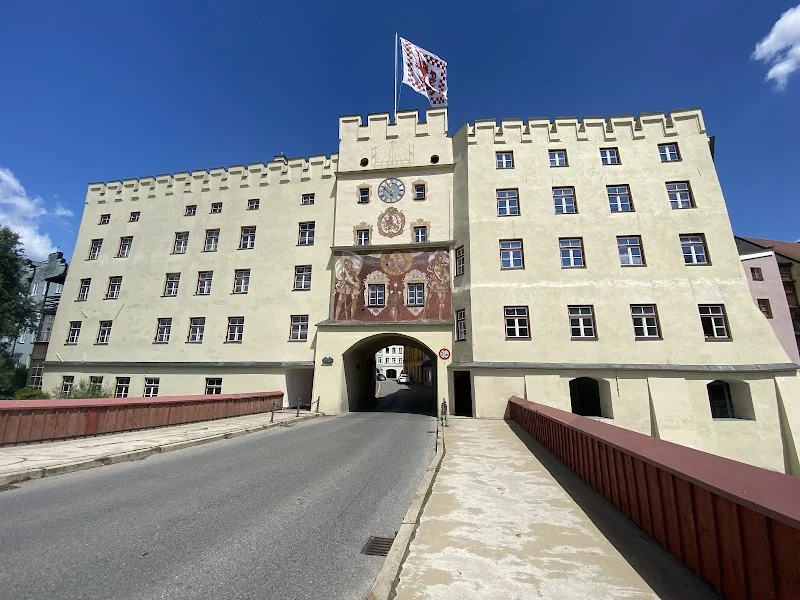
The Brucktor is one of the most impressive landmarks of Wasserburg am Inn and marks the historical transition over the Inn Bridge into the almost completely preserved medieval old town. Together with the Heiliggeist-Spital, the Spital Church, and the former meat house, the city gate forms the distinctive beginning of the Wasserburg city entrance. Anyone entering the city from the south immediately experiences the blend of defensive architecture, trade history, river location, and dense development that makes Wasserburg so unique. The official tourism brochure describes the Brucktor as the entrance gate at the Inn Bridge and refers to the wall paintings from 1568; at the same time, the city and its tourism pages make it clear that the ensemble still belongs to the characteristic landmarks of the city today. This place is ideal for first-time visitors because it is not only beautiful to look at but also brings together many themes of the city in a single image: bridge, gate, hospital, collection, old town, and Innfront. ([wasserburg.de](https://www.wasserburg.de/fileadmin/Dateien/Dateien/Wasserburg/Tourismus_Freizeit/Prospekte/Gaestefuehrer_Wasserburg_2021.pdf))
Brucktor Wasserburg am Inn: History and Significance
The history of the Brucktor dates back to the Middle Ages. In the city brochure, the gate has been documented since 1338; an English tourism brochure cites it as the main access to the bridge since 1374. Both pieces of information show that here, at the latest since the 14th century, the most important city access over the Inn was located. This was not a decorative detail but a functional bottleneck: The city gate and the former drawbridge served to protect and fortify the city, and the location at the river crossing connected traffic, trade, and control at a single point. Especially in a trading city like Wasserburg, this point was crucial, as goods, people, and news were directed into the old town via the bridge. The architectural development also tells of this role. The ensemble has been rebuilt, renovated, and restored several times over the centuries because fires, changes in use, and new requirements repeatedly necessitated interventions. Particularly striking are the wall paintings on the Innfront, which, according to the official brochure, date from 1568 and show two armored guards with the Bavarian and Wasserburg banners as well as Jupiter on an eagle. Thus, the Brucktor is not only a passage but a visible piece of city memory. Today, anyone standing in front of the gate sees a place where power, civic pride, security, and traffic history overlap. That is precisely why the Brucktor still appears so cohesive and present after centuries: It not only tells of the past but keeps it readable in the cityscape to this day. ([wasserburg.de](https://www.wasserburg.de/fileadmin/Dateien/Dateien/Wasserburg/Tourismus_Freizeit/Prospekte/Gaestefuehrer_Wasserburg_2021.pdf))
Brucktor Photos: The Best Angles at the Red Bridge
Those looking for Brucktor photos should view the ensemble from several perspectives rather than just photographing it head-on. The view from the Red Bridge onto the Brucktor ensemble is particularly striking; the city itself explicitly mentions this view in a media release and emphasizes that the ensemble impresses visitors arriving in the city over the Inn. From there, the Brucktor, Heiliggeist-Spital Church, and the closed Innfront can be connected in one image, beautifully showcasing the depth of the historical city entrance. A second worthwhile motif is the facade of the gate itself: On the Innfront are the wall paintings from 1568, which give the building a narrative surface and immediately provide structure in the photo. Additionally, the historical water level markers on the facade are an unusual detail; in the image documentation, they are described as part of the left Brucktor area and date the water levels from 1641 to 1899. This creates a second layer for detail shots, as one is not only photographing architecture but also city and river history. Those who prefer to work documentarily can also capture the transitions between the gate, bridge, hospital, and Bruckgasse; this connection makes the Brucktor so photogenic because many eras remain visible in a small space. Even from a slightly lateral position, the volumes of the ensemble and the proximity to the Inn Bridge appear particularly plastic. For a calm image composition, it is worth opening the view over the bridge to the facade front and understanding the gate not only as a single motif but as part of a coherent urban scenery. ([wasserburg.de](https://www.wasserburg.de/fileadmin/Dateien/Dateien/Museum/Medieninfos/Medieninfo_21_2024_Tag_des_offenen_Denkmals_lang.pdf))
Access and Parking at the Brucktor
The access to the Brucktor is closely linked to the special location of the Wasserburg old town, as the city is situated on a peninsula at the Inn loop. The official parking plan of the city therefore indicates several parking options around the old town, including the parking garage Kellerstraße, the parking garage Überfuhrstraße, and the parking lots Unter der Rampe and Am Gries. In both parking garages and at the Unter der Rampe parking lot, parking is free for up to four hours; at the Am Gries parking lot and in the old town parking area, the fee depends on the parking duration, with a maximum parking duration of three hours at the Am Gries parking lot and two hours in the old town parking area. This is practical for short visits, as the Brucktor can be quickly reached on foot from several directions. It is also important to note the height restriction: The old town on the peninsula is only directly accessible for vehicles over 3.4 meters high via Wasserburg West due to the Brucktor. That is why the designated parking garages and parking lots are the most sensible choice in everyday life, especially if one is only coming for photos, a walk, or a museum visit in the old town. The city map also mentions parking spaces for tour buses and motorhomes, making arrival easier for groups. Therefore, those arriving by car should not attempt to drive directly to the gate but should choose the route via the designated parking areas and walk the last meters. This way, one experiences the Brucktor just as it is intended: as an arriving city entrance, not as a thoroughfare. Those coming from Wasserburg East or from Prien will find the particularly suitable parking garages in the official plan, while for Wasserburg West, the parking lots Unter der Rampe and Überfuhrstraße are mentioned. This makes orientation surprisingly clear despite the narrow old town structure. ([wasserburg.de](https://www.wasserburg.de/fileadmin/Dateien/Dateien/Wasserburg/Tourismus_Freizeit/Prospekte/stadtplan_parken_2024.pdf))
Collection at the Brucktor: Wasserburg from Five Centuries
In the former Heiliggeist-Spital at the Brucktor, there is now the collection “Wasserburg from Five Centuries,” and this use makes the place additionally exciting. The official themed tour brochure describes the collection as located in the premises at the Brucktor; it grew out of the collecting passions of Wasserburg resident Bernd Joa and includes more than 2,500 objects related to Wasserburg. These include prints, drawings, watercolors, oil paintings, tin, silver, clocks, photos, seals, tobacco tins, coins, as well as numerous models, stove tiles, dishes, and figures from Wasserburg pottery. This diversity shows that the Brucktor is not only an architectural monument but also a place of city history in a material sense. On four floors, one can trace how the city has seen itself over centuries and which images, objects, and memories it has preserved. The 2024 museum information also describes the collection as part of the Brucktor ensemble, which was formerly, among other things, the seat of the Heiliggeist-Spital and now houses the collection “Wasserburg from Five Centuries.” For visitors, this is particularly valuable because one does not only visit a building but gets to know the cultural interior of an entire city. The collection is also an indication of how strongly Wasserburg does not separate its past from the present but continues it in the historical place itself. Therefore, the visit does not feel like an isolated museum stop but like an in-depth encounter with the city itself. Those who only view the Brucktor from the outside see the facade; those who include the collection also understand the inner historical connection between art, craft, cityscape, and civic memory. This connection makes the location so special. ([wasserburg.de](https://www.wasserburg.de/fileadmin/Dateien/Dateien/Wasserburg/Tourismus_Freizeit/Prospekte/themenfuehrungen_2025_web.pdf))
Heiliggeist-Spital and Former Meat House at the City Entrance
The Brucktor ensemble is more than just a gate; it is a historical complex of city gate, Heiliggeist-Spital with church, and former meat house, forming the city entrance from the south over the Inn. The official Wasserburg monument and event information describes this group of buildings as a city entrance that has belonged together since the 14th century and points out that the foundations may date back to the 13th century. Equally important is the history of use: In the cellar vaults, there was the meat house in the 14th century, a functional part of the urban supply. Over the centuries, the facility has been altered, renovated, restored, and repurposed multiple times due to fires and renovations. This is exactly what makes the ensemble so credible today, as it shows not only a medieval facade but a continuous urban process. The city brochure also names the Heiliggeist-Spital as the oldest and financially most significant charitable foundation of Wasserburg, underscoring the social role of the place. Another brochure adds that the hospital buildings have been repeatedly renewed throughout history and that the place also served as a space for care and assistance. The proximity to the bridge also made the ensemble an economically relevant point, where the collection of tolls and fees played a role. Today, anyone standing there can still understand why this area is so important for the identity of the old town: The gate frames the access, the hospital speaks of social responsibility, and the former meat house reminds of the pragmatic everyday functions of a medieval city. In this combination lies the true strength of the Brucktor: It is not only beautiful but also readable. Each part of the ensemble takes on a function in the historical overall picture, and that is why city history can be experienced so vividly at this place. ([wasserburg.de](https://www.wasserburg.de/fileadmin/Dateien/Dateien/Museum/Medieninfos/Medieninfo_21_2024_Tag_des_offenen_Denkmals_lang.pdf))
Old Town Walk: From Brucktor to Bridge, Innfront, and Alleys
From the Brucktor, the Wasserburg old town can be discovered particularly logically and atmospherically, as many of the most important axes of the city meet in a small space. The tourism brochure describes Wasserburg as an almost completely preserved medieval old town, where practically every building carries its own story. That is why the Brucktor is suitable as a starting point for a short walk: From here, one goes to the Inn Bridge area, along the Innfront, and further into the old town alleys, where the closed facade rows make the historical character visible. Those who wish to explore the surroundings a bit longer can join the official sculpture path, which, according to the city brochure, begins at the Brucktor and stretches for about 1.5 kilometers along the Inn; more than 30 works by local artists can be seen there. This is interesting for visitors looking for Brucktor photos and wanting to expand their walk with landscapes, art, and river views. The inner dramaturgy of the old town is also well expressed on this path: First the gate, then the bridge, then the densely built city with its alleys, courtyards, and facades. The English tourism brochure describes the Inn Bridge as a permanent connection over the narrowest part of the river, historically arising from the prosperity of the Middle Ages; thus, it becomes clear that the Brucktor cannot be understood separately from the bridge. It is part of a city entrance that combines traffic and representation. Therefore, those planning only a short visit will already get a very good impression of Wasserburg as a trading and river city around the Brucktor; those who stay longer can systematically explore the entire historical center from there. Particularly appealing is the view of the layering of public space, bridge, gate, and closed rows of houses, as this sequence makes the place so photogenic and easy to read. ([wasserburg.de](https://www.wasserburg.de/fileadmin/Dateien/Dateien/Wasserburg/Tourismus_Freizeit/Prospekte/Flyer_Englisch.pdf))
City Tours, Sculpture Path, and Thematic Routes
The Brucktor is also a significant reference point for thematic city tours. The Wasserburg tourism brochures and museum information regularly list special tours of the Brucktor ensemble, where the group of buildings is explained with its history, renovations, and former functions. Those interested in architecture will not only get a beautiful exterior view here but also an explanation of the connection between city gate, hospital, cellar vaults, and former meat house. This makes the facility particularly valuable for visitors who want to look behind the facades rather than just take away a photo motif. Additionally, Wasserburg understands its old town as an experiential space: City tours, thematic routes, and museum offerings are closely linked, and the collection at the Brucktor is explicitly mentioned as its own point of contact in the official programs. For an individual visit, it is also helpful that the city emphasizes clear wayfinding and signage in the tourism sector; thus, Brucktor, Inn Bridge, and old town can be well connected even without local knowledge. Therefore, those who want to not only see the city but also understand it should not end the walk at the gate but consciously continue the transition into the old town. It is precisely the combination of built history and lively use that makes the place so strong: The Brucktor is not an isolated monument but a threshold between outside and inside, between river and city, between arrival and discovery. That is why it is suitable for both first-time visitors and returnees who want to experience Wasserburg more deeply during a second or third encounter. For groups and culture-interested guests, this connection of architecture, collection, and city tour is particularly valuable, as it turns a short visit into a compact historical experience. ([wasserburg.de](https://www.wasserburg.de/fileadmin/Dateien/Dateien/Museum/Medieninfos/Medieninfo_21_2024_Tag_des_offenen_Denkmals_lang.pdf))
Practical Tips for Visiting the Brucktor
For a relaxed visit to the Brucktor, it is worth taking a look at the small, practical details of the city. Before leaving the old town via the Brucktor and the Inn Bridge, one can refresh oneself at the fountain created in 1849 by Simon Geigenberger, according to the city website; the city also points out that other public fountains usually do not provide drinking water. This is useful for anyone wanting to combine a walk around the gate with a longer tour of the old town. Also helpful is the orientation at the official parking areas, as they save time and prevent unnecessary maneuvering in the narrow historical streets. Those wishing to take photos should also not only focus on the gate itself but seek the connection with the Spital Church, the bridge, and the Innfront. This transforms a single monument into a complete city experience. In conjunction with the protected old town area, it becomes clear why Wasserburg attracts so many visitors: Here, short distances, dense history, and strong motifs are very close together. The Brucktor is an ideal starting point for this because it bundles the most important themes of the city - arrival, trade, care, architecture, and memory. Those who come with open eyes will quickly realize that this place is not only suitable for a quick stop but for a concentrated look at the Wasserburg identity. Those who stay a bit longer can combine their visit with a detour to the collection, a walk along the Innfront, and a look at the historical facades. This mix of practical access and historical depth makes the Brucktor one of the most rewarding destinations in the old town. And precisely because orientation and atmosphere connect so well here, the place is suitable for both the first visit and a later, more conscious reunion with Wasserburg am Inn. ([wasserburg.de](https://www.wasserburg.de/trinkwasserbrunnen?cHash=44849f39c1f8f74c826682542aefcd84&mdrv=www.wasserburg.de&utm_source=openai))
Sources:
Mehr anzeigenWeniger anzeigen
Brucktor | Wasserburg am Inn & Photos
The Brucktor is one of the most impressive landmarks of Wasserburg am Inn and marks the historical transition over the Inn Bridge into the almost completely preserved medieval old town. Together with the Heiliggeist-Spital, the Spital Church, and the former meat house, the city gate forms the distinctive beginning of the Wasserburg city entrance. Anyone entering the city from the south immediately experiences the blend of defensive architecture, trade history, river location, and dense development that makes Wasserburg so unique. The official tourism brochure describes the Brucktor as the entrance gate at the Inn Bridge and refers to the wall paintings from 1568; at the same time, the city and its tourism pages make it clear that the ensemble still belongs to the characteristic landmarks of the city today. This place is ideal for first-time visitors because it is not only beautiful to look at but also brings together many themes of the city in a single image: bridge, gate, hospital, collection, old town, and Innfront. ([wasserburg.de](https://www.wasserburg.de/fileadmin/Dateien/Dateien/Wasserburg/Tourismus_Freizeit/Prospekte/Gaestefuehrer_Wasserburg_2021.pdf))
Brucktor Wasserburg am Inn: History and Significance
The history of the Brucktor dates back to the Middle Ages. In the city brochure, the gate has been documented since 1338; an English tourism brochure cites it as the main access to the bridge since 1374. Both pieces of information show that here, at the latest since the 14th century, the most important city access over the Inn was located. This was not a decorative detail but a functional bottleneck: The city gate and the former drawbridge served to protect and fortify the city, and the location at the river crossing connected traffic, trade, and control at a single point. Especially in a trading city like Wasserburg, this point was crucial, as goods, people, and news were directed into the old town via the bridge. The architectural development also tells of this role. The ensemble has been rebuilt, renovated, and restored several times over the centuries because fires, changes in use, and new requirements repeatedly necessitated interventions. Particularly striking are the wall paintings on the Innfront, which, according to the official brochure, date from 1568 and show two armored guards with the Bavarian and Wasserburg banners as well as Jupiter on an eagle. Thus, the Brucktor is not only a passage but a visible piece of city memory. Today, anyone standing in front of the gate sees a place where power, civic pride, security, and traffic history overlap. That is precisely why the Brucktor still appears so cohesive and present after centuries: It not only tells of the past but keeps it readable in the cityscape to this day. ([wasserburg.de](https://www.wasserburg.de/fileadmin/Dateien/Dateien/Wasserburg/Tourismus_Freizeit/Prospekte/Gaestefuehrer_Wasserburg_2021.pdf))
Brucktor Photos: The Best Angles at the Red Bridge
Those looking for Brucktor photos should view the ensemble from several perspectives rather than just photographing it head-on. The view from the Red Bridge onto the Brucktor ensemble is particularly striking; the city itself explicitly mentions this view in a media release and emphasizes that the ensemble impresses visitors arriving in the city over the Inn. From there, the Brucktor, Heiliggeist-Spital Church, and the closed Innfront can be connected in one image, beautifully showcasing the depth of the historical city entrance. A second worthwhile motif is the facade of the gate itself: On the Innfront are the wall paintings from 1568, which give the building a narrative surface and immediately provide structure in the photo. Additionally, the historical water level markers on the facade are an unusual detail; in the image documentation, they are described as part of the left Brucktor area and date the water levels from 1641 to 1899. This creates a second layer for detail shots, as one is not only photographing architecture but also city and river history. Those who prefer to work documentarily can also capture the transitions between the gate, bridge, hospital, and Bruckgasse; this connection makes the Brucktor so photogenic because many eras remain visible in a small space. Even from a slightly lateral position, the volumes of the ensemble and the proximity to the Inn Bridge appear particularly plastic. For a calm image composition, it is worth opening the view over the bridge to the facade front and understanding the gate not only as a single motif but as part of a coherent urban scenery. ([wasserburg.de](https://www.wasserburg.de/fileadmin/Dateien/Dateien/Museum/Medieninfos/Medieninfo_21_2024_Tag_des_offenen_Denkmals_lang.pdf))
Access and Parking at the Brucktor
The access to the Brucktor is closely linked to the special location of the Wasserburg old town, as the city is situated on a peninsula at the Inn loop. The official parking plan of the city therefore indicates several parking options around the old town, including the parking garage Kellerstraße, the parking garage Überfuhrstraße, and the parking lots Unter der Rampe and Am Gries. In both parking garages and at the Unter der Rampe parking lot, parking is free for up to four hours; at the Am Gries parking lot and in the old town parking area, the fee depends on the parking duration, with a maximum parking duration of three hours at the Am Gries parking lot and two hours in the old town parking area. This is practical for short visits, as the Brucktor can be quickly reached on foot from several directions. It is also important to note the height restriction: The old town on the peninsula is only directly accessible for vehicles over 3.4 meters high via Wasserburg West due to the Brucktor. That is why the designated parking garages and parking lots are the most sensible choice in everyday life, especially if one is only coming for photos, a walk, or a museum visit in the old town. The city map also mentions parking spaces for tour buses and motorhomes, making arrival easier for groups. Therefore, those arriving by car should not attempt to drive directly to the gate but should choose the route via the designated parking areas and walk the last meters. This way, one experiences the Brucktor just as it is intended: as an arriving city entrance, not as a thoroughfare. Those coming from Wasserburg East or from Prien will find the particularly suitable parking garages in the official plan, while for Wasserburg West, the parking lots Unter der Rampe and Überfuhrstraße are mentioned. This makes orientation surprisingly clear despite the narrow old town structure. ([wasserburg.de](https://www.wasserburg.de/fileadmin/Dateien/Dateien/Wasserburg/Tourismus_Freizeit/Prospekte/stadtplan_parken_2024.pdf))
Collection at the Brucktor: Wasserburg from Five Centuries
In the former Heiliggeist-Spital at the Brucktor, there is now the collection “Wasserburg from Five Centuries,” and this use makes the place additionally exciting. The official themed tour brochure describes the collection as located in the premises at the Brucktor; it grew out of the collecting passions of Wasserburg resident Bernd Joa and includes more than 2,500 objects related to Wasserburg. These include prints, drawings, watercolors, oil paintings, tin, silver, clocks, photos, seals, tobacco tins, coins, as well as numerous models, stove tiles, dishes, and figures from Wasserburg pottery. This diversity shows that the Brucktor is not only an architectural monument but also a place of city history in a material sense. On four floors, one can trace how the city has seen itself over centuries and which images, objects, and memories it has preserved. The 2024 museum information also describes the collection as part of the Brucktor ensemble, which was formerly, among other things, the seat of the Heiliggeist-Spital and now houses the collection “Wasserburg from Five Centuries.” For visitors, this is particularly valuable because one does not only visit a building but gets to know the cultural interior of an entire city. The collection is also an indication of how strongly Wasserburg does not separate its past from the present but continues it in the historical place itself. Therefore, the visit does not feel like an isolated museum stop but like an in-depth encounter with the city itself. Those who only view the Brucktor from the outside see the facade; those who include the collection also understand the inner historical connection between art, craft, cityscape, and civic memory. This connection makes the location so special. ([wasserburg.de](https://www.wasserburg.de/fileadmin/Dateien/Dateien/Wasserburg/Tourismus_Freizeit/Prospekte/themenfuehrungen_2025_web.pdf))
Heiliggeist-Spital and Former Meat House at the City Entrance
The Brucktor ensemble is more than just a gate; it is a historical complex of city gate, Heiliggeist-Spital with church, and former meat house, forming the city entrance from the south over the Inn. The official Wasserburg monument and event information describes this group of buildings as a city entrance that has belonged together since the 14th century and points out that the foundations may date back to the 13th century. Equally important is the history of use: In the cellar vaults, there was the meat house in the 14th century, a functional part of the urban supply. Over the centuries, the facility has been altered, renovated, restored, and repurposed multiple times due to fires and renovations. This is exactly what makes the ensemble so credible today, as it shows not only a medieval facade but a continuous urban process. The city brochure also names the Heiliggeist-Spital as the oldest and financially most significant charitable foundation of Wasserburg, underscoring the social role of the place. Another brochure adds that the hospital buildings have been repeatedly renewed throughout history and that the place also served as a space for care and assistance. The proximity to the bridge also made the ensemble an economically relevant point, where the collection of tolls and fees played a role. Today, anyone standing there can still understand why this area is so important for the identity of the old town: The gate frames the access, the hospital speaks of social responsibility, and the former meat house reminds of the pragmatic everyday functions of a medieval city. In this combination lies the true strength of the Brucktor: It is not only beautiful but also readable. Each part of the ensemble takes on a function in the historical overall picture, and that is why city history can be experienced so vividly at this place. ([wasserburg.de](https://www.wasserburg.de/fileadmin/Dateien/Dateien/Museum/Medieninfos/Medieninfo_21_2024_Tag_des_offenen_Denkmals_lang.pdf))
Old Town Walk: From Brucktor to Bridge, Innfront, and Alleys
From the Brucktor, the Wasserburg old town can be discovered particularly logically and atmospherically, as many of the most important axes of the city meet in a small space. The tourism brochure describes Wasserburg as an almost completely preserved medieval old town, where practically every building carries its own story. That is why the Brucktor is suitable as a starting point for a short walk: From here, one goes to the Inn Bridge area, along the Innfront, and further into the old town alleys, where the closed facade rows make the historical character visible. Those who wish to explore the surroundings a bit longer can join the official sculpture path, which, according to the city brochure, begins at the Brucktor and stretches for about 1.5 kilometers along the Inn; more than 30 works by local artists can be seen there. This is interesting for visitors looking for Brucktor photos and wanting to expand their walk with landscapes, art, and river views. The inner dramaturgy of the old town is also well expressed on this path: First the gate, then the bridge, then the densely built city with its alleys, courtyards, and facades. The English tourism brochure describes the Inn Bridge as a permanent connection over the narrowest part of the river, historically arising from the prosperity of the Middle Ages; thus, it becomes clear that the Brucktor cannot be understood separately from the bridge. It is part of a city entrance that combines traffic and representation. Therefore, those planning only a short visit will already get a very good impression of Wasserburg as a trading and river city around the Brucktor; those who stay longer can systematically explore the entire historical center from there. Particularly appealing is the view of the layering of public space, bridge, gate, and closed rows of houses, as this sequence makes the place so photogenic and easy to read. ([wasserburg.de](https://www.wasserburg.de/fileadmin/Dateien/Dateien/Wasserburg/Tourismus_Freizeit/Prospekte/Flyer_Englisch.pdf))
City Tours, Sculpture Path, and Thematic Routes
The Brucktor is also a significant reference point for thematic city tours. The Wasserburg tourism brochures and museum information regularly list special tours of the Brucktor ensemble, where the group of buildings is explained with its history, renovations, and former functions. Those interested in architecture will not only get a beautiful exterior view here but also an explanation of the connection between city gate, hospital, cellar vaults, and former meat house. This makes the facility particularly valuable for visitors who want to look behind the facades rather than just take away a photo motif. Additionally, Wasserburg understands its old town as an experiential space: City tours, thematic routes, and museum offerings are closely linked, and the collection at the Brucktor is explicitly mentioned as its own point of contact in the official programs. For an individual visit, it is also helpful that the city emphasizes clear wayfinding and signage in the tourism sector; thus, Brucktor, Inn Bridge, and old town can be well connected even without local knowledge. Therefore, those who want to not only see the city but also understand it should not end the walk at the gate but consciously continue the transition into the old town. It is precisely the combination of built history and lively use that makes the place so strong: The Brucktor is not an isolated monument but a threshold between outside and inside, between river and city, between arrival and discovery. That is why it is suitable for both first-time visitors and returnees who want to experience Wasserburg more deeply during a second or third encounter. For groups and culture-interested guests, this connection of architecture, collection, and city tour is particularly valuable, as it turns a short visit into a compact historical experience. ([wasserburg.de](https://www.wasserburg.de/fileadmin/Dateien/Dateien/Museum/Medieninfos/Medieninfo_21_2024_Tag_des_offenen_Denkmals_lang.pdf))
Practical Tips for Visiting the Brucktor
For a relaxed visit to the Brucktor, it is worth taking a look at the small, practical details of the city. Before leaving the old town via the Brucktor and the Inn Bridge, one can refresh oneself at the fountain created in 1849 by Simon Geigenberger, according to the city website; the city also points out that other public fountains usually do not provide drinking water. This is useful for anyone wanting to combine a walk around the gate with a longer tour of the old town. Also helpful is the orientation at the official parking areas, as they save time and prevent unnecessary maneuvering in the narrow historical streets. Those wishing to take photos should also not only focus on the gate itself but seek the connection with the Spital Church, the bridge, and the Innfront. This transforms a single monument into a complete city experience. In conjunction with the protected old town area, it becomes clear why Wasserburg attracts so many visitors: Here, short distances, dense history, and strong motifs are very close together. The Brucktor is an ideal starting point for this because it bundles the most important themes of the city - arrival, trade, care, architecture, and memory. Those who come with open eyes will quickly realize that this place is not only suitable for a quick stop but for a concentrated look at the Wasserburg identity. Those who stay a bit longer can combine their visit with a detour to the collection, a walk along the Innfront, and a look at the historical facades. This mix of practical access and historical depth makes the Brucktor one of the most rewarding destinations in the old town. And precisely because orientation and atmosphere connect so well here, the place is suitable for both the first visit and a later, more conscious reunion with Wasserburg am Inn. ([wasserburg.de](https://www.wasserburg.de/trinkwasserbrunnen?cHash=44849f39c1f8f74c826682542aefcd84&mdrv=www.wasserburg.de&utm_source=openai))
Sources:
Upcoming Events
No events found
Frequently Asked Questions
Reviews
david antoun
8. February 2026
Medieval town gate from the 14th century. It is formed with an old hospital church and was a fortification gate to the old city from the river side. Today it is a car/pedestrian passage.
Tanja B.
22. September 2023
A small but beautiful entrance to the city center. The passage feels like stepping into another era, or even like "walking through" a castle wall. We were fascinated. The photos show the exterior and interior view right by the bridge.
franz wolfinger
2. March 2026
In all the publications about Wasserburg that I remember, there was always an illustration of the Brucktor, so I assume it is one of the most famous landmarks. There are detailed descriptions of its rich history available online. Open tours take place on selected Sundays at 3 PM.
Andreas
7. September 2023
The relief above the passage of the Brucktor is worth seeing, otherwise it's a rather unremarkable structure of its time. It is old, yes. The gate itself is from the 15th century, so over 600 years old. However, it has been so frequently modified, expanded, and restored with vague dates that one must wonder if any stone still originates from that time.
Herr Sigi
5. August 2023
An impressive structure and main gate of Wasserburg's old town. Behind it lies a beautiful, large, diverse old town worth visiting. Many shops, including unique ones.