
Traunstein
Hofgasse 6, 83278 Traunstein, Deutschland
Brewery Hofbräuhaus Traunstein | Photos & Reviews
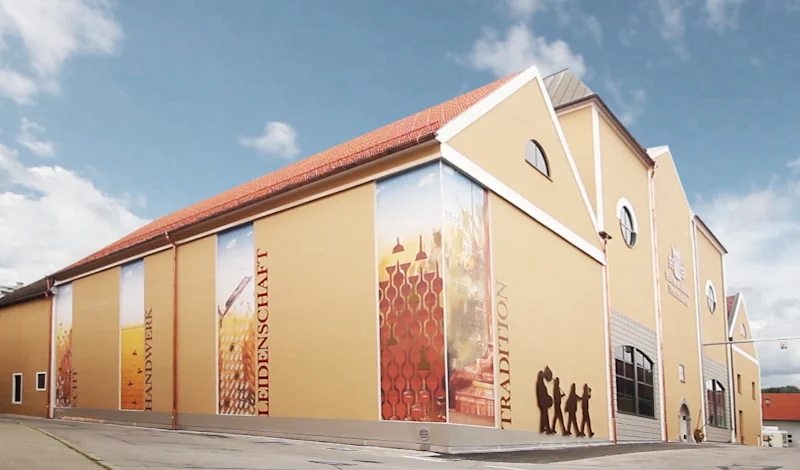
Those looking for photos, reviews, and an honest first impression of the Brewery Hofbräuhaus Traunstein will encounter an institution with real history and a strong presence. The brewery at Hofgasse 6 has been part of Traunstein's beer history since 1612, in the hands of the Sailer family since 1896, and is still operated as a lively family brewery today. Visitors experience not only a place rich in tradition but also an active brewery with tours, a brewery museum, tastings, and the cozy Bräustüberl in the town square. For those seeking to know what to expect on-site, this blend of historical value, craftsmanship, and hospitality is the real charm. The location in Chiemgau, the proximity to the old town, and the strong connection to the city of Traunstein make this site a destination that goes far beyond a classic industrial building. ([traunstein.de](https://www.traunstein.de/tourismus-freizeit/biertradition-in-traunstein/hofbraeuhaus-traunstein/))
Photos and First Impressions of the Historic Brewery
Those searching for images of the brewery usually want to see more than just a facade; they want to understand the feeling that this place radiates. The Hofbräuhaus Traunstein is officially described as a landmark that towers high above the city on its rock and still looks out over Chiemgau today. This elevated location makes the first impression particularly striking: The brewery is not just any operational building, but a visible piece of Traunstein's identity. That is why the location works so well in photos. It appears both historical, artisanal, and vibrant. The silhouette on the wheat beer side shows the main house with the large brewhouse window, the Jacklturm with the passage, St. Oswald Church, and behind it the mountain panorama of the Bavarian Alps. This is not an interchangeable brand image but a very specific place with recognizability. For people searching for photos and impressions, these elements are crucial: the old building substance, the view of the city, and the immediate connection between the brewery, urban space, and alpine backdrop. ([hb-ts.de](https://www.hb-ts.de/geschichte/das-17-jahrhundert/))
Additionally, there is a special connection between tradition and everyday life that is immediately recognizable visually. The Hofbräuhaus Traunstein still delivers its crates, barrels, and original wooden barrel beer in the city area using horse-drawn carriages. There is also the alley sale of fresh Zwicklbier on selected days of the year. Therefore, those who want to experience the brewery photographically or on-site do not just see a beautiful historical object but a business that truly continues old forms of craftsmanship. This blend makes the house interesting for visitors who are looking for impressions, photos, or reviews in advance: There is no pure show facade here, but visible beer culture with real operations, visible transport routes, and a very clear connection to the city. In Traunstein, the Hofbräuhaus is also not isolated but part of a developed beer tradition that is continued by only three breweries in the city. This further enhances the photographic and emotional impact because one always perceives the brewery as part of a larger cultural context. ([traunstein.de](https://www.traunstein.de/tourismus-freizeit/biertradition-in-traunstein/hofbraeuhaus-traunstein/))
History Since 1612 and the Sailer Family
The history of Hofbräuhaus Traunstein begins in 1612. According to official accounts, Duke Maximilian I founded the brewery because Bavaria was transitioning from wine to beer at that time. The years around the founding were marked by poor wine harvests and an increasing demand for beer, especially for wheat beer. This is where Maximilian I intervened: Wheat beer was promoted, a monopoly was established, and a new landmark of the city developed in Traunstein. The official chronicle describes this step as a response to the changing climatic and economic conditions of the time. More than just a brewery emerged from this. It became a piece of national history that remained closely connected to the city of Traunstein and still stands for the Traunstein beer identity today. Therefore, those who visit the location today experience not just a company but the visible continuation of a political, economic, and cultural development that dates back over four centuries. ([hb-ts.de](https://www.hb-ts.de/geschichte/das-17-jahrhundert/))
From 1896, the defining connection with the Sailer family began. According to the official family history, Hofbräuhaus has been a family business for over 125 years. The Sailers had long been brewers and innkeepers; their roots trace back to the 17th century. In 1896, Josef Sailer acquired Hofbräuhaus Traunstein after the brewery had already experienced several fires and setbacks, including a fire in 1704 and the great city fire of 1851. Under the family's leadership, the significance of the house was to be reestablished. Particularly interesting is also the role of gastronomy in the hands of women: The official family page recalls Franziska Fanny Sailer and emphasizes that strong women and hospitality have always been part of the development. This creates the image of a brewery that not only thrives on technology and brewing kettles but also on continuity, responsibility, and family identity. This is exactly what gives Hofbräuhaus Traunstein its charm: One can sense that history is not only told here but also carried forward. ([hb-ts.de](https://www.hb-ts.de/geschichte/familie-sailer/))
Brewery Tour, Brewery Museum, and Beer Tasting
A core argument for a visit is the brewery tour. Hofbräuhaus Traunstein offers a tour through the active brewery and the new brewery museum, where guests are guided through the beer world of the house with many historical and practical information. The official site describes that the tour includes stations such as the historical malt floor, the brewhouse with shiny copper kettles, the fermentation cellar with open tanks, the storage cellar with horizontal tanks, and the bottling of bottles and barrels. Additionally, there are historical scenes of old craft guilds such as coopers and pitchmen. This combination of functioning production and museum mediation is particularly exciting because it not only shows the past but also explains the brewing process in the present. After the tour, there is a small tasting with three beers and a fresh pretzel in the Maximilianstüberl. Therefore, those interested in beer culture do not receive a dry lecture here but a sensory experience with real practical relevance. ([hb-ts.de](https://www.hb-ts.de/brauereifuehrung-neu-und-oefter/))
The tours are clearly organized and can be booked practically. According to official information, the standard tours last about 2.5 hours and currently take place on Wednesdays and Saturdays at 11 a.m., Tuesdays at 2 p.m., and Mondays and Thursdays at 6 p.m. Bookings are only possible with prior registration through the ticket system. In addition, there are special tastings with five beers, a beer connoisseur certificate, and a monthly VIP master brewer tasting with one of the master brewers. Groups, clubs, companies, and schools can also receive special tours by arrangement, even in the evenings and on weekends. For school classes, there is a special format with non-alcoholic beverages and pretzels. The new brewery museum was also awarded the Golden Beer Idea 2023, highlighting the quality of the mediation. Therefore, those looking for an authentic visit with substance will find a tour here that cleanly combines artisanal depth, history, and enjoyment. ([hb-ts.de](https://www.hb-ts.de/brauereifuehrung-neu-und-oefter/))
Directions and Parking in Traunstein
Getting to Traunstein is relatively easy. According to official tourism information, the city is located about 110 kilometers southeast of Munich and about 50 kilometers west of Salzburg in Chiemgau. It is easily accessible via the A8 Munich-Salzburg highway and also has a direct train connection from Munich and Salzburg. For visitors arriving by car, the city offers around 3,000 centrally located parking spaces in parking garages, underground garages, and parking lots. Thus, the old town is generally well accessible, although one should still plan a bit of walking for a visit to Hofgasse. Those traveling from the region or further away can therefore choose flexibly between car and train. This is a practical advantage, especially for day visitors who want to combine the brewery, old town, and perhaps a meal in the Bräustüberl. Traunstein is thus not only scenically attractive but also logistically comfortable. ([traunstein.de](https://www.traunstein.de/tourismus-freizeit/anreise-informationen/))
For the brewery tour itself, Hofbräuhaus recommends the Karl-Theodor parking lot in Traunstein. From there, it is about a 10-minute walk to the brewery, and the official site recommends using the Parkster app. This is important for visitors because the tour starts directly at the location in Hofgasse 6, in the Maximilianstüberl. The practical notes are also clear: The tour is not barrier-free, children are welcome, but pushchairs cannot be taken along, and comfortable flat shoes are recommended. Therefore, those planning the visit should not only keep an eye on the time but also consider a small walk and the fact that it is a tour through an active brewery. This is precisely what makes it appealing: One does not get a sterile exhibition but a lively operational visit with clear pathways, good access from the city center, and a journey that fits well into a walk through Traunstein. ([hb-ts.de](https://www.hb-ts.de/en/brewery-tour/))
Wheat Beer, Zwicklbier, and the Special Brewing Culture
The Hofbräuhaus Traunstein is primarily known as a wheat beer brewery. The official product page explains that the brewery was founded in 1612 as a pure wheat beer brewery and that wheat beer, unlike brown beer, could also be brewed in summer. This is historically interesting because it shows how closely brewing culture and seasons were once connected. The page also describes the role of wheat, the origin of the raw materials from Bavarian growing regions, and the own yeast strain that gives the wheat beer its characteristic fruity character. Particularly noteworthy is also the mention that Hofbräuhaus Traunstein was the world's first brewery to offer wheat beer on tap in the 1980s. This makes the operation not only traditional but also innovative. For people interested in beer styles, labels, and brewing traditions, this is a very exciting point: Here, historical identity meets productive development. ([hb-ts.de](https://www.hb-ts.de/biere/weissbier/))
Part of the house's profile is also the 1612 Zwicklbier. The city of Traunstein points out that this specialty has a original gravity of 12.3 percent and an alcohol content of 5.3 percent by volume. Additionally, there is the aforementioned alley sale of fresh Zwicklbier directly from the storage cellar on selected days of the year. Such offers make the brewery particularly interesting for connoisseurs because they make the connection between production and immediate enjoyment visible. The method of delivery is also part of the brand identity: Wooden barrels are still delivered to the gastronomy in Traunstein by horse-drawn carriage. Together with the fact that wooden barrel beer is traditionally filled by hand, a complete picture emerges that goes far beyond a normal brewery operation. It is a brewing culture that is aware of its origins yet remains vibrant. This tension between tradition, product quality, and visible craftsmanship shapes the reputation of Hofbräuhaus Traunstein. ([traunstein.de](https://www.traunstein.de/tourismus-freizeit/biertradition-in-traunstein/hofbraeuhaus-traunstein/))
Bräustüberl, Hospitality, and the Role in City Life
Hofbräuhaus Traunstein includes more than just the brewery itself. The Bräustüberl in the town square is an important part of the overall experience, as one can enjoy a hearty snack after the tour or wind down the visit comfortably. The official site describes the Bräustüberl as a place for hearty food and friendly hospitality. This is where the difference between a pure production site and a real brewery with a public orientation becomes evident: Those who come should not only see but also arrive. This aligns with the family history, where hospitality and well-being are explicitly mentioned as core components. The Sailer family emphasizes that strong hands and a big heart are still part of the house today. This creates an atmosphere that many visitors perceive as down-to-earth and authentic. Therefore, those looking for photos, reviews, or a place for a half-day trip will find a location here that connects craftsmanship, gastronomy, and city life. ([hb-ts.de](https://www.hb-ts.de/brauereifuehrung-neu-und-oefter/))
For the city of Traunstein itself, Hofbräuhaus is an identity-forming place. The city points out that until the 19th century, nine breweries were active in Traunstein, and today three breweries continue this tradition. Hofbräuhaus Traunstein thus stands for continuity in a place with a pronounced beer history. The brewery is not only a producer but also part of the cultural memory of the city, and it is explicitly mentioned in the official city communication as one of the places where the brewing tradition can still be experienced and tasted today. The fact that the new brewery museum was awarded the Golden Beer Idea in 2023 fits this picture: Here, tradition is not museum-frozen but conveyed in a contemporary manner. This is precisely why the brewery is so well suited for visitors looking for photos or reviews of a special destination. They do not receive an interchangeable gastro place but a strong mix of history, artisanal credibility, regional anchoring, and vibrant hospitality. ([traunstein.de](https://www.traunstein.de/tourismus-freizeit/biertradition-in-traunstein/))
Sources:
Mehr anzeigenWeniger anzeigen
Brewery Hofbräuhaus Traunstein | Photos & Reviews
Those looking for photos, reviews, and an honest first impression of the Brewery Hofbräuhaus Traunstein will encounter an institution with real history and a strong presence. The brewery at Hofgasse 6 has been part of Traunstein's beer history since 1612, in the hands of the Sailer family since 1896, and is still operated as a lively family brewery today. Visitors experience not only a place rich in tradition but also an active brewery with tours, a brewery museum, tastings, and the cozy Bräustüberl in the town square. For those seeking to know what to expect on-site, this blend of historical value, craftsmanship, and hospitality is the real charm. The location in Chiemgau, the proximity to the old town, and the strong connection to the city of Traunstein make this site a destination that goes far beyond a classic industrial building. ([traunstein.de](https://www.traunstein.de/tourismus-freizeit/biertradition-in-traunstein/hofbraeuhaus-traunstein/))
Photos and First Impressions of the Historic Brewery
Those searching for images of the brewery usually want to see more than just a facade; they want to understand the feeling that this place radiates. The Hofbräuhaus Traunstein is officially described as a landmark that towers high above the city on its rock and still looks out over Chiemgau today. This elevated location makes the first impression particularly striking: The brewery is not just any operational building, but a visible piece of Traunstein's identity. That is why the location works so well in photos. It appears both historical, artisanal, and vibrant. The silhouette on the wheat beer side shows the main house with the large brewhouse window, the Jacklturm with the passage, St. Oswald Church, and behind it the mountain panorama of the Bavarian Alps. This is not an interchangeable brand image but a very specific place with recognizability. For people searching for photos and impressions, these elements are crucial: the old building substance, the view of the city, and the immediate connection between the brewery, urban space, and alpine backdrop. ([hb-ts.de](https://www.hb-ts.de/geschichte/das-17-jahrhundert/))
Additionally, there is a special connection between tradition and everyday life that is immediately recognizable visually. The Hofbräuhaus Traunstein still delivers its crates, barrels, and original wooden barrel beer in the city area using horse-drawn carriages. There is also the alley sale of fresh Zwicklbier on selected days of the year. Therefore, those who want to experience the brewery photographically or on-site do not just see a beautiful historical object but a business that truly continues old forms of craftsmanship. This blend makes the house interesting for visitors who are looking for impressions, photos, or reviews in advance: There is no pure show facade here, but visible beer culture with real operations, visible transport routes, and a very clear connection to the city. In Traunstein, the Hofbräuhaus is also not isolated but part of a developed beer tradition that is continued by only three breweries in the city. This further enhances the photographic and emotional impact because one always perceives the brewery as part of a larger cultural context. ([traunstein.de](https://www.traunstein.de/tourismus-freizeit/biertradition-in-traunstein/hofbraeuhaus-traunstein/))
History Since 1612 and the Sailer Family
The history of Hofbräuhaus Traunstein begins in 1612. According to official accounts, Duke Maximilian I founded the brewery because Bavaria was transitioning from wine to beer at that time. The years around the founding were marked by poor wine harvests and an increasing demand for beer, especially for wheat beer. This is where Maximilian I intervened: Wheat beer was promoted, a monopoly was established, and a new landmark of the city developed in Traunstein. The official chronicle describes this step as a response to the changing climatic and economic conditions of the time. More than just a brewery emerged from this. It became a piece of national history that remained closely connected to the city of Traunstein and still stands for the Traunstein beer identity today. Therefore, those who visit the location today experience not just a company but the visible continuation of a political, economic, and cultural development that dates back over four centuries. ([hb-ts.de](https://www.hb-ts.de/geschichte/das-17-jahrhundert/))
From 1896, the defining connection with the Sailer family began. According to the official family history, Hofbräuhaus has been a family business for over 125 years. The Sailers had long been brewers and innkeepers; their roots trace back to the 17th century. In 1896, Josef Sailer acquired Hofbräuhaus Traunstein after the brewery had already experienced several fires and setbacks, including a fire in 1704 and the great city fire of 1851. Under the family's leadership, the significance of the house was to be reestablished. Particularly interesting is also the role of gastronomy in the hands of women: The official family page recalls Franziska Fanny Sailer and emphasizes that strong women and hospitality have always been part of the development. This creates the image of a brewery that not only thrives on technology and brewing kettles but also on continuity, responsibility, and family identity. This is exactly what gives Hofbräuhaus Traunstein its charm: One can sense that history is not only told here but also carried forward. ([hb-ts.de](https://www.hb-ts.de/geschichte/familie-sailer/))
Brewery Tour, Brewery Museum, and Beer Tasting
A core argument for a visit is the brewery tour. Hofbräuhaus Traunstein offers a tour through the active brewery and the new brewery museum, where guests are guided through the beer world of the house with many historical and practical information. The official site describes that the tour includes stations such as the historical malt floor, the brewhouse with shiny copper kettles, the fermentation cellar with open tanks, the storage cellar with horizontal tanks, and the bottling of bottles and barrels. Additionally, there are historical scenes of old craft guilds such as coopers and pitchmen. This combination of functioning production and museum mediation is particularly exciting because it not only shows the past but also explains the brewing process in the present. After the tour, there is a small tasting with three beers and a fresh pretzel in the Maximilianstüberl. Therefore, those interested in beer culture do not receive a dry lecture here but a sensory experience with real practical relevance. ([hb-ts.de](https://www.hb-ts.de/brauereifuehrung-neu-und-oefter/))
The tours are clearly organized and can be booked practically. According to official information, the standard tours last about 2.5 hours and currently take place on Wednesdays and Saturdays at 11 a.m., Tuesdays at 2 p.m., and Mondays and Thursdays at 6 p.m. Bookings are only possible with prior registration through the ticket system. In addition, there are special tastings with five beers, a beer connoisseur certificate, and a monthly VIP master brewer tasting with one of the master brewers. Groups, clubs, companies, and schools can also receive special tours by arrangement, even in the evenings and on weekends. For school classes, there is a special format with non-alcoholic beverages and pretzels. The new brewery museum was also awarded the Golden Beer Idea 2023, highlighting the quality of the mediation. Therefore, those looking for an authentic visit with substance will find a tour here that cleanly combines artisanal depth, history, and enjoyment. ([hb-ts.de](https://www.hb-ts.de/brauereifuehrung-neu-und-oefter/))
Directions and Parking in Traunstein
Getting to Traunstein is relatively easy. According to official tourism information, the city is located about 110 kilometers southeast of Munich and about 50 kilometers west of Salzburg in Chiemgau. It is easily accessible via the A8 Munich-Salzburg highway and also has a direct train connection from Munich and Salzburg. For visitors arriving by car, the city offers around 3,000 centrally located parking spaces in parking garages, underground garages, and parking lots. Thus, the old town is generally well accessible, although one should still plan a bit of walking for a visit to Hofgasse. Those traveling from the region or further away can therefore choose flexibly between car and train. This is a practical advantage, especially for day visitors who want to combine the brewery, old town, and perhaps a meal in the Bräustüberl. Traunstein is thus not only scenically attractive but also logistically comfortable. ([traunstein.de](https://www.traunstein.de/tourismus-freizeit/anreise-informationen/))
For the brewery tour itself, Hofbräuhaus recommends the Karl-Theodor parking lot in Traunstein. From there, it is about a 10-minute walk to the brewery, and the official site recommends using the Parkster app. This is important for visitors because the tour starts directly at the location in Hofgasse 6, in the Maximilianstüberl. The practical notes are also clear: The tour is not barrier-free, children are welcome, but pushchairs cannot be taken along, and comfortable flat shoes are recommended. Therefore, those planning the visit should not only keep an eye on the time but also consider a small walk and the fact that it is a tour through an active brewery. This is precisely what makes it appealing: One does not get a sterile exhibition but a lively operational visit with clear pathways, good access from the city center, and a journey that fits well into a walk through Traunstein. ([hb-ts.de](https://www.hb-ts.de/en/brewery-tour/))
Wheat Beer, Zwicklbier, and the Special Brewing Culture
The Hofbräuhaus Traunstein is primarily known as a wheat beer brewery. The official product page explains that the brewery was founded in 1612 as a pure wheat beer brewery and that wheat beer, unlike brown beer, could also be brewed in summer. This is historically interesting because it shows how closely brewing culture and seasons were once connected. The page also describes the role of wheat, the origin of the raw materials from Bavarian growing regions, and the own yeast strain that gives the wheat beer its characteristic fruity character. Particularly noteworthy is also the mention that Hofbräuhaus Traunstein was the world's first brewery to offer wheat beer on tap in the 1980s. This makes the operation not only traditional but also innovative. For people interested in beer styles, labels, and brewing traditions, this is a very exciting point: Here, historical identity meets productive development. ([hb-ts.de](https://www.hb-ts.de/biere/weissbier/))
Part of the house's profile is also the 1612 Zwicklbier. The city of Traunstein points out that this specialty has a original gravity of 12.3 percent and an alcohol content of 5.3 percent by volume. Additionally, there is the aforementioned alley sale of fresh Zwicklbier directly from the storage cellar on selected days of the year. Such offers make the brewery particularly interesting for connoisseurs because they make the connection between production and immediate enjoyment visible. The method of delivery is also part of the brand identity: Wooden barrels are still delivered to the gastronomy in Traunstein by horse-drawn carriage. Together with the fact that wooden barrel beer is traditionally filled by hand, a complete picture emerges that goes far beyond a normal brewery operation. It is a brewing culture that is aware of its origins yet remains vibrant. This tension between tradition, product quality, and visible craftsmanship shapes the reputation of Hofbräuhaus Traunstein. ([traunstein.de](https://www.traunstein.de/tourismus-freizeit/biertradition-in-traunstein/hofbraeuhaus-traunstein/))
Bräustüberl, Hospitality, and the Role in City Life
Hofbräuhaus Traunstein includes more than just the brewery itself. The Bräustüberl in the town square is an important part of the overall experience, as one can enjoy a hearty snack after the tour or wind down the visit comfortably. The official site describes the Bräustüberl as a place for hearty food and friendly hospitality. This is where the difference between a pure production site and a real brewery with a public orientation becomes evident: Those who come should not only see but also arrive. This aligns with the family history, where hospitality and well-being are explicitly mentioned as core components. The Sailer family emphasizes that strong hands and a big heart are still part of the house today. This creates an atmosphere that many visitors perceive as down-to-earth and authentic. Therefore, those looking for photos, reviews, or a place for a half-day trip will find a location here that connects craftsmanship, gastronomy, and city life. ([hb-ts.de](https://www.hb-ts.de/brauereifuehrung-neu-und-oefter/))
For the city of Traunstein itself, Hofbräuhaus is an identity-forming place. The city points out that until the 19th century, nine breweries were active in Traunstein, and today three breweries continue this tradition. Hofbräuhaus Traunstein thus stands for continuity in a place with a pronounced beer history. The brewery is not only a producer but also part of the cultural memory of the city, and it is explicitly mentioned in the official city communication as one of the places where the brewing tradition can still be experienced and tasted today. The fact that the new brewery museum was awarded the Golden Beer Idea in 2023 fits this picture: Here, tradition is not museum-frozen but conveyed in a contemporary manner. This is precisely why the brewery is so well suited for visitors looking for photos or reviews of a special destination. They do not receive an interchangeable gastro place but a strong mix of history, artisanal credibility, regional anchoring, and vibrant hospitality. ([traunstein.de](https://www.traunstein.de/tourismus-freizeit/biertradition-in-traunstein/))
Sources:
Upcoming Events
No events found
Frequently Asked Questions
Reviews
andrei kope
22. June 2024
Hello from Brașov, Romania. :) This beer traveled a bit. Traunstein-Berlin-Munich-Sibiu-Brașov :)
Pavel Hrdlička
25. August 2022
An honest beer with hops that smell of fruit. Light, full-bodied, pleasant.
Sarah Cafaro
27. June 2025
I understand completely the fact we were 15 minutes late but the way the waitress handled the situation was very aggressive and unpolite. She could’ve been much nicer and for instance as a local recommend restaurants that were still open.
Cornelius Schmahl
10. July 2024
Amazing Brewery, great and funny tour. Beer is incredible, especial the special Weissbier, probably the best I ever had.
Mr PSayers
10. October 2025
Excellent food, real 'German' atmosphere, super friendly and attentive staff (without being intrusive).