
Brannenburg
Biberhöhe 7, 83098 Brannenburg, Deutschland
Biber | Biberhöhe & Magdalenenkirche
The Biber in Brannenburg is a destination for those who evaluate a location not just by square meters, but by atmosphere. At Biberhöhe, natural monument, sacred building, Stations of the Cross, and hiking trail combine to create a place that is much more than a single building. The approximately 40-meter high conglomerate rock formation dates back to the last Ice Age and, despite its manageable size, acts like a stage above the town: calm, historic, and full of small details that one only discovers while walking. This very mix makes the Biber so interesting for visitors, families, culture enthusiasts, and walkers. ([chiemsee-alpenland.de](https://www.chiemsee-alpenland.de/entdecken/tourenportal/biber-steinbruch-rundweg-3bc1a9da00))
Those searching for Biberhöhe, Magdalenenkirche, Stations of the Cross, access, or parking usually want to find this connection of nature and orientation. On-site, one should not misunderstand the place as a classic event arena, but rather as a landscape and cultural space that thrives on the marked paths. The Biber is partly privately owned, so consideration for the marked routes is important; at the same time, the historical circular path, the view, and the proximity to Brannenburg make the visit easy to plan. Thus, a place is created that is quiet yet tells a lot. ([chiemsee-alpenland.de](https://www.chiemsee-alpenland.de/entdecken/tourenportal/wanderung-zur-biberhoehe-br3-ba2b590634))
Biberhöhe, Natural Monument and Scenic Experience
The Biber is, from a landscape perspective, an astonishingly compact yet very distinctive point in the Brannenburg area. The descriptions of tours and attractions in the region emphasize that it is a conglomerate rock formation that rises about 40 meters and is embedded in the landscape of the last Ice Age. This is precisely what creates its characteristic charm: The Biber is neither a peak in the classical sense nor just a piece of forest, but an independent natural area with edges, steps, rock, and meadow. For visitors, this means a very immediate change of movement, view, and quiet interspaces. Those who are out here do not experience a staged backdrop, but a place where geology and culture naturally intertwine. ([chiemsee-alpenland.de](https://www.chiemsee-alpenland.de/entdecken/tourenportal/biber-steinbruch-rundweg-3bc1a9da00))
The location on the forest meadow above the rocky landscape ensures that the place noticeably changes with the seasons. In summer, the view opens up to Riesenkopf and Maiwand, while in winter, the gaze turns to the opposite Peterskircherl. This very change is particularly relevant for inquiries about Biberhöhe, views, and walks, as it shows that the Biber is not only a historic site but also a scenic experience. Those who enjoy photography, hiking, or moving at a slower pace will find numerous motifs here without having to take long paths. ([brannenburg.de](https://www.brannenburg.de/orte/kirchen/wallfahrtskirche-st-magdalena/))
At the same time, the Biber remains a sensitive area. The official tour guidelines make it clear that parts of the area are private and that active quarries are located in the eastern and southern sections. For the visit, this means not giving up, but being mindful: stay on the marked paths, wear sturdy footwear, and use the place as intended. This very mix of accessibility and consideration gives the Biber a pleasant tranquility. It is not a loud recreational arena, but a place that one explores on foot and thus experiences more intensively. ([chiemsee-alpenland.de](https://www.chiemsee-alpenland.de/entdecken/tourenportal/wanderung-zur-biberhoehe-br3-ba2b590634))
Magdalenenkirche and Stations of the Cross at the Biber
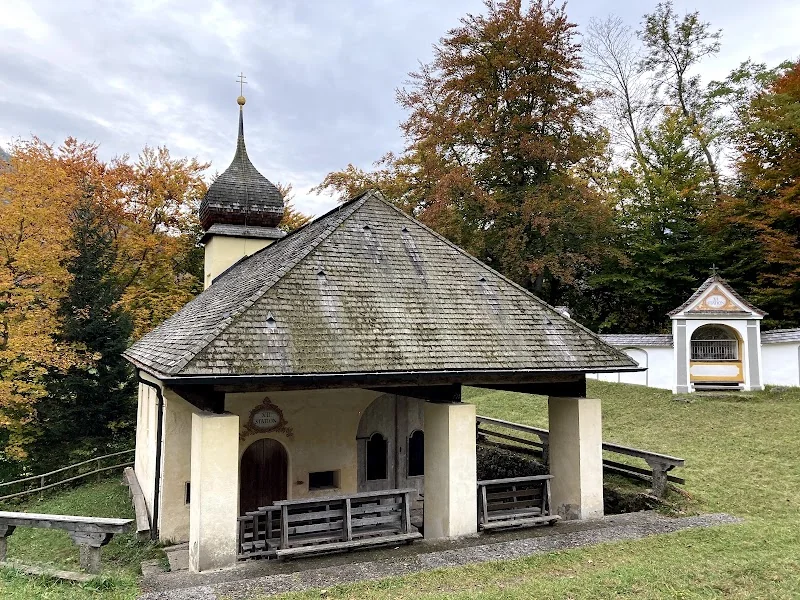
At the center of the Biber stands the former pilgrimage church of St. Maria Magdalena, which was built in 1628/29 by the hermit Johannes Schelle and consecrated in 1636. The church is located in the middle of a forest meadow and is oriented southwest, unlike many traditionally east-facing churches. This architectural peculiarity makes it interesting not only for believers but also for anyone fascinated by historic sacred architecture and local cultural history. The Magdalenenkirche is thus an important reason why the term Biber in Brannenburg is so frequently searched in connection with church, history, and walking. ([brannenburg.de](https://www.brannenburg.de/orte/kirchen/wallfahrtskirche-st-magdalena/))
Particularly significant is the Stations of the Cross, which was created between 1733 and 1736 and has largely remained in its original condition with its 15 stations. The layout is horseshoe-shaped; the individual stations are designed as chapels, and it is unusual that even the resurrection of Christ is included in the Stations of the Cross. Thus, the Biber belongs to the early Stations of the Cross installations in Bavaria and stands out clearly from many other pilgrimage sites. Those who visit the Biber thus receive not only a beautiful view but also a spiritually and art-historically remarkable walk that unfolds step by step. ([brannenburg.de](https://www.brannenburg.de/orte/kirchen/wallfahrtskirche-st-magdalena/))
Below the church, there are naturally formed rock caves that once served as additional places of devotion. The tradition surrounding the site also tells of a life of simplicity and seclusion: The settlement of Biberhöhe has been documented as far back as the early 19th century, and the last hermit died in 1813. Together with the historic Stations of the Cross, the old church, and the open landscape, this creates an image that goes far beyond an ordinary attraction. The Biber is therefore a place for people who like to read history directly on site and not just in books. ([brannenburg.de](https://www.brannenburg.de/orte/kirchen/wallfahrtskirche-st-magdalena/))
Access, Parking, and Orientation on Site
Those who wish to visit the Biber by public transport start at Brannenburg train station. Several regional tours connect the station with the paths around the Biber, and the official route description leads from the tourist information through the town center and Kirchstraße further towards Biberhöhe. This makes the visit well-planned, even if one is traveling without a car. The path is not only functional but also part of the experience: even before reaching the actual Biber, sightlines open up to the districts, churches, and the landscape of the Inn Valley. ([chiemsee-alpenland.de](https://www.chiemsee-alpenland.de/entdecken/tourenportal/wanderung-zur-biberhoehe-br3-ba2b590634))
For drivers, parking options are mentioned in the tour descriptions at Kirchenstraße and the town hall. Other routes from the vicinity of Degerndorf also refer to the district itself as a starting and parking area. Thus, access is uncomplicated, as long as one keeps an eye on the respective starting point. Especially for a short but versatile hike, this is helpful, as visitors do not have to search but can directly enter the circular path. The combination of train station, tourist information, public parking, and clear waypoints makes the Biber a well-organized destination for day visitors. ([chiemsee-alpenland.de](https://www.chiemsee-alpenland.de/entdecken/tourenportal/wanderung-zur-biberhoehe-br3-ba2b590634))
The circular tours around the Biber are clearly described in practice: From the tourist information, it goes via Kirchstraße, crossing Sudelfeldstraße, Kammerlanderweg, Haus Marini, the Grad quarry, the stone steps, and finally to the pilgrimage church of St. Maria Magdalena. After that, the path continues over Biberhöhe back. The official description also points out that the pure walking time is about a good hour, but more time should be planned for visits and information boards. This makes orientation pleasant: the Biber is manageable, but not to be experienced in a hurry. ([chiemsee-alpenland.de](https://www.chiemsee-alpenland.de/entdecken/tourenportal/wanderung-zur-biberhoehe-br3-ba2b590634))
Conglomerate, Quarries, and Biberstein
The Biber is not only a natural and cultural space but also a place with a pronounced stone and craftsmanship tradition. The official Brannenburg information emphasizes that conglomerate is still being quarried and processed at the natural monument Biber. Three large quarries at the Biber extract the coveted natural stone, and local descriptions make it clear how closely landscape and work are connected here. The Biberstein is not just a material but part of a long regional identity that ranges from millstones to church construction to modern design. ([brannenburg.de](https://www.brannenburg.de/orte/steinbrueche/steinbruch-feicht/))
The familial and craft stories are remarkably concrete. The craft company Feicht has been extracting conglomerate at the Biber since 1868, the quarry family Huber refers to quarry rights dating back to 1597, and the Grad conglomerate works have been in family ownership since 1773. The quarried stone is still processed by experienced stonemasons or used as natural stone slabs. Such details explain why the Biber is perceived not only as a pretty viewpoint but also as a genuine economic and cultural place. ([brannenburg.de](https://www.brannenburg.de/orte/steinbrueche/steinbruch-feicht/))
Magdalenenfest, Biberleuchten, and Special Moments
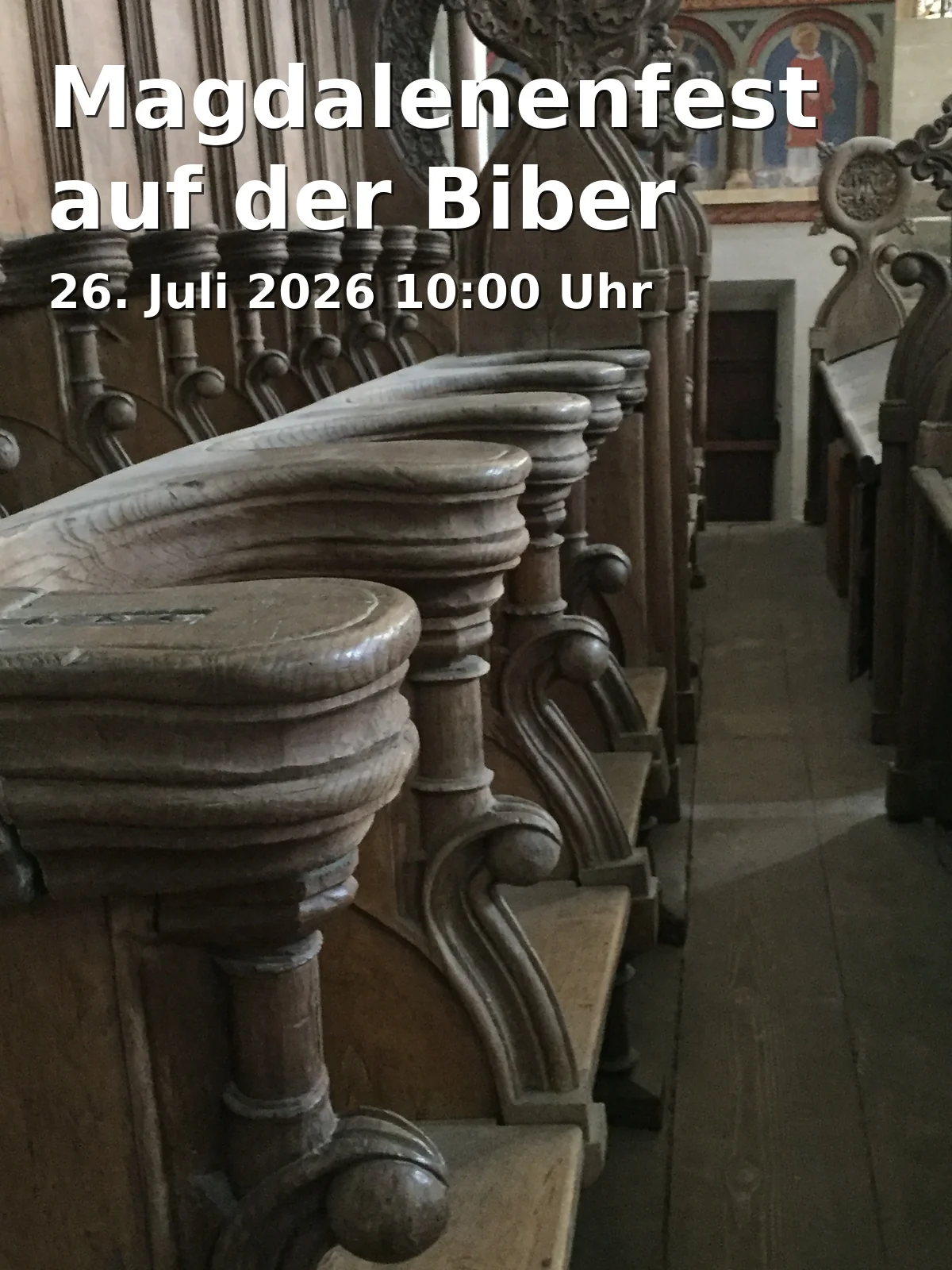
Among the most well-known events at the Biber is the Magdalenenfest in July. The community page describes it as a customs and cultural event at the festival site at the Biber, with an outdoor service and subsequent breakfast in the large kitchen hut, weather permitting. The festival site is located below the church in the forest and fits perfectly with the character of the place: no big city staging, but a regionally rooted festival at a spiritually and scenically special place. For visitors looking for events in Brannenburg, this is a clear anchor point. ([brannenburg.de](https://www.brannenburg.de/aktuelles-und-veranstaltungen/?utm_source=openai))
In addition, the Biberleuchten provides a different, atmospheric kind of attention. The event description speaks of an illuminated Biber, where rocks, stalls, and trees are staged with artificial and natural light. This shifts the focus from daytime hiking to an evening experience that emphasizes the landscape in a very unique way. Together with the historic church, the Stations of the Cross, and the quarries, a place is created that appeals to different target groups: hikers, culture enthusiasts, photographers, friends of customs, and all those who seek special places not in large programs but in their impact. ([b458d3ef-d006-45b4-a8c1-d473aa42f4b9.hey.at](https://b458d3ef-d006-45b4-a8c1-d473aa42f4b9.hey.at/events/139187?utm_source=openai))
Sources:
- Brannenburg - Pilgrimage Church of St. Magdalena
- Chiemsee-Alpenland Tourism - St. Maria Magdalena Church at the Biber
- Chiemsee-Alpenland Tourism - Biber - Quarry - Circular Path
- Chiemsee-Alpenland Tourism - Hike to Biberhöhe BR3
- Brannenburg - News and Events
- Brannenburg - Quarry Feicht
- Brannenburg - Quarry Huber
- Brannenburg - Quarry Grad
Mehr anzeigenWeniger anzeigen
Biber | Biberhöhe & Magdalenenkirche
The Biber in Brannenburg is a destination for those who evaluate a location not just by square meters, but by atmosphere. At Biberhöhe, natural monument, sacred building, Stations of the Cross, and hiking trail combine to create a place that is much more than a single building. The approximately 40-meter high conglomerate rock formation dates back to the last Ice Age and, despite its manageable size, acts like a stage above the town: calm, historic, and full of small details that one only discovers while walking. This very mix makes the Biber so interesting for visitors, families, culture enthusiasts, and walkers. ([chiemsee-alpenland.de](https://www.chiemsee-alpenland.de/entdecken/tourenportal/biber-steinbruch-rundweg-3bc1a9da00))
Those searching for Biberhöhe, Magdalenenkirche, Stations of the Cross, access, or parking usually want to find this connection of nature and orientation. On-site, one should not misunderstand the place as a classic event arena, but rather as a landscape and cultural space that thrives on the marked paths. The Biber is partly privately owned, so consideration for the marked routes is important; at the same time, the historical circular path, the view, and the proximity to Brannenburg make the visit easy to plan. Thus, a place is created that is quiet yet tells a lot. ([chiemsee-alpenland.de](https://www.chiemsee-alpenland.de/entdecken/tourenportal/wanderung-zur-biberhoehe-br3-ba2b590634))
Biberhöhe, Natural Monument and Scenic Experience
The Biber is, from a landscape perspective, an astonishingly compact yet very distinctive point in the Brannenburg area. The descriptions of tours and attractions in the region emphasize that it is a conglomerate rock formation that rises about 40 meters and is embedded in the landscape of the last Ice Age. This is precisely what creates its characteristic charm: The Biber is neither a peak in the classical sense nor just a piece of forest, but an independent natural area with edges, steps, rock, and meadow. For visitors, this means a very immediate change of movement, view, and quiet interspaces. Those who are out here do not experience a staged backdrop, but a place where geology and culture naturally intertwine. ([chiemsee-alpenland.de](https://www.chiemsee-alpenland.de/entdecken/tourenportal/biber-steinbruch-rundweg-3bc1a9da00))
The location on the forest meadow above the rocky landscape ensures that the place noticeably changes with the seasons. In summer, the view opens up to Riesenkopf and Maiwand, while in winter, the gaze turns to the opposite Peterskircherl. This very change is particularly relevant for inquiries about Biberhöhe, views, and walks, as it shows that the Biber is not only a historic site but also a scenic experience. Those who enjoy photography, hiking, or moving at a slower pace will find numerous motifs here without having to take long paths. ([brannenburg.de](https://www.brannenburg.de/orte/kirchen/wallfahrtskirche-st-magdalena/))
At the same time, the Biber remains a sensitive area. The official tour guidelines make it clear that parts of the area are private and that active quarries are located in the eastern and southern sections. For the visit, this means not giving up, but being mindful: stay on the marked paths, wear sturdy footwear, and use the place as intended. This very mix of accessibility and consideration gives the Biber a pleasant tranquility. It is not a loud recreational arena, but a place that one explores on foot and thus experiences more intensively. ([chiemsee-alpenland.de](https://www.chiemsee-alpenland.de/entdecken/tourenportal/wanderung-zur-biberhoehe-br3-ba2b590634))
Magdalenenkirche and Stations of the Cross at the Biber
At the center of the Biber stands the former pilgrimage church of St. Maria Magdalena, which was built in 1628/29 by the hermit Johannes Schelle and consecrated in 1636. The church is located in the middle of a forest meadow and is oriented southwest, unlike many traditionally east-facing churches. This architectural peculiarity makes it interesting not only for believers but also for anyone fascinated by historic sacred architecture and local cultural history. The Magdalenenkirche is thus an important reason why the term Biber in Brannenburg is so frequently searched in connection with church, history, and walking. ([brannenburg.de](https://www.brannenburg.de/orte/kirchen/wallfahrtskirche-st-magdalena/))
Particularly significant is the Stations of the Cross, which was created between 1733 and 1736 and has largely remained in its original condition with its 15 stations. The layout is horseshoe-shaped; the individual stations are designed as chapels, and it is unusual that even the resurrection of Christ is included in the Stations of the Cross. Thus, the Biber belongs to the early Stations of the Cross installations in Bavaria and stands out clearly from many other pilgrimage sites. Those who visit the Biber thus receive not only a beautiful view but also a spiritually and art-historically remarkable walk that unfolds step by step. ([brannenburg.de](https://www.brannenburg.de/orte/kirchen/wallfahrtskirche-st-magdalena/))
Below the church, there are naturally formed rock caves that once served as additional places of devotion. The tradition surrounding the site also tells of a life of simplicity and seclusion: The settlement of Biberhöhe has been documented as far back as the early 19th century, and the last hermit died in 1813. Together with the historic Stations of the Cross, the old church, and the open landscape, this creates an image that goes far beyond an ordinary attraction. The Biber is therefore a place for people who like to read history directly on site and not just in books. ([brannenburg.de](https://www.brannenburg.de/orte/kirchen/wallfahrtskirche-st-magdalena/))
Access, Parking, and Orientation on Site
Those who wish to visit the Biber by public transport start at Brannenburg train station. Several regional tours connect the station with the paths around the Biber, and the official route description leads from the tourist information through the town center and Kirchstraße further towards Biberhöhe. This makes the visit well-planned, even if one is traveling without a car. The path is not only functional but also part of the experience: even before reaching the actual Biber, sightlines open up to the districts, churches, and the landscape of the Inn Valley. ([chiemsee-alpenland.de](https://www.chiemsee-alpenland.de/entdecken/tourenportal/wanderung-zur-biberhoehe-br3-ba2b590634))
For drivers, parking options are mentioned in the tour descriptions at Kirchenstraße and the town hall. Other routes from the vicinity of Degerndorf also refer to the district itself as a starting and parking area. Thus, access is uncomplicated, as long as one keeps an eye on the respective starting point. Especially for a short but versatile hike, this is helpful, as visitors do not have to search but can directly enter the circular path. The combination of train station, tourist information, public parking, and clear waypoints makes the Biber a well-organized destination for day visitors. ([chiemsee-alpenland.de](https://www.chiemsee-alpenland.de/entdecken/tourenportal/wanderung-zur-biberhoehe-br3-ba2b590634))
The circular tours around the Biber are clearly described in practice: From the tourist information, it goes via Kirchstraße, crossing Sudelfeldstraße, Kammerlanderweg, Haus Marini, the Grad quarry, the stone steps, and finally to the pilgrimage church of St. Maria Magdalena. After that, the path continues over Biberhöhe back. The official description also points out that the pure walking time is about a good hour, but more time should be planned for visits and information boards. This makes orientation pleasant: the Biber is manageable, but not to be experienced in a hurry. ([chiemsee-alpenland.de](https://www.chiemsee-alpenland.de/entdecken/tourenportal/wanderung-zur-biberhoehe-br3-ba2b590634))
Conglomerate, Quarries, and Biberstein
The Biber is not only a natural and cultural space but also a place with a pronounced stone and craftsmanship tradition. The official Brannenburg information emphasizes that conglomerate is still being quarried and processed at the natural monument Biber. Three large quarries at the Biber extract the coveted natural stone, and local descriptions make it clear how closely landscape and work are connected here. The Biberstein is not just a material but part of a long regional identity that ranges from millstones to church construction to modern design. ([brannenburg.de](https://www.brannenburg.de/orte/steinbrueche/steinbruch-feicht/))
The familial and craft stories are remarkably concrete. The craft company Feicht has been extracting conglomerate at the Biber since 1868, the quarry family Huber refers to quarry rights dating back to 1597, and the Grad conglomerate works have been in family ownership since 1773. The quarried stone is still processed by experienced stonemasons or used as natural stone slabs. Such details explain why the Biber is perceived not only as a pretty viewpoint but also as a genuine economic and cultural place. ([brannenburg.de](https://www.brannenburg.de/orte/steinbrueche/steinbruch-feicht/))
Magdalenenfest, Biberleuchten, and Special Moments
Among the most well-known events at the Biber is the Magdalenenfest in July. The community page describes it as a customs and cultural event at the festival site at the Biber, with an outdoor service and subsequent breakfast in the large kitchen hut, weather permitting. The festival site is located below the church in the forest and fits perfectly with the character of the place: no big city staging, but a regionally rooted festival at a spiritually and scenically special place. For visitors looking for events in Brannenburg, this is a clear anchor point. ([brannenburg.de](https://www.brannenburg.de/aktuelles-und-veranstaltungen/?utm_source=openai))
In addition, the Biberleuchten provides a different, atmospheric kind of attention. The event description speaks of an illuminated Biber, where rocks, stalls, and trees are staged with artificial and natural light. This shifts the focus from daytime hiking to an evening experience that emphasizes the landscape in a very unique way. Together with the historic church, the Stations of the Cross, and the quarries, a place is created that appeals to different target groups: hikers, culture enthusiasts, photographers, friends of customs, and all those who seek special places not in large programs but in their impact. ([b458d3ef-d006-45b4-a8c1-d473aa42f4b9.hey.at](https://b458d3ef-d006-45b4-a8c1-d473aa42f4b9.hey.at/events/139187?utm_source=openai))
Sources:
- Brannenburg - Pilgrimage Church of St. Magdalena
- Chiemsee-Alpenland Tourism - St. Maria Magdalena Church at the Biber
- Chiemsee-Alpenland Tourism - Biber - Quarry - Circular Path
- Chiemsee-Alpenland Tourism - Hike to Biberhöhe BR3
- Brannenburg - News and Events
- Brannenburg - Quarry Feicht
- Brannenburg - Quarry Huber
- Brannenburg - Quarry Grad
Biber | Biberhöhe & Magdalenenkirche
The Biber in Brannenburg is a destination for those who evaluate a location not just by square meters, but by atmosphere. At Biberhöhe, natural monument, sacred building, Stations of the Cross, and hiking trail combine to create a place that is much more than a single building. The approximately 40-meter high conglomerate rock formation dates back to the last Ice Age and, despite its manageable size, acts like a stage above the town: calm, historic, and full of small details that one only discovers while walking. This very mix makes the Biber so interesting for visitors, families, culture enthusiasts, and walkers. ([chiemsee-alpenland.de](https://www.chiemsee-alpenland.de/entdecken/tourenportal/biber-steinbruch-rundweg-3bc1a9da00))
Those searching for Biberhöhe, Magdalenenkirche, Stations of the Cross, access, or parking usually want to find this connection of nature and orientation. On-site, one should not misunderstand the place as a classic event arena, but rather as a landscape and cultural space that thrives on the marked paths. The Biber is partly privately owned, so consideration for the marked routes is important; at the same time, the historical circular path, the view, and the proximity to Brannenburg make the visit easy to plan. Thus, a place is created that is quiet yet tells a lot. ([chiemsee-alpenland.de](https://www.chiemsee-alpenland.de/entdecken/tourenportal/wanderung-zur-biberhoehe-br3-ba2b590634))
Biberhöhe, Natural Monument and Scenic Experience
The Biber is, from a landscape perspective, an astonishingly compact yet very distinctive point in the Brannenburg area. The descriptions of tours and attractions in the region emphasize that it is a conglomerate rock formation that rises about 40 meters and is embedded in the landscape of the last Ice Age. This is precisely what creates its characteristic charm: The Biber is neither a peak in the classical sense nor just a piece of forest, but an independent natural area with edges, steps, rock, and meadow. For visitors, this means a very immediate change of movement, view, and quiet interspaces. Those who are out here do not experience a staged backdrop, but a place where geology and culture naturally intertwine. ([chiemsee-alpenland.de](https://www.chiemsee-alpenland.de/entdecken/tourenportal/biber-steinbruch-rundweg-3bc1a9da00))
The location on the forest meadow above the rocky landscape ensures that the place noticeably changes with the seasons. In summer, the view opens up to Riesenkopf and Maiwand, while in winter, the gaze turns to the opposite Peterskircherl. This very change is particularly relevant for inquiries about Biberhöhe, views, and walks, as it shows that the Biber is not only a historic site but also a scenic experience. Those who enjoy photography, hiking, or moving at a slower pace will find numerous motifs here without having to take long paths. ([brannenburg.de](https://www.brannenburg.de/orte/kirchen/wallfahrtskirche-st-magdalena/))
At the same time, the Biber remains a sensitive area. The official tour guidelines make it clear that parts of the area are private and that active quarries are located in the eastern and southern sections. For the visit, this means not giving up, but being mindful: stay on the marked paths, wear sturdy footwear, and use the place as intended. This very mix of accessibility and consideration gives the Biber a pleasant tranquility. It is not a loud recreational arena, but a place that one explores on foot and thus experiences more intensively. ([chiemsee-alpenland.de](https://www.chiemsee-alpenland.de/entdecken/tourenportal/wanderung-zur-biberhoehe-br3-ba2b590634))
Magdalenenkirche and Stations of the Cross at the Biber
At the center of the Biber stands the former pilgrimage church of St. Maria Magdalena, which was built in 1628/29 by the hermit Johannes Schelle and consecrated in 1636. The church is located in the middle of a forest meadow and is oriented southwest, unlike many traditionally east-facing churches. This architectural peculiarity makes it interesting not only for believers but also for anyone fascinated by historic sacred architecture and local cultural history. The Magdalenenkirche is thus an important reason why the term Biber in Brannenburg is so frequently searched in connection with church, history, and walking. ([brannenburg.de](https://www.brannenburg.de/orte/kirchen/wallfahrtskirche-st-magdalena/))
Particularly significant is the Stations of the Cross, which was created between 1733 and 1736 and has largely remained in its original condition with its 15 stations. The layout is horseshoe-shaped; the individual stations are designed as chapels, and it is unusual that even the resurrection of Christ is included in the Stations of the Cross. Thus, the Biber belongs to the early Stations of the Cross installations in Bavaria and stands out clearly from many other pilgrimage sites. Those who visit the Biber thus receive not only a beautiful view but also a spiritually and art-historically remarkable walk that unfolds step by step. ([brannenburg.de](https://www.brannenburg.de/orte/kirchen/wallfahrtskirche-st-magdalena/))
Below the church, there are naturally formed rock caves that once served as additional places of devotion. The tradition surrounding the site also tells of a life of simplicity and seclusion: The settlement of Biberhöhe has been documented as far back as the early 19th century, and the last hermit died in 1813. Together with the historic Stations of the Cross, the old church, and the open landscape, this creates an image that goes far beyond an ordinary attraction. The Biber is therefore a place for people who like to read history directly on site and not just in books. ([brannenburg.de](https://www.brannenburg.de/orte/kirchen/wallfahrtskirche-st-magdalena/))
Access, Parking, and Orientation on Site
Those who wish to visit the Biber by public transport start at Brannenburg train station. Several regional tours connect the station with the paths around the Biber, and the official route description leads from the tourist information through the town center and Kirchstraße further towards Biberhöhe. This makes the visit well-planned, even if one is traveling without a car. The path is not only functional but also part of the experience: even before reaching the actual Biber, sightlines open up to the districts, churches, and the landscape of the Inn Valley. ([chiemsee-alpenland.de](https://www.chiemsee-alpenland.de/entdecken/tourenportal/wanderung-zur-biberhoehe-br3-ba2b590634))
For drivers, parking options are mentioned in the tour descriptions at Kirchenstraße and the town hall. Other routes from the vicinity of Degerndorf also refer to the district itself as a starting and parking area. Thus, access is uncomplicated, as long as one keeps an eye on the respective starting point. Especially for a short but versatile hike, this is helpful, as visitors do not have to search but can directly enter the circular path. The combination of train station, tourist information, public parking, and clear waypoints makes the Biber a well-organized destination for day visitors. ([chiemsee-alpenland.de](https://www.chiemsee-alpenland.de/entdecken/tourenportal/wanderung-zur-biberhoehe-br3-ba2b590634))
The circular tours around the Biber are clearly described in practice: From the tourist information, it goes via Kirchstraße, crossing Sudelfeldstraße, Kammerlanderweg, Haus Marini, the Grad quarry, the stone steps, and finally to the pilgrimage church of St. Maria Magdalena. After that, the path continues over Biberhöhe back. The official description also points out that the pure walking time is about a good hour, but more time should be planned for visits and information boards. This makes orientation pleasant: the Biber is manageable, but not to be experienced in a hurry. ([chiemsee-alpenland.de](https://www.chiemsee-alpenland.de/entdecken/tourenportal/wanderung-zur-biberhoehe-br3-ba2b590634))
Conglomerate, Quarries, and Biberstein
The Biber is not only a natural and cultural space but also a place with a pronounced stone and craftsmanship tradition. The official Brannenburg information emphasizes that conglomerate is still being quarried and processed at the natural monument Biber. Three large quarries at the Biber extract the coveted natural stone, and local descriptions make it clear how closely landscape and work are connected here. The Biberstein is not just a material but part of a long regional identity that ranges from millstones to church construction to modern design. ([brannenburg.de](https://www.brannenburg.de/orte/steinbrueche/steinbruch-feicht/))
The familial and craft stories are remarkably concrete. The craft company Feicht has been extracting conglomerate at the Biber since 1868, the quarry family Huber refers to quarry rights dating back to 1597, and the Grad conglomerate works have been in family ownership since 1773. The quarried stone is still processed by experienced stonemasons or used as natural stone slabs. Such details explain why the Biber is perceived not only as a pretty viewpoint but also as a genuine economic and cultural place. ([brannenburg.de](https://www.brannenburg.de/orte/steinbrueche/steinbruch-feicht/))
Magdalenenfest, Biberleuchten, and Special Moments
Among the most well-known events at the Biber is the Magdalenenfest in July. The community page describes it as a customs and cultural event at the festival site at the Biber, with an outdoor service and subsequent breakfast in the large kitchen hut, weather permitting. The festival site is located below the church in the forest and fits perfectly with the character of the place: no big city staging, but a regionally rooted festival at a spiritually and scenically special place. For visitors looking for events in Brannenburg, this is a clear anchor point. ([brannenburg.de](https://www.brannenburg.de/aktuelles-und-veranstaltungen/?utm_source=openai))
In addition, the Biberleuchten provides a different, atmospheric kind of attention. The event description speaks of an illuminated Biber, where rocks, stalls, and trees are staged with artificial and natural light. This shifts the focus from daytime hiking to an evening experience that emphasizes the landscape in a very unique way. Together with the historic church, the Stations of the Cross, and the quarries, a place is created that appeals to different target groups: hikers, culture enthusiasts, photographers, friends of customs, and all those who seek special places not in large programs but in their impact. ([b458d3ef-d006-45b4-a8c1-d473aa42f4b9.hey.at](https://b458d3ef-d006-45b4-a8c1-d473aa42f4b9.hey.at/events/139187?utm_source=openai))
Sources:
- Brannenburg - Pilgrimage Church of St. Magdalena
- Chiemsee-Alpenland Tourism - St. Maria Magdalena Church at the Biber
- Chiemsee-Alpenland Tourism - Biber - Quarry - Circular Path
- Chiemsee-Alpenland Tourism - Hike to Biberhöhe BR3
- Brannenburg - News and Events
- Brannenburg - Quarry Feicht
- Brannenburg - Quarry Huber
- Brannenburg - Quarry Grad
Frequently Asked Questions
Reviews
No reviews found