
Flintsbach am Inn
Hohe Asten 2, 83126 Flintsbach am Inn, Deutschland
Mountain Inn Hohe Asten | Hiking & Opening Hours
The Mountain Inn Hohe Asten is much more than just a destination for a stopover: it is a historically grown mountain farm, a family-run excursion location, and a distinctive resting point high above Flintsbach am Inn. Those who come here are usually looking for this mix of panorama, authentic Bavarian cuisine, clear hiking trails, and an atmosphere that consciously slows down. The official website describes Hohe Asten as a place at around 1,108 meters above sea level, with the tourism site categorizing it as a year-round operated mountain inn with a long family tradition. Additionally, the uniqueness lies in the fact that the inn is only accessible on foot, making the journey part of the experience. Especially for inquiries regarding hiking, opening hours, access, parking, photos, reviews, and overnight stays, Hohe Asten is thus a location with a very clear usage intention: nature, movement, and refreshment are at the center. At the same time, the website makes it clear that the Astl family has shaped the farm for generations, produces many dishes themselves, and understands the location on the mountain as part of their identity. ([hoheasten.de](https://hoheasten.de/))
Current Opening Hours, Rest Days, and Management
For visitors, the question of opening hours is particularly important because Hohe Asten is not a classic restaurant in the valley, but a mountain inn with a rhythm influenced by the seasons and weather. According to the official website, it is currently open on Mondays, Saturdays, and Sundays from 9:00 AM to 6:00 PM, on Tuesdays and Wednesdays from 9:00 AM to 11:00 PM, while Thursdays and Fridays are rest days. The same page also points out that there may be different times on holidays and special occasions. Additionally, the homepage shows current notices, such as open holidays or limited parking options, which is very helpful for planning a hike or a family outing. Anyone planning a visit around holidays should therefore always check the current schedule on the official site. Especially in the alpine environment, this transparency is valuable because spontaneous weather changes, operational holidays, or special events can affect the times. The website also makes it clear that Hohe Asten is not intended as an arbitrary stopover, but as a place where one consciously spends time. The combination of tranquility, snacks, cake, views, and a longer stay fits well with the published time slots, especially on days with extended opening hours until 11:00 PM. For SEO logic, this topic is therefore central, as “opening hours,” “open today,” “rest day,” and “events” are among the strongest practical search intentions. ([hoheasten.de](https://hoheasten.de/))
Also in terms of content, the opening hours show how Hohe Asten operates: not as fast food, but as a mountain destination with a refreshment character. The site explicitly states that the operation is managed year-round, which is an important indication for mountain inns at this altitude. At the same time, the daily routine of the house fits the hiking audience, which usually seeks a break, a snack, or a longer stay with a view after the ascent. The information about rest days also helps with tour planning, as those coming from Flintsbach or via Bichlersee do not want to realize at the top that it is closed. For families and groups, it is also important that the operation does not only consider classic weekend times but also focuses on Wednesdays with longer opening hours. This makes Hohe Asten particularly interesting for outings during the week. The official notices about special dates, such as Corpus Christi, Labor Day, or New Year's Eve, additionally show that the mountain inn is part of a lively farm calendar and not a static hut. For visitors, this means: before setting off, it is better to check the current date briefly, then a good hike also becomes a well-planned refreshment moment. ([hoheasten.de](https://hoheasten.de/))
Access, Parking, and the Best Ascents to Hohe Asten
Those searching for “Mountain Inn Hohe Asten access” primarily expect clear, practical information: Where do you start, how long does the ascent take, and where can the car stay? This is exactly where the official website provides very useful information. For the ascent via Flintsbach am Inn, the parking lot Flintsbach am Inn and the train station Flintsbach am Inn are mentioned as starting points. From there, according to the official contact page, there are three options: via the main path in about 1.5 to 2 hours, via Wagner am Berg also in about 1.5 to 2 hours, or via Petersberg in about 2.5 to 3 hours. Those arriving from Sudelfeld start at the parking lot Tatzelwurmstraße; there, a main path leads up in 1.5 to 2 hours, and this route is described as suitable for strollers. A third option is the ascent via Bichlersee, also with a main path of 1.5 to 2 hours. The official homepage adds that parking options at Tatzelwurm parking lot are currently limited, and therefore the ascents via Flintsbach or Bichlersee may be particularly sensible. For hikers, this is important information because they must consider not only the most attractive route but also the realistic parking situation. Especially on weekends and holidays, the parking issue often decides whether an outing starts relaxed or becomes unnecessarily complicated. ([hoheasten.de](https://hoheasten.de/home/anfahrt-kontakt))
Hohe Asten is particularly interesting because it offers suitable access for different target groups. Experienced mountain hikers can choose the longer and more varied route via Petersberg, while families often prefer the route via Sudelfeld or Bichlersee. The official website explicitly mentions different ascent options for families with children, but also for experienced mountain hikers. This makes it clear: the mountain inn is not a place only for sporty alpinists but a versatile hiking destination with clear access options. This is exactly what makes it relevant for search queries like “hike,” “Flintsbach,” “Bichlersee,” “Tatzelwurm,” and “Petersberg.” The information on duration is crucial for planning because it provides a rough idea of the effort and helps plan reserves for the return trip. Those traveling with children, dogs, or older companions can choose the route accordingly. Additionally, one should consider that the path is only accessible to hikers, according to the tourism site, so it is not a regular destination for a simple drive up to the door. Hohe Asten is thus consciously designed as a foot destination, and this enhances its charm. The access route does not end at a parking lot but becomes part of the experience. ([hoheasten.de](https://hoheasten.de/home/anfahrt-kontakt))
Hiking, Views, and the Path as Part of the Experience
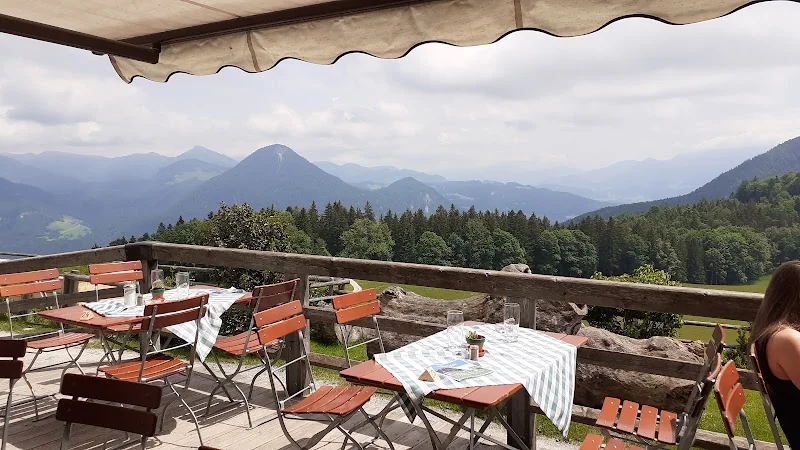
The search for Hohe Asten is almost always also a search query for a hike. This fits perfectly with the nature of the location, as the mountain inn is not just a house with a terrace but a concrete destination for a foot ascent in a very beautiful landscape. The tourism site describes the path from the parking lot Petersberg or Hohe Asten as about two hours long, with about 500 meters in elevation, passing the ruins of Falkenstein and the Antonius Chapel on the forest road. The official website adds various other ascent options from Flintsbach and Sudelfeld, allowing the route to be well adapted to fitness and time budget. This is a significant advantage for families and day visitors because the same destination can be experienced differently depending on the starting point. For search terms like “mountain inn Hohe Asten hike,” “Hohe Asten Flintsbach,” or “Hohe Asten Petersberg,” this flexibility is at the core of user intention. Hohe Asten is also high enough to create a clear contrast to the valley above: everyday life below, tranquility, views, and refreshment above. The official website speaks of the wonderful view over the meadows onto the surrounding mountain panorama, and the tourism site highlights the location high above the Inn Valley. This is not exaggerated marketing but a realistic core description that fits the position of the house at about 1,108 meters. ([hoheasten.de](https://hoheasten.de/))
Especially the hiking character makes Hohe Asten attractive for spontaneous and repeated visits. Those who know the main path from Flintsbach can later choose a new perspective via Bichlersee or Tatzelwurm. Those traveling with children can specifically take the stroller-friendly route via Sudelfeld. And those wanting a longer mountain tour can choose Petersberg as a more varied option. The different ascents are not only logistical alternatives but create different experiences at the same location. This is important for SEO because searchers often do not just want to find a restaurant but a concrete hiking destination with experiential value. In this case, the refreshment at the top is almost the reward for the journey. At the same time, the official website shows that Hohe Asten is also a starting point for further hiking destinations and summit tours. This means: those who arrive at the top have not reached the end but can extend the tour. For active guests, this is a real added value because a refreshment can develop into a half-day or full-day tour. This combination of destination, stopover, and starting point makes Hohe Asten particularly special in the region. It is a mountain inn, a hiking hub, and a viewpoint all at once. ([hoheasten.de](https://hoheasten.de/))
Menu, House Products, and the Special Refreshment Culture
A key reason why Hohe Asten is so often searched is the cuisine. The official website makes it immediately clear what it is about: traditional, homemade dishes, many ingredients from their own agriculture, and a solidly Bavarian orientation. The menu features classic dishes such as pancake soup, cheese dumpling soup, bacon dumpling soup, dumpling duo with butter and parmesan, liver cheese with fried egg and fried potatoes, pork sausages on sauerkraut, fried potatoes with homemade quark, and Kaiserschmarrn. Additionally, there are snacks like mixed snack platters, mountain cheese, cheese platters, pressack, sausage salad, warm liver cheese, homemade bread with Asten butter or crackling lard. Even the drinks and desserts reveal the unique character: raw milk, buttermilk, coffee, beer, homemade egg liqueur, ice cream with products from regional production, and seasonal dishes on the daily menu. This is particularly strong for searches for “menu” because users not only want to eat but also want to know what typical delicacies they can expect. The cuisine is thus a central unique selling point. ([hoheasten.de](https://hoheasten.de/home/speisekarte))
Furthermore, Hohe Asten is culinary closely connected to the farm. The official homepage and the about us page emphasize that the Astl family has been self-sufficient for centuries and produces many products themselves. Bread, lard noodles, cakes, butter, quark, cream, cheese, and meat come as far as possible from their own production or their own agriculture. The website even explains that the location on the mountain and the remoteness make the farm heavily dependent on nature and weather, and that is why they have always worked with nature rather than against it. For guests, this directly affects the food: the refreshment is not anonymous but noticeably close to the farm and product-oriented. This creates credibility and explains why the inn is known in the region for its traditional dishes. The selection of cakes and lard pastries, as well as the possibility of getting products from the delicacy corner even on rest days, show the strong connection to the farm shop character. This connection between agriculture and hospitality is an important content building block for SEO because it attracts searchers interested in regional cuisine, homemade products, and authentic alpine atmosphere. ([hoheasten.de](https://hoheasten.de/?utm_source=openai))
For visitors, the culinary experience is therefore not just a meal but part of the outing. After the ascent, snacks, soup, or Kaiserschmarrn taste different than in the valley because they are connected to the location and the journey up. This is even more true as the official website explicitly speaks of a beautiful view and a place to unwind. So those searching for “mountain inn Hohe Asten photos” often want to see exactly this connection: terrace, mountain view, plate dish, farm, and landscape. The online presence of Hohe Asten consistently conveys this through images, impressions, and menu information. At the same time, the menu design is surprisingly down-to-earth and familiar, which fits well with the audience. Families, hikers, and day visitors find here no staged experiential gastronomy but a credible mountain cuisine. This is an important content point because this authenticity carries the brand. In the SEO context, terms like homemade, regional, snack, Kaiserschmarrn, mountain cheese, and cake are not just ingredients but search signals with a high conversion probability. They tell the user: Here you can expect not just any inn but a place with a clear culinary identity. ([hoheasten.de](https://hoheasten.de/home/speisekarte))
Farm History and Family Astl: Over 500 Years of Tradition
The history of Hohe Asten is exceptionally deep for a mountain inn. On the official about us page, it states that the Schwaig Asten was already mentioned in 921, and the first documented mention of Hohe Asten dates back to 1512. At the same time, it is explained that the hosts Peter and Christa, Bernhard and Luisa Astl can look back on a family history of over five hundred years. This is more than just a nice historical addition; it is the foundation of the entire brand. Because those who come here do not simply visit a business but a farm with a demonstrably long development. The website also tells that over the centuries, the farm has often been passed down to the daughters of the house and that the Asten room has been the family’s good room for generations. Such details show how closely living, working, and hosting have intertwined over a long time. The development of the agricultural estate into today’s excursion destination with hospitality only began slowly after World War I, according to the website. In old guestbooks, which are kept in the living room cupboard, entries date back to 1885. This makes Hohe Asten a place with a grown character rather than artificially created tradition. ([hoheasten.de](https://hoheasten.de/home/ueber-uns))
The family history is told on the website not abstractly but very concretely. It is about school, work, self-sufficiency, winter, craftsmanship, and everyday life on a high-altitude farm. The description shows that there has been a life rhythm here over generations that was far removed from modern valley operations. In 1966, the first telephone line was laid, and in 1975, the connection to the power grid of the municipality of Flintsbach followed. Such dates mark the transition from traditional mountain agriculture to a more modern inn operation without losing the character of the place. Today, Peter Astl, his wife Christa, and now also Bernhard and Luisa continue to run the business. Agriculture still plays a central role: the website emphasizes that many products come from their own breeding and production. This is an important trust factor for guests because the authenticity of the offer is historically and practically substantiated. Inquiries regarding “reviews” or “overnight stays” often indicate that people are looking for more than just a rating; they want to know if this place has substance. The farm history provides exactly this substance because it explains why Hohe Asten appears so independent and credible in the region. ([hoheasten.de](https://hoheasten.de/home/ueber-uns))
For the storytelling of the location, the Astl family is therefore a central element. Hohe Asten is not presented on the website as an interchangeable business but as a family place with generational knowledge. This is also felt in the terms used: good room, self-sufficient, agriculture, own products, nature, weather, and craftsmanship. This language creates a trust and down-to-earth effect that is immediately recognizable to the guest. From an SEO perspective, this is very valuable because search intentions like “history,” “family,” “tradition,” and “special features” find real content here. Another advantage is that the history does not end in a museum but culminates in an ongoing farm and hospitality reality. Hohe Asten is thus historical but not dusty; it is grown but active; it is traditional but not old-fashioned. This balance makes the location narratable and search engine relevant. Those searching for photos, reviews, or backgrounds find here a real narrative instead of mere advertising language. The Family Astl story makes the mountain inn a brand with origin, identity, and recognizability. ([hoheasten.de](https://hoheasten.de/home/ueber-uns))
Panorama, Summit Tours, and Further Destinations from Hohe Asten
A large part of the fascination of Hohe Asten lies in its location. The official homepage refers to the wonderful view over the meadows onto the surrounding mountain panorama, while the tourism site describes the position high above the Inn Valley and below the Rehleitenkopf. Depending on the source, the height is given as around 1,106 to 1,108 meters; therefore, it makes sense to classify it as approximately 1,108 meters. This location explains why the mountain inn is not only a refreshment destination but also a starting point for further tours. The official website mentions other hiking destinations and summit tours, including the Riesenkopf and the Rehleitenkopf. In the hiking tips, both destinations are even more specific: the Große Riesenkopf is 1,337 meters high and can be reached from Hohe Asten in about 45 minutes, while the Rehleitenkopf is 1,338 meters high and can be reached from Hohe Asten in about 30 minutes. This makes it clear that Hohe Asten is an excellent base for ambitious hikers. You do not only come up to eat but can also take in further peaks from there. For search queries about “Hohe Asten Riesenkopf” or “Hohe Asten Rehleitenkopf,” this dual role is important. ([hoheasten.de](https://hoheasten.de/))
Hohe Asten also benefits from its exposed yet easily accessible location in terms of landscape. The tourism site describes the mountain inn as traditional, family-run, and operated year-round, whose farm complements its own dishes with agricultural products. The official website adds that the place is consciously designed as a destination for families with children and experienced mountain hikers. This results in a very broad usage profile: families come for a manageable hike and a snack, sportier guests extend the outing with summit destinations, and connoisseurs stay a little longer for the view and cuisine. This versatility is a strong advantage over pure mountain huts without gastronomic depth. Additionally, Hohe Asten is also a topic in winter and on special occasions because the website repeatedly points out dates and events. This makes the place lively and calendar-relevant. For content and SEO, this means: Hohe Asten is not just an entry in the directory but a real experience destination with scenic added value. Those who arrive here receive views, history, hiking options, and a genuine refreshment culture all in one. This is exactly why the location works so well for search terms related to hiking, photos, opening hours, access, parking, and activities in Flintsbach. ([hoheasten.de](https://hoheasten.de/))
Practical Information on Photos, Reviews, and Overnight Stays
Many inquiries about Hohe Asten are not purely informational but are meant to be very practical. Those entering “photos” want to get an impression of the atmosphere and panorama. The official website has a section for impressions and references to Instagram, which serves the visual expectation well. Those searching for “reviews” want to know if the journey is worth it, how other guests assess the cuisine, and whether the location seems reliable. The location data you provided with 4.6 stars and 565 reviews already indicates a solid public perception; regardless, the official pages themselves show that the mountain inn is actively managed, communicates current dates, and has a pronounced identity as a family business. For “overnight stay,” it is important to know that the official pages primarily emphasize the mountain inn, management, hiking routes, and menu. Therefore, anyone planning accommodation or sleeping options should inquire directly by phone rather than silently assuming there are rooms. This is the most serious solution because the website does not provide prominently displayed room or package information, but the contact is clearly stated. Thus, an open inquiry becomes a clean recommendation for action: first call, then plan. ([hoheasten.de](https://hoheasten.de/?utm_source=openai))
These practical questions are also valuable for keyword logic. “Photos” serve visual inspiration, “reviews” serve trust verification, and “overnight stay” processes interest into concrete booking intent. In content practice, this means: One should not only describe Hohe Asten as a gastronomic place but as a destination for multiple levels of user intention. First, the journey and hike; second, the refreshment and cuisine; third, the history and authenticity; fourth, the visual representation; and fifth, the organizational clarification for a possible longer stay. This structure is well supported by the website because it provides many basic information directly. For potential visitors, this creates a clear path: choose the route, check opening hours, determine parking point or starting point, refresh at the top, and possibly add further peaks. In this way, Hohe Asten fulfills many search intentions simultaneously without appearing arbitrary. This makes it a strong local destination with high organic search potential. ([hoheasten.de](https://hoheasten.de/))
Sources:
Mehr anzeigenWeniger anzeigen
Mountain Inn Hohe Asten | Hiking & Opening Hours
The Mountain Inn Hohe Asten is much more than just a destination for a stopover: it is a historically grown mountain farm, a family-run excursion location, and a distinctive resting point high above Flintsbach am Inn. Those who come here are usually looking for this mix of panorama, authentic Bavarian cuisine, clear hiking trails, and an atmosphere that consciously slows down. The official website describes Hohe Asten as a place at around 1,108 meters above sea level, with the tourism site categorizing it as a year-round operated mountain inn with a long family tradition. Additionally, the uniqueness lies in the fact that the inn is only accessible on foot, making the journey part of the experience. Especially for inquiries regarding hiking, opening hours, access, parking, photos, reviews, and overnight stays, Hohe Asten is thus a location with a very clear usage intention: nature, movement, and refreshment are at the center. At the same time, the website makes it clear that the Astl family has shaped the farm for generations, produces many dishes themselves, and understands the location on the mountain as part of their identity. ([hoheasten.de](https://hoheasten.de/))
Current Opening Hours, Rest Days, and Management
For visitors, the question of opening hours is particularly important because Hohe Asten is not a classic restaurant in the valley, but a mountain inn with a rhythm influenced by the seasons and weather. According to the official website, it is currently open on Mondays, Saturdays, and Sundays from 9:00 AM to 6:00 PM, on Tuesdays and Wednesdays from 9:00 AM to 11:00 PM, while Thursdays and Fridays are rest days. The same page also points out that there may be different times on holidays and special occasions. Additionally, the homepage shows current notices, such as open holidays or limited parking options, which is very helpful for planning a hike or a family outing. Anyone planning a visit around holidays should therefore always check the current schedule on the official site. Especially in the alpine environment, this transparency is valuable because spontaneous weather changes, operational holidays, or special events can affect the times. The website also makes it clear that Hohe Asten is not intended as an arbitrary stopover, but as a place where one consciously spends time. The combination of tranquility, snacks, cake, views, and a longer stay fits well with the published time slots, especially on days with extended opening hours until 11:00 PM. For SEO logic, this topic is therefore central, as “opening hours,” “open today,” “rest day,” and “events” are among the strongest practical search intentions. ([hoheasten.de](https://hoheasten.de/))
Also in terms of content, the opening hours show how Hohe Asten operates: not as fast food, but as a mountain destination with a refreshment character. The site explicitly states that the operation is managed year-round, which is an important indication for mountain inns at this altitude. At the same time, the daily routine of the house fits the hiking audience, which usually seeks a break, a snack, or a longer stay with a view after the ascent. The information about rest days also helps with tour planning, as those coming from Flintsbach or via Bichlersee do not want to realize at the top that it is closed. For families and groups, it is also important that the operation does not only consider classic weekend times but also focuses on Wednesdays with longer opening hours. This makes Hohe Asten particularly interesting for outings during the week. The official notices about special dates, such as Corpus Christi, Labor Day, or New Year's Eve, additionally show that the mountain inn is part of a lively farm calendar and not a static hut. For visitors, this means: before setting off, it is better to check the current date briefly, then a good hike also becomes a well-planned refreshment moment. ([hoheasten.de](https://hoheasten.de/))
Access, Parking, and the Best Ascents to Hohe Asten
Those searching for “Mountain Inn Hohe Asten access” primarily expect clear, practical information: Where do you start, how long does the ascent take, and where can the car stay? This is exactly where the official website provides very useful information. For the ascent via Flintsbach am Inn, the parking lot Flintsbach am Inn and the train station Flintsbach am Inn are mentioned as starting points. From there, according to the official contact page, there are three options: via the main path in about 1.5 to 2 hours, via Wagner am Berg also in about 1.5 to 2 hours, or via Petersberg in about 2.5 to 3 hours. Those arriving from Sudelfeld start at the parking lot Tatzelwurmstraße; there, a main path leads up in 1.5 to 2 hours, and this route is described as suitable for strollers. A third option is the ascent via Bichlersee, also with a main path of 1.5 to 2 hours. The official homepage adds that parking options at Tatzelwurm parking lot are currently limited, and therefore the ascents via Flintsbach or Bichlersee may be particularly sensible. For hikers, this is important information because they must consider not only the most attractive route but also the realistic parking situation. Especially on weekends and holidays, the parking issue often decides whether an outing starts relaxed or becomes unnecessarily complicated. ([hoheasten.de](https://hoheasten.de/home/anfahrt-kontakt))
Hohe Asten is particularly interesting because it offers suitable access for different target groups. Experienced mountain hikers can choose the longer and more varied route via Petersberg, while families often prefer the route via Sudelfeld or Bichlersee. The official website explicitly mentions different ascent options for families with children, but also for experienced mountain hikers. This makes it clear: the mountain inn is not a place only for sporty alpinists but a versatile hiking destination with clear access options. This is exactly what makes it relevant for search queries like “hike,” “Flintsbach,” “Bichlersee,” “Tatzelwurm,” and “Petersberg.” The information on duration is crucial for planning because it provides a rough idea of the effort and helps plan reserves for the return trip. Those traveling with children, dogs, or older companions can choose the route accordingly. Additionally, one should consider that the path is only accessible to hikers, according to the tourism site, so it is not a regular destination for a simple drive up to the door. Hohe Asten is thus consciously designed as a foot destination, and this enhances its charm. The access route does not end at a parking lot but becomes part of the experience. ([hoheasten.de](https://hoheasten.de/home/anfahrt-kontakt))
Hiking, Views, and the Path as Part of the Experience
The search for Hohe Asten is almost always also a search query for a hike. This fits perfectly with the nature of the location, as the mountain inn is not just a house with a terrace but a concrete destination for a foot ascent in a very beautiful landscape. The tourism site describes the path from the parking lot Petersberg or Hohe Asten as about two hours long, with about 500 meters in elevation, passing the ruins of Falkenstein and the Antonius Chapel on the forest road. The official website adds various other ascent options from Flintsbach and Sudelfeld, allowing the route to be well adapted to fitness and time budget. This is a significant advantage for families and day visitors because the same destination can be experienced differently depending on the starting point. For search terms like “mountain inn Hohe Asten hike,” “Hohe Asten Flintsbach,” or “Hohe Asten Petersberg,” this flexibility is at the core of user intention. Hohe Asten is also high enough to create a clear contrast to the valley above: everyday life below, tranquility, views, and refreshment above. The official website speaks of the wonderful view over the meadows onto the surrounding mountain panorama, and the tourism site highlights the location high above the Inn Valley. This is not exaggerated marketing but a realistic core description that fits the position of the house at about 1,108 meters. ([hoheasten.de](https://hoheasten.de/))
Especially the hiking character makes Hohe Asten attractive for spontaneous and repeated visits. Those who know the main path from Flintsbach can later choose a new perspective via Bichlersee or Tatzelwurm. Those traveling with children can specifically take the stroller-friendly route via Sudelfeld. And those wanting a longer mountain tour can choose Petersberg as a more varied option. The different ascents are not only logistical alternatives but create different experiences at the same location. This is important for SEO because searchers often do not just want to find a restaurant but a concrete hiking destination with experiential value. In this case, the refreshment at the top is almost the reward for the journey. At the same time, the official website shows that Hohe Asten is also a starting point for further hiking destinations and summit tours. This means: those who arrive at the top have not reached the end but can extend the tour. For active guests, this is a real added value because a refreshment can develop into a half-day or full-day tour. This combination of destination, stopover, and starting point makes Hohe Asten particularly special in the region. It is a mountain inn, a hiking hub, and a viewpoint all at once. ([hoheasten.de](https://hoheasten.de/))
Menu, House Products, and the Special Refreshment Culture
A key reason why Hohe Asten is so often searched is the cuisine. The official website makes it immediately clear what it is about: traditional, homemade dishes, many ingredients from their own agriculture, and a solidly Bavarian orientation. The menu features classic dishes such as pancake soup, cheese dumpling soup, bacon dumpling soup, dumpling duo with butter and parmesan, liver cheese with fried egg and fried potatoes, pork sausages on sauerkraut, fried potatoes with homemade quark, and Kaiserschmarrn. Additionally, there are snacks like mixed snack platters, mountain cheese, cheese platters, pressack, sausage salad, warm liver cheese, homemade bread with Asten butter or crackling lard. Even the drinks and desserts reveal the unique character: raw milk, buttermilk, coffee, beer, homemade egg liqueur, ice cream with products from regional production, and seasonal dishes on the daily menu. This is particularly strong for searches for “menu” because users not only want to eat but also want to know what typical delicacies they can expect. The cuisine is thus a central unique selling point. ([hoheasten.de](https://hoheasten.de/home/speisekarte))
Furthermore, Hohe Asten is culinary closely connected to the farm. The official homepage and the about us page emphasize that the Astl family has been self-sufficient for centuries and produces many products themselves. Bread, lard noodles, cakes, butter, quark, cream, cheese, and meat come as far as possible from their own production or their own agriculture. The website even explains that the location on the mountain and the remoteness make the farm heavily dependent on nature and weather, and that is why they have always worked with nature rather than against it. For guests, this directly affects the food: the refreshment is not anonymous but noticeably close to the farm and product-oriented. This creates credibility and explains why the inn is known in the region for its traditional dishes. The selection of cakes and lard pastries, as well as the possibility of getting products from the delicacy corner even on rest days, show the strong connection to the farm shop character. This connection between agriculture and hospitality is an important content building block for SEO because it attracts searchers interested in regional cuisine, homemade products, and authentic alpine atmosphere. ([hoheasten.de](https://hoheasten.de/?utm_source=openai))
For visitors, the culinary experience is therefore not just a meal but part of the outing. After the ascent, snacks, soup, or Kaiserschmarrn taste different than in the valley because they are connected to the location and the journey up. This is even more true as the official website explicitly speaks of a beautiful view and a place to unwind. So those searching for “mountain inn Hohe Asten photos” often want to see exactly this connection: terrace, mountain view, plate dish, farm, and landscape. The online presence of Hohe Asten consistently conveys this through images, impressions, and menu information. At the same time, the menu design is surprisingly down-to-earth and familiar, which fits well with the audience. Families, hikers, and day visitors find here no staged experiential gastronomy but a credible mountain cuisine. This is an important content point because this authenticity carries the brand. In the SEO context, terms like homemade, regional, snack, Kaiserschmarrn, mountain cheese, and cake are not just ingredients but search signals with a high conversion probability. They tell the user: Here you can expect not just any inn but a place with a clear culinary identity. ([hoheasten.de](https://hoheasten.de/home/speisekarte))
Farm History and Family Astl: Over 500 Years of Tradition
The history of Hohe Asten is exceptionally deep for a mountain inn. On the official about us page, it states that the Schwaig Asten was already mentioned in 921, and the first documented mention of Hohe Asten dates back to 1512. At the same time, it is explained that the hosts Peter and Christa, Bernhard and Luisa Astl can look back on a family history of over five hundred years. This is more than just a nice historical addition; it is the foundation of the entire brand. Because those who come here do not simply visit a business but a farm with a demonstrably long development. The website also tells that over the centuries, the farm has often been passed down to the daughters of the house and that the Asten room has been the family’s good room for generations. Such details show how closely living, working, and hosting have intertwined over a long time. The development of the agricultural estate into today’s excursion destination with hospitality only began slowly after World War I, according to the website. In old guestbooks, which are kept in the living room cupboard, entries date back to 1885. This makes Hohe Asten a place with a grown character rather than artificially created tradition. ([hoheasten.de](https://hoheasten.de/home/ueber-uns))
The family history is told on the website not abstractly but very concretely. It is about school, work, self-sufficiency, winter, craftsmanship, and everyday life on a high-altitude farm. The description shows that there has been a life rhythm here over generations that was far removed from modern valley operations. In 1966, the first telephone line was laid, and in 1975, the connection to the power grid of the municipality of Flintsbach followed. Such dates mark the transition from traditional mountain agriculture to a more modern inn operation without losing the character of the place. Today, Peter Astl, his wife Christa, and now also Bernhard and Luisa continue to run the business. Agriculture still plays a central role: the website emphasizes that many products come from their own breeding and production. This is an important trust factor for guests because the authenticity of the offer is historically and practically substantiated. Inquiries regarding “reviews” or “overnight stays” often indicate that people are looking for more than just a rating; they want to know if this place has substance. The farm history provides exactly this substance because it explains why Hohe Asten appears so independent and credible in the region. ([hoheasten.de](https://hoheasten.de/home/ueber-uns))
For the storytelling of the location, the Astl family is therefore a central element. Hohe Asten is not presented on the website as an interchangeable business but as a family place with generational knowledge. This is also felt in the terms used: good room, self-sufficient, agriculture, own products, nature, weather, and craftsmanship. This language creates a trust and down-to-earth effect that is immediately recognizable to the guest. From an SEO perspective, this is very valuable because search intentions like “history,” “family,” “tradition,” and “special features” find real content here. Another advantage is that the history does not end in a museum but culminates in an ongoing farm and hospitality reality. Hohe Asten is thus historical but not dusty; it is grown but active; it is traditional but not old-fashioned. This balance makes the location narratable and search engine relevant. Those searching for photos, reviews, or backgrounds find here a real narrative instead of mere advertising language. The Family Astl story makes the mountain inn a brand with origin, identity, and recognizability. ([hoheasten.de](https://hoheasten.de/home/ueber-uns))
Panorama, Summit Tours, and Further Destinations from Hohe Asten
A large part of the fascination of Hohe Asten lies in its location. The official homepage refers to the wonderful view over the meadows onto the surrounding mountain panorama, while the tourism site describes the position high above the Inn Valley and below the Rehleitenkopf. Depending on the source, the height is given as around 1,106 to 1,108 meters; therefore, it makes sense to classify it as approximately 1,108 meters. This location explains why the mountain inn is not only a refreshment destination but also a starting point for further tours. The official website mentions other hiking destinations and summit tours, including the Riesenkopf and the Rehleitenkopf. In the hiking tips, both destinations are even more specific: the Große Riesenkopf is 1,337 meters high and can be reached from Hohe Asten in about 45 minutes, while the Rehleitenkopf is 1,338 meters high and can be reached from Hohe Asten in about 30 minutes. This makes it clear that Hohe Asten is an excellent base for ambitious hikers. You do not only come up to eat but can also take in further peaks from there. For search queries about “Hohe Asten Riesenkopf” or “Hohe Asten Rehleitenkopf,” this dual role is important. ([hoheasten.de](https://hoheasten.de/))
Hohe Asten also benefits from its exposed yet easily accessible location in terms of landscape. The tourism site describes the mountain inn as traditional, family-run, and operated year-round, whose farm complements its own dishes with agricultural products. The official website adds that the place is consciously designed as a destination for families with children and experienced mountain hikers. This results in a very broad usage profile: families come for a manageable hike and a snack, sportier guests extend the outing with summit destinations, and connoisseurs stay a little longer for the view and cuisine. This versatility is a strong advantage over pure mountain huts without gastronomic depth. Additionally, Hohe Asten is also a topic in winter and on special occasions because the website repeatedly points out dates and events. This makes the place lively and calendar-relevant. For content and SEO, this means: Hohe Asten is not just an entry in the directory but a real experience destination with scenic added value. Those who arrive here receive views, history, hiking options, and a genuine refreshment culture all in one. This is exactly why the location works so well for search terms related to hiking, photos, opening hours, access, parking, and activities in Flintsbach. ([hoheasten.de](https://hoheasten.de/))
Practical Information on Photos, Reviews, and Overnight Stays
Many inquiries about Hohe Asten are not purely informational but are meant to be very practical. Those entering “photos” want to get an impression of the atmosphere and panorama. The official website has a section for impressions and references to Instagram, which serves the visual expectation well. Those searching for “reviews” want to know if the journey is worth it, how other guests assess the cuisine, and whether the location seems reliable. The location data you provided with 4.6 stars and 565 reviews already indicates a solid public perception; regardless, the official pages themselves show that the mountain inn is actively managed, communicates current dates, and has a pronounced identity as a family business. For “overnight stay,” it is important to know that the official pages primarily emphasize the mountain inn, management, hiking routes, and menu. Therefore, anyone planning accommodation or sleeping options should inquire directly by phone rather than silently assuming there are rooms. This is the most serious solution because the website does not provide prominently displayed room or package information, but the contact is clearly stated. Thus, an open inquiry becomes a clean recommendation for action: first call, then plan. ([hoheasten.de](https://hoheasten.de/?utm_source=openai))
These practical questions are also valuable for keyword logic. “Photos” serve visual inspiration, “reviews” serve trust verification, and “overnight stay” processes interest into concrete booking intent. In content practice, this means: One should not only describe Hohe Asten as a gastronomic place but as a destination for multiple levels of user intention. First, the journey and hike; second, the refreshment and cuisine; third, the history and authenticity; fourth, the visual representation; and fifth, the organizational clarification for a possible longer stay. This structure is well supported by the website because it provides many basic information directly. For potential visitors, this creates a clear path: choose the route, check opening hours, determine parking point or starting point, refresh at the top, and possibly add further peaks. In this way, Hohe Asten fulfills many search intentions simultaneously without appearing arbitrary. This makes it a strong local destination with high organic search potential. ([hoheasten.de](https://hoheasten.de/))
Sources:
Upcoming Events
No events found
Frequently Asked Questions
Reviews
Giovana Veratti
17. June 2026
Beautiful view and good food. The staff is very friendly, I was there for the second time, it is a really nice place to go.
Gary Doyle
23. July 2023
The hike to get here is not as easy as some guides would have you think. Gravel roads (fire roads, in the US). Steep inclines. No real views until you get near the top - then WOW! Worth the wait and the effort.
Sohyeon Lee
5. February 2024
Nice view, really friendly staff, and food was soooo delicious 🥰
Magdalena Vaclavek
4. June 2023
Nice view to the alps and farms. Fresh Bavarian food, fresh dairy products, and vegetarian options. Friendly staff.
Sebastian Schuster
30. July 2019
Nice place with a good view on the surrounding mountains. You can get the usual Bavarian/Austrian cuisine. Most of the ingredients come from their own farm. Everything that our group had was really good. And the service was friendly. Also there's a small playground for kids.