
Paweł Pawlikowski
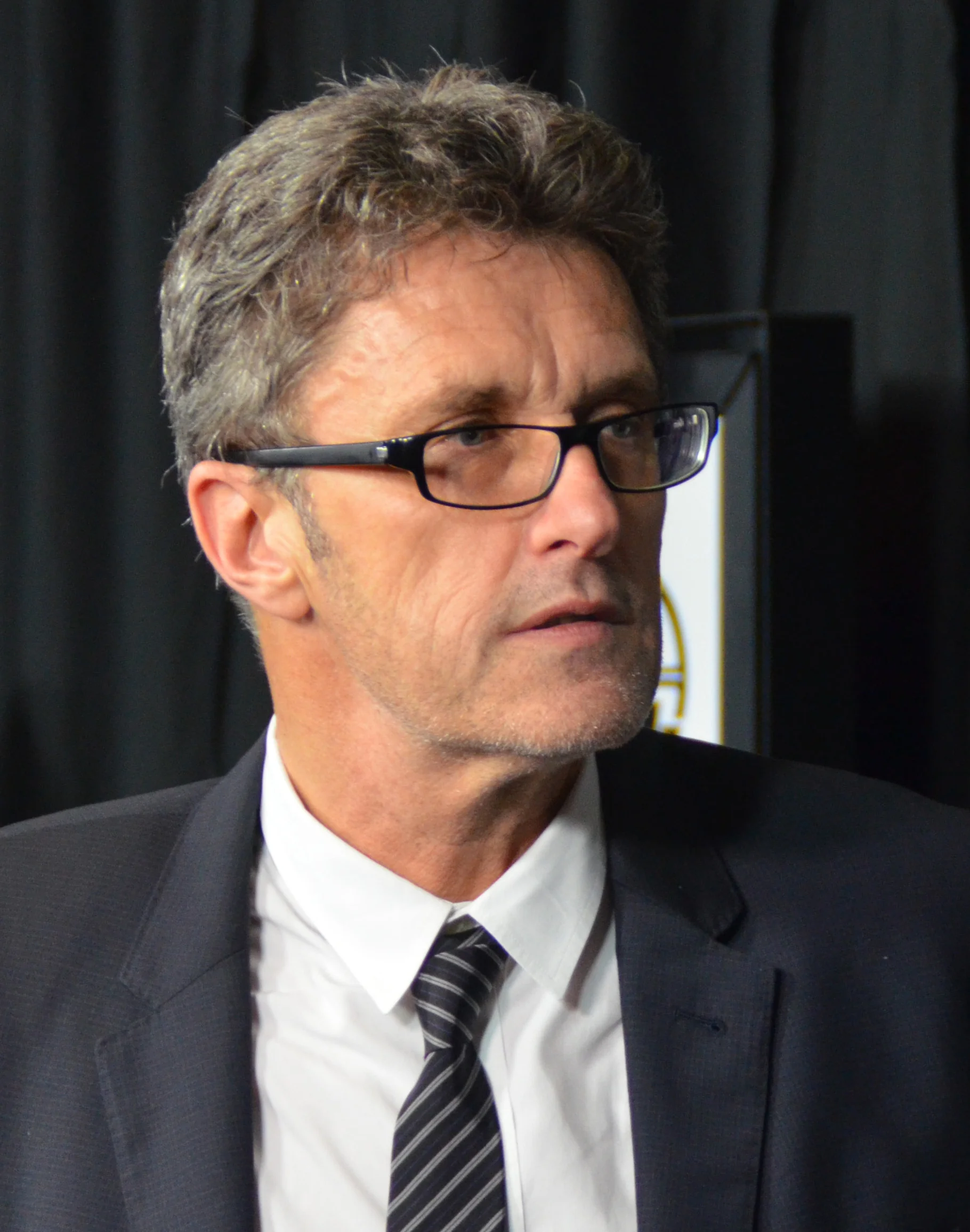
Image from Wikipedia
Image from Wikipedia
Paweł Pawlikowski – the Precise Chronicler of European Breaks and Great Cinematic Emotions
A Director Between Exile, Memory, and International Prestige
Paweł Aleksander Pawlikowski, born on September 15, 1957, in Warsaw, is among the most prominent European film directors of our time. He lives and works in London and Paris, creating a distinctive cinema shaped by the experiences of migration, distance, and cultural multilingualism. His films combine formal rigor with emotional power, addressing themes of identity, history, loss, and desire with extraordinary clarity. ([de.wikipedia.org](https://de.wikipedia.org/wiki/Pawe%C5%82_Pawlikowski))
Even his biography embodies the tension that later defined his work: Jewish descent on his father's side, a childhood in Warsaw, emigration with his mother at the age of 14, first to Germany and Italy, and since 1977, to Great Britain. He studied literature and philosophy at Oxford before turning to film. This academic and cultural background is reflected in his scripts, the observation of characters, and his ability to translate historical narratives into intimate human dramas. ([de.wikipedia.org](https://de.wikipedia.org/wiki/Pawe%C5%82_Pawlikowski))
Early Years: Documentary Sharpness as Artistic Foundation
Pawlikowski's career began in the mid-1980s with documentaries for the BBC, initially within the Community Programme Unit and later for the series Bookmark. In these works, he developed the precise and often unyielding gaze that would later make him famous. The satirical documentary From Moscow to Pietushki brought him breakout success in the early 1990s, winning several awards, including the Emmy International, the Prix Italia, and an award from the Royal Television Society. ([de.wikipedia.org](https://de.wikipedia.org/wiki/Pawe%C5%82_Pawlikowski))
Serbian Epics also demonstrated early on that Pawlikowski is not a harmonizing storyteller, but a filmmaker who makes visible political realities, national myths, and ideological self-staging. The controversial film about the Bosnian War gained him international recognition and underscored his willingness to unravel conflicts analytically rather than smoothing them over. With Tripping with Zhirinovsky, he won the Grierson Award for Best British Documentary in 1995, solidifying his reputation as a precise, risk-taking observer. ([de.wikipedia.org](https://de.wikipedia.org/wiki/Pawe%C5%82_Pawlikowski))
The Path to Feature Film: Search Movements, Setbacks, and Artistic Maturity
His first feature film The Stringer from 1998 was not deemed a full success. However, Pawlikowski quickly returned to a hybrid storytelling form with Twockers, which combines documentary and fictional elements. The real breakthrough in the feature film sector came with Last Resort, a semi-autobiographical drama about a Russian mother and her son in England. The film received attention at festivals like Toronto and Sundance and won awards in Edinburgh, Thessaloniki, Gijón, and Motovun, bringing Pawlikowski the BAFTA for "Most Promising Newcomer in British Film" in 2001. ([de.wikipedia.org](https://de.wikipedia.org/wiki/Pawe%C5%82_Pawlikowski))
The following years showed a director grappling with material, production conditions, and personal crises without losing his distinctive hand. My Summer of Love brought him further festival success, including the Grand Prize in Edinburgh and BAFTA nominations. The planned project The Restraint of Beasts had to be abandoned in 2006 when his wife fell seriously ill, halting work. Subsequently, Pawlikowski withdrew for several years, writing scripts, teaching at a film school, and working in Oxford before returning in 2010 with The Woman in the Fifth. ([de.wikipedia.org](https://de.wikipedia.org/wiki/Pawe%C5%82_Pawlikowski))
Ida: Formal Rigor, Historical Depth, and Worldwide Breakthrough
With Ida, Pawlikowski reached the pinnacle of global auteur cinema. The film shot in Poland is a formal homage to Polish films from the 1960s inspired by the French Nouvelle Vague, blending black-and-white aesthetics, precise composition, and moral ambiguity. The film won top awards in Gdynia, Warsaw, and London, was honored as Best Film at the 2014 European Film Awards, and also received awards for direction, screenplay, and cinematography. Ultimately, Ida won the Oscar for Best Foreign Language Film – the first Polish film ever to win in this category. ([de.wikipedia.org](https://de.wikipedia.org/wiki/Pawe%C5%82_Pawlikowski))
The success of Ida permanently altered Pawlikowski’s status in international cinema. From a highly regarded festival director, he became an author with global impact, whose works are viewed not only as critically acclaimed but also as reference points by academies and festival juries. At the same time, the essence of his cinema remained unchanged: quiet spaces, precise gazes, controlled emotions, and a deep skepticism toward simple historical narratives. ([de.wikipedia.org](https://de.wikipedia.org/wiki/Pawe%C5%82_Pawlikowski))
Cold War: Romance, Music, and a Film Like an Entire Century
In 2018, Cold War – The Latitude of Love continued this path while simultaneously opening a new dimension of sound and emotion. The romantic, musical film drama premiered at the Cannes Film Festival and was warmly received by both Cannes and international critics. Pawlikowski won the European Film Award for Best Director and Best Screenplay; Cold War also earned an Oscar nomination for Best Director. ([de.wikipedia.org](https://de.wikipedia.org/wiki/Pawe%C5%82_Pawlikowski))
Particularly notable is how Pawlikowski in Cold War uses music not as decoration but as a dramatic structural principle. The film employs song, rhythm, and emotional intensification without ever losing the clarity of its imagery. This results in a work that is simultaneously a love story, a portrait of an era, and a cultural reflection – a cinema of concise gestures and lasting repercussions. ([de.wikipedia.org](https://de.wikipedia.org/wiki/Pawe%C5%82_Pawlikowski))
Current Projects: Return to Cannes and New Historical Terrain
In the 2020s, Pawlikowski remains productive and artistically relevant. In spring 2025, Muse, a black-and-white short film featuring Małgorzata Bela, was presented; according to reports, the work debuted in March 2025 on Mubi. Concurrently, Pawlikowski was working on 1949, later also called Fatherland, starring Sandra Hüller; the film premiered in the competition at Cannes in 2026 and was described as part of a thematic continuation of his previous works on post-war Europe. ([elle.pl](https://www.elle.pl/kultura/pawel-pawlikowski-nakrecil-film-o-artyscie-i-muzie-w-roli-glownej-jego-zona-malgorzata-bela/?utm_source=openai))
Current reporting emphasizes that Fatherland continues the lines of Ida and Cold War, once again focusing on the post-war period, European identity, and historical self-interpretation. This keeps Pawlikowski as a director who consistently tells great political history as personal experience. The fact that his films continue to be discussed at the world's most important festivals underscores his ongoing relevance in international auteur cinema. ([cineuropa.org](https://cineuropa.org/en/interview/491503/?utm_source=openai))
Filmography, Awards, and Critical Reception
Pawlikowski's filmography shows remarkable consistency: from the documentaries of the 1980s and early 1990s to the feature films The Stringer, Twockers, Last Resort, My Summer of Love, and The Woman in the Fifth, to the celebrated works Ida, Cold War, and Vaterland/Fatherland. His works have repeatedly received awards, including the BAFTA, the Grierson Award, the Oscar, the European Film Award, and numerous festival accolades. This record positions him as one of the most significant voices in European cinema of recent decades. ([de.wikipedia.org](https://de.wikipedia.org/wiki/Pawe%C5%82_Pawlikowski))
Critics commend Pawlikowski particularly for his ability to combine historical material with emotional precision and visual discipline. His films are seen as spare, elegant, and intellectually demanding without ever coming across as academic. That is precisely where his authority lies: he does not narrate broadly, but condenses; not loudly, but with that controlled intensity that remains in memory. ([theguardian.com](https://www.theguardian.com/film/pawel-pawlikowski?utm_source=openai))
Conclusion: A Master of Quiet Cinema with Great Impact
Paweł Pawlikowski is captivating because he does not merely illustrate European history but makes it felt. His cinema thrives on formal precision, moral openness, and a rare ability to inscribe intimate relationships within historical tensions. Those searching for films that are visually rigorous, emotionally rich, and culturally enduring will find in his works one of the most important authors of our time. ([de.wikipedia.org](https://de.wikipedia.org/wiki/Pawe%C5%82_Pawlikowski))
His films deserve the big screen because they unleash their full power there: in the silence between two gazes, in the black and white of his images, and in the emotional aftereffects of his stories. Pawlikowski remains a director who should not only be seen but profoundly experienced – best where cinema is strongest: in the hall, live and immediate. ([de.wikipedia.org](https://de.wikipedia.org/wiki/Pawe%C5%82_Pawlikowski))
Official Channels of Paweł Pawlikowski:
- Instagram: No official profile found
- Facebook: No official profile found
- YouTube: No official profile found
- Spotify: No official profile found
- TikTok: No official profile found
- Vimeo: https://vimeo.com/user20670040
Sources:
- Wikipedia (de) – Paweł Pawlikowski
- Polska Agencja Prasowa – Paweł Pawlikowski: "Ojczyzna" is the most personal film I have made
- Cineuropa – Paweł Pawlikowski interview, Cannes 2026
- The Wrap – Fatherland interview
- Polskie Radio – Pawel Pawlikowski is working on a new film “1949”
- Elle.pl – Muse, new film by Paweł Pawlikowski
- Filmweb – Awards of Paweł Pawlikowski
- Treccani – Pawel Pawlikowski
- Wikipedia: Image and text source
Upcoming Events
19th Music Film Days Oberaudorf - Special Screening: Fatherland
Film Nights – Fatherland
Fatherland
Fatherland – Filmforum Duisburg presents Thomas Mann film by Paweł Pawlikowski
Fatherland – Thomas Mann's Return to the Screen
Film and Discussion: Ida

Fatherland
CINEMA AUGUSTINUM - SCREEN PEARLS: "FATHERLAND"

Fatherland