
Juliane Banse
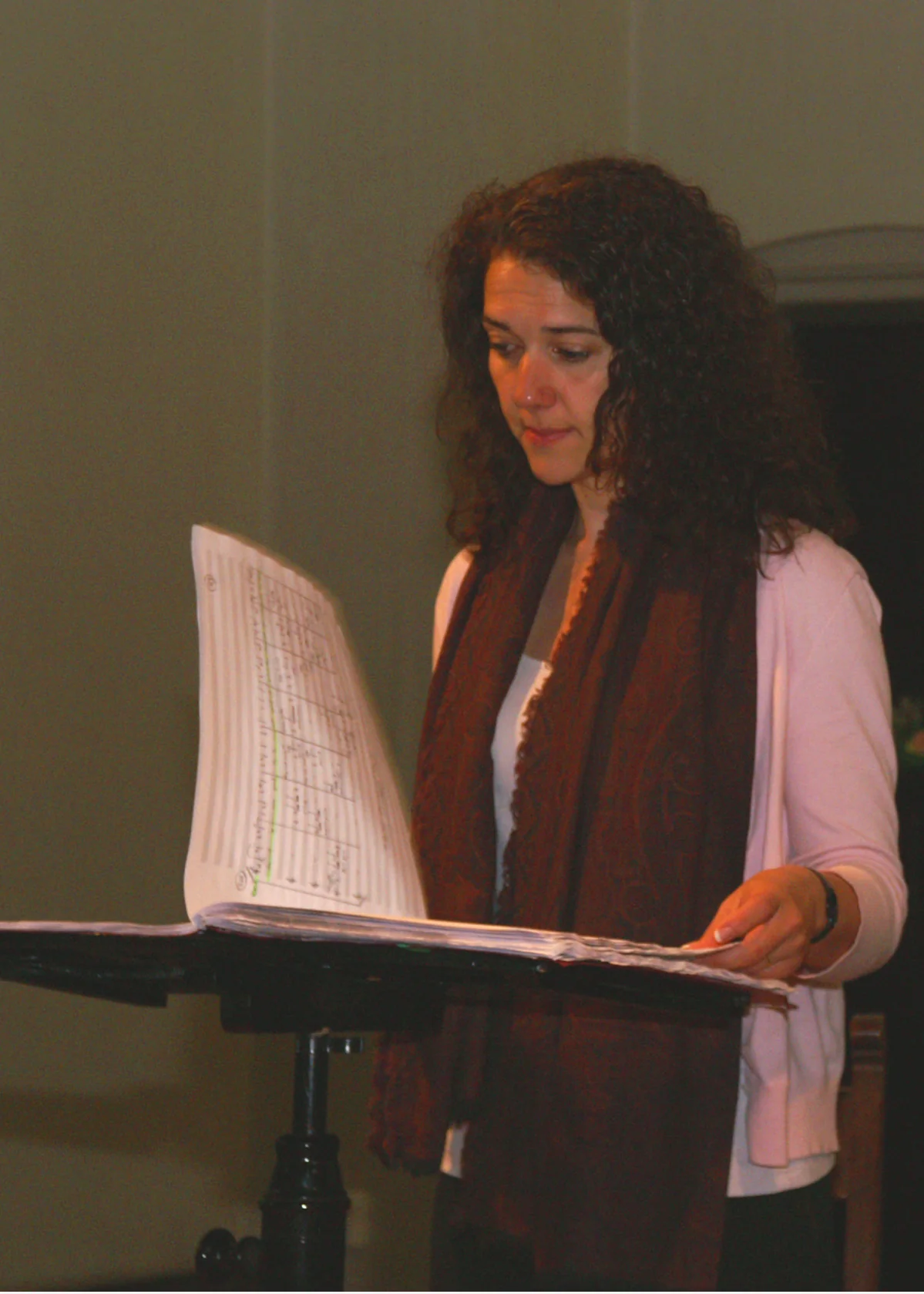
Image from Wikipedia
Image from Wikipedia
Juliane Banse – one of the most influential German sopranos between opera, song, and modern music
A singer with a wide stylistic range and unmistakable voice
Juliane Banse, born July 10, 1969, in Tettnang, is one of the most versatile German opera singers of her generation. Her career encompasses classical opera roles, the great art song, concert oratorios, and the world premiere of contemporary works, forming an artistic profile of rare coherence. Early influenced by an international education and a pronounced musical curiosity, she developed into a soprano who excels in both lyrical and more dramatic repertoire. ([en.wikipedia.org](https://en.wikipedia.org/wiki/Juliane_Banse?utm_source=openai))
Biography and artistic formation
From Tettnang to Zurich to Munich
Growing up in southern Germany and Zurich, Juliane Banse initially received lessons from Paul Steiner and later from Ruth Rohner at the Zurich Opera. She completed her studies with Brigitte Fassbaender and Daphne Evangelatos in Munich, two teachers who significantly shaped her vocal discipline and text-focused singing. This combination of German singing tradition, stylistic precision, and international openness continues to form the foundation of her musical career today. ([julianebanse.de](https://julianebanse.de/index.php/en/))
The early breakthrough as Pamina
The actual artistic breakthrough came at the age of 20 when she performed as Pamina in Harry Kupfer's production of Mozart's Die Zauberflöte at the Komische Oper Berlin. This moment marked not only the start of her career but also set the tone for a trajectory that consistently straddled classical repertoire and demanding character work. Particularly remarkable is how early Banse was recognized on the great stages and how consistently she expanded her repertoire thereafter. ([julianebanse.de](https://julianebanse.de/index.php/en/))
A repertoire spanning Mozart, Strauss, and Wagner
Her operatic repertoire includes roles from the Marschallin to the Contessa in Le nozze di Figaro, Fiordiligi, Donna Elvira, and Vitellia up to Genoveva, Leonore, Tatjana, Arabella, and Grete from Schreker's Der ferne Klang. Additionally, she takes on parts such as Elsa von Brabant in Wagner's Lohengrin, the title role in Walter Braunfels’ Jeanne d’Arc, and participated in Heinz Holliger's Lunea and Schneewittchen. This range showcases a singer who masters the grand romantic repertoire just as confidently as the challenging modern works. ([julianebanse.de](https://julianebanse.de/index.php/en/))
Stage career, concert life, and international presence
Opera and concert stages in Europe and the USA
Juliane Banse has appeared at significant venues and important music centers, including Cologne, Zurich, Nantes, Angers, Chicago, and the Metropolitan Opera in New York. On the concert stage, she has worked with conductors like Lorin Maazel, Riccardo Chailly, Bernard Haitink, Franz Welser-Möst, Marin Alsop, Zubin Mehta, and Manfred Honeck. This combination of operatic presence and concert authority makes her artistic development so extraordinary: Banse is not only a role interpreter but also a comprehensive musical storyteller. ([julianebanse.de](https://julianebanse.de/index.php/en/))
Art song as the center of her musical career
A key focus of her career lies in art song and chamber music. Recitals have taken her to venues such as Wigmore Hall, the Schubertiade in Vilabertran, and the Teatro de la Zarzuela in Madrid; she has also performed Schubert's Winterreise, Wagner programs, and thematic song evenings. In her art songs, Banse particularly utilizes the subtle gradation of color, text interpretation, and breath control, making her interpretations often described as intellectually conceived yet emotionally immediate. ([julianebanse.de](https://julianebanse.de/index.php/en/))
Contemporary music and world premieres
A hallmark of her artistic identity is her closeness to new music. Banse sang the world premiere of Manfred Trojahn's cycle Four Women from Shakespeare, interpreted Heinz Holliger's Schneewittchen and Lunea, and has collaborated intensively with composers such as Heinz Holliger, G. Kurtág, and other figures from the modern repertoire. This openness to new sound languages gives her career a special authority, as she not only nurtures well-established repertoire but actively participates in expanding it. ([julianebanse.de](https://julianebanse.de/index.php/en/))
Discography and critical reception
Recordings across song, opera, and orchestral music
Juliane Banse's discography reflects her artistic versatility very accurately. Important recordings include, among others, Das Marienleben by Paul Hindemith with Martin Helmchen, Im Arm der Liebe with the Munich Radio Orchestra, unanswered love featuring works by Reimann, Henze, and Rihm, as well as Brahms recordings with songs and duets. Additionally, there are CDs and recordings with Alban Berg, Mozart, Mahler, Braunfels, and Holliger that mark her focus between song, vocal symphony, and opera. ([julianebanse.de](https://julianebanse.de/index.php/en/))
Awards and recognition in the press
Several of her recordings have received awards, including two with Echo Klassik: Walter Braunfels’ Jeanne d’Arc and Mahler's Eighth Symphony. Her website also highlights that her CD unanswered love received significant media recognition and includes some first recordings dedicated to her. Hindemith’s Marienleben also found special resonance, establishing Banse as a referential interpreter for late Romantic, modern, and expressionist song profiles. ([julianebanse.de](https://julianebanse.de/index.php/en/))
Critical assessment of her artistic profile
The press and institutions describe Banse as a singer with an exceptionally wide stylistic range. The repertoire spans from Mozart through Schumann and Strauss to Holliger, Kurtág, and Trojahn, achieving an impressive balance between classical tradition and contemporary music. This balance makes her discography culturally and historically interesting: It documents not only a singer but also the vibrant development of the repertoire in the late 20th and early 21st centuries. ([julianebanse.de](https://julianebanse.de/index.php/en/))
Teaching, masterclasses, and influence on the next generation
Professor and mentor
Alongside her stage career, pedagogy plays an important role in Juliane Banse's career. Since the winter semester of 2016/2017, she has held a professorship in singing at the Robert Schumann Hochschule Düsseldorf and later took a position at the Mozarteum in Salzburg; she was also appointed to the Escuela Superior de Música Reina Sofía in Madrid for the academic year 2023/2024. These positions highlight her authority not only as an interpreter but also as a mediator of technique, sense of style, and musical intelligence. ([julianebanse.de](https://julianebanse.de/index.php/en/))
Influence through repertoire, attitude, and language
Juliane Banse impacts primarily through the consistency with which she thinks about music and text together. Her work on song cycles, rarely performed operas, and contemporary works demonstrates an artist who never reduces herself to mere efficacy. For music lovers, she remains exciting, as she shapes each role as an individual composition of sound, expression, and language, thereby occupying an unmistakable place in the German-speaking singing culture. ([julianebanse.de](https://julianebanse.de/index.php/en/))
Current projects and artistic presence
New impulses until 2026
Even currently, Banse remains active: Her website lists a chamber music event on October 18, 2026, at the Gabriel von Seidl Concert Hall. Additionally, recent updates on her website and program materials indicate that she continues to be engaged in song evenings, concert performances, and selected opera productions. This continuity showcases an artist who does not merely manage her career but continually develops it. ([julianebanse.de](https://julianebanse.de/index.php/en/))
Conclusion: Why Juliane Banse continues to fascinate today
Juliane Banse combines vocal nobility, intellectual depth, and an extraordinarily broad repertoire into a radiant artistic personality. Her career represents musical integrity, stylistic openness, and a stage presence that captivates in both the opera house and song evening. For those wanting to experience vocal artistry at the highest level, hearing Juliane Banse live is a must: It is on stage that the blend of precision, warmth, and artistic boldness unfolds, making her musical career so special. ([julianebanse.de](https://julianebanse.de/index.php/en/))
Official channels of Juliane Banse:
- Instagram: No official profile found
- Facebook: No official profile found
- YouTube: No official profile found
- Spotify: No official profile found
- TikTok: No official profile found
Sources:
- Juliane Banse - Official Website
- Juliane Banse - Official Website (German Version)
- Wikipedia: Juliane Banse
- Klassik Heute - Juliane Banse: Biography, Discography
- AllMusic - Juliane Banse: Biography, Discography & Reviews
- Deutsche Grammophon - Press reviews of Berg works with Juliane Banse
- ECM Records - Juliane Banse
- Artist Secretariat at Gasteig - Juliane Banse
- Wikipedia: Image and text source