
Josef Gabriel Rheinberger
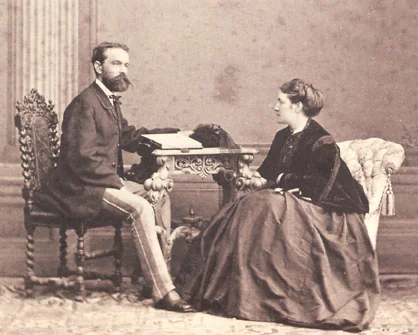
Image from Wikipedia
Image from Wikipedia
Josef Gabriel Rheinberger
The Quiet Classic from Vaduz Who Shaped Munich's Musical Landscape
Josef Gabriel Rheinberger is considered one of the most distinctive composers of the 19th century: born in 1839 in Vaduz and blessed with early musical talent, he later made his home in Munich, where he was active as a composer, organist, and music educator until his death in 1901. His life represents a musical career straddling Liechtenstein origins, Bavarian court culture, and a consistently cultivated classical-romantic musical language. This blend of artistic discipline, teaching, and compositional versatility continues to fascinate music lovers and church music enthusiasts today. ([de.wikipedia.org](https://de.wikipedia.org/wiki/Josef_Gabriel_Rheinberger?utm_source=openai))
Biographical Roots: Vaduz, Munich, and the Early Path to the Organ
Rheinberger was born on March 17, 1839, in Vaduz and received musical training as a child. At the age of twelve, he moved to Munich, where he studied at the conservatory and quickly established himself as an exceptionally gifted young musician. According to the Rheinberger Society, he played the organ at church services by the age of seven; this led to a career in Munich that brought him early into the spotlight of the city's musical life. ([rheinberger.li](https://www.rheinberger.li/josef-g-rheinberger-1?lang=en&utm_source=openai))
Particularly noteworthy is his rapid rise: at just 19, the conservatory offered him a professorship in piano, later adding organ and composition. This early recognition highlights his authority as a musician and teacher and explains why Rheinberger is seen in music history not just as a composer but also as a pivotal figure in education. He remained closely tied to Munich for life, serving there as court conductor and professor with a lasting influence. ([rheinberger.li](https://www.rheinberger.li/josef-g-rheinberger-1?lang=en&utm_source=openai))
Career and Breakthrough: A Composer Without Self-Promotion
During his lifetime, Rheinberger was a successful composer who was directly approached by publishers, musicians, and choirs for new works. Unlike some contemporaries, he did not engage in aggressive self-promotion; however, his oeuvre spread internationally, partly because it was technically precise, stylistically controlled, and excellently suited for practical use. The Rheinberger website highlights that he died in 1901 as one of the leading European composers and teachers in Munich. ([rheinberger.li](https://www.rheinberger.li/josef-g-rheinberger-1?lang=en&utm_source=openai))
The significant shift following his death was not initially a triumph but rather a retreat from the repertoire: with the change in aesthetic around 1900, his works temporarily fell into the shadow of more modern movements. Carus describes Rheinberger as a composer whose music, due to its conservative-classical ideals, was long underestimated despite its high quality. Only the scholarly edited complete edition and renewed performance practices brought his work back into focus. ([carus-verlag.com](https://www.carus-verlag.com/en/music-scores-and-recordings/josef-gabriel-rheinberger-complete-edition-48-volumes-5020000.html?utm_source=openai))
The Teacher of Munich: Influencing Generations of Musicians
Rheinberger's reputation as an educator was extraordinary. The German Biography describes him as someone who entered music history more as a teacher than as a composer; among his students were significant names like Max Bruch, Engelbert Humperdinck, Richard Strauss, Wilhelm Furtwängler, and even an entire generation of young American composers. This list highlights how profoundly Rheinberger's musical education extended beyond Munich. ([deutsche-biographie.de](https://www.deutsche-biographie.de/sfz105515.html?utm_source=openai))
His teaching shaped not only technique but also attitude: accuracy in setting, clear form, counterpoint, sound balance, and a cultivated treatment of the voice. In retrospect, Rheinberger appears as a musician who did not merely preserve tradition but actively transmitted it. This combination of didactic rigor and artistic elegance explains why his personality remains significant in music history to this day. ([rheinberger.li](https://www.rheinberger.li/josef-g-rheinberger-1?lang=en&utm_source=openai))
Discography and Body of Work: Organ, Choir, Chamber Music, and Sacred Monuments
According to the Rheinberger Society, Rheinberger's published oeuvre encompasses 197 opus numbers and ranges from piano and organ works to sacred and secular choral music, songs, chamber music, symphonies, concert overtures, stage music, and operas. This breadth is a crucial part of his artistic development: he did not think in a single genre but in a stable, classically organized total work. Particularly his organ sonatas and sacred vocal music continue to have a strong presence today. ([rheinberger.li](https://www.rheinberger.li/josef-g-rheinberger-1?lang=en&utm_source=openai))
Carus documents the ongoing relevance of his work with a 48-volume complete edition, created between 1987 and 2008. This edition includes among others organ music, sacred vocal music, oratorios, cantatas, chamber music, and piano works and has significantly contributed to making Rheinberger's music audible worldwide once again. Additionally, individual editions and recordings, such as the Musica Sacra series, show that his works are not only archivally interesting but practically vibrant for performance. ([blog.carus-verlag.com](https://blog.carus-verlag.com/en/music-stories/josef-gabriel-rheinbergers-musica-sacra-2/?utm_source=openai))
Among the particularly important genres are the masses and organ sonatas. Carus emphasizes that the fourteen settings of the Ordinary of the Mass occupy an important place in the church music oeuvre; at the same time, the organ works are once again at the center of interest because they are accessible in critical edition. For organists and choirs, Rheinberger thus offers a repertoire that ideally combines liturgical function with compositional sophistication. ([carus-verlag.com](https://www.carus-verlag.com/en/products/complete-editions-selected-works/josef-gabriel-rheinberger-complete-works/sacred-vocal-music/?force_sid=hnj3gm1ncme4dkmu8g9apdaskt&utm_source=openai))
Musical Style: Classicism with Romantic Warmth
Rheinberger did not see himself as a revolutionary in music, but rather as a master of form. Sources describe him as a determined classicist who viewed Bach and Beethoven as paragons and, despite employing a romantic language, adhered to order, transparency, and contrapuntal care. This is precisely where his uniqueness lies: his music rarely comes across as overtly dramatic but gains immense persuasive power through inner balance, fine harmony, and elegant line shaping. ([de.wikipedia.org](https://de.wikipedia.org/wiki/Josef_Gabriel_Rheinberger?utm_source=openai))
This stylistic approach also explains why his works are often perceived as "noble" or "elegant" in concert halls. The music does not rely on effect but on architectural thinking, clean setting, and controlled emotional tension. For church music, this is essential: Rheinberger provides sound spaces that are dignified, lyrical, and technically demanding. ([blog.carus-verlag.com](https://blog.carus-verlag.com/en/music-stories/josef-gabriel-rheinbergers-musica-sacra-2/?utm_source=openai))
Cultural Influence: Liechtenstein, Munich, and the Rheinberger Renaissance
Rheinberger's significance extends far beyond the biography of a single composer. Since 2003, the International Josef Gabriel Rheinberger Society has promoted his work, organized events, and documented the global impact of the composer. The official website even maintains a current event calendar format, showing that Rheinberger is seen today as a vibrant cultural brand. ([rheinberger.li](https://www.rheinberger.li/?utm_source=openai))
His connection to Liechtenstein is particularly strong. Carus and the Rheinberger Archives emphasize that the complete edition was under the patronage of the principality and significantly contributed to the re-establishment of a long-neglected body of work. Additionally, there has been a programmatic return in festivals and concert series: in 2026 the first Rheinberger Festival took place in Liechtenstein, and from 2024 to 2026, his masses, motets, and choral works were regularly performed. ([carus-verlag.com](https://www.carus-verlag.com/en/music-scores-and-recordings/josef-gabriel-rheinberger-complete-edition-48-volumes-5020000.html?utm_source=openai))
Current Presence and Reception: Why Rheinberger is Being Heard Again Today
Even though Josef Gabriel Rheinberger can no longer be responsible for new albums or studio projects, his music continues to be alive in the performance practice of 2024 and 2025. Concert reports, radio mentions, and festival news confirm that choirs and organists continue to draw on his works, particularly liturgical compositions, Passion music, and Christmas choral works. This demonstrates a stable reception in the present and confirms his ongoing relevance in sacred and concert repertoire. ([ardmediathek.de](https://www.ardmediathek.de/video/swr-kultur-musikmatinee/swr-vokalensemble-das-weihnachtskonzert-2024/swr/Y3JpZDovL3N3ci5kZS9hZXgvbzIxNjQxMzk?utm_source=openai))
Recent criticism and editorial practice emphasize two things: the high quality of his compositions and the necessity to hear them anew beyond historical prejudices. Rheinberger now appears not as a marginal figure but as a composer with a clear profile who condenses musical tradition at a high level. His rediscovery is not merely an archival success but a gain for concert life, church music, and music education. ([blog.carus-verlag.com](https://blog.carus-verlag.com/en/music-stories/josef-gabriel-rheinbergers-musica-sacra-2/?utm_source=openai))
Conclusion: The Value of a Quiet Master
Josef Gabriel Rheinberger is exciting because he embodies greatness without noise. His musical career combines virtuosity, compositional discipline, and pedagogical impact into a body of work of rare coherence. Those who listen to his organ sonatas, masses, or choral pieces encounter an artist who did not copy tradition but refined it at the highest level. Experiencing Rheinberger live reveals a master of balance between spirituality, form awareness, and romantic sound culture. ([rheinberger.li](https://www.rheinberger.li/josef-g-rheinberger-1?lang=en&utm_source=openai))
Official Channels of Josef Gabriel Rheinberger:
- Instagram: No official profile found
- Facebook: No official profile found
- YouTube: No official profile found
- Spotify: No official profile found
- TikTok: No official profile found
Sources:
- Wikipedia – Josef Gabriel Rheinberger
- International Josef Gabriel Rheinberger Society – Biography
- International Josef Gabriel Rheinberger Society – Life and Works
- German Biography – Rheinberger, Josef Gabriel von
- Carus-Verlag – Complete Edition (48 Volumes)
- Carus-Verlag – Complete Works
- Carus-Verlag – Organ Music by Josef Gabriel Rheinberger
- Carus-Verlag – Sacred Vocal Music
- Carus-Verlag Blog – Rheinberger’s Musica Sacra
- AllMusic – Joseph Rheinberger Biography