
Helge Burggrabe
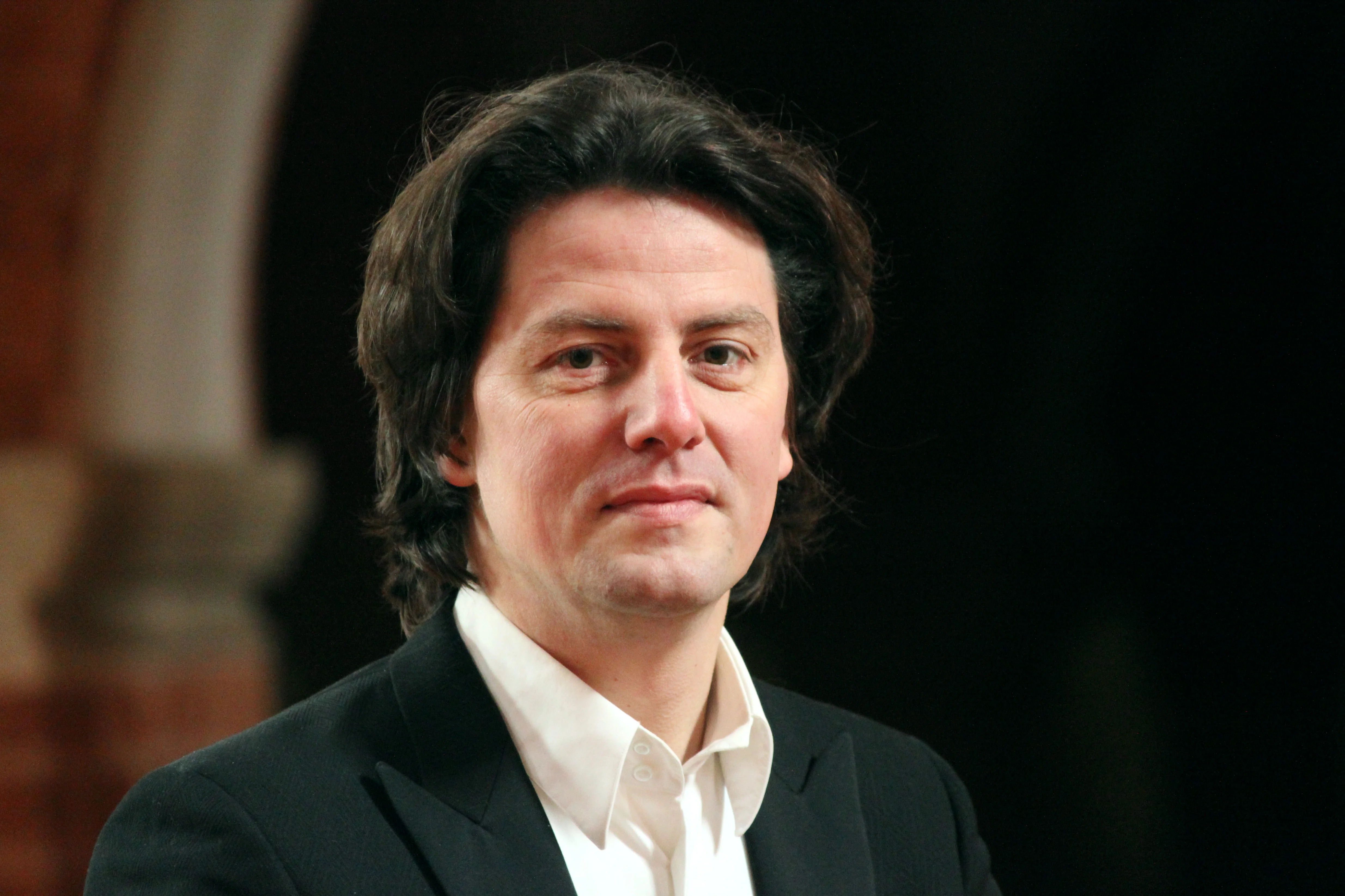
Image from Wikipedia
Image from Wikipedia
Helge Burggrabe – Composer Bridging Spatial Art, Spirituality, and Contemporary Oratorio
An Artist Who Thinks of Music as an Experiential Space
Helge Burggrabe, born on June 17, 1973, in Magstadt near Stuttgart, is one of the most independent voices in contemporary German-speaking music. The German composer, recorder player, stage designer, and seminar leader combines a musical career, spatial aesthetics, and spiritual reflection into an artistic profile that clearly diverges from conventional career patterns. He lives in Fischerhude and develops his works from a stance that understands music not just as sound but as a social, architectural, and soulful experience. ([de.wikipedia.org](https://de.wikipedia.org/wiki/Helge_Burggrabe))
His work spans concert, liturgy, seminars, and scenic art. Burggrabe does not seek quick effects, but rather depth: spaces in which song, silence, word, and light form a total artwork. This fascination is at the core of his artistic development, which early on led him from a purely instrumental practice to large-scale oratorios and culturally spiritual projects. ([de.wikipedia.org](https://de.wikipedia.org/wiki/Helge_Burggrabe))
Biographical Influence: From the Hamburg University of Music to Sacred Space
After studying at the Hamburg University of Music, Burggrabe began a Europe-wide concert career in 1994. Early on, he connected musical practice with an interdisciplinary perspective: as a stage designer and landscape artist, he engaged with labyrinths, constructing several, including two permanent ones in Northern Germany. This integration of art, architecture, and symbolism continues to shape his aesthetic signature today. ([burggrabe.de](https://burggrabe.de/wordpress2021/wp-content/uploads/2025/01/HELGE-BURGGRABE.Jahresprogramm2025-2026.pdf?utm_source=openai))
A central biographical and intellectual reference point became the Cathedral of Chartres. His diploma thesis already addressed proportional relationships and their reflections in music and architecture through the example of this cathedral, and since the mid-1990s, Chartres, labyrinth, and sacred symbolism have been recurring motifs in his work. Since 1996, Burggrabe has also led numerous study weeks related to Chartres, closely intertwining his roles as an artist and seminar leader. ([de.wikipedia.org](https://de.wikipedia.org/wiki/Helge_Burggrabe))
The Breakthrough with “Stella Maris”
Helge Burggrabe's real breakthrough as a composer came with the oratorio Stella Maris, which was commissioned for the 1000th anniversary of the Cathedral of Chartres and premiered there in 2006. The work became known as the "blue oratorio" and was designed as a concert piece integrating music, space, language, water, and light. The production combined medieval compositional principles with a contemporary musical aesthetic and marked Burggrabe's unmistakable artistic signature. ([de.wikipedia.org](https://de.wikipedia.org/wiki/Helge_Burggrabe))
The performance in Chartres made it clear how consistently Burggrabe translates architecture into composition. Historical texts from Fulbert of Chartres met modern poetry, and in the sound design, influences from György Ligeti became evident. This connection between historical depth and modern sonority earned him recognition far beyond the realm of church music. ([de.wikipedia.org](https://de.wikipedia.org/wiki/Helge_Burggrabe))
Musical Language: Classical, Jazz, Folk, and Spiritual Tradition
Helge Burggrabe's compositions can be broadly divided into two categories, as the Wikipedia description highlights. In his collaborative works with Christof Fankhauser, a fusion of classical and jazz emerges, often interspersed with improvisational elements and influences from folk, klezmer, and pop music. Works like Rose – Hommage an einen Mythos or the children's musical theater project Kinderplanet/Planet Bunterkunt demonstrate that Burggrabe understands musical openness not as a stylistic quotation but as a compositional principle. ([de.wikipedia.org](https://de.wikipedia.org/wiki/Helge_Burggrabe))
Since 2004, the engagement with Chartres and themes of philosophy and spirituality has increasingly come to the forefront. For Resonatus, Burggrabe combined Gregorian chant with his own compositions for flute, voice, and monochord. It is precisely this layering of liturgical tradition, modern composition, and meditative reduction that explains why his music remains both contemplative and immediate. ([de.wikipedia.org](https://de.wikipedia.org/wiki/Helge_Burggrabe))
Oratorios as an Art Form: From “Lux in tenebris” to “Katharina”
In recent years, Burggrabe has further sharpened his profile as a creator of large-scale spiritual and historically motivated works. Lux in tenebris premiered in May 2015 at the Hildesheim Cathedral for the 1200th anniversary of the city and diocese, with four sold-out concerts attended by around 2,300 visitors. The work exemplifies Burggrabe's ability to merge scenic impact, spiritual depth, and musical coherence. ([burggrabe.de](https://burggrabe.de/portrait-2/))
Additionally, the Three Kings Oratorio, created as a commissioned work for the Cologne Cathedral anniversary, and the oratorio Katharina, which premiered in 2024, showcase Burggrabe's interest in historical figures and processes of religious transformation. In Zurich, the premiere of Katharina was sold out twice; approximately 1,350 people attended the two performances in November 2024. The libretto by Giannina Wedde focused on Katharina von Zimmern and the question of change and transformation. ([burggrabe.de](https://burggrabe.de/urauffuehrung-zuerich-2/))
HAGIOS: Sung Prayers, Peace Work, and Collective Voice
Since 2015, the project HAGIOS has strongly influenced Burggrabe's work. The repertoire of songs continues the tradition of monastic and Taizé-style singing in a new form and includes two cycles of one to four-part songs that revolve around the sacred. According to his project page, Burggrabe and the HAGIOS network have already conducted over 100 peace concerts with more than 25,000 participants in the German-speaking region. ([burggrabe.de](https://burggrabe.de/human/))
The artistic idea behind it is clear: music as a peace impulse, as collective practice, and as a form of inner gathering. In his current texts, Burggrabe explicitly describes the songs and dances as an invitation to inner clarity, resilience, and connectedness. This is precisely what grants his work a societal dimension that transcends aesthetics and explains its cultural relevance. ([burggrabe.de](https://burggrabe.de/wordpress2021/wp-content/uploads/2025/01/HELGE-BURGGRABE.Jahresprogramm2025-2026.pdf))
Current Projects and Publications
The latest indications of Burggrabe's work show that he remains a highly productive composer. In 2025, Katharina was released online as a concert film from Zurich, while he announced an extensive annual program featuring HAGIOS peace concerts in several cities across Germany, as well as for the first time in the Netherlands and Belgium for 2025/2026. Additionally, in 2026, 18 new HAGIOS peace songs were added and published as a sheet music collection. ([burggrabe.de](https://burggrabe.de/urauffuehrung-zuerich-2/))
The broader thematic line remains apparent: Burggrabe is working on formats that connect music, word, light, and communal singing. His annual program for 2025/2026 emphasizes transformation, resonance, and the question of what truly promotes life. Thus, he positions himself as an artist who does not merely comment on the present but engages with it through musical practice. ([burggrabe.de](https://burggrabe.de/wordpress2021/wp-content/uploads/2025/01/HELGE-BURGGRABE.Jahresprogramm2025-2026.pdf))
Discography and Reception
Helge Burggrabe's discography includes oratorios, CDs, DVDs, and book projects, among them Zeiten der Stille with Anselm Grün and Iris Berben, Stella Maris – Chartres Oratorio, Hagios (Songs of Praise), Hagios II (Songs of Praise and Meditation), Human, and the concert film CATO. On Spotify, tracks like Lichtgebet, Hineni, Bei Gott bin ich geboren, Lass deinen Mund stille sein, and Unruhig ist mein Herz appear as the most listened to pieces from his catalog. ([de.wikipedia.org](https://de.wikipedia.org/wiki/Helge_Burggrabe))
The critical and cultural resonance can be observed at the venues where his works have been performed: his music has been heard in cathedrals in Speyer, Meißen, Bremen, and Hildesheim, in the Pantheon in Rome, in the Frauenkirche in Dresden, and in the Berner Münster. In reviews, Burggrabe is often described as a composer who not only occupies sacred spaces but also co-composes their content. This makes his works relatable for music press, church musicians, and culturally interested listeners alike. ([chorfest.de](https://www.chorfest.de/fileadmin/chorfest/Downloads/Lux_in_tenebris_Programmheft_2025.pdf))
Cultural Influence and Artistic Signature
Burggrabe's cultural influence lies less in the mainstream and more in the lasting impact of his formats. With HUMAN, he launched a cultural initiative that combines music, dance choreography, and human rights education, which has already been implemented in 50 projects with more than 4,000 participants across six countries. This is not only an artistic but also a cultural educational statement of remarkable consistency. ([chorfest.de](https://www.chorfest.de/fileadmin/chorfest/Downloads/Lux_in_tenebris_Programmheft_2025.pdf))
It is precisely his versatility that makes him interesting: as a composer, he thinks in dramaturgies; as a recorder player, in breath and line; as a stage designer, in spatial impact; and as a seminar leader, in collective experience. This combination creates a rare form of artistic authority that derives from coherence rather than volume. Those who follow Burggrabe's work experience a musical career that uniquely combines spirituality, formal awareness, and social responsibility. ([burggrabe.de](https://burggrabe.de/wordpress2021/wp-content/uploads/2025/01/HELGE-BURGGRABE.Jahresprogramm2025-2026.pdf?utm_source=openai))
Conclusion: A Composer for Resonant Spaces
Helge Burggrabe is compelling because he perceives music as a living process: as composition, community, spiritual opening, and dialogue with architecture and history. His works reveal their power particularly where space, sound, and presence converge. Those seeking contemporary spiritual music, profound oratorios, and participatory concert forms will find here an artist with a clear signature and impressive consistency. ([de.wikipedia.org](https://de.wikipedia.org/wiki/Helge_Burggrabe))
A live experience is especially worthwhile, as Burggrabe's music unfolds its full effect in concert: in communal singing, the echoing of sacred spaces, and the focused presence of word and sound. His performances do not simply create events, but experiential spaces that linger long in memory. Helge Burggrabe should not only be heard but experienced in space. ([burggrabe.de](https://burggrabe.de/portrait-2/))
Official Channels of Helge Burggrabe:
- Instagram: no official profile found
- Facebook: https://www.facebook.com/helge.burggrabe
- YouTube: https://www.youtube.com/musicainnova
- Spotify: https://open.spotify.com/artist/2eOLc11ujZ1IqBBG9EMwAu
- TikTok: no official profile found
Sources:
- Wikipedia – Helge Burggrabe
- Helge Burggrabe – Official Website
- Helge Burggrabe – Portrait/Biography
- Helge Burggrabe – HUMAN International Culture Project
- Helge Burggrabe – News/Current Contributions
- Helge Burggrabe – KATHARINA Concert Film from Zurich Online
- Program Book LUX IN TENEBRIS 2025
- Spotify – Helge Burggrabe
- DOMRADIO.DE – Interview with Helge Burggrabe on His New CD
- Helge Burggrabe – Annual Program 2025/2026