Gerd Anthoff
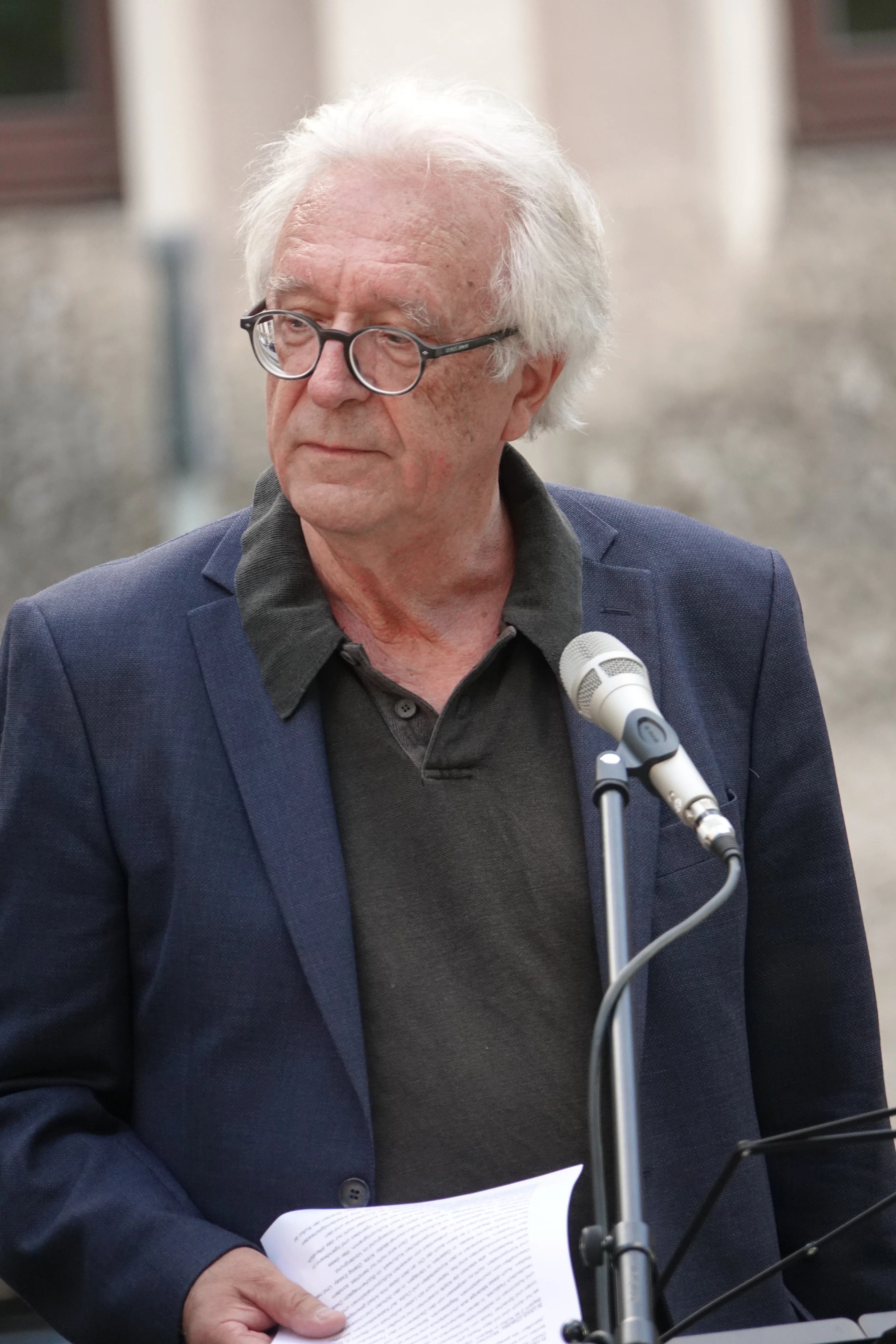
Image from Wikipedia
Image from Wikipedia
Gerd Anthoff – Munich Stage Presence, Bavarian Character Strength, and a Life Dedicated to Theatre
A Distinctive Artist Between Theatre, Television, and Vibrant Dialect Culture
Gerd Anthoff, born on August 12, 1946, in Munich, is one of the most notable faces in Bavarian theatre and television. His artistic profile combines stage presence, folk-rootedness, and an authority that has grown over decades in roles that oscillate between comedy, sharpness, and social precision. The documented milestones of his career reveal an actor who has developed a distinctive signature from the Munich milieu. ([dewiki.de](https://dewiki.de/Lexikon/Gerd_Anthoff))
Early Years and Training: Munich Origins as an Artistic Foundation
Anthoff grew up in Munich's Westend and was introduced to the stage early on through an aunt at the Residenz Theatre. He took acting lessons as a teenager; from 1964 to 1967, he received a scholarship from Bayerischer Rundfunk to promote actors with a Bavarian dialect. During this phase, he learned from Peter Rieckmann, Fritz Straßner, and Gustl Bayrhammer, names that represent a strongly regional yet professionally defined acting tradition. ([dewiki.de](https://dewiki.de/Lexikon/Gerd_Anthoff))
This influence explains much of his later impact: Anthoff never merely embodied characters, but always a piece of linguistic and cultural identity. His work remained closely connected to the Bavarian tone without tipping into mere folklore. From this connection, he derived the credibility that made him substantial both on stage and in front of the camera. ([dewiki.de](https://dewiki.de/Lexikon/Gerd_Anthoff))
The Breakthrough on Stage: Ensemble Work, Repertoire, and Perseverance
Anthoff's theatre career began in 1967 with engagements at the Bayerisches Staatsschauspiel, the Münchner Kammerspiele, and the Münchner Volkstheater. From 1970, he became a permanent ensemble member at the Bayerisches Staatsschauspiel, where he remained until 2011—an unusually long association that indicates continuity, trust, and repertoire strength. His role as Nantwein in Der Brandner Kaspar und das ewig’ Leben was particularly formative, where he performed approximately 950 shows over 27 years. ([dewiki.de](https://dewiki.de/Lexikon/Gerd_Anthoff))
The work at other prestigious stages further emphasizes this breadth: Anthoff has performed at the Münchner Kammerspiele, Volkstheater München, Staatstheater am Gärtnerplatz, the Komödie im Bayerischen Hof, and at the Salzburg Festival. His career showcases an actor who has evolved from the ensemble thought and whose artistic development is supported by perseverance, textual security, and stylistic adaptability. ([volkverlag.de](https://volkverlag.de/autoren/anthoff-gerd/))
Television Career and Popularity: From Joseph Filser to Der Bulle von Tölz
Beginning in 1987, Anthoff increasingly appeared on television, reaching an early peak in 1989 with the title role in the 13-part BR series Joseph Filser – Bilder aus dem Leben eines Bayerischen Abgeordneten. By the time he portrayed Toni Rambold in Der Bulle von Tölz, he had become known to a nationwide audience. In Löwengrube, he played Chief Inspector Deinlein, and in Unter Verdacht from 2002 to 2019, he depicted the corrupt Dr. Claus Reiter in 30 episodes. ([dewiki.de](https://dewiki.de/Lexikon/Gerd_Anthoff))
In these roles, Anthoff often embodies men with a sense of power, a jovial surface, and hidden sharpness. This blend of Bavarian reliability and inner cunning made him highly valuable for crime formats, folk plays, and series with regional color. His characters seldom come across as smooth; they thrive on attitude, timing, and a precise composition of voice, gaze, and gesture. ([dewiki.de](https://dewiki.de/Lexikon/Gerd_Anthoff))
Awards and Recognition: Signs of Long-Standing Authority
For his achievements, Gerd Anthoff has received significant awards. In 1995, he was honored with the Bavarian Television Award for Über Kreuz, followed by the Adolf Grimme Award in 2003 for the premiere episode of Unter Verdacht: Verdecktes Spiel. Other accolades include the AZ Star of the Year in 2008, the Bavarian Order of Merit in 2010, and the Munich Medal of Light in Gold in 2011. ([dewiki.de](https://dewiki.de/Lexikon/Gerd_Anthoff))
These honors affirm not only his fame but also his artistic reliability. Anthoff represents a form of acting craft that is not defined by short-term trends but by presence, role profile, and the ability to portray audience-accessible characters with precise understatement. This makes him a fixture in the South German cultural and television landscape. ([dewiki.de](https://dewiki.de/Lexikon/Gerd_Anthoff))
Style, Language, and Impact: Bavarian Identity as an Artistic Quality
Anthoff's style is characterized by the combination of dialect, precision, and comedic control. Sources describe him as an actor who frequently portrays rough entrepreneurs or bureaucratic leaders who veil their intrigues behind a friendly facade. In this way, he operates within a tradition where regional language serves not as an effect but as a dramatic tool for milieu studies, conflicts, and social sharpness. ([dewiki.de](https://dewiki.de/Lexikon/Gerd_Anthoff))
His presence is also enhanced by his experience in stage performance. Anyone who works in an ensemble for decades develops a keen sense of rhythm, pauses, punchlines, and textual nuances. These qualities explain why Anthoff remains credible both in folk plays and television crime dramas, and why his characters are often recognized immediately. ([dewiki.de](https://dewiki.de/Lexikon/Gerd_Anthoff))
Later Projects and Current Presence: Continuity Over Loudness
Even beyond the years of major breakthroughs, Anthoff remains present. BR continues to refer to him in contemporary and recent contexts as an actor, including productions like Zwei am großen See, Im Schleudergang, and in the ongoing series Krimis aus Passau. The more recent indications show: His career does not rely on constant media presence, but on carefully placed roles in enduring formats. ([br.de](https://www.br.de/br-fernsehen/inhalt/film-und-serie/zwei-am-grossen-see-uschi-glas-ruth-drexel-106.html?utm_source=openai))
Particularly interesting is his connection to spoken and musically framed formats such as Opern auf Bayrisch at the Staatstheater am Gärtnerplatz. This reveals an intersection between acting, language, and musical stage design, which has anchored his name in the vibrant Munich culture to this day. ([filmeule.com](https://www.filmeule.com/deutsche-schauspieler/2725-gerd-anthoff/))
Discography, Charts, and Musical Releases
According to the available sources, Gerd Anthoff does not have a classical discography, a chart history, or a documented pop or album career. His artistic strength lies clearly in acting, in radio play work, and in stage formats with verbal and sometimes musical framing. Therefore, those searching for musical releases will encounter a character actor rather than a recording artist. ([dewiki.de](https://dewiki.de/Lexikon/Gerd_Anthoff))
This clarity is crucial for a reliable artist profile: Anthoff's significance arises from his roles, repertoire, and media presence, rather than from a line of music releases. Nevertheless, his cultural relevance remains high because he has visibly shaped the tradition of Bavarian folk theatre in television and theatre over decades. ([dewiki.de](https://dewiki.de/Lexikon/Gerd_Anthoff))
Cultural Influence: A Face of Bavarian Television and Folk Theatre
Anthoff represents a generation of actors who convey regional identity not in a museum-like way but vibrantly. His roles in Der Brandner Kaspar und das ewig’ Leben, Löwengrube, Die Hausmeisterin, Café Meineid, and Der Bulle von Tölz have shaped the image of Bavarian television well beyond the borders of the state. The influence arises from recognizability, linguistic culture, and a strong connection between stage and screen. ([dewiki.de](https://dewiki.de/Lexikon/Gerd_Anthoff))
As part of the Munich cultural realm, he also possesses charisma. The combination of theatrical discipline, television routine, and dialectical authenticity makes him a solid reference for Bavarian acting art. Encountering Anthoff means engaging with a piece of lived cultural history, not an interchangeable series biography. ([dewiki.de](https://dewiki.de/Lexikon/Gerd_Anthoff))
Conclusion: Why Gerd Anthoff Remains Fascinating to This Day
Gerd Anthoff captivates with consistency, linguistic precision, and a stage presence that grows from genuine experience. He embodies characters that reflect life in Southern Germany with humor, friction, and depth of character. For these reasons, it is worthwhile to rediscover him in his theatre, television, and voice work and, where possible, to experience him live. ([dewiki.de](https://dewiki.de/Lexikon/Gerd_Anthoff))
Official Channels of Gerd Anthoff:
- Instagram: no official profile found
- Facebook: no official profile found
- YouTube: no official profile found
- Spotify: no official profile found
- TikTok: no official profile found
Sources:
Upcoming Events
Chamber Concerts "Auf da Oim" Hofalm - Musical Reading with Gerd Anthoff and a Duo from the Munich Philharmonic