
Fabio Biondi
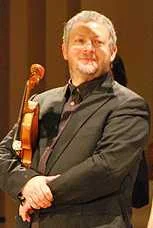
Image from Wikipedia
Image from Wikipedia
Fabio Biondi – The Visionary of Historical Performance Practice
An Italian Violin Poet Between Baroque, Opera, and Stylistic Boldness
Fabio Biondi, born on March 15, 1961, in Palermo, is one of the influential figures in historically informed performance practice. As a violinist, conductor, and founder of Europa Galante, he has redefined the Baroque violin not just as an instrument but as a space for expression of freedom, temperament, and tonal precision. His career began early and quickly evolved into an international path, characterized to this day by stylistic curiosity and interpretative authority. ([de.wikipedia.org](https://de.wikipedia.org/wiki/Fabio_Biondi?utm_source=openai))
Early Years: The Start of an Extraordinary Musical Career
From a young age, Biondi displayed remarkable musical maturity. At twelve, he performed for the first time with the RAI Symphony Orchestra, a debut that launched his career with astonishing early maturity. By the age of 16, he was playing the violin concertos of Johann Sebastian Bach at the Vienna Musikverein, marking an artistic statement that indicated both technical mastery and historical awareness. ([de.wikipedia.org](https://de.wikipedia.org/wiki/Fabio_Biondi?utm_source=openai))
These early milestones signify more than mere successes of a child prodigy. They indicate the beginning of a music career that focused from the outset on substance rather than effect. Biondi consistently turned to historical performance practice and collaborated with ensembles such as La Capella Reial de Catalunya, Musica Antiqua Wien, the Clemencic Consort, the Seminario Musicale, La Chapelle Royale, and Les Musiciens du Louvre. ([de.wikipedia.org](https://de.wikipedia.org/wiki/Fabio_Biondi?utm_source=openai))
Europa Galante: An Ensemble as an Artistic Laboratory
In 1990, Fabio Biondi founded the ensemble Europa Galante, which developed into one of the leading Baroque ensembles in Europe. With this ensemble, he created an instrument that matched his artistic vision: nimble, agile, virtuosic, and open to new interpretations of the repertoire. Europa Galante became a platform for musical discoveries, where Biondi served effectively as soloist, concertmaster, and conductor alike. ([de.wikipedia.org](https://de.wikipedia.org/wiki/Fabio_Biondi?utm_source=openai))
Notably, he consistently returned to original instruments and historical sound ideals. Descriptions of the ensemble emphasize Biondi's ability to open works from the Baroque, Classical, and even early Romantic periods with a fresh, exploratory perspective. The result is not a museal purism but a vivid, dramatically charged sound discourse. ([europagalante.com](https://www.europagalante.com/en/discografia/bellini-i-capuleti-e-i-montecchi/?utm_source=openai))
Musical Development: From Baroque to Romanticism
Biondi's artistic development is closely connected to the courage to transcend stylistic boundaries. Although he is regarded as a specialist in Baroque music, he extended his interpretive range towards Mendelssohn, Bellini, and Verdi. This expansion illustrates the depth of his musical intelligence: Biondi does not treat repertoire as a rigid category but as historically breathing material that can be illuminated anew through articulation, phrasing, and timbre. ([baroque.org](https://www.baroque.org/About/Performers/fabio-biondi?utm_source=openai))
Medici.tv describes his interpretations as a return to the origins of music, connected with freedom of expression and imagination. This characterization fits his profile precisely: Biondi combines technical discipline with an instinctive sense of musical storytelling. This tension lies at the heart of his work as a conductor and soloist. ([medici.tv](https://www.medici.tv/de/artists/fabio-biondi?utm_source=openai))
Discography: A Catalog of Luster and Profile
Fabio Biondi's discography is extensive and has been released on renowned labels such as Warner Classics, Virgin, and Glossa. It includes significant recordings of Vivaldi, Boccherini, Bellini, Mendelssohn, and Verdi, earning him numerous accolades, including the Diapason d’or de l’année and the Choc – Le Monde de la musique. Thus, Biondi has established himself not only as an interpreter but also as a discography architect with high artistic recognition. ([de.wikipedia.org](https://de.wikipedia.org/wiki/Fabio_Biondi?utm_source=openai))
Prominent recordings include Vivaldi's Il cimento dell’armonia e dell’invenzione, the Concerti per viola d’amore, Boccherini's String Quintets, and the recording of Verdi's Macbeth in the Florentine version of 1847. This particular release highlights Biondi's inclination to view well-known works from an unusual perspective and replace the expected discographic readings with a historically precise, dramatically sharper interpretation. ([europagalante.com](https://www.europagalante.com/discografia/vivaldi-il-cimento-dellarmonia-e-dellinvenzione/?utm_source=openai))
Critical Reception: Praise for Sound Culture, Virtuosity, and Imagination
The music press has responded consistently over the years to Biondi's work. In reviews, his playing style is described as energetic, narrative, and stylistically differentiated. Particularly frequent is the note on the balance between dramatic authority and poetic delicacy—an interpretation that is not merely historically correct but emotionally compelling. ([europagalante.com](https://www.europagalante.com/discografia/vivaldi-il-cimento-dellarmonia-e-dellinvenzione/?utm_source=openai))
International voices also underscore his unique position. The Strad highlighted the transparency of the lines and the penetrating character of the period strings in the Mendelssohn recording, while Gramophone praised the recording as exemplary in its artistic consistency. In Verdi, Early Music Review lauded the transparent orchestral texture and dramatic audibility, further confirming Biondi's approach as a conductor. ([europagalante.com](https://www.europagalante.com/en/discografia/mendelssohn/?utm_source=openai))
Current Projects and Artistic Presence
In recent years, Fabio Biondi remains prominent on international concert stages. The concert schedules of Europa Galante show performances and programs in the 2025 and 2026 seasons, including works by Bach, Vivaldi, Monteverdi, Frescobaldi, Haydn, and Mozart. This continuous presence demonstrates that Biondi's artistic development is by no means complete but continues through projects, tours, and repertoire expansions. ([europagalante.com](https://www.europagalante.com/en/concerts/?utm_source=openai))
Particularly revealing is the release of Locatelli: 6 Introduttioni teatrali in 2025 on the Europa Galante website, as well as the Mendelssohn production released in 2022. Together, these projects showcase an artist who does not restrict his historical expertise to the Baroque but maintains a focus on stylistic transitions and theatrical energy. ([europagalante.com](https://www.europagalante.com/discografia/giuseppe-verdi-macbeth-firenze-1847/?utm_source=openai))
Style and Interpretation: Precision, Risk, and Theatrical Tension
Fabio Biondi's style is based on a rare combination of analytical clarity and expressive intensity. His way of making music favors sharp contours, flexible tempi, and an articulation that reveals the inner pulse of the works. In historically informed performance practice, he has thus set standards because he does not strive for mere authenticity but for rhetorical truth in the moment of play. ([medici.tv](https://www.medici.tv/de/artists/fabio-biondi?utm_source=openai))
His repertoire is broad. Sources indicate that he treats Italian music of the 18th and early 19th centuries with particular affection but is also willing to delve into early German Romanticism. This openness makes him a musician who does not manage historical boundaries but shifts them productively. ([europagalante.com](https://www.europagalante.com/en/discografia/bellini-i-capuleti-e-i-montecchi/?utm_source=openai))
Cultural Influence: A Formative Voice in Early Music
Biondi belongs to that generation of artists who have brought Early Music out of its specialist status and opened it to a broader audience. His influence extends far beyond individual recordings, as he has changed listening itself: away from smooth, standardized readings towards riskier, more expressive, and colorful interpretations. In this way, he is not only an excellent violinist but also a cultural innovator within the European music landscape. ([de.wikipedia.org](https://de.wikipedia.org/wiki/Fabio_Biondi?utm_source=openai))
The resonance to his recordings indicates that his name remains associated with quality, stylistic awareness, and historical curiosity. For music lovers, Fabio Biondi is therefore a reliable address for interpretative depth, for connoisseurs a reference point for historical performance practice, and for concertgoers an artist with an unmistakable stage presence. ([europagalante.com](https://www.europagalante.com/discografia/vivaldi-il-cimento-dellarmonia-e-dellinvenzione/?utm_source=openai))
Fabio Biondi fascinates because he does not conserve tradition but vivifies it. His music career combines virtuosity, research, risk, and artistic consistency at the highest level. Those who experience him live encounter a musician who perceives each work as a present moment and infuses historical music with unbroken contemporaneity. ([medici.tv](https://www.medici.tv/de/artists/fabio-biondi?utm_source=openai))
Official Channels of Fabio Biondi:
- Instagram: no official profile found
- Facebook: no official profile found
- YouTube: no official profile found
- Spotify: no official profile found
- TikTok: no official profile found
Sources:
- Wikipedia - Fabio Biondi (German Edition)
- Europa Galante - Vivaldi: Il cimento dell'armonia e dell'invenzione
- Europa Galante - Vivaldi: Concerti per viola d'amore
- Europa Galante - Boccherini: String Quintets
- Europa Galante - Bellini: I Capuleti e i Montecchi
- Europa Galante - Giuseppe Verdi: Macbeth Firenze, 1847
- Europa Galante - Mendelssohn
- Europa Galante - Concerts
- Official Charts - Fabio Biondi
- Music of the Baroque - Fabio Biondi
- medici.tv - Fabio Biondi