
Concerto Köln
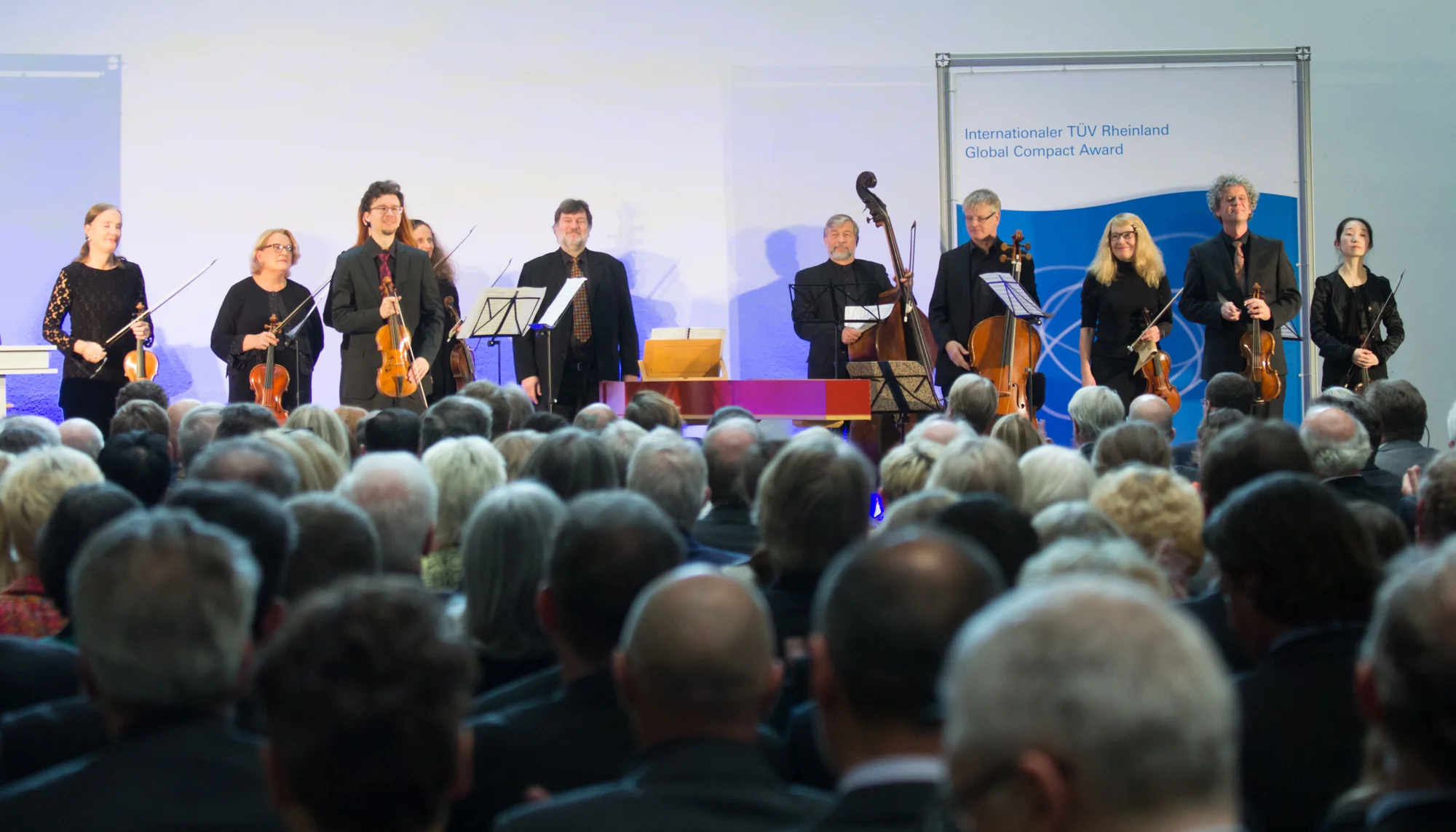
Image from Wikipedia
Image from Wikipedia
Concerto Köln – Original Sound, Exploratory Spirit, and the Art of Historical Performance Practice
A Cologne Ensemble that Enlivens Early Music with the Present
Since 1985, Concerto Köln has been one of the defining ensembles in historical performance practice, evolving from Cologne into an internationally sought-after voice for original sound. The orchestra combines scholarly curiosity with stylistic precision and a joy of playing that is repeatedly described as unusually vibrant in reviews. Its artistic identity is based on source-based research, historically informed interpretation, and a sound ideal that does not preserve the past in a museum-like fashion but instead brings it audibly into the present. ([concerto-koeln.de](https://www.concerto-koeln.de/))
Engaging with Concerto Köln means encountering not just a pure repertoire ensemble, but a musical research station with a commanding stage presence. The ensemble has earned a reputation as a precise yet adventurous interpreter that takes hidden works as seriously as canonical masterpieces. This blend of a musical career, curatorial thinking, and interpretative courage makes Concerto Köln one of the most intriguing German ensembles in the field of early music. ([concerto-koeln.de](https://www.concerto-koeln.de/))
The Foundation: Cologne as a Laboratory for Historical Sound Expression
Concerto Köln was founded in 1985 by students from the Cologne University of Music. The starting point was not a nostalgic project, but a deliberate attempt to transfer insights from musicology to the stage using historical instruments. Founding the ensemble in a city with a rich musical tradition quickly gave it profile and context, while simultaneously opening up perspectives on a repertoire relevant across Europe from the 18th to the early 19th century. ([de.wikipedia.org](https://de.wikipedia.org/wiki/Concerto_K%C3%B6ln?utm_source=openai))
Deutsche Grammophon describes the ensemble as an orchestra created to provide a forum for the then-growing insights of historical performance practice. Along these lines, Concerto Köln developed projects that placed composers and repertoires beyond the standard canon at the center, including Boccherini, Brunetti, Locatelli, Rosetti, Vanhal, Dall’Abaco, and Eberl. Early on, the ensemble made it clear that historical performance practice stands for more than just correct tempo choices or baroque embellishments: it is a perspective on music history. ([deutschegrammophon.com](https://www.deutschegrammophon.com/de/kuenstler-innen/concertokoeln/biografie?utm_source=openai))
Artistic Development: From Baroque to Musical Archaeology with Attitude
Over the decades, Concerto Köln has sharpened its artistic development through thematic cycles, special programs, and collaborations with singers and soloists. The ensemble has collaborated with Cecilia Bartoli, Vivica Genaux, Waltraud Meier, Natalie Dessay, Philippe Jaroussky, Christoph Prégardien, Andreas Scholl, Ulrich Tukur, Harald Schmidt, and Bruno Ganz. Such partnerships demonstrate the extensive reach of the orchestra: from opera and oratorio to staged concerts and experimental formats. ([de.wikipedia.org](https://de.wikipedia.org/wiki/Concerto_K%C3%B6ln?utm_source=openai))
This profile is especially evident in the program lines documented on the website, consistently exploring new musical territories. Themes such as Spanish classical music, early classical music, the dawn of Romanticism, or project formats like “Dream of the Orient” showcase an approach that takes historical contexts seriously while also tightening the dramatic focus. Concerto Köln thus operates not only as an orchestra but as a cultural-historical storyteller. ([deutschegrammophon.com](https://www.deutschegrammophon.com/de/kuenstler-innen/concertokoeln/biografie?utm_source=openai))
Discography: From Award-Winning Reference Recordings to Current Releases
Concerto Köln's discography now includes over 75 recordings and stands as one of the significant catalogs of early music. Among the outstanding recordings is Mozart's Le nozze di Figaro under René Jacobs, which won a Grammy Award; Wikipedia and the website also mention other important distinctions such as the German Record Critics' Award, ECHO Klassik, Midem Classical Award, German Critics' Prize, as well as French honors like Choc and Diapason d’or. This landscape of awards points to critical reception: Concerto Köln has not only been noticed but repeatedly regarded as exemplary. ([concerto-koeln.de](https://www.concerto-koeln.de/biografie.html?utm_source=openai))
On the official website, an overview of albums lists current releases for 2025, 2026, 2022, and 2021; on Spotify, more recent titles include Mozart 1791 (2023), Pisendel (2023), Vivaldi (2020), and the current album Pantheon - Corelli's Orbit. The platform also shows that pieces like the Sinfonia from Le nozze di Figaro or the movement “I. Allegro” rank among the ensemble's most listened-to tracks. Thus, scientifically motivated programming efforts connect with a clearly audible streaming reach. ([open.spotify.com](https://open.spotify.com/artist/6dxdut9Mhu7r7SM9HZB5Ob?utm_source=openai))
Earlier projects also mark discographic milestones. The recording of Vivaldi's Four Seasons was presented in 2016 as the first recording of this core work by Concerto Köln and described as a quest for freedom, spontaneity, and vibrant playing. This release clearly shows how the ensemble engages with repertoire: not as a mere obligation, but as an interpretative renegotiation of well-known works. ([concerto-koeln.de](https://www.concerto-koeln.de/cds/vivaldi-the-four-seasons.html))
Current Projects: Wagner, Anniversaries, and a Present for Early Music
Among the central projects of the present is The Wagner Cycles, a collaboration between the Dresden Music Festival, Concerto Köln, and Kent Nagano. This project examines Wagner's Ring Tetralogy from a historically informed perspective and was launched in 2023 with Das Rheingold, followed in 2024 with Die Walküre, and continued with Siegfried. The approach is extraordinary: historical instruments, reconstruction of playing styles, and the rediscovery of the singing and speaking style of Wagner's time come together in a new music-historical experiment. ([concerto-koeln.de](https://www.concerto-koeln.de/de/projekte/the-wagner-cycles/))
In parallel, the ensemble is celebrating its 40th anniversary with #WeCelebrate: 2025-2035, conceptualizing the anniversary as a long-term artistic narrative. Each year leading up to its 50th birthday, Concerto Köln will focus on a composer, or a historical event; in 2025, Alessandro Scarlatti was the focus, and in 2026, Christina of Sweden. The project connects historical research with contemporary relevance, explicitly understanding music as a socially relevant practice. ([concerto-koeln.de](https://www.concerto-koeln.de/de/projekte/wecelebrate-2025-2035/))
The concert calendar also shows the current dynamics of the ensemble. For 2026, performances are documented at the Chopin and his Europe Festival in Warsaw, the Bach Festival Leipzig, the Handel Festival Halle, as well as at the Rheingau Music Festival and other European venues. Concerto Köln thus remains not just a studio ensemble but an actively touring ensemble with a significant presence at renowned venues. ([concerto-koeln.de](https://www.concerto-koeln.de/kalender/category/all.html?utm_source=openai))
Style and Sound: Precision, Freedom, and a Democratic Ensemble Spirit
The sound of Concerto Köln is characterized by historical awareness, yet never by a sterile sense of reconstruction. The ensemble's own website cites press reviews that speak of "buried jewels" and a "democracy of sound"; The New York Times sums up the ensemble as "Those wonderful Early-Musickers in Cologne." Such phrases are more than praise: they describe an ensemble that understands its work as a collectively developed sound expression. ([concerto-koeln.de](https://www.concerto-koeln.de/))
Especially in the interpretation of Italian and German-Austrian Baroque repertoire, this blend of historical knowledge and vitality unfolds. Concerto Köln works with articulation, affect, agogic, and improvisational moments without losing formal control. In this balance lies the authority of the ensemble: the sound remains transparent, buoyant, and yet powerful and direct. ([concerto-koeln.de](https://www.concerto-koeln.de/cds/vivaldi-the-four-seasons.html))
Awards, Collaborations, and Cultural Influence
Concerto Köln's international reputation is founded not only on its discography but also on awards and collaborations. In addition to the Grammy Award, the sources mention prizes such as ECHO Klassik, Choc du Monde de la musique, Diapason d’or, and the International Opera Award nomination context for Artaserse. The ensemble has thus established itself as an authority in early music while shaping the perception of historical performance practice in the German-speaking world and internationally. ([de.wikipedia.org](https://de.wikipedia.org/wiki/Concerto_K%C3%B6ln?utm_source=openai))
Its cultural influence is also evident in the selection of unusual repertoires and collaborations with labels, festivals, and institutions. The official website points to supporters such as the Ministry of Culture and Science of North Rhine-Westphalia, as well as partnerships with the Kunststiftung NRW, the Goethe-Institut, and the Federal Government Commissioner for Culture and the Media. Thus, Concerto Köln operates within a network that brings together artistic quality, cultural education, and institutional embedding. ([concerto-koeln.de](https://www.concerto-koeln.de/biografie.html?utm_source=openai))
Conclusion: Why Concerto Köln Remains What It Has Been for Decades
Concerto Köln fascinates because the ensemble does not view historical performance practice as a set of rules but as a living art form. The combination of research, risk, sound discipline, and joy of playing gives the orchestra a rare credibility. Those who wish to experience early music not just accurately but electrifyingly will find an ensemble of the highest caliber here. ([concerto-koeln.de](https://www.concerto-koeln.de/))
In projects like The Wagner Cycles and #WeCelebrate, Concerto Köln demonstrates how relevant historical perspectives remain for the present. This musical career is not a closed chapter but an ongoing story of discovery that continually raises new questions about the repertoire. Those who experience the ensemble live not only hear excellent interpretation but also a piece of living music history. ([concerto-koeln.de](https://www.concerto-koeln.de/de/projekte/wecelebrate-2025-2035/))
Official Channels of Concerto Köln:
- Instagram: https://www.instagram.com/concerto_koeln/
- Facebook: No official profile found
- YouTube: https://www.youtube.com/channel/UCkXy_DDispTOPgeUt05fAqQ
- Spotify: https://open.spotify.com/artist/6dxdut9Mhu7r7SM9HZB5Ob
- TikTok: No official profile found