
Christian Morgenstern
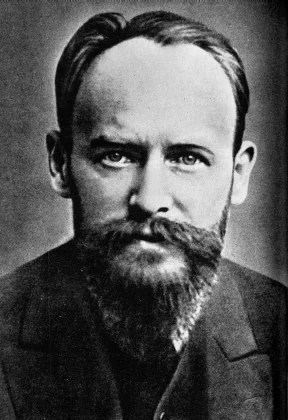
Image from Wikipedia
Image from Wikipedia
Christian Morgenstern: The Word Artist Between Humor, Cosmos, and Resounding Lyricism
A Poet Who Made Music from Words and Continues to Influence German Literature Today
Christian Morgenstern is one of those rare authors whose work simultaneously appears light-footed, witty, and profound. Born in Munich in 1871, this German poet, writer, and translator created poetry that ranges from the mystical to the personal-lyrical to the famous nonsense verse. His lines have found lasting resonance not only in literature but also in musical adaptations and cultural-historical interpretations. ([britannica.com](https://www.britannica.com/biography/Christian-Morgenstern))
Biography: Origins, Education, and Early Influences
Morgenstern came from an artistic family; according to biographical accounts, painting, landscape, and aesthetic sensitivity shaped his early environment. He initially studied economics and law, later philosophy and art history, before fully dedicating himself to literary work. The combination of intellectual education and artistic heritage formed an authority that remained palpable throughout his work. ([deutschelyrik.de](https://www.deutschelyrik.de/morgenstern.html?utm_source=openai))
His life was overshadowed by illness from an early age, necessitating frequent stays in sanatoriums and travels for recovery. Nevertheless, it was precisely from this biographical tension that a unique poetic energy developed: between inner vulnerability and linguistic humor, between withdrawal and mental alertness. In 1908, he married Margarete Gosebruch von Liechtenstern; from 1910 onward, he lived in South Tyrol, where he died in Merano in 1914. ([britannica.com](https://www.britannica.com/biography/Christian-Morgenstern))
Career: From Serious Lyricist to Master of Poetic Play
Although Morgenstern is primarily associated today with his humorous poems, this aspect of his work is only a part of his overall oeuvre. His early and middle collections of poetry show an author who playfully weaves cosmic, mythological, and philosophical motifs while developing a serious worldview. Britannica describes his writing as a tension field between mystical, personal lyricism and nonsense verse, characterized by satirical precision. ([britannica.com](https://www.britannica.com/biography/Christian-Morgenstern))
Morgenstern's international fame is largely credited to his nonsense poetry, in which he rearranged words, shifted meanings, and deliberately upended grammatical structures. This technique created a peculiar sound space where humor and cerebral sharpness converged. Key collections include Galgenlieder from 1905 and Palmström from 1910; further significant compilations such as Palma Kunkel, Der Gingganz, and Die Schallmühle were published posthumously. ([britannica.com](https://www.britannica.com/biography/Christian-Morgenstern))
The Breakthrough: Why the “Galgenlieder” Became Classics
The creation of Galgenlieder is closely linked to the legendary Brotherhood of the Gallows, which developed in Berlin and placed Morgenstern's texts within a ritual, almost performative context. The Christian Morgenstern Society describes that these poems came alive in a “musically realized” ceremony. Thus, literature early on became a multidisciplinary event of language, presentation, and sound. ([christian-morgenstern-gesellschaft.de](https://www.christian-morgenstern-gesellschaft.de/seite/629072/sein-leben.html))
Morgenstern himself regarded his humorous poems as rather incidental works, yet it was precisely these that brought him worldwide fame. The wit of his verses remains modern to this day, as it is not merely silly but operates with rhythm, sound effects, and semantic shift. This combination of linguistic art and punchline explains why Morgenstern continues to be present in textbooks, stage programs, and literary reissues. ([christian-morgenstern-gesellschaft.de](https://www.christian-morgenstern-gesellschaft.de/seite/629072/sein-leben.html))
Musical Reception and Cultural Influence
Morgenstern's poetry possesses a strong musical quality, which has made his texts attractive to composers across generations. The Wikipedia entry lists settings by composers such as Erik Bergman, Hanns Eisler, Sofia Gubaidulina, Lera Auerbach, Paul Hindemith, Alexander von Zemlinsky, among others. His verses continue to thrive not only in the literary canon but also in the repertoire of modern and classical music. ([en.wikipedia.org](https://en.wikipedia.org/wiki/Christian_Morgenstern))
Current recordings and programs also consistently draw on Morgenstern. A KAIROS catalog from 2025 describes Galgenlieder à 3 as a fusion of Christian Morgenstern's quirky verses with Sofia Gubaidulina's musical language, highlighting the playful and surreal expressive means. Furthermore, the Christian Morgenstern Society mentions the musical realization of his texts as part of their early reception. ([note1-music.com](https://www.note1-music.com/opencms/export/sites/note1/de/Neuheitenheft/01-2025-Neuheitenheft.pdf))
Style: Wit, Philosophy, and Formal Precision
Morgenstern's style thrives on a delicate balance of comedy and gravity. His poems seem cheerful at first glance but often carry a philosophical core that addresses existential questions of perception, world relation, and language. Especially in his more serious texts, a development is evident under the influence of Nietzsche, and later also Buddhism and Rudolf Steiner's anthroposophy. ([britannica.com](https://www.britannica.com/biography/Christian-Morgenstern))
The poetic technique is highly precise: sound symbolism, neologisms, absurd imagery logic, and controlled syntax create the typical Morgenstern effect. It is precisely this formal discipline that makes the humor enduring, as it rests not on simple gags but on compositional accuracy. Thus, Morgenstern stylistically stands between classicism, modernism, and avant-garde wordplay. ([britannica.com](https://www.britannica.com/biography/Christian-Morgenstern))
Discography in a Broader Sense: Adaptations, Recordings, and Literary Editions
There is no classical music discography in the sense of a singer-songwriter for Christian Morgenstern, but there is a rich reception in recordings, audiobooks, and adaptations. Spotify search results show that his poems and titles appear in numerous publications and audio formats, such as in collections related to Morgenstern and Ringelnatz or in literary readings with musical connections. This presence confirms his continued cultural applicability in audio format. ([open.spotify.com](https://open.spotify.com/intl-tr/track/57lkcDKCoDX1TaCFUIoykC?utm_source=openai))
Concurrently, his texts continue to be published in new editions and anthologies. Reclam announced a 2025 edition of Von Mondschafen und Purzelbäumen, and further bibliographic entries indicate ongoing reissues. The literary discography of his works remains dynamic, as Morgenstern is continuously recontextualized in readers, editions, and artistic programs. ([reclam.de](https://www.reclam.de/detail/978-3-15-014479-4/Morgenstern__Christian/Von_Mondschafen_und_Purzelbaeumen?utm_source=openai))
Current Projects and Publications
As Christian Morgenstern passed away in 1914, there are no new albums, singles, or tours. Nevertheless, his texts remain the subject of current cultural work: in 2024 and 2025, programs, readings, and musical evenings dedicated to Morgenstern took place, under titles such as Der Unverbeß or Gestatten Morgenstern!. Such projects demonstrate how alive his work remains in theater, music, and literary mediation. ([nordhausen.de](https://www.nordhausen.de/news/news_lang.php?ArtNr=30643&utm_source=openai))
Conclusion: Why Christian Morgenstern Remains Fascinating Today
Christian Morgenstern is an author of remarkable relevance, as he not only describes language but makes it audible. His poems connect wit, philosophical depth, and formal elegance into a literary signature that remains instantly recognizable. Those who read his texts or experience them in adaptations encounter an artist who understood humor as a means of insight and transformed literature into a resonant event. ([britannica.com](https://www.britannica.com/biography/Christian-Morgenstern))
For this reason, engaging with Morgenstern is always worthwhile: as an entry point into German modernism, as a study of language music, and as an invitation to experience literature with all the senses. Those who experience his poems live in readings, music programs, or on stage immediately understand why Morgenstern has not faded for over a century. He remains a poet to be not only read but also heard. ([christian-morgenstern-gesellschaft.de](https://www.christian-morgenstern-gesellschaft.de/seite/629072/sein-leben.html))
Official Channels of Christian Morgenstern:
- Instagram: no official profile found
- Facebook: no official profile found
- YouTube: no official profile found
- Spotify: no official profile found
- TikTok: no official profile found
Sources:
- Wikipedia - Christian Morgenstern
- Britannica - Christian Morgenstern
- Christian Morgenstern Society e.V. - His Life
- Note1 Music - New Releases January 2025
- Reclam Verlag - Von Mondschafen und Purzelbäumen
- Nordhausen.de - Der Unverbeß, 10.01.2024
- Juist News - Christian Morgenstern was Experienced in the Terrassensaal
- Wikipedia: Image and text source